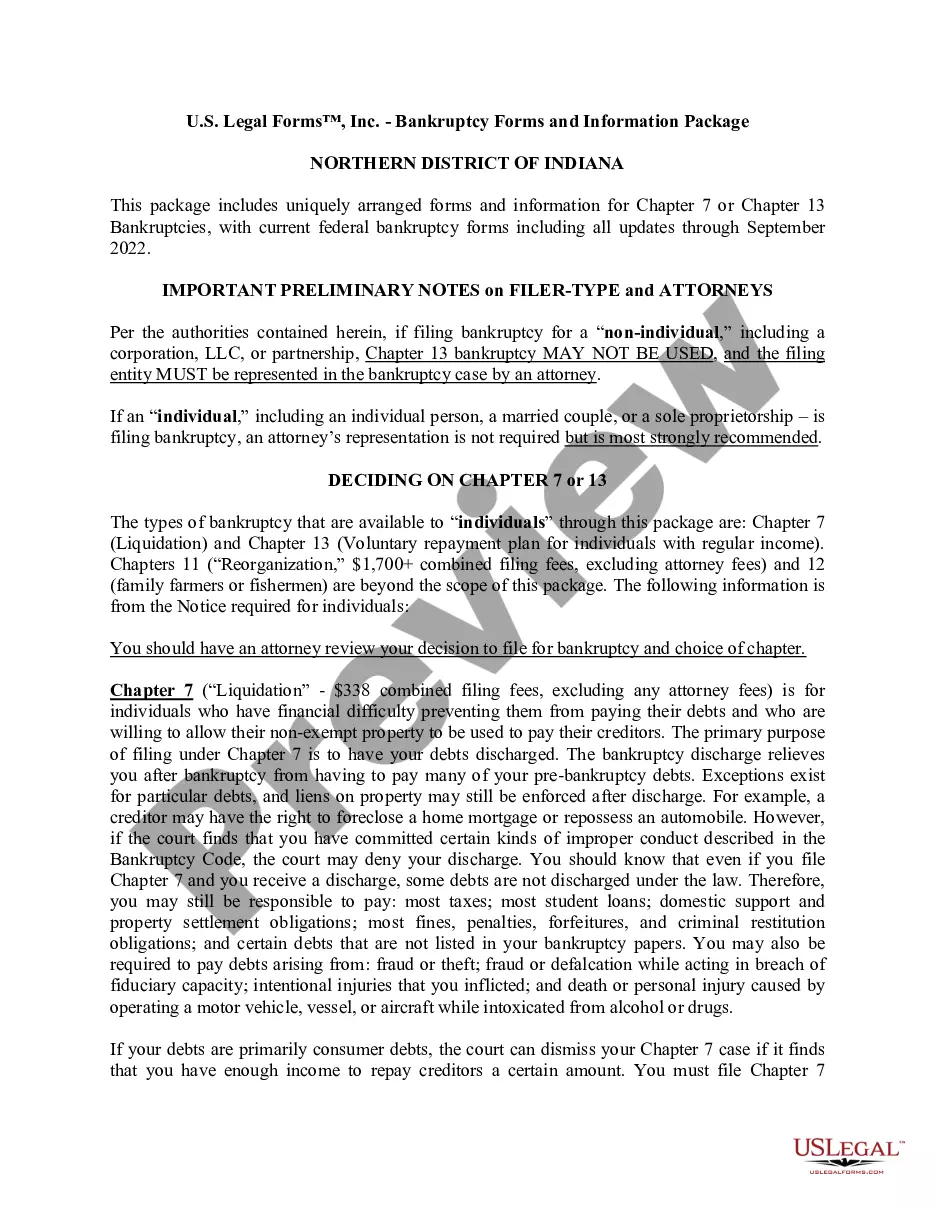
Montana Installments Fixed Rate Promissory Note Secured by Residential Real Estate
Understanding this form
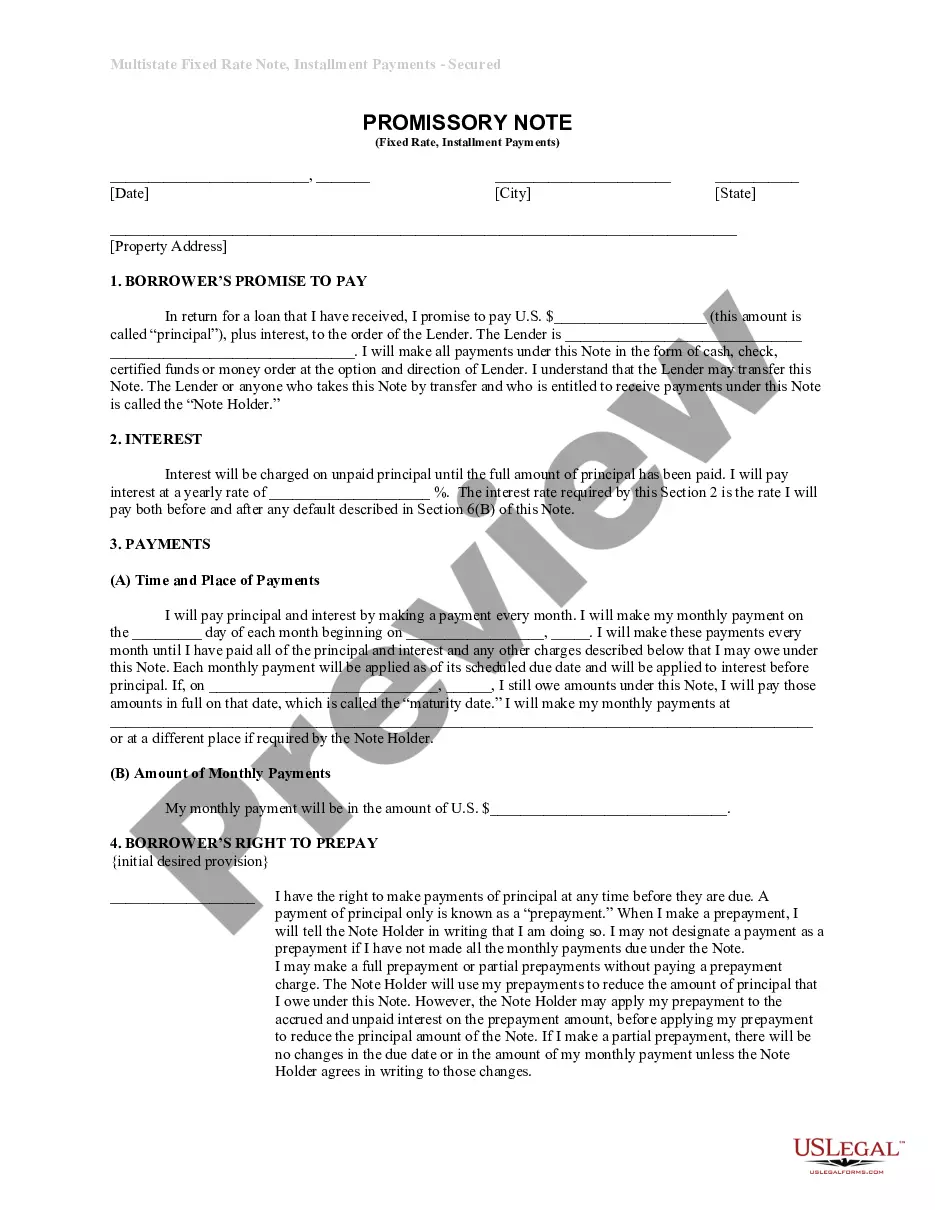
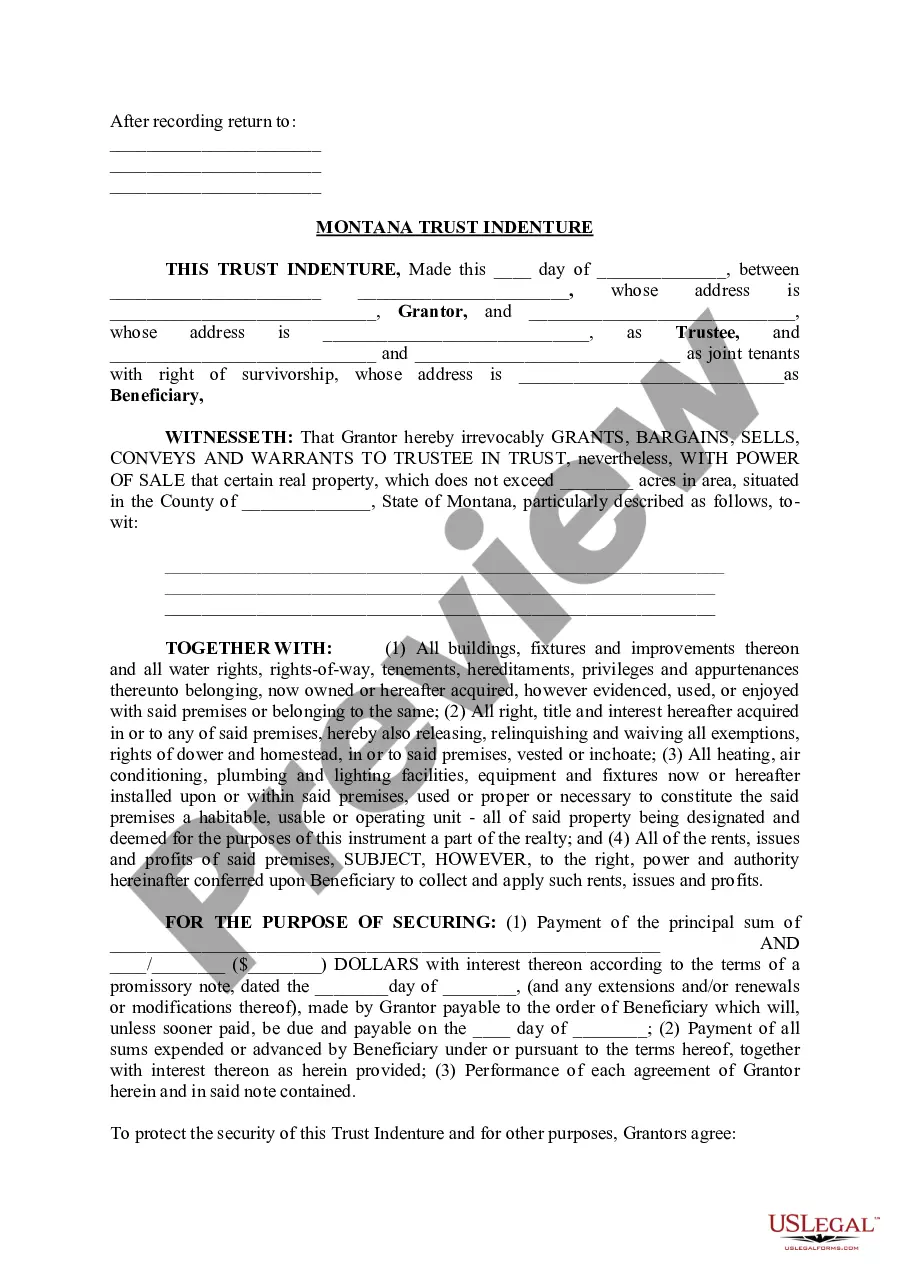
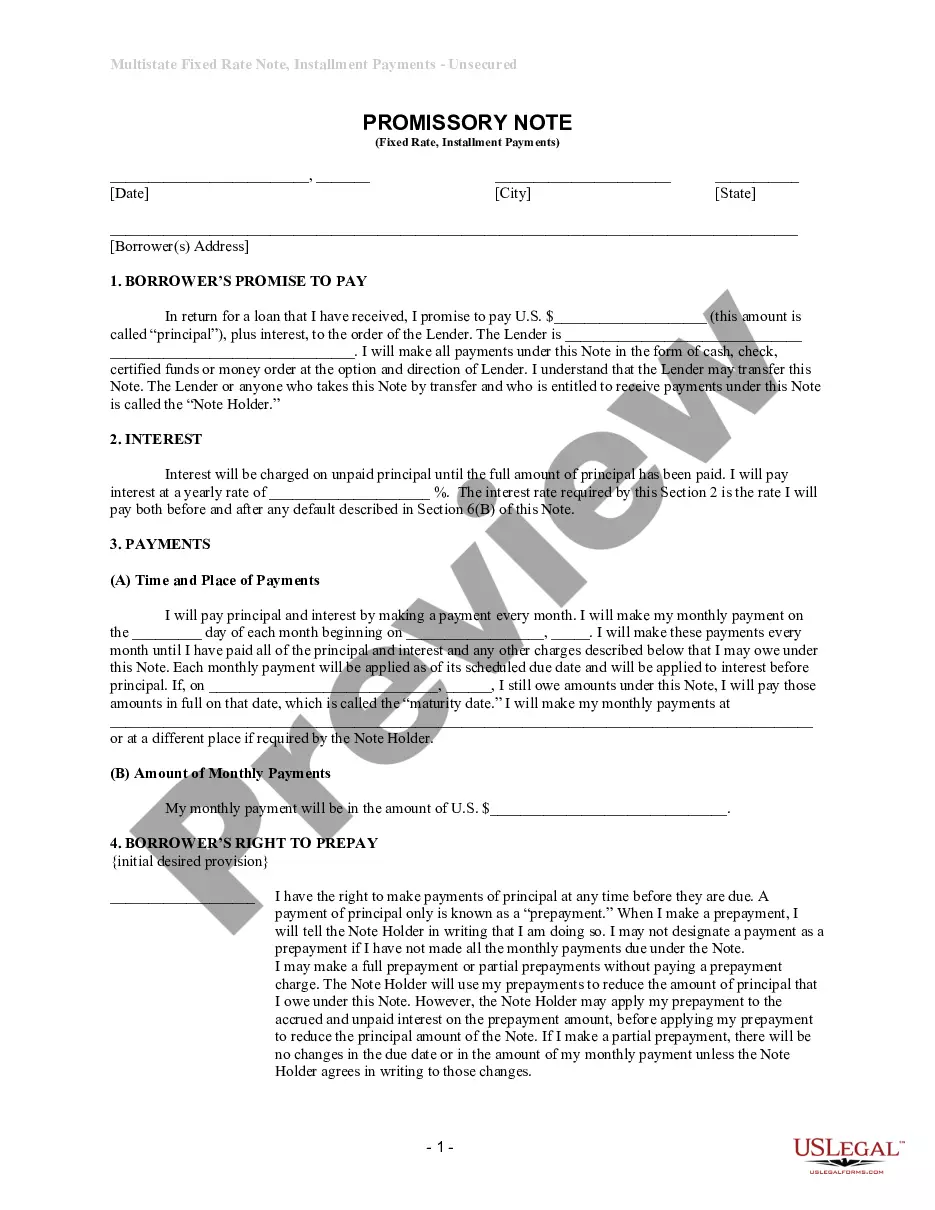
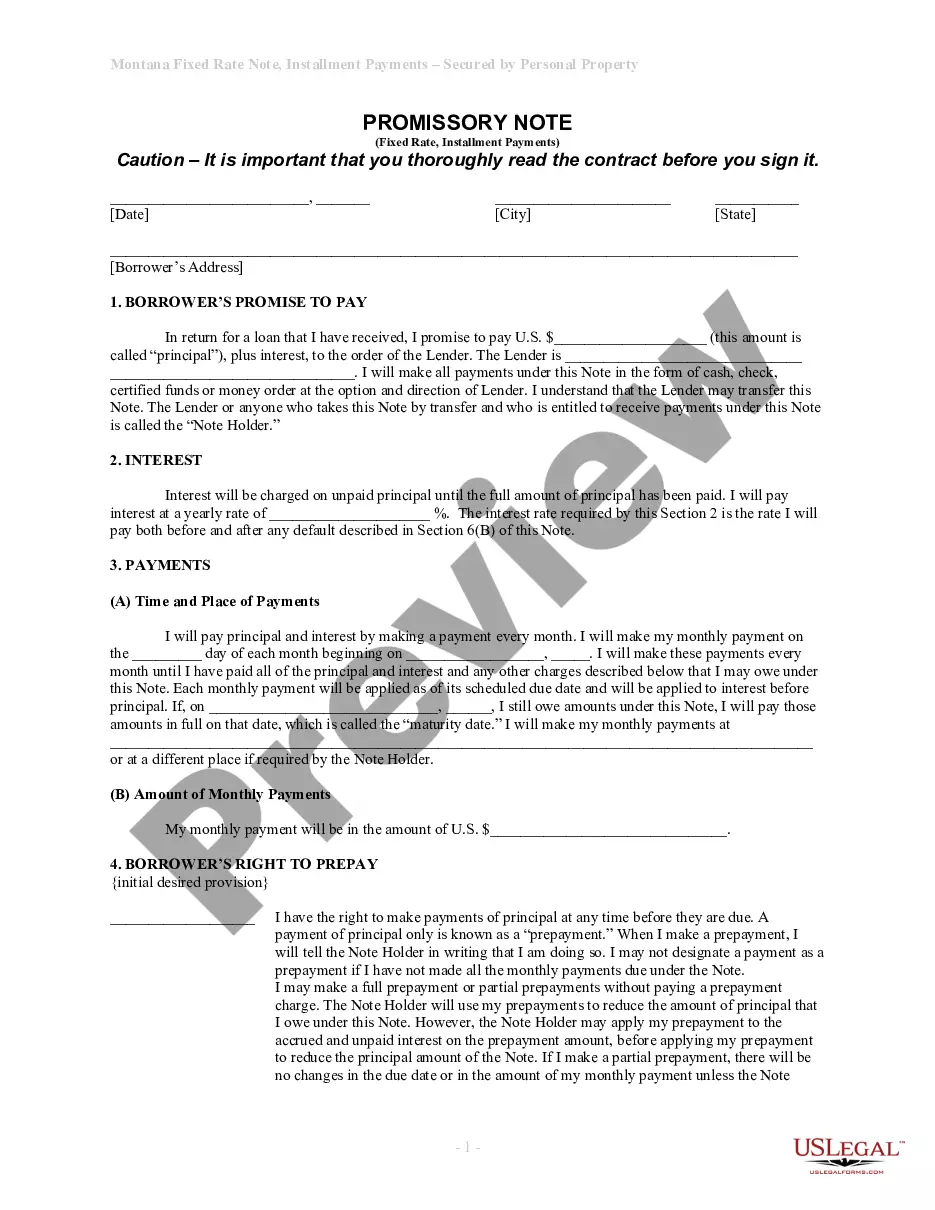
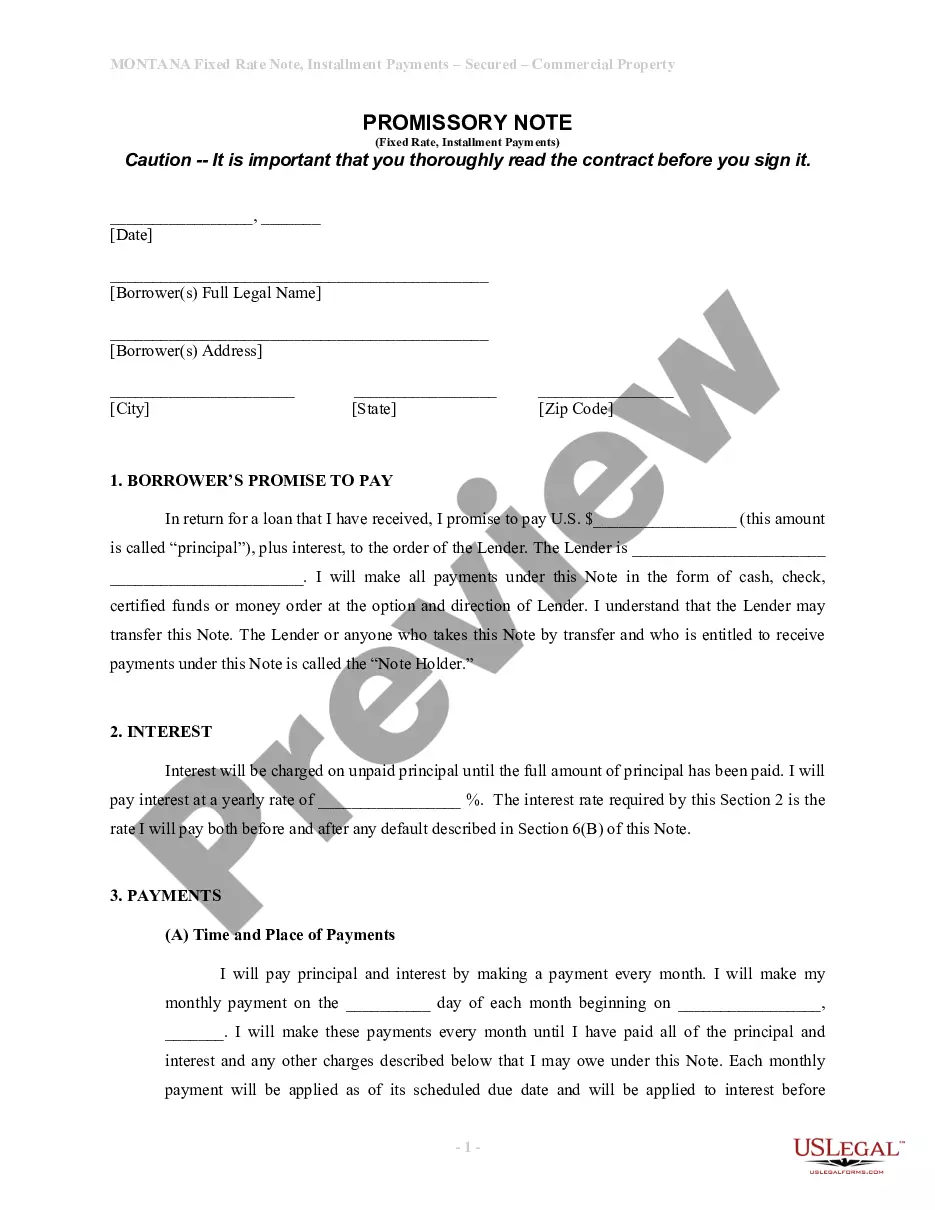
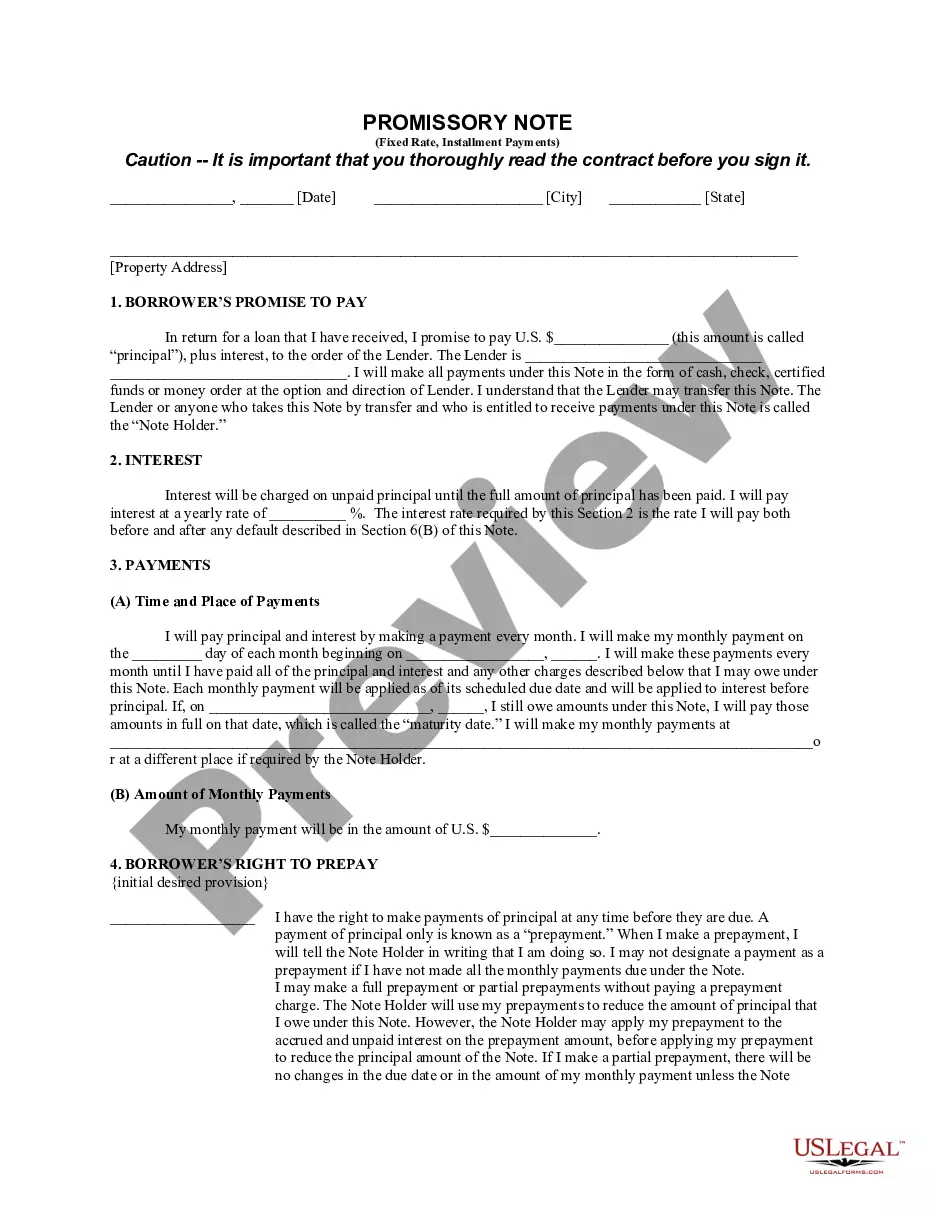
The Montana Installments Fixed Rate Promissory Note Secured by Residential Real Estate is a legal document that represents a borrower's promise to repay a loan secured by residential property. This form outlines the terms of the loan, including the amount to be repaid, interest rate, payment schedule, and the obligations of the borrower. Unlike unsecured promissory notes, this note includes a security interest in the property, providing additional assurance to the lender in case of default.
Form components explained
- Borrower's agreement to repay the loan amount (principal) plus interest.
- Specification of the interest rate and payment frequency.
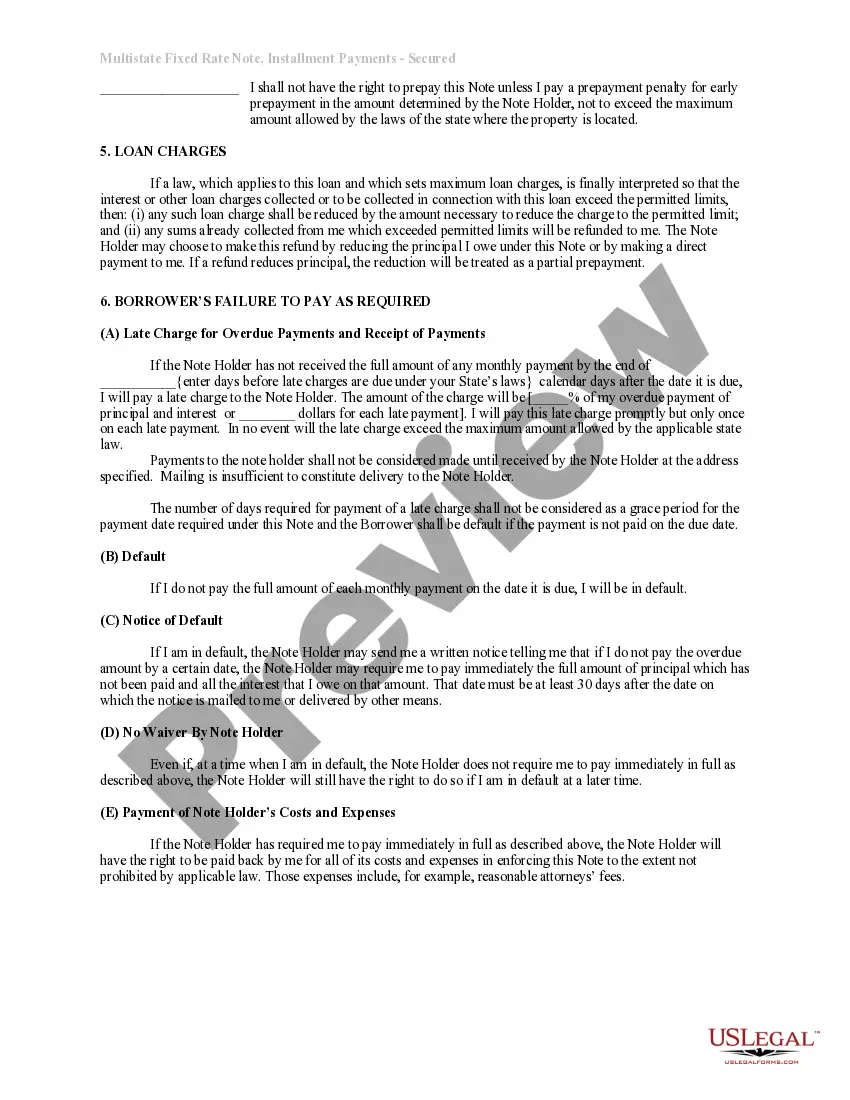
- Details about prepayments and any associated penalties.
- Outlines the actions during default, including late fees and notice requirements.
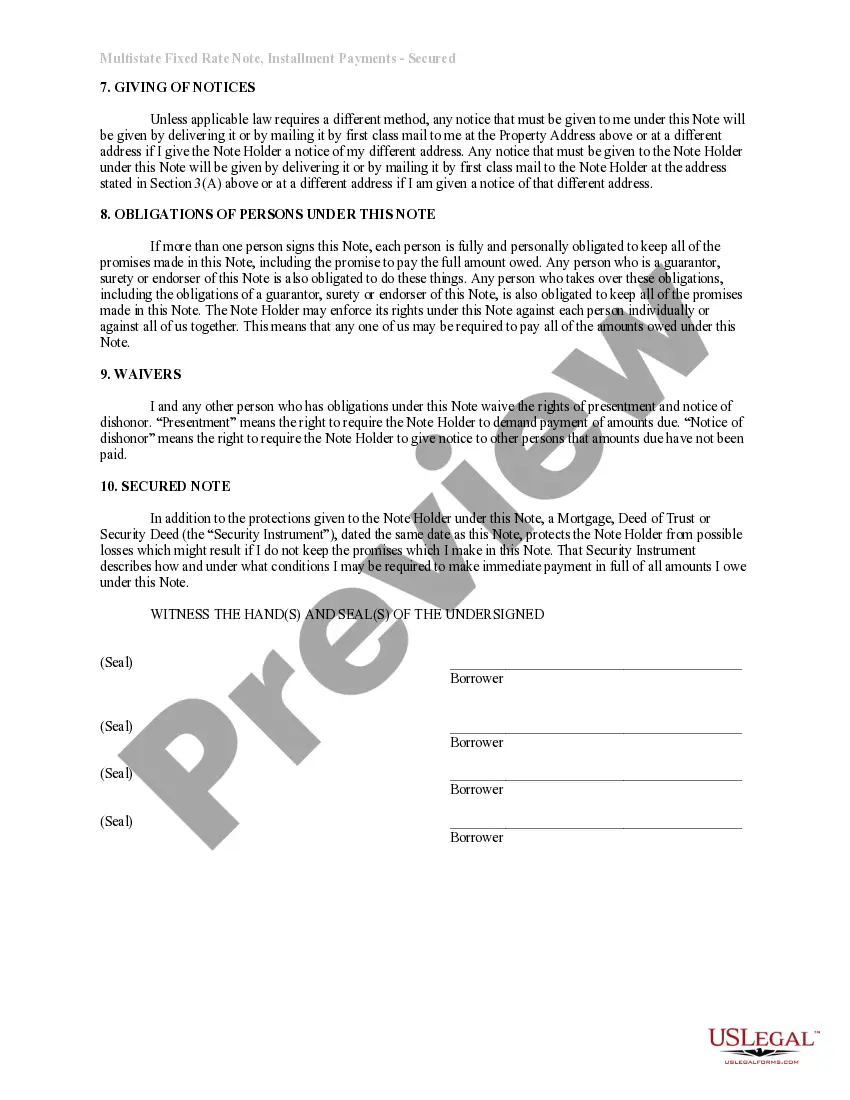
- Identification of the property securing the loan.
- Signatures of the borrower(s) and any other obligors.
Common use cases
This form is typically used when an individual or business takes out a loan secured by residential real estate. Common scenarios include financing the purchase of a home or refinancing an existing mortgage. It is also useful in situations where the lender requires a legal guarantee backed by property to mitigate risk.
Who should use this form
The Montana Installments Fixed Rate Promissory Note should be used by:
- Homebuyers seeking financing for residential properties.
- Homeowners looking to refinance their existing loans.
- Lenders who require a secured promissory note for loans.
- Real estate investors financing property purchases.
Steps to complete this form
- Enter the loan amount and interest rate applicable to the note.
- Provide the names of the borrower(s) and lender.
- Specify the property address that secures the loan.
- Fill in the payment schedule, including the due date and amount of each installment.
- Review the obligations related to late payments and defaults.
- Obtain signatures from all parties involved in the agreement.
Notarization requirements for this form
This form does not typically require notarization unless specified by local law. However, having it notarized may provide additional security and verification of the signatures involved.
Get your form ready online
Our built-in tools help you complete, sign, share, and store your documents in one place.
Make edits, fill in missing information, and update formatting in US Legal Forms—just like you would in MS Word.
Download a copy, print it, send it by email, or mail it via USPS—whatever works best for your next step.
Sign and collect signatures with our SignNow integration. Send to multiple recipients, set reminders, and more. Go Premium to unlock E-Sign.
If this form requires notarization, complete it online through a secure video call—no need to meet a notary in person or wait for an appointment.
We protect your documents and personal data by following strict security and privacy standards.

Make edits, fill in missing information, and update formatting in US Legal Forms—just like you would in MS Word.

Download a copy, print it, send it by email, or mail it via USPS—whatever works best for your next step.

Sign and collect signatures with our SignNow integration. Send to multiple recipients, set reminders, and more. Go Premium to unlock E-Sign.

If this form requires notarization, complete it online through a secure video call—no need to meet a notary in person or wait for an appointment.

We protect your documents and personal data by following strict security and privacy standards.
Mistakes to watch out for
- Failing to specify the correct property address being used as collateral.
- Not entering the correct interest rate, leading to confusion about repayment terms.
- Leaving important sections blank, such as maturity date or prepayment terms.
- Not ensuring all parties sign the document, which could invalidate the agreement.
Benefits of using this form online
- Convenient access to professionally drafted templates.
- Immediate download for quick use and completion.
- Editability allows for customization to fit specific loan agreements.
- Reliability with forms created by licensed attorneys ensuring legal compliance.
Legal use & context
- Serves as a legally binding agreement that can be enforced in court.
- Provides security for the lender, making it more appealing for loan agreements.
- Outlines clear terms, reducing the chance of disputes between parties.
- Compliance with Montana laws regarding secured promissory notes is crucial for legality.
Summary of main points
- The Montana Installments Fixed Rate Promissory Note Secured by Residential Real Estate is essential for loans tied to real property.
- Ensure all details, including payment terms and property specifics, are accurate and complete.
- Consider notarization for increased legal credibility.
- Understand your rights regarding prepayment and the consequences of default.
Looking for another form?
Form popularity
FAQ
Promissory notes are a valuable legal tool that any individual can use to legally bind another individual to an agreement for purchasing goods or borrowing money. A well-executed promissory note has the full effect of law behind it and is legally binding on both parties.
In order for a promissory note to be valid, both the lender and the borrower must sign the documentation. If you are a co-signer for the loan, you are required to sign the promissory note. Being a co-signer requires you to repay the loan amount in the instance that the borrower defaults on payment.
The lender holds the promissory note while the loan is being repaid, then the note is marked as paid and returned to the borrower when the loan is satisfied. Promissory notes aren't the same as mortgages, but the two often go hand in hand when someone is buying a home.
A simple promissory note might be for a lump sum repayment on a certain date. For example, you lend your friend $1,000 and he agrees to repay you by December 1. The full amount is due on that date, and there is no payment schedule involved.
Writing the Promissory Note Terms You don't have to write a promissory note from scratch. You can use a template or create a promissory note online.
Navigate to the website: www.studentloans.gov. Click "Log In." Enter your FSA ID and Password. Click "Complete Master Promissory Note." Select the appropriate loan type. Enter Your Personal Information.
Full names of parties (borrower and lender) Repayment amount (principal and interest) Payment plan. Consequences of non-payment (default and collection) Notarization (if necessary) Other common details.
An instrument containing an unconditional written promise by one party (the maker) to pay a definite sum of money to the other party (the payee) (or to his order, or to bearer). A promissory note can be payable on demand or at a specified future date (section 83(1), Bills of Exchange Act 1882).
Step 1 Agree to Terms. Step 2 Run a Credit Report. Step 3 Security and Co-Signer(s) Step 4 Writing the Promissory Note. Step 5 Paying Back the Borrowed Money. Calculating Total Interest Owed. Calculating the Final Payment Amount. Calculating the Monthly Payment Amount.