Montana Petition - Emancipation
Overview of this form
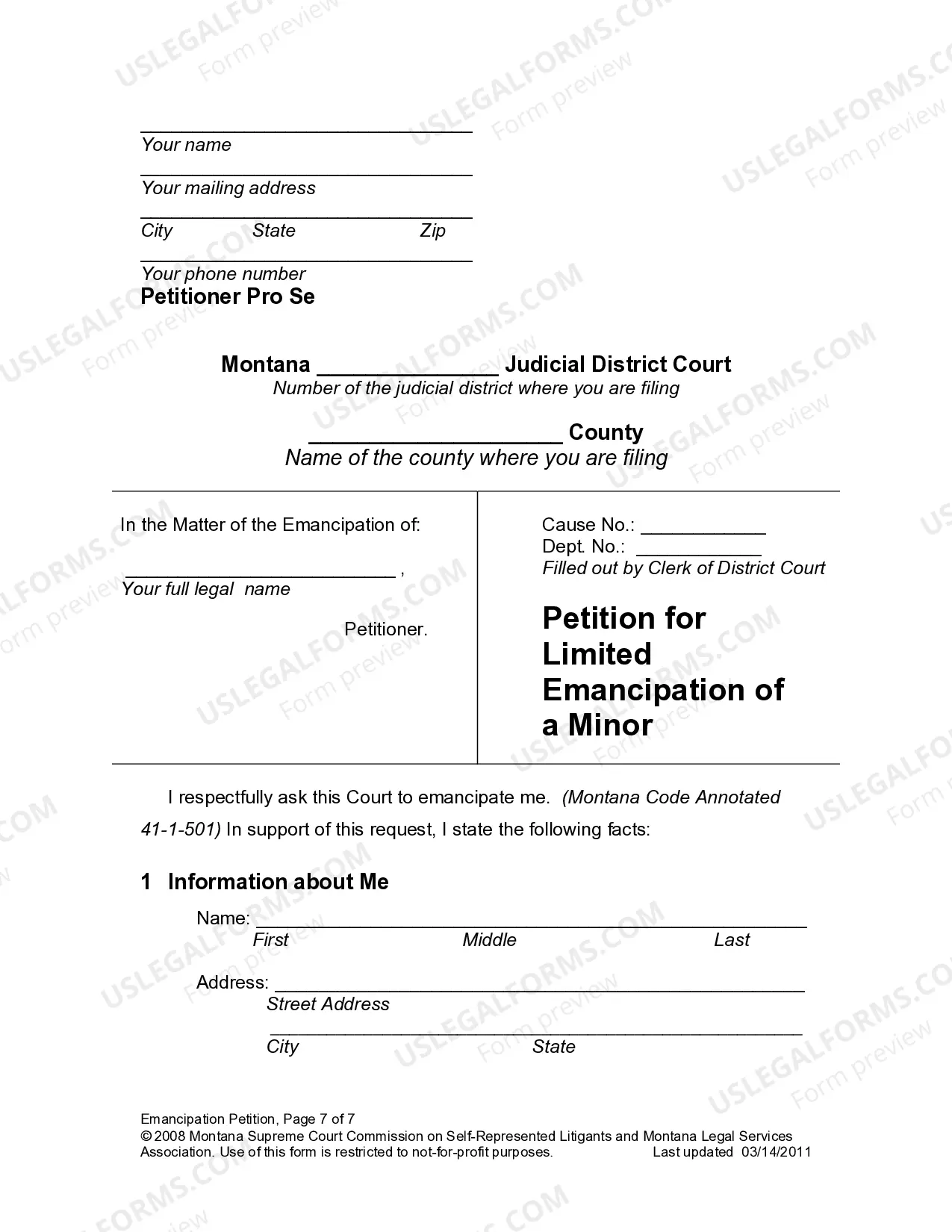
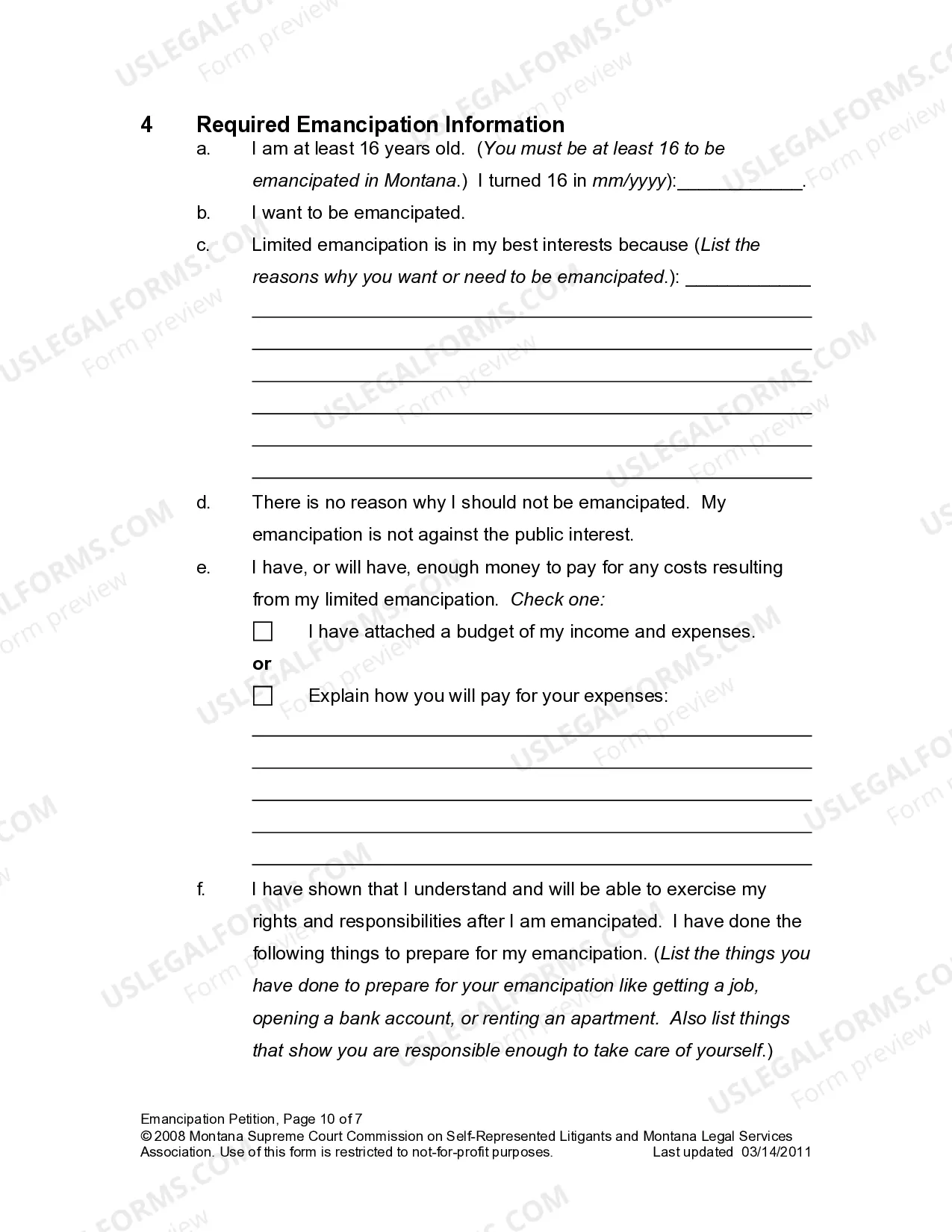
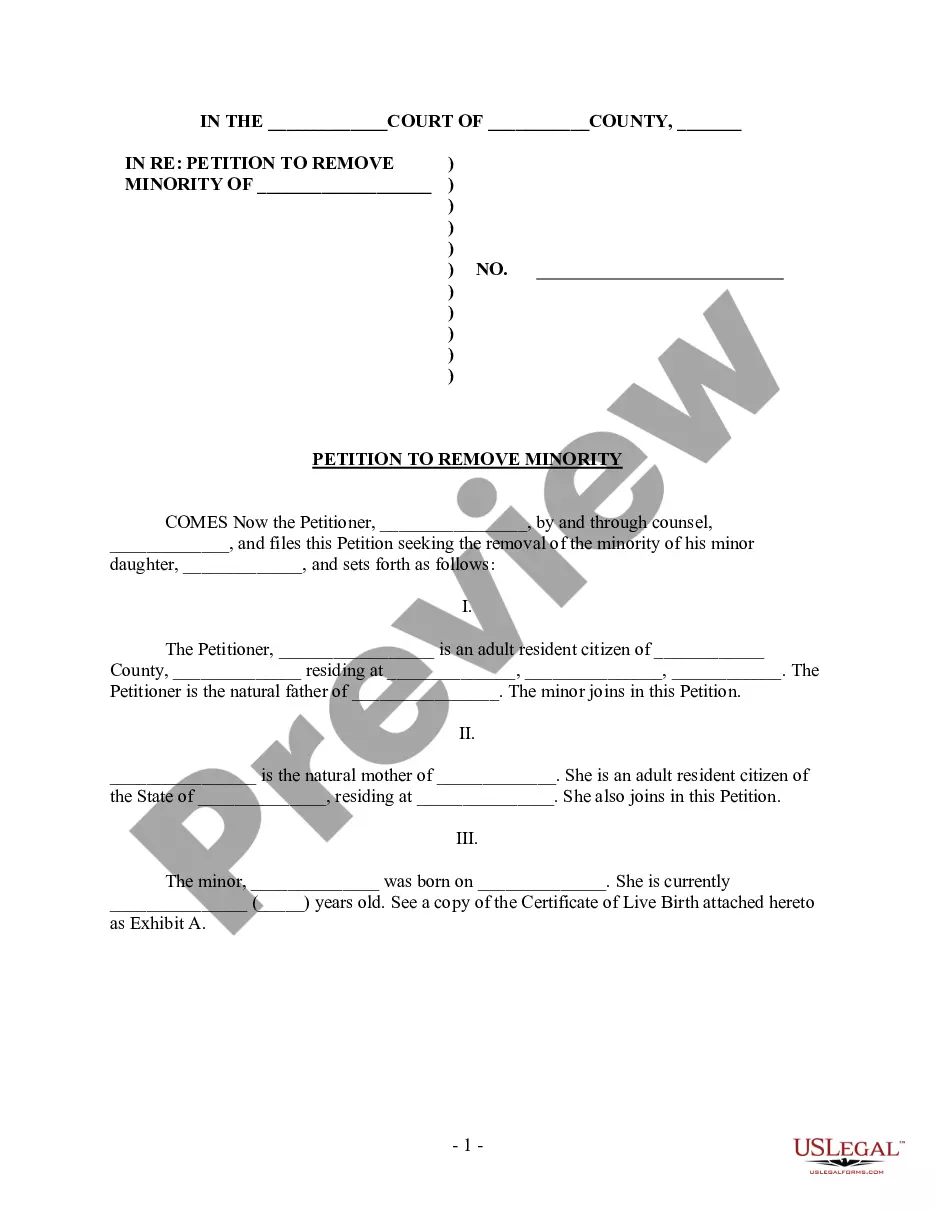
The Petition for Emancipation is a legal document specifically designed for individuals in Montana seeking to gain independence from parental control before reaching the age of majority. This form allows minors to petition the court to be recognized as adults for certain legal purposes. It is distinct from other parental consent forms or guardianship applications, focusing solely on the legal acknowledgment of a minor's ability to make personal decisions.
Main sections of this form
- Petitioner information: Name and contact details of the individual seeking emancipation.
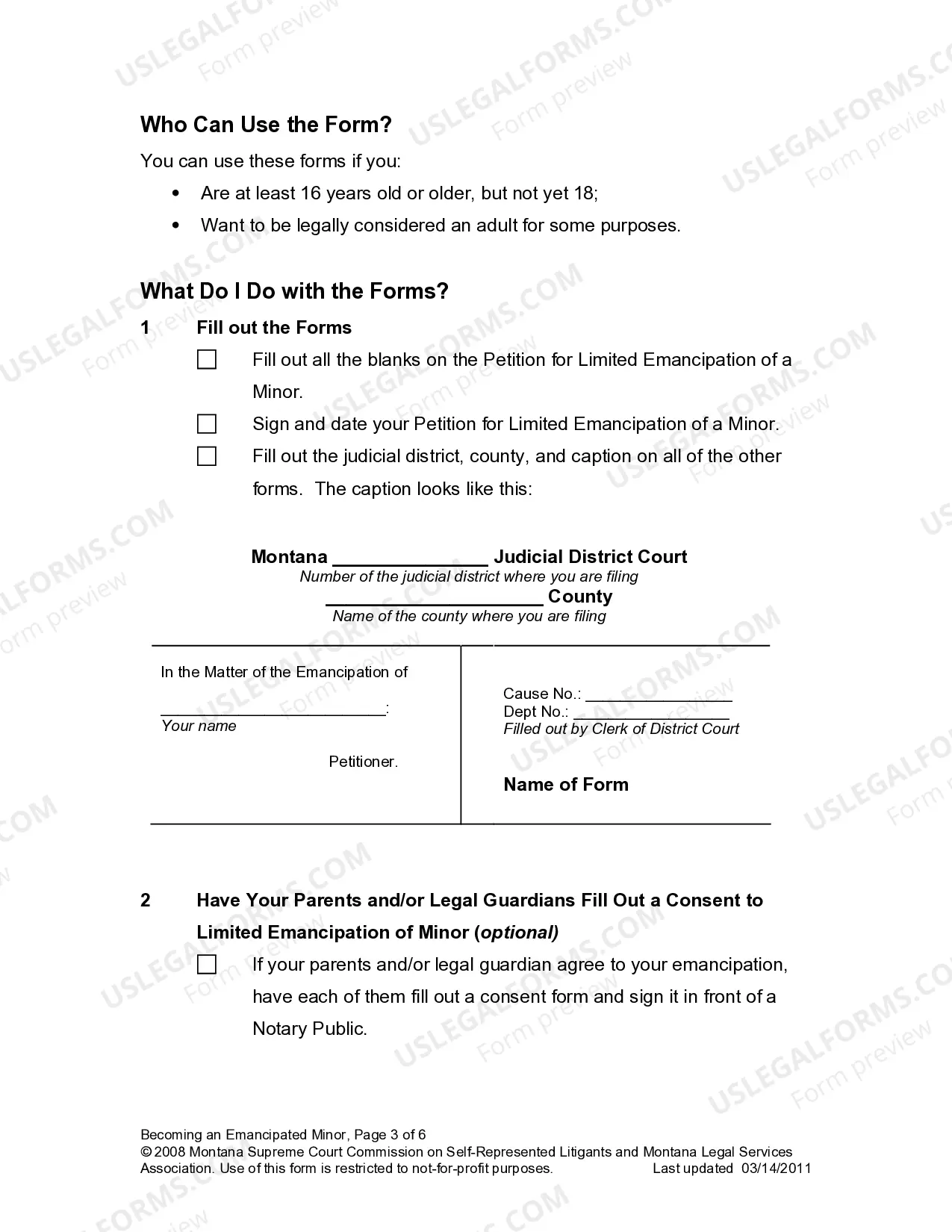
- Court details: The name of the judicial district and county where the petition is filed.
- Statement of request: A clear statement outlining what the petitioner is asking the court to grant.
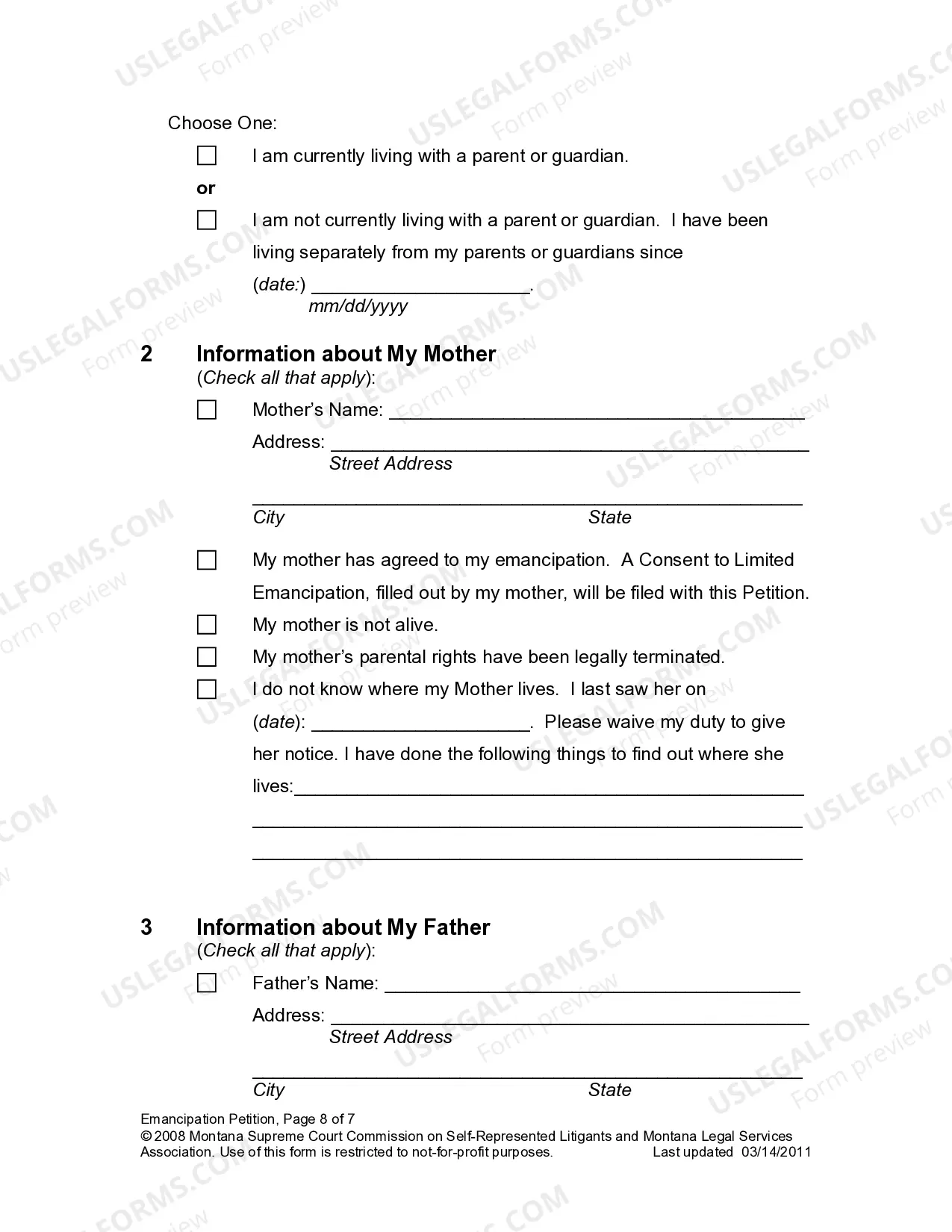
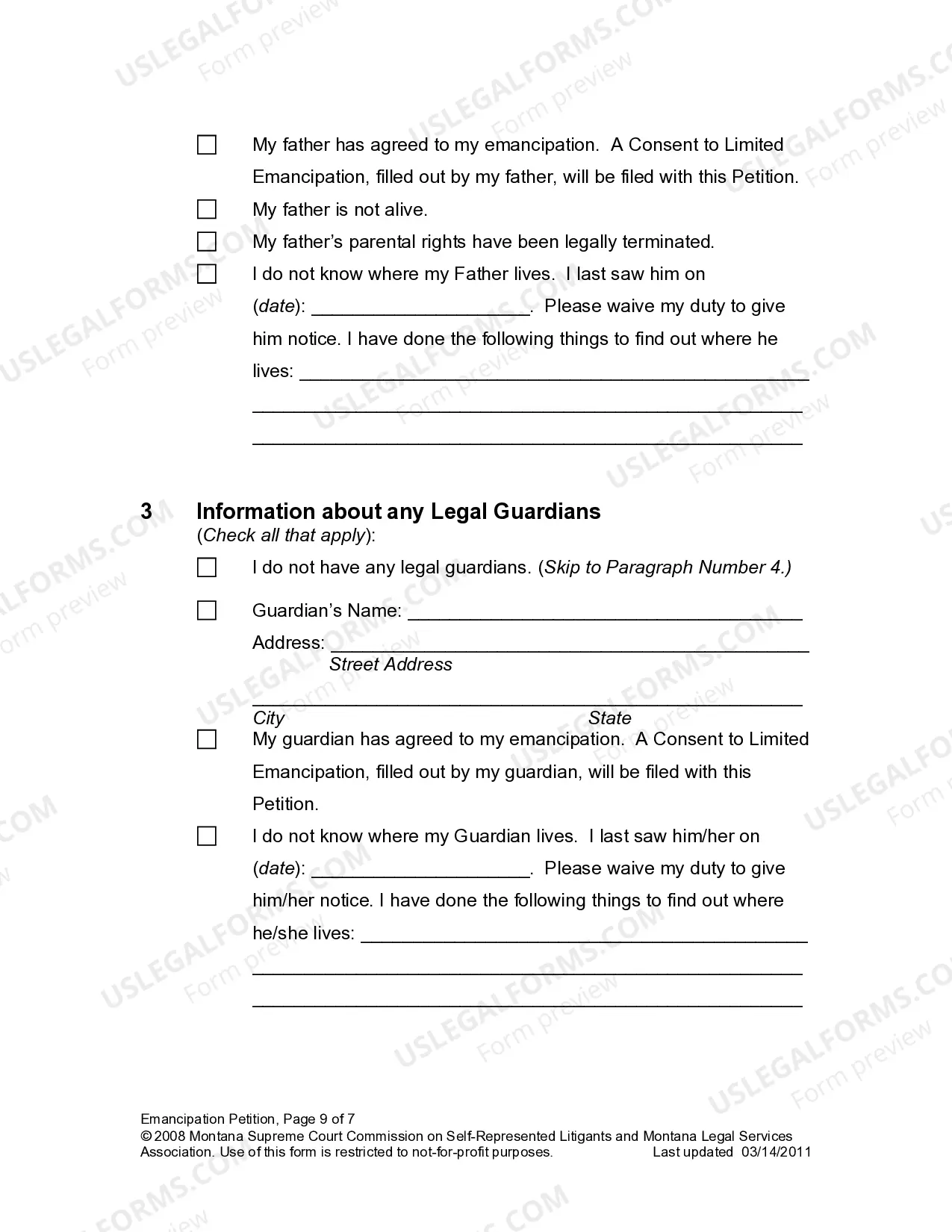
- Supporting information: Sections to provide additional details that support the petition.
- Verification: A sworn statement confirming the accuracy of the information provided.
- Notary section: Area for a notary public to validate the signing of the document.



When to use this form
This form should be used when a minor wishes to seek legal emancipation from their parents or guardians. This may be necessary in circumstances such as wanting to make independent decisions regarding education, healthcare, or living arrangements. It is particularly relevant for individuals who are experiencing conflicts at home or who have the means to support themselves financially.
Intended users of this form
- Minors in Montana seeking independence from their parents or guardians.
- Individuals aged 16 or older who can demonstrate financial independence.
- Anyone wishing to make personal decisions without parental consent.
Completing this form step by step
- Fill in your personal information as the Petitioner, including your name and address.
- Indicate the judicial district and county for filing the petition.
- Clearly state your request for emancipation in the designated section.
- Provide any supporting information or evidence that justifies your request.
- Sign the petition in front of a notary public for validation.
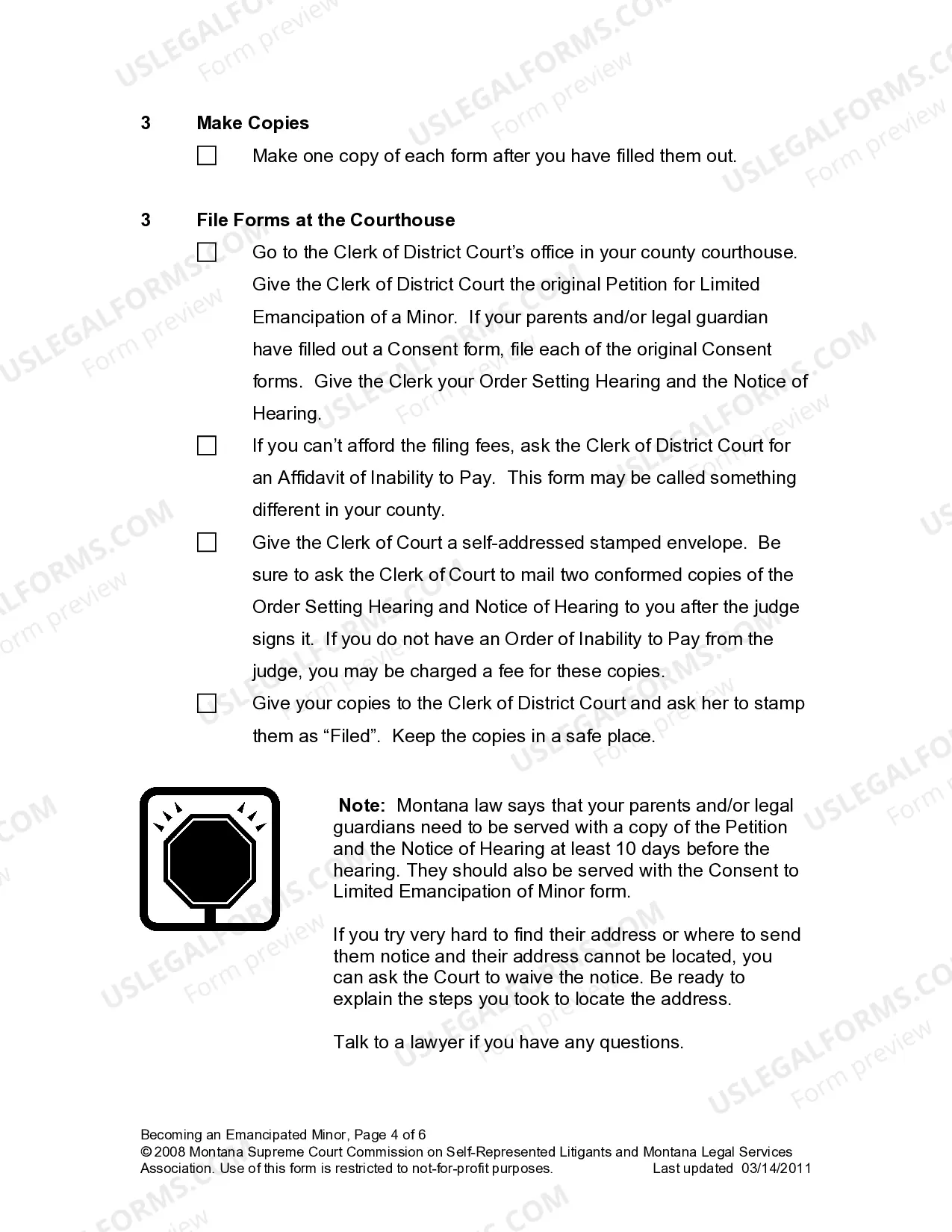
- File the completed petition with the appropriate county court.
Notarization requirements for this form
This form usually doesn’t need to be notarized. However, local laws or specific transactions may require it. Our online notarization service, powered by Notarize, lets you complete it remotely through a secure video session, available 24/7.
Get your form ready online
Our built-in tools help you complete, sign, share, and store your documents in one place.
Make edits, fill in missing information, and update formatting in US Legal Forms—just like you would in MS Word.
Download a copy, print it, send it by email, or mail it via USPS—whatever works best for your next step.
Sign and collect signatures with our SignNow integration. Send to multiple recipients, set reminders, and more. Go Premium to unlock E-Sign.
If this form requires notarization, complete it online through a secure video call—no need to meet a notary in person or wait for an appointment.
We protect your documents and personal data by following strict security and privacy standards.

Make edits, fill in missing information, and update formatting in US Legal Forms—just like you would in MS Word.

Download a copy, print it, send it by email, or mail it via USPS—whatever works best for your next step.

Sign and collect signatures with our SignNow integration. Send to multiple recipients, set reminders, and more. Go Premium to unlock E-Sign.

If this form requires notarization, complete it online through a secure video call—no need to meet a notary in person or wait for an appointment.

We protect your documents and personal data by following strict security and privacy standards.
Common mistakes
- Failing to include all required personal information in the petition.
- Not providing adequate supporting details or evidence to justify the request.
- Neglecting to have the petition notarized, if required.
Why use this form online
- Easy access to a legally compliant template drafted by licensed attorneys.
- Convenient download and print options for immediate use.
- Ability to edit form fields as necessary to suit individual circumstances.
Looking for another form?

Form popularity
FAQ
Running away from home is not an offense; there is no statute in the Montana codes against it that I know of.Sometimes kids run away to go to a party, or run away to hang with friends. Sometimes parents even know where their child is, but report them as missing because they haven't come home.
In your state, you must be 18 years of age. Until then, your parents have full authority.
What Happens If I Runaway At 17. There is very little you can do to secure the return of your 17 year old that runs away voluntarily. You cannot call the police to force your 17 year old to return to your household because the child voluntarily ran away.
Generally, the youth must be a minimum age, usually 16 years old, live apart form her parents, and be economically self-sufficient. Definitions of an emancipated minor include those who are self-supporting and not living at home, married, pregnant or a parent, in the military, declared emancipated by the court.
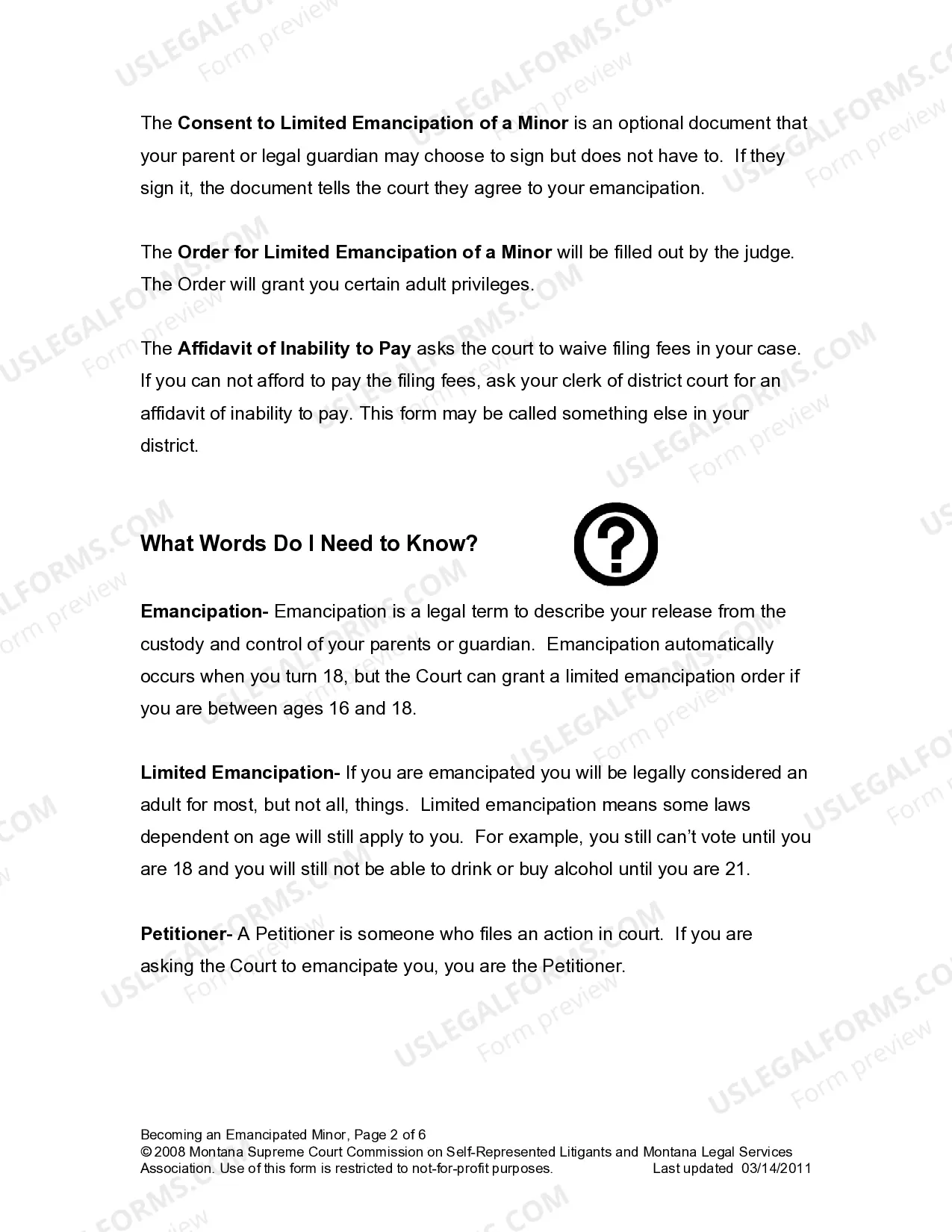
Emancipation is a legal term to describe a minor's release from the custody and control of his or her parents or guardian. Emancipation automatically occurs when a person turns 18, but the Court can grant a limited emancipation order for individuals between ages 16 and 18.
You are at least 16 years old; You want to live on your own; You are responsible enough to live on your own, and understand your rights as an adult; You can afford to live on your own; Emancipation would be best for you; and.
To be emancipated, you'll need to be at least 14 to 16 years old, depending on your state, and you must be able to prove that being emancipated from your parents is in your best interest. It's also helpful if you can prove that you can support yourself financially and are capable of making your own decisions.
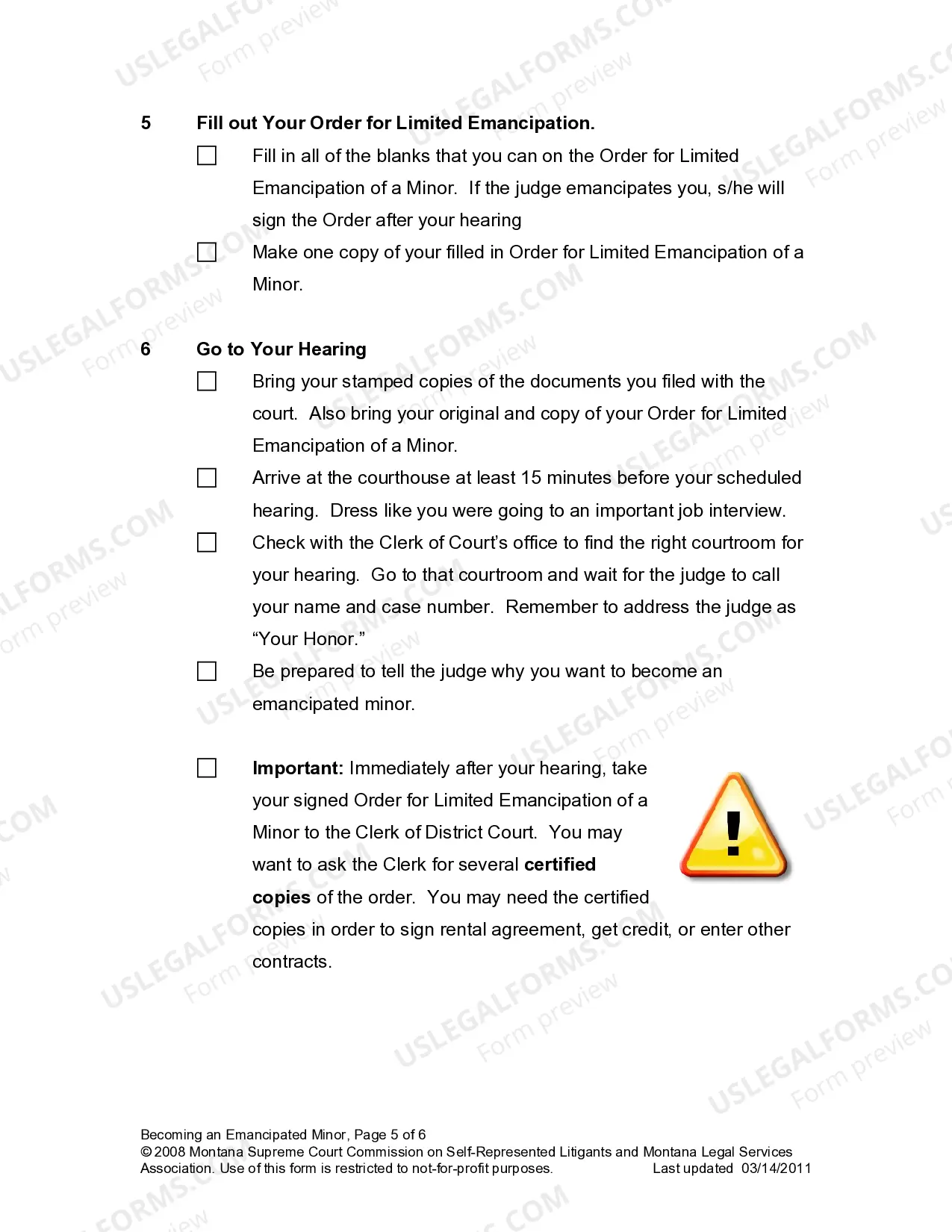
You must file the petition with the court and notify your parents or legal guardians (required by most states). Then the court will schedule a hearing. At the hearing, the judge will ask questions and hear evidence before deciding whether you should be emancipated.