Montana Answer to the Third Party Complaint
Description
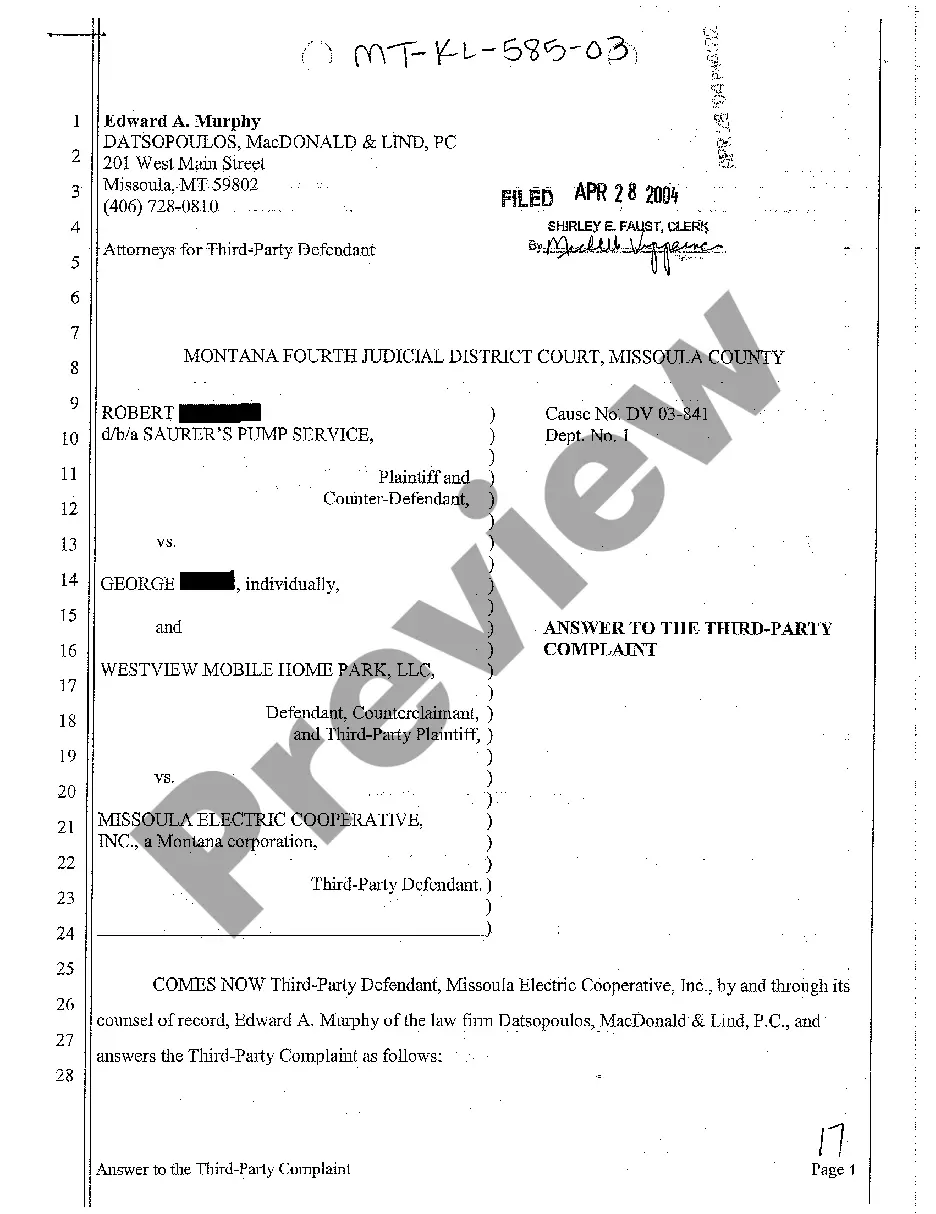
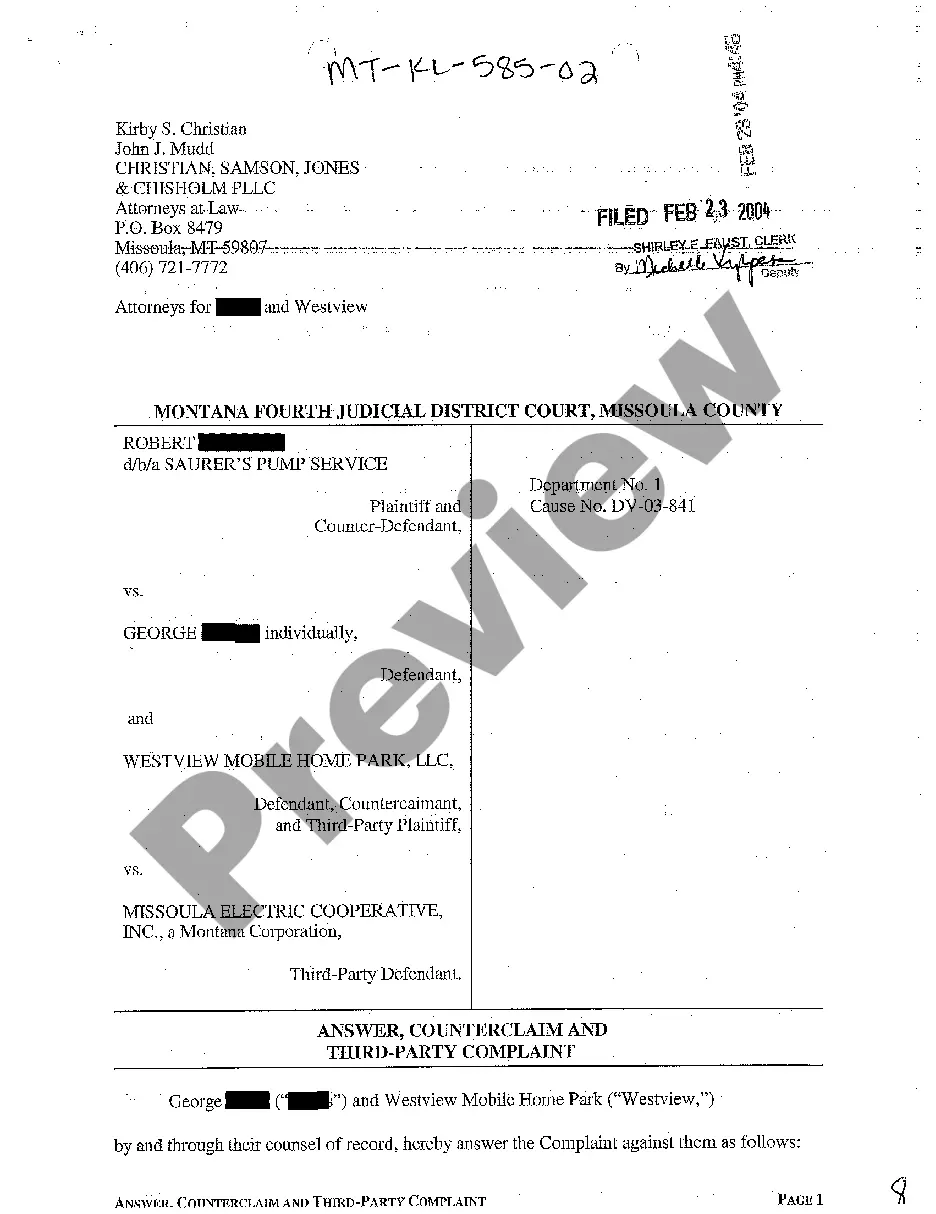
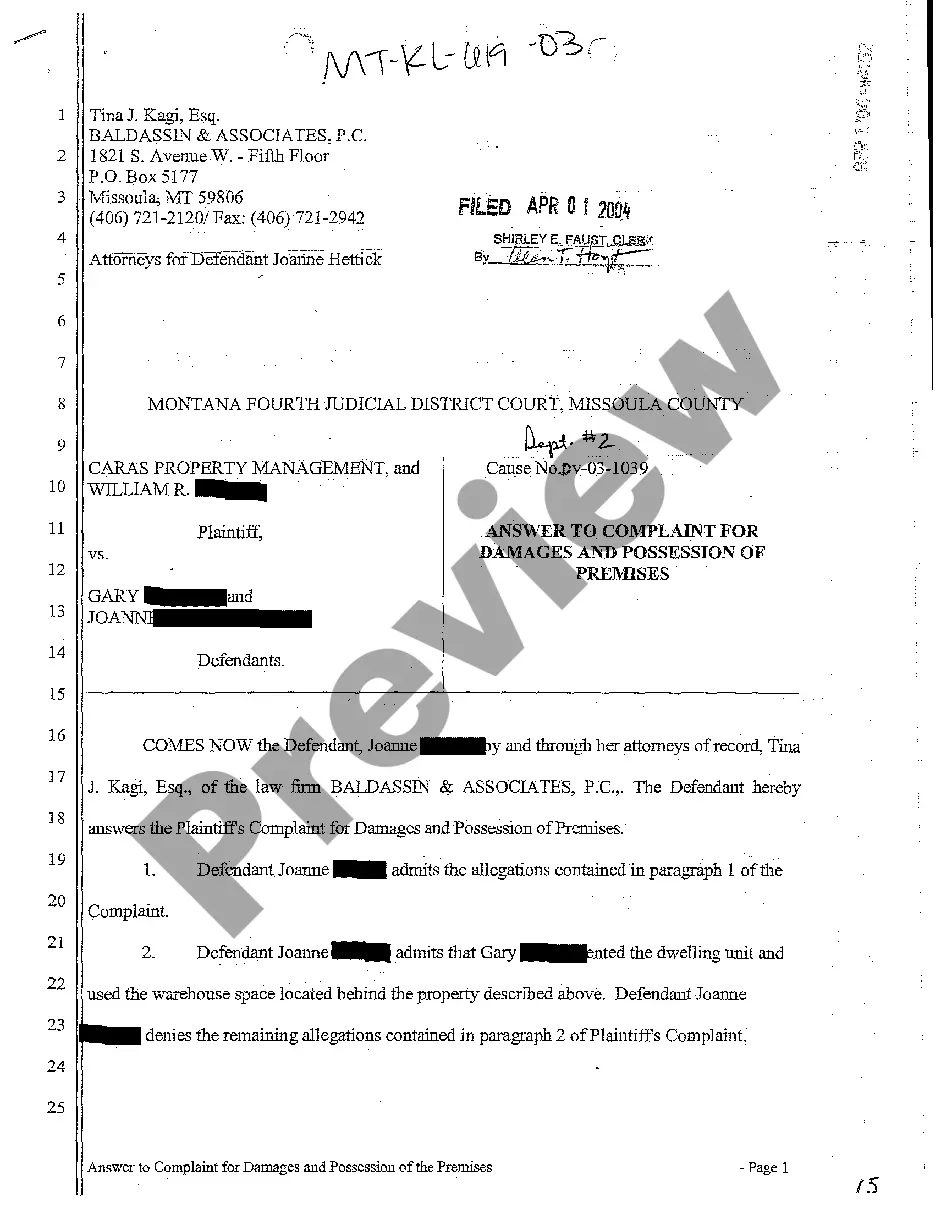
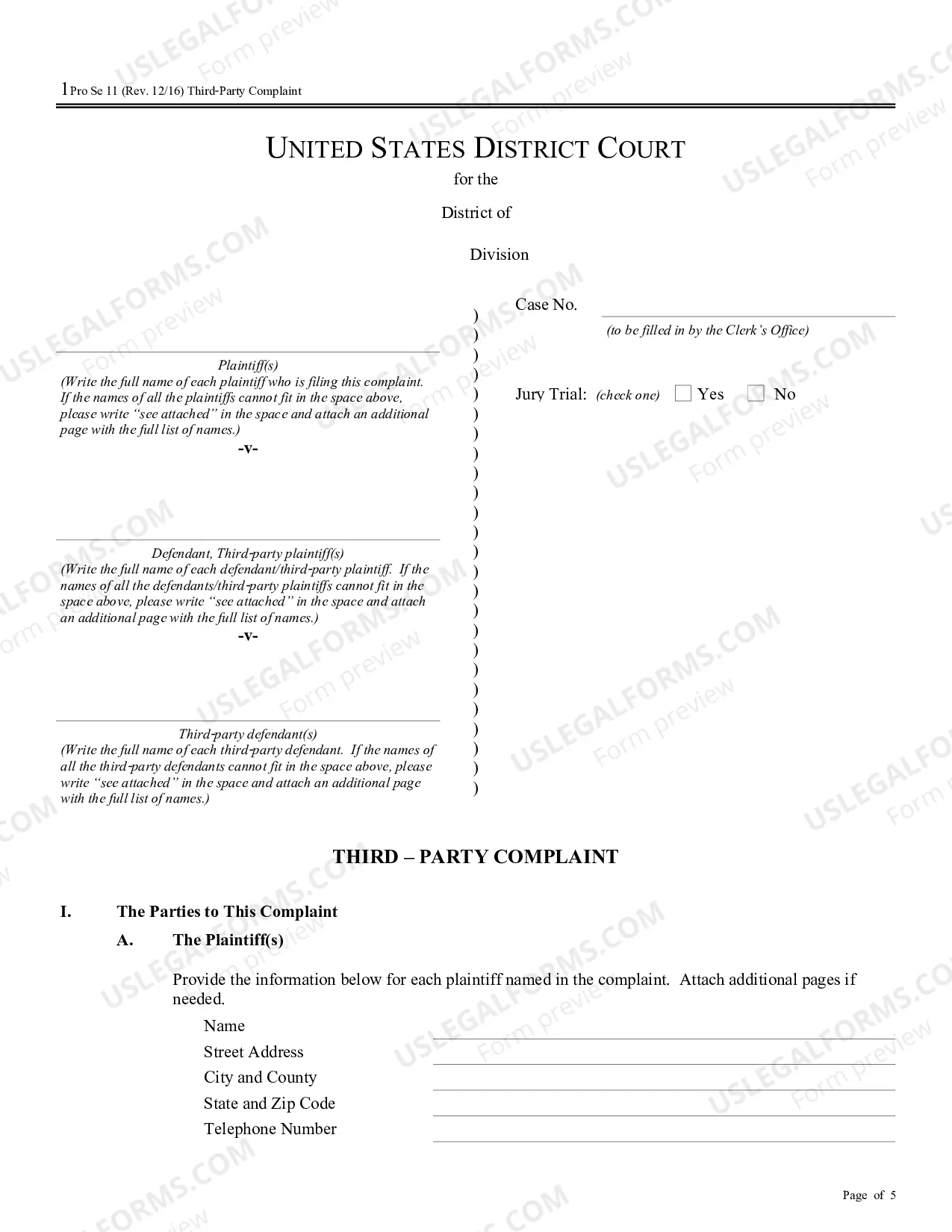

How to fill out Montana Answer To The Third Party Complaint?
Acquire a printable Montana Response to the Third Party Complaint in just a few clicks in the most extensive collection of legal e-documents. Locate, download, and print professionally crafted and verified samples on the US Legal Forms site. US Legal Forms has remained the leading provider of economical legal and tax templates for US citizens and residents online since 1997.
Individuals with a subscription need to sign in directly into their US Legal Forms account, download the Montana Response to the Third Party Complaint, and find it stored in the My documents section. Those without a subscription must adhere to the steps outlined below.
Once you've downloaded your Montana Response to the Third Party Complaint, you can fill it out in any online editor or print it and complete it by hand. Utilize US Legal Forms to access 85,000 professionally drafted, state-specific documents.
- Ensure your template complies with your state's regulations.
- If possible, review the form's description for additional information.
- If available, preview the form to explore more details.
- When you are confident the form meets your requirements, click Buy Now.
- Establish a personal account.
- Select a plan.
- Make a payment via PayPal or credit card.
- Download the template in Word or PDF format.
Form popularity
FAQ
You can file an answer or a general denial. Filing an answer. You can file a motion In certain situations, you can respond to the lawsuit by filing a motion (a request) that usually tells the court that the plaintiff made a mistake in the lawsuit. Talk to a lawyer!
Filing an An answer is a formal statement, in writing, of your defense to the lawsuit. You can say that what the plaintiff claims is not true. Or you can say it is true but give more information and reasons to defend your actions or explain the situation.
Contact the clerk's office of the court where the lawsuit was filed. You'll find a phone number and address for the clerk's office on your summons. The clerk will be able to tell you exactly what documents you should file with your answer and whether any filing fee is required.
(a) A defendant may file an answer with the reviewing official and the Office of Hearings and Appeals within 30 days of service of the complaint. An answer will be considered a request for an oral hearing.
Read the summons and make sure you know the date you must answer by. Read the complaint carefully. Write your answer. Sign and date the answer. Make copies for the plaintiff and yourself. Mail a copy to the plaintiff. File your answer with the court by the date on the summons.
Read Information Sheet: Responsive Declaration to Request for Order (Form FL-320-INFO ). Fill out your court forms. Have your forms reviewed. Make at least 2 copies of all your forms. File your forms with the court clerk. Serve your papers on the other parent. File your Proof of Service.
The Answer. The defendant's response to a complaint is called the answer. The answer contains the defendant's version of the events leading to the lawsuit and may be based on the contents of the complaint. The filing of the answer is one option that the defendant has in deciding how to respond to the complaint.
Your response to the complaint is called the answer. You should respond to each paragraph of the complaint matching your response to the exact number used in the complaint. Be very careful with the statement you make in your answer. These statements can become admissions of facts that could be used against you.
A complaint must state all of the plaintiff's claims against the defendant, and must also specify what remedy the plaintiff wants. After receiving the complaint, the defendant must respond with an answer.