Montana Notices, Resolutions, Simple Stock Ledger and Certificate
What this document covers
This collection of corporate forms, including Notices of Meetings, Corporate Resolutions, a Stock Ledger, and a Stock Certificate, serves essential purposes for businesses. These documents facilitate organized corporate governance, ensuring compliance with legal requirements. Unlike other forms, this package provides a comprehensive solution for managing shareholder and director meetings, as well as tracking stock ownership within a corporation.
What’s included in this form
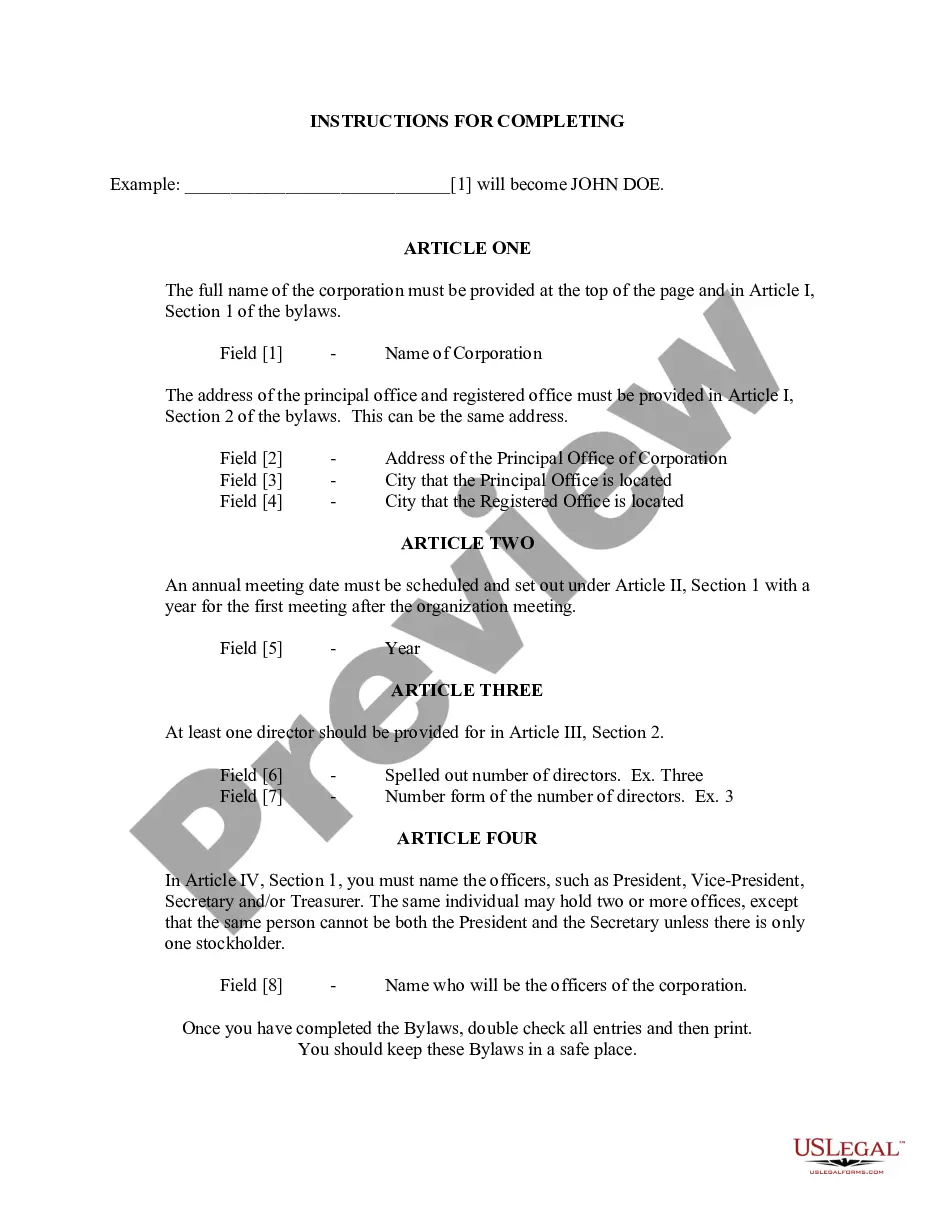
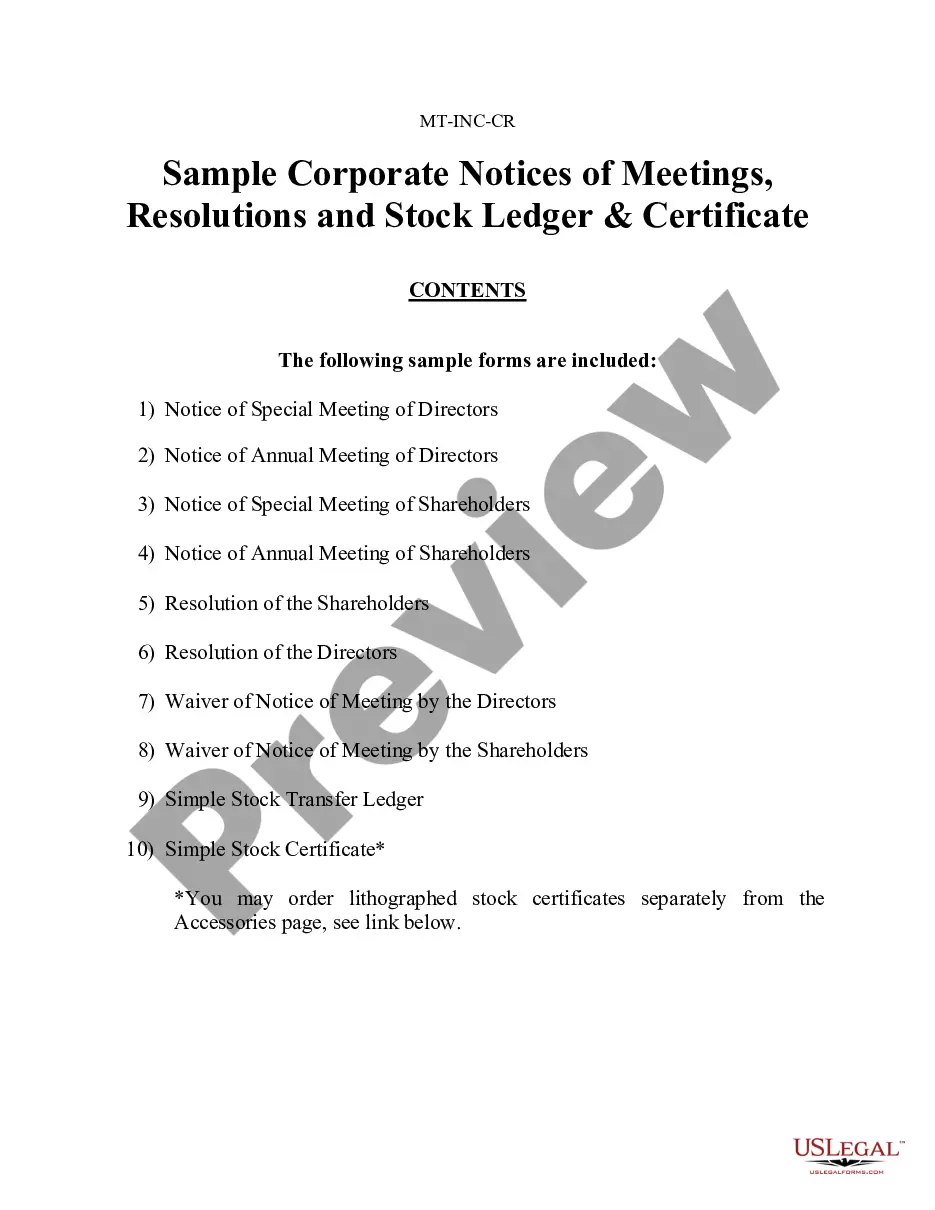
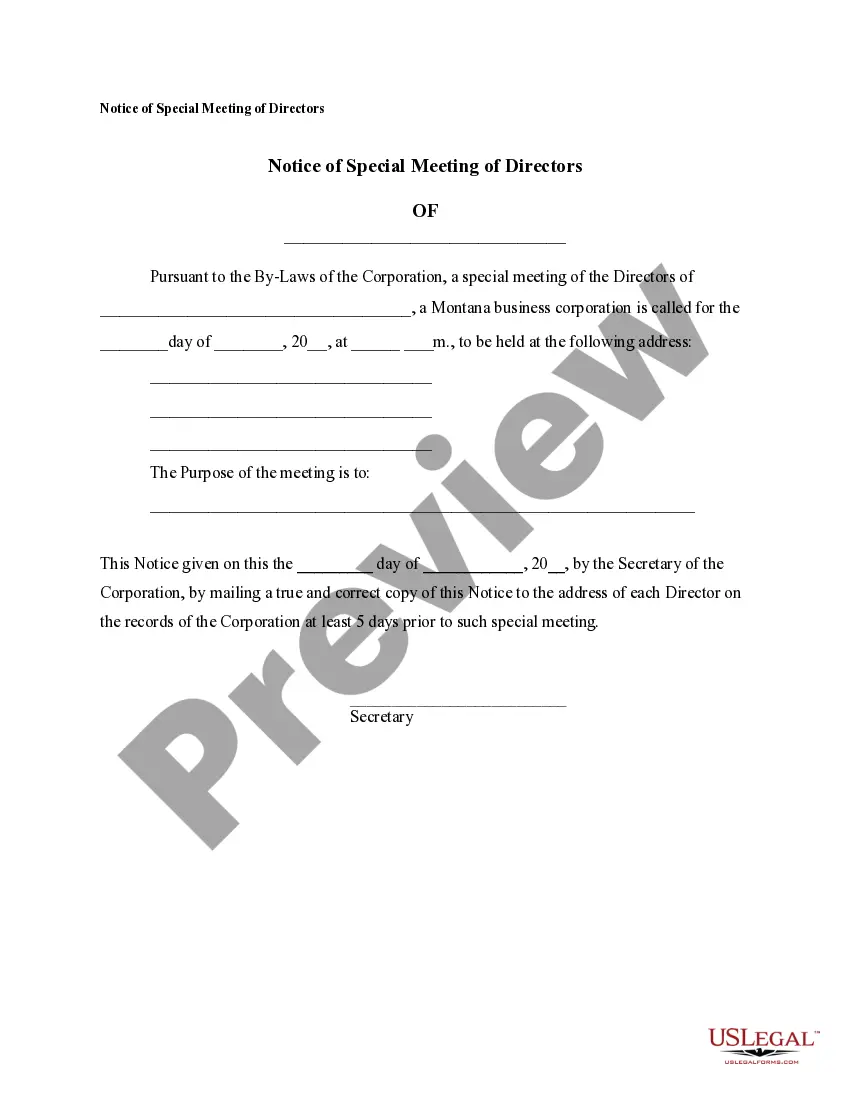
- Notice of Special Meeting of Directors
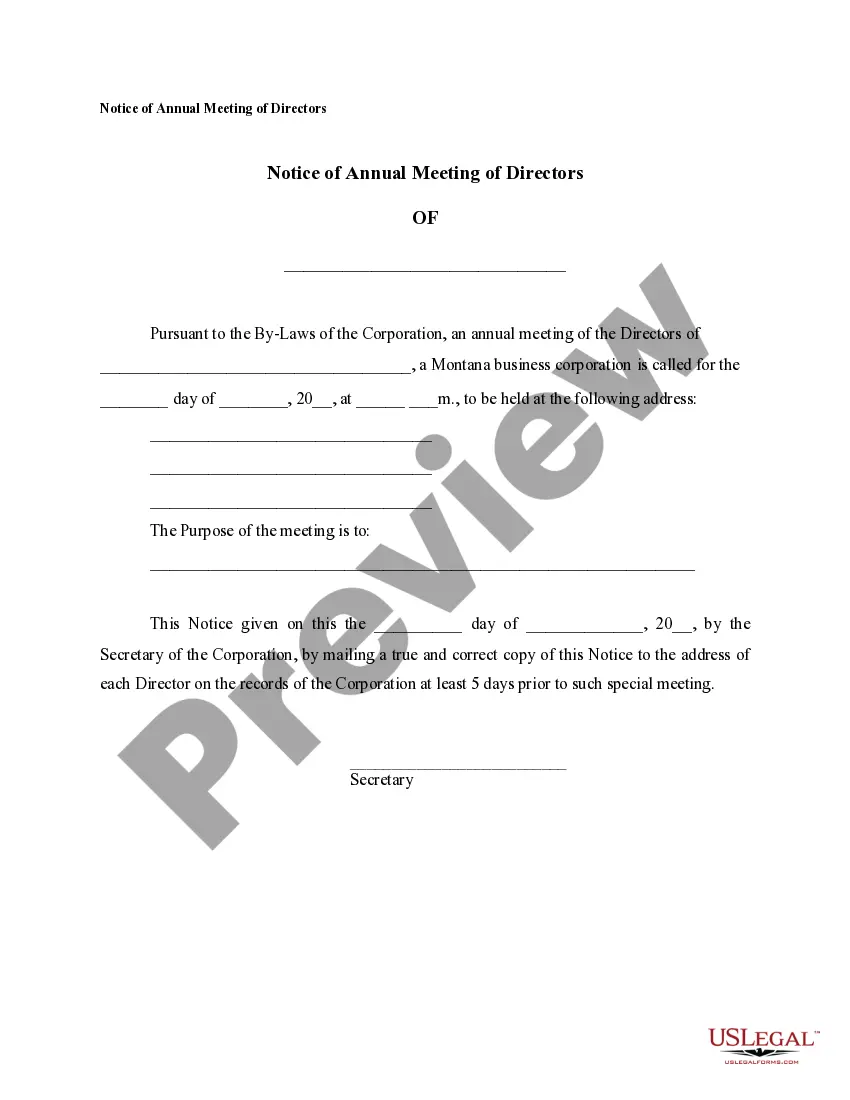
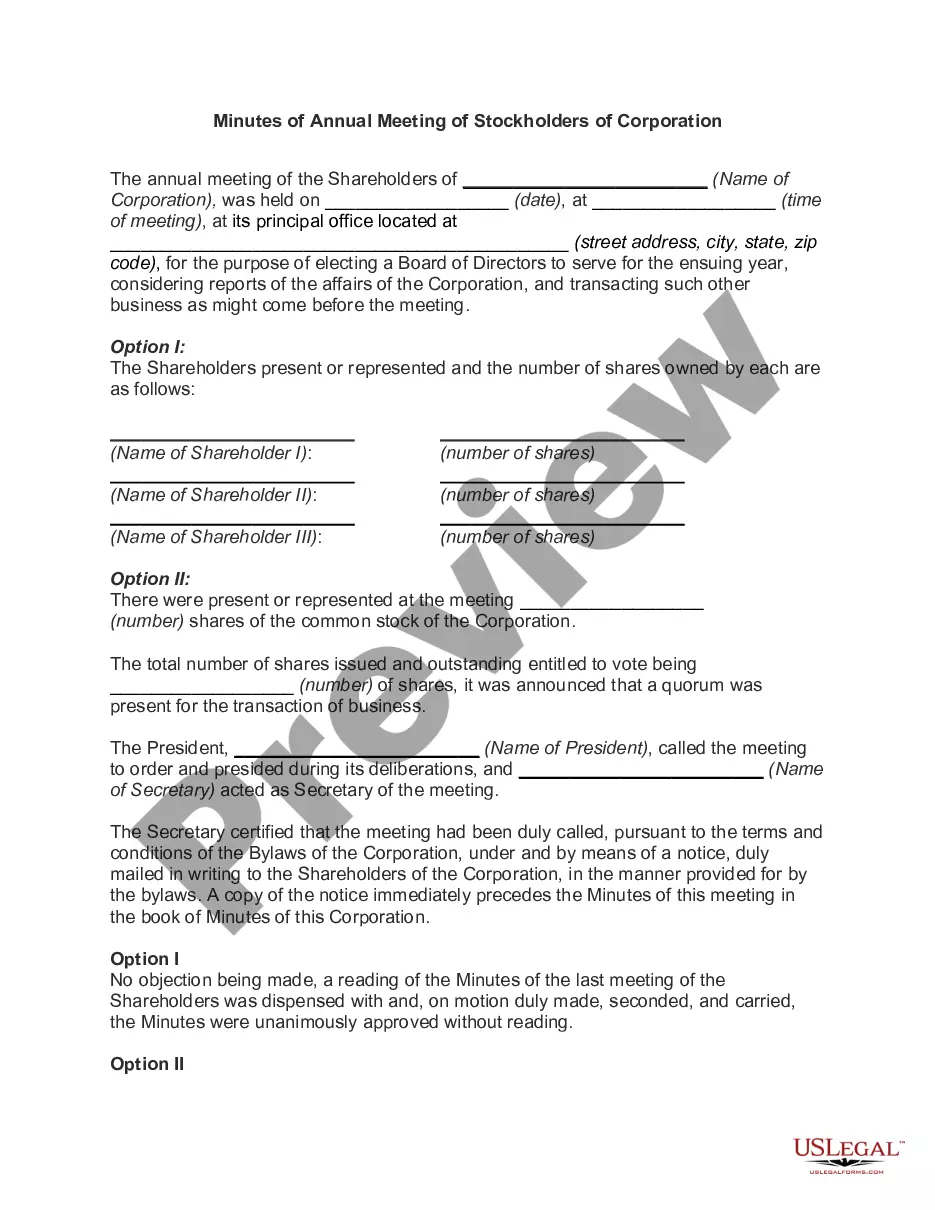
- Notice of Annual Meeting of Directors
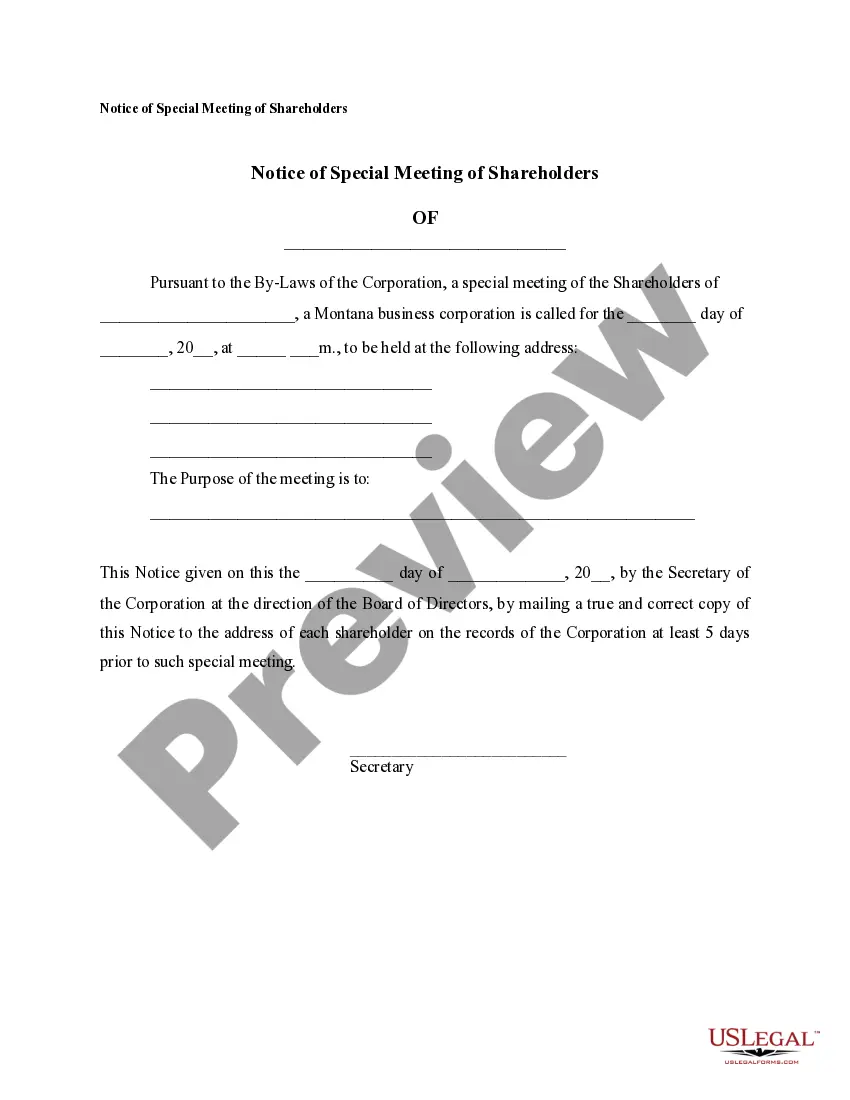
- Notice of Special Meeting of Shareholders
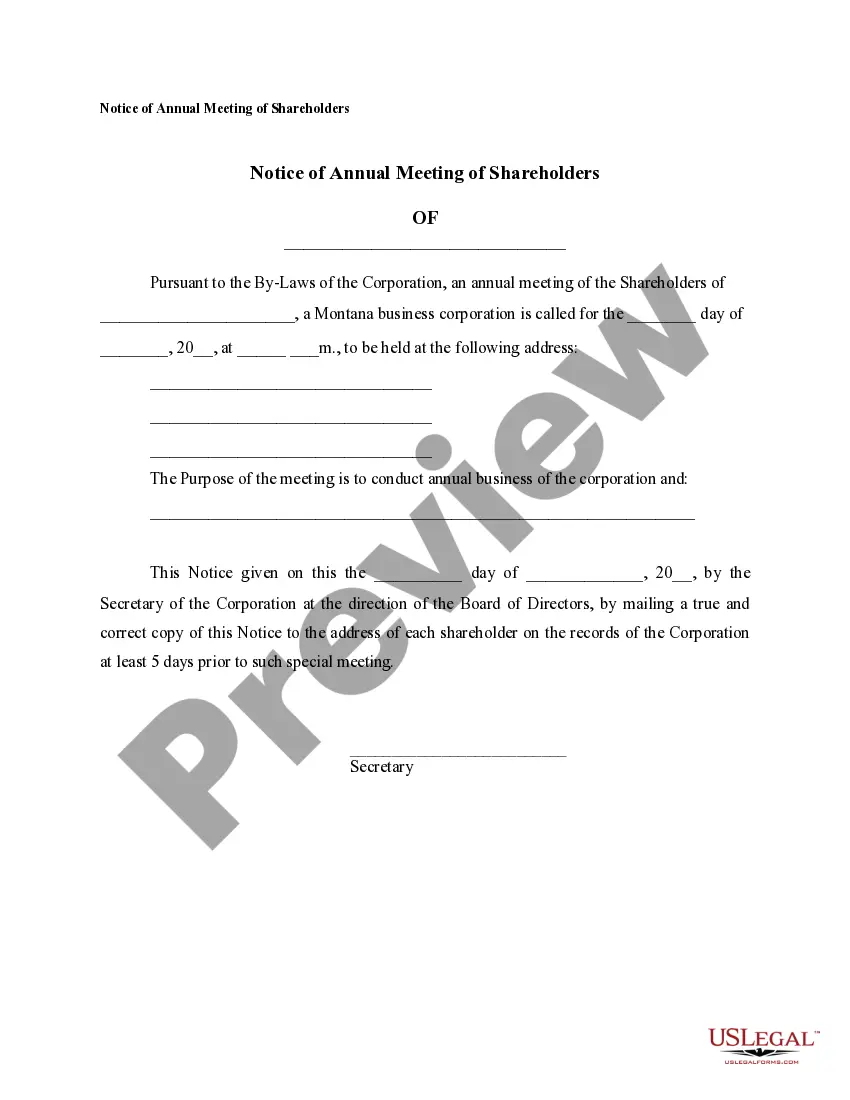
- Notice of Annual Meeting of Shareholders
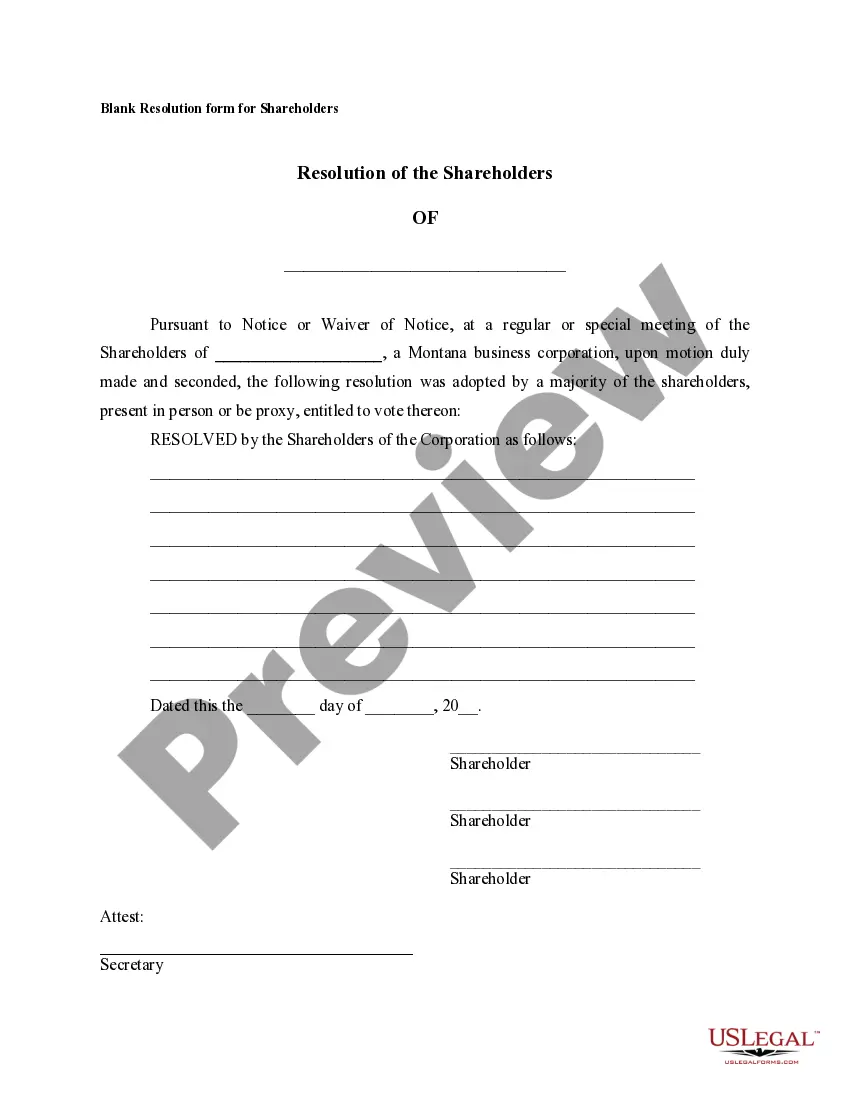
- Resolution of the Shareholders
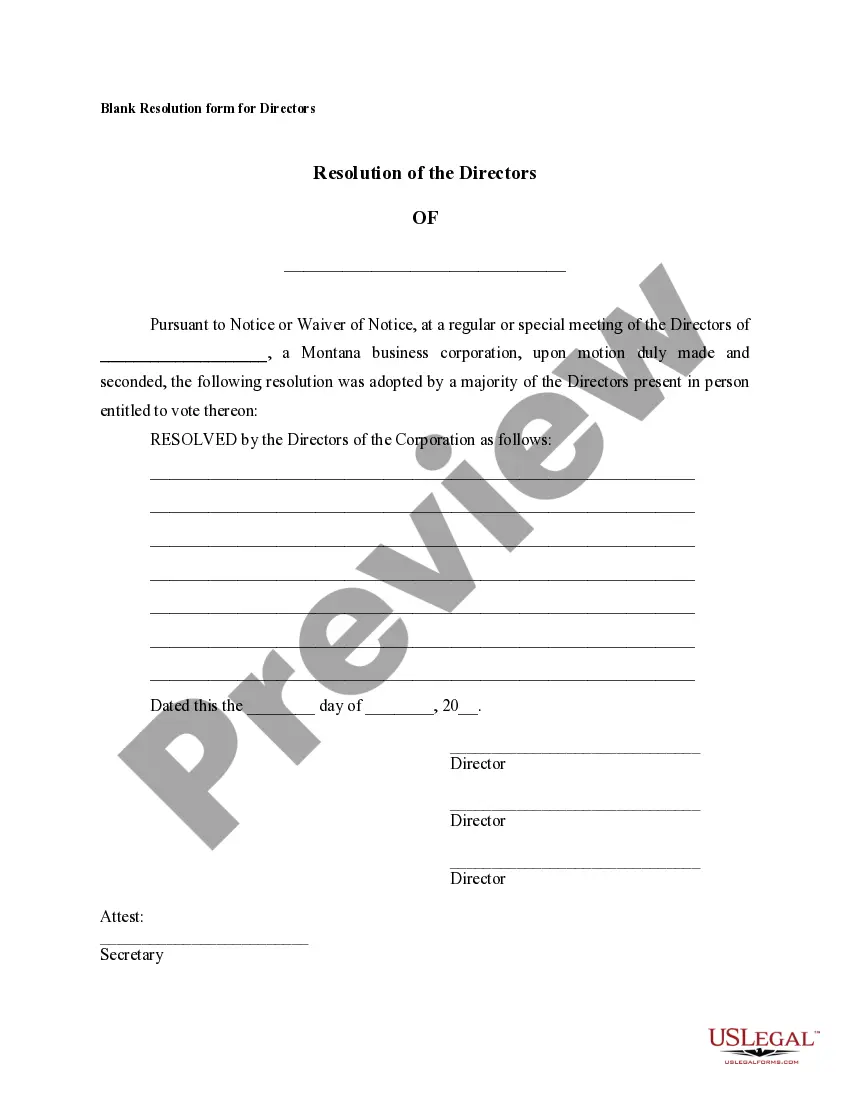
- Resolution of the Directors
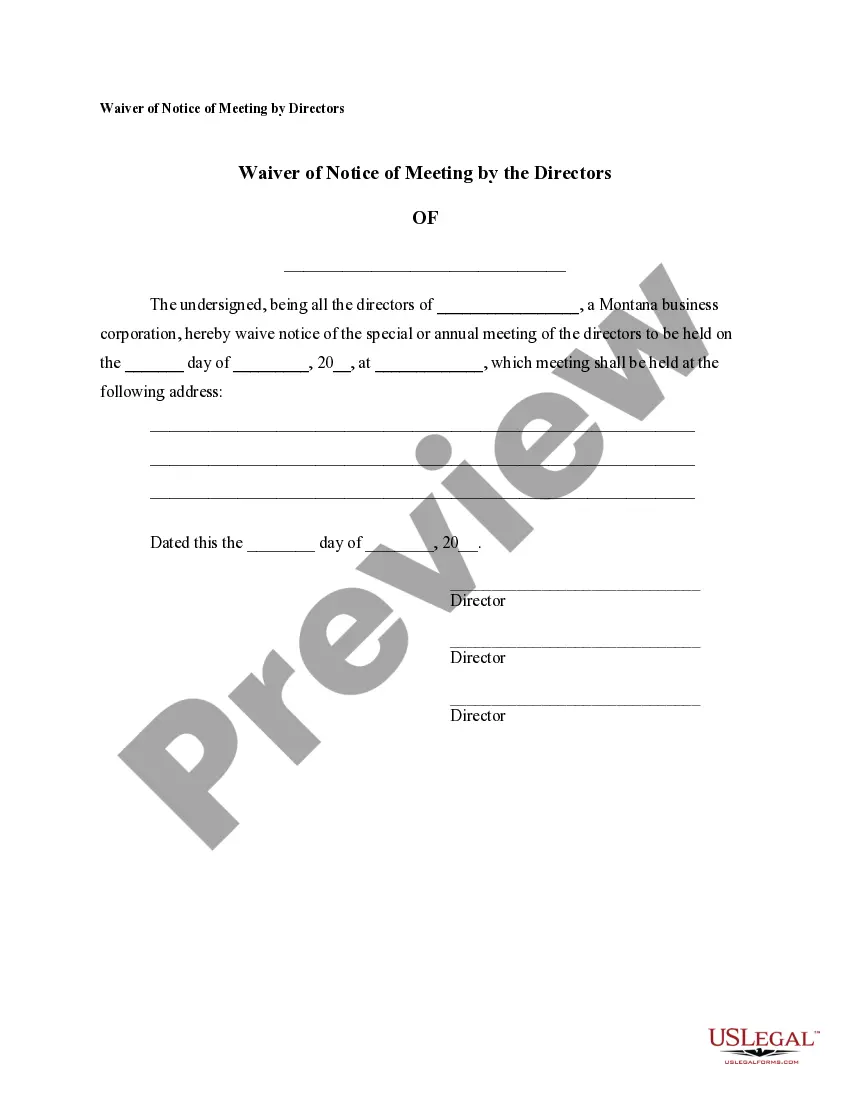
- Waiver of Notice of Meeting by Directors
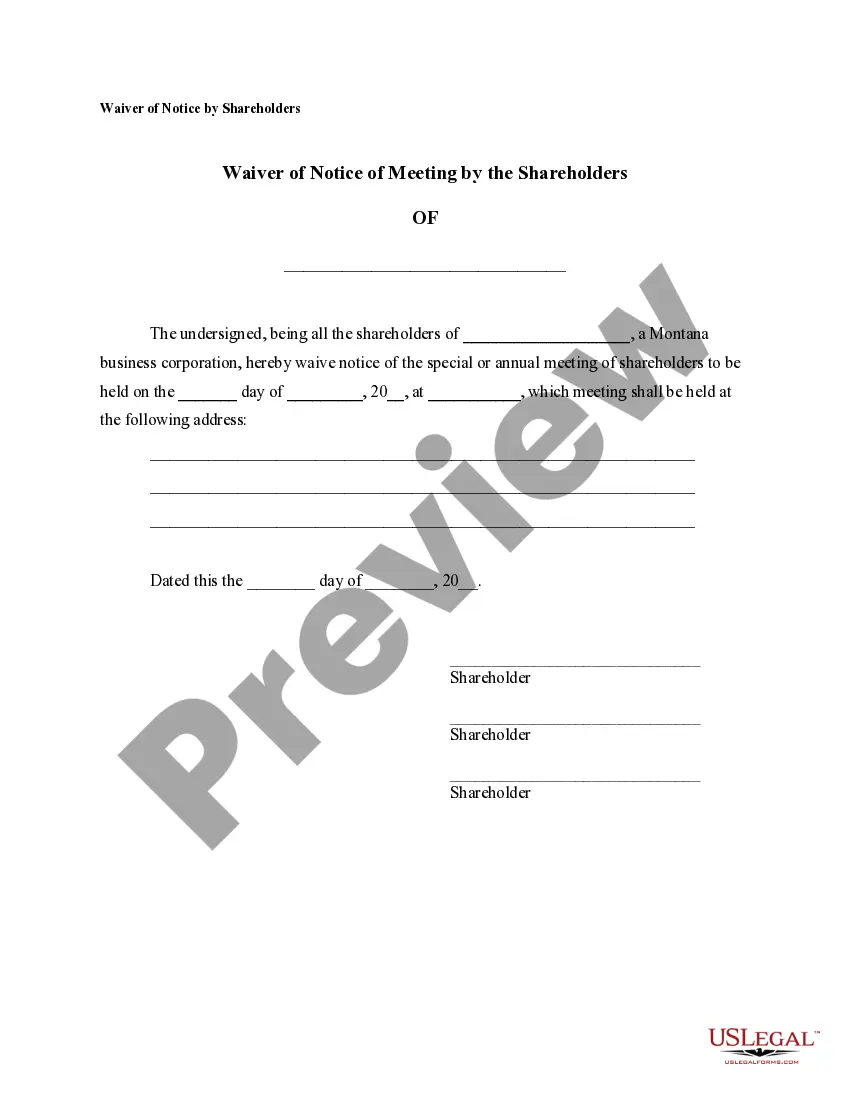
- Waiver of Notice of Meeting by Shareholders
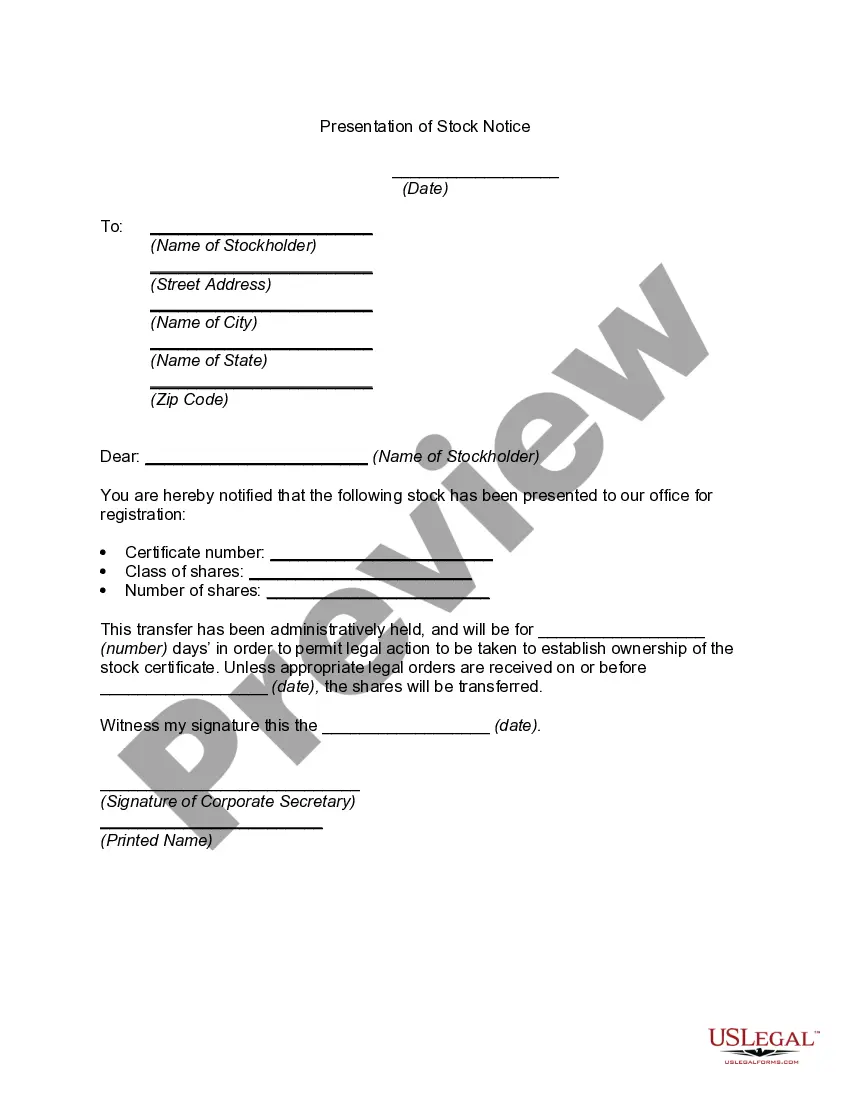
- Simple Stock Transfer Ledger
- Simple Stock Certificate

When to use this document
This form package is particularly useful during the scheduling of corporate meetings, such as special or annual meetings of directors and shareholders. It is needed when you are documenting decisions made during these meetings, resolving corporate actions, or maintaining records of stock ownership and transfers. Businesses of all sizes can rely on these forms to maintain statutory compliance and corporate governance best practices.
Who can use this document
- Corporate Directors and Officers
- Shareholders of a Corporation
- Small Business Owners
- Legal Advisors assisting corporations
Instructions for completing this form
- Identify the corporation's name and primary address.
- Specify the date and time of the meeting being announced.
- Clearly state the purpose of the meeting in the relevant section.
- List the names and titles of all directors or shareholders participating.
- Have the Secretary or an authorized person sign the notice or resolution.
- Distribute the notices as required to all attending directors or shareholders.
Notarization guidance
Notarization is generally not required for this form. However, certain states or situations might demand it. You can complete notarization online through US Legal Forms, powered by Notarize, using a verified video call available anytime.
Get your form ready online
Our built-in tools help you complete, sign, share, and store your documents in one place.
Make edits, fill in missing information, and update formatting in US Legal Forms—just like you would in MS Word.
Download a copy, print it, send it by email, or mail it via USPS—whatever works best for your next step.
Sign and collect signatures with our SignNow integration. Send to multiple recipients, set reminders, and more. Go Premium to unlock E-Sign.
If this form requires notarization, complete it online through a secure video call—no need to meet a notary in person or wait for an appointment.
We protect your documents and personal data by following strict security and privacy standards.

Make edits, fill in missing information, and update formatting in US Legal Forms—just like you would in MS Word.

Download a copy, print it, send it by email, or mail it via USPS—whatever works best for your next step.

Sign and collect signatures with our SignNow integration. Send to multiple recipients, set reminders, and more. Go Premium to unlock E-Sign.

If this form requires notarization, complete it online through a secure video call—no need to meet a notary in person or wait for an appointment.

We protect your documents and personal data by following strict security and privacy standards.
Avoid these common issues
- Failing to provide adequate notice periods for meetings.
- Omitting essential details such as the meeting agenda.
- Not properly documenting resolutions or waivers.
- Using outdated or incorrect forms not tailored to your state.
Why complete this form online
- Access to professionally drafted forms created by licensed attorneys.
- Convenience of downloading and customizing forms as needed.
- Reduced risk of legal errors by utilizing up-to-date templates.
- Ability to store forms digitally for easy access and record-keeping.
Legal use & context
- These forms help ensure compliance with corporate governance laws in Montana.
- Proper use increases the validity of corporate resolutions and records.
- Not adhering to these formalities could result in challenges to corporate decisions.
Main things to remember
- The form package includes essential documents for corporate meetings and stock transactions.
- Use the federal or state recommended practices to ensure compliance.
- Review the forms regularly to keep up with any changes in regulations.
Looking for another form?
Form popularity
FAQ
A stock certificate is a physical piece of paper that represents a shareholder's ownership in a company. Stock certificates include information such as the number of shares owned, the date of purchase, an identification number, usually a corporate seal, and signatures.
Name of the shareholder; Complete mailing address of the stock shareholder including contact number; Stock certificate number; The total number of shares outstanding; The date the shares were purchased;
Help Guide. A stock transfer ledger is a document in a corporation's record books that is used to keep an accurate record of all of the corporation's stock transactions. It includes the relevant details anytime corporate shares are issued, sold, or otherwise transferred.
Corporate stock refers to a type of ownership in a legal business entity, such as an C-corporation. Corporations typically issue stock to raise money from investors to fund capital expenditures or future growth. Typically corporate stock is broken up into common or preferred stock.
Stock Certificates Are No Longer Necessary Today, most of the world's exchanges have either done away with or are phasing out paper certificates. Stock ownership is much easier to prove now thanks to electronic records and electronic communication networks (ECN).
Old stock certificates shouldn't be simply thrown away. They can still have value if they represent an existing or merged company, or if they are valued as collectibles. A little bit of research can help you determine the worth, if any, of your old paper stock certificate.
Name of the shareholder; Complete mailing address of the stock shareholder including contact number; Stock certificate number; The total number of shares outstanding; The date the shares were purchased;
The stock ledger holds financial data that allows you to monitor your company's performance. It incorporates financial transactions related to merchandising activities, including sales, purchases, transfers, and markdowns; and is calculated weekly or monthly.
A stock certificate represents a shareholder's ownership interest in a corporation. Most states do not require a corporation to issue a paper stock certificate -- that is, the corporation's board can authorize issuance of shares without the need for certificates.