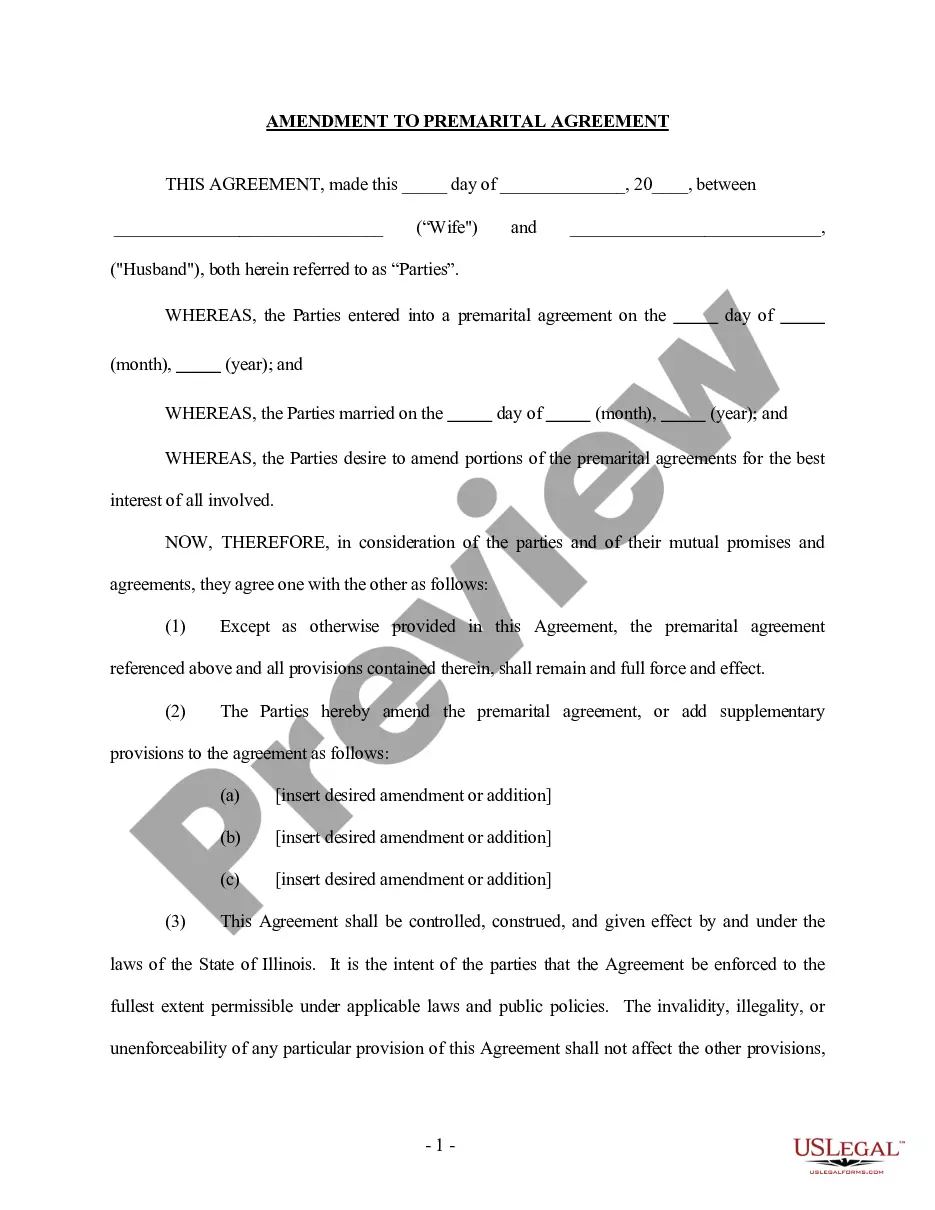
Montana Living Trust for Husband and Wife with One Child
What is this form?
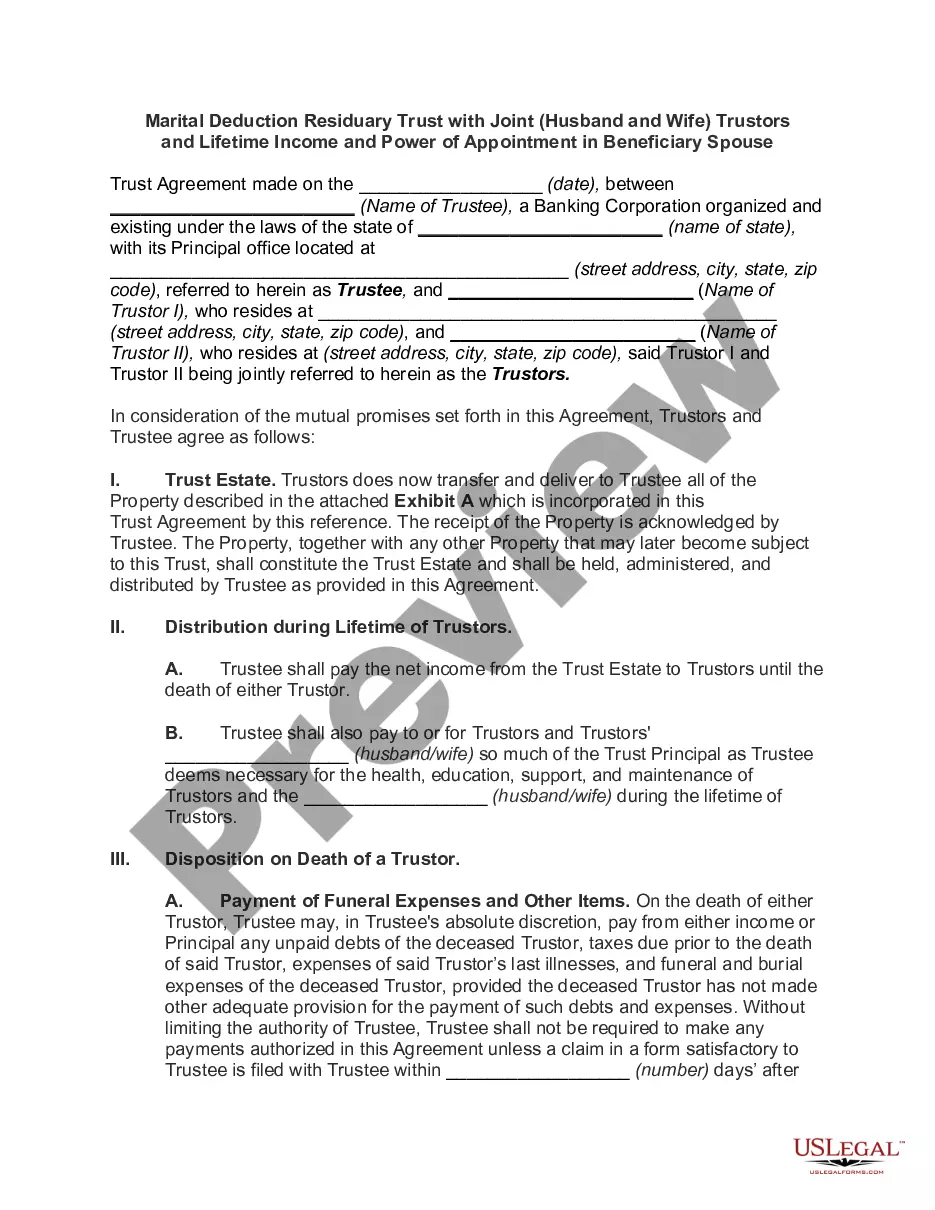
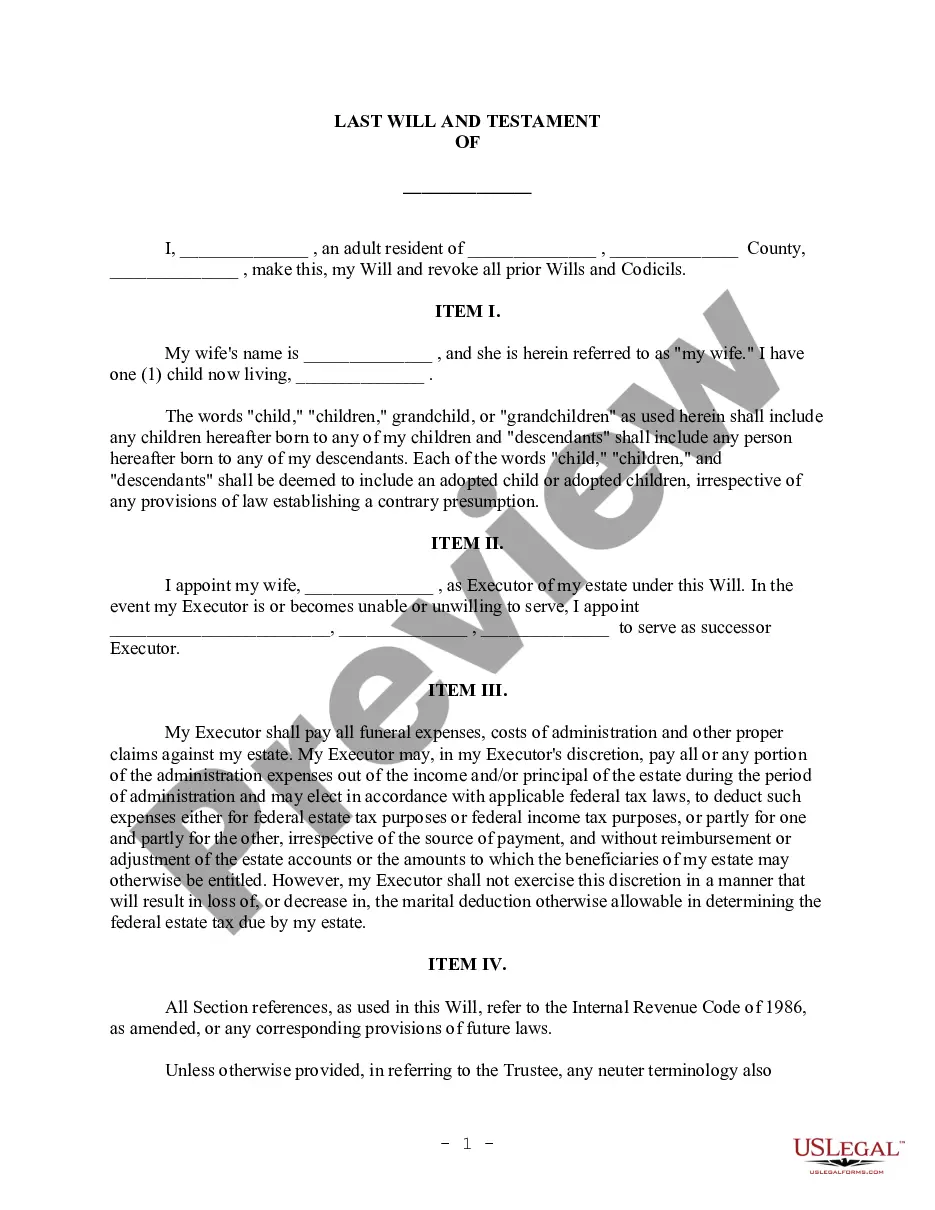
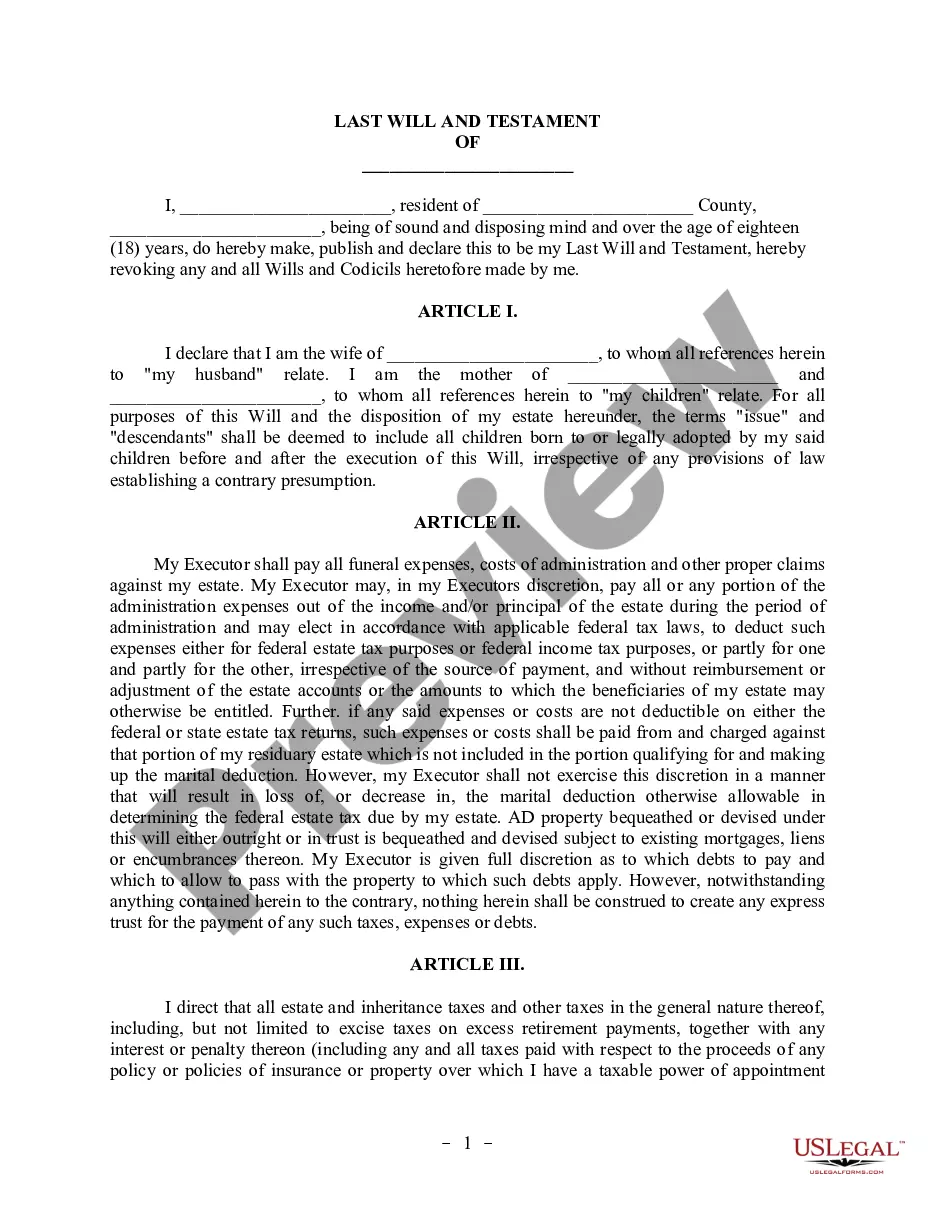
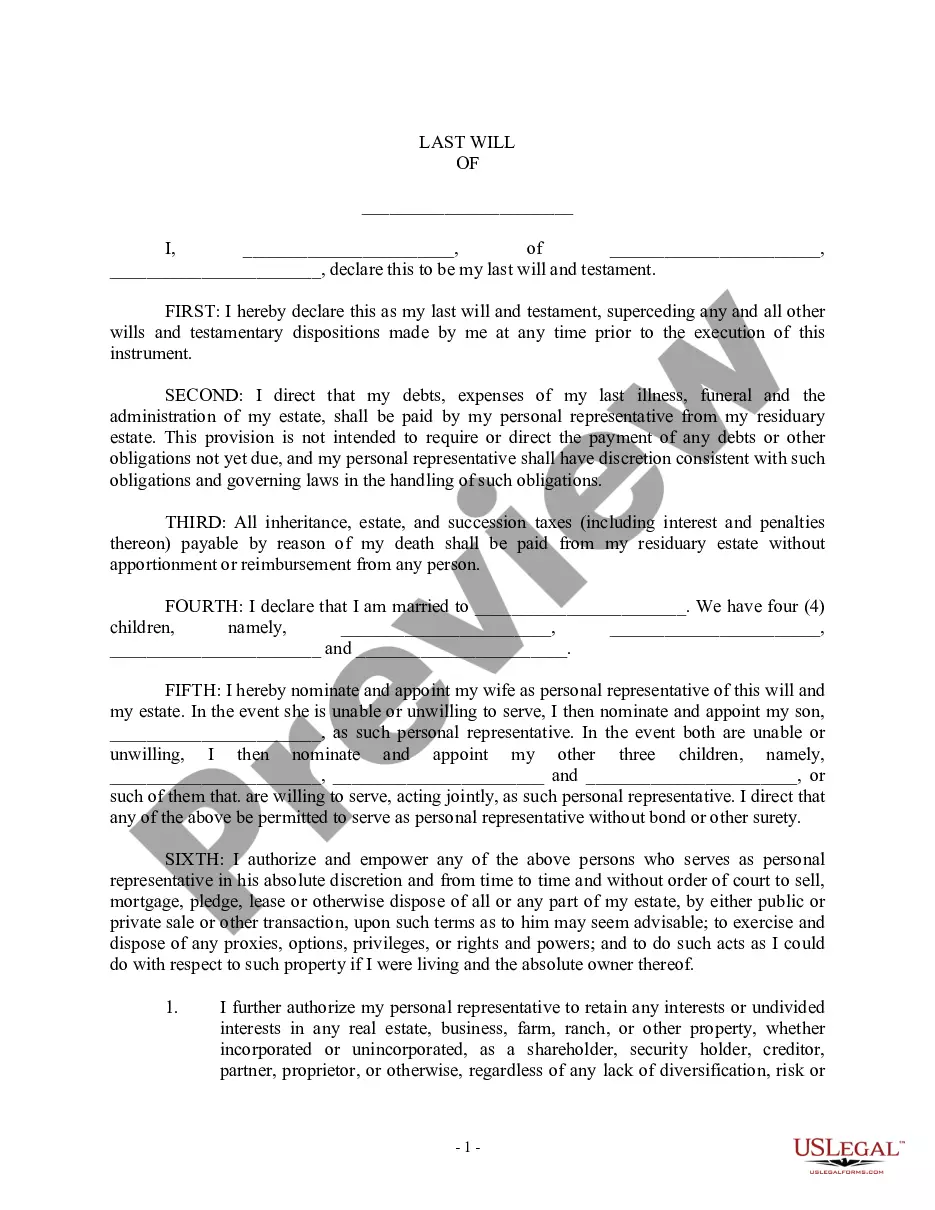
This Living Trust for Husband and Wife with One Child is a legal document that establishes a revocable living trust tailored specifically for a married couple who have one child. This form allows the trustors to manage their assets during their lifetime and specifies how those assets should be distributed after their death, avoiding the probate process. Unlike a will, a living trust provides more immediate control and can be altered or revoked at any time during the trustor's lifetime.
Form components explained
- Name of Trust: Identification of the trust and its purpose.
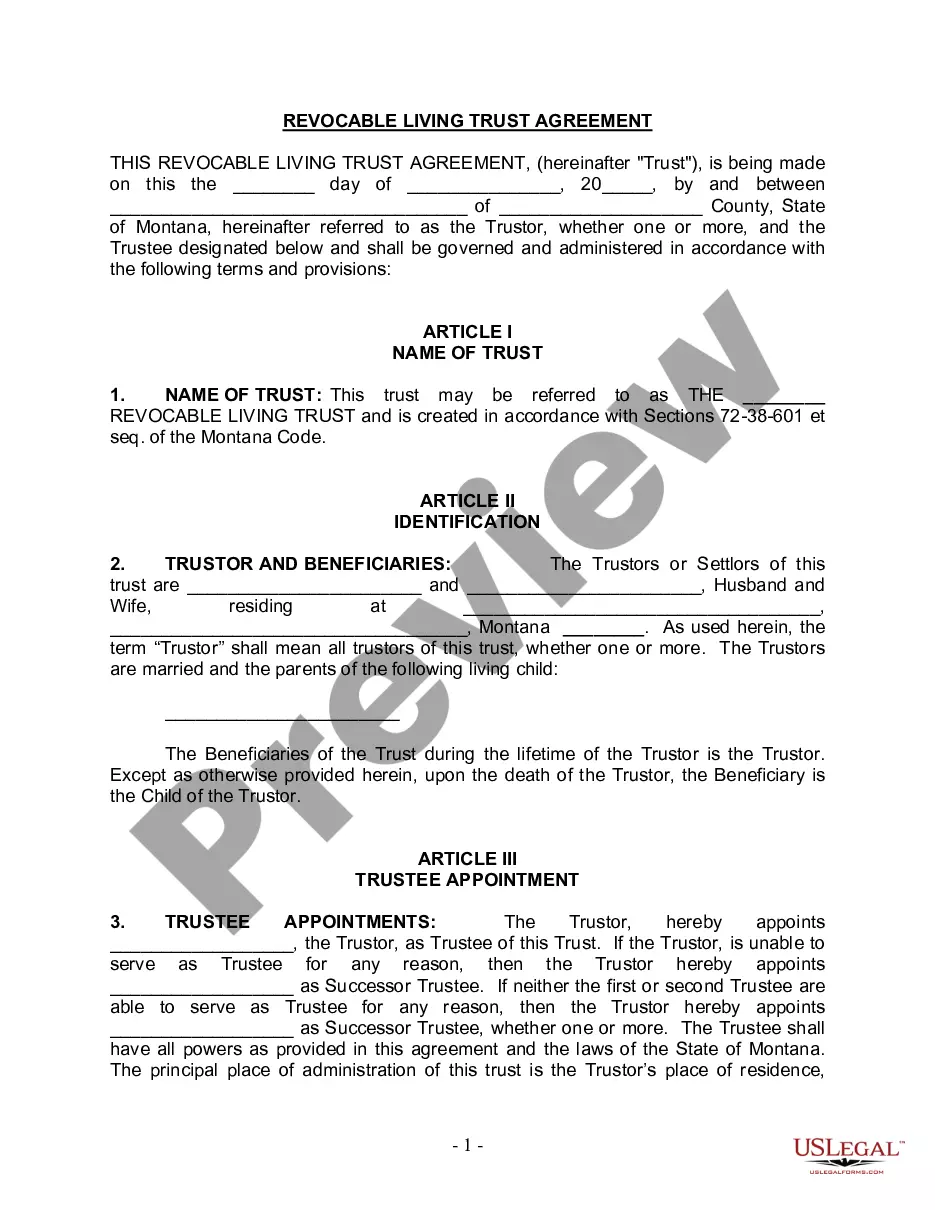
- Trustor and Beneficiaries: Details about the trustors (husband and wife) and their child as direct beneficiaries.
- Trustee Appointments: Designation of the trustees, including successor trustees in case of incapacity or death.
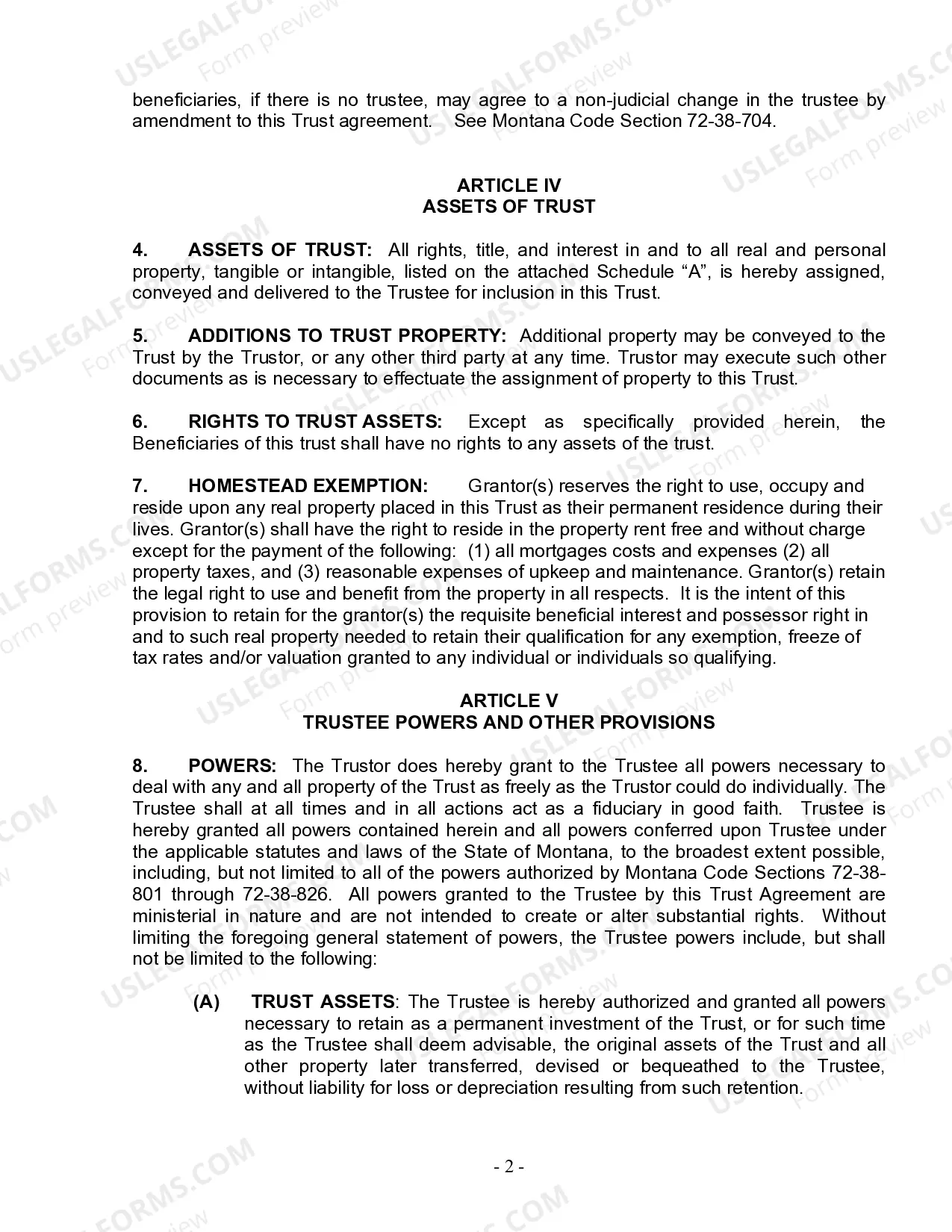
- Assets of Trust: Provision for the assignment and management of assets within the trust.
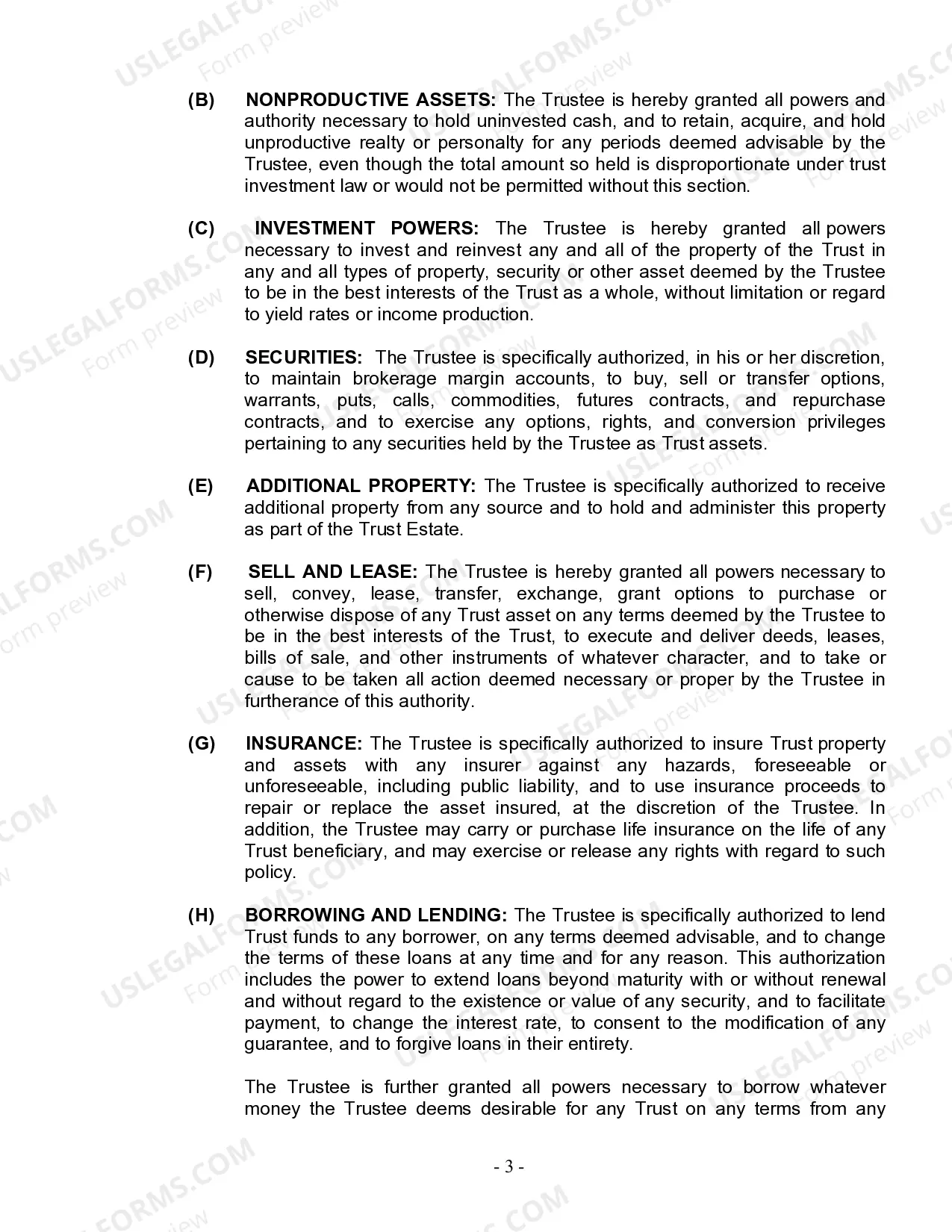
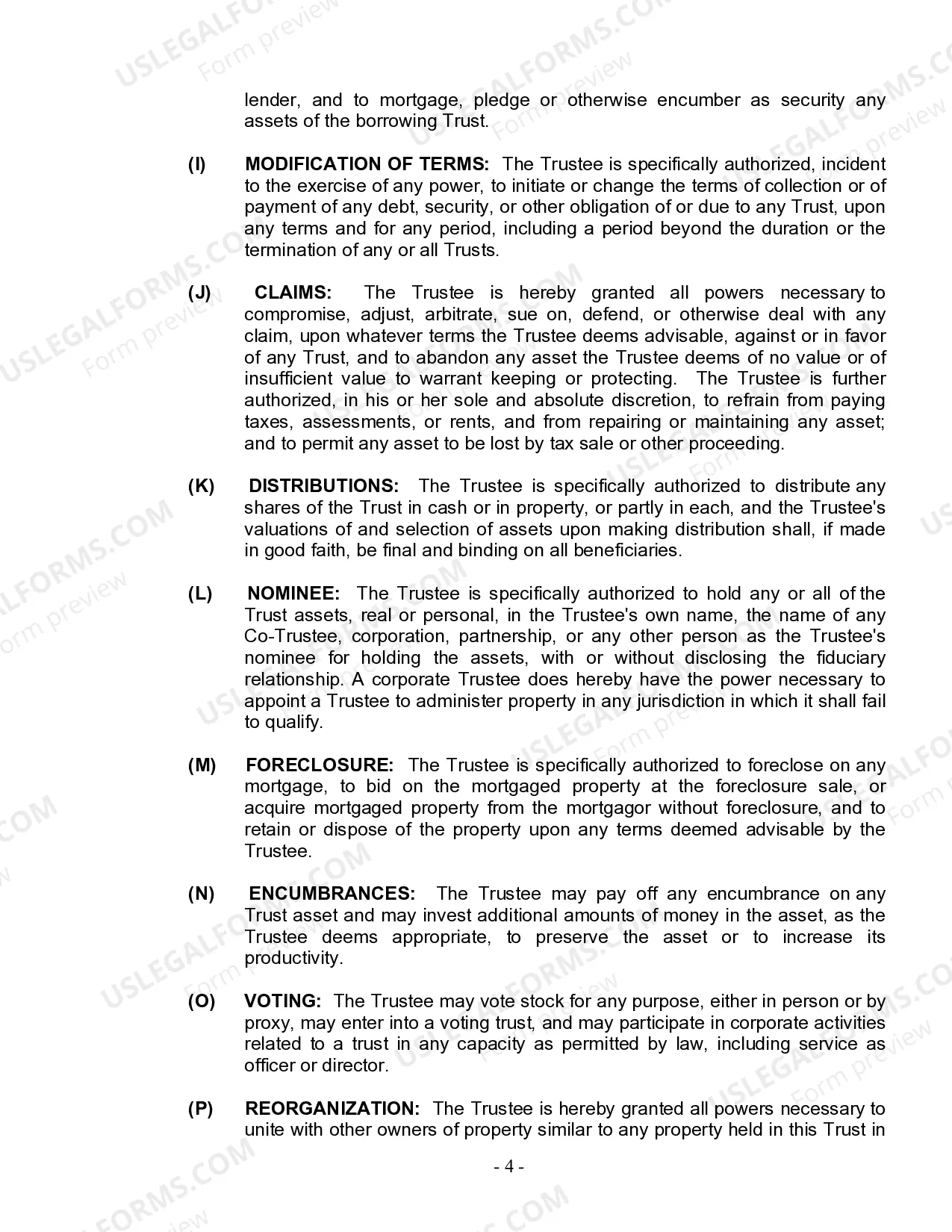
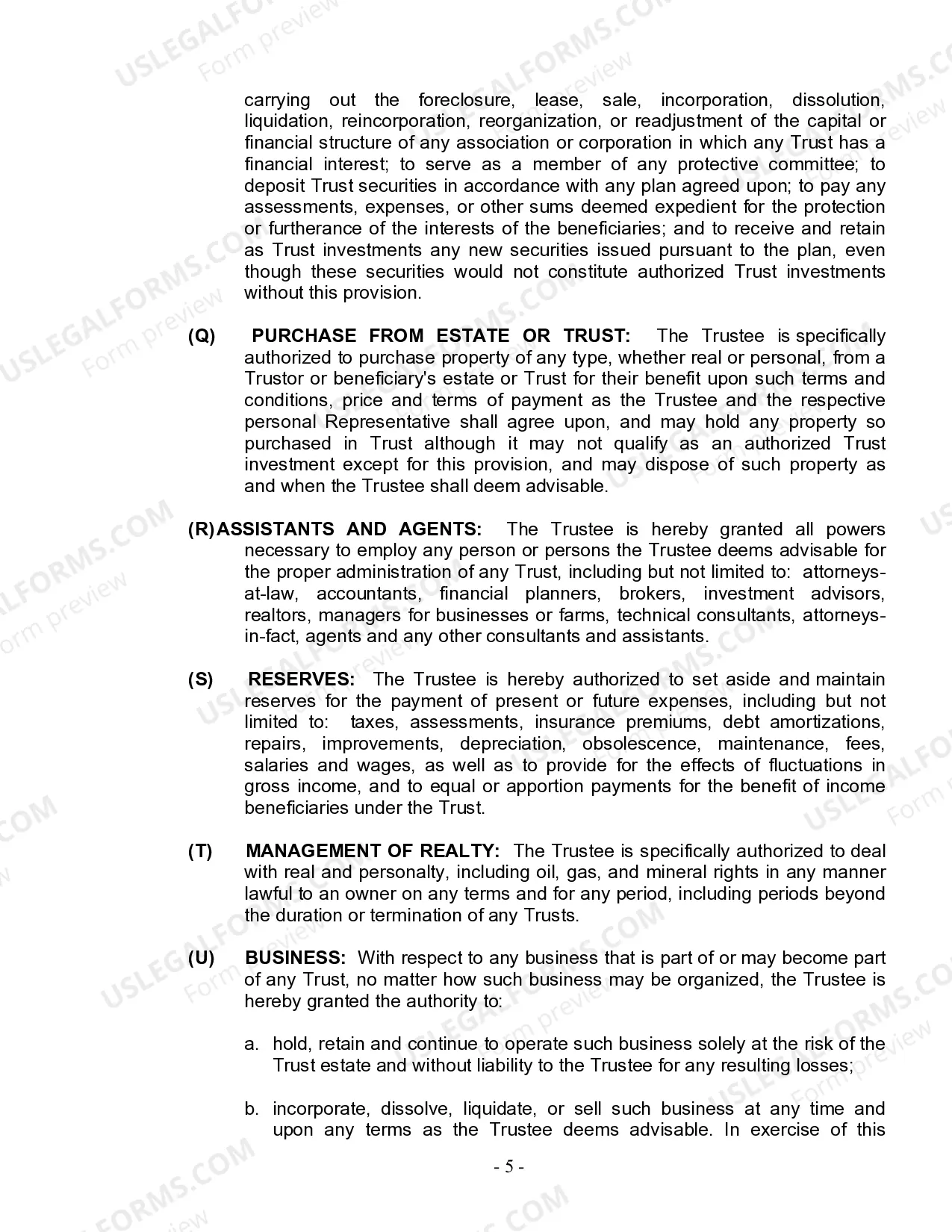
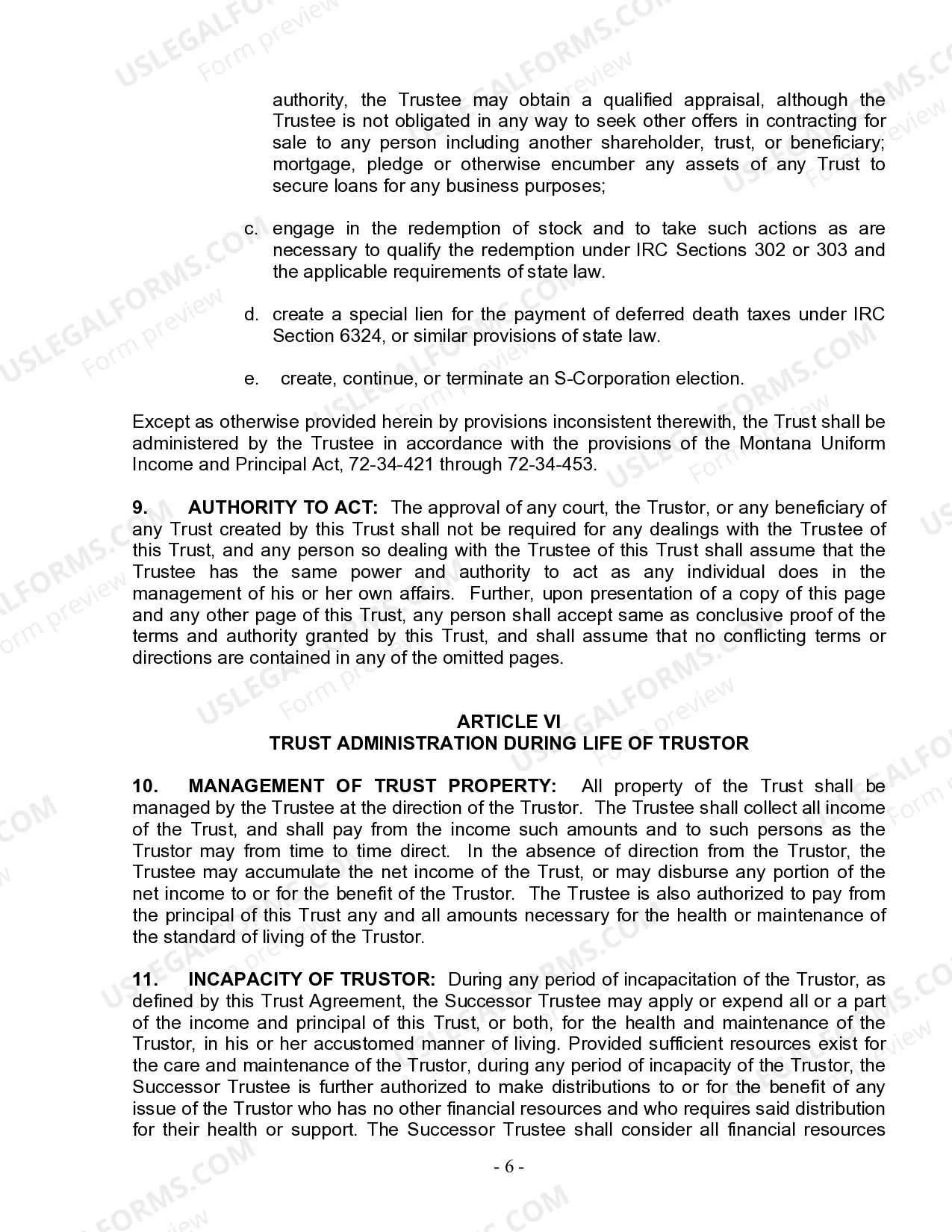
- Trustee Powers: Specifies the powers granted to trustees regarding the management and distribution of trust assets.
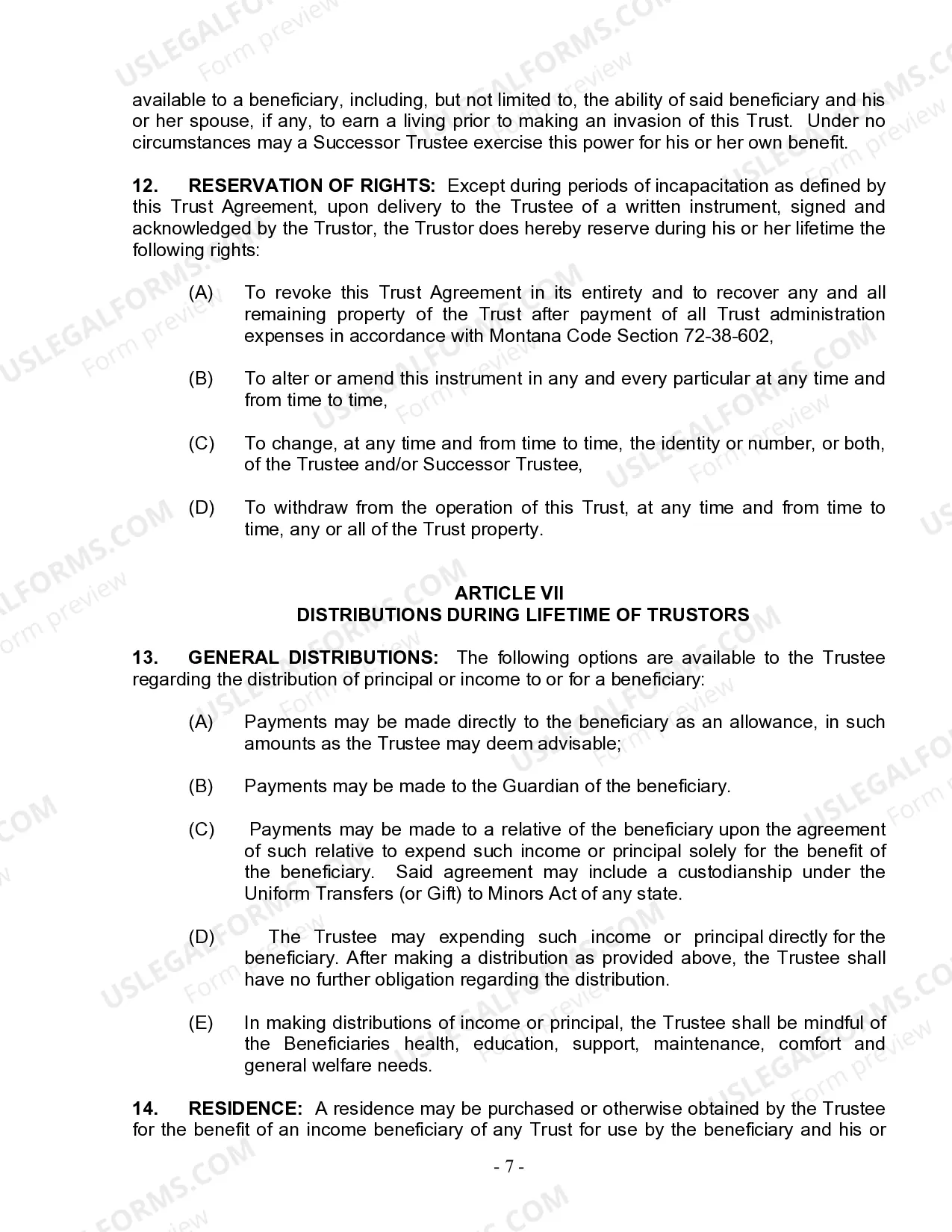
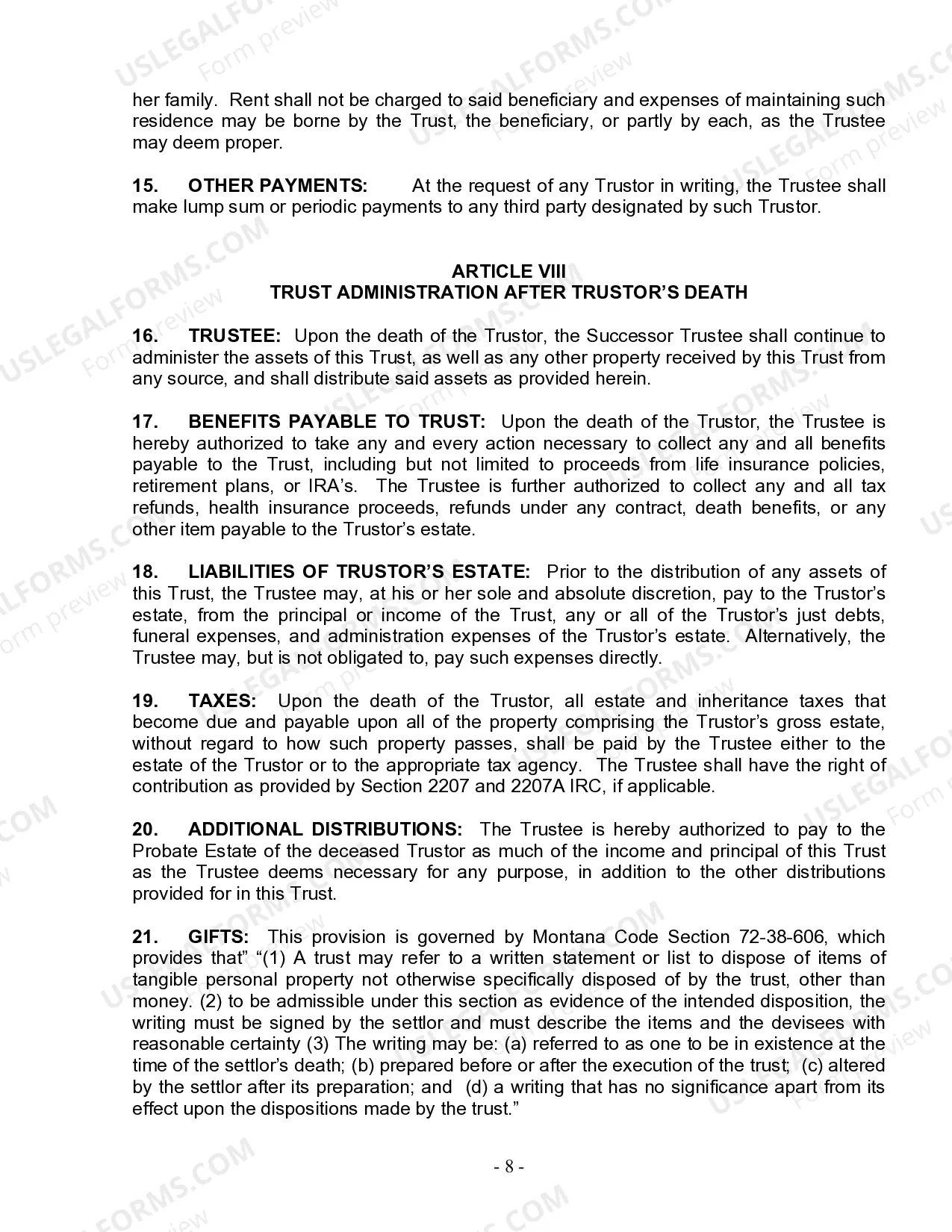
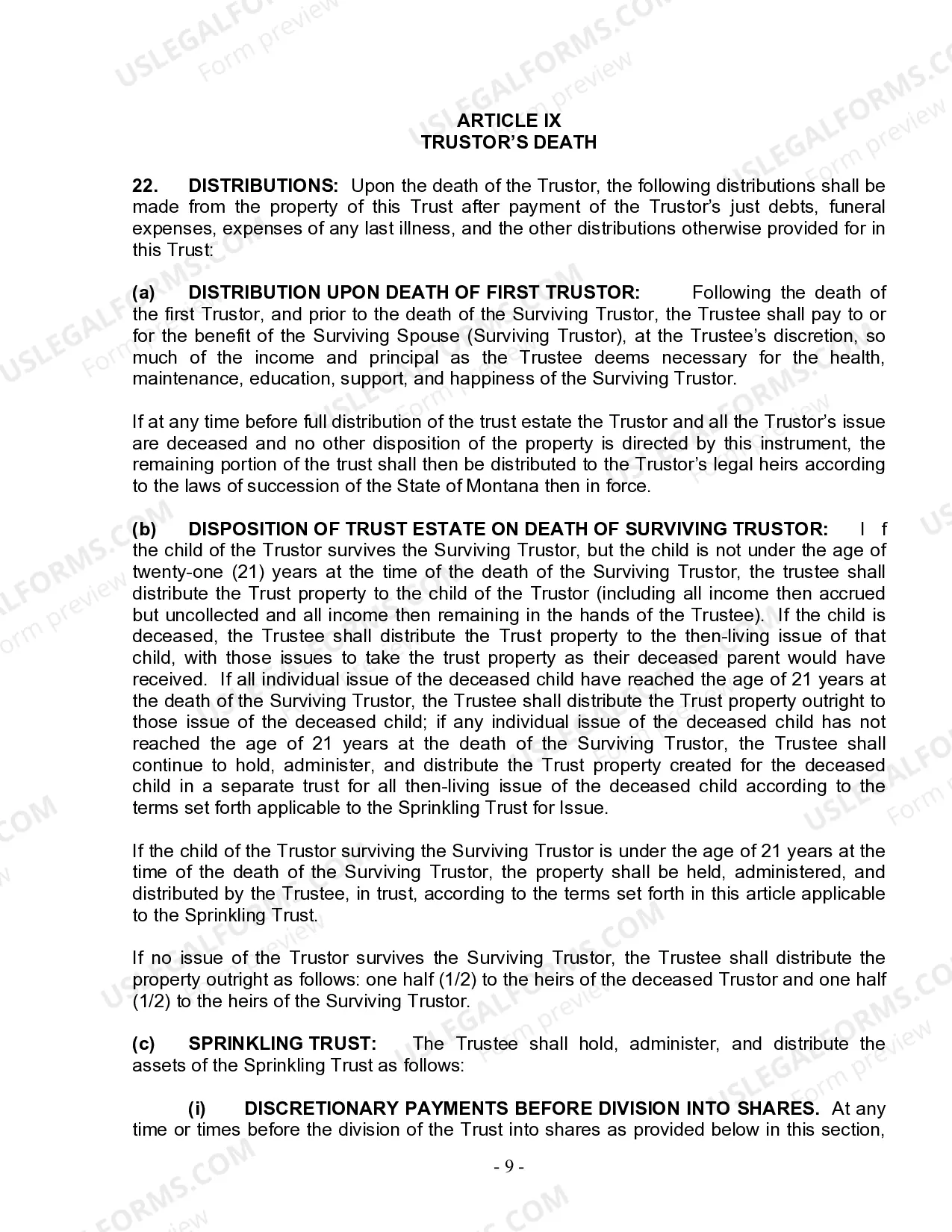
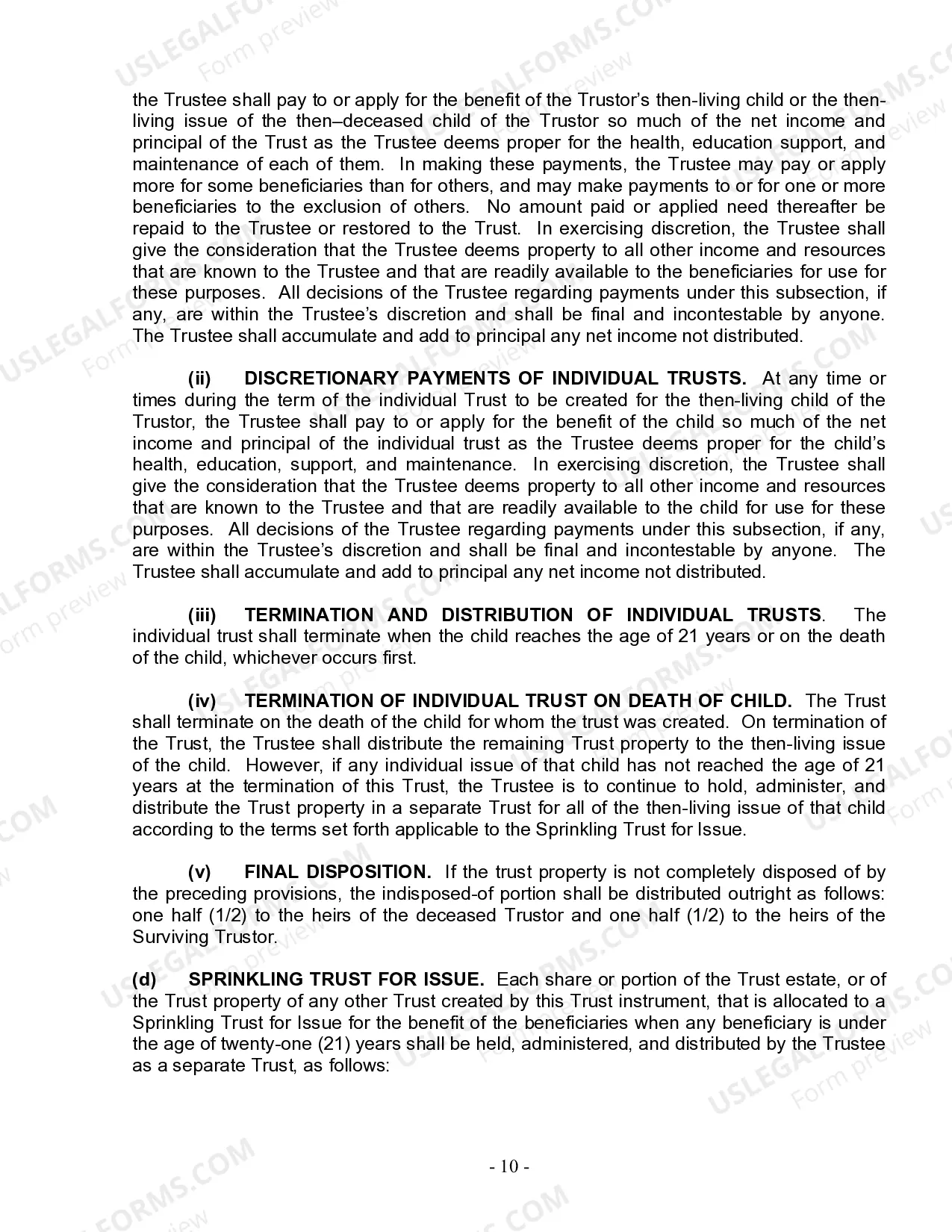
- Distributions: Guidelines for how and when trust property should be distributed upon the trustor's death.

When this form is needed
This form should be used when a husband and wife want to establish a living trust to organize their assets effectively, provide for their child, and ensure a smooth transition of their estate without the need for probate. It is particularly beneficial if they wish to retain control over their assets while planning for possible incapacity and ensuring their child's financial security after their passing.
Who can use this document
This form is ideal for:
- Married couples residing in Montana with one child.
- Couples who desire a flexible estate planning tool that allows them to manage their assets and provide for their child.
- Individuals looking to avoid the complexities of probate after death.
Steps to complete this form
- Identify the parties involved: the husband and wife as trustors and the appointed trustee (who can also be one of the trustors).
- Specify the name of the trust and the assets that will be included in it, detailing them in the attached Schedule A.
- Fill in dates and relevant personal information, including the names and addresses of the trustors and beneficiary.
- Determine the trustee's powers and specify any particular instructions regarding asset management and distributions.
- Sign and date the trust agreement in the presence of a notary public, if required, to ensure its legitimacy.
Does this document require notarization?
Yes, this form must be notarized to be legally valid. US Legal Forms provides integrated online notarization services that are available 24/7, allowing you to complete the process securely via video call, eliminating the need for travel.
Get your form ready online
Our built-in tools help you complete, sign, share, and store your documents in one place.
Make edits, fill in missing information, and update formatting in US Legal Forms—just like you would in MS Word.
Download a copy, print it, send it by email, or mail it via USPS—whatever works best for your next step.
Sign and collect signatures with our SignNow integration. Send to multiple recipients, set reminders, and more. Go Premium to unlock E-Sign.
If this form requires notarization, complete it online through a secure video call—no need to meet a notary in person or wait for an appointment.
We protect your documents and personal data by following strict security and privacy standards.

Make edits, fill in missing information, and update formatting in US Legal Forms—just like you would in MS Word.

Download a copy, print it, send it by email, or mail it via USPS—whatever works best for your next step.

Sign and collect signatures with our SignNow integration. Send to multiple recipients, set reminders, and more. Go Premium to unlock E-Sign.

If this form requires notarization, complete it online through a secure video call—no need to meet a notary in person or wait for an appointment.

We protect your documents and personal data by following strict security and privacy standards.
Typical mistakes to avoid
- Failing to list all assets correctly in Schedule A.
- Not appointing a backup or successor trustee, which may lead to confusion in the management of the trust.
- Neglecting to update the trust when personal circumstances change, such as the addition of children or significant assets.
Why complete this form online
- Convenience of downloading and filling out the form at your own pace.
- Editability allows for quick updates when necessary, ensuring the trust remains current.
- Reliable content drafted by licensed attorneys, ensuring compliance with state law.
Looking for another form?
Form popularity
FAQ
The process of funding your living trust by transferring your assets to the trustee is an important part of what helps your loved ones avoid probate court in the event of your death or incapacity. Qualified retirement accounts such as 401(k)s, 403(b)s, IRAs, and annuities, should not be put in a living trust.
Yes, and no. Yes, a spouse can be disinherited.The laws vary from state to state, but in a community property state like California, your spouse will have a legal right to one-half of the estate assets acquired during the marriage, otherwise known as community property.
Under California law, a marriage automatically invalidates any pre-existing will or trust as to the new spouse's inheritance rights, unless the documents provide for a new spouse, or clearly indicate a new spouse will receive nothing.
When one spouse dies, the joint trust will continue to operate for the benefit of the surviving spouse as a Survivor's Trust. Any specific gifts of tangible property from the first spouse to beneficiaries (other than the surviving spouse) will be given to those people.
Qualified retirement accounts 401ks, IRAs, 403(b)s, qualified annuities. Health saving accounts (HSAs) Medical saving accounts (MSAs) Uniform Transfers to Minors (UTMAs) Uniform Gifts to Minors (UGMAs) Life insurance. Motor vehicles.
If you own the property as Tenants in Common and there is a Declaration of Trust document that states the division of shares, the trust deed is still valid after marriage but it will be considered alongside other important factors by the courts.
Legally your Trust now owns all of your assets, but you manage all of the assets as the Trustee. This is the essential step that allows you to avoid Probate Court because there is nothing for the courts to control when you die or become incapacitated.
As the grantor or creator of an irrevocable trust, if you place assets into one before your marriage, these are never marital property and are never at risk in a divorce.You can't get these assets back later if you decide you don't mind sharing them with your spouse or after you divorce.
Under California law, a marriage automatically invalidates any pre-existing will or trust as to the new spouse's inheritance rights, unless the documents provide for a new spouse, or clearly indicate a new spouse will receive nothing.