Montana Dissolution Package to Dissolve Corporation
About this form
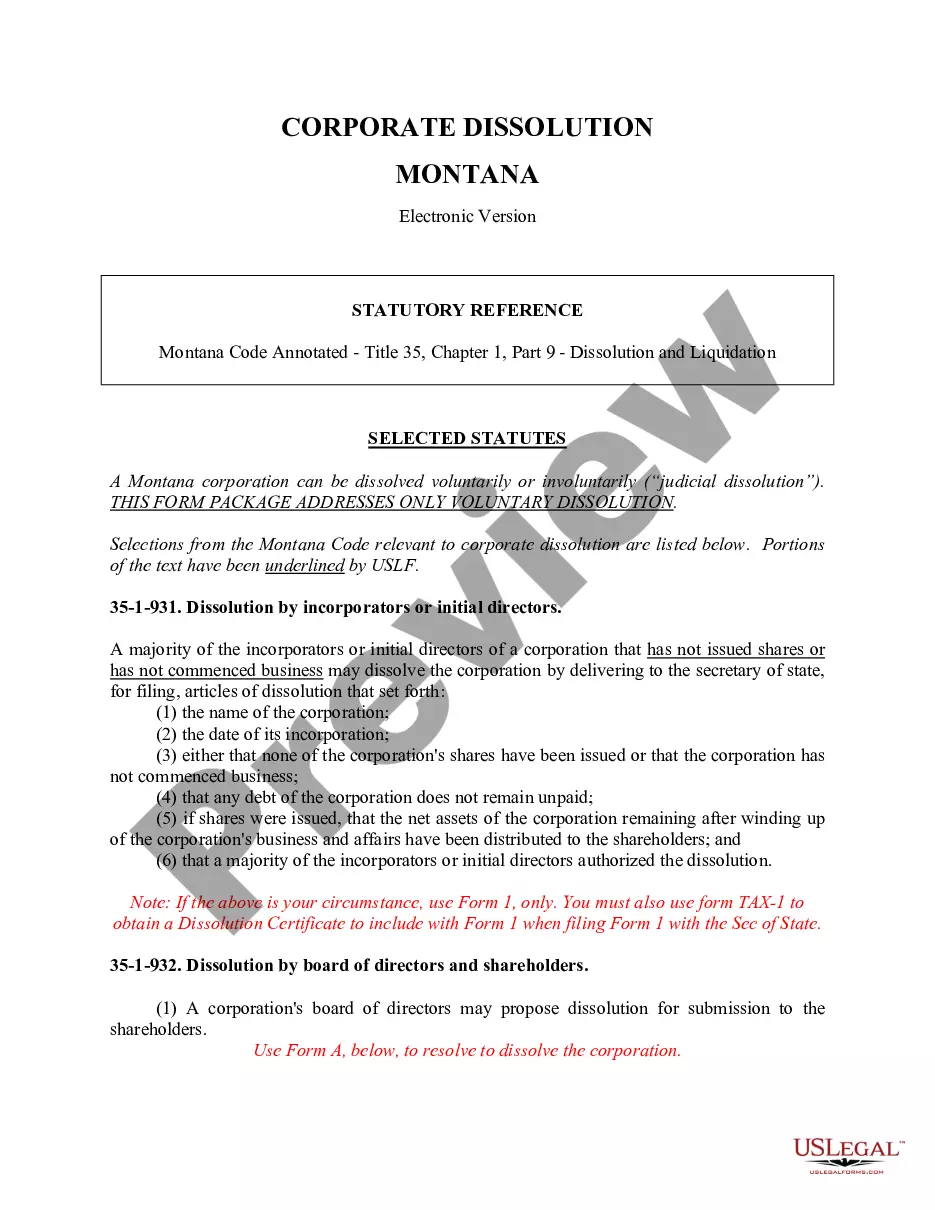
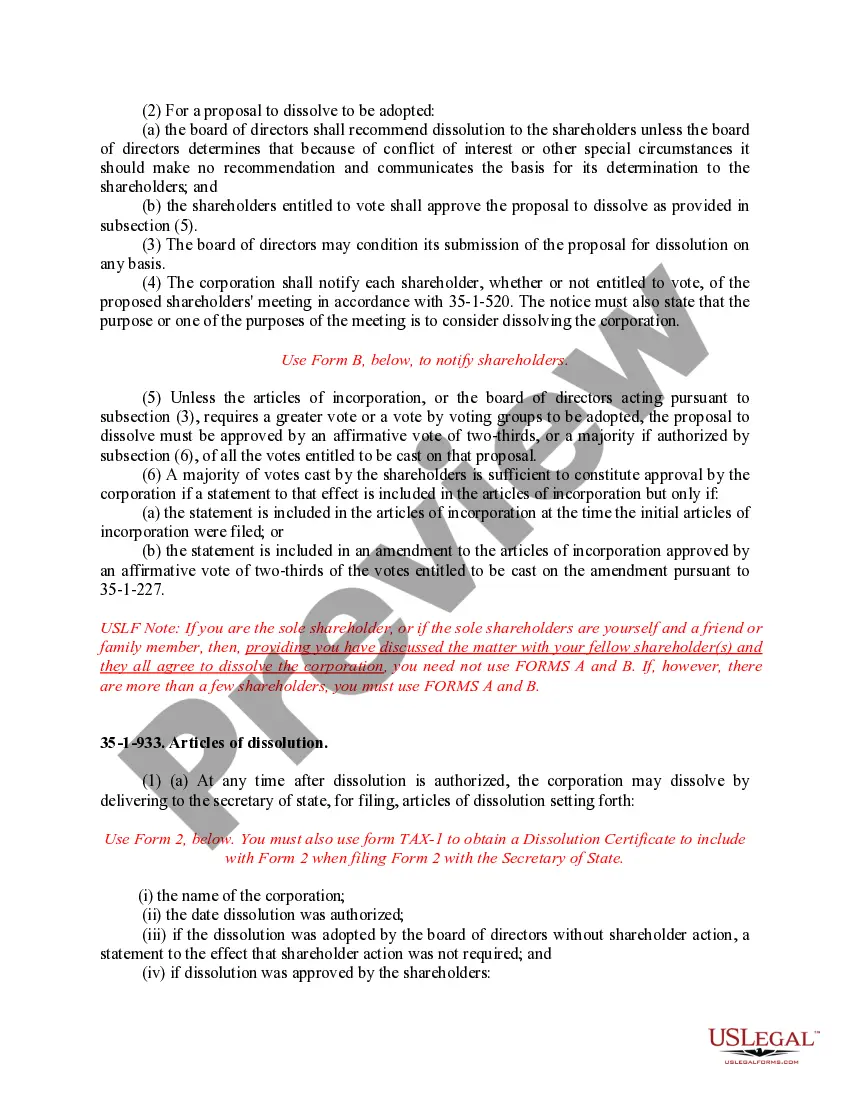
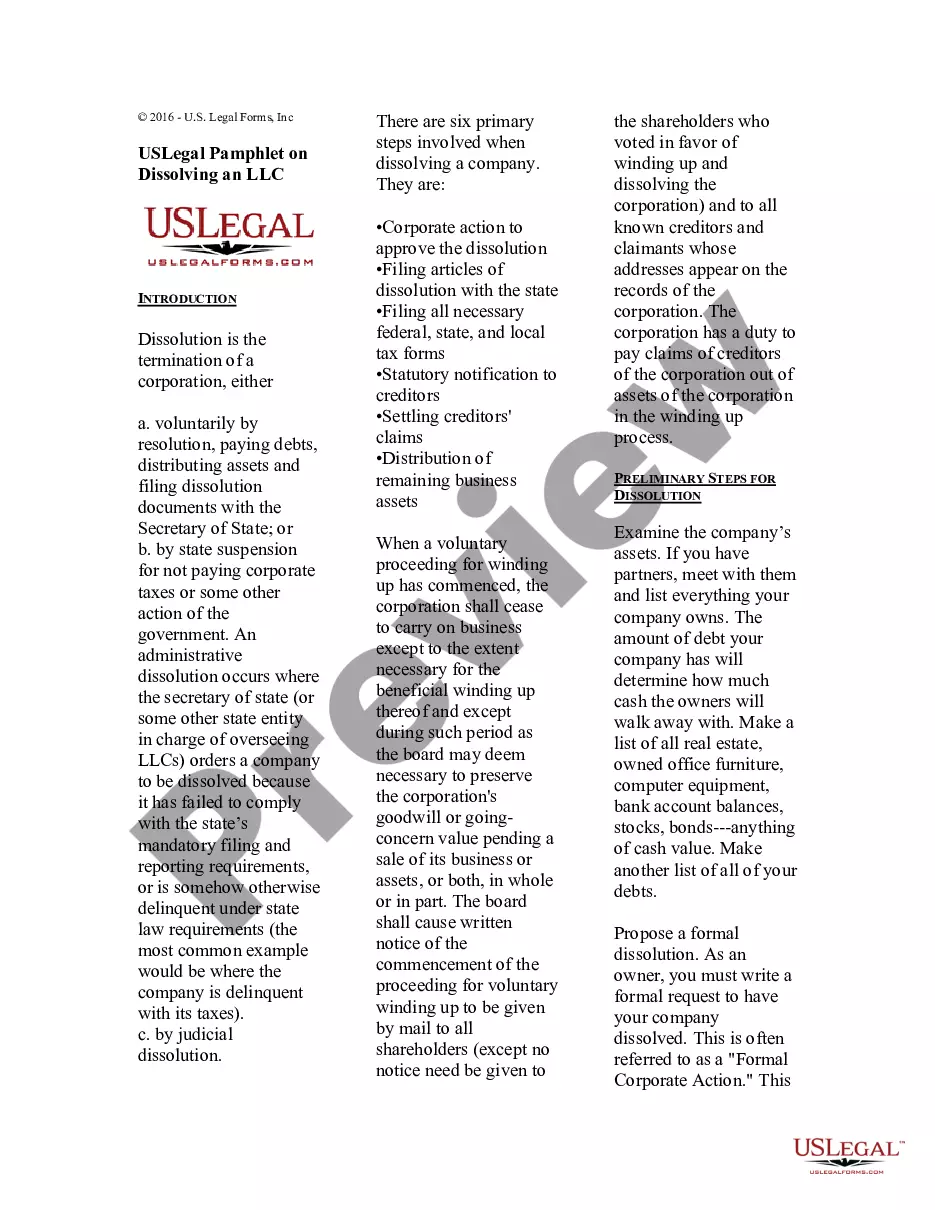
The Montana Dissolution Package to Dissolve Corporation includes essential legal documents to formally dissolve a corporation in Montana. This package differs from similar forms by focusing specifically on the voluntary dissolution process, providing step-by-step instructions, required forms, and guidelines tailored to Montana's legal framework.
Key parts of this document
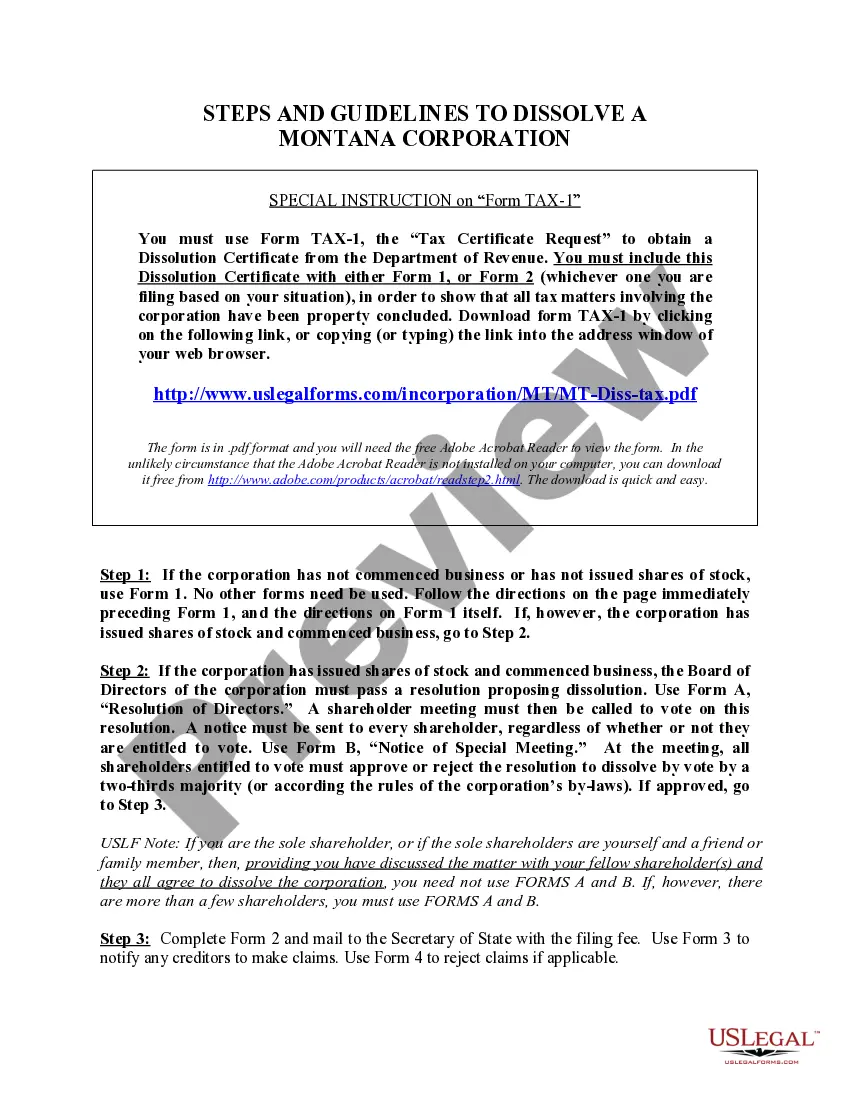
- Form 1: For corporations that have not issued shares or commenced business.
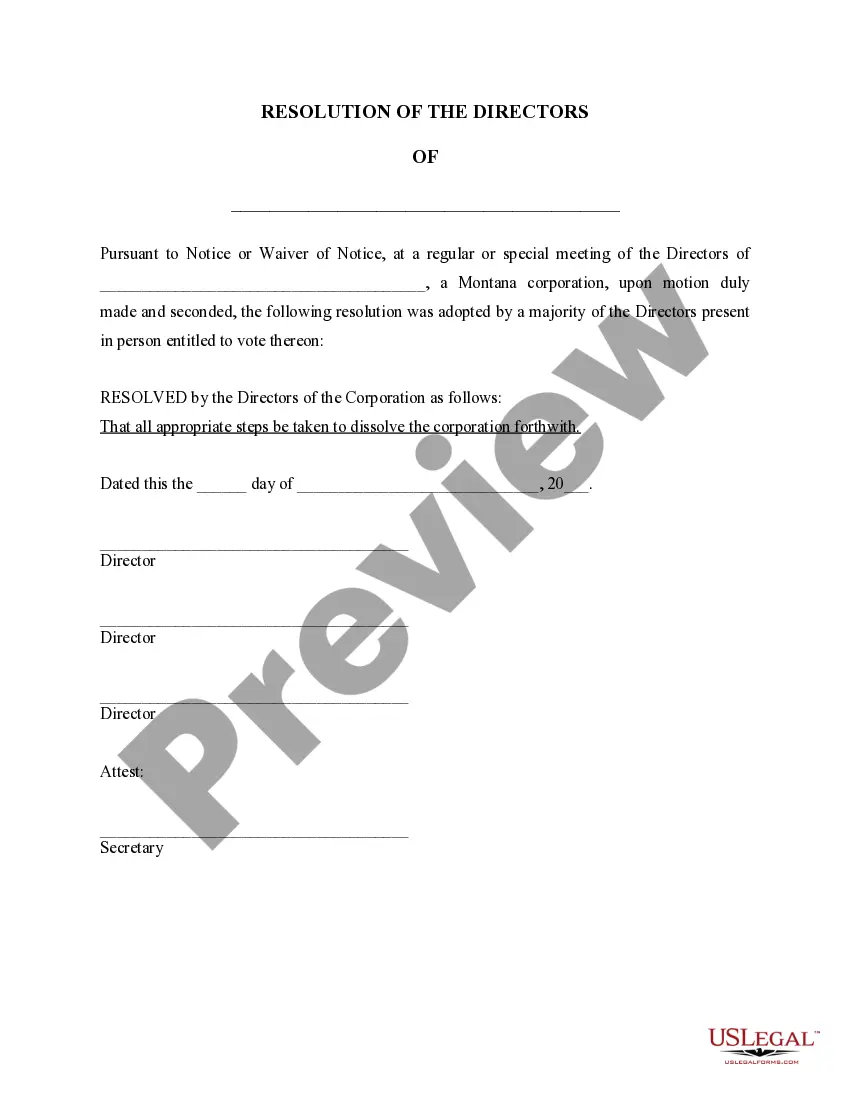
- Form A: Resolution of directors required to propose dissolution for corporations with shares.
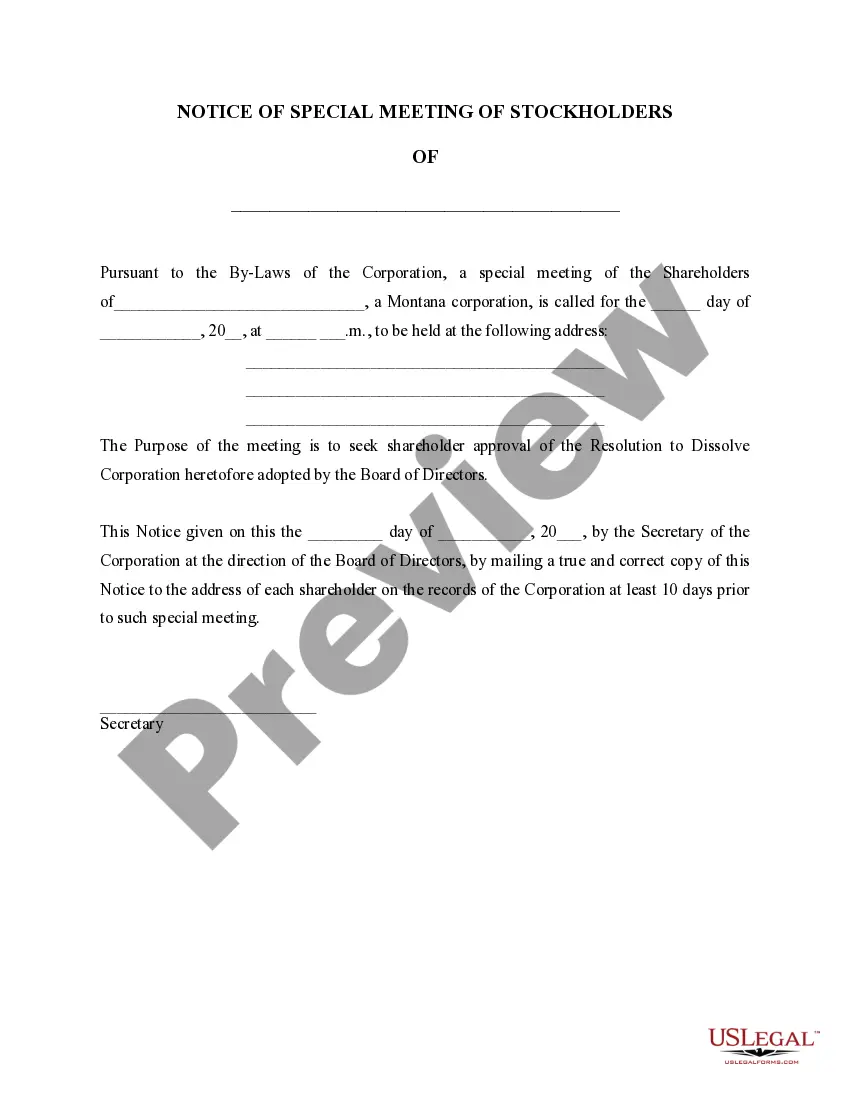
- Form B: Notice of special meeting to notify shareholders of the proposal to dissolve.
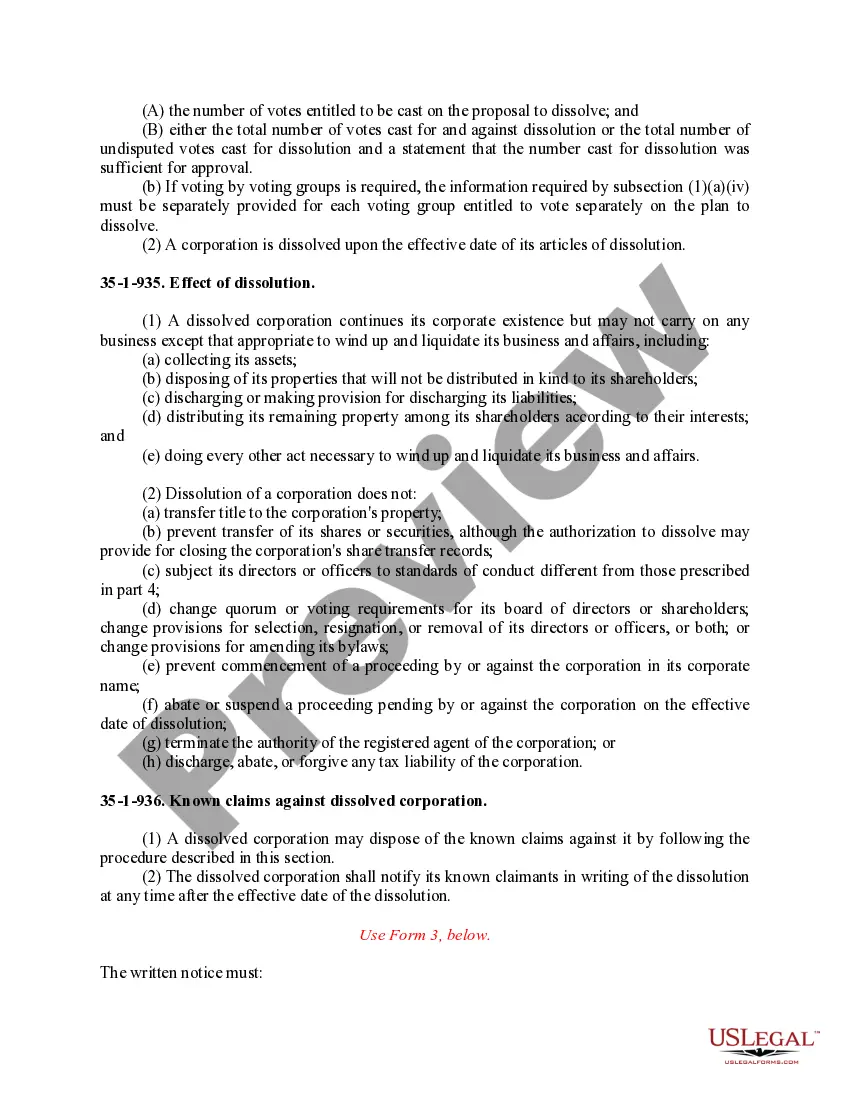
- Form 2: Articles of dissolution to file with the Secretary of State after approval.
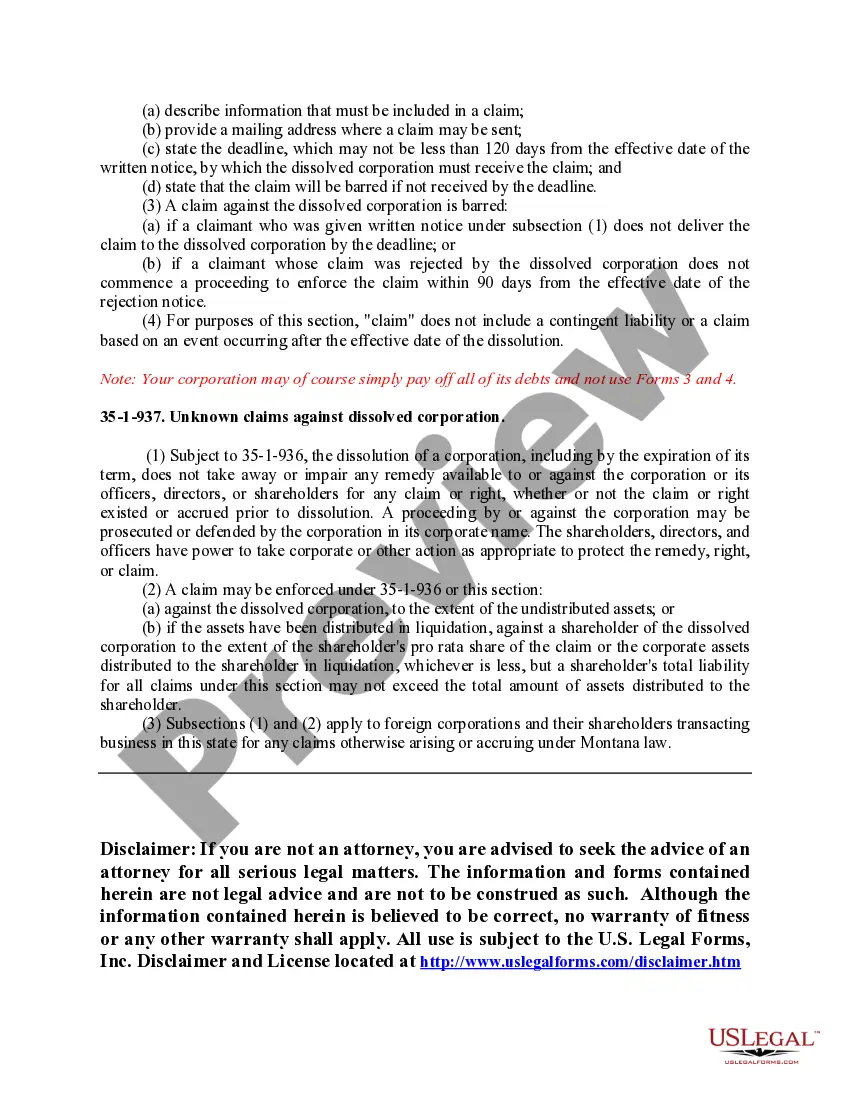
- Form 3: Notification to known claimants and request for claims against the dissolved corporation.
- Form 4: Notice of rejection of claims, if applicable.




Situations where this form applies
This dissolution package is necessary when a corporation in Montana decides to cease its business operations voluntarily. You might encounter this situation if the corporation has fulfilled its purpose, suffered financial losses, or the owners have reached a consensus to shut down the business. Using this structured approach ensures compliance with state laws during the dissolution process.
Who needs this form
- Corporation owners and shareholders looking to dissolve their business.
- Corporations that have not issued shares or have ceased operations.
- Corporations with multiple shareholders who need formal approval for dissolution.
- Directors of corporations who need to follow legal procedures for voluntary dissolution.
How to prepare this document
- Determine whether your corporation has issued shares or commenced business to select the appropriate form.
- If no shares were issued or no business commenced, complete and file Form 1 with the required fee.
- If shares were issued, the board of directors must adopt a resolution using Form A and notify shareholders using Form B.
- After shareholder approval, complete Form 2 and file it with the Secretary of State.
- Send Form 3 to all known claimants to notify them about the dissolution and request any pending claims.
- If necessary, prepare Form 4 to formally reject claims as applicable.
Notarization requirements for this form
This form does not typically require notarization unless specified by local law. However, it is advisable to consult with an attorney to ensure all legal requirements are met during the dissolution process.
Get your form ready online
Our built-in tools help you complete, sign, share, and store your documents in one place.
Make edits, fill in missing information, and update formatting in US Legal Forms—just like you would in MS Word.
Download a copy, print it, send it by email, or mail it via USPS—whatever works best for your next step.
Sign and collect signatures with our SignNow integration. Send to multiple recipients, set reminders, and more. Go Premium to unlock E-Sign.
If this form requires notarization, complete it online through a secure video call—no need to meet a notary in person or wait for an appointment.
We protect your documents and personal data by following strict security and privacy standards.

Make edits, fill in missing information, and update formatting in US Legal Forms—just like you would in MS Word.

Download a copy, print it, send it by email, or mail it via USPS—whatever works best for your next step.

Sign and collect signatures with our SignNow integration. Send to multiple recipients, set reminders, and more. Go Premium to unlock E-Sign.

If this form requires notarization, complete it online through a secure video call—no need to meet a notary in person or wait for an appointment.

We protect your documents and personal data by following strict security and privacy standards.
Common mistakes
- Failing to notify all shareholders before proceeding with dissolution.
- Not including the Dissolution Certificate when filing articles of dissolution.
- Ignoring the necessary timeline for notifying claimants of dissolution.
- Misunderstanding the requirements for approvals based on the number of shareholders.
Advantages of online completion
- Convenient access to all necessary forms in one package for streamlined processing.
- Editable forms that can be customized to your corporation's specific details.
- Reliable guidance on completing each step accurately to ensure compliance with Montana law.
Legal use & context
- Ensure compliance with Montana state laws regarding corporate dissolution.
- Utilize forms properly to protect against future liabilities.
- Know that dissolved corporations retain certain legal rights, allowing them to manage pending claims.
Key takeaways
- The Montana Dissolution Package is essential for anyone looking to dissolve a corporation in Montana.
- Understanding which forms to use based on corporate activity is crucial for compliance.
- Proper notification to shareholders and creditors is required to protect against claims.
- Using this package simplifies the legal process and ensures adherence to Montana statutes.
Looking for another form?

Form popularity
FAQ
In most states, to keep a corporation active, the owners must file annual reports and income tax returns. They may have to pay annual fees as well. Failure to do these things can render the corporation inactive. A corporation may also voluntarily become inactive by ceasing to do business.
After a company is dissolved, it must liquidate its assets. Liquidation refers to the process of sale or auction of the company's non-cash assets.Assets used as security for loans must be given to the bank or creditor that extended the loan, or you must pay off the loan before selling such assets.
An inactive business is a business that still exists but has no activity, which means no business transactions during a specific year.Even if the business has no income, it may still be considered active for tax purposes. There are many reasons a business may become inactive.
Hold a Board of Directors meeting and record a resolution to Dissolve the Montana Corporation. Hold a Shareholder meeting to approve Dissolution of the Montana Corporation. File all required Annual Reports with the Montana Secretary of State. File all required tax returns with the Montana Department of Revenue.
Dissolve the Legal Entity (LLC or Corporation) with the State. An LLC or Corporation needs to be officially dissolved. Pay Any Outstanding Bills. You need to satisfy any company debts before closing the business. Cancel Any Business Licenses or Permits. File Your Final Federal and State Tax Returns.
Step 1: Corporation or LLC action. Step 2: Filing the Certificate of Dissolution with the state. Step 3: Filing federal, state, and local tax forms. Step 4: Notifying creditors your business is ending. Step 5: Settling creditors' claims.
When a corporation is dissolved, it no longer legally exists and, in most cases, its debts disappear as well. State laws usually give additional time beyond the dissolution for creditors to file suits for failure to pay any corporate debts or for the wrongful distribution of corporate assets.
Failing to dissolve the corporation allows third parties to continue to sue the corporation as if it is still in operation. A judgment might mean that shareholders use the money received from distributed assets when the corporation closed down to satisfy judgments against the corporation.