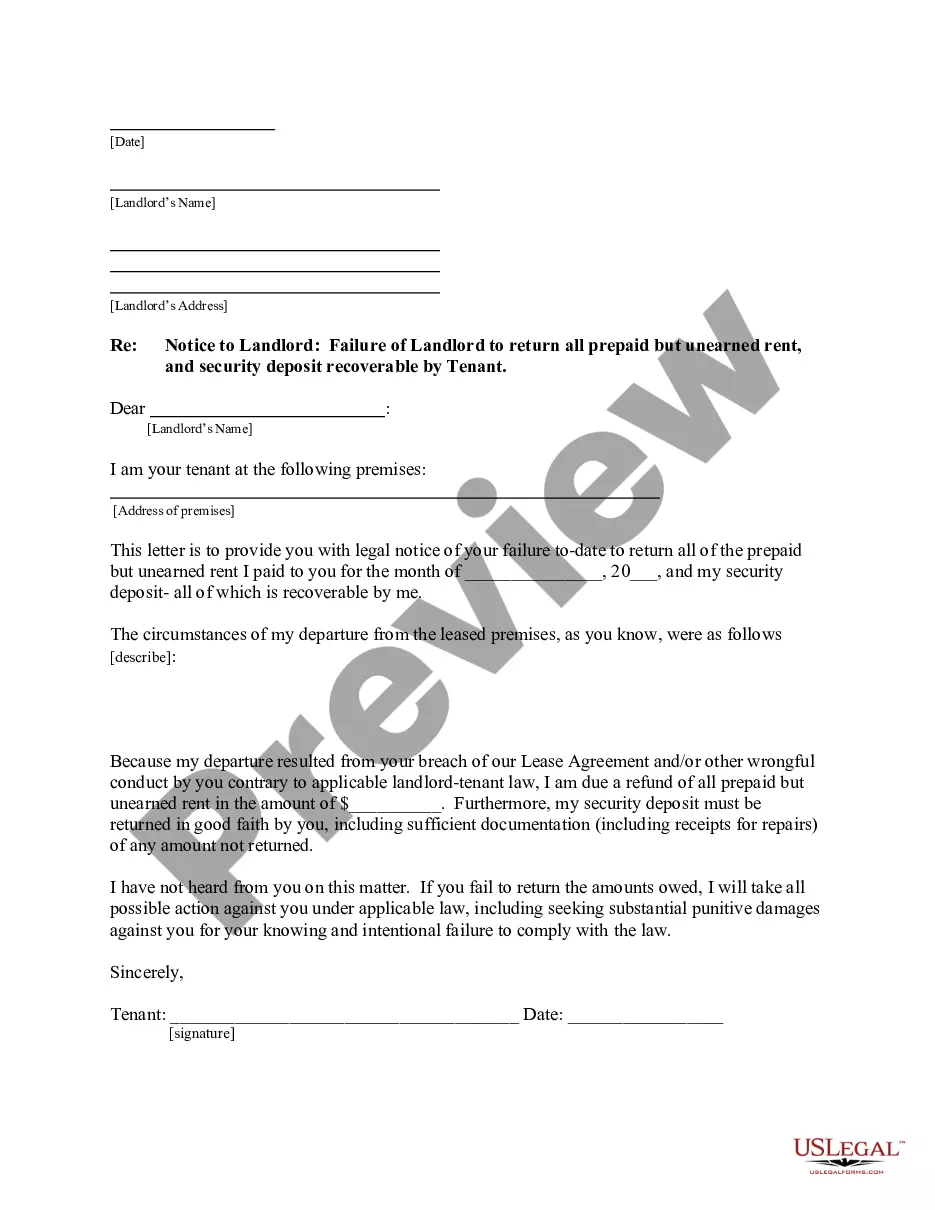
Montana Letter from Tenant to Landlord for Failure of Landlord to return all prepaid and unearned rent and security recoverable by Tenant
About this form
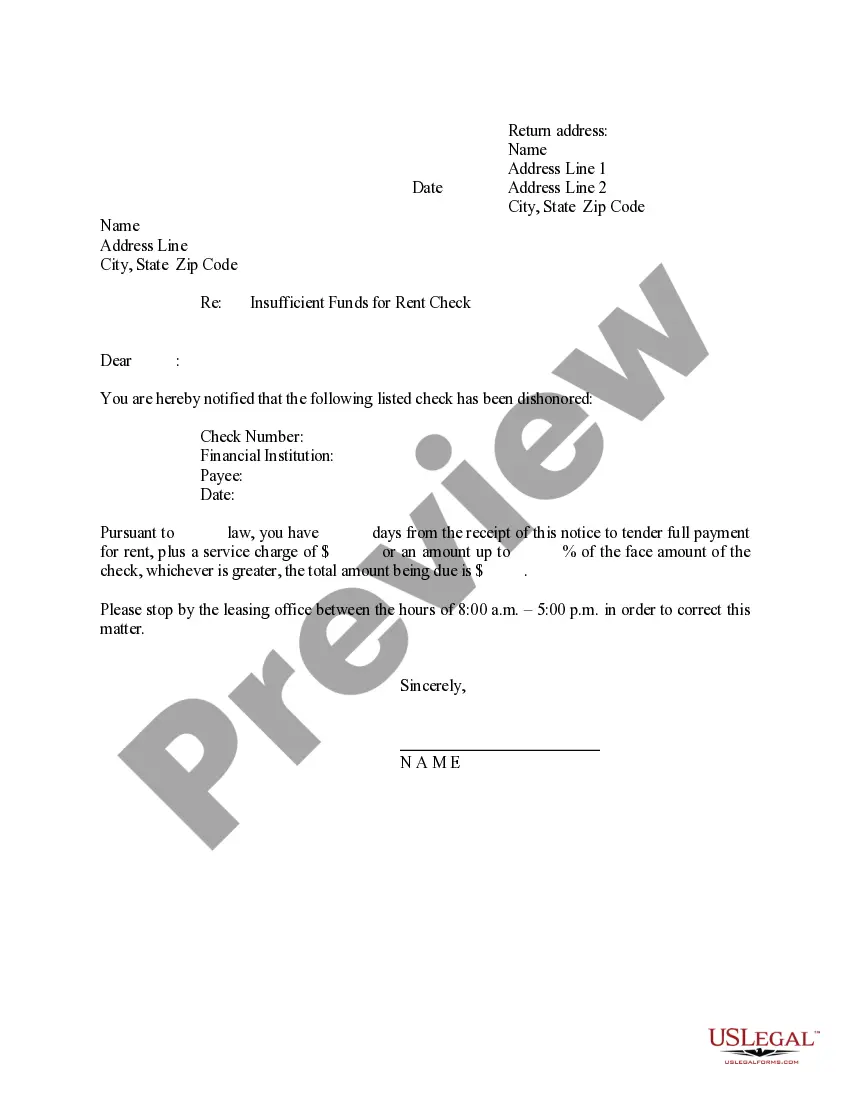
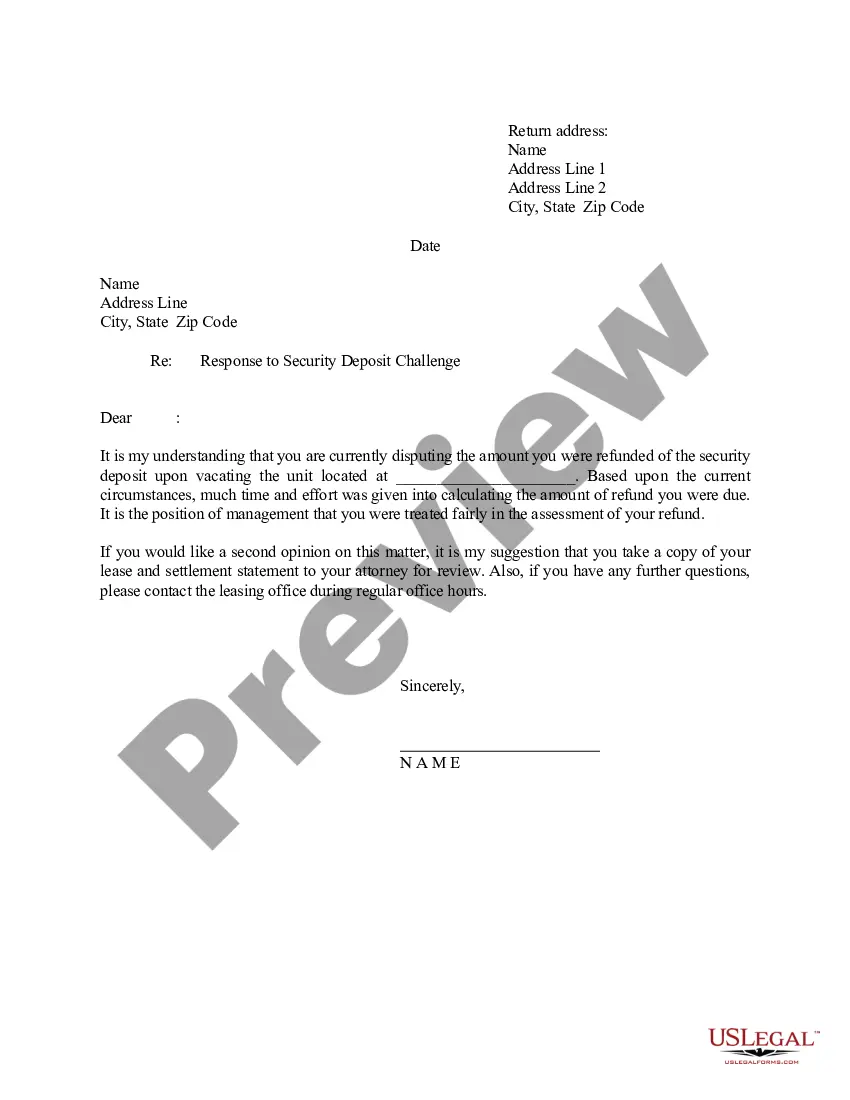
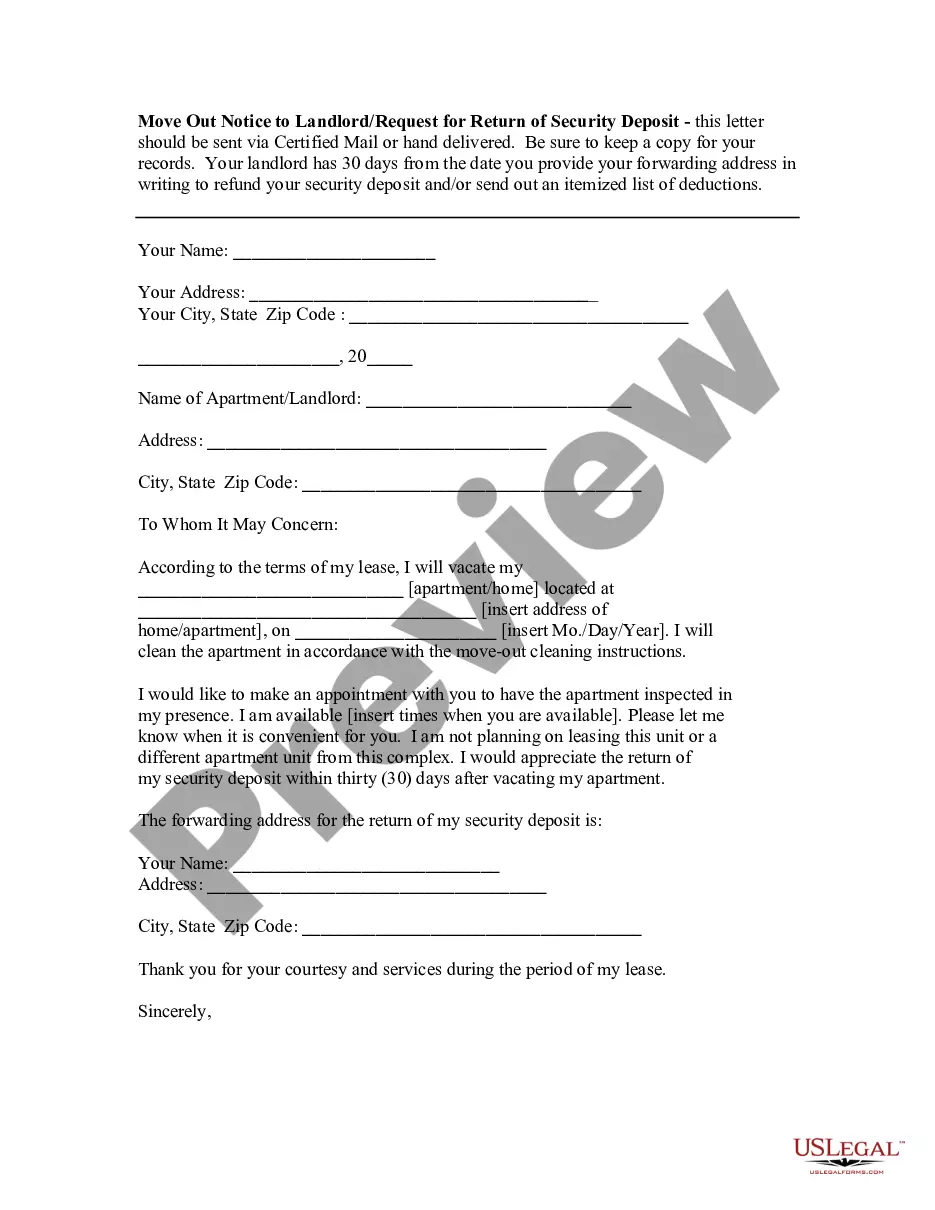
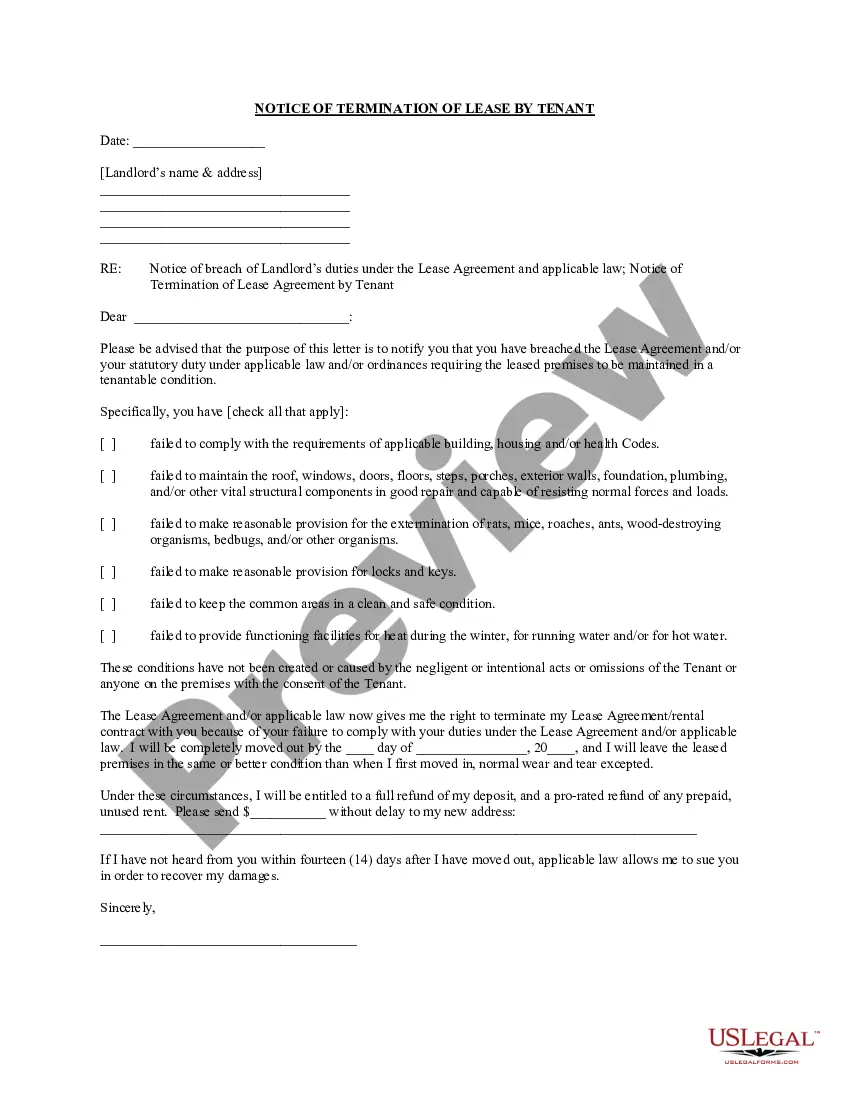
This form is a legal notice from a tenant to a landlord, specifically addressing the landlord's failure to return all prepaid and unearned rent and security deposits. The Letter from Tenant to Landlord for Failure of Landlord to Return All Prepaid and Unearned Rent and Security Recoverable by Tenant allows a tenant to formally communicate their demand for a refund due to the landlord's breach of the lease agreement or other wrongful conduct. This form serves as a crucial step in addressing grievances and protecting tenant rights.
Key components of this form
- Tenant's details: Information including the tenant's name and address.
- Landlord's details: Contact information for the landlord or their representative.
- Description of circumstances: Explanation of the tenantâs departure from the leased premises.
- Demand for refund: Explicit request for the return of prepaid but unearned rent and security deposits.
- Deadline for response: A notice that outlines the next steps if the landlord fails to comply.
When this form is needed
This form should be used when a tenant believes their landlord has not returned all prepaid and unearned rent after vacating the property. Common scenarios include situations where the tenant leaves due to the landlord's violation of the lease terms, such as failing to provide essential services or engaging in unlawful behavior. This letter acts as a formal warning before legal action is considered.
Intended users of this form
This form is intended for:
- Current or former tenants seeking to recover unpaid rent or security deposits.
- Individuals leaving a rental property due to the landlord's breach of contract or misconduct.
- Tenants who have already attempted to resolve the issue informally with their landlord.
Steps to complete this form
To complete this form, follow these steps:
- Identify the parties: Fill in your name and address as the tenant, along with the landlord's information.
- Describe your circumstances: Clearly explain the details of your departure and the landlordâs obligations.
- State your demand: Specify the amount of prepaid rent and security you wish to recover.
- Include a deadline: Indicate a time frame for the landlord to respond or take action.
- Sign and date the form: Ensure you provide your signature and the date before delivering the notice.
Is notarization required?
This form does not typically require notarization unless specified by local law. However, some jurisdictions may suggest having it notarized for added legal credibility. Always check local regulations to ensure compliance.
Get your form ready online
Our built-in tools help you complete, sign, share, and store your documents in one place.
Make edits, fill in missing information, and update formatting in US Legal Forms—just like you would in MS Word.
Download a copy, print it, send it by email, or mail it via USPS—whatever works best for your next step.
Sign and collect signatures with our SignNow integration. Send to multiple recipients, set reminders, and more. Go Premium to unlock E-Sign.
If this form requires notarization, complete it online through a secure video call—no need to meet a notary in person or wait for an appointment.
We protect your documents and personal data by following strict security and privacy standards.

Make edits, fill in missing information, and update formatting in US Legal Forms—just like you would in MS Word.

Download a copy, print it, send it by email, or mail it via USPS—whatever works best for your next step.

Sign and collect signatures with our SignNow integration. Send to multiple recipients, set reminders, and more. Go Premium to unlock E-Sign.

If this form requires notarization, complete it online through a secure video call—no need to meet a notary in person or wait for an appointment.

We protect your documents and personal data by following strict security and privacy standards.
Typical mistakes to avoid
- Failing to include all necessary recipient details, which can hinder communication.
- Not clearly stating the reasons for the demand can lead to misunderstandings.
- Neglecting to include a deadline may result in a lack of urgency for the landlord.
Advantages of online completion
- Convenient download and edit: Easily access and personalize the form to suit your situation.
- Professionally drafted: The form is created by licensed attorneys, ensuring legal language accuracy.
- Immediate availability: Download the form instantly without waiting for mail delivery.
Looking for another form?
Form popularity
FAQ
If you think your landlord is violating the Fair Housing Act, you can get that landlord in trouble by filing a complaint at HUD.gov. Your remedy for breach of quiet enjoyment is to terminate the lease and move or sue in small claims court.
A rental verification helps landlords and property managers to verify the rental history of their applicant. This is done through a background check combined with a phone call verification.Calling the previous and current landlord is an important step of the rental verification.
State the purpose of the letter. In the first paragraph, explain that you are writing to verify that the tenants live on your property. Also include the address where they live. For example, you can write, I am writing to confirm that Mr.
Alerting state or local health and building inspectors. Suing your landlord in small claims court.
Landlord Rights When Tenant Destroys PropertyIf the tenant is evicted or already abandoned the property the landlord can deduct money from the security deposit. If the damages exceed the funds in the security deposit the landlord can sue the tenant in small claims court.
Notice to Pay or Quit. Another common landlord letter to tenants is the notice to pay or quit.Include the date by which the tenant must pay or fix the issues. Send this notice by certified mail, as this will act as a record of your attempt to correspond with your tenant.
The landlord verification form is a document used by a landlord when verifying the previous rental information of an applicant for tenancy. The requesting landlord must send the form to the applicant's current or past landlord in order to obtain all details related to the tenancy of the individual.
If your deposit didn't need to be protected and your landlord refuses to give it back, you might have to take them to court. Going to court can be expensive and stressful. You'll have to pay court costs upfront but you might get them back if you win your case.
Fill out the Request for Return of Security Deposit form (not interactive; you must print, then fill out the form). Send the form to your former landlord. Keep a photo-copy of the form for yourself. Hold on to the Return Receipt when it comes back in the mail.