Mississippi Last Will and Testament for Single Person with No Children
Understanding this form
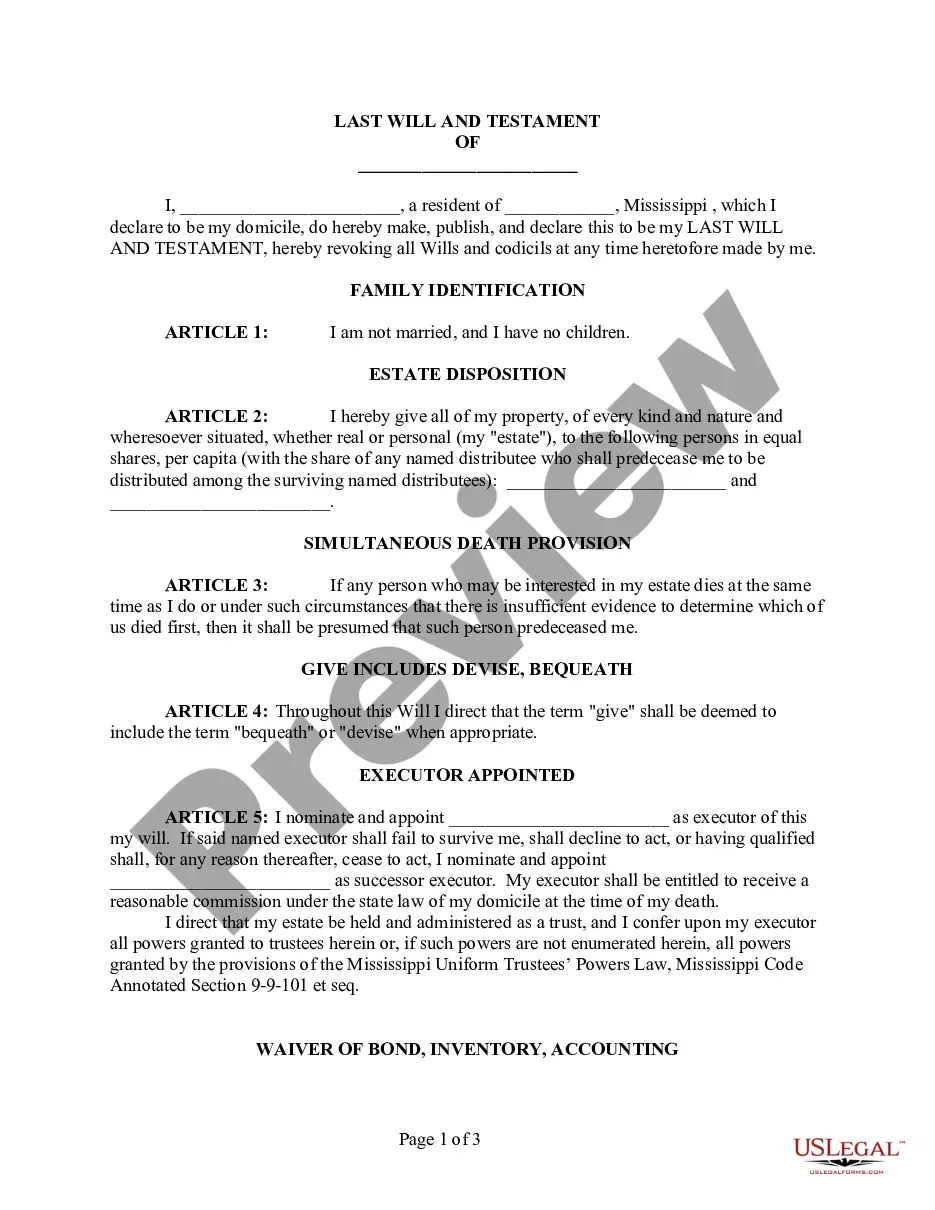
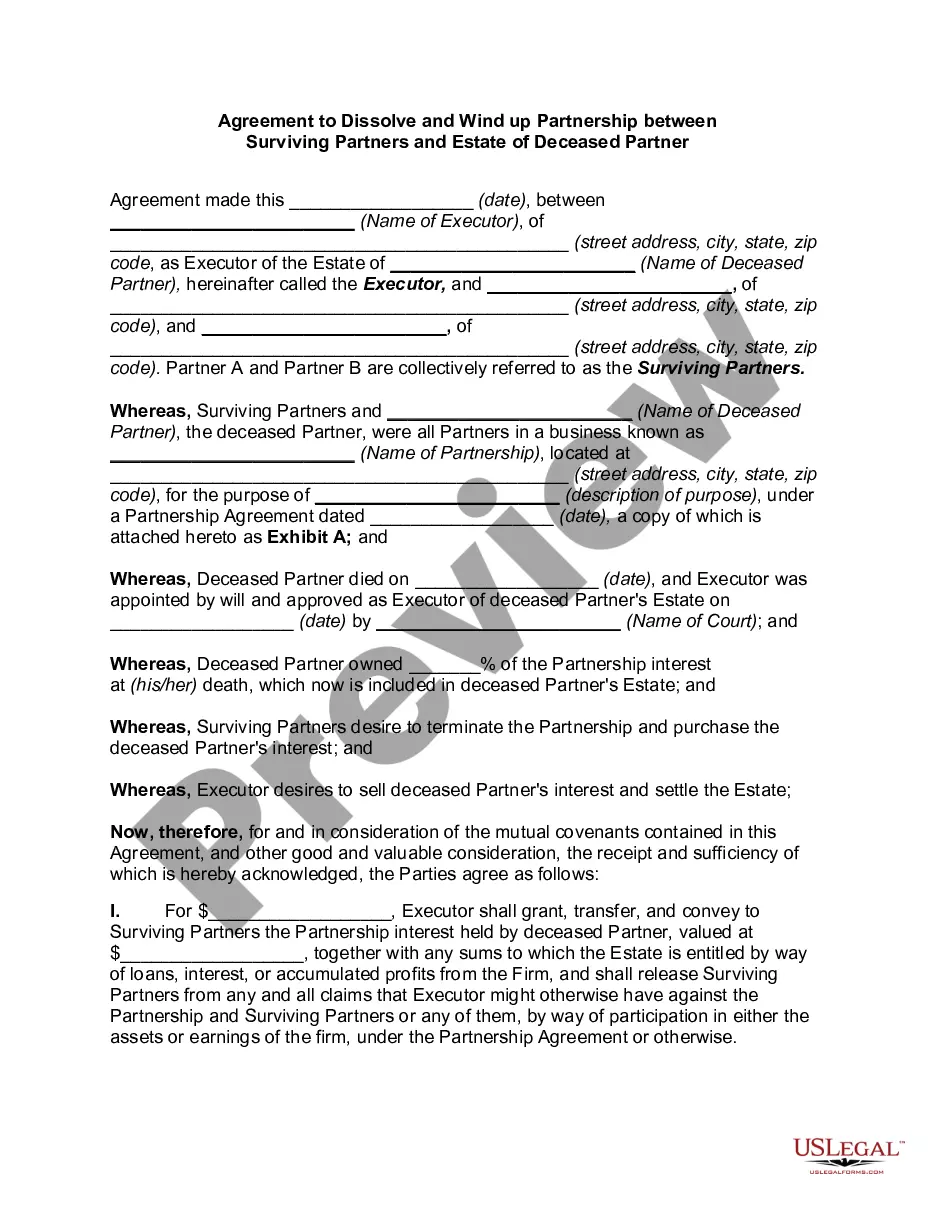
The Last Will and Testament for Single Person with No Children is a legal document that outlines an individual's wishes regarding their estate after their death. This form is specifically designed for those who are single and have no children, allowing them to designate how their property should be distributed and who will manage their estate. It includes essential details such as the appointment of an executor and the specific distributions of assets, ensuring that the individual's preferences are respected and legally recognized.
Key parts of this document
- Family Identification: Designates that the testator is single and has no children.
- Estate Disposition: Specifies how the testatorâs property will be divided among beneficiaries.
- Executor Appointment: Names an executor responsible for administering the estate.
- Simultaneous Death Provision: Clarifies what happens if the beneficiaries die at the same time as the testator.
- Waiver of Bond: Removes the requirement for the executor to post a bond or inventory.




Common use cases
This form should be used by individuals who are single and do not have children but wish to outline their wishes for property distribution after their death. It is useful in any situation where a person wants to ensure their assets are distributed according to their preferences and to appoint someone to manage their estate, thus avoiding potential disputes among relatives or friends.
Who can use this document
- Individuals who are single and without children.
- People who want to ensure their property goes to specific beneficiaries after death.
- Those looking to appoint an executor to handle their estate matters.
- Anyone seeking to simplify the estate settlement process for their loved ones.
How to complete this form
- Identify the parties by filling in the your name and residency details.
- Designate who will receive your property by listing beneficiaries in the estate disposition section.
- Appoint an executor who will oversee your estateâs administration.
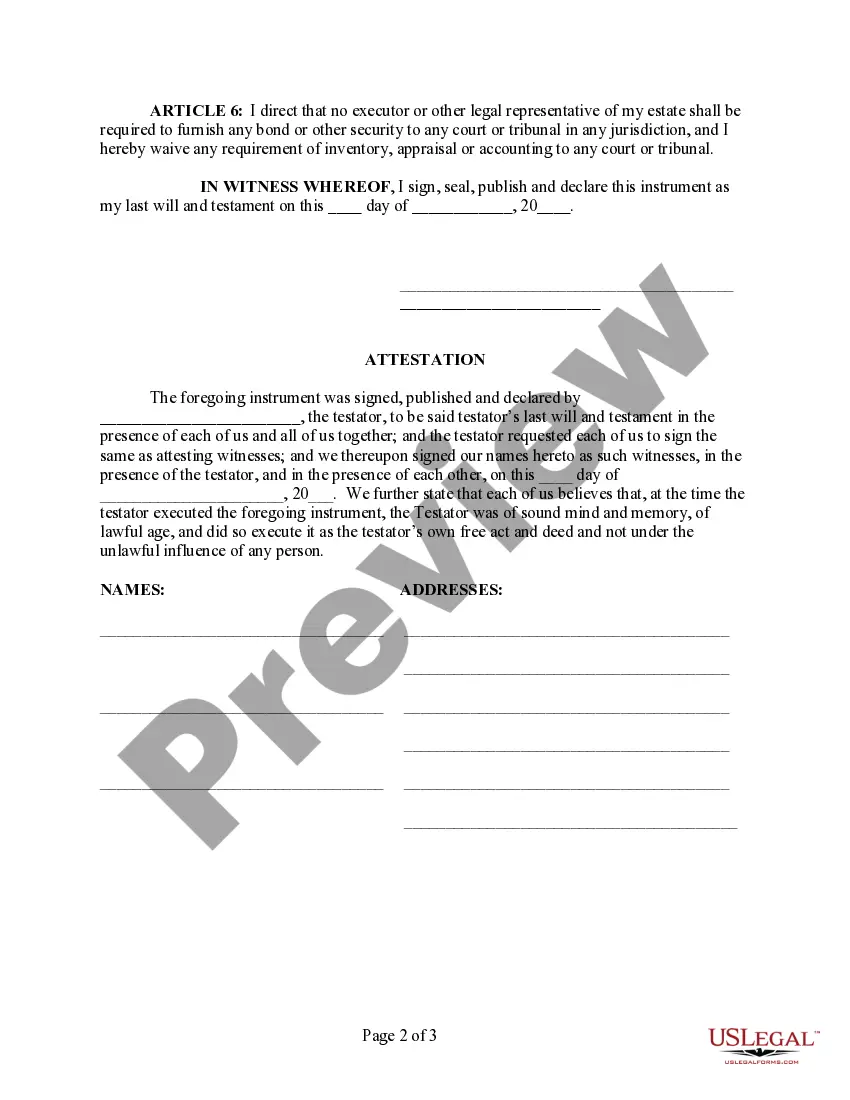
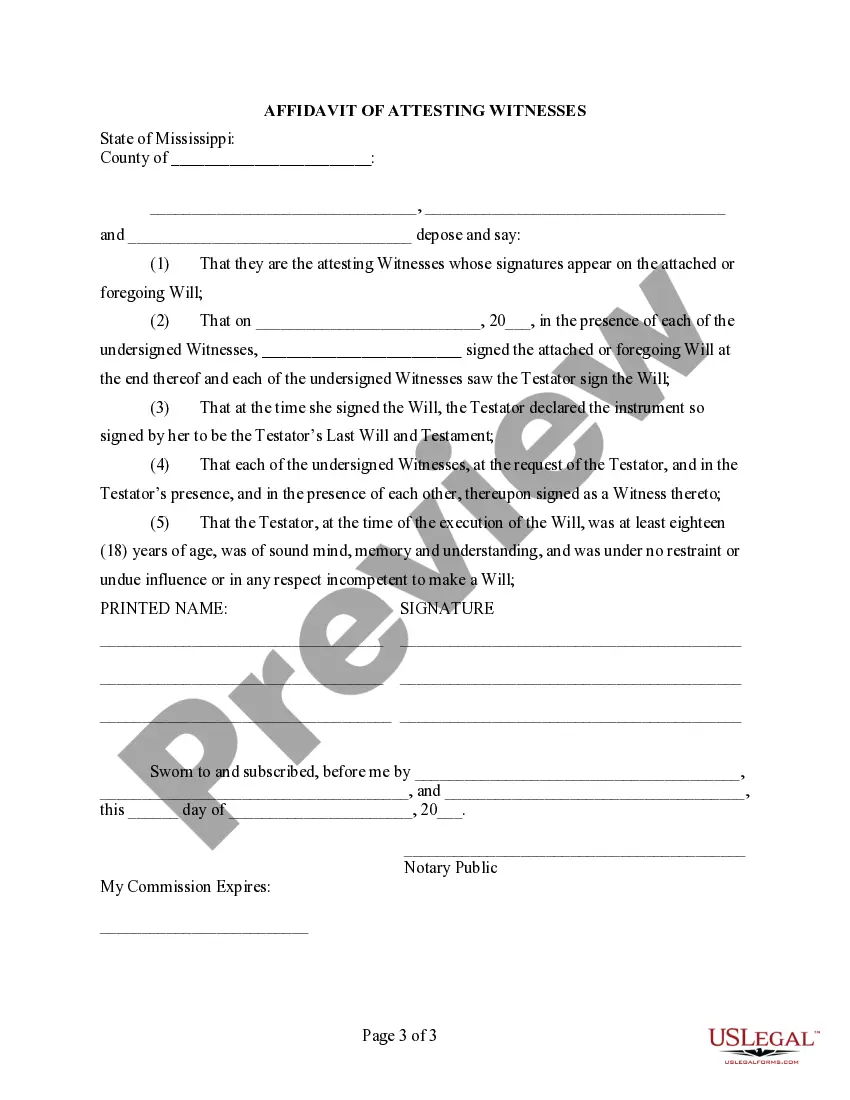
- Complete the signature section to validate your wishes, ensuring you have witnesses present.
- Consider if any specific instructions about simultaneous deaths or waiving requirements apply to your wishes.
Notarization guidance
This form does not typically require notarization unless specified by local law. However, having a notary can add an additional layer of legitimacy to your will.
Get your form ready online
Our built-in tools help you complete, sign, share, and store your documents in one place.
Make edits, fill in missing information, and update formatting in US Legal Forms—just like you would in MS Word.
Download a copy, print it, send it by email, or mail it via USPS—whatever works best for your next step.
Sign and collect signatures with our SignNow integration. Send to multiple recipients, set reminders, and more. Go Premium to unlock E-Sign.
If this form requires notarization, complete it online through a secure video call—no need to meet a notary in person or wait for an appointment.
We protect your documents and personal data by following strict security and privacy standards.

Make edits, fill in missing information, and update formatting in US Legal Forms—just like you would in MS Word.

Download a copy, print it, send it by email, or mail it via USPS—whatever works best for your next step.

Sign and collect signatures with our SignNow integration. Send to multiple recipients, set reminders, and more. Go Premium to unlock E-Sign.

If this form requires notarization, complete it online through a secure video call—no need to meet a notary in person or wait for an appointment.

We protect your documents and personal data by following strict security and privacy standards.
Avoid these common issues
- Failing to sign the form in front of witnesses can invalidate the will.
- Not properly designating beneficiaries may lead to disputes among potential heirs.
- Forgetting to revoke previous wills can cause confusion about which will is current.
Why complete this form online
- Convenience of filling out and saving your form at your own pace.
- Editability allows you to make changes as your circumstances evolve.
- Reliability of using an attorney-drafted template to ensure legal compliance.
Looking for another form?
Form popularity
FAQ
If you die without a will in Mississippi, your assets will go to your closest relatives under state "intestate succession" laws.
Does a Will Have to Be Probated in Mississippi? Yes, a will must be entered into the court records when a person dies. The court is responsible to ensure the wishes of the decedent as expressed in the will are followed.
If you die without a will in Mississippi, your assets will go to your closest relatives under state "intestate succession" laws.
A surviving spouse inherits the entire intestate estate when a decedent dies without a will. Unfortunately, the spouse's share quickly shrinks under Mississippi law if the decedent had children. The state's intestacy laws equally divide the estate among the spouse and children.
The short answer: unless a decedent established a parent-child relationship before their death or name them in a last will and testament, then these children will not inherit from the decedent. There are several ways legally to establish a parent-child relationship for purposes of inheritance.
If you die with children but no spouse, your children will inherit everything. If you die with one child, your spouse gets half of the intestate property and your child gets the other half. If you die with two or more children, your surviving spouse and children each get an equal share of your intestate property.
To write a will, Mississippi law states you must be at least 18 years old, of sound and disposing mind, must intend the document to be your will and must have the written will validly executed. Upon your death, your will must go through probate, a court proceeding that declares the will valid or invalid.
The laws are different in each state; however, in Mississippi, your Living Will requires notarization or the signatures of two witnesses. At least one of the witnesses to your Living Will form should not be a relative, spouse, adopted child, heir, or any other beneficiary.