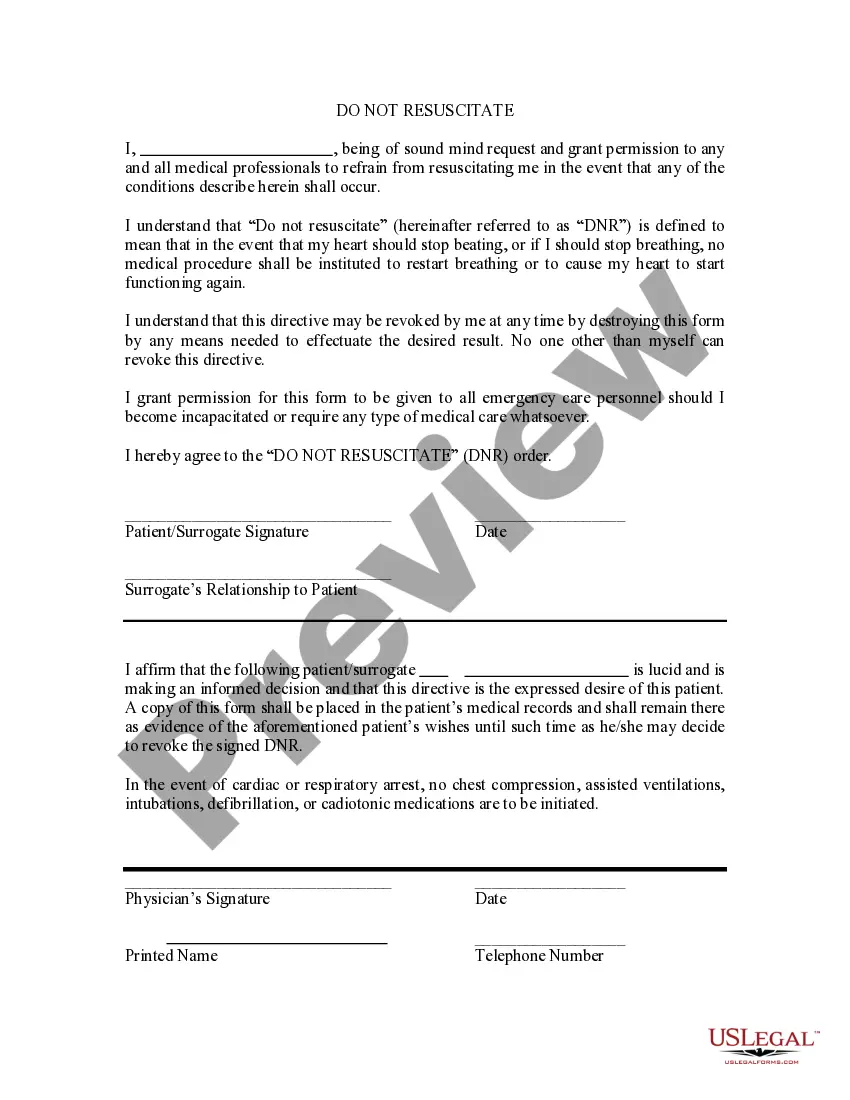
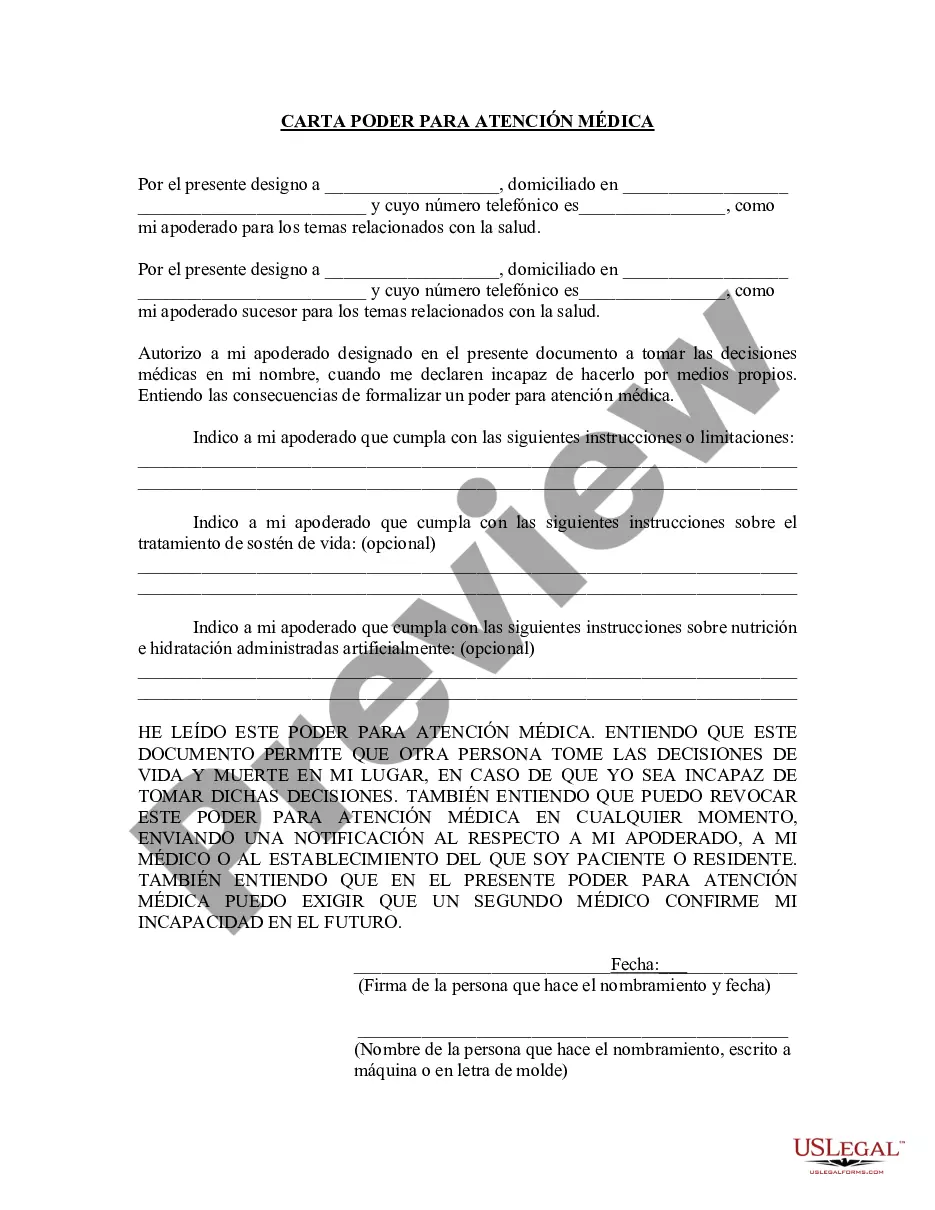
This is a form initiated by a patient requesting that he/she not be resuscitated should he/she stop breathing or should his/her heart stop beating. This form is also to be signed by a physician attesting to patient's wishes and to be placed in the patient's file.
Mississippi Do Not Resuscitate Request - DNR
State:
Multi-State
Control #:
US-PRM-12
Format:
Word;
Rich Text
Instant download
Description
Free preview

Get your form ready online
Our built-in tools help you complete, sign, share, and store your documents in one place.
Built-in online Word editor
Make edits, fill in missing information, and update formatting in US Legal Forms—just like you would in MS Word.
Export easily
Download a copy, print it, send it by email, or mail it via USPS—whatever works best for your next step.
E-sign your document
Sign and collect signatures with our SignNow integration. Send to multiple recipients, set reminders, and more. Go Premium to unlock E-Sign.
Notarize online 24/7
If this form requires notarization, complete it online through a secure video call—no need to meet a notary in person or wait for an appointment.
Store your document securely
We protect your documents and personal data by following strict security and privacy standards.
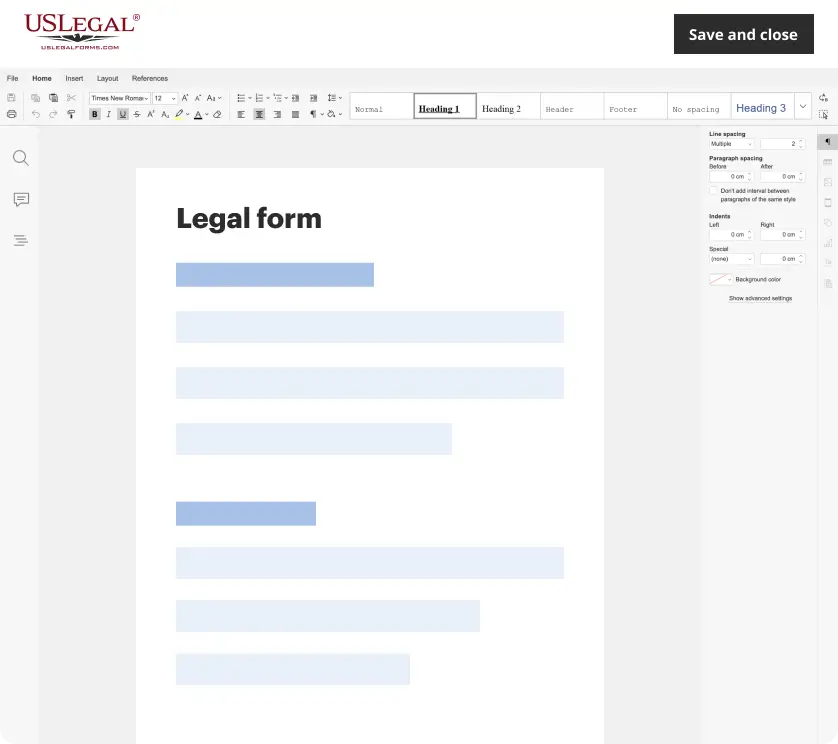
Make edits, fill in missing information, and update formatting in US Legal Forms—just like you would in MS Word.
Download a copy, print it, send it by email, or mail it via USPS—whatever works best for your next step.
Sign and collect signatures with our SignNow integration. Send to multiple recipients, set reminders, and more. Go Premium to unlock E-Sign.

If this form requires notarization, complete it online through a secure video call—no need to meet a notary in person or wait for an appointment.

We protect your documents and personal data by following strict security and privacy standards.
Looking for another form?




How to fill out Do Not Resuscitate Request - DNR?
US Legal Forms - one of the largest collections of legal documents in the United States - offers a broad selection of legal document templates that you can download or print. By using the website, you can find thousands of forms for business and personal purposes, organized by categories, states, or keywords. You can discover the most recent versions of forms such as the Mississippi Do Not Resuscitate Request - DNR in just a few moments.
If you have a monthly subscription, Log In and obtain the Mississippi Do Not Resuscitate Request - DNR from the US Legal Forms library. The Download button will appear on every document you view. You can access all previously saved forms in the My documents section of your account.
To use US Legal Forms for the first time, here are simple steps to get started: Ensure you have selected the correct form for your city/state. Click on the Preview button to review the document's content. Read the document description to ensure you have chosen the correct form. If the form does not meet your requirements, use the Search field at the top of the screen to find one that does. Once satisfied with the form, confirm your choice by clicking the Get now button. Then, choose the pricing plan you prefer and provide your credentials to register for an account.
Access the Mississippi Do Not Resuscitate Request - DNR with US Legal Forms, the most extensive collection of legal document templates. Utilize thousands of professional and state-specific templates that meet your business or personal needs and requirements.
- Process the payment. Use your credit card or PayPal account to complete the transaction.
- Select the format and download the document to your device.
- Make modifications. Fill out, edit, print, and sign the saved Mississippi Do Not Resuscitate Request - DNR.
- Every template you added to your account has no expiration date and belongs to you forever.
- So, if you want to download or print another copy, just go to the My documents section and click on the document you need.
Form popularity
FAQ
The most important factor to bear in mind is that the law does not require a patient, or their family to consent to a DNR order. This means a doctor can issue a DNR order, even if you do not want one (see section on what to do if there is a disagreement).
The most important factor to bear in mind is that the law does not require a patient, or their family to consent to a DNR order. This means a doctor can issue a DNR order, even if you do not want one (see section on what to do if there is a disagreement).
You can make it clear to your doctor or medical team that you do not want CPR if your heart or breathing stops. Your doctor may complete a DNACPR form to indicate this and put it in your medical records.
Summary. The main point is this: as a bystander, i.e. a non-medical professional, you cannot get into any legal trouble for giving CPR to a person with a DNR, and should always give CPR as soon as possible to all victims of sudden cardiac arrest.
How Do You Get A Do Not Resuscitate Order? If you decide you wish to have a DNR order put in place, inform your doctor. Your doctor is required to follow your wishes or transfer your care to a physician who is willing to carry them out. The doctor will fill out a form for a DNR order and add it to your medical record.
notresuscitate order (DNR), also known as Do Not Attempt Resuscitation (DNAR), Do Not Attempt Cardiopulmonary Resuscitation (DNACPR), no code or allow natural death, is a medical order, written or oral depending on country, indicating that a person should not receive cardiopulmonary resuscitation (CPR) if that
Those who are resuscitated may also suffer brain damage. As such, it can lead to broken ribs, punctured lungs, and possibly a damaged heart. These actions may be too much for someone in frail health. If you wish to explore a DNR order, it's important to know that the orders vary from state to state.
Do not resuscitate orderA DNR is a request not to have CPR if your heart stops or if you stop breathing. You can use an advance directive form or tell your doctor that you don't want to be resuscitated. Your doctor will put the DNR order in your medical chart. Doctors and hospitals in all states accept DNR orders.
Generally, a DNR is executed when an individual has a history of chronic disease or terminal illness, such as chronic lung disease or heart disease, that has in the past or may in the future necessitate cardiopulmonary resuscitation (CPR), and the patient no longer wishes to be revived because of concerns that the use