Mississippi Order Granting Expunction of Record
What this document covers
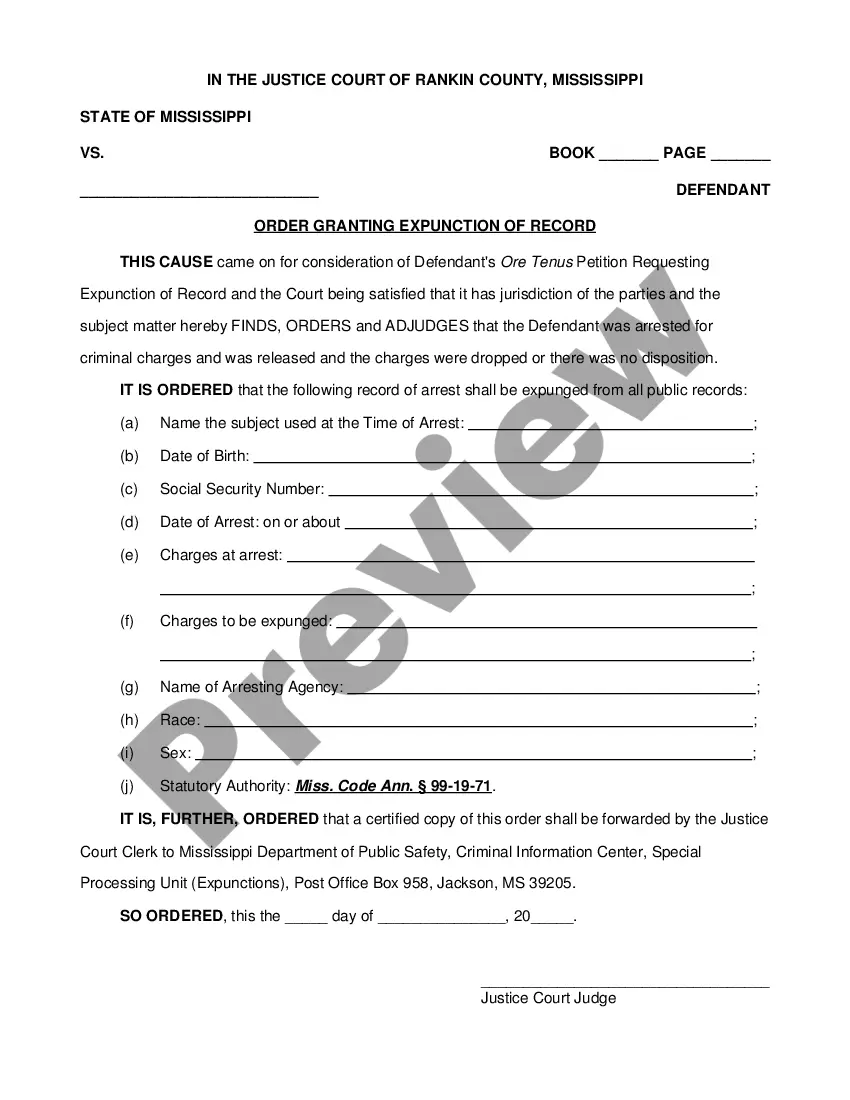
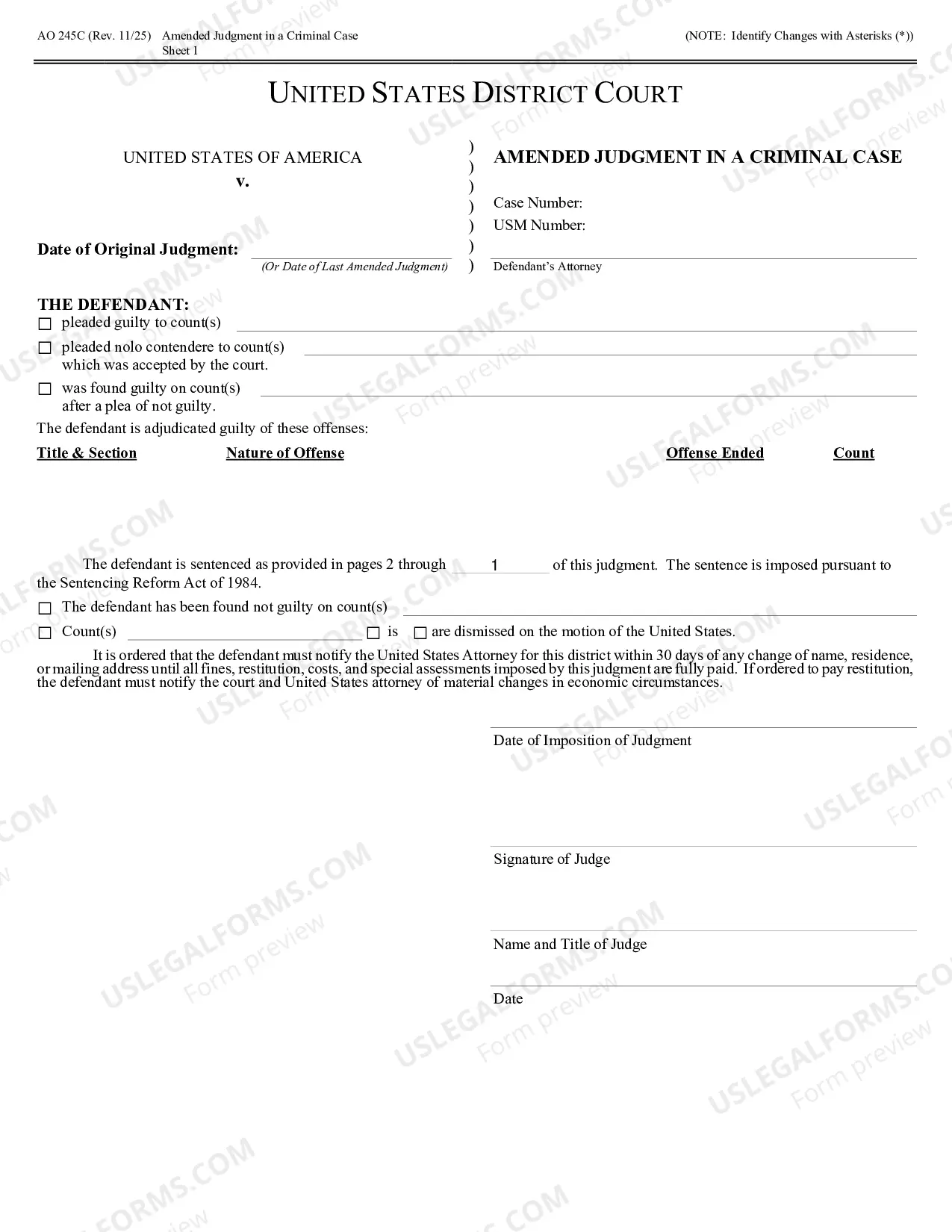
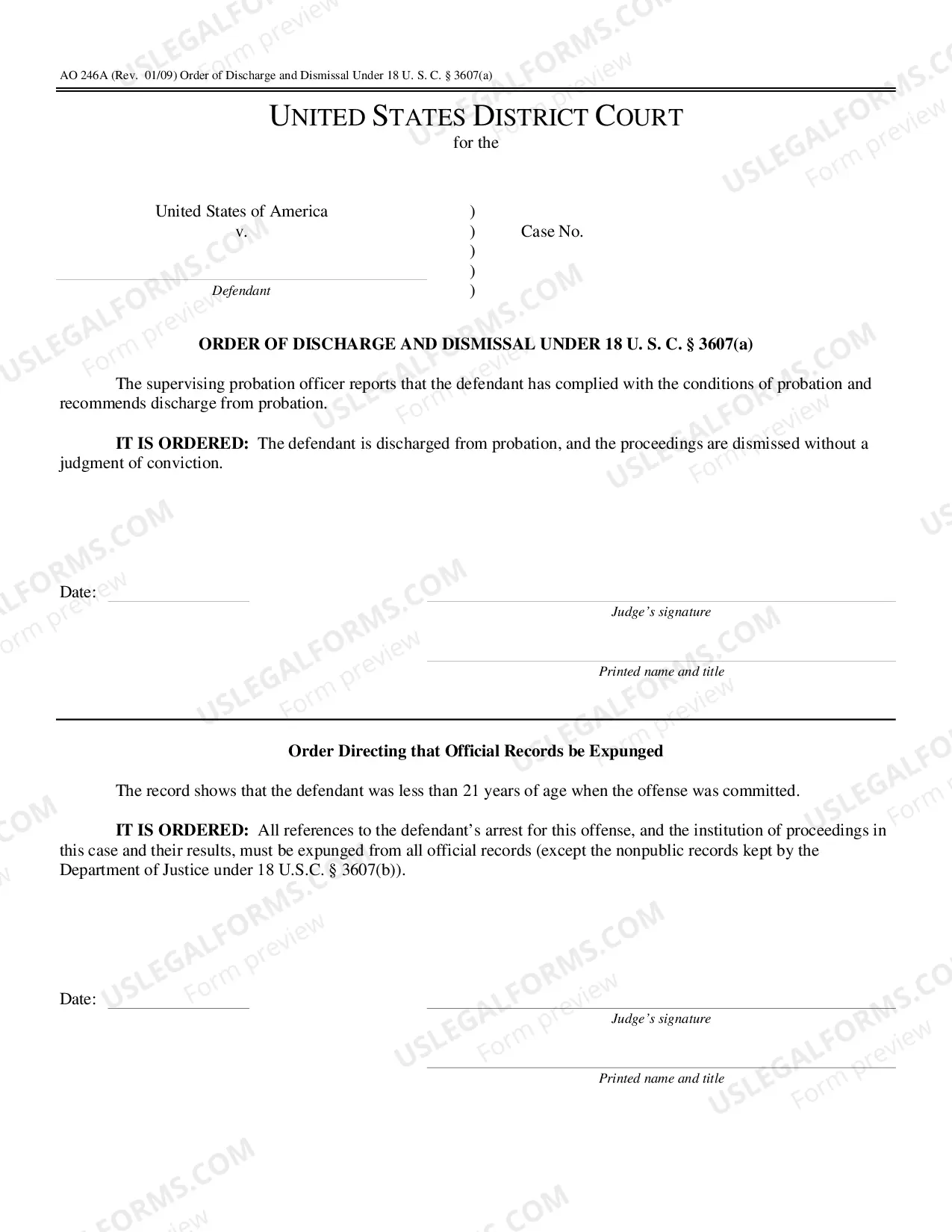
The Order Granting Expunction of Record is an official legal document issued by the Rankin County Mississippi Justice Court. Its primary purpose is to allow a defendant to expunge or erase certain arrest records from public view. This form is specifically designed for situations where an individual was arrested but did not face any criminal charges or the charges were dropped, distinguishing it from other forms that may address different legal situations or outcomes.
Main sections of this form
- Defendant's information including name, date of birth, and Social Security number.
- Details of the arrest including the date, charges at the time of arrest, and charges to be expunged.
- Name of the agency that made the arrest.
- Demographic information such as race and sex of the defendant.
- Statutory authority reference from Mississippi law.
- Instructions for forwarding the certified order to relevant authorities.
Common use cases
This form should be used when an individual wishes to have a record of arrest expunged in situations where there were no charges filed, or where charges were dropped. Common scenarios include minor offenses, cases where the individual was wrongly arrested, or instances where the outcome did not lead to prosecution.
Who should use this form
This form is intended for:
- Defendants who have been arrested but not convicted of a crime.
- Individuals seeking to clear their criminal record for personal or professional reasons.
- Those looking to restore their reputation after a wrongful arrest.
Completing this form step by step
- Provide your complete name, date of birth, and Social Security number accurately.
- Enter the date of your arrest and any charges that were applied at that time.
- Specify which charges you wish to have expunged from your record.
- Fill in the name of the arresting agency and your demographics (race and sex).
- Submit the completed order to the appropriate court for the judge's signature.
- Ensure that a certified copy of the order is sent to the Mississippi Department of Public Safety, Criminal Information Center.
Notarization requirements for this form
This form does not typically require notarization unless specified by local law. However, it is important to verify if there are any specific requirements that may necessitate notarization in your case.
Get your form ready online
Our built-in tools help you complete, sign, share, and store your documents in one place.
Make edits, fill in missing information, and update formatting in US Legal Forms—just like you would in MS Word.
Download a copy, print it, send it by email, or mail it via USPS—whatever works best for your next step.
Sign and collect signatures with our SignNow integration. Send to multiple recipients, set reminders, and more. Go Premium to unlock E-Sign.
If this form requires notarization, complete it online through a secure video call—no need to meet a notary in person or wait for an appointment.
We protect your documents and personal data by following strict security and privacy standards.

Make edits, fill in missing information, and update formatting in US Legal Forms—just like you would in MS Word.

Download a copy, print it, send it by email, or mail it via USPS—whatever works best for your next step.

Sign and collect signatures with our SignNow integration. Send to multiple recipients, set reminders, and more. Go Premium to unlock E-Sign.

If this form requires notarization, complete it online through a secure video call—no need to meet a notary in person or wait for an appointment.

We protect your documents and personal data by following strict security and privacy standards.
Avoid these common issues
- Failing to provide complete or accurate personal information.
- Not specifying all charges to be expunged.
- Forgetting to submit the form to the correct court.
- Neglecting to have the completed form signed by a judge.
Why complete this form online
- Easy access to professionally drafted legal forms without the need for in-person consultations.
- Convenient and quick to download, allowing for immediate use.
- Forms can be edited to fit your specific circumstances before printing.
Looking for another form?
Form popularity
FAQ
A person convicted of a felony loses the rights to vote and to serve on a jury. The right to vote is restored automatically after completion of sentence, including payment of fines and restitution. The right to serve on a jury can only be restored by a pardon.
Under Mississippi state law, it is illegal for anyone who has been convicted of a felony to possess a firearm.have had an adjudication of guilt withheld or a suspended sentence on any felony (unless it has been more than three years since probation or any other conditions set by the court have been fulfilled); and.
Usually states will not allow felonies to be expunged for violent felonies, sexual assaults, and other serious crimes such as endangerment to children, crimes involving weapons or arson, and perjury.
To get a conviction expunged under this statute, you need to retain a Mississippi expungement lawyer or attorney. A Petition for Expungement must be filed. At the end of the process, should the judge find you have been rehabilitated, he will enter the expungement Order.
To get a conviction expunged under this statute, you need to retain a Mississippi expungement lawyer or attorney. A Petition for Expungement must be filed. At the end of the process, should the judge find you have been rehabilitated, he will enter the expungement Order.
The answer is yes, Mississippi law allows for the expungement of a DUI. A DUI Expungement in Mississippi is a process and cannot occur until five (5) years after you complete all the requirements of the court for the conviction. That is discussed below.You can show the court why the conviction should be expunged.
All firearms rights lost for felony conviction; may be regained from the court through a set-aside, if the conviction was for a non-violent offense, or from the court two years after discharge. Persons convicted of a dangerous offense must wait ten years.
How long do I have to wait to have a misdemeanor expunged? Depending on the charge, usually 1-5 years after completion of the court ordered sentence.
Does a Felony Ever Go Away? A felony charge will stay on your record for life. The only way to remove a felony from your record is through a strict process called expungement (more on expungement below).
Gun ownership rights of a convicted felon can be restored through a Certificate of Rehabilitation. Upon completion of court-ordered conditions, including all fines and probation costs, a convicted felon may petition the court to issue a Certificate of Rehabilitation.