Mississippi Identity Theft Recovery Package
Understanding this form package
The Mississippi Identity Theft Recovery Package is a comprehensive collection of legal forms designed specifically for victims of identity theft in Mississippi. This package helps individuals manage the aftermath of having their identification lost or stolen, allowing them to effectively communicate with creditors and government agencies. Unlike other packages, it offers tools tailored to safeguard your credit, financial assets, and job opportunities while streamlining the recovery process.
What’s included in this form package
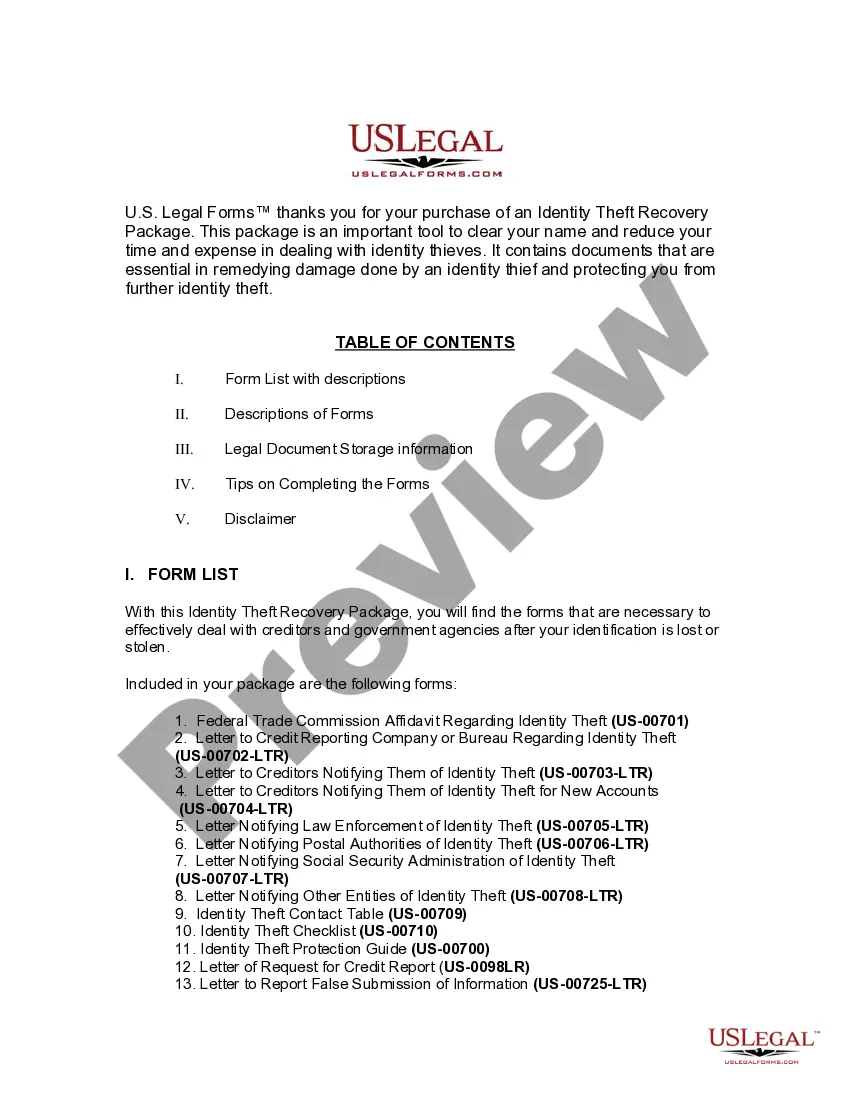
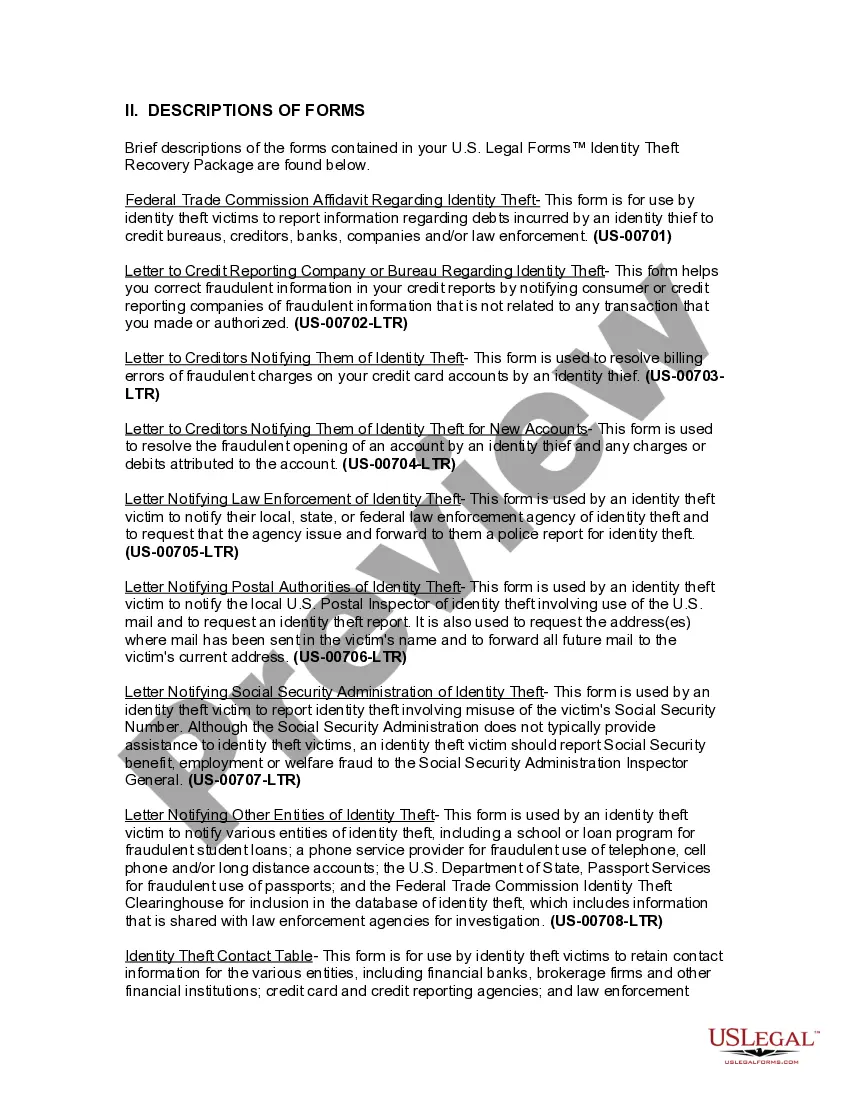
- Identity Theft Protection Guide
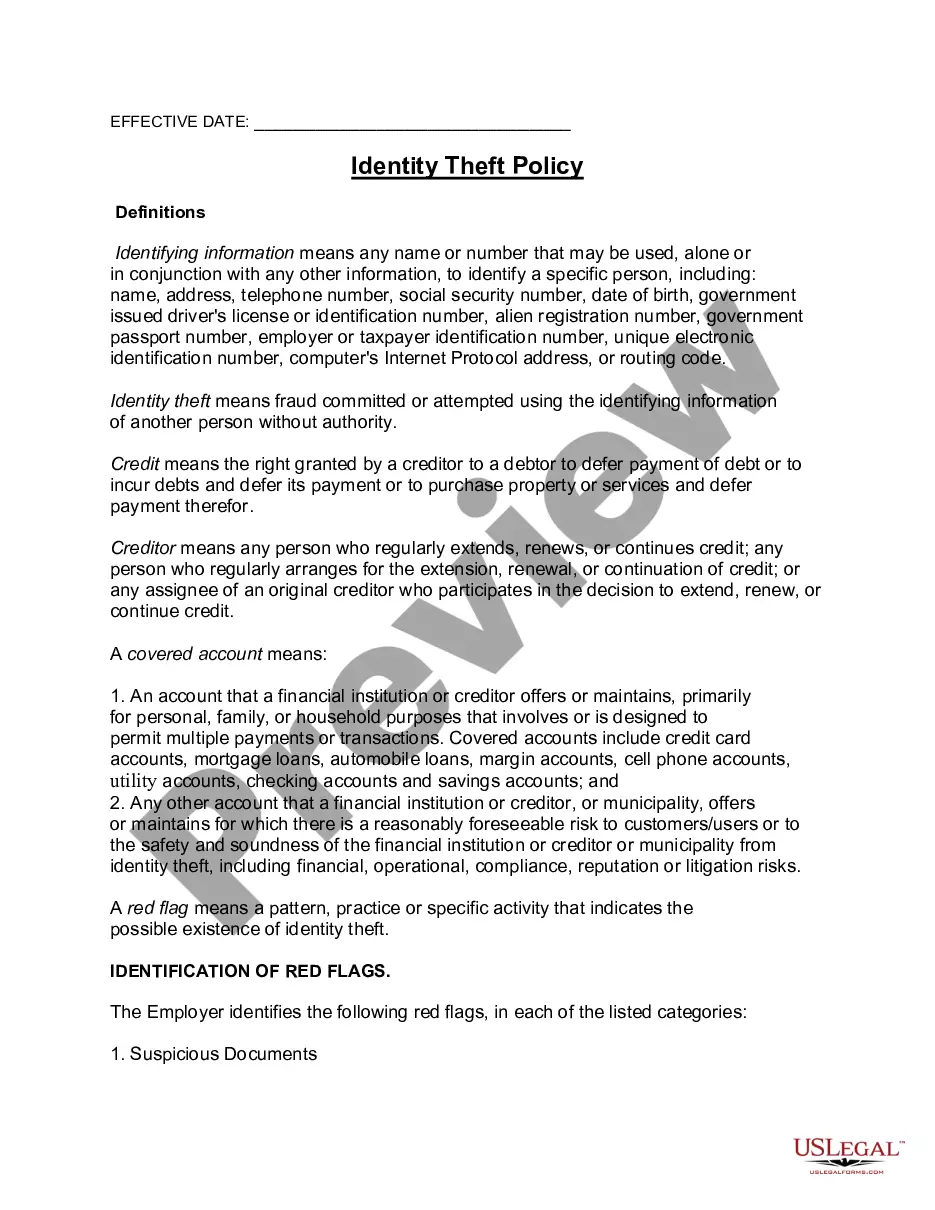
- Federal Trade Commission Affidavit regarding Identity Theft
- Letter to Credit Reporting Company or Bureau regarding Identity Theft
- Letter to Creditors notifying them of Identity Theft
- Letter to Creditors Notifying Them of Identity Theft for New Accounts
- Letter Notifying Law Enforcement of Identity Theft
- Letter Notifying Postal Authorities of Identity Theft
- Letter Notifying Social Security Administration of Identity Theft
- Letter to Other Entities Notifying Them of Identity Theft
- Identity Theft Contact Table
- Identity Theft Checklist
- Sample Letter to Report False Submission of Information
- Sample Letter for Request for Free Credit Report Allowed by Federal Law
Situations where these forms applies
This form package is essential in various situations, including:
- If your personal information has been stolen and used fraudulently.
- When you notice unauthorized charges on your credit report.
- If you are notified of new accounts opened in your name without your consent.
- When you need to report identity theft to law enforcement or other agencies.
Intended users of this form package
- Individuals whose personal information has been stolen or compromised.
- Anyone needing to clear fraudulent charges on their credit reports.
- Victims of identity theft who wish to notify creditors and authorities.
- People looking to safeguard their financial identity after an incident of identity theft.
Completing these forms step by step
- Review all included forms to understand their purposes.
- Collect necessary personal information, such as your identification and details of the identity theft.
- Fill out each form carefully, ensuring accuracy in the details provided.
- Submit the completed forms to the relevant entities including creditors and law enforcement agencies.
- Keep copies of everything for your records.
Notarization details for included forms
Forms in this package typically do not require notarization. However, certain states or document types may still need it. US Legal Forms provides online notarization powered by Notarize, available 24/7 for your convenience.
Get your form ready online
Our built-in tools help you complete, sign, share, and store your documents in one place.
Make edits, fill in missing information, and update formatting in US Legal Forms—just like you would in MS Word.
Download a copy, print it, send it by email, or mail it via USPS—whatever works best for your next step.
Sign and collect signatures with our SignNow integration. Send to multiple recipients, set reminders, and more. Go Premium to unlock E-Sign.
If this form requires notarization, complete it online through a secure video call—no need to meet a notary in person or wait for an appointment.
We protect your documents and personal data by following strict security and privacy standards.

Make edits, fill in missing information, and update formatting in US Legal Forms—just like you would in MS Word.

Download a copy, print it, send it by email, or mail it via USPS—whatever works best for your next step.

Sign and collect signatures with our SignNow integration. Send to multiple recipients, set reminders, and more. Go Premium to unlock E-Sign.

If this form requires notarization, complete it online through a secure video call—no need to meet a notary in person or wait for an appointment.

We protect your documents and personal data by following strict security and privacy standards.
Mistakes to watch out for
- Failing to keep copies of submitted forms for personal records.
- Not providing sufficient detail when filling out forms, which can lead to delays in resolving issues.
- Overlooking the necessity to notify all affected entities about the identity theft.
- Not following up with creditors or agencies after submitting the forms.
Why use this package online
- Convenient access to all necessary forms in one package.
- Edit and customize forms quickly to fit your specific situation.
- Reliability of forms prepared by licensed legal professionals.
- Immediate download availability, allowing for prompt action.
Legal use & context
- The forms in this package are legally recognized in Mississippi for addressing cases of identity theft.
- Using these forms helps protect your credit and mitigate any fraudulent charges.
- These documents serve as vital evidence when reporting to authorities or disputing charges.
Main things to remember
- The Mississippi Identity Theft Recovery Package provides essential forms to assist victims of identity theft.
- Understanding when and how to use these forms can expedite the recovery process.
- Staying organized and proactive is key in effectively dealing with identity theft issues.
Looking for another form?
Form popularity
FAQ
Skimmer devices. Thieves can copy your credit card information using a hand held device called a skimmer. Dumpster diving. Printed documents that state private information should be shredded before being thrown away. Mail theft. Internet. Phishing. Pretext Calling. Shoulder Surfing. Card Verification Value Code Requests.
Go to your local police office with: A copy of your FTC Identity Theft Report. Tell the police someone stole your identity and you need to file a report. Ask for a copy of the police report. You may need this to complete other steps.
Step 1: Call the companies where you know fraud occurred. Call the fraud department. Step 2: Place a fraud alert and get your credit reports. Place a free, one-year fraud alert by contacting one of the three credit bureaus. Step 3: Report identity theft to the FTC.
Notify affected creditors or banks. Put a fraud alert on your credit report. Check your credit reports. Freeze your credit. Report the identity theft to the FTC. Go to the police. Remove fraudulent info from your credit report.
69 percent reported feelings of fear related to personal financial safety. 60 percent reported anxiety. 42 percent reported fearing for the financial security of family members. 8 percent reported feeling suicidal.
Financial Identity Theft. Financial identity theft is by far the most common type of identity theft. Medical Identity Theft. Criminal Identity Theft. Child Identity Theft. Identity Cloning & Concealment. Synthetic Identity Theft. Mitigate Your Risk.
Account Takeover Fraud. Debit Card Fraud or Credit Card Fraud. Driver's License Identity Theft. Mail Identity Theft. Online Shopping Fraud. Social Security Number Identity Theft. Senior Identity Theft and Scams. Child Identity Theft.
The four types of identity theft include medical, criminal, financial and child identity theft.
Aggravated identity theft is punishable by a mandatory minimum sentence of imprisonment for two years or by imprisonment for five years if it relates to a terrorism offense. At least thus far, the government has rarely prosecuted the five-year terrorism form of the offense.