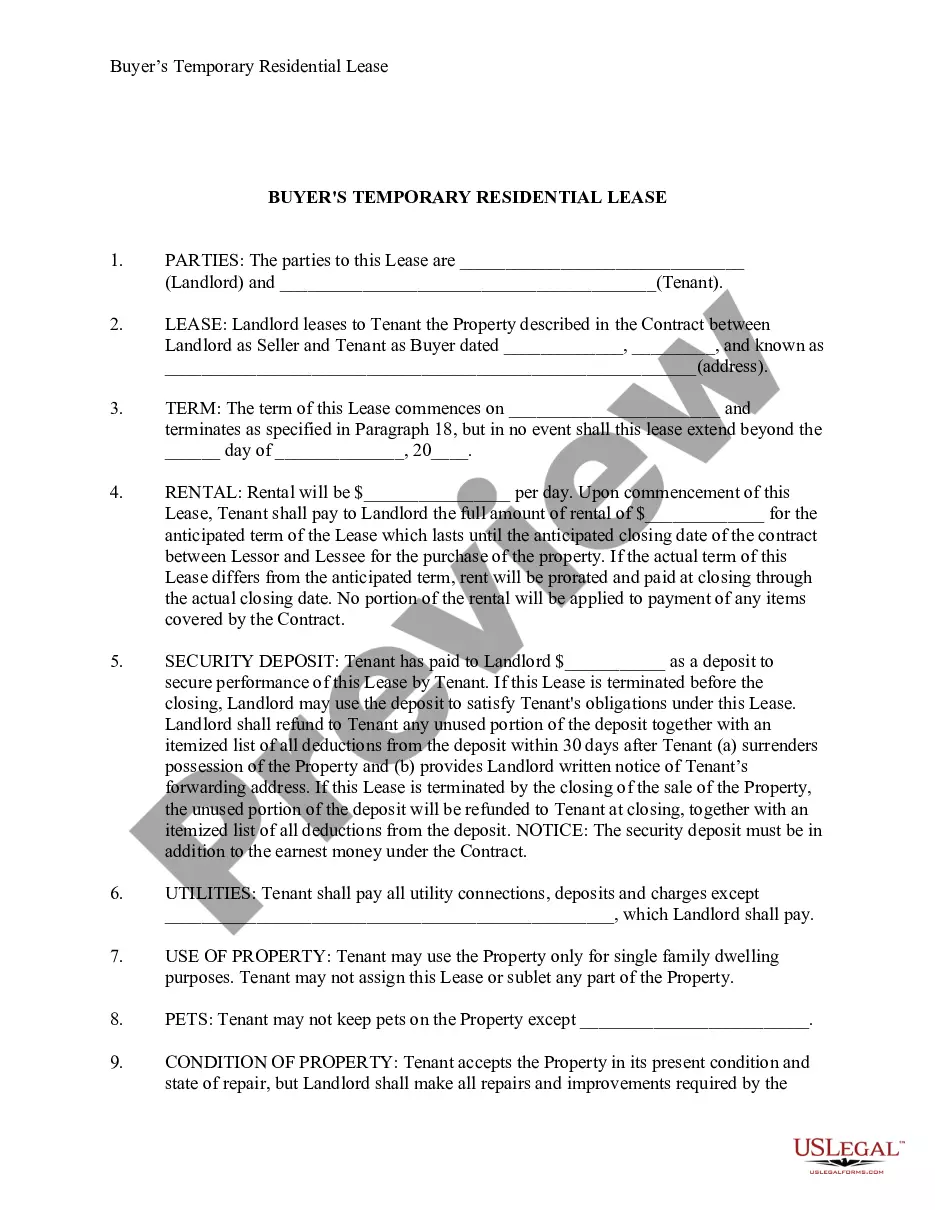
Mississippi Installments Fixed Rate Promissory Note Secured by Personal Property
Understanding this form
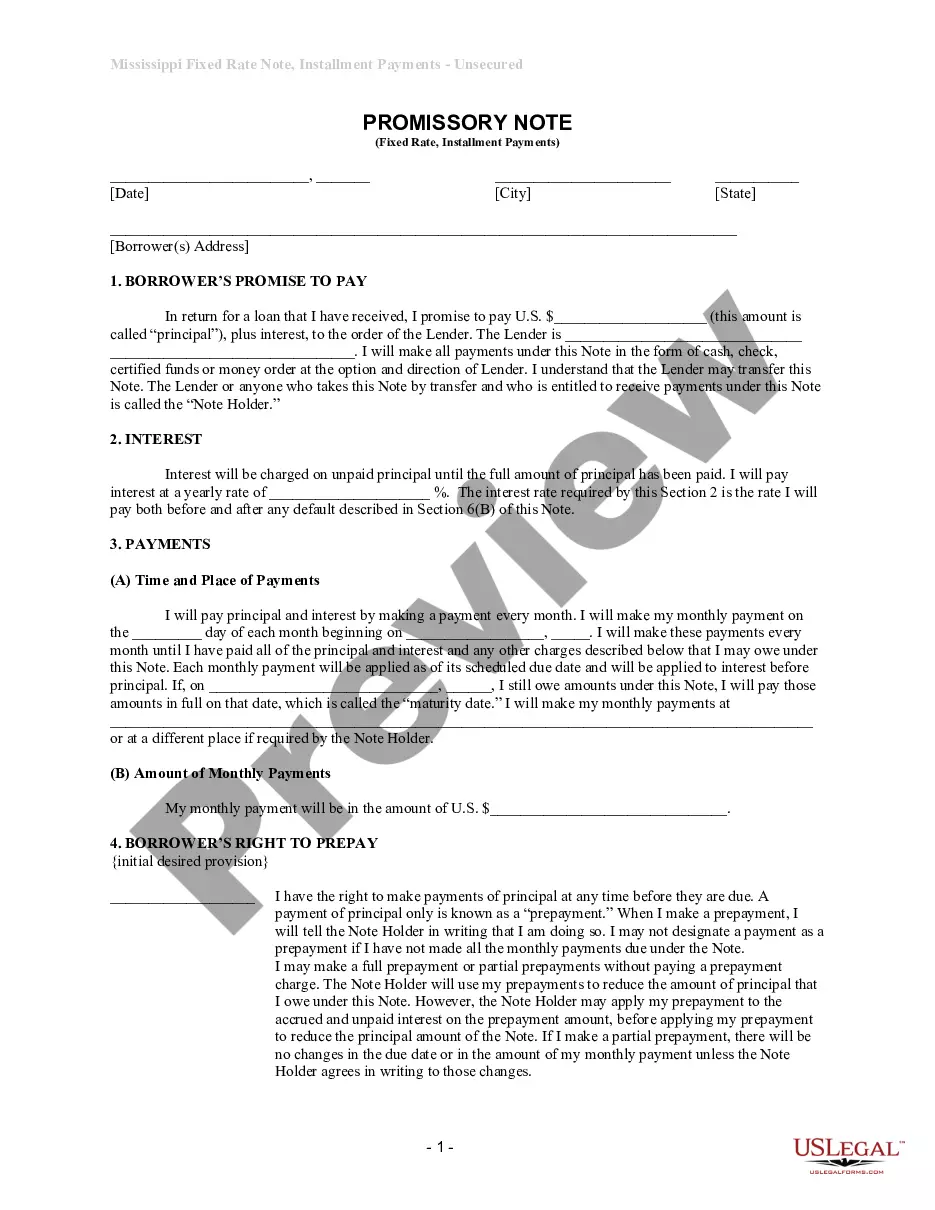
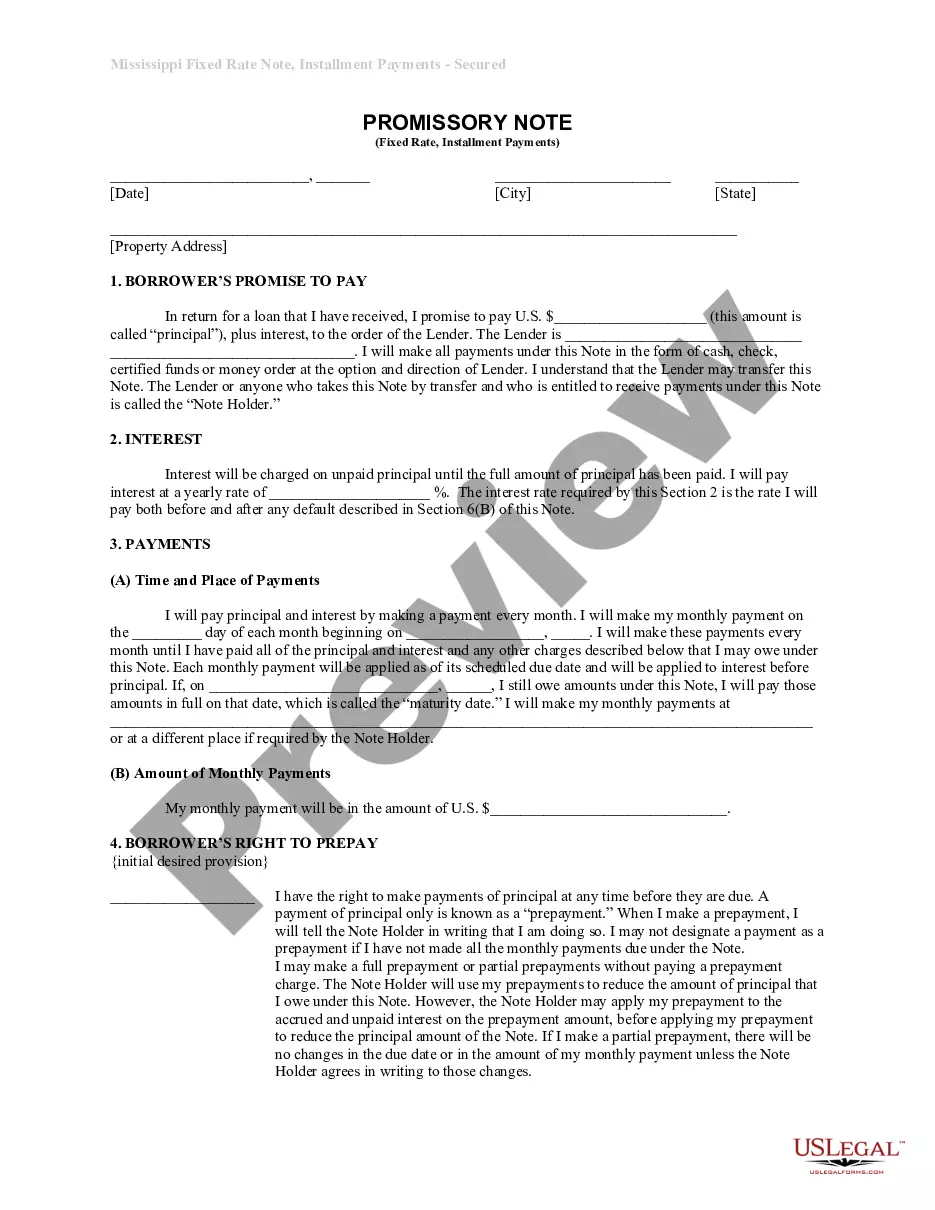
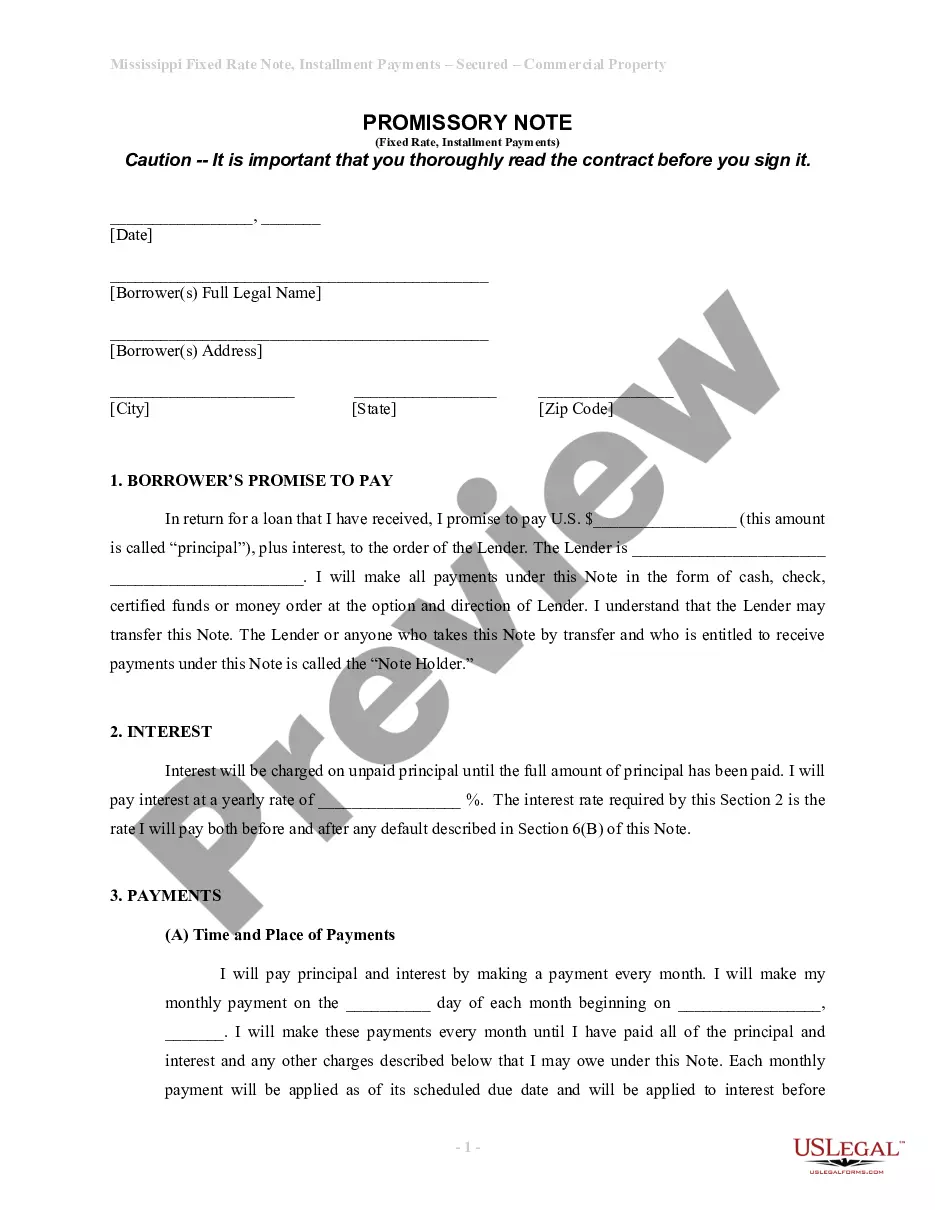
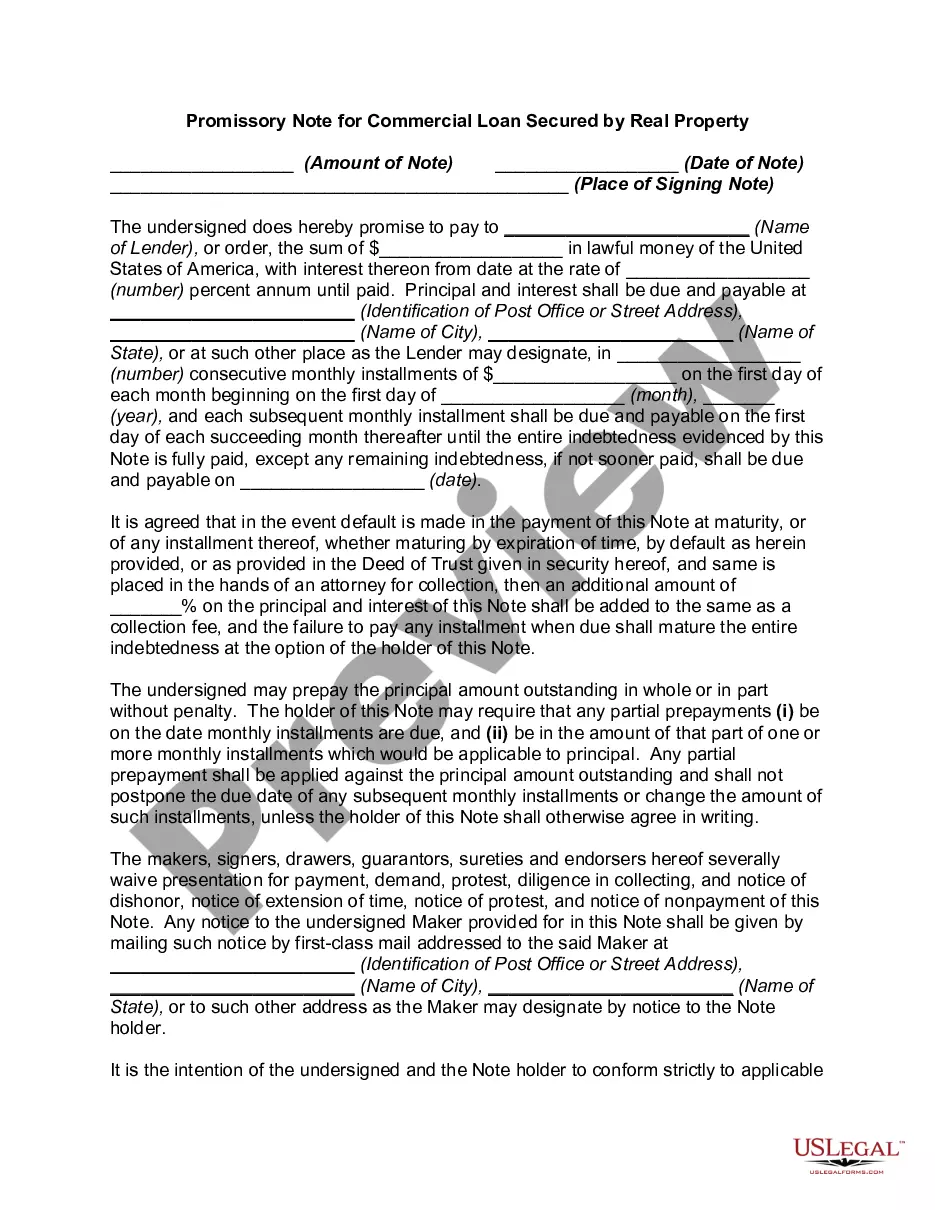
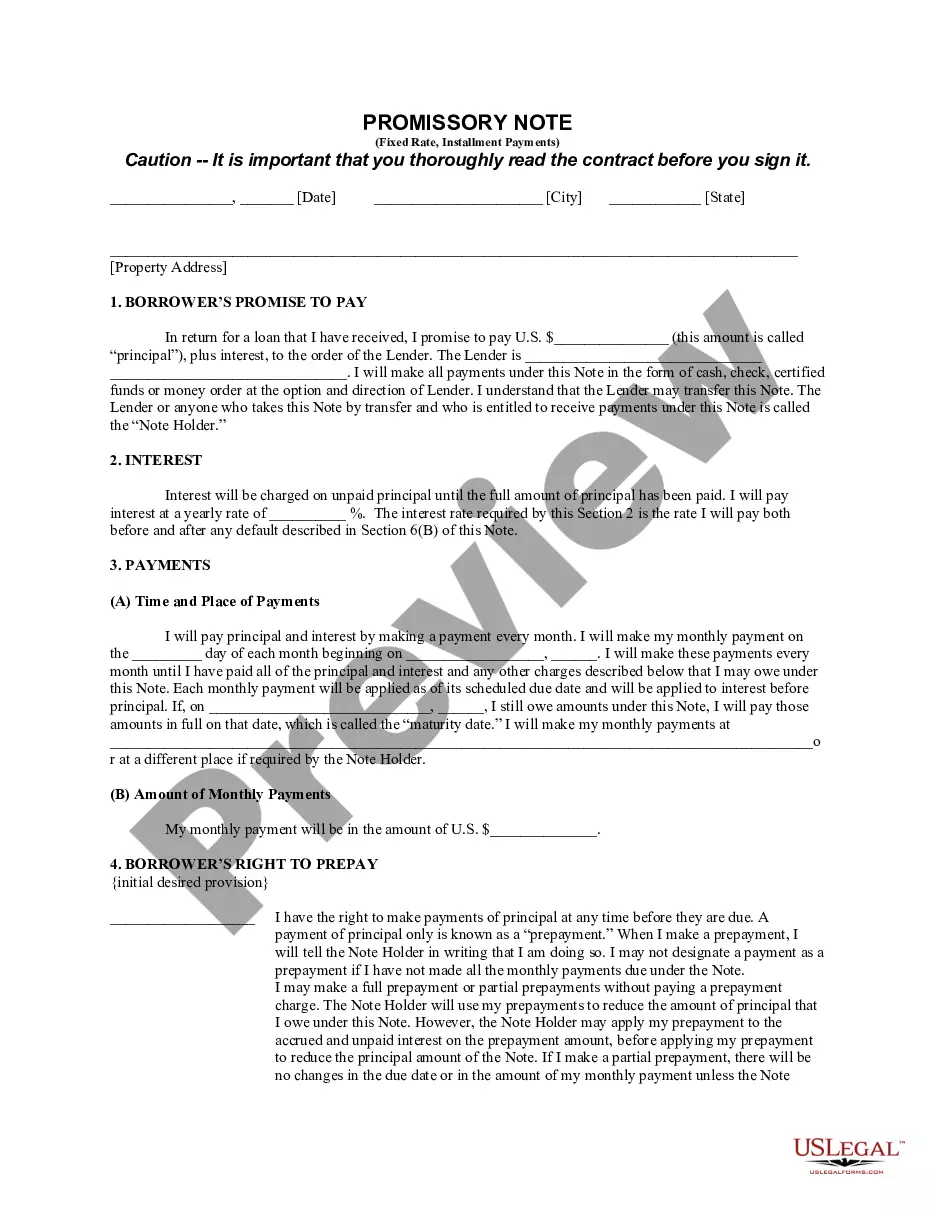
The Mississippi Installments Fixed Rate Promissory Note Secured by Personal Property is a legally binding document wherein a borrower agrees to repay a loan secured by personal property. This type of note specifies the fixed repayment terms, including interest rates and payment schedules. It distinguishes itself from other forms of promissory notes by including a security interest in personal property, ensuring the lender has a legal claim to the property if repayment obligations are not met.
Key components of this form
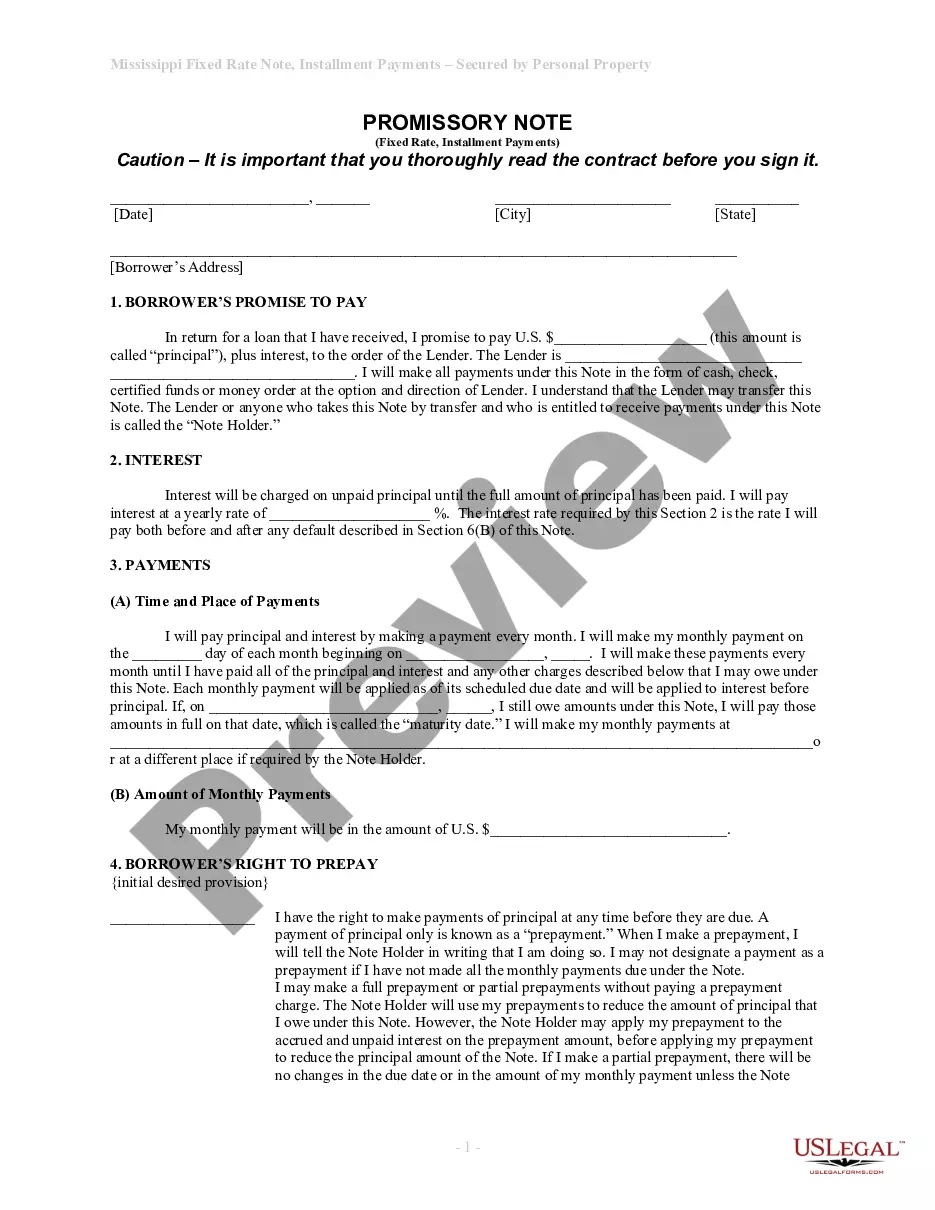
- Borrower's promise to pay: Specifies the principal amount, interest rate, and the lender's name.
- Interest terms: Outlines the interest charged on the unpaid principal.
- Payment schedule: Details the frequency and amount of monthly payments and the maturity date of the loan.
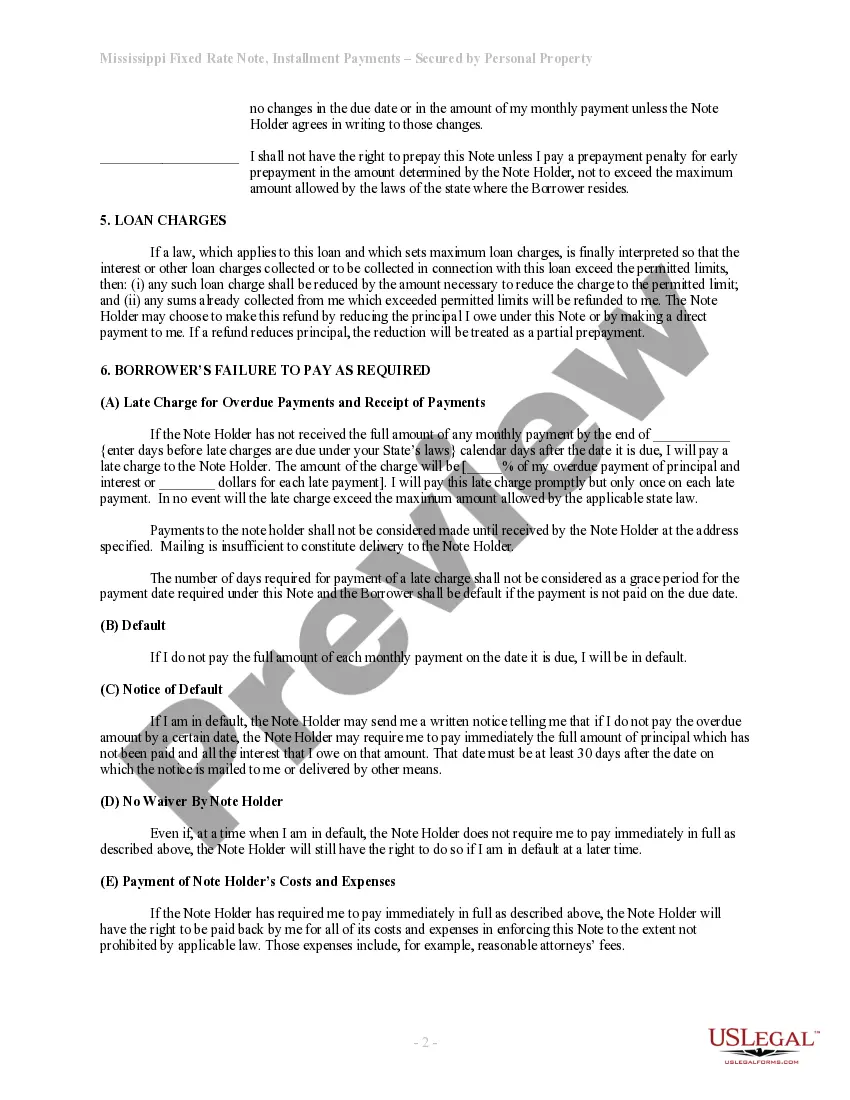
- Borrower's right to prepay: Describes conditions under which the borrower can pay off principal early.
- Loan charges and default terms: Includes late charges for overdue payments and the process for handling defaults.
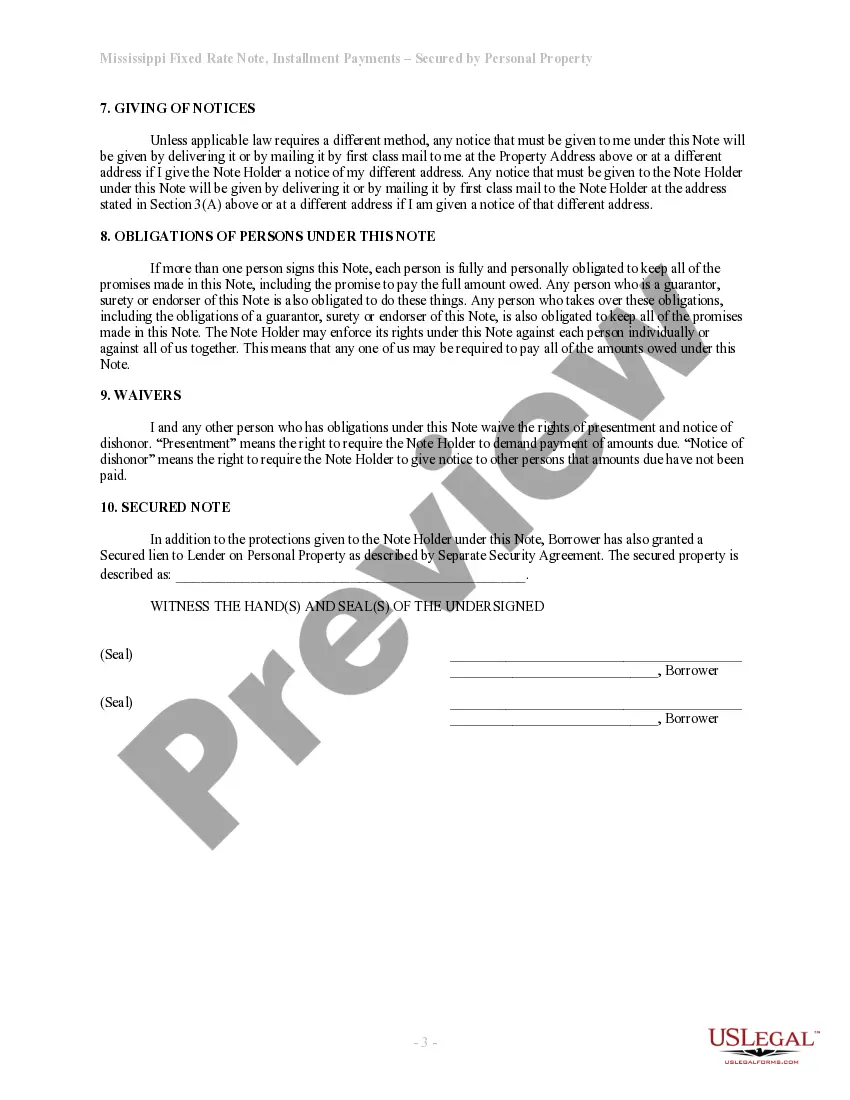
- Secured note provision: Establishes a security lien on personal property as collateral.
Situations where this form applies
This form is useful when an individual or business borrows money and wants to secure the loan with personal property. It should be used to formalize an agreement where the lender requires assurance that they can claim the specified property in case of default. Scenarios include purchasing a vehicle, acquiring equipment, or any situation where a borrower needs financial assistance and has personal property to offer as collateral.
Who needs this form
- Individuals obtaining a personal loan secured by personal property.
- Businesses seeking financing with collateral.
- Lenders who require a formal agreement regarding loan repayment and security.
- Borrowers who want clear terms regarding interest and repayment obligations.
How to prepare this document
- Identify the parties involved by entering the names and addresses of the borrower and the lender.
- Specify the amount of the loan and the applicable interest rate.
- Fill in the payment terms including the due date, amount, and frequency of payments.
- Detail any prepayment rights and charges according to your agreement with the lender.
- Sign and date the form along with any co-borrowers or guarantors.
Does this document require notarization?
Notarization is generally not required for this form. However, certain states or situations might demand it. You can complete notarization online through US Legal Forms, powered by Notarize, using a verified video call available anytime.
Get your form ready online
Our built-in tools help you complete, sign, share, and store your documents in one place.
Make edits, fill in missing information, and update formatting in US Legal Forms—just like you would in MS Word.
Download a copy, print it, send it by email, or mail it via USPS—whatever works best for your next step.
Sign and collect signatures with our SignNow integration. Send to multiple recipients, set reminders, and more. Go Premium to unlock E-Sign.
If this form requires notarization, complete it online through a secure video call—no need to meet a notary in person or wait for an appointment.
We protect your documents and personal data by following strict security and privacy standards.

Make edits, fill in missing information, and update formatting in US Legal Forms—just like you would in MS Word.

Download a copy, print it, send it by email, or mail it via USPS—whatever works best for your next step.

Sign and collect signatures with our SignNow integration. Send to multiple recipients, set reminders, and more. Go Premium to unlock E-Sign.

If this form requires notarization, complete it online through a secure video call—no need to meet a notary in person or wait for an appointment.

We protect your documents and personal data by following strict security and privacy standards.
Typical mistakes to avoid
- Failing to specify the correct interest rate and repayment schedule.
- Not including the collateral description in the security agreement.
- Missing signatures from all borrowers, which can invalidate the note.
- Overlooking the conditions for prepayment or penalties associated with early repayment.
Why complete this form online
- Convenient access to the document from anywhere, allowing for quick completion and editing.
- Reliability of obtaining properly formatted and legally compliant templates drafted by licensed attorneys.
- Easy download and print options to ensure you have a hard copy for your records.
Legal use & context
- Promissory notes create an enforceable obligation for repayment.
- Failure to comply with the terms can lead to collection actions or loss of collateral.
- This form is suitable for both personal and business loans secured by personal property.
Summary of main points
- This form is essential for securing a loan with personal property.
- Clear terms regarding payment and default help ensure understanding between parties.
- Careful completion of the form is crucial for legal enforceability.
Looking for another form?
Form popularity
FAQ
When a loan changes hands, the promissory note is endorsed (signed over) to the new owner of the loan. In some cases, the note is endorsed in blank which makes it a bearer instrument under Article 3 of the Uniform Commercial Code. So, any party that possesses the note has the legal authority to enforce it.
The individual who promises to pay is the maker, and the person to whom payment is promised is called the payee or holder. If signed by the maker, a promissory note is a negotiable instrument.
Although this case relates to state securities law claims, in applying the Reves test and holding that the Notes are not securities, the court has ruled squarely in favor of the long-held view in the loan industry that loans are not securities.
To write a promissory note for a personal loan, you will need to include the names of both parties, the principal balance, the APR, and any fees that are part of the agreement. The promissory note should also clearly explain what will happen if the borrower pays late or does not pay the loan back at all.
What Is a Promissory Note? A promissory note is a financial instrument that contains a written promise by one party (the note's issuer or maker) to pay another party (the note's payee) a definite sum of money, either on demand or at a specified future date.
Promissory notes are legally binding whether the note is secured by collateral or based only on the promise of repayment. If you lend money to someone who defaults on a promissory note and does not repay, you can legally possess any property that individual promised as collateral.
The lender holds the promissory note while the loan is being repaid, then the note is marked as paid and returned to the borrower when the loan is satisfied. Promissory notes aren't the same as mortgages, but the two often go hand in hand when someone is buying a home.
A promissory note can be secured with a pledge of collateral, which is something of value that can be seized if a borrower defaults.
Whether a promissory note is a security is one of the most vexatious issues in US securities laws.In general, under the Securities Acts, promissory notes are defined as securities, but notes with a maturity of 9 months or less are not securities.