Mississippi Abandonment of Utility Easement
Overview of this form
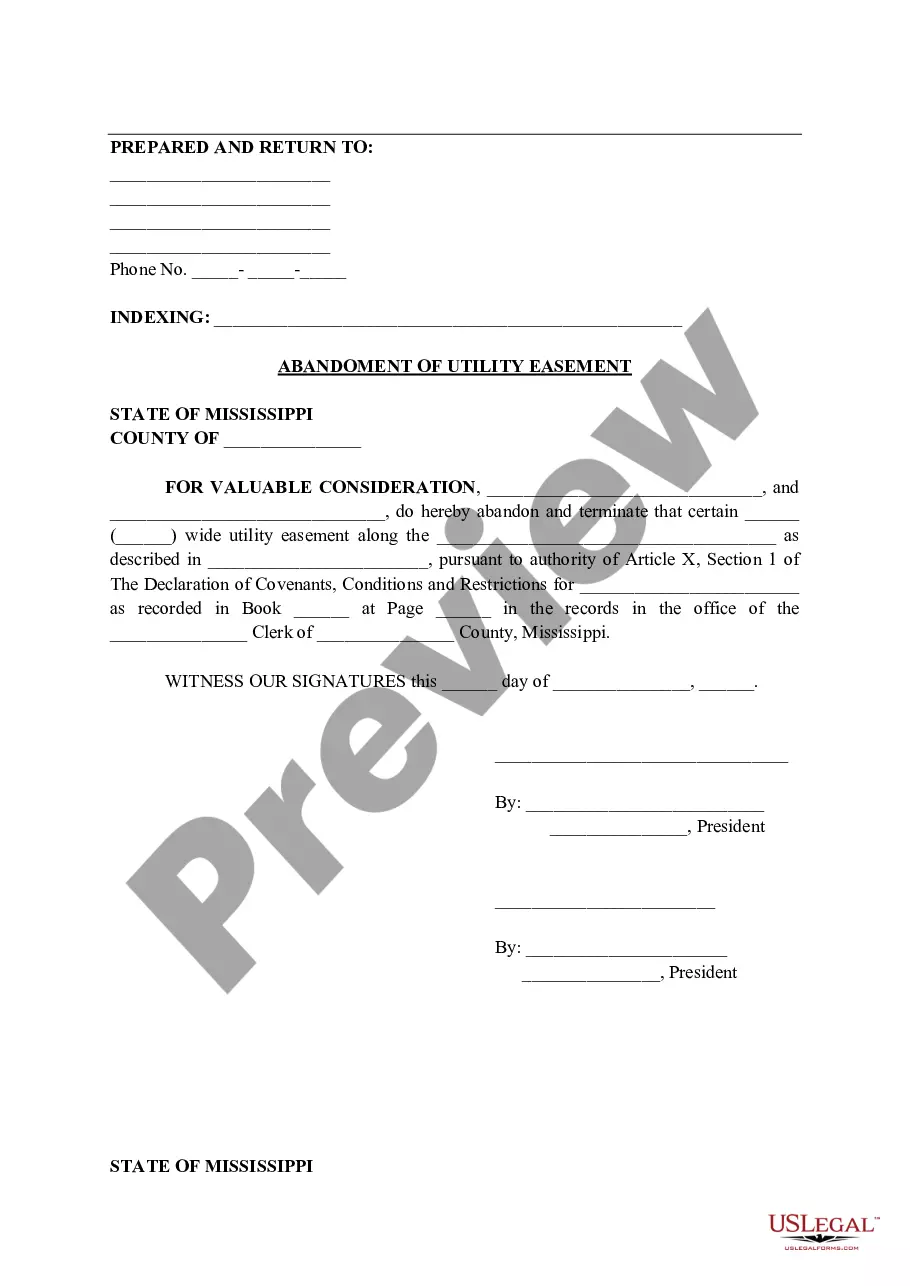
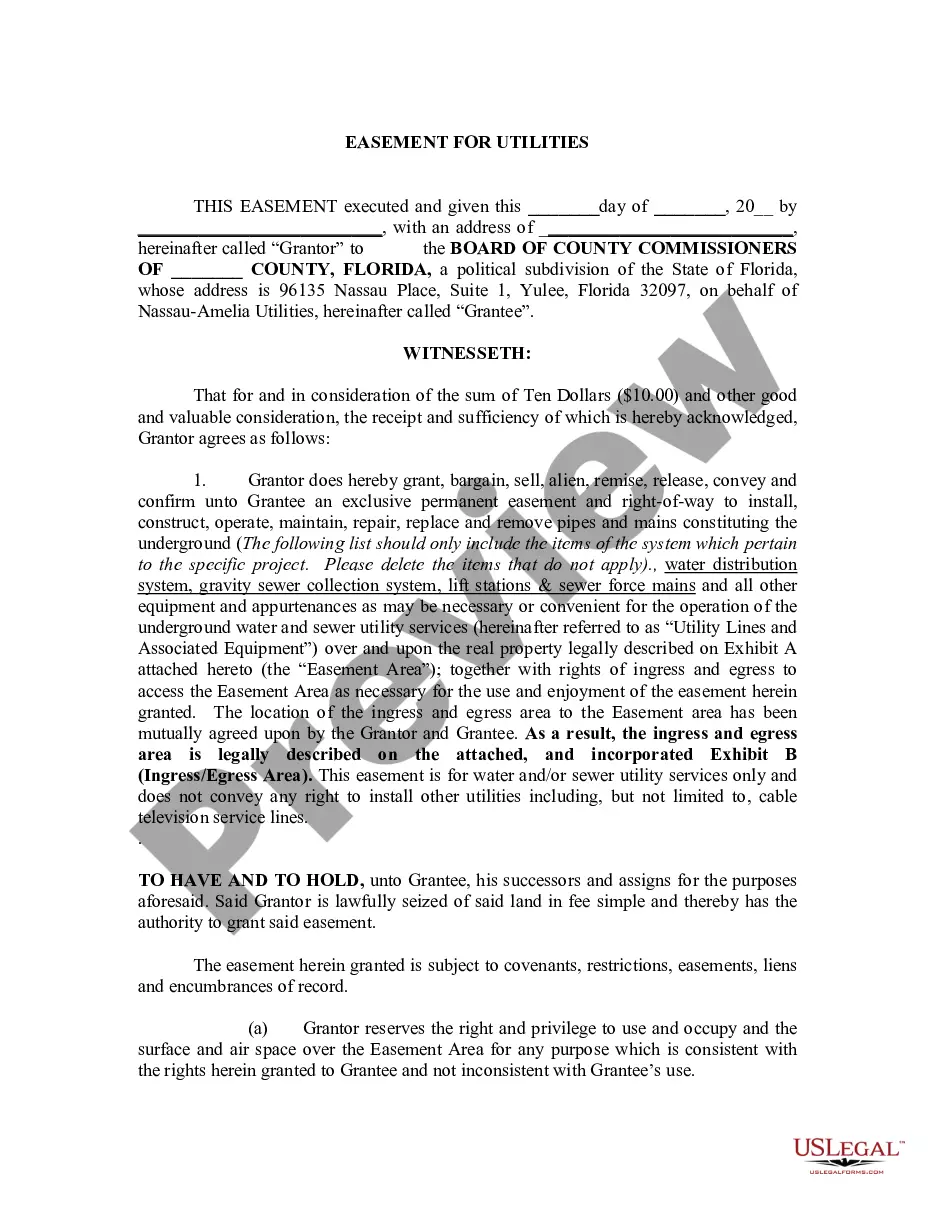
The Abandonment of Utility Easement form is a legal document used to formally terminate an existing easement for utilities. An easement allows utility companies to access property for the purpose of installing and maintaining services such as electricity, water, or gas. By completing this form, the property owner relinquishes their rights to the easement, effectively ending its existence and any associated rights for utility providers.
Main sections of this form
- Identification of the parties involved in the abandonment.
- Description of the specific easement being abandoned, including its width and location.
- Reference to the legal authority supporting the abandonment.
- Signature lines for authorized representatives of the parties.
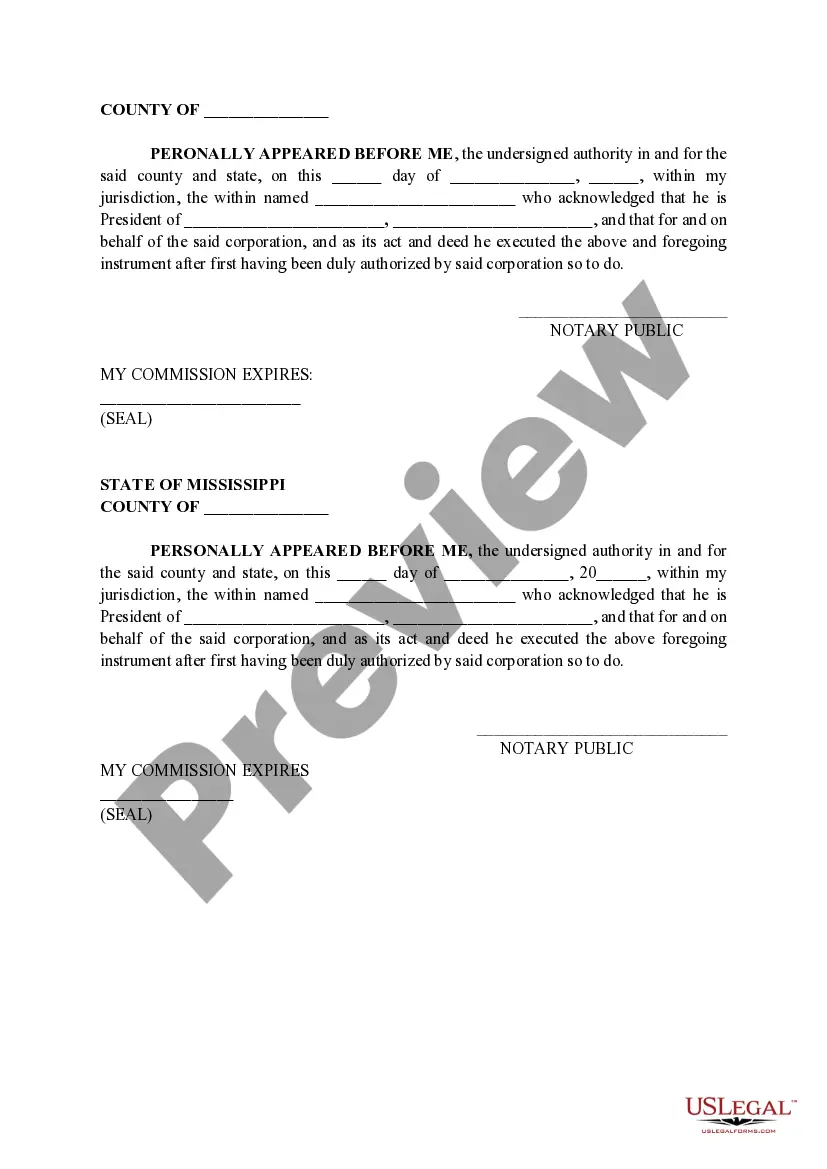
- Notary acknowledgment to verify the identities of the signers.
When to use this form
This form should be used when a property owner decides to abandon a utility easement that is no longer needed. Common situations include changes in land use, the relocation of utility lines, or when utility access is no longer required. It is important to ensure that all parties involved are in agreement before proceeding with the abandonment.
Who needs this form
- Property owners looking to terminate a utility easement on their property.
- Organizations or homeowners associations managing utility easements.
- Legal representatives or real estate professionals facilitating the process.
How to prepare this document
- Identify the parties involved by entering their names and addresses at the top of the form.
- Specify the width and location of the utility easement being abandoned.
- Insert the name of the governing body or document that provides authority for the abandonment.
- Have the authorized representatives sign and date the form.
- Complete the notary section to authenticate the signatures, including the date and notary commission details.
Is notarization required?
Yes, this form must be notarized to be legally valid. Notarization is important as it verifies the identities of the signers and ensures that the document is executed under lawful circumstances. US Legal Forms offers integrated online notarization services, providing secure video calls and legal equivalence without the need for travel.
Get your form ready online
Our built-in tools help you complete, sign, share, and store your documents in one place.
Make edits, fill in missing information, and update formatting in US Legal Forms—just like you would in MS Word.
Download a copy, print it, send it by email, or mail it via USPS—whatever works best for your next step.
Sign and collect signatures with our SignNow integration. Send to multiple recipients, set reminders, and more. Go Premium to unlock E-Sign.
If this form requires notarization, complete it online through a secure video call—no need to meet a notary in person or wait for an appointment.
We protect your documents and personal data by following strict security and privacy standards.

Make edits, fill in missing information, and update formatting in US Legal Forms—just like you would in MS Word.

Download a copy, print it, send it by email, or mail it via USPS—whatever works best for your next step.

Sign and collect signatures with our SignNow integration. Send to multiple recipients, set reminders, and more. Go Premium to unlock E-Sign.

If this form requires notarization, complete it online through a secure video call—no need to meet a notary in person or wait for an appointment.

We protect your documents and personal data by following strict security and privacy standards.
Typical mistakes to avoid
- Failing to properly identify all parties involved in the easement.
- Omitting required signatures or dates.
- Not having the document notarized if required by local law.
Quick recap
- The Abandonment of Utility Easement form is essential for terminating utility access rights on private property.
- Proper completion and notarization are crucial for the legal validity of the form.
- This form is specifically designed for use in Mississippi, reflecting local legal requirements.
Looking for another form?


Form popularity
FAQ
Merger. Prescription. Estoppel. Abandonment. Destruction of servient estate. Forfeiture. Release, and. Expiration.
Generally, easements are created by express grant or reservation. Easements are perpetual unless they are expressly limited, or terminated by agreement, abandonment, implication (e.g. necessity ceases to exist), adverse possession, or another means of formal termination.
While an unrecorded easement may still be enforceable, the easement may be nullified by a "bona fide purchaser" of the property if the property is sold for value and the subsequent purchaser has no notice (constructive or otherwise) of the unrecorded easement.
An easement, right of way or profit can be expressly released by deed. Once this has been done then it is extinguished and cannot be revived.The owner must make it clear that he or she is abandoning the right not just for himself but also for his successors in title.
An unrecorded easement, on the other hand, are those easements which for whatever reason go unrecorded.A prescriptive easement for example, whereby a neighbor had been using the property in some way for a long time and thus created an easement may never have been recorded.
When a property owner holds an easement on neighboring property and later acquires title to that neighboring property, the easement automatically terminates by operation of law due to the merger of title.Once extinguished, the easement no longer exists and therefore there is nothing to revive.
Generally speaking, an easement is a more serious property right; it is the legal right to use someone else's land for a particular purpose. Easements are often recorded at the county clerk's office and encumber your property's title.Here, however, you probably do not need to take the step of granting an easement.
An easement can be terminated by estopple if the easement holder shows an intent to abandon and the owner of the servient tenement spends money in reasonable reliance on the easement holders representations.
However, given that a prescriptive easement is created when the requisite elements are met, and not when a court is asked to enforce the easement by legal action, the ability for a prescriptive easement to exist without being of-record actually promotes uncertainty.