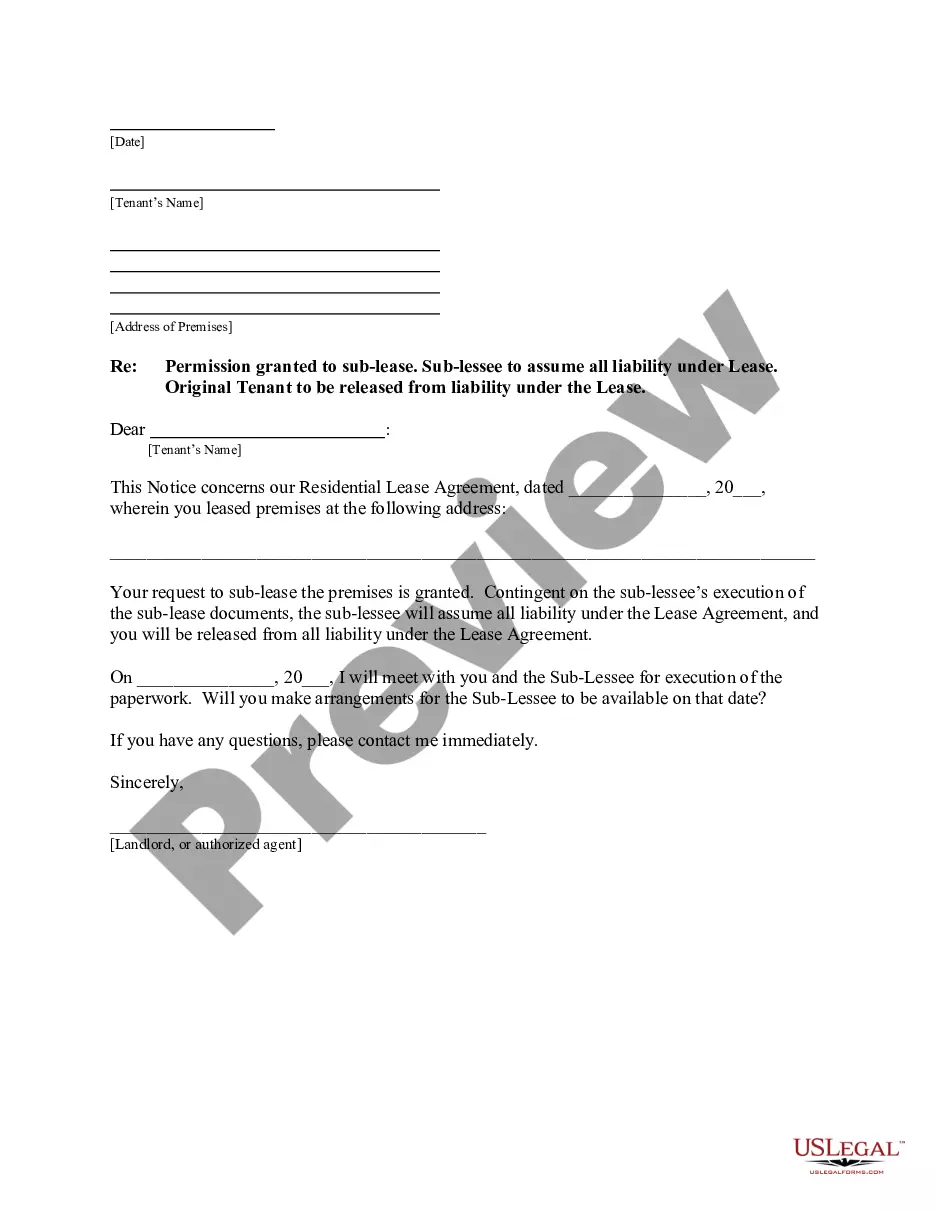
Oklahoma Fiduciary Deed for Probate Estate - Testate or Intestate
Understanding this form
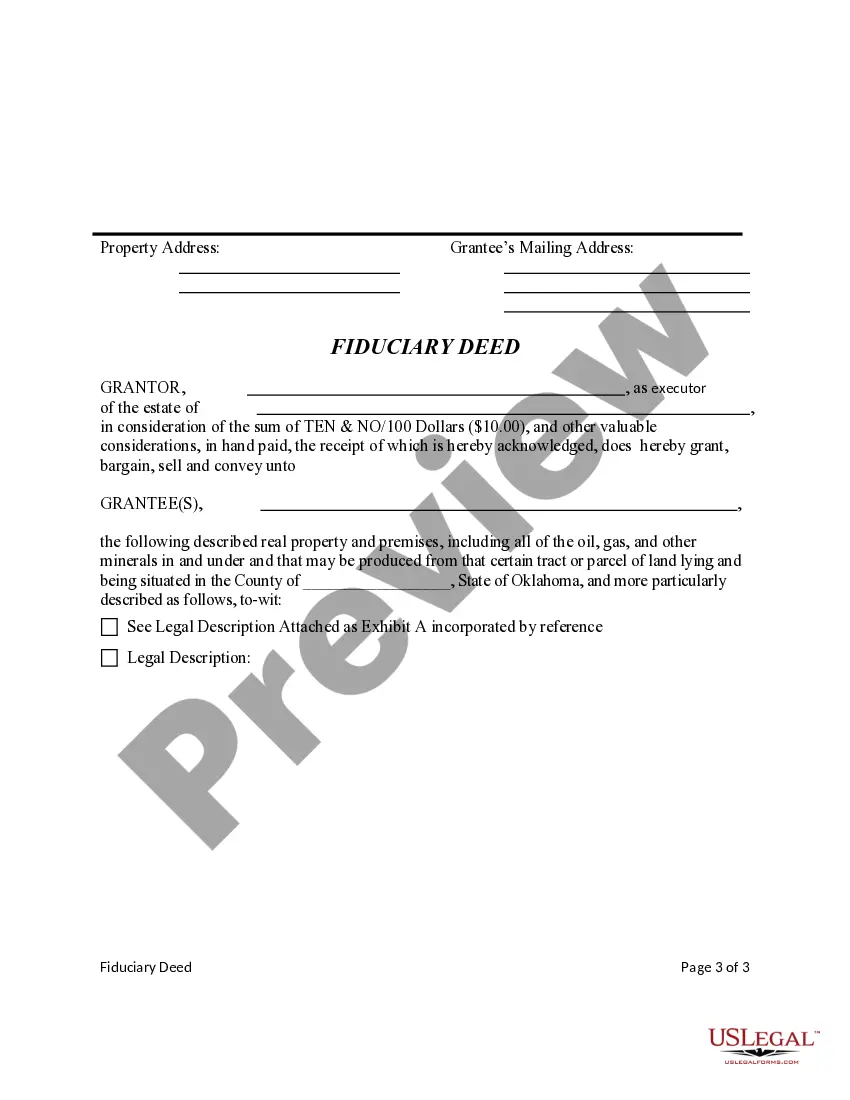
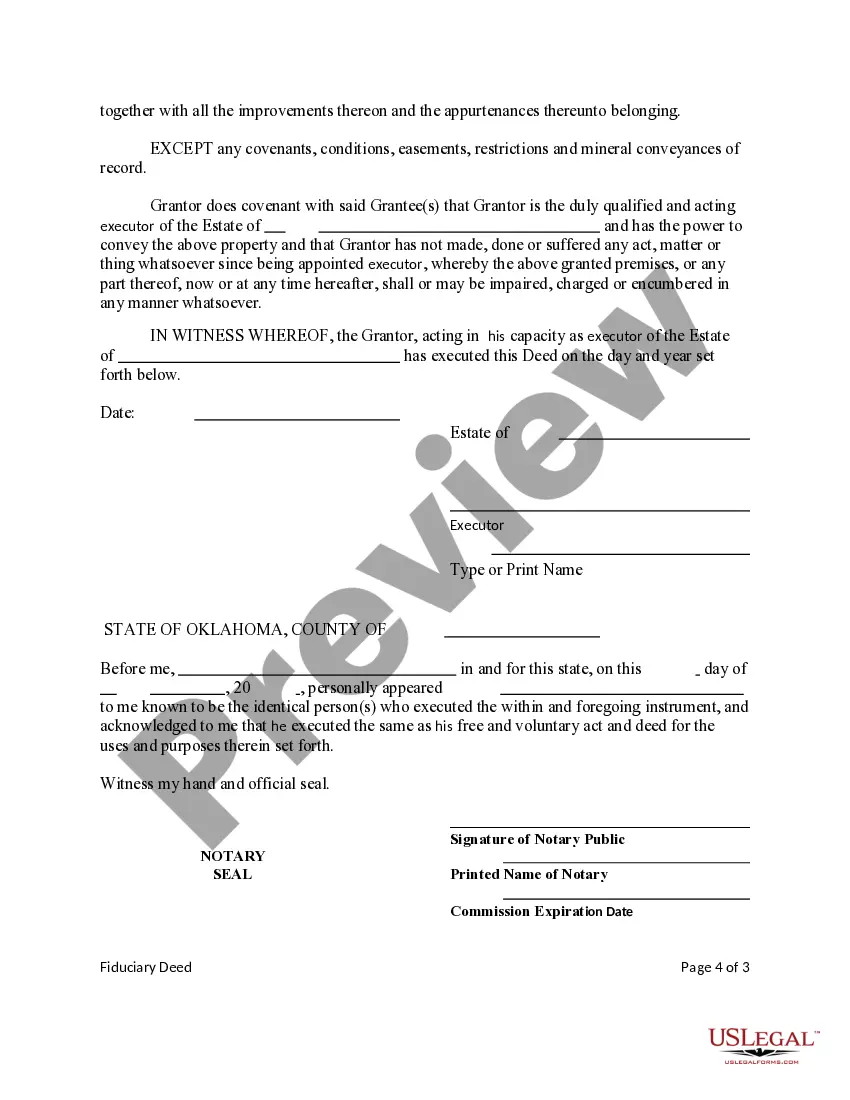
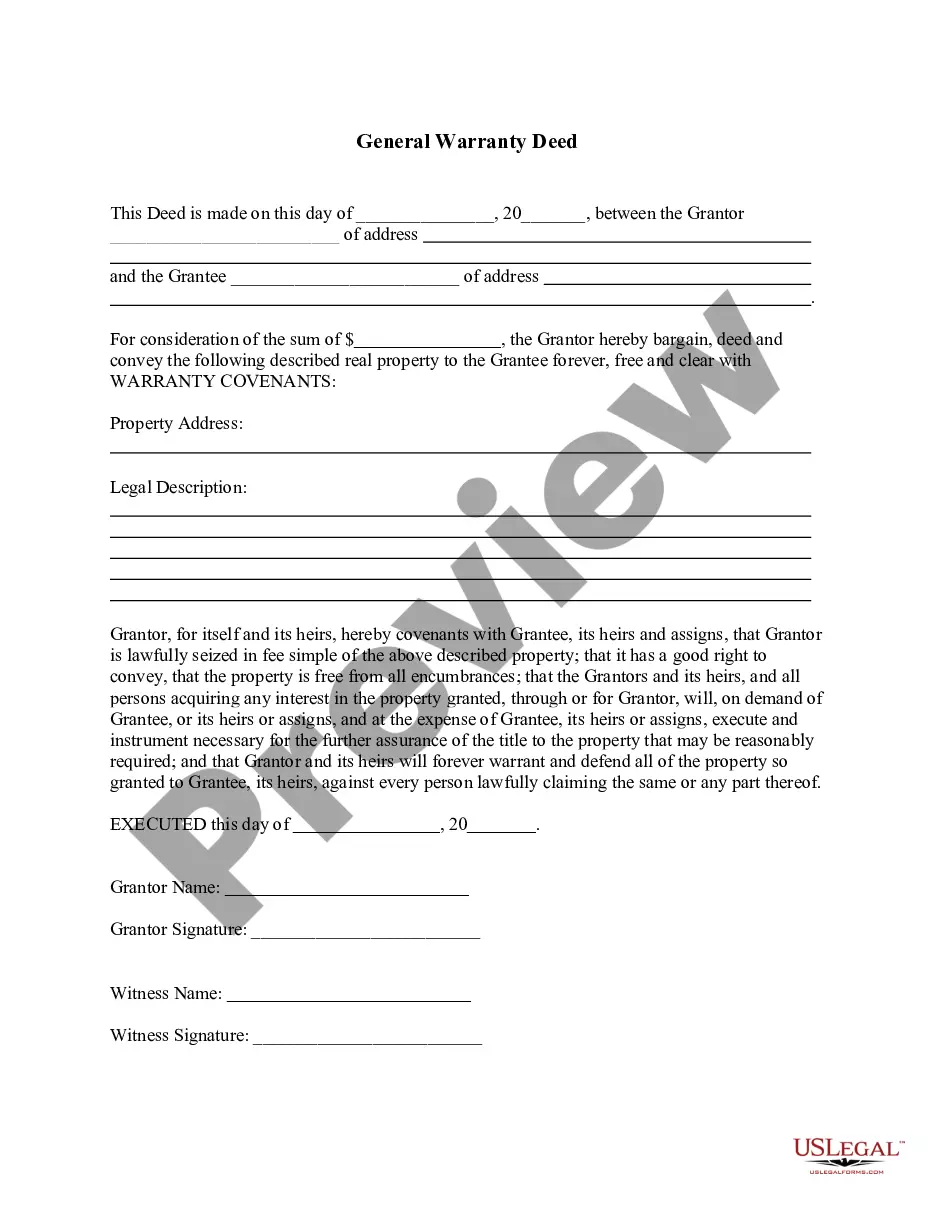
The Fiduciary Deed for Probate Estate is a legal document used when the administrator or executor of an estate needs to transfer property to a buyer. This form is essential for conveying real estate from the estate to grantee(s), whether the decedent died testate (with a will) or intestate (without a will). Unlike other deeds, this Fiduciary Deed includes specific covenants that indicate the transfer is authorized by the probate court and addresses any encumbrances on the property that may have occurred during the Grantor's service.
Main sections of this form
- Grantor Information: Details about the administrator or executor of the probate estate.
- Grantee Information: Information about the individual(s) purchasing the property.
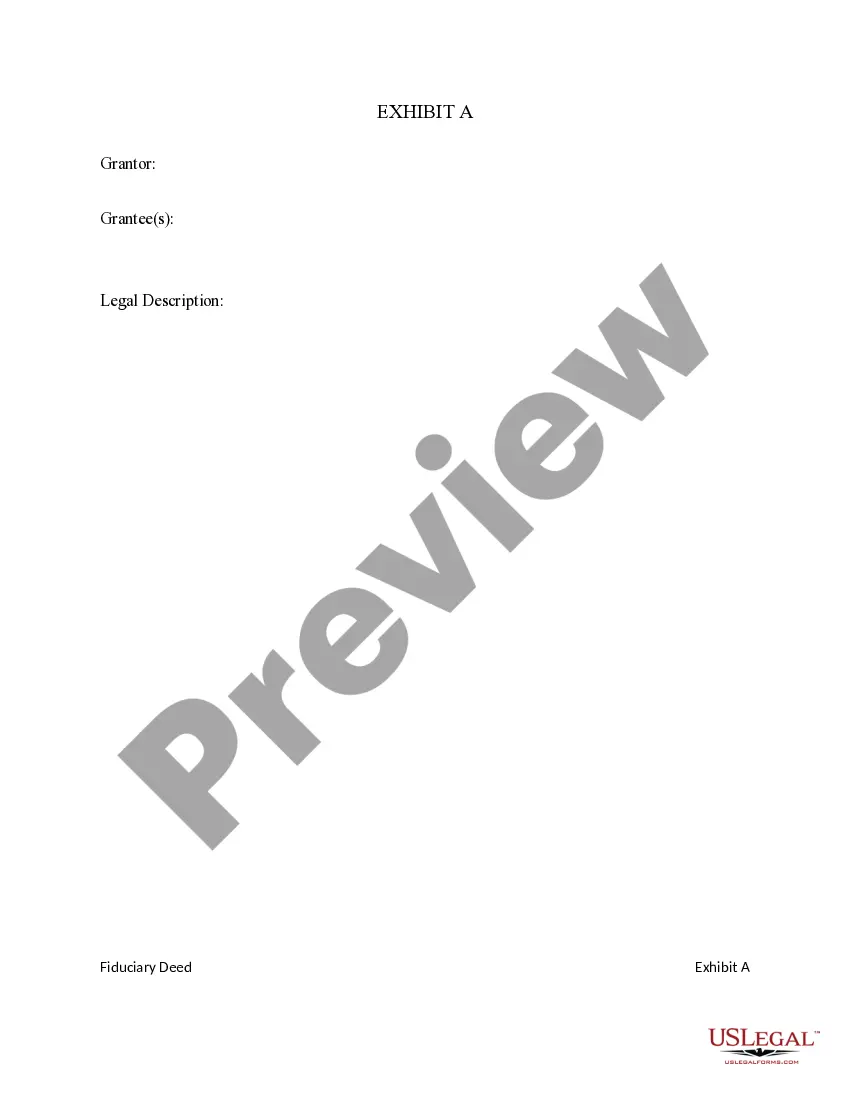
- Property Description: A legal description of the property being conveyed.
- Covenants: Statements affirming the Grantor's authority and absence of encumbrances during their tenure.
- Signature Section: Signature lines for the Grantor and any required witnesses.


Common use cases
You would utilize the Fiduciary Deed for Probate Estate when managing an estate's real property after the death of an individual. It is specifically needed in situations where the estate is being dissolved and property needs to be sold or transferred to one or more buyers. This deed is crucial when the executor or administrator is officially transferring ownership in compliance with probate court directions.
Who should use this form
- Executors or administrators of a probate estate.
- Individuals involved in purchasing property from an estate.
- Estate beneficiaries who are coordinating the transfer of property.
- Real estate professionals handling transactions involving estate properties.
Completing this form step by step
- Identify the parties involved, including the Grantor and Grantee.
- Provide a detailed description of the property being transferred.
- Include relevant dates, such as the date of death, and the date of transfer.
- Complete the signature lines of the Grantor and any required witnesses.
- File the completed form with the appropriate probate court, if necessary.
Does this form need to be notarized?
This form does not typically require notarization unless specified by local law. However, it is advisable to check local jurisdiction requirements to ensure compliance with any additional formalities.
Get your form ready online
Our built-in tools help you complete, sign, share, and store your documents in one place.
Make edits, fill in missing information, and update formatting in US Legal Forms—just like you would in MS Word.
Download a copy, print it, send it by email, or mail it via USPS—whatever works best for your next step.
Sign and collect signatures with our SignNow integration. Send to multiple recipients, set reminders, and more. Go Premium to unlock E-Sign.
If this form requires notarization, complete it online through a secure video call—no need to meet a notary in person or wait for an appointment.
We protect your documents and personal data by following strict security and privacy standards.

Make edits, fill in missing information, and update formatting in US Legal Forms—just like you would in MS Word.

Download a copy, print it, send it by email, or mail it via USPS—whatever works best for your next step.

Sign and collect signatures with our SignNow integration. Send to multiple recipients, set reminders, and more. Go Premium to unlock E-Sign.

If this form requires notarization, complete it online through a secure video call—no need to meet a notary in person or wait for an appointment.

We protect your documents and personal data by following strict security and privacy standards.
Typical mistakes to avoid
- Failing to provide a full legal description of the property.
- Not having the necessary signatures from all parties involved.
- Omitting required dates or specific information about the estate.
- Not verifying the authority of the Grantor to execute the deed.
Why use this form online
- Convenient access to legally vetted forms that meet state laws.
- Easy editing and completion using your computer, allowing for legible entries.
- Downloadable format for quick printing if needed.
- Access to updated versions of forms to ensure compliance with changing laws.
Looking for another form?

Form popularity
FAQ
It is harder to be impartial when the fiduciary is also a beneficiary. As a beneficiary, the fiduciary usually wants to favor himself. Acting as fiduciary, however, the fiduciary must treat himself no better than any other beneficiary.
Take possession of the decedent's property and inventory the property for the probate court; Collect rents, payments or other debts due to the decedent; Identify the heirs of the estate; Investigate any claims against the estate and either pay the debts or object to the debts;
An heir is a person who is legally entitled to collect an inheritance, when a deceased person did not formalize a last will and testament. Generally speaking, heirs who inherit the property are children, descendants or other close relatives of the decedent.
Intestacy refers to the condition of an estate of a person who dies without a will, and owns property with a total value greater than that of their outstanding debts.Typically, property goes to a surviving spouse first, then to any children, then to extended family and descendants, following common law.
Administrator (A woman is sometimes called an administratrix) An individual (or sometimes a trust company) that settles the estate of a decedent who dies without a will according to the state laws of intestacy. Fiduciary - An individual or trust company that acts for the benefit of another.
A fiduciary is a person or organization that acts on behalf of another person or persons, putting their clients' interest ahead of their own, with a duty to preserve good faith and trust. Being a fiduciary thus requires being bound both legally and ethically to act in the other's best interests.
The trustee is the person or entity (e.g., a bank or other corporation) who holds legal title to the trust property. Fiduciary: A person or institution who manages money or property for another and who must exercise a standard of care in such management activity.
You can do this by simply signing your name and putting your title of executor of the estate afterward. One example of an acceptable signature would be Signed by Jane Doe, Executor of the Estate of John Doe, Deceased. Of course, many institutions may not simply take your word that you are the executor of the estate.
If there is no surviving partner, the children of a person who has died without leaving a will inherit the whole estate. This applies however much the estate is worth. If there are two or more children, the estate will be divided equally between them.