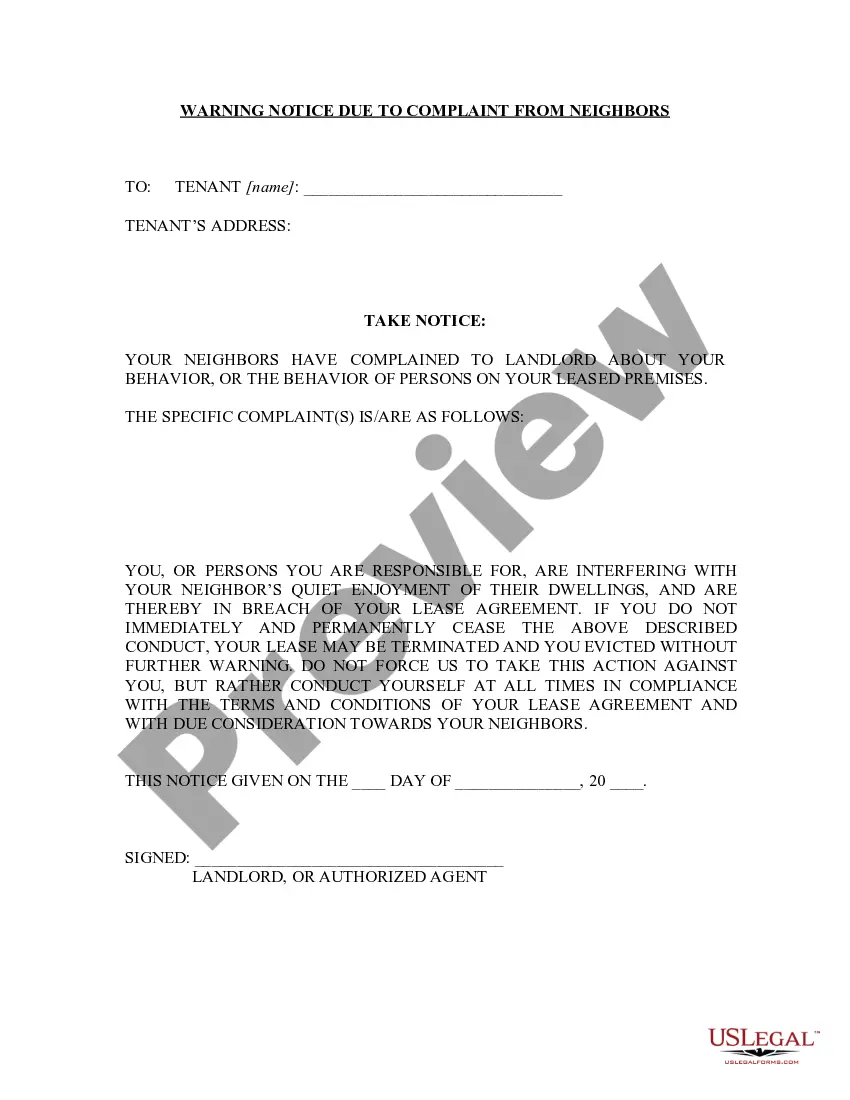
Mississippi Termination of Utility Easement
Overview of this form
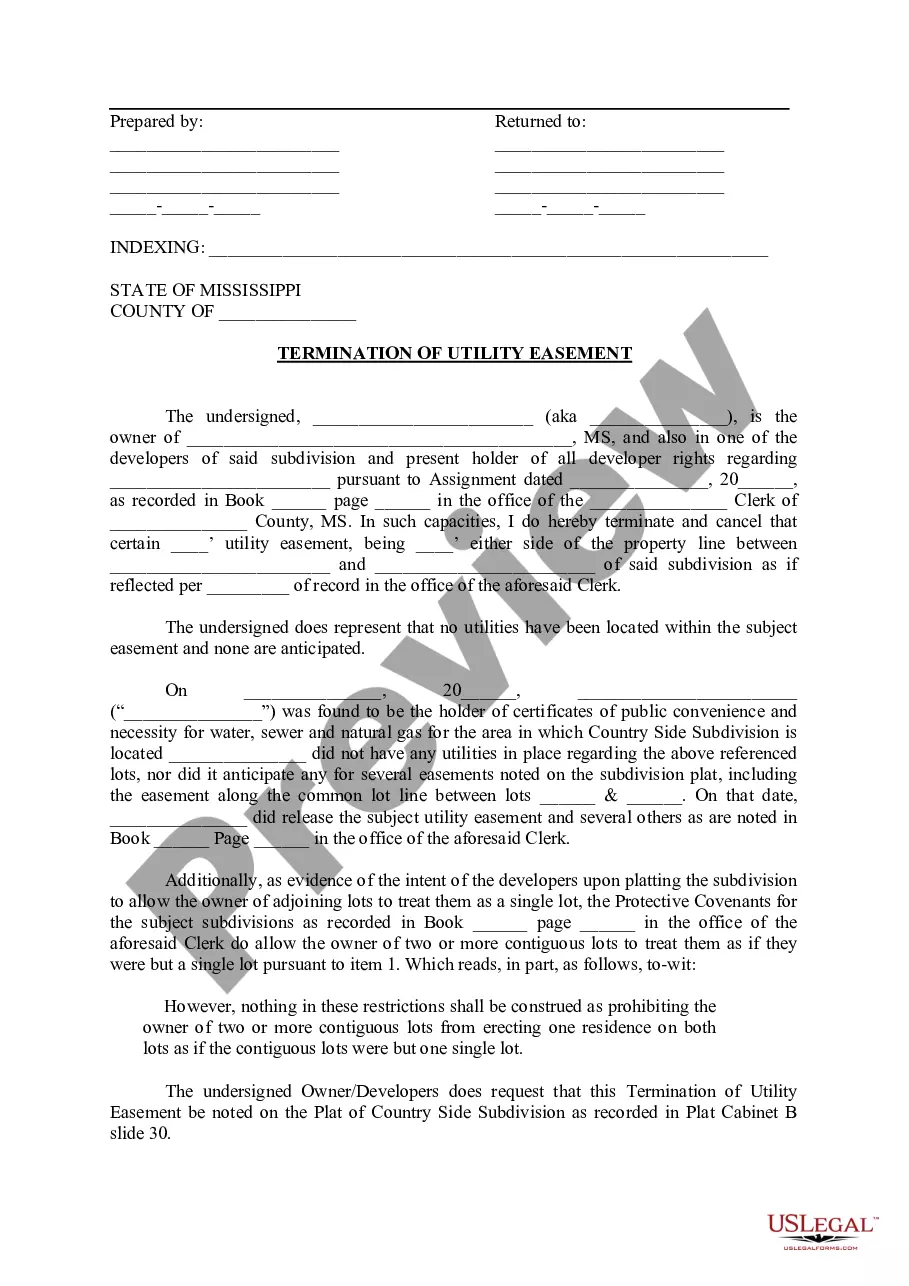
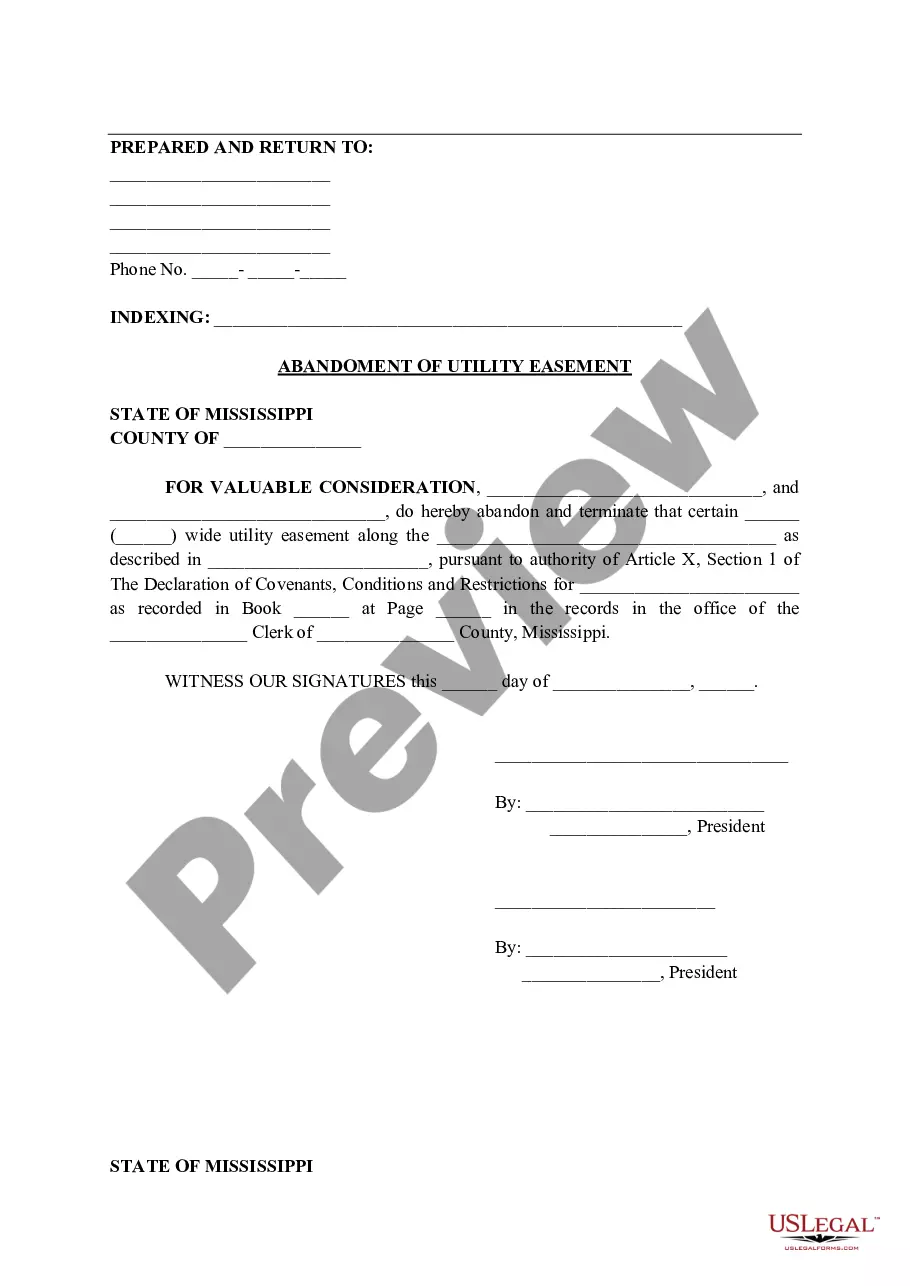
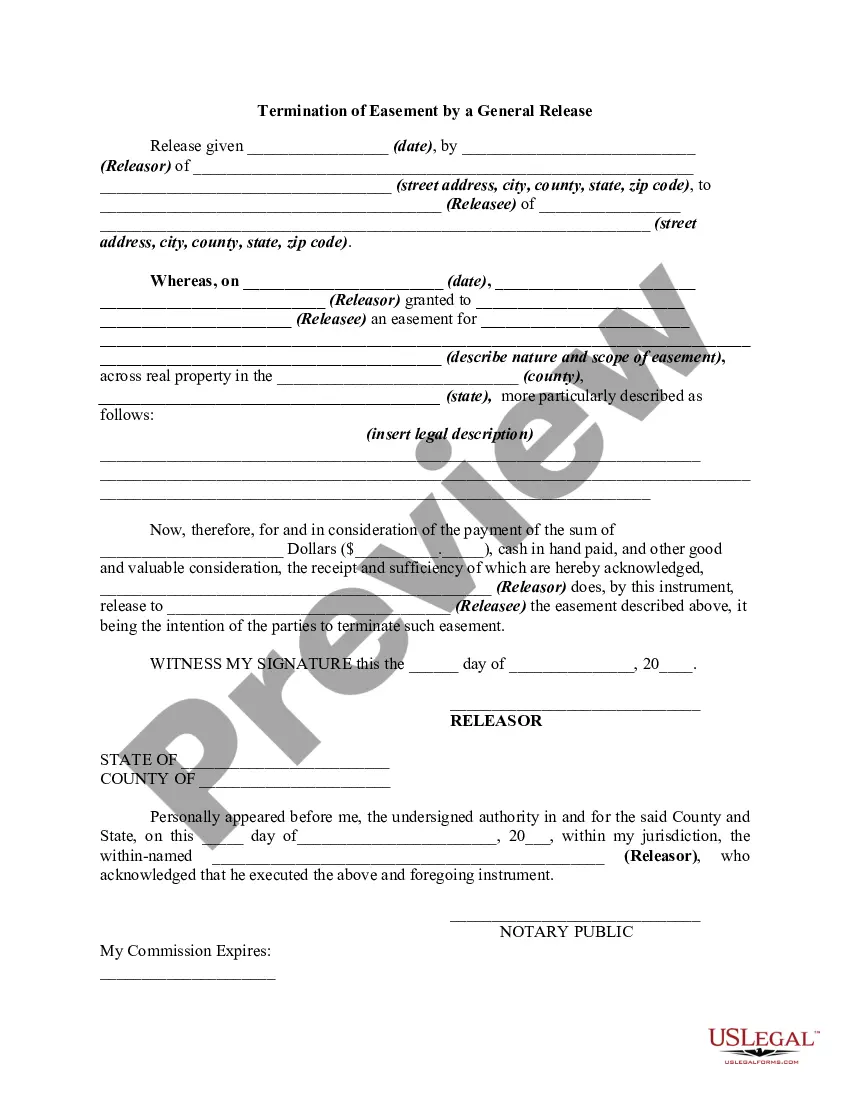
The Termination of Utility Easement form is a legal document that allows the owner of an easement to formally terminate their ownership of that easement. This form is significant because it enables property owners to cancel easements that no longer serve a purpose, such as those where no utilities exist. Unlike other real estate forms, this one specifically addresses the cancellation of utility easements, making it essential for property development and management.
Key components of this form
- Identification of the easement holder and the property involved.
- Clear description of the utility easement being terminated.
- Representation that no utilities are present in the easement area.
- Request for notation on the subdivision plat.
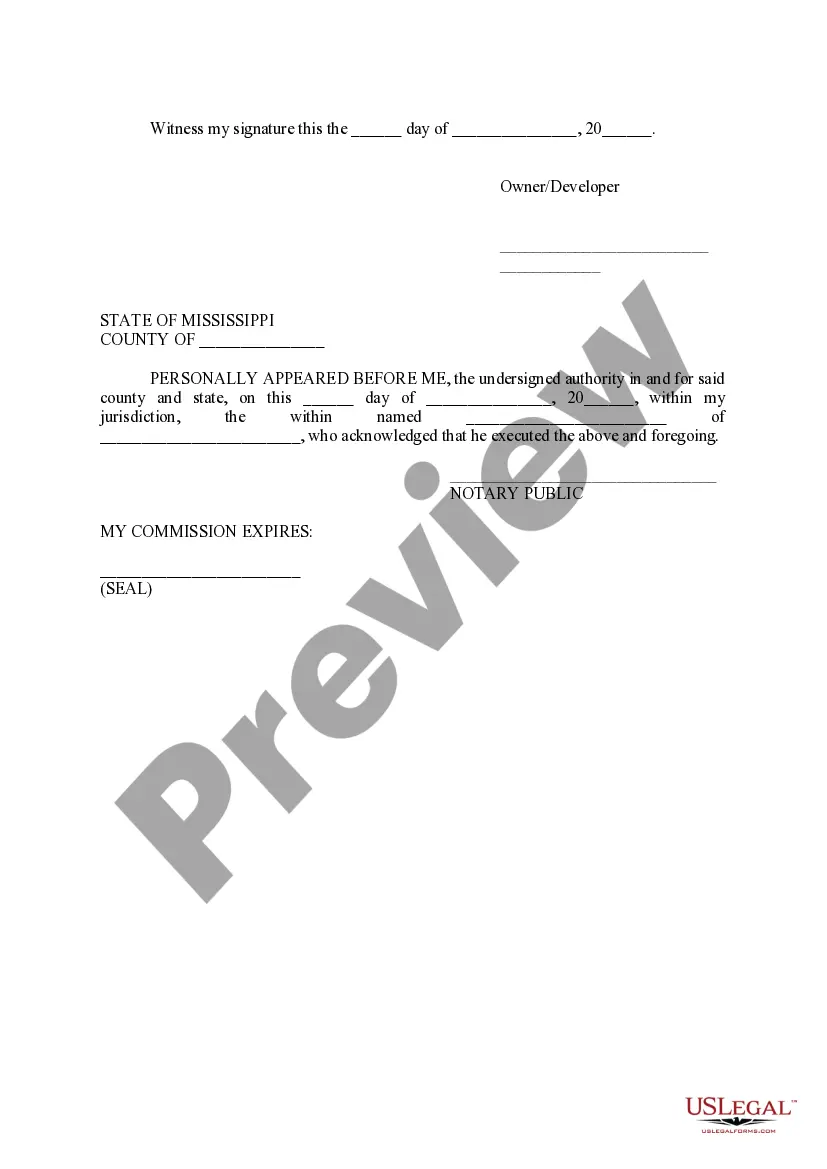
- Signatures of the owner/developer and notarization section.

Common use cases
This form is needed in scenarios where a property developer or owner wants to officially eliminate a utility easement that is no longer in use, especially in residential subdivisions. It is particularly useful when the easement has not been utilized for utility placement and there is no anticipated future use for utilities in that area.
Who this form is for
- Property developers looking to modify easement rights.
- Owners of residential or commercial properties wishing to cancel unused easements.
- Real estate professionals managing property agreements.
How to complete this form
- Identify all parties involved in the easement and the property details.
- Clearly describe the utility easement being terminated.
- Confirm that no utilities are located within the easement.
- Enter dates and ensure all parties sign the document.
- Have the form notarized as required.
Does this form need to be notarized?
Yes, this form must be notarized to be legally valid. This ensures that the signatures are verified and contributes to the formâs enforceability. US Legal Forms provides integrated online notarization services, offering 24/7 availability through secure video calls to complete this process efficiently.
Get your form ready online
Our built-in tools help you complete, sign, share, and store your documents in one place.
Make edits, fill in missing information, and update formatting in US Legal Forms—just like you would in MS Word.
Download a copy, print it, send it by email, or mail it via USPS—whatever works best for your next step.
Sign and collect signatures with our SignNow integration. Send to multiple recipients, set reminders, and more. Go Premium to unlock E-Sign.
If this form requires notarization, complete it online through a secure video call—no need to meet a notary in person or wait for an appointment.
We protect your documents and personal data by following strict security and privacy standards.

Make edits, fill in missing information, and update formatting in US Legal Forms—just like you would in MS Word.

Download a copy, print it, send it by email, or mail it via USPS—whatever works best for your next step.

Sign and collect signatures with our SignNow integration. Send to multiple recipients, set reminders, and more. Go Premium to unlock E-Sign.

If this form requires notarization, complete it online through a secure video call—no need to meet a notary in person or wait for an appointment.

We protect your documents and personal data by following strict security and privacy standards.
Mistakes to watch out for
- Failing to verify that no utilities exist in the easement before cancellation.
- Not properly identifying all parties involved in the easement agreement.
- Leaving out required signatures or the date of execution.
Benefits of using this form online
- Convenient access from anywhere, allowing for easy downloads and printing.
- Editable forms to tailor to specific needs without legal jargon complications.
- Reliable templates drafted by licensed attorneys to ensure legal validity.
Looking for another form?



Form popularity
FAQ
There are eight ways to terminate an easement: abandonment, merger, end of necessity, demolition, recording act, condemnation, adverse possession, and release.
Merger. Prescription. Estoppel. Abandonment. Destruction of servient estate. Forfeiture. Release, and. Expiration.
Easements are specified in a property deed, which is typically recorded at the county courthouse. However, deeds may be kept in other locations, such as a county tax assessor's office or county clerk's office.Your local utility company may also maintain records on utility easements.
The term vacate has two common usages in the law. With respect to real property, to vacate the premises means to give up possession of the property and leave the area totally devoid of contents. To vacate a court order or judgment means to cancel it or render it null and void.
There are eight ways to terminate an easement: abandonment, merger, end of necessity, demolition, recording act, condemnation, adverse possession, and release.
An easement is extinguished when the dominant owner releases it, expressly or impliedly, to the servient owner. Such release can be made only in the circumstances and to the extent in and to which the dominant owner can alienate the dominant heritage.A, without the consent of B and C, release the easement.
A property easement is generally written and recorded with the local assessor's office. The documented easement will show up when a title search is conducted and it stays there indefinitely, unless both parties agree to remove it.
Generally speaking, an easement is a more serious property right; it is the legal right to use someone else's land for a particular purpose. Easements are often recorded at the county clerk's office and encumber your property's title.Here, however, you probably do not need to take the step of granting an easement.
III. Vacating or Reopening a Public Way or Easement. Anytime after the municipality closes the public way or easement, a property owner may commence an action to either vacate (i.e., foreclose) the municipality's right to reopen the closed public way or easement or to have the closed public way or easement reopened.