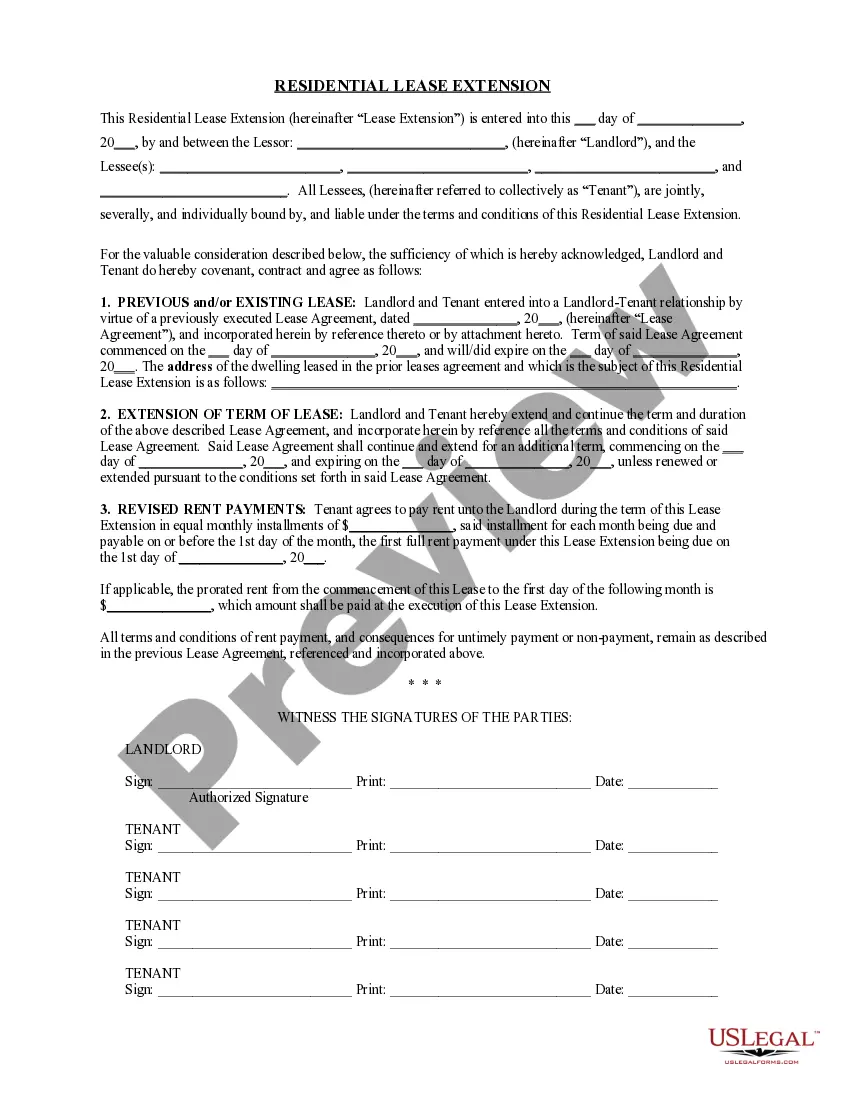
Mississippi Notice of Termination of Termporary Easement
About this form
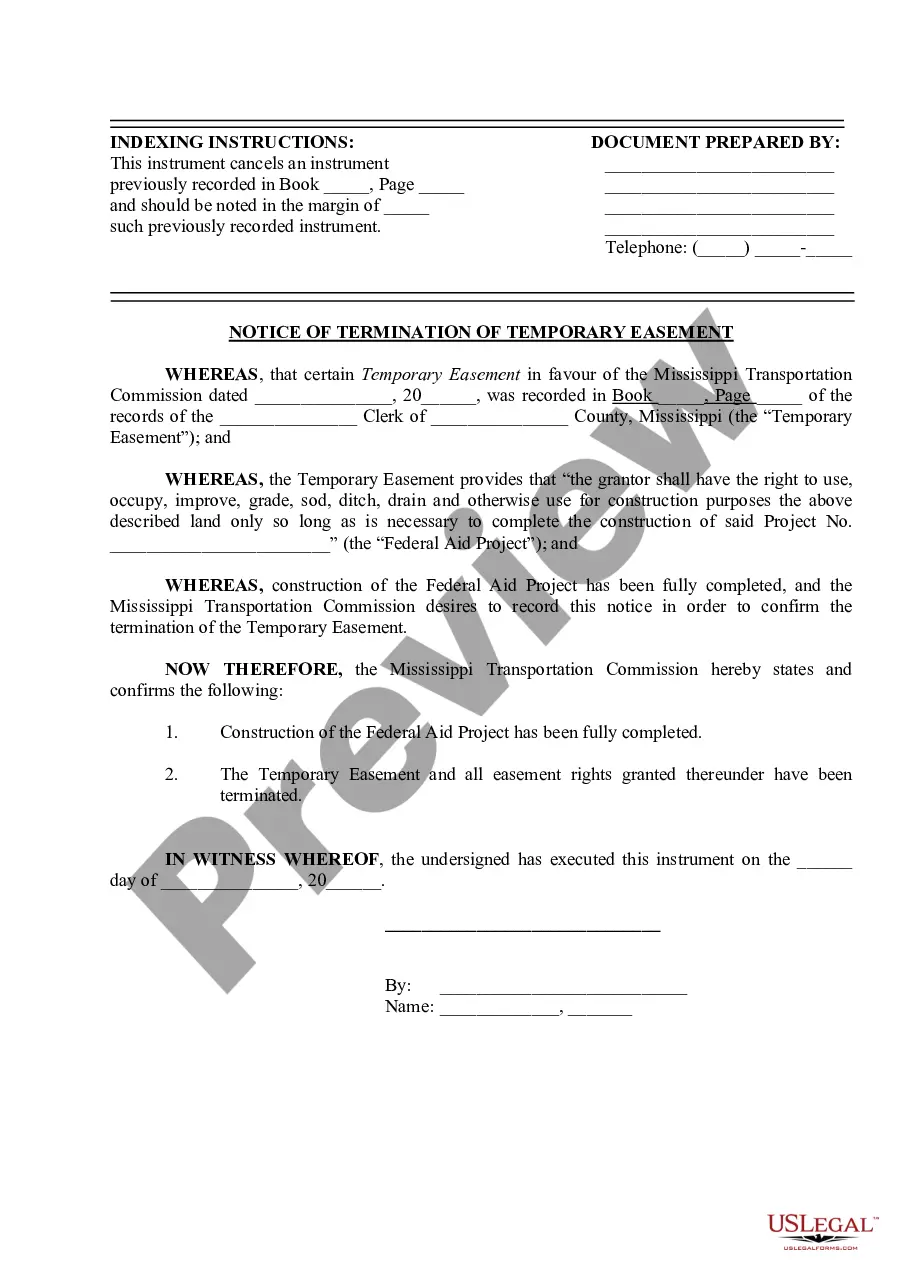
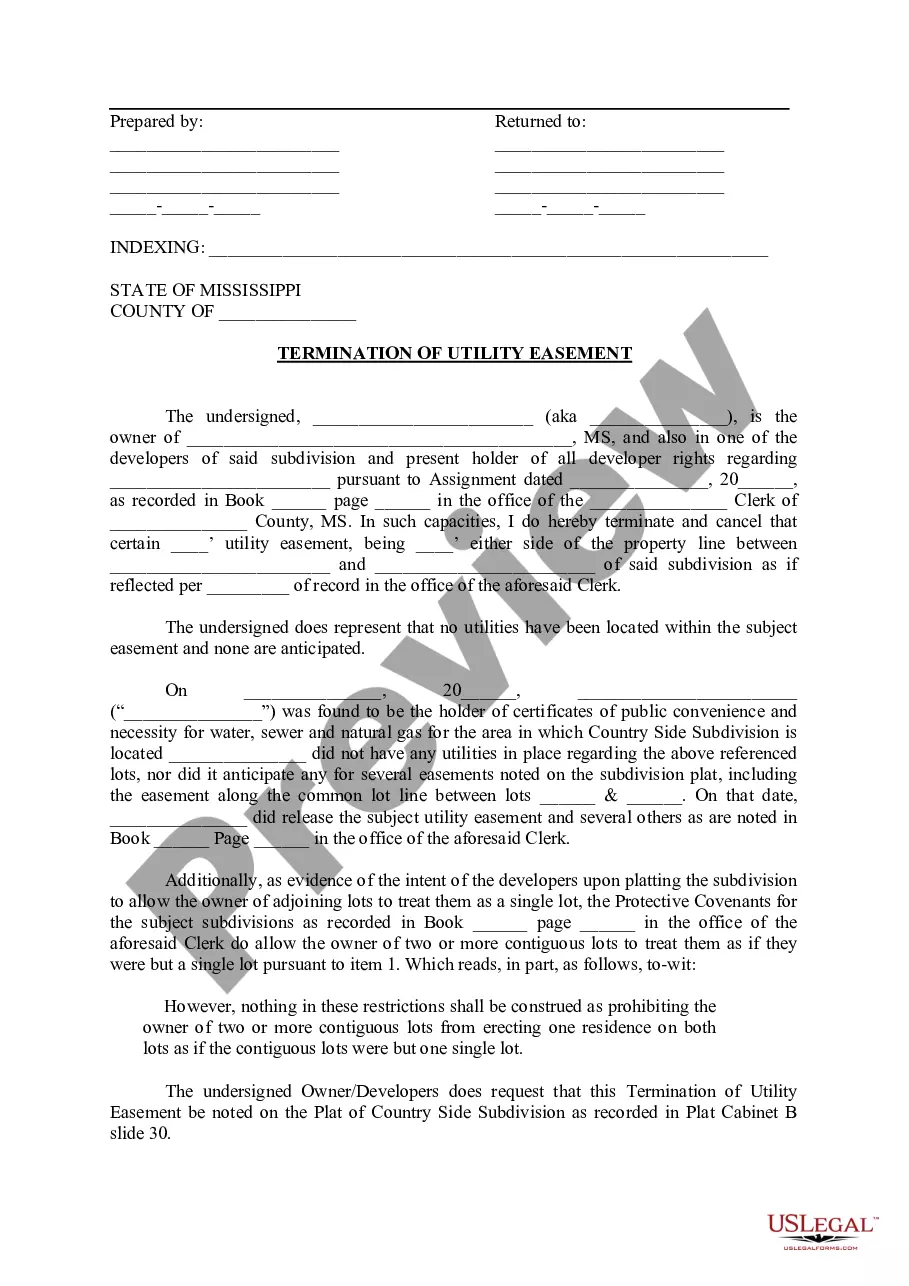
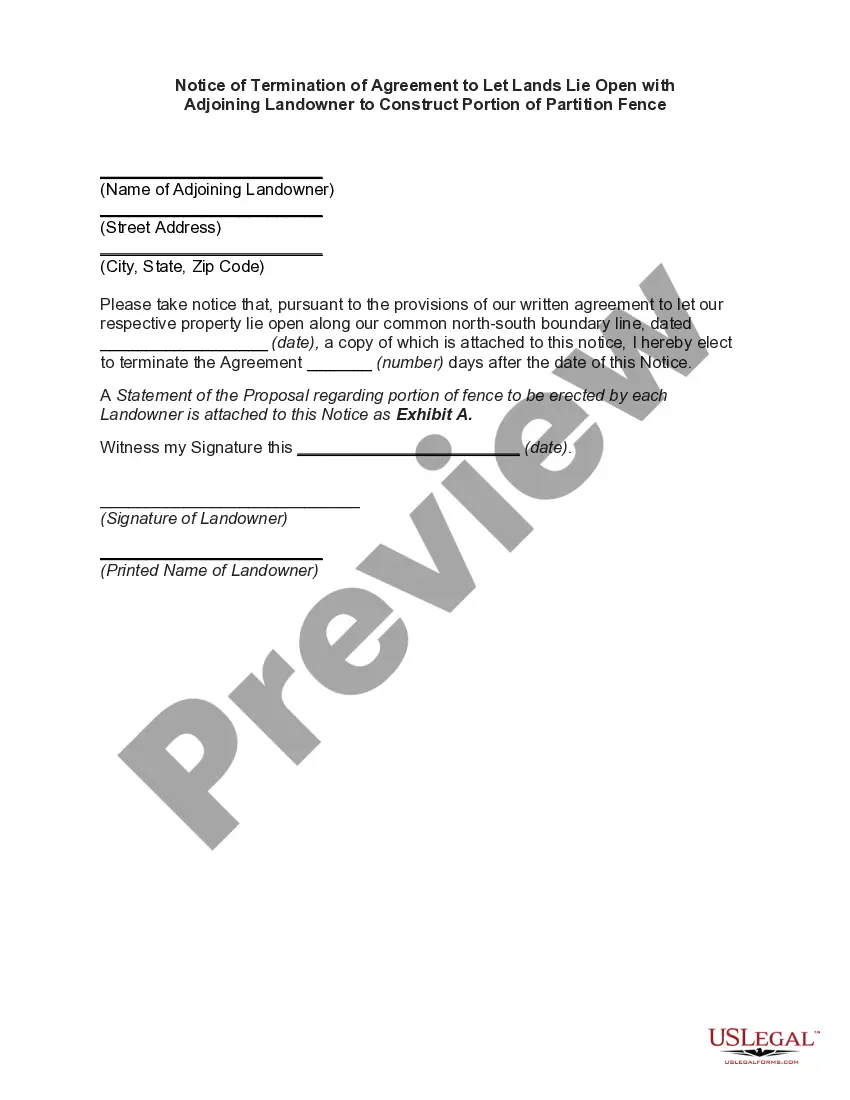
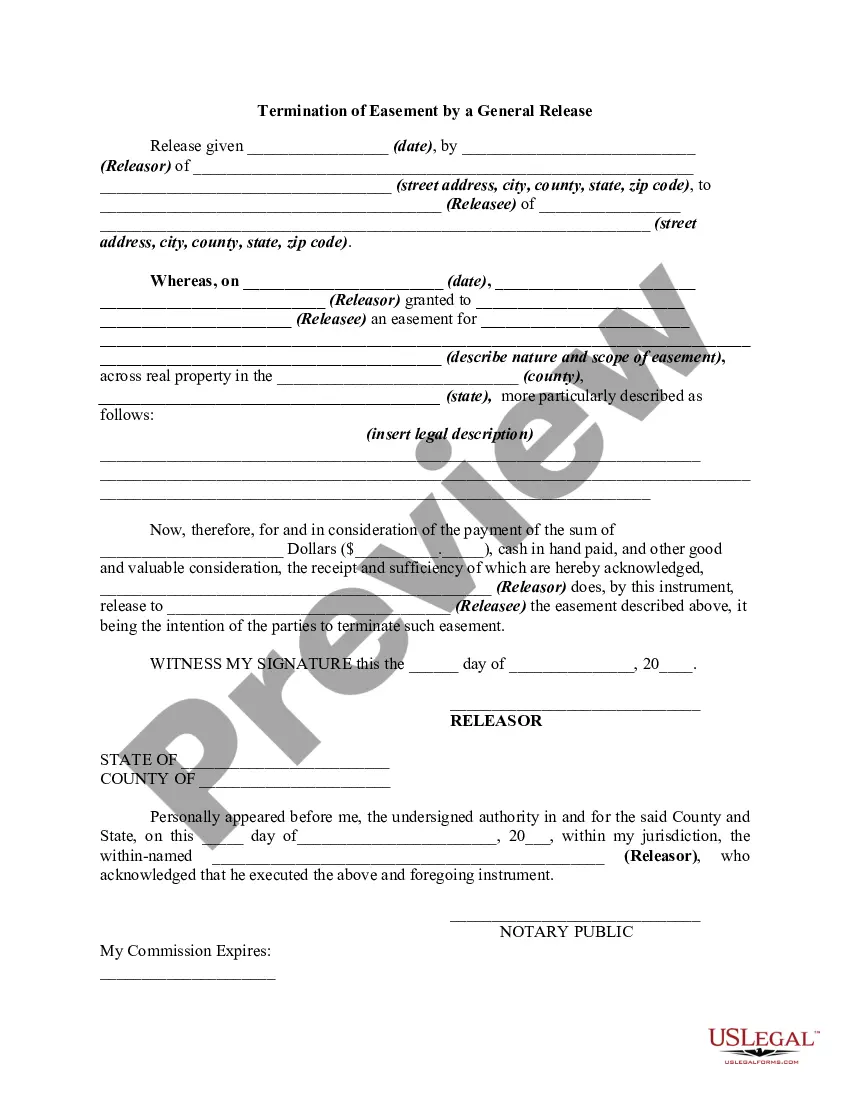
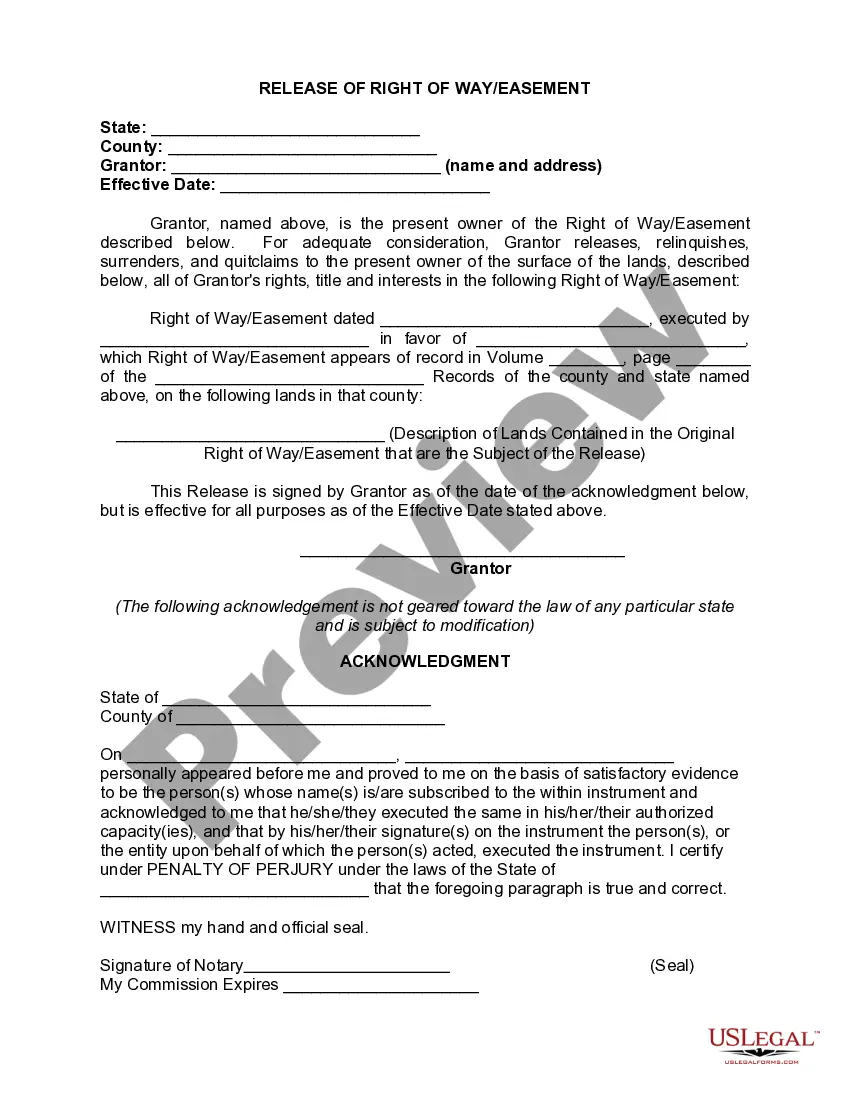
The Notice of Termination of Temporary Easement is a legal document used to officially inform that the Mississippi Transportation Commission no longer requires a temporary easement for construction purposes. This form serves to cancel the easement previously granted for construction activities and differs from similar forms by specifically addressing the termination of temporary rights associated with a particular project.
Main sections of this form
- Identification of the Temporary Easement being terminated, including its date and recording details.
- Confirmation that the construction project for which the easement was granted has been completed.
- A clear statement declaring the termination of all easement rights.
- Signature and title of the authorized representative of the Mississippi Transportation Commission.
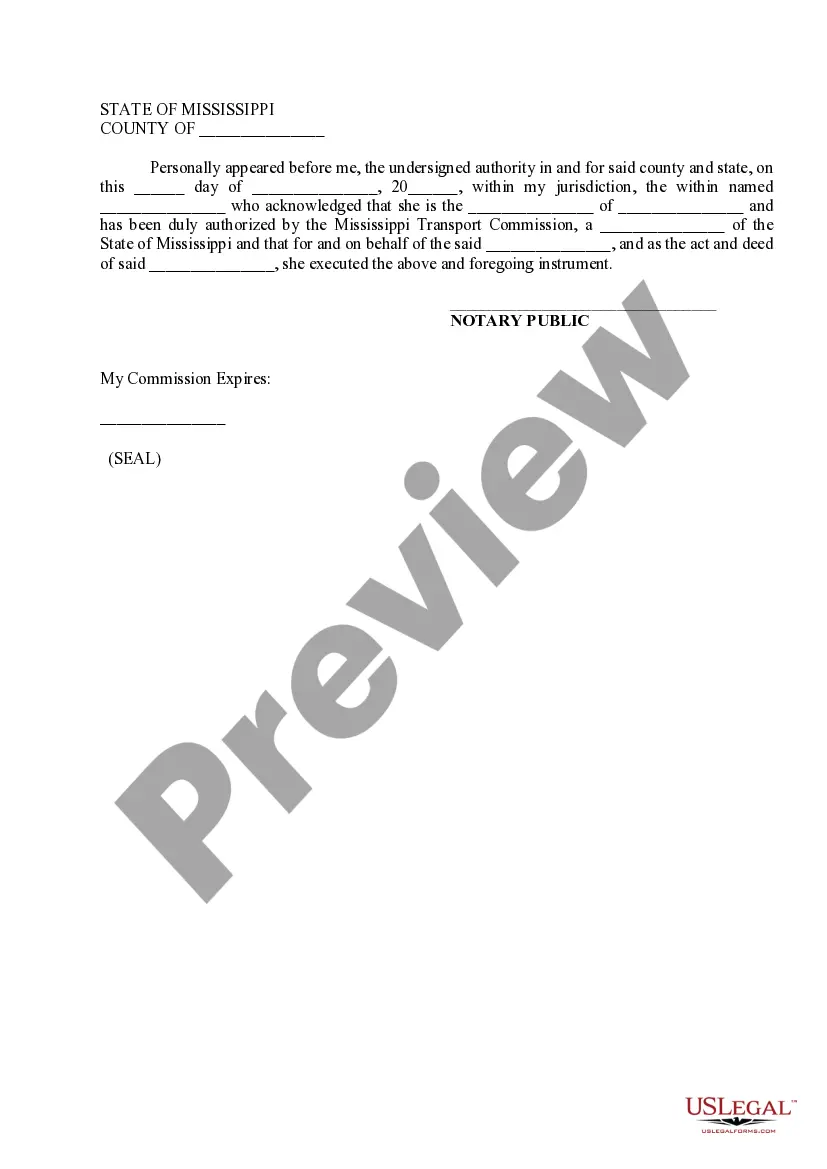
- Notary acknowledgment to validate the document.
When to use this form
This form should be used when the construction project associated with a temporary easement has been completed, and the landowner or grantor wishes to officially terminate the easement. It is particularly relevant for public construction projects in Mississippi where land use needs to be reclaimed post-construction.
Who this form is for
- Landowners who have granted a temporary easement for construction purposes.
- Representatives of the Mississippi Transportation Commission.
- Legal professionals working with land use and property rights in Mississippi.
Steps to complete this form
- Identify the original Temporary Easement by entering its date and recording information.
- Confirm that the construction associated with the easement has been completed.
- State that the Temporary Easement and rights have been terminated.
- Have the authorized representative of the Mississippi Transportation Commission sign the document.
- Ensure the document is notarized to gain legal validity.
Is notarization required?
Yes, this form must be notarized to be legally valid. It includes a section for a notary public to acknowledge the signature, ensuring the documentâs authenticity. US Legal Forms offers integrated online notarization, available 24/7, providing a secure and legal alternative to in-person notarization.
Get your form ready online
Our built-in tools help you complete, sign, share, and store your documents in one place.
Make edits, fill in missing information, and update formatting in US Legal Forms—just like you would in MS Word.
Download a copy, print it, send it by email, or mail it via USPS—whatever works best for your next step.
Sign and collect signatures with our SignNow integration. Send to multiple recipients, set reminders, and more. Go Premium to unlock E-Sign.
If this form requires notarization, complete it online through a secure video call—no need to meet a notary in person or wait for an appointment.
We protect your documents and personal data by following strict security and privacy standards.

Make edits, fill in missing information, and update formatting in US Legal Forms—just like you would in MS Word.

Download a copy, print it, send it by email, or mail it via USPS—whatever works best for your next step.

Sign and collect signatures with our SignNow integration. Send to multiple recipients, set reminders, and more. Go Premium to unlock E-Sign.

If this form requires notarization, complete it online through a secure video call—no need to meet a notary in person or wait for an appointment.

We protect your documents and personal data by following strict security and privacy standards.
Typical mistakes to avoid
- Failing to accurately fill in the details of the original Temporary Easement, such as the recording book and page number.
- Not signing the document in the presence of a notary public.
- Neglecting to confirm the completion of the construction project before issuing the termination notice.
Benefits of completing this form online
- Easy and quick access to the legal form, avoiding long wait times for paper versions.
- Editability allows you to enter specific details relevant to your situation.
- Reliable templates ensure compliance with legal standards without needing extensive legal knowledge.
Looking for another form?

Form popularity
FAQ
Which of the following actions would terminate an easement? A release signed by the holder of the dominant tenement. A revocation granted by the grantor of the easement. A full conveyance signed by the servient tenement.
An easement is extinguished when the dominant owner releases it, expressly or impliedly, to the servient owner. Such release can be made only in the circumstances and to the extent in and to which the dominant owner can alienate the dominant heritage.
Thus, the simplest method by which an owner can prevent an easement from being acquired on his or her property is by giving his consent to the other person's use. Once permission is given, the use by the neighbor (or the neighbor's tenant) is not adverse.
You can terminate an easement by release. A release is a surrender of a right or interest, such as an easement. Only the person holding the right can release it, such as the owner of the dominant estate in an easement appurtenant or the holder of an easement in gross.
An easement is extinguished when the dominant owner releases it, expressly or impliedly, to the servient owner. Such release can be made only in the circumstances and to the extent in and to which the dominant owner can alienate the dominant heritage.A, without the consent of B and C, release the easement.
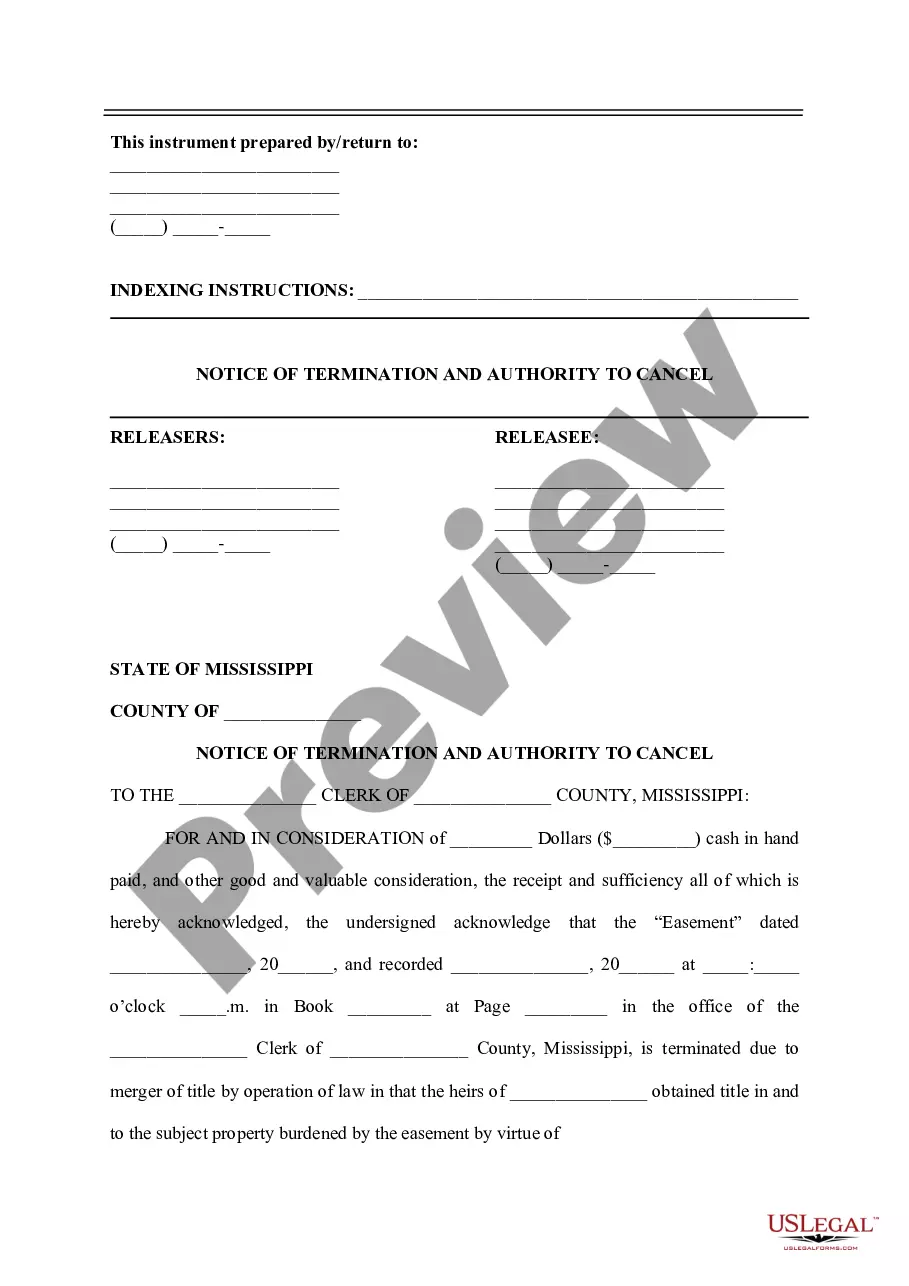
An easement can be terminated by releasing it through the use of a deed. This can be done through a quitclaim or grant deed. A merger of legal interests by common ownership will extinguish an easement. A merger occurs when the same owner acquires fee title to both the benefiting and burdened properties.
An easement can be terminated by estopple if the easement holder shows an intent to abandon and the owner of the servient tenement spends money in reasonable reliance on the easement holders representations.
Prescription. Just as an easement can be created by prescription (adverse possession), an easement can also be terminated by prescription if the owner of the servient tenement excludes the easement holder from the usage of the easement for the prescribed statutory period of time.