Mississippi Response to First Set of Interrogatories
What this document covers
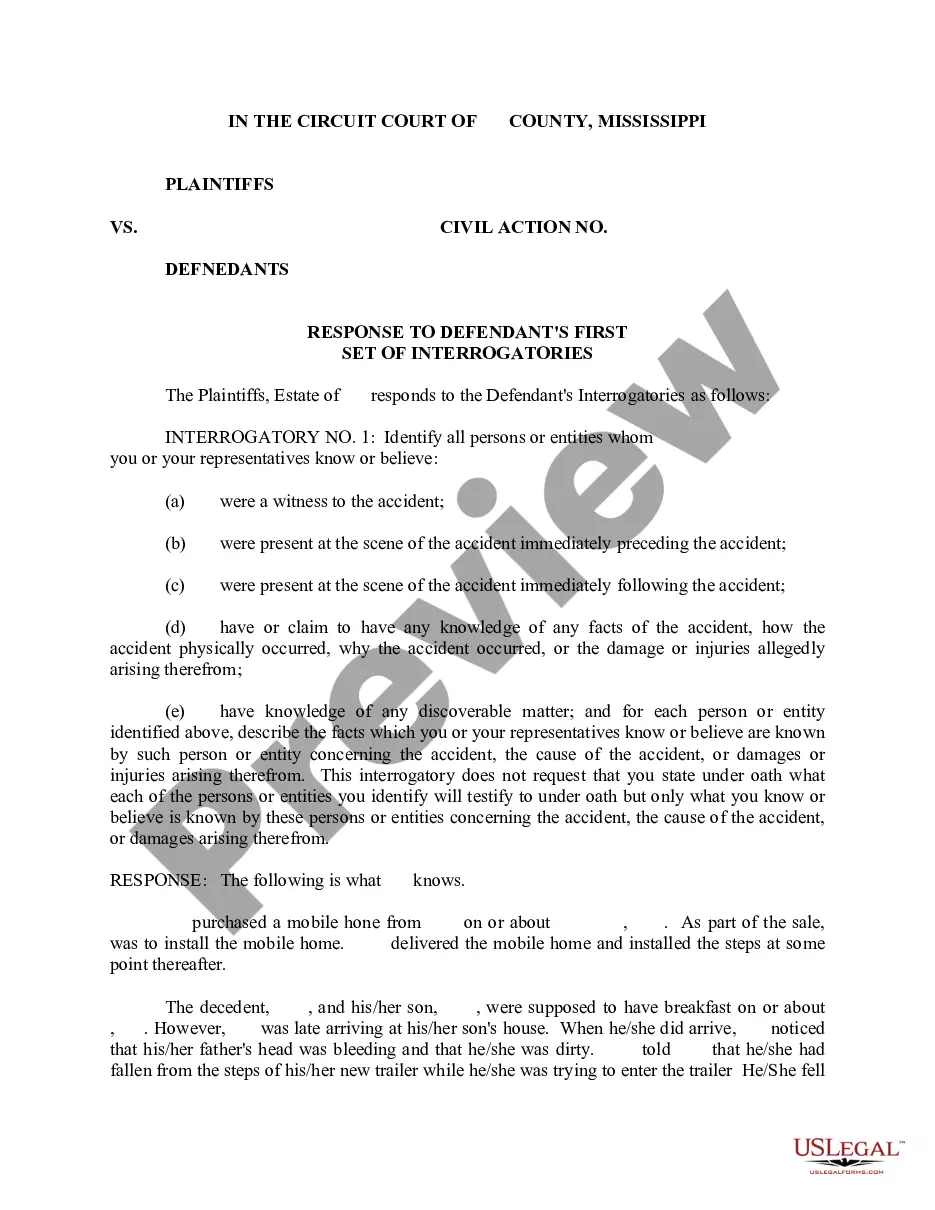
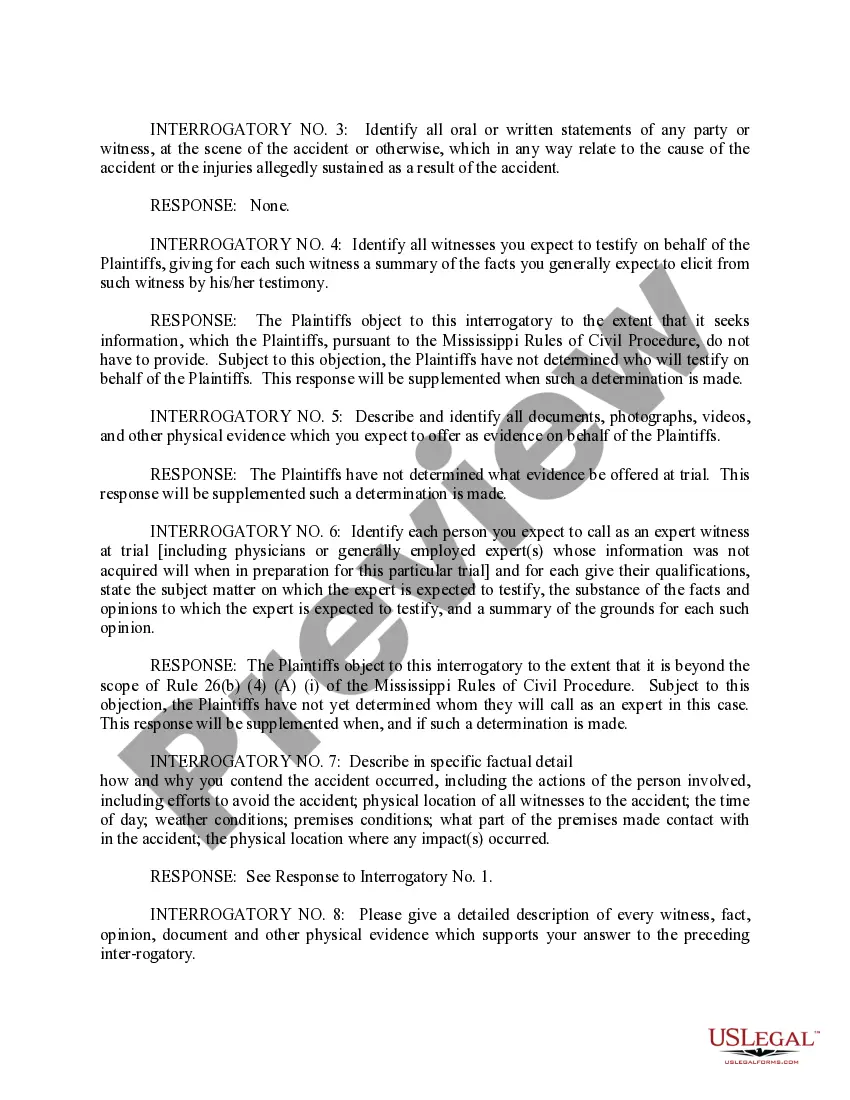
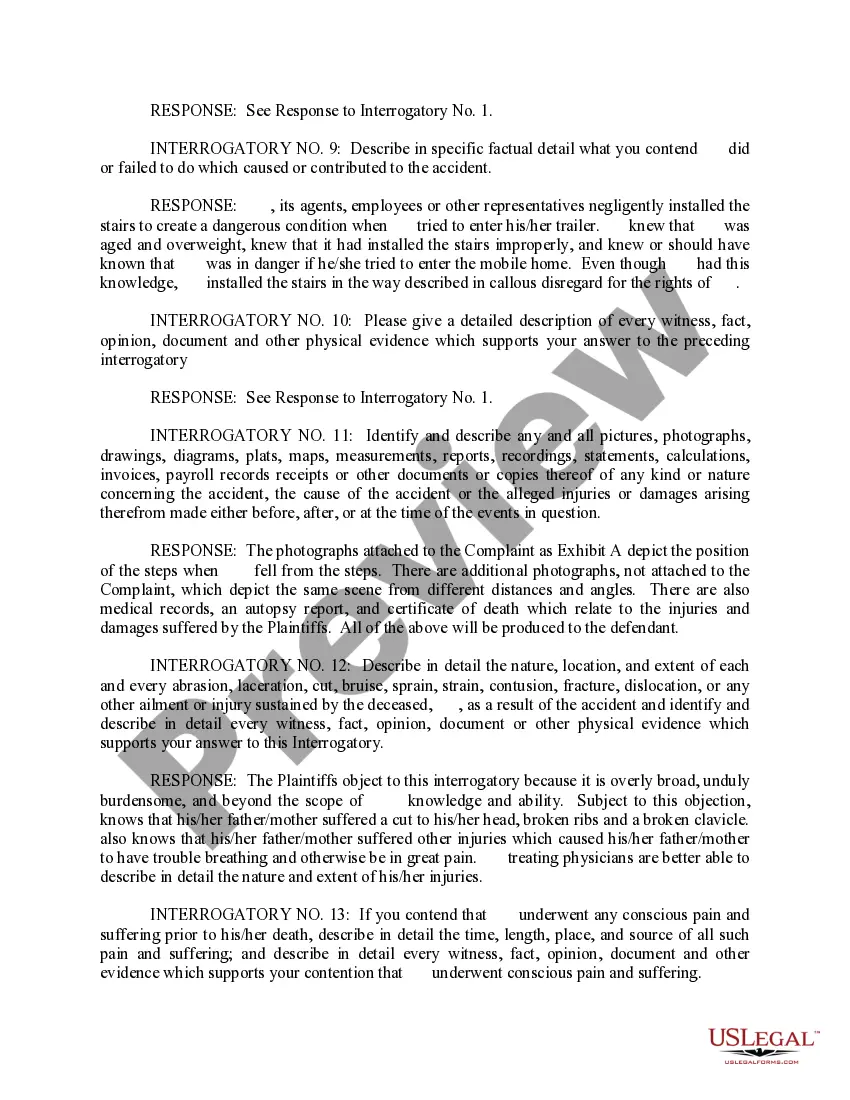
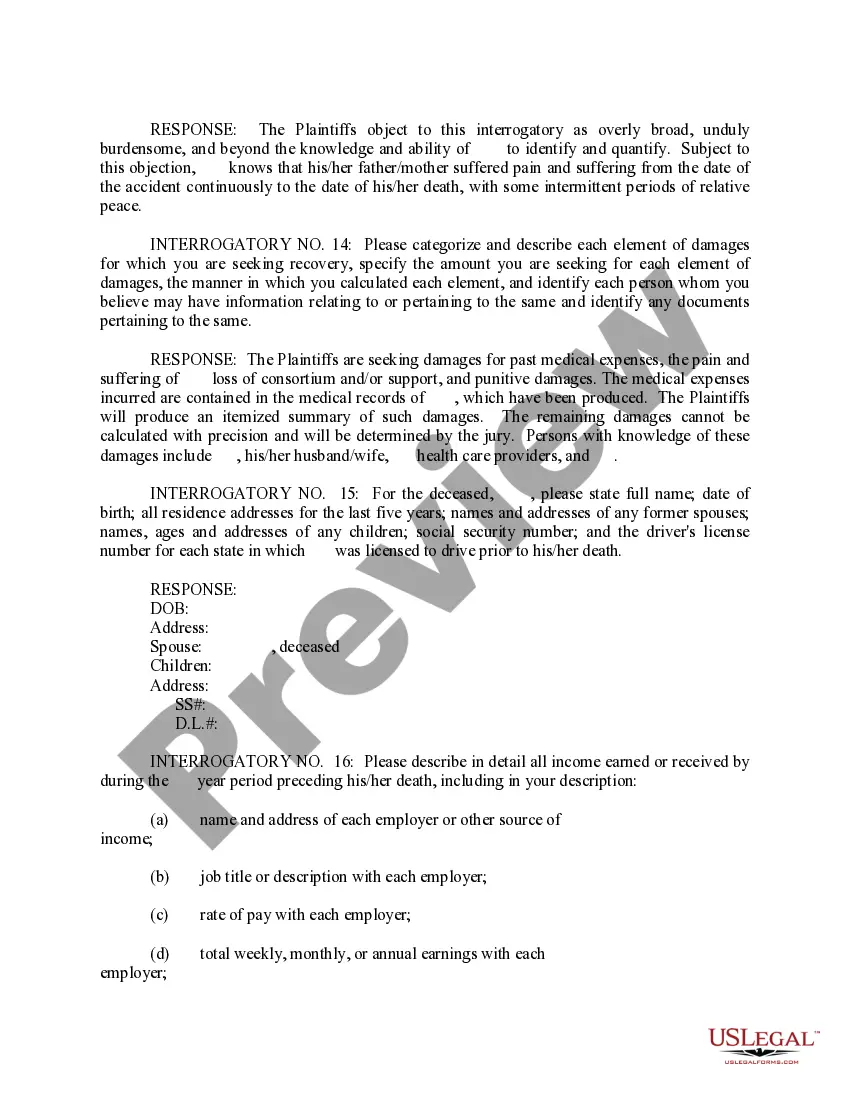
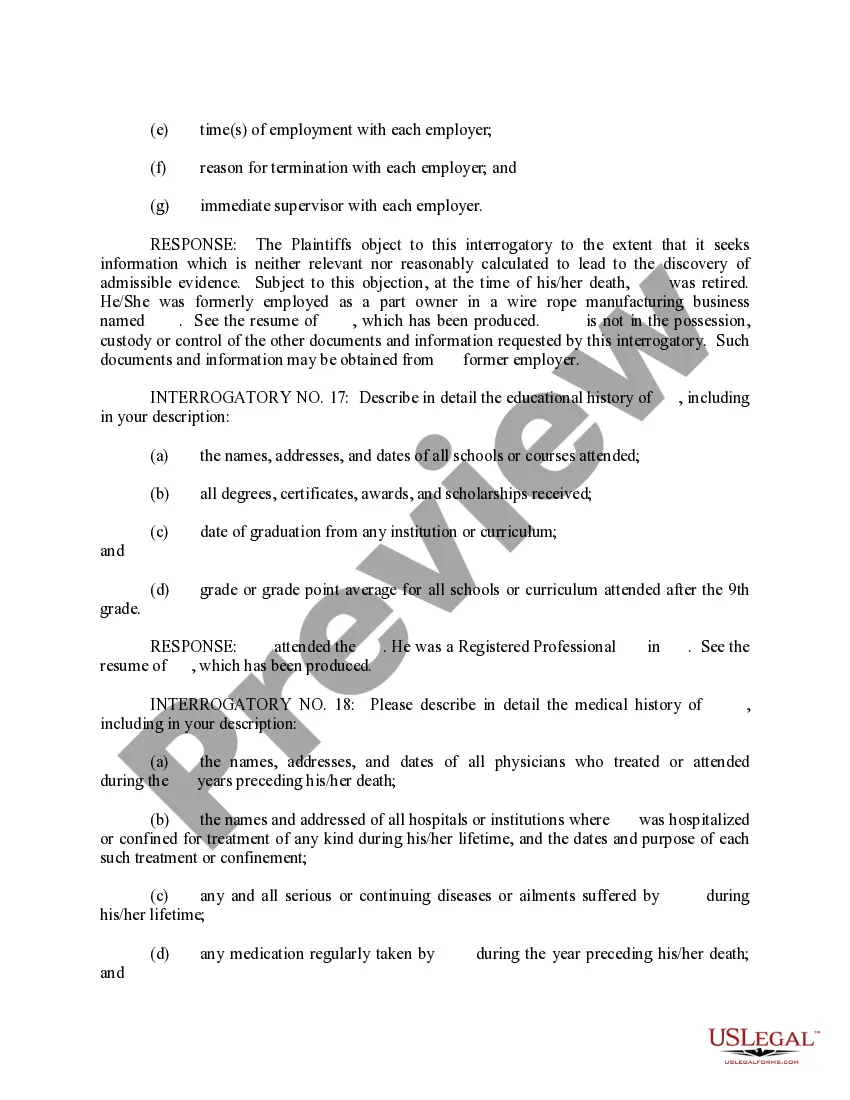
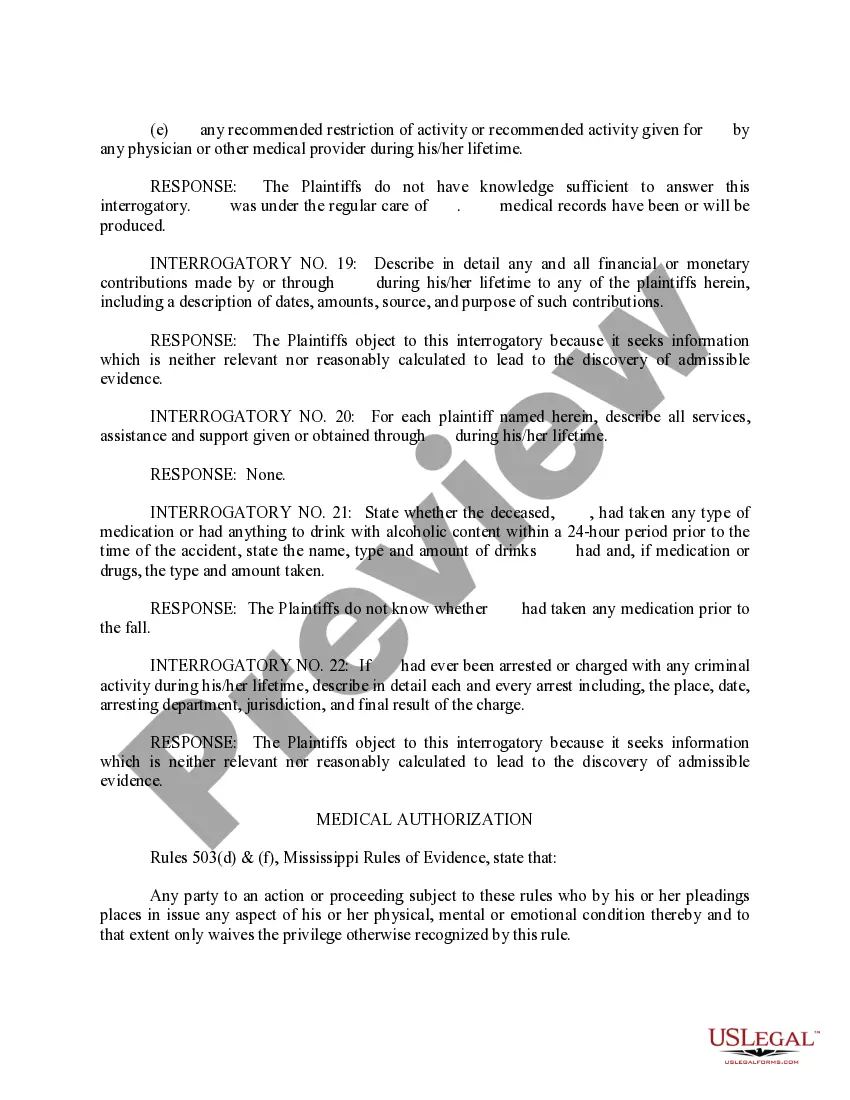
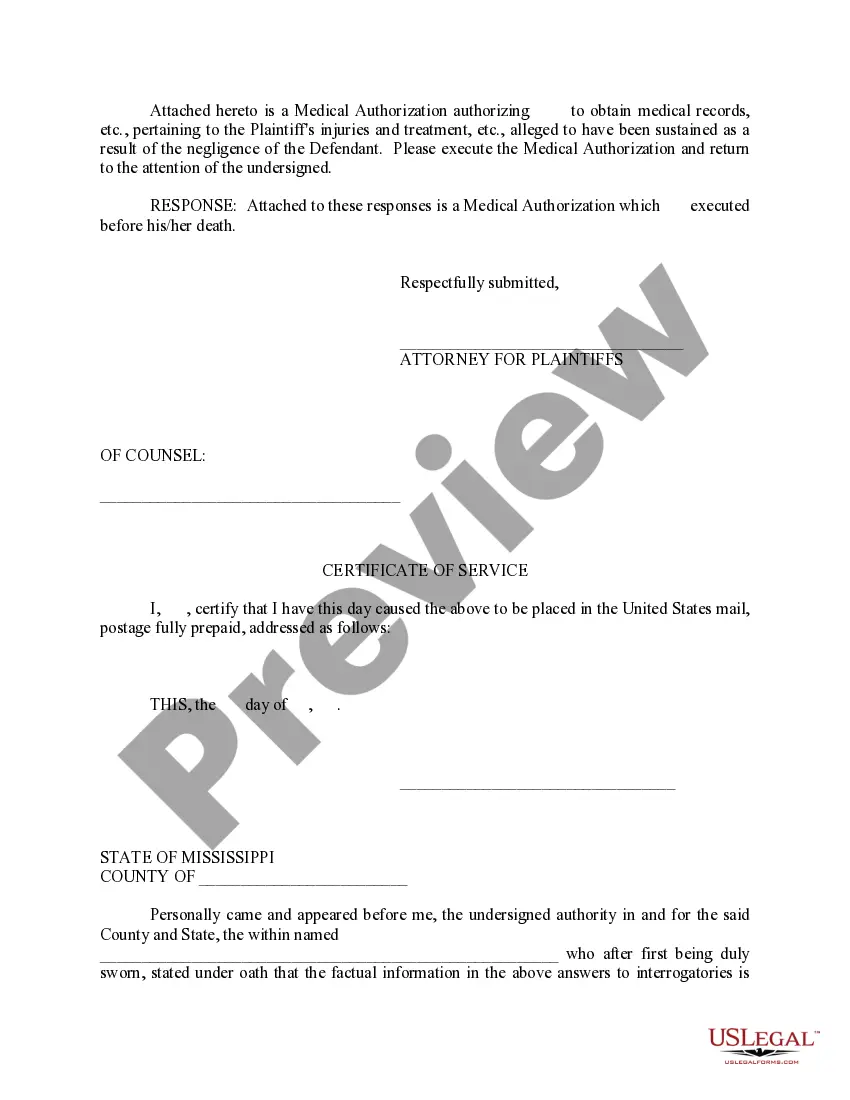
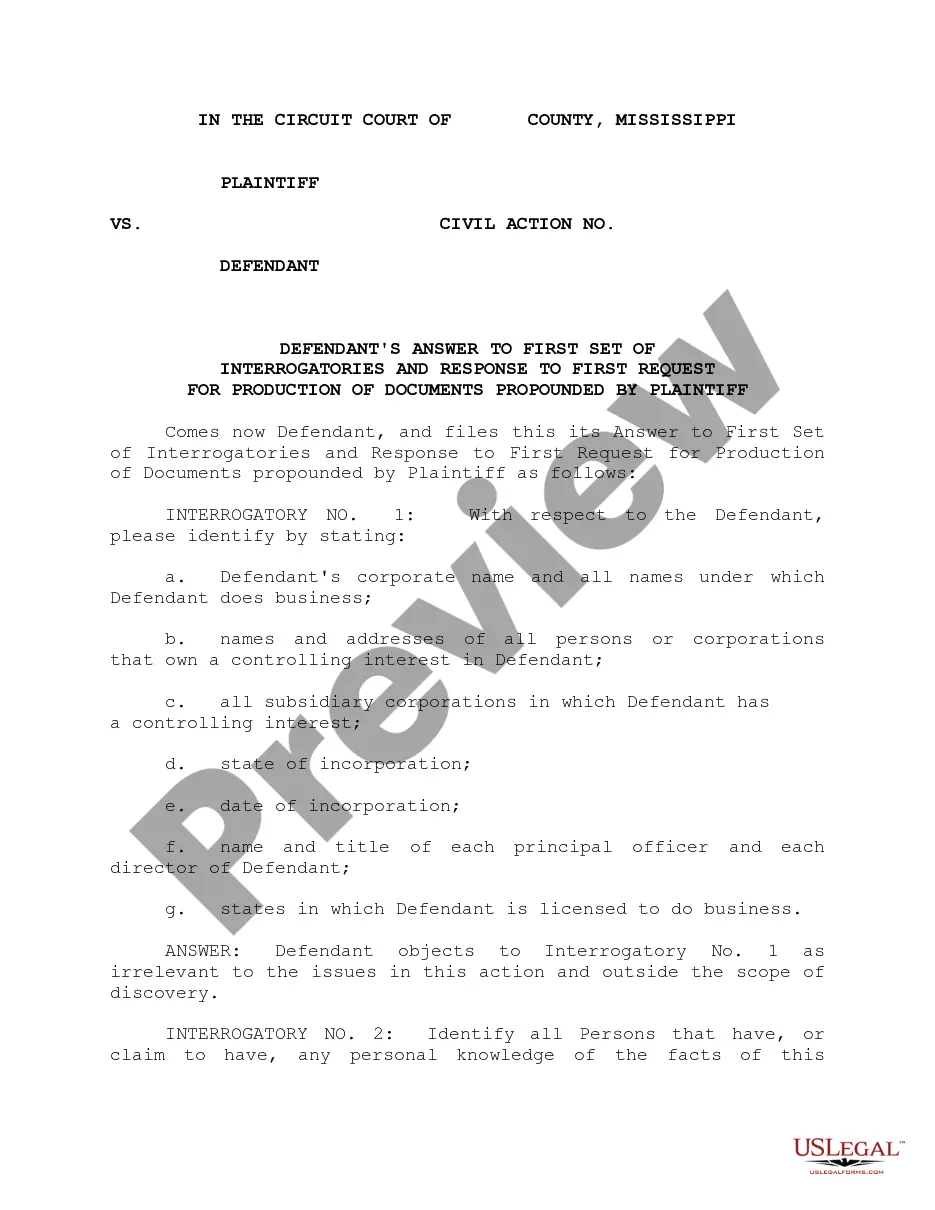
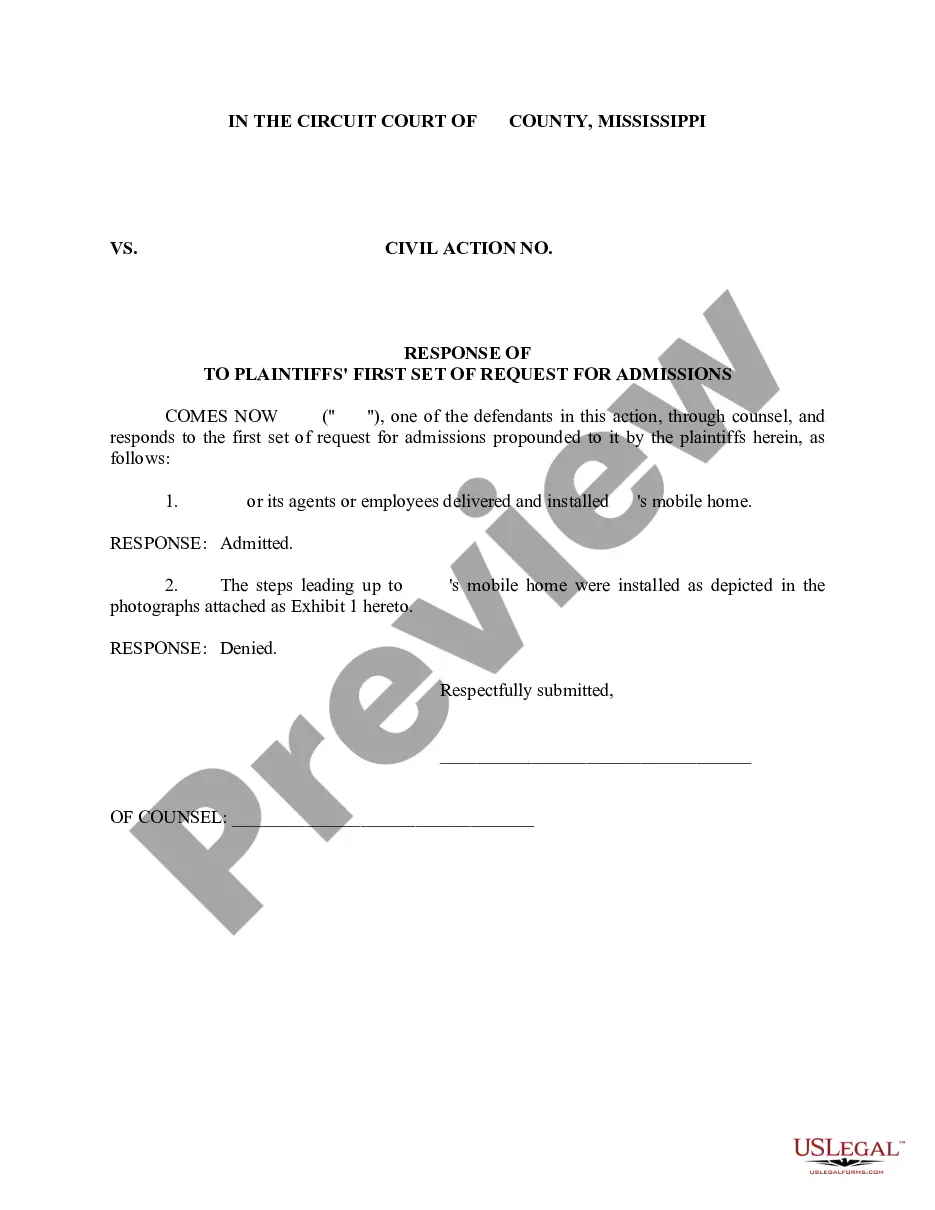
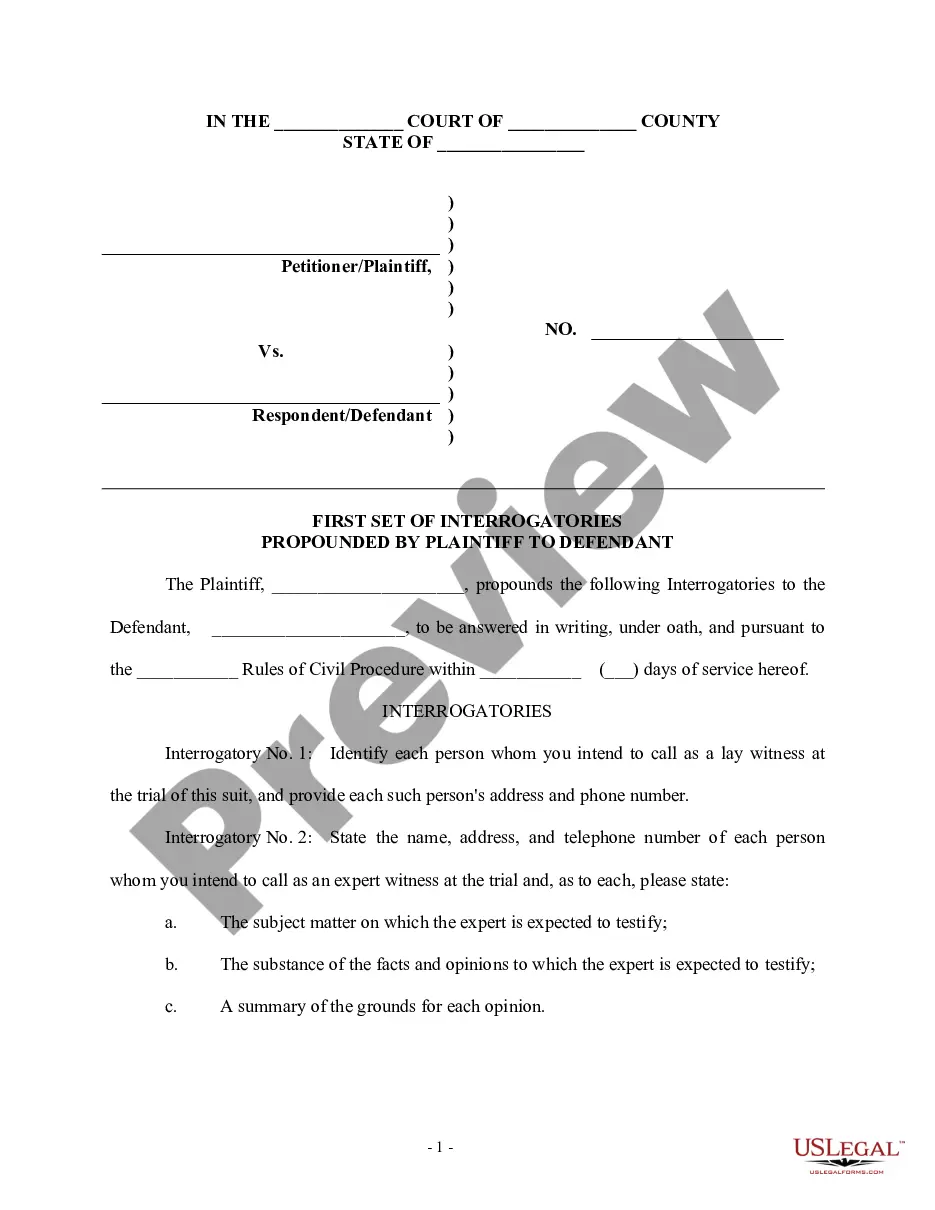
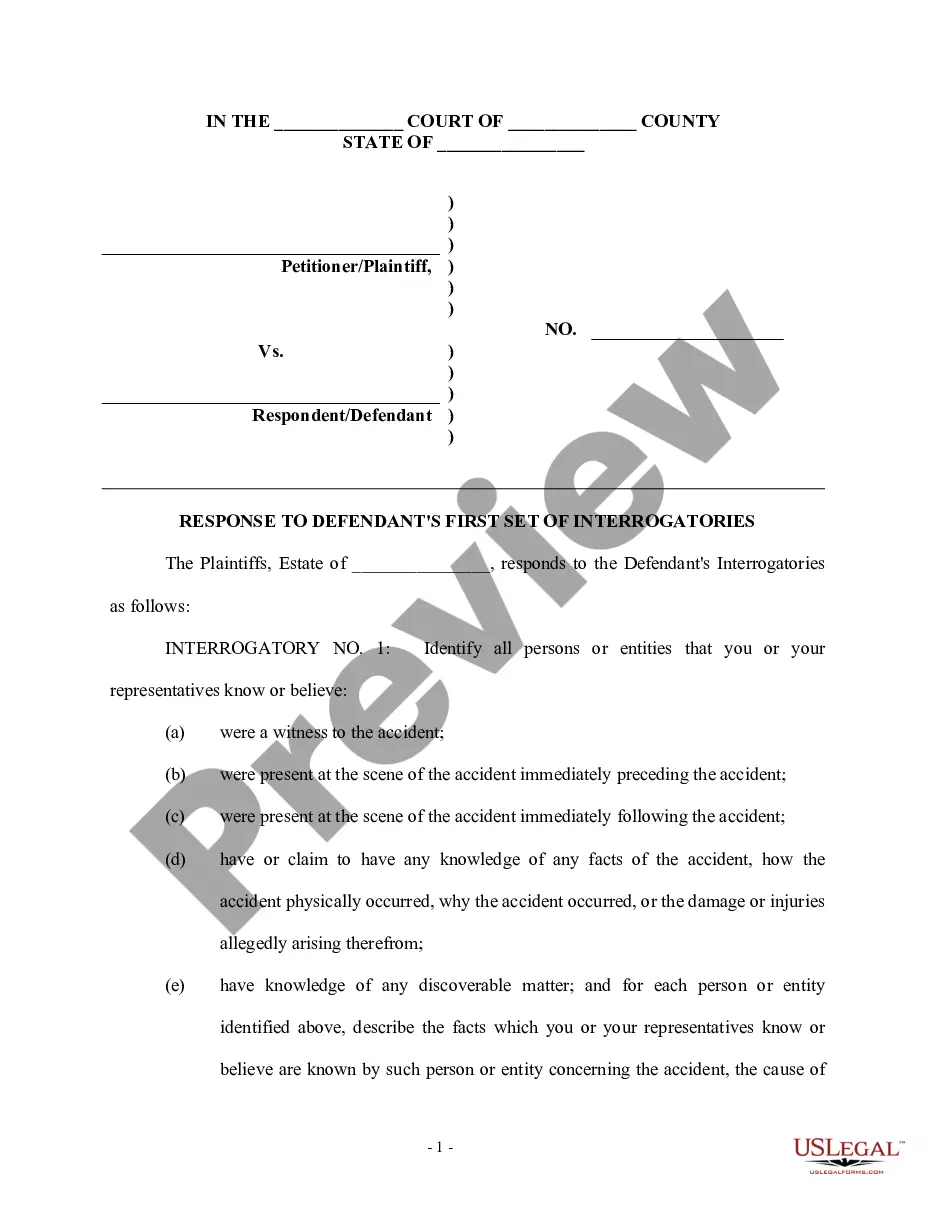
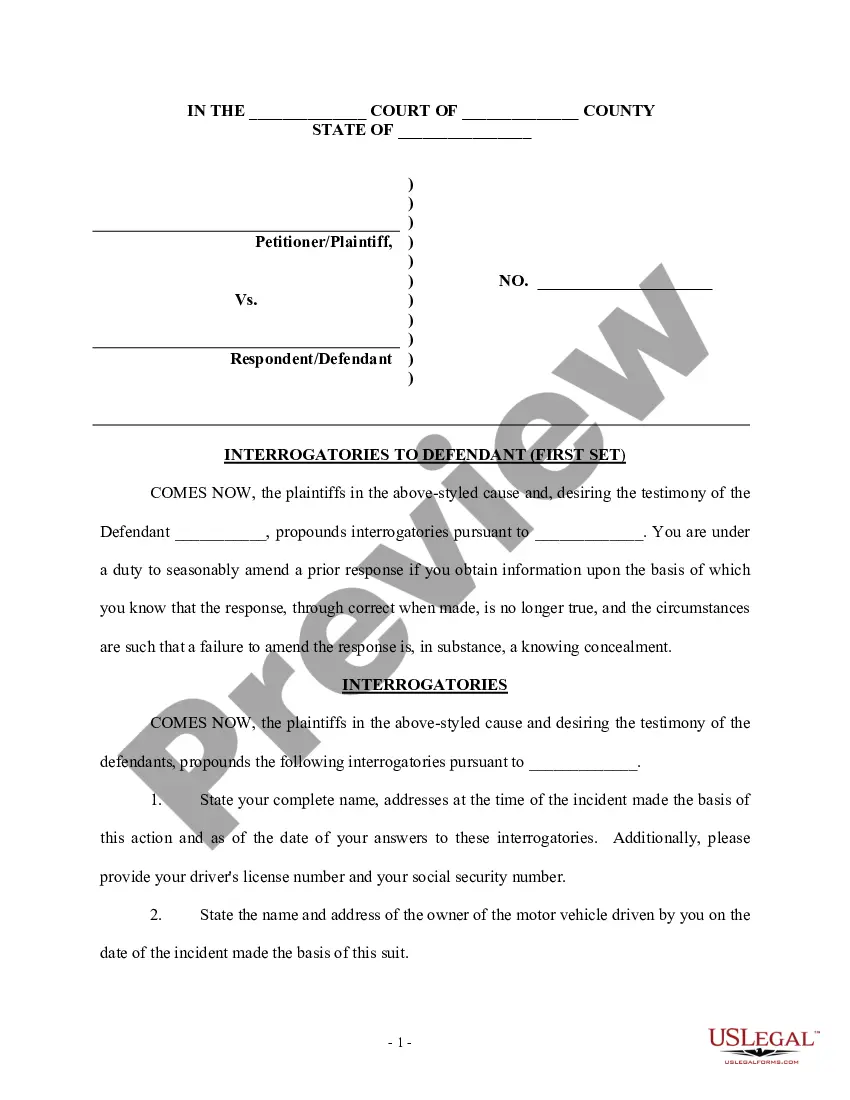
The Response to First Set of Interrogatories is a legal document used in civil litigation, where one party (the plaintiffs) provides answers to a defendant's written questions regarding a case. This form helps clarify the facts of the case, allowing both parties to prepare for trial. Unlike other forms, it is specifically tailored for responding to interrogatories, which are formal inquiries made to elicit information before a trial.
Main sections of this form
- Identification of all possible witnesses to the accident.
- Details regarding the circumstances surrounding the accident.
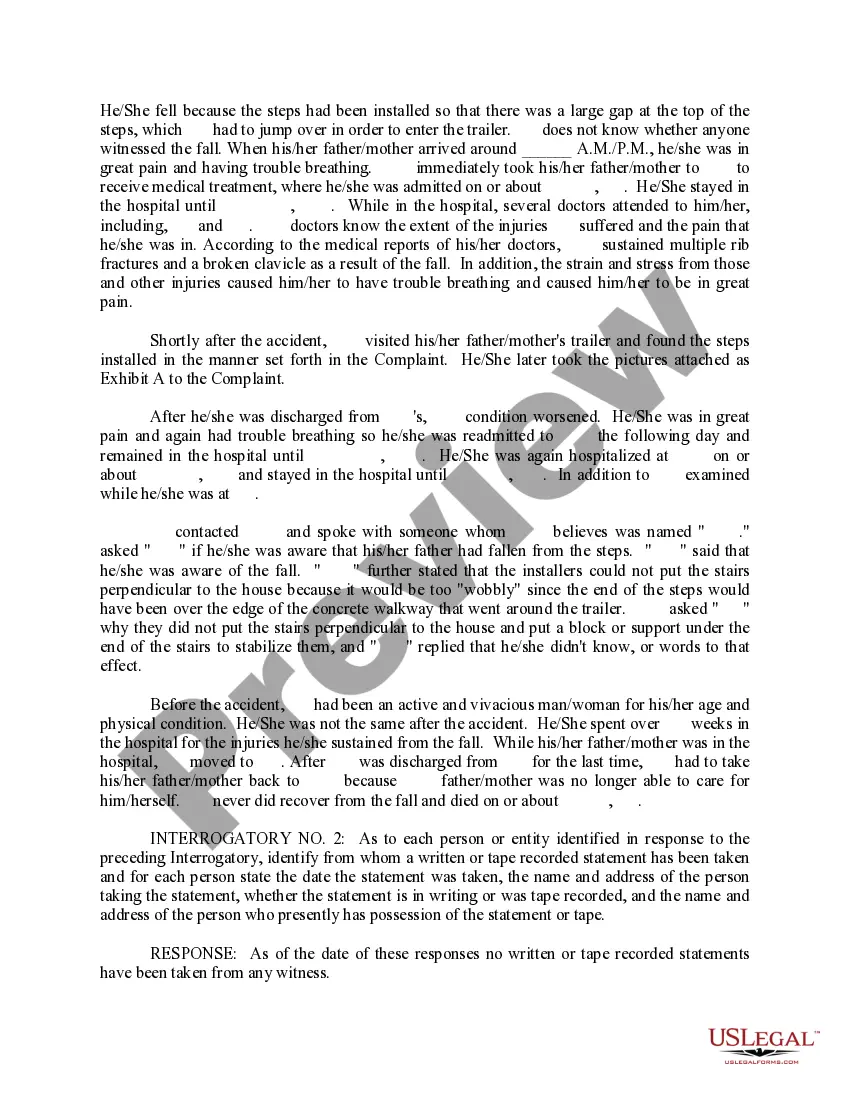
- Responses to specific inquiries about injuries and damages.
- Description of any evidence related to the case.
- Medical history and related treatments of the injured party.
When to use this document
This form is necessary when you are involved in a civil lawsuit where the defendant has served you with their First Set of Interrogatories. It is crucial for accurately providing factual information about the case, which may include witness accounts, details about the accident, and any claims regarding injuries or damages. Use this form to ensure compliance with legal procedures and to assist in the preparation of your case.
Intended users of this form
- Individuals or entities who are plaintiffs in a civil lawsuit.
- Attorneys representing plaintiffs needing to formalize their responses to interrogatories.
- Anyone involved in a case where the defendant has issued a First Set of Interrogatories.
Steps to complete this form
- Begin by filling in the case information, including the plaintiffs and defendants.
- Respond to each interrogatory by clearly detailing your answers to the questions posed.
- Identify and describe any witnesses and their knowledge related to the circumstances of the accident.
- Outline any medical treatments, documentation, or evidence relevant to the case.
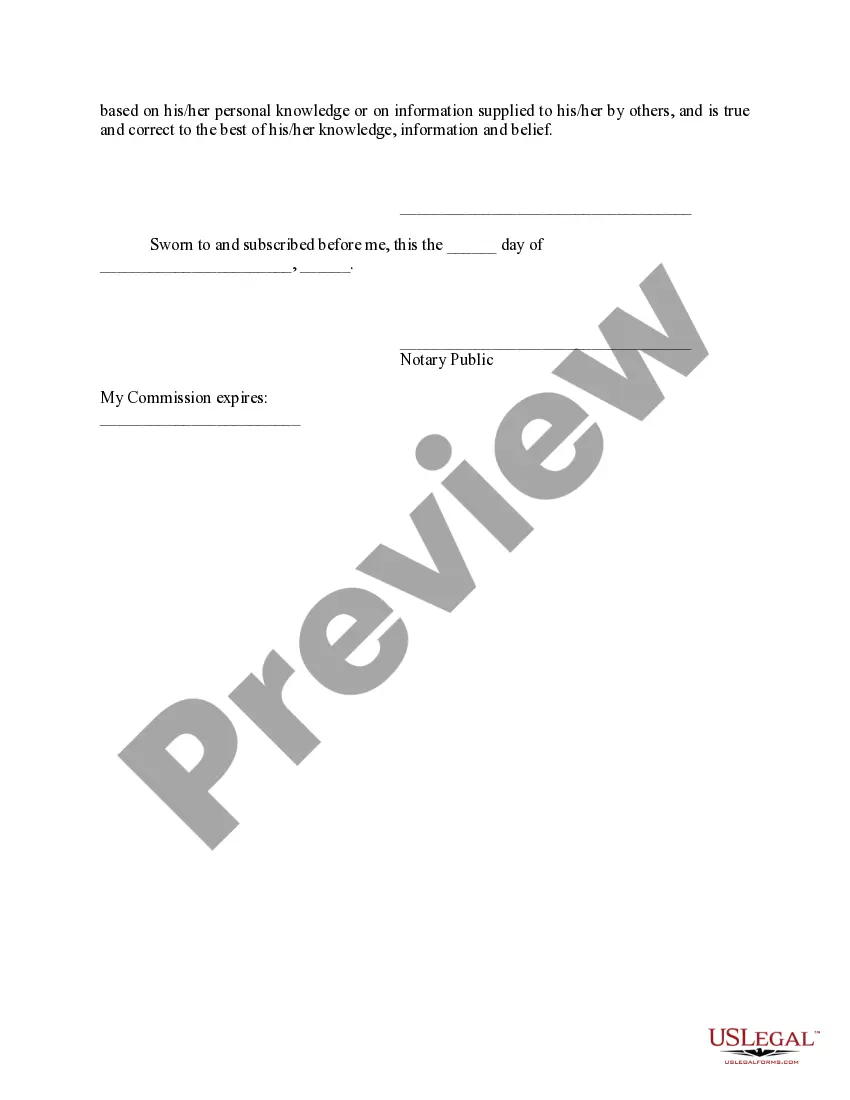
- Conclude with your signature and the date, ensuring that all responses are truthful and accurate.
Does this document require notarization?
Notarization is required for this form to take effect. Our online notarization service, powered by Notarize, lets you verify and sign documents remotely through an encrypted video session, available 24/7.
Get your form ready online
Our built-in tools help you complete, sign, share, and store your documents in one place.
Make edits, fill in missing information, and update formatting in US Legal Forms—just like you would in MS Word.
Download a copy, print it, send it by email, or mail it via USPS—whatever works best for your next step.
Sign and collect signatures with our SignNow integration. Send to multiple recipients, set reminders, and more. Go Premium to unlock E-Sign.
If this form requires notarization, complete it online through a secure video call—no need to meet a notary in person or wait for an appointment.
We protect your documents and personal data by following strict security and privacy standards.

Make edits, fill in missing information, and update formatting in US Legal Forms—just like you would in MS Word.

Download a copy, print it, send it by email, or mail it via USPS—whatever works best for your next step.

Sign and collect signatures with our SignNow integration. Send to multiple recipients, set reminders, and more. Go Premium to unlock E-Sign.

If this form requires notarization, complete it online through a secure video call—no need to meet a notary in person or wait for an appointment.

We protect your documents and personal data by following strict security and privacy standards.
Common mistakes to avoid
- Failing to answer every interrogatory fully as required.
- Providing vague or incomplete information that may not address the questions asked.
- Forgetting to sign and date the form before submitting it.
- Not keeping a copy of your responses for your records.
Advantages of online completion
- Convenient access to essential legal documents anytime and anywhere.
- Easy customization to fit your specific case circumstances.
- Instant download options for various formats ensuring compatibility.
- Guidance from licensed attorneys helps ensure legal compliance and accuracy.
Looking for another form?


Form popularity
FAQ
You must answer each interrogatory separately and fully in writing under oath, unless you object to it. You must explain why you object. You must sign your answers and objections.
So, can you refuse to answer interrogatories? The answer is, no, you may not. You must answer a Rule 33 interrogatory within 30 days of being served with it. That answer must either permit inspection of the requested information or object to the production of the information for a specific reason.
Responding to Form InterrogatoriesAnswer each question, being careful to answer each subpart, if one exists. Read the question carefully, and answer only what it asks. You may attach exhibits, if necessary. The response must be verified, meaning you must swear that the responses given are true.
Your answers to the interrogatories should usually be short, clear, and direct and should answer only the question that is being asked. This is not the time to set out your entire case or defense to the other side. Take the time to make sure your answers are correct and truthful.
Motions to Compel If a party doesn't respond to interrogatories or requests for production, then the party seeking those answers must file a motion to compel with the court. If the court grants the motion to compel, then the party who objected or failed to answer must then do so.
Motions to Compel If a party doesn't respond to interrogatories or requests for production, then the party seeking those answers must file a motion to compel with the court. If the court grants the motion to compel, then the party who objected or failed to answer must then do so.
Written questions submitted to a party from his or her adversary to ascertain answers that are prepared in writing and signed under oath and that have relevance to the issues in a lawsuit.No party can be compelled to answer interrogatories that involve matters beyond the party's control.
The purpose of interrogatories is to learn a great deal of general information about a party in a lawsuit. For example, the defendant in a personal injury lawsuit about a car accident might send you interrogatories asking you to disclose things like: Where you live. Where you work.