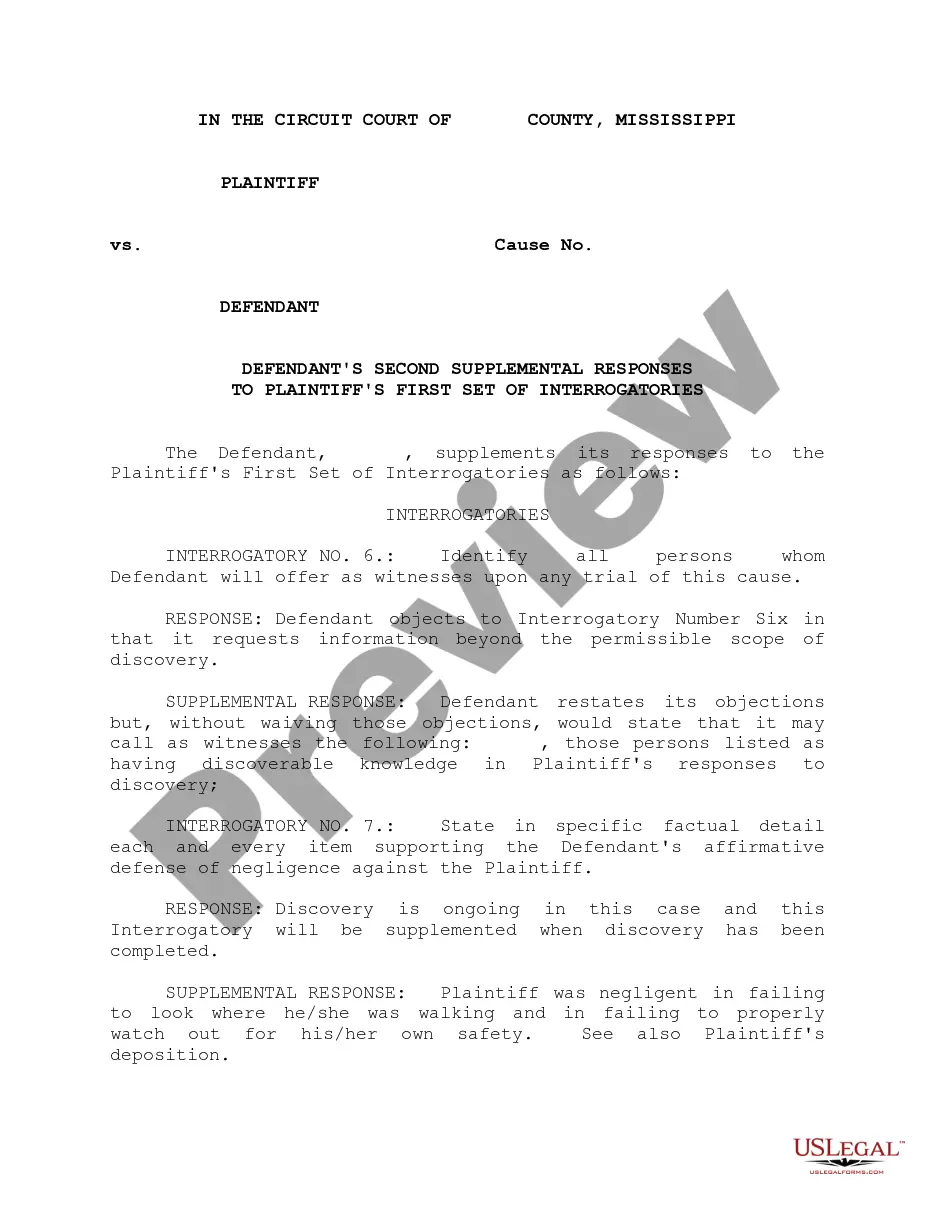
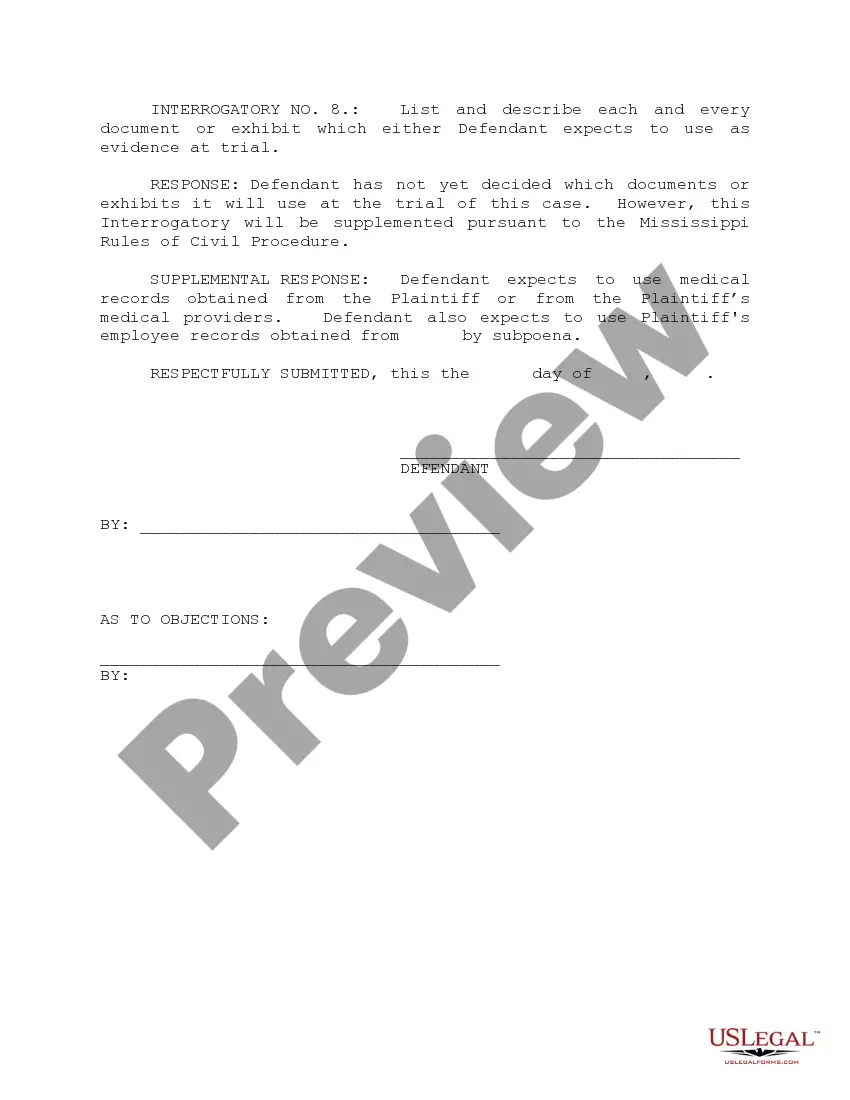
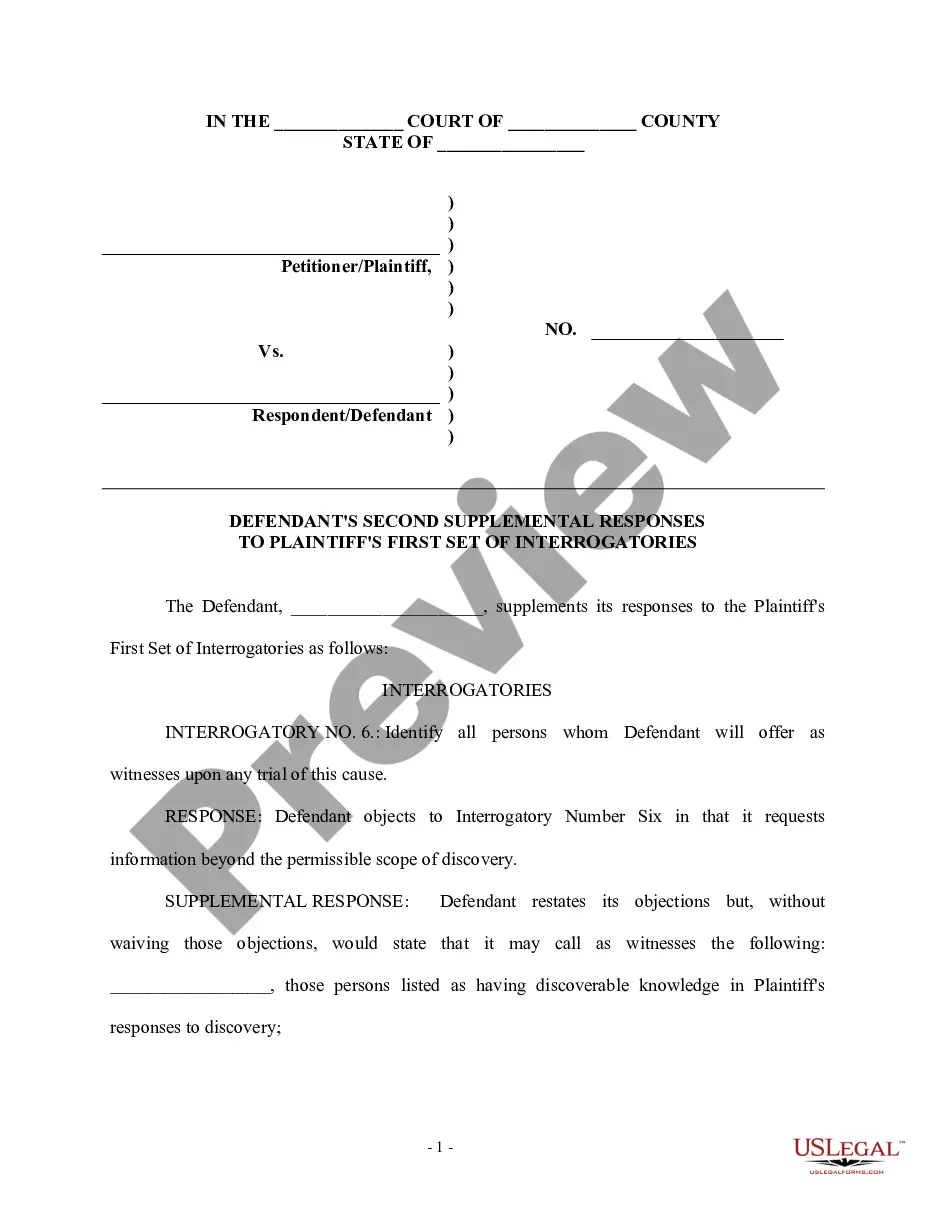
Mississippi Second Supplemental Responses to Plaintiff's First Set of Interrogatories
What this document covers
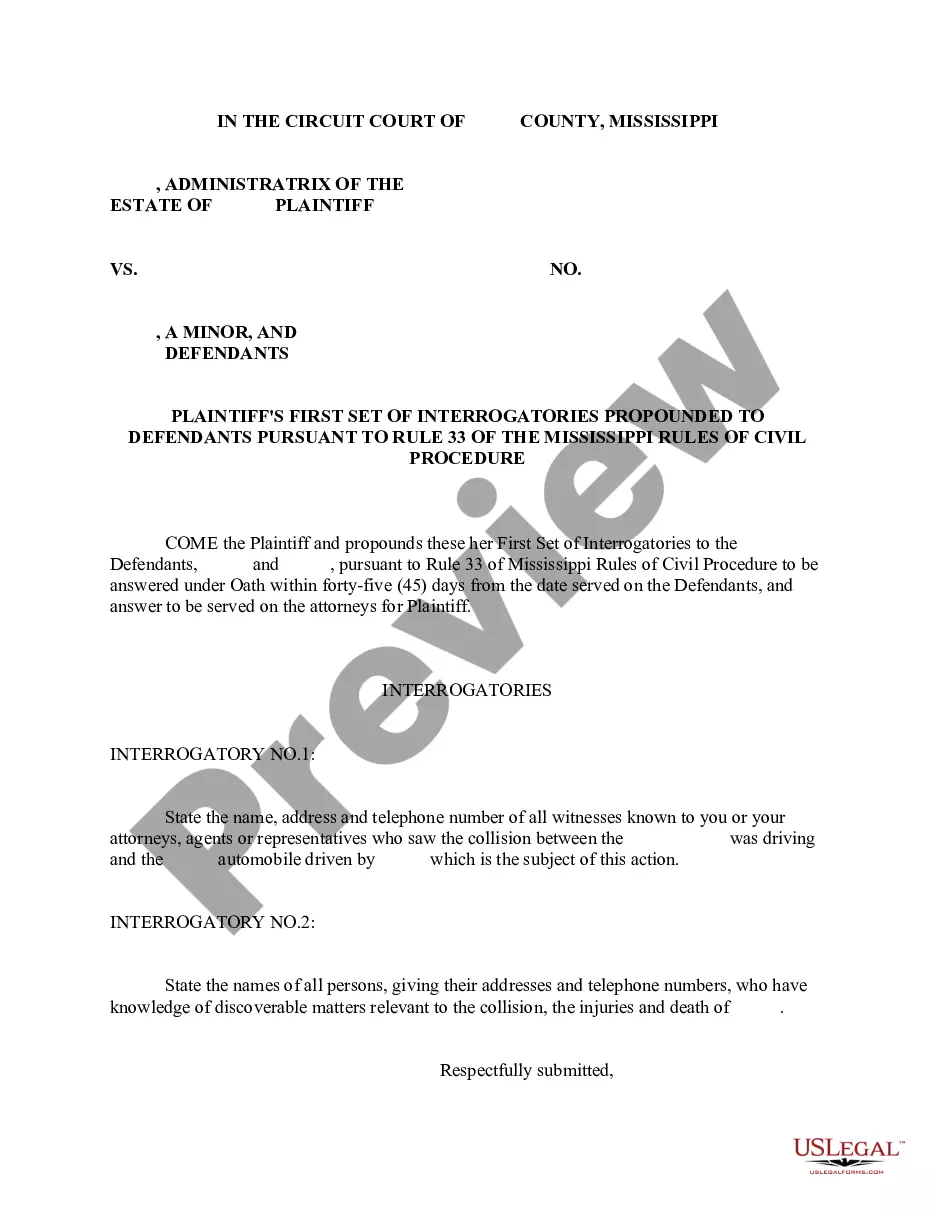
The Second Supplemental Responses to Plaintiff's First Set of Interrogatories is a legal form that allows defendants to provide detailed answers to specific questions posed by the plaintiff in a lawsuit. This form is intended to supplement earlier responses, ensuring compliance with ongoing discovery requirements. It is crucial for maintaining transparency in legal proceedings and differentiates itself from other interrogatory responses by explicitly addressing updates and additional information as it becomes available.
Main sections of this form
- Response to specific interrogatories regarding the case.
- Supplemental responses to include additional information as it arises during discovery.
- Objections to interrogatories on grounds such as overreach or ambiguity.
- References to supportive documents, like depositions.
- Provision for further supplementation under applicable rules.
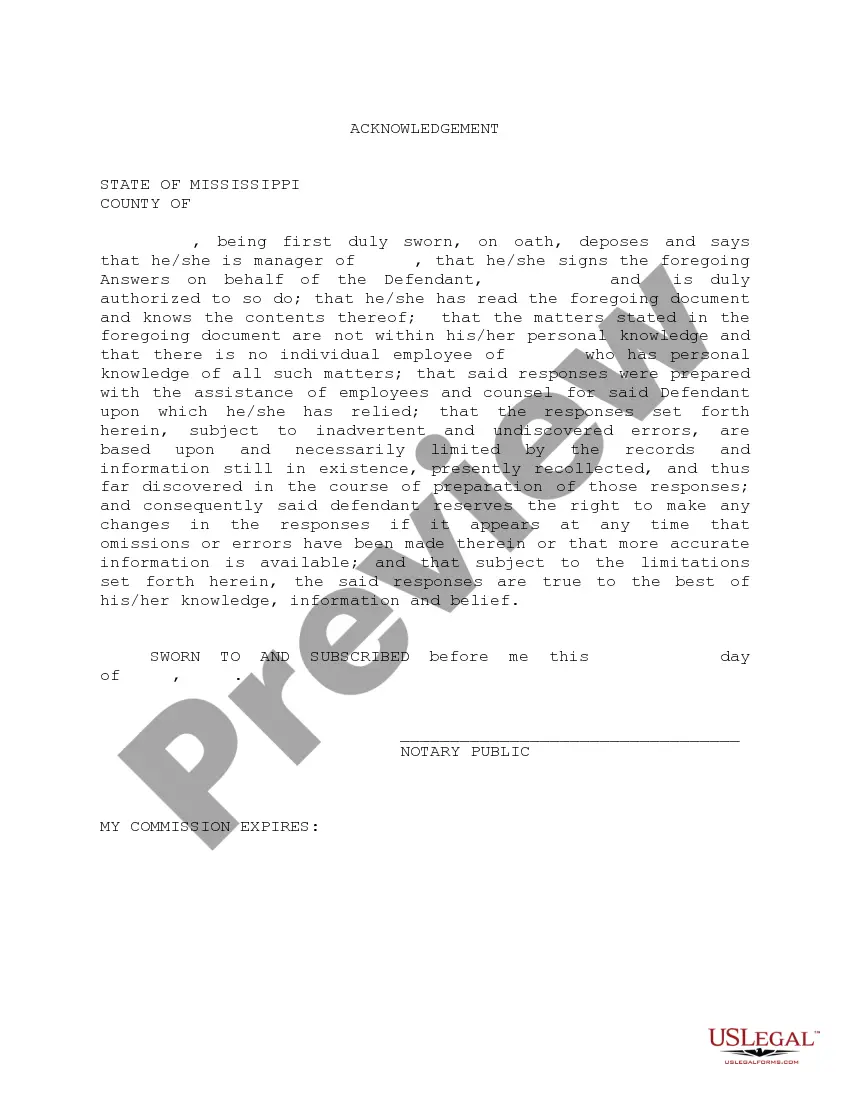

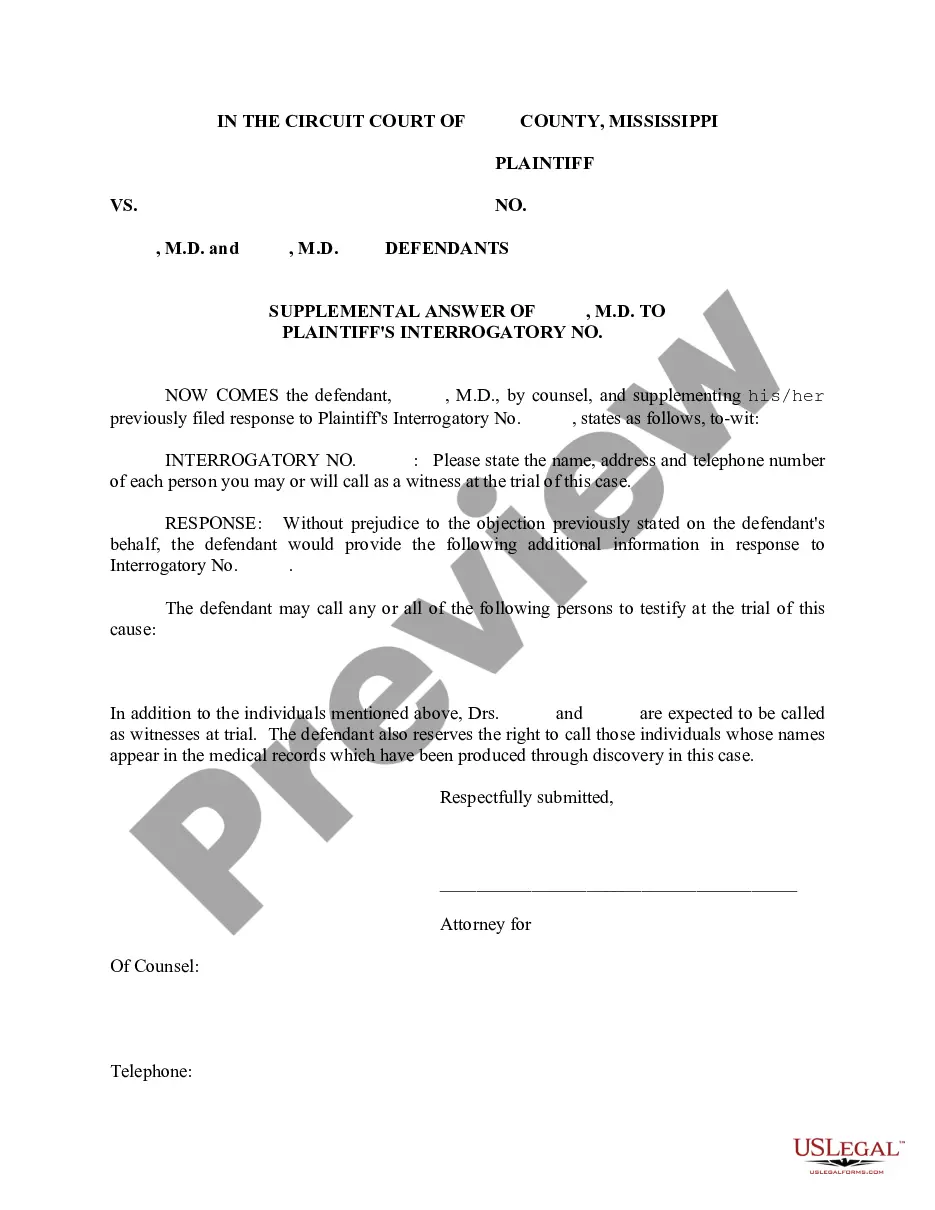
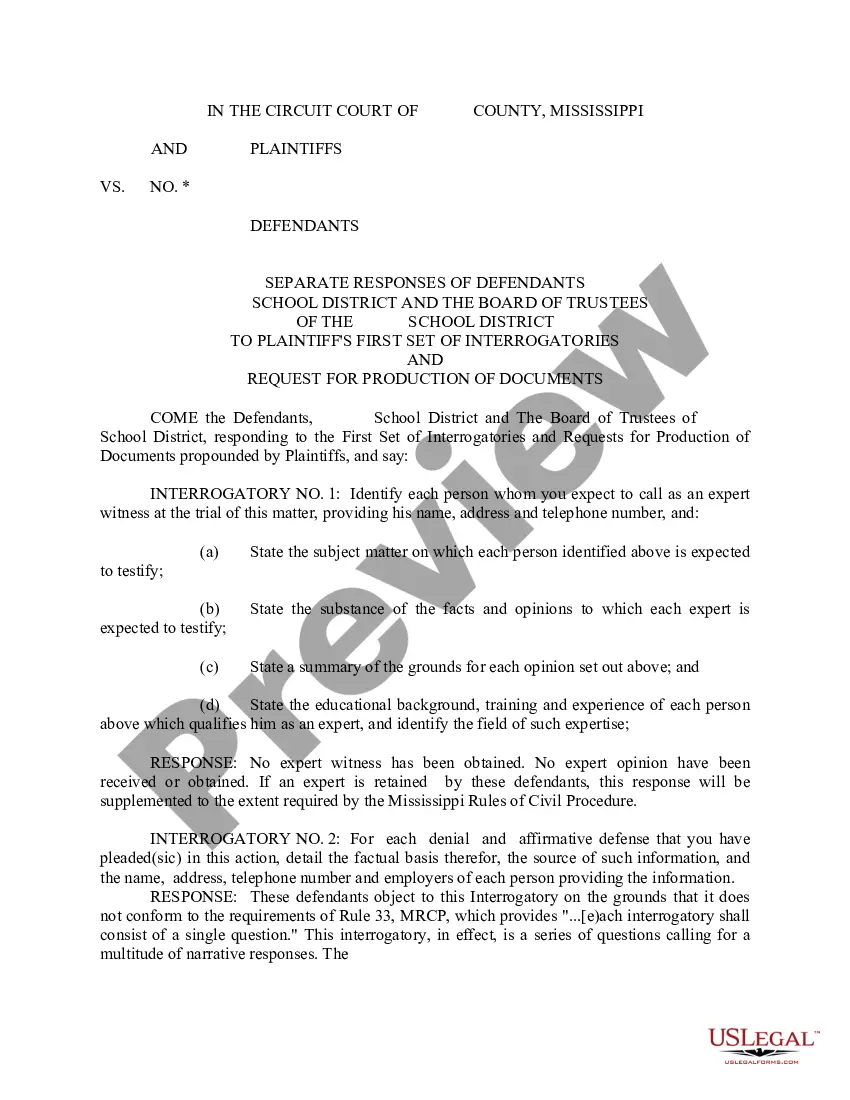
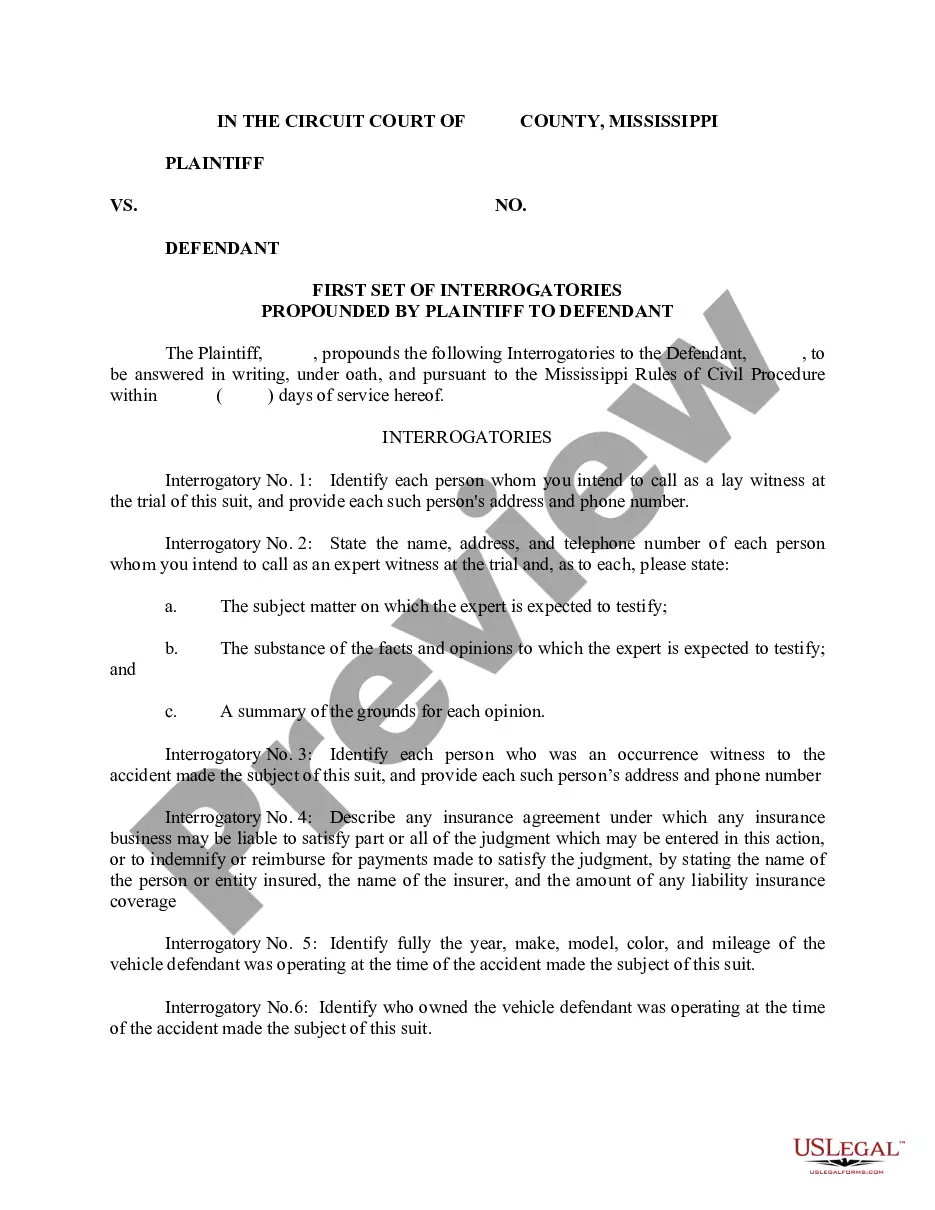
When this form is needed
This form should be used when a defendant is required to respond to a plaintiff's interrogatories in a civil lawsuit and needs to provide updated or additional information beyond the initial responses. It is particularly relevant in ongoing legal matters where the discovery process is active, allowing parties to adjust their information as it evolves.
Who can use this document
- Defendants in civil litigation who have been served with interrogatories.
- Legal representatives or attorneys acting on behalf of defendants.
- Individuals seeking to clarify or supplement existing interrogatory responses.
How to complete this form
- Review the interrogatories posed by the plaintiff carefully.
- Fill in the responses, addressing each interrogatory clearly and succinctly.
- Identify any objections to specific interrogatories and provide justifications.
- Include supplemental information and references to relevant documents as necessary.
- Ensure compliance with any deadlines set forth by the Mississippi Rules of Civil Procedure.
Does this form need to be notarized?
This form does not typically require notarization unless specified by local law. Users should review their specific jurisdiction's requirements to ensure compliance.
Get your form ready online
Our built-in tools help you complete, sign, share, and store your documents in one place.
Make edits, fill in missing information, and update formatting in US Legal Forms—just like you would in MS Word.
Download a copy, print it, send it by email, or mail it via USPS—whatever works best for your next step.
Sign and collect signatures with our SignNow integration. Send to multiple recipients, set reminders, and more. Go Premium to unlock E-Sign.
If this form requires notarization, complete it online through a secure video call—no need to meet a notary in person or wait for an appointment.
We protect your documents and personal data by following strict security and privacy standards.

Make edits, fill in missing information, and update formatting in US Legal Forms—just like you would in MS Word.

Download a copy, print it, send it by email, or mail it via USPS—whatever works best for your next step.

Sign and collect signatures with our SignNow integration. Send to multiple recipients, set reminders, and more. Go Premium to unlock E-Sign.

If this form requires notarization, complete it online through a secure video call—no need to meet a notary in person or wait for an appointment.

We protect your documents and personal data by following strict security and privacy standards.
Avoid these common issues
- Failing to address all interrogatories fully.
- Not providing timely supplemental responses as new information becomes available.
- Overlooking the requirement to object to overly broad or ambiguous questions.
- Neglecting to cite supporting documents referenced in responses.
Advantages of online completion
- Convenience of accessing and downloading the form from anywhere.
- Editability allows users to customize the form to their specific circumstances.
- Provides reliable templates created by licensed attorneys ensuring legal compliance.
- Responses must conform to discovery rules outlined by the local jurisdiction.
- Failure to provide complete and accurate responses may result in legal penalties.
- Supplemental responses help ensure that the defendant's case is fully represented as new evidence emerges.
Looking for another form?

Form popularity
FAQ
Discovery is evidence that is required to be disclosed to an opposing party. Supplemental discovery is when there is additional evidence that has been provided to the other side, after the initial discovery.
Supplemental discovery, seeks to find out what has changed since the initial disclosure to uncover any new information that is crucial to the case. After answering a discovery request, the answering party has a duty to provide further information if the answer later turns out to be inaccurate.
So, can you refuse to answer interrogatories? The answer is, no, you may not. You must answer a Rule 33 interrogatory within 30 days of being served with it. That answer must either permit inspection of the requested information or object to the production of the information for a specific reason.
Motions to Compel If a party doesn't respond to interrogatories or requests for production, then the party seeking those answers must file a motion to compel with the court. If the court grants the motion to compel, then the party who objected or failed to answer must then do so.
An amended or supplemental response must be in the same form as the initial response and must be verified by the party if the original response was required to be verified by the party, but the failure to comply with this requirement does not make the amended or supplemental response untimely unless the party making
In your discovery response, you would include a time and place for the inspection and the other party has an opportunity to go and review the requested items at that time.There are cases though where the court, not the other party, will request information. This usually happens in divorce or child support cases.
Adj. referring to anything that is added to complete something, particularly a document such as a supplemental declaration, supplemental complaint, supplemental answer, supplemental claim.
Language permits a party to serve interrogatories only on other parties.Second, and in any event, Rule 45 does not permit a party to use a subpoena to obtain information from non-parties that is unrelated to the action in which the Rule 45 subpoena is issued.