Mississippi First Set Of Interrogatories Propounded By Plaintiff To Defendant
About this form
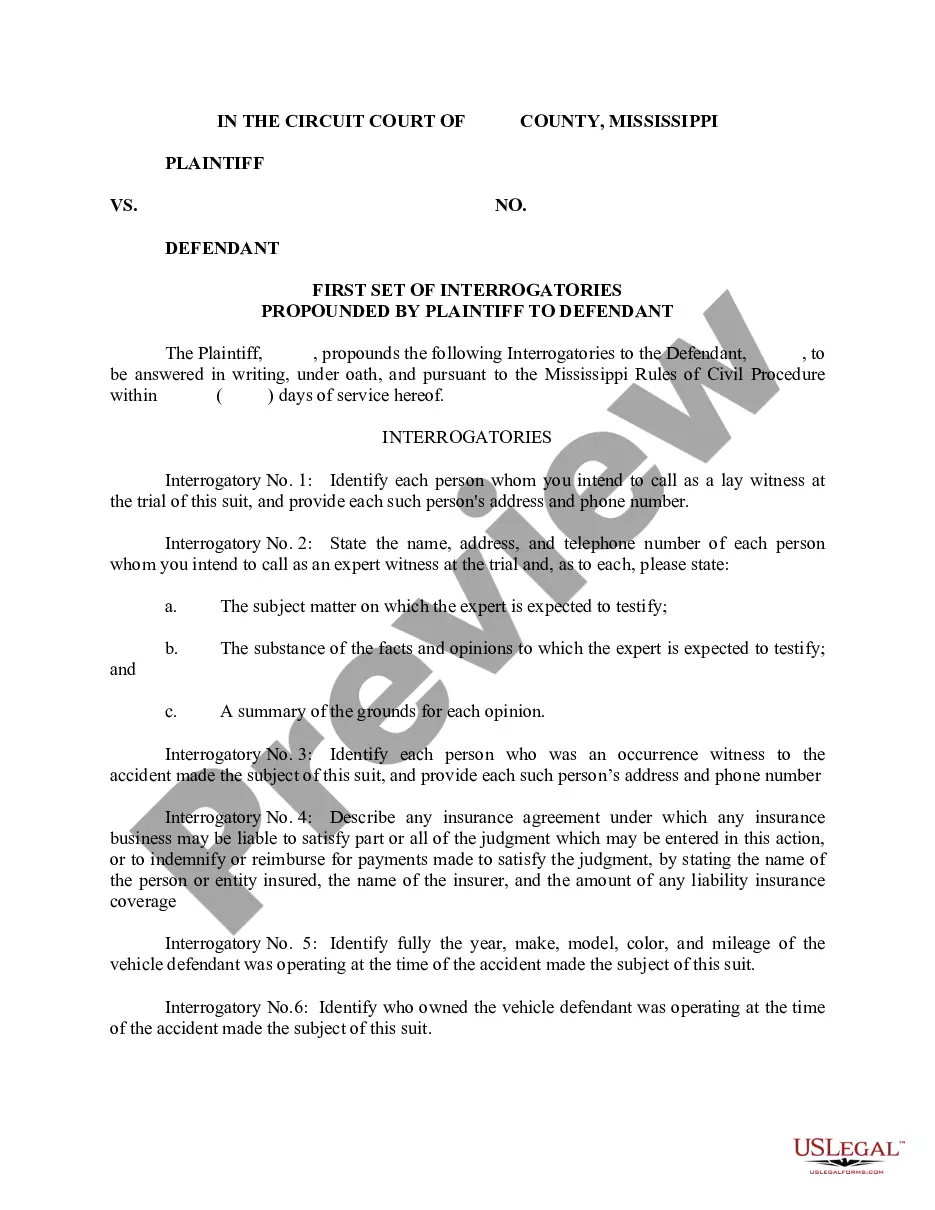
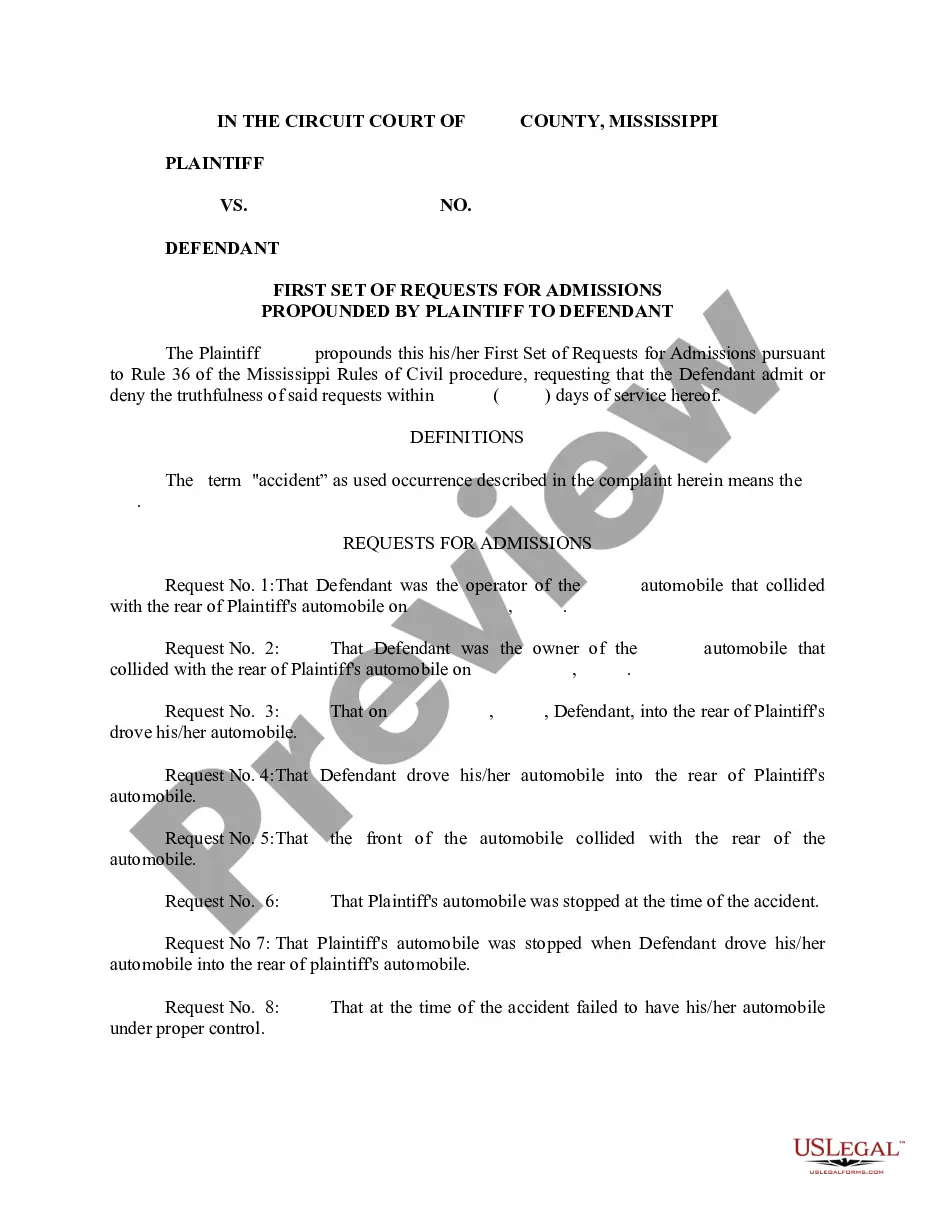
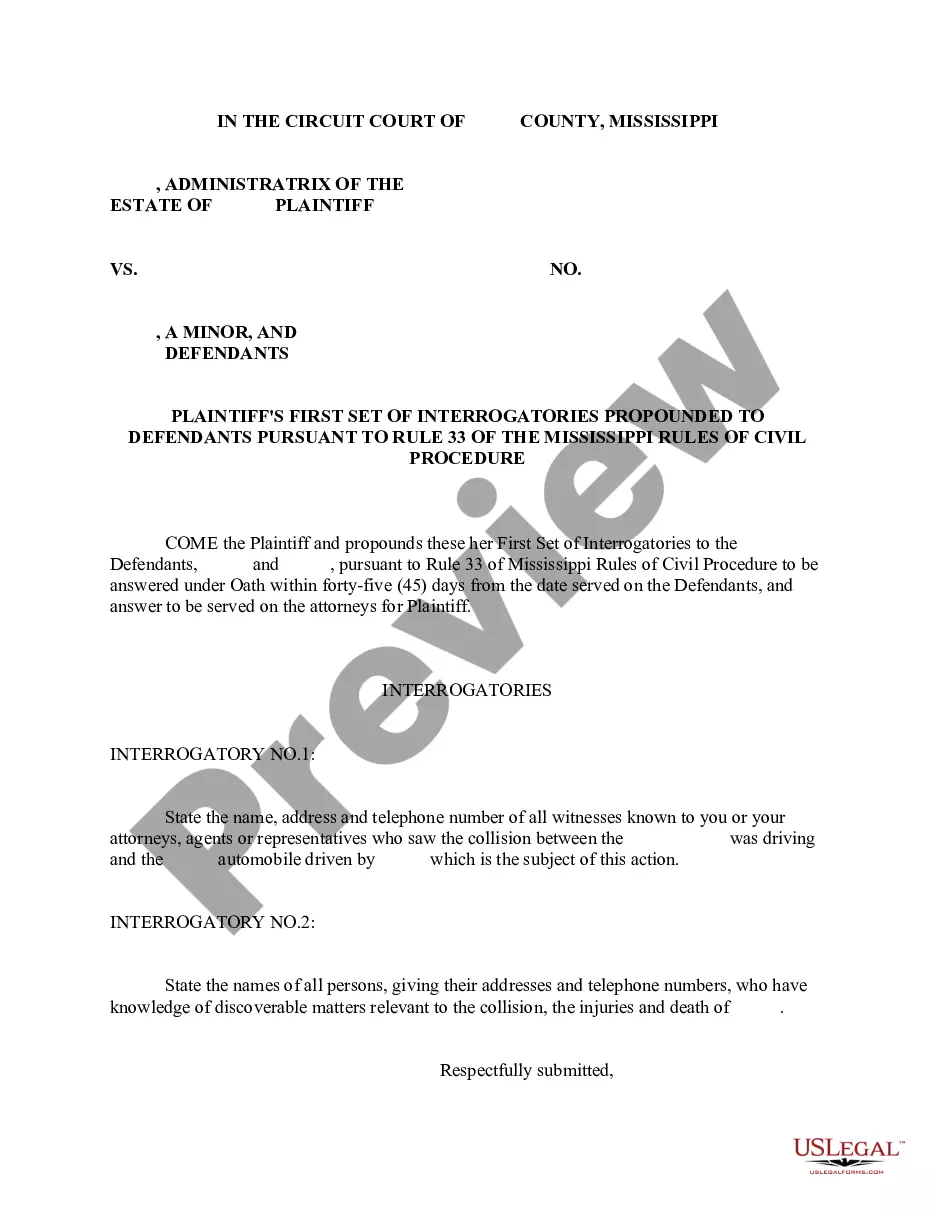
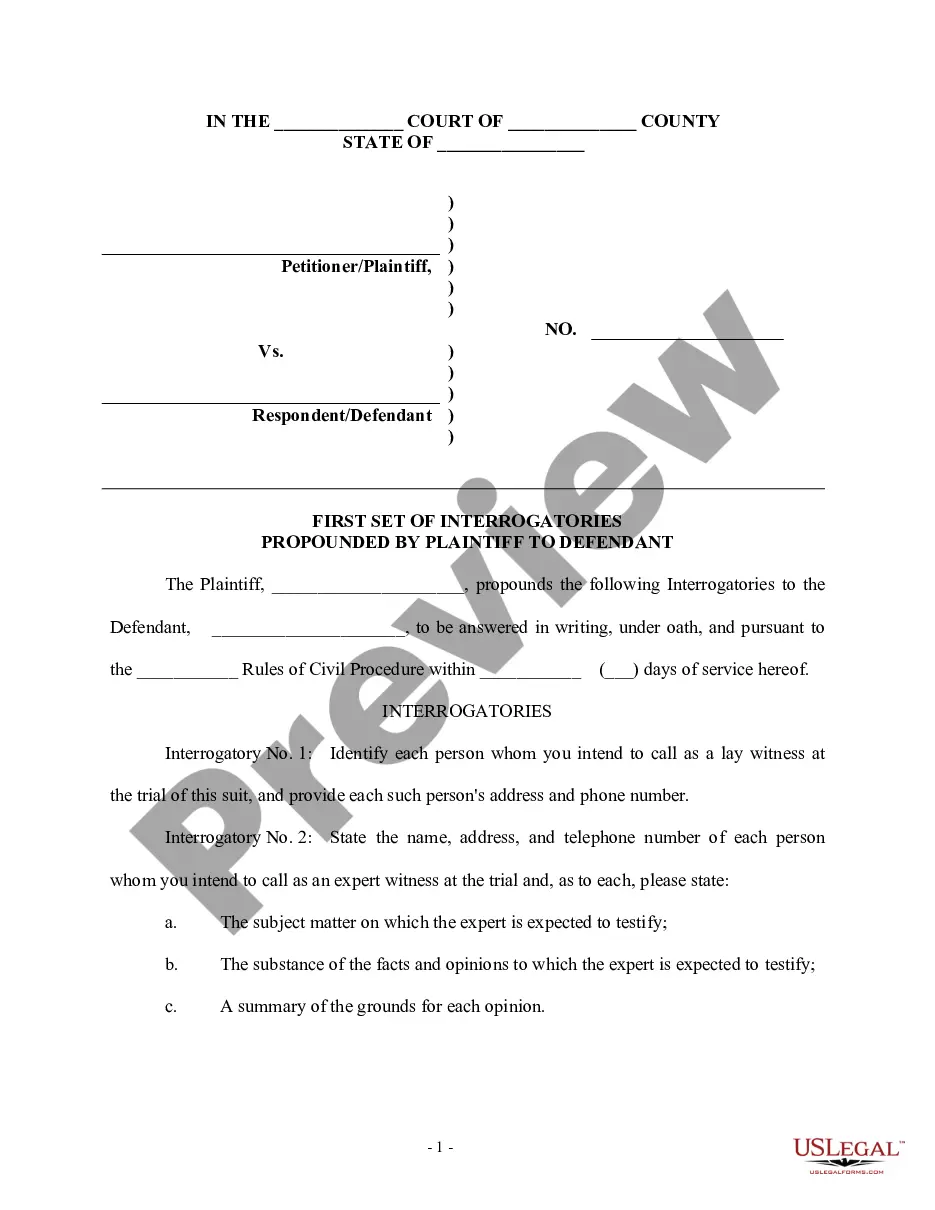
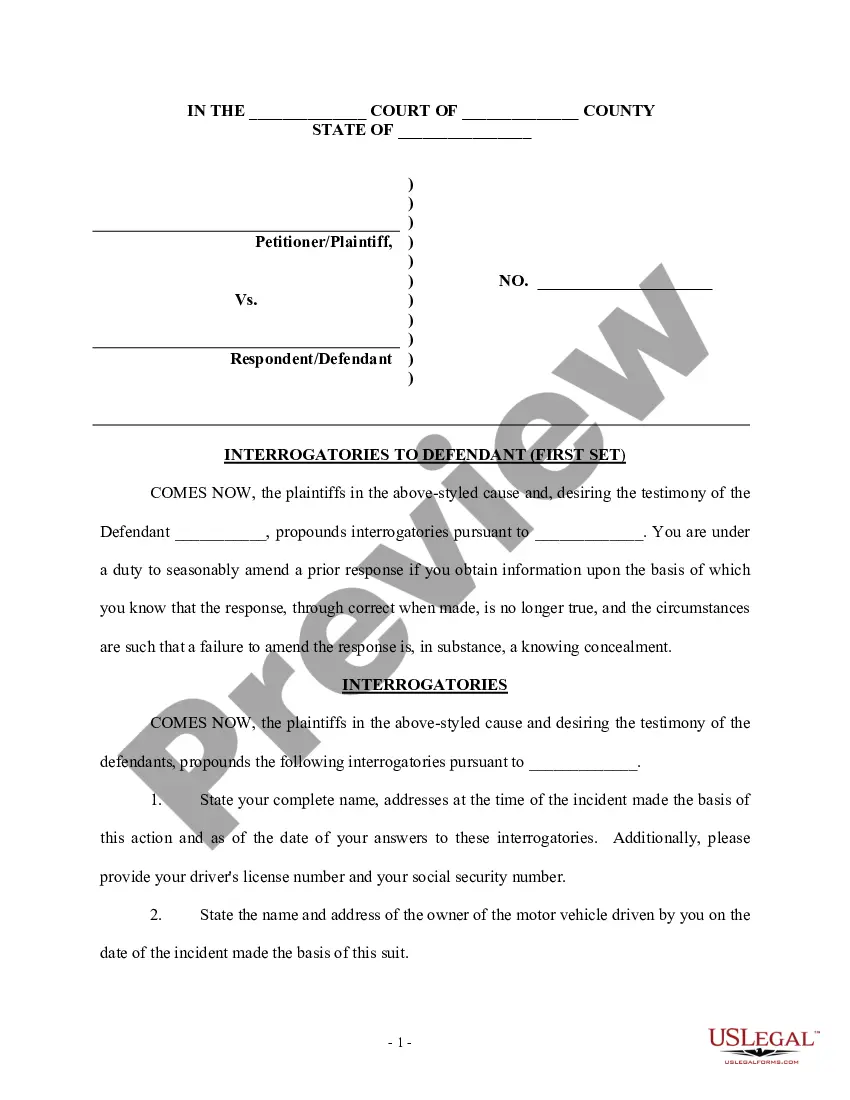
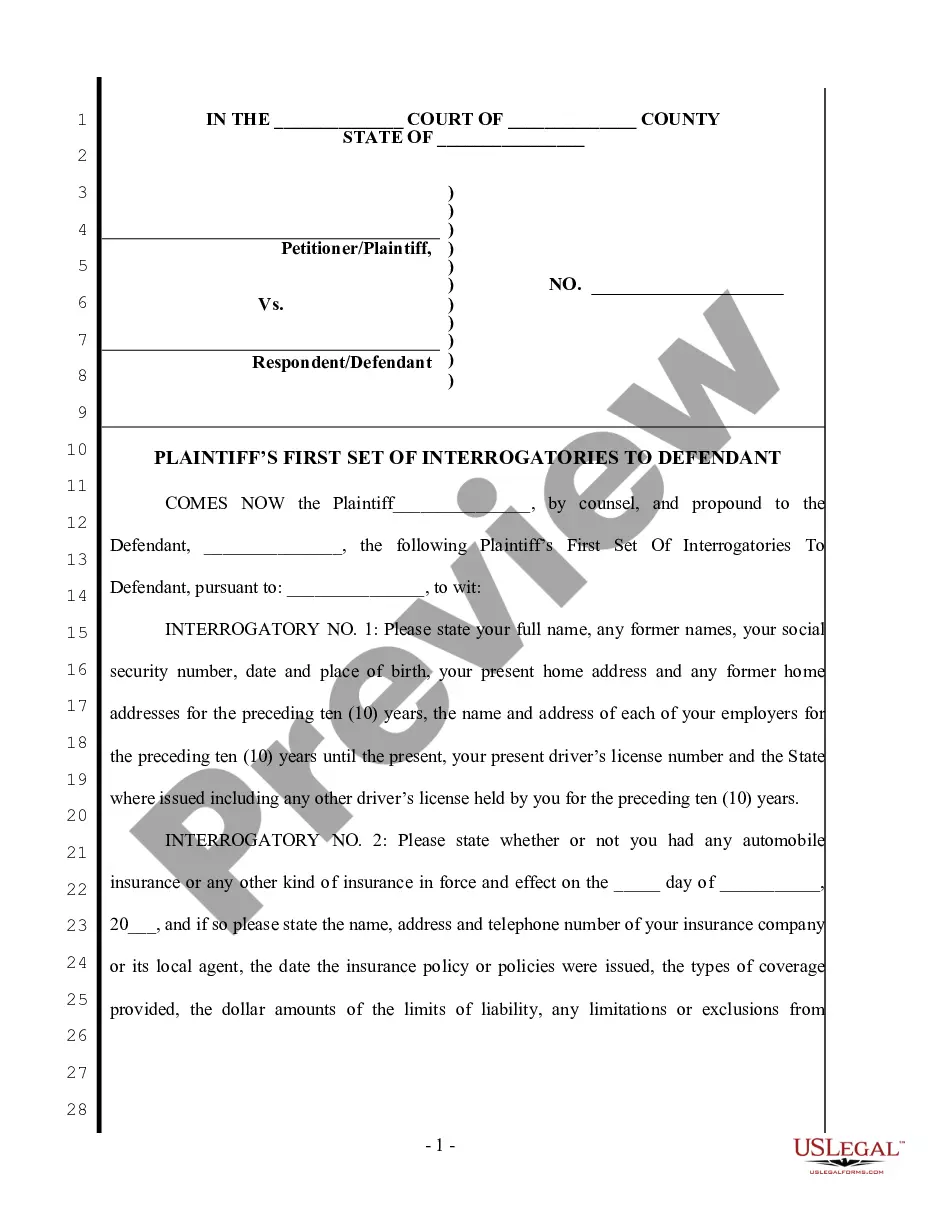
The First Set of Interrogatories Propounded by Plaintiff to Defendant is a crucial legal document used in the discovery phase of litigation. This form consists of a series of written questions that a plaintiff directs to the defendant, aimed at gathering pertinent information regarding the case. Unlike other forms, interrogatories are specifically tailored to elicit detailed responses that can clarify facts relevant to the lawsuit. They help both parties prepare for trial by outlining key information and strategies.
Form components explained
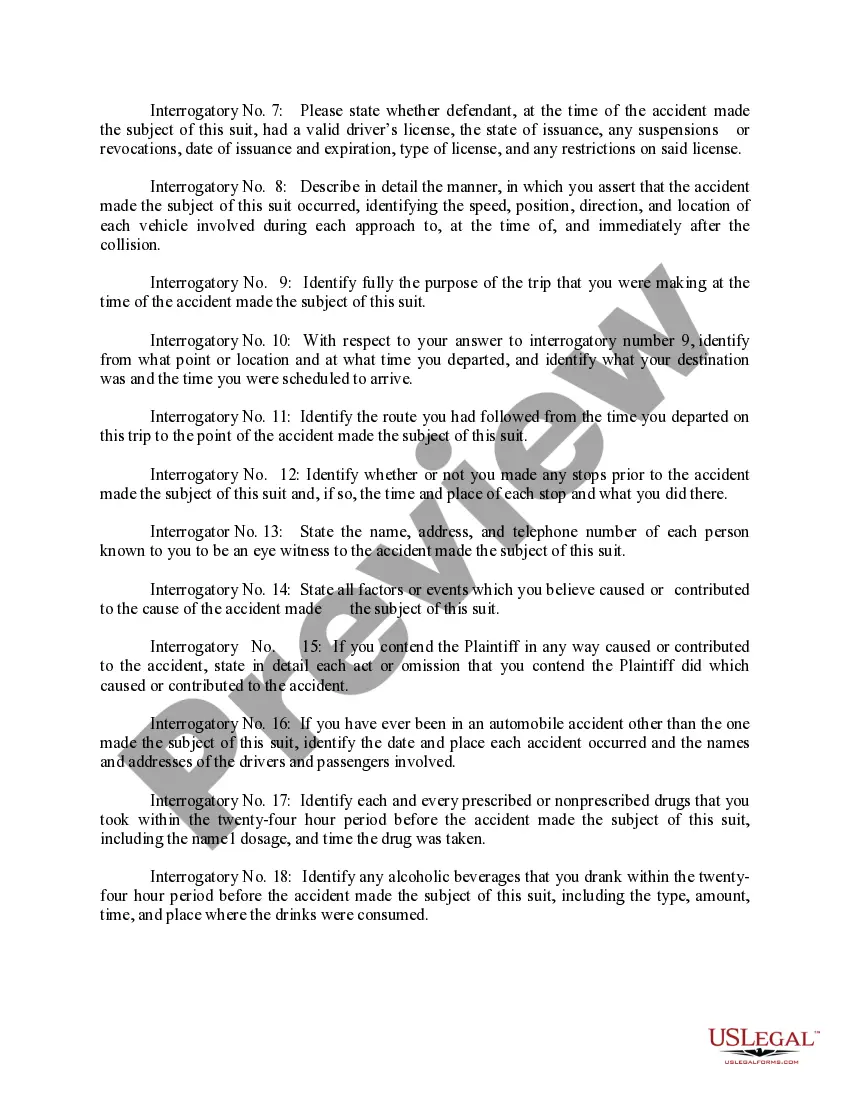
- Identification of witnesses, including lay and expert witnesses.
- Details regarding insurance coverage related to the incident.
- Information about the vehicle involved in the accident.
- Statements regarding the driver's license status at the time of the accident.
- Descriptive accounts of the accident's circumstances and contributing factors.
- History of prior accidents and substance use leading up to the incident.

Common use cases
This form should be used when a plaintiff initiates a lawsuit against a defendant and needs to gather factual responses for the case. It is particularly useful in personal injury, property damage, or any litigation where the understanding of circumstances surrounding an incident is necessary. Use this form if you want to clarify the defendant's version of events or establish other important facts through legal questioning.
Intended users of this form
- Plaintiffs in civil lawsuits seeking additional information from defendants.
- Attorneys preparing for trial or conducting discovery in relevant cases.
- Individuals involved in personal injury or accident claims.
Steps to complete this form
- Identify the parties involved, including the plaintiff and defendant.
- Answer each interrogatory truthfully and completely, providing required details such as names, addresses, and circumstances.
- Include any relevant history or background information, especially regarding past accidents or drug and alcohol use.
- Review your responses for clarity and coherence, ensuring they align with supporting evidence.
- Submit the completed form as required by your local court's discovery process.
Does this form need to be notarized?
This form does not typically require notarization unless specified by local law. Ensure to check any specific regulations in your jurisdiction regarding the use of interrogatories.
Get your form ready online
Our built-in tools help you complete, sign, share, and store your documents in one place.
Make edits, fill in missing information, and update formatting in US Legal Forms—just like you would in MS Word.
Download a copy, print it, send it by email, or mail it via USPS—whatever works best for your next step.
Sign and collect signatures with our SignNow integration. Send to multiple recipients, set reminders, and more. Go Premium to unlock E-Sign.
If this form requires notarization, complete it online through a secure video call—no need to meet a notary in person or wait for an appointment.
We protect your documents and personal data by following strict security and privacy standards.

Make edits, fill in missing information, and update formatting in US Legal Forms—just like you would in MS Word.

Download a copy, print it, send it by email, or mail it via USPS—whatever works best for your next step.

Sign and collect signatures with our SignNow integration. Send to multiple recipients, set reminders, and more. Go Premium to unlock E-Sign.

If this form requires notarization, complete it online through a secure video call—no need to meet a notary in person or wait for an appointment.

We protect your documents and personal data by following strict security and privacy standards.
Mistakes to watch out for
- Failing to answer all interrogatories thoroughly.
- Providing vague or unclear responses to specific questions.
- Missing the submission deadline for the interrogatories.
- Neglecting to modify the form to address jurisdiction-specific requirements.
Benefits of completing this form online
- Convenience of downloading and editing the form as needed.
- Access to templates drafted by licensed attorneys, ensuring legal accuracy.
- Immediate availability without the need for physical appointments or paperwork.
- This form is enforceable within the jurisdiction's court system when properly completed and served.
- Responses to interrogatories can be used as evidence during the trial.
- Each jurisdiction may have specific rules regarding deadlines and response formats.
Main things to remember
- The First Set of Interrogatories is crucial for gathering information from the defendant during a lawsuit.
- Customized responses based on the specific case context are essential for effectiveness.
- Completing the form accurately can significantly influence the outcome of the litigation.
Looking for another form?



Form popularity
FAQ
Personal/Corporate information of opposing party. Identifying information of witnesses. Contact information & background of expert witnesses. Insurance information.
You must answer each interrogatory separately and fully in writing under oath, unless you object to it. You must explain why you object. You must sign your answers and objections.
Your answers to the interrogatories should usually be short, clear, and direct and should answer only the question that is being asked. This is not the time to set out your entire case or defense to the other side. Take the time to make sure your answers are correct and truthful.
You must answer each interrogatory separately and fully in writing under oath, unless you object to it. You must explain why you object. You must sign your answers and objections.
Interrogatories are written questions that one party to a lawsuit sends to another, and the responding party submits written answers under oath. If a lawsuit is filed in a personal injury case, chances are interrogatories will come into play.
Responding to Form InterrogatoriesAnswer each question, being careful to answer each subpart, if one exists. Read the question carefully, and answer only what it asks. You may attach exhibits, if necessary. The response must be verified, meaning you must swear that the responses given are true.
Your name and address. The Court's name. The title of the case. Case number. Fill your name in as the Requesting Party. On the following pages, choose which questions you wish to ask by checking boxes next to the questions you wish to ask.
Your answers to the interrogatories should usually be short, clear, and direct and should answer only the question that is being asked. This is not the time to set out your entire case or defense to the other side. Take the time to make sure your answers are correct and truthful.
You may object to Form Interrogatories, but be careful to use the proper objection. Using the wrong one or using every single one may lead the court to view you as misusing the discovery process and make you pay sanctions.