Mississippi Motion to Transfer
What is this form?
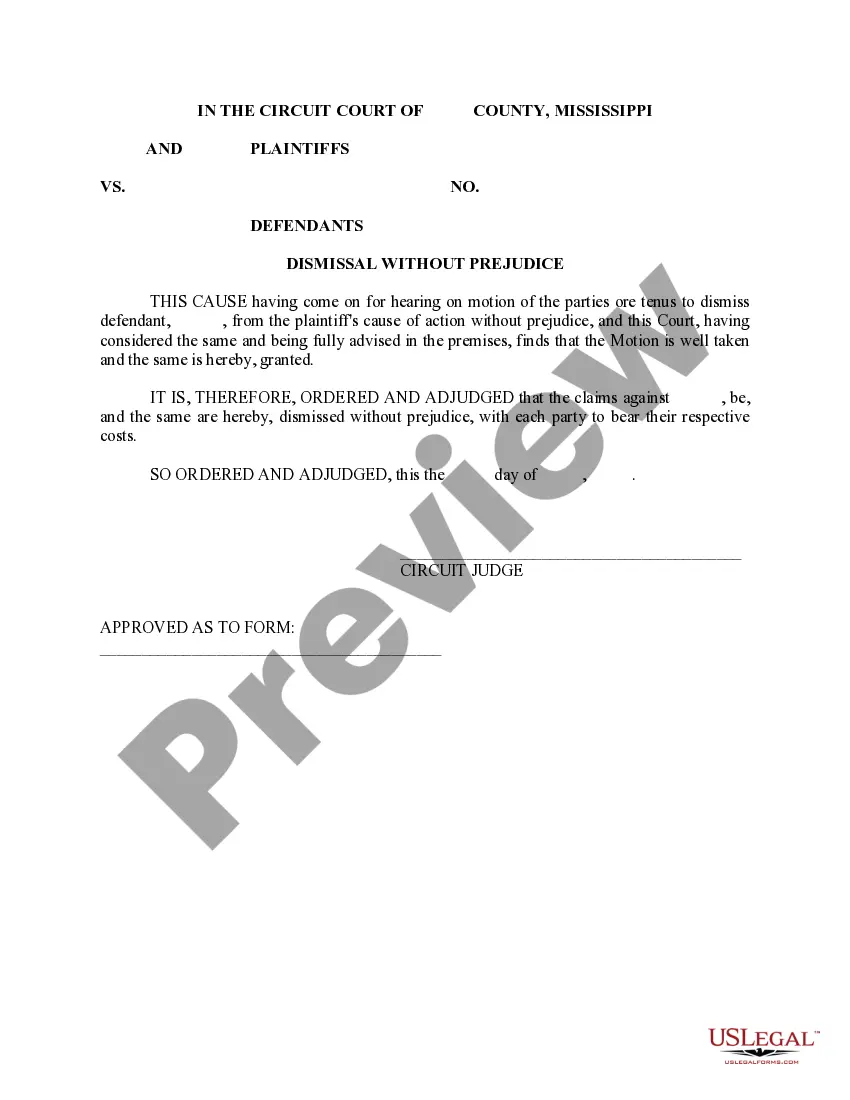
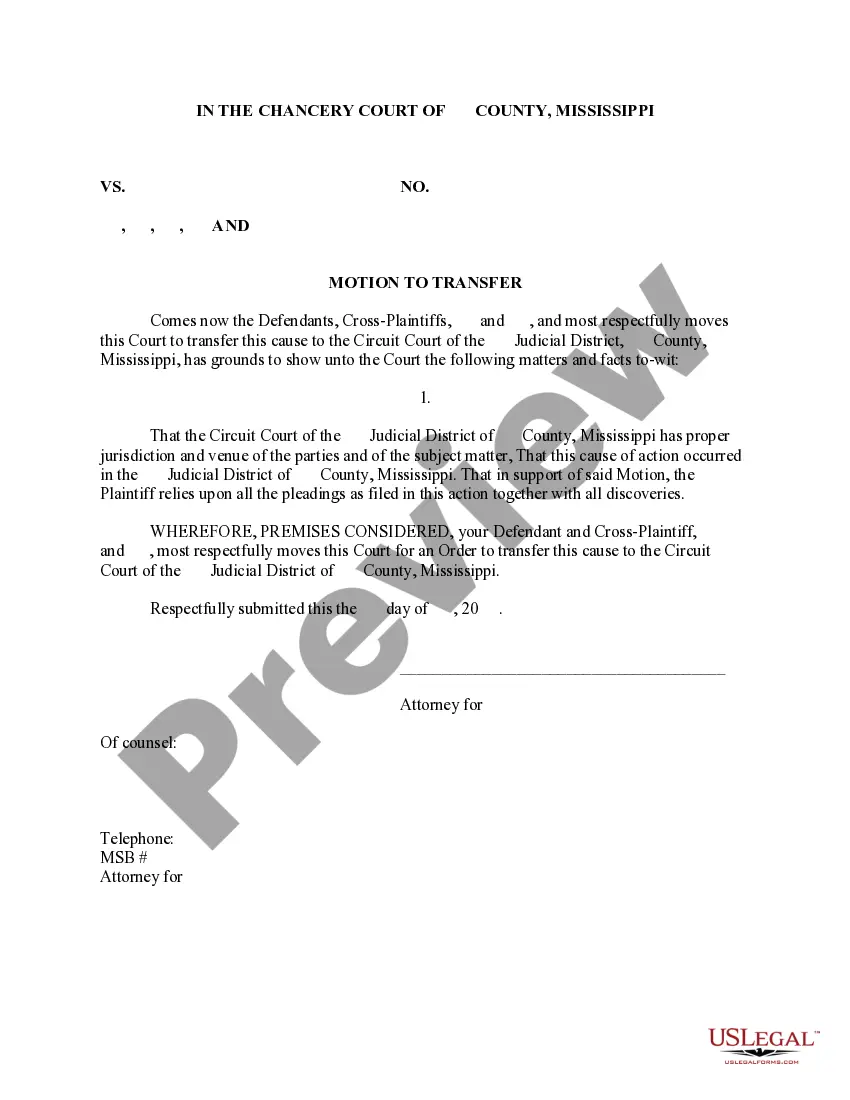
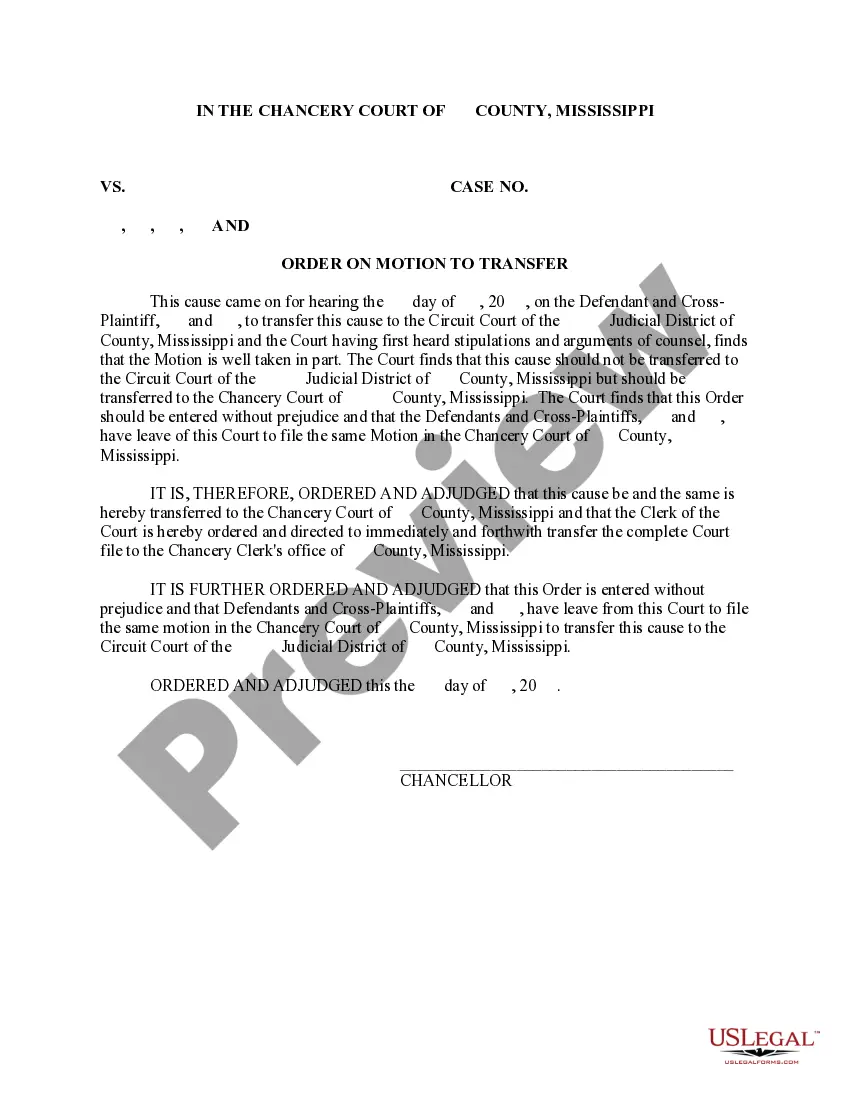
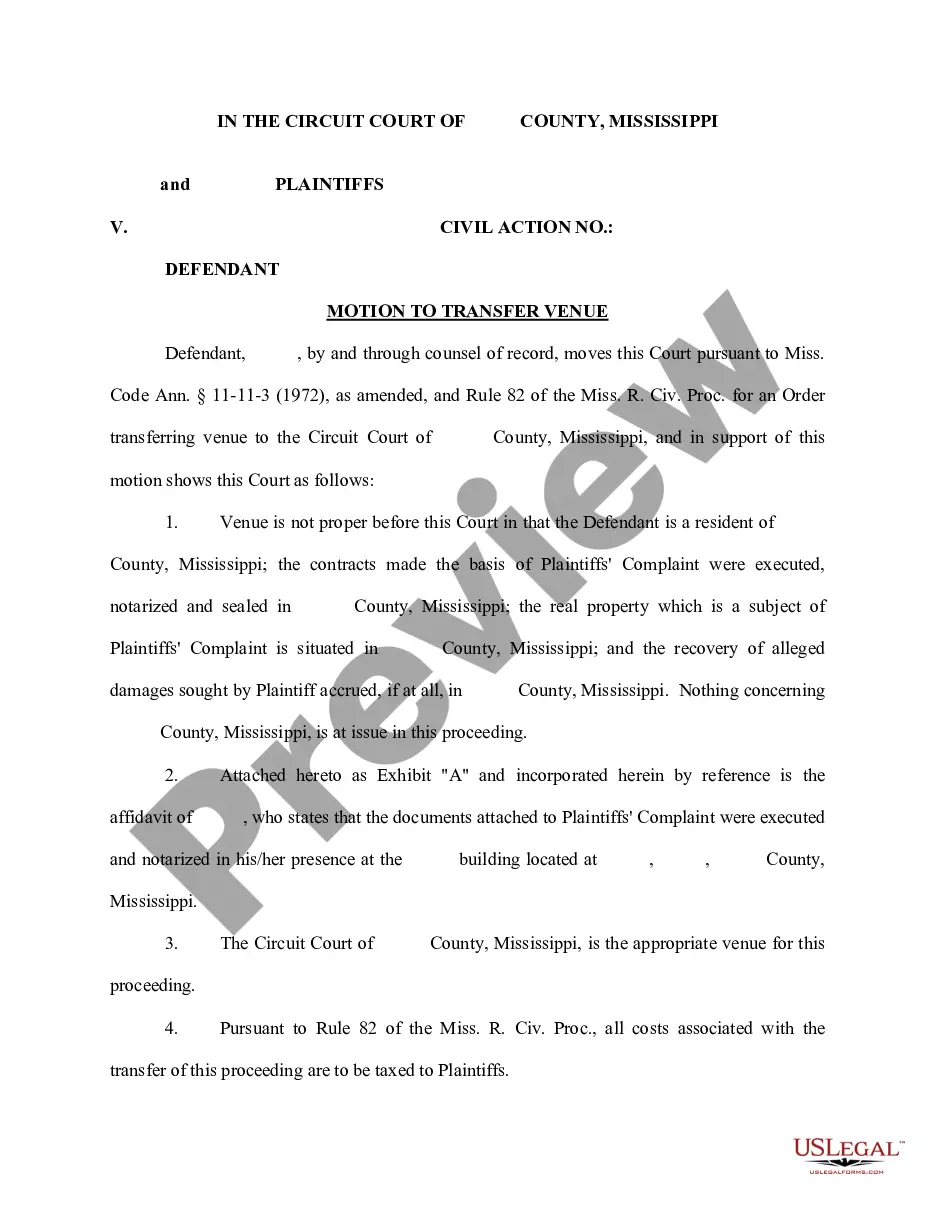
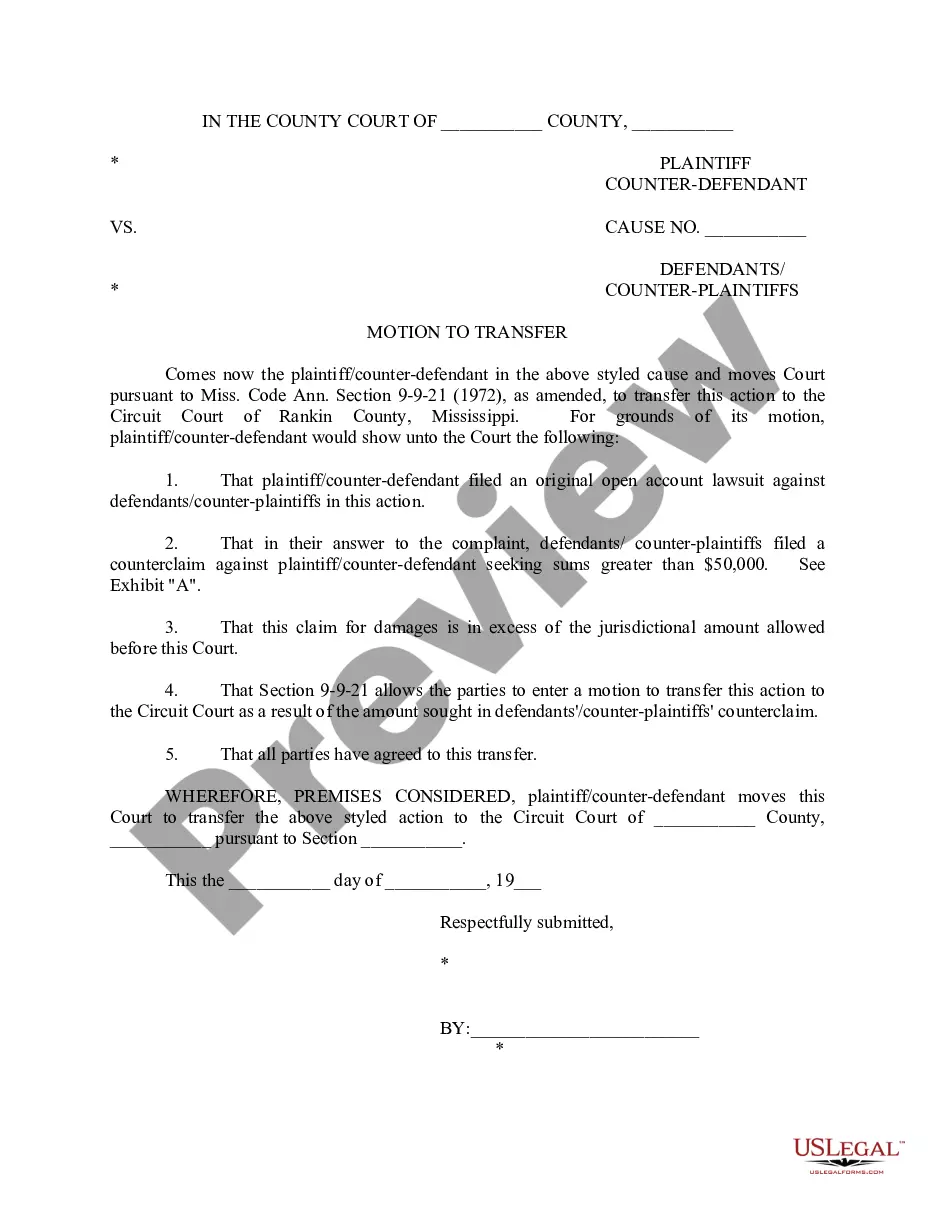
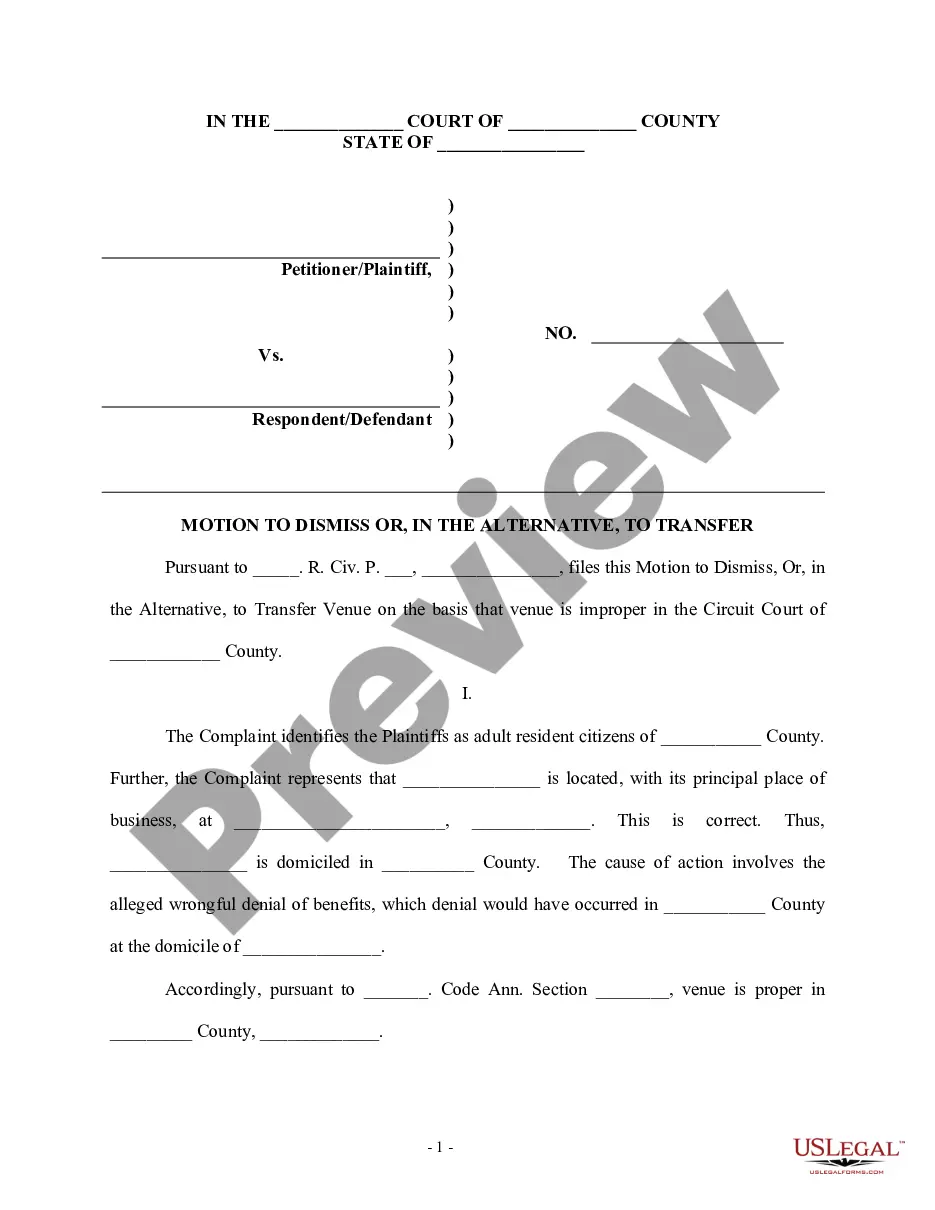
A Motion to Transfer is a legal document used to request the court to transfer a case from one court to another. This motion is specifically designed to articulate the reasons for the transfer, making it distinct from other general motions. It is an essential tool for navigating jurisdictional issues and ensuring that a case is heard in the most appropriate venue.
Key parts of this document
- Title of the motion and court details
- Name of the parties involved
- Clear statement outlining the reasons for the transfer
- Signature section for the requesting party
- Date of submission
Situations where this form applies
This form should be used when you believe that your case should be heard in a different court for reasons such as jurisdictional matters, convenience for the parties, or to ensure a fair trial. Common scenarios include a change in residence of a party, the location of witnesses, or applicable laws being more favorable in another jurisdiction.
Intended users of this form
Individuals or entities involved in a legal case that requires a transfer can use this form. This includes:
- Litigants seeking a more suitable venue
- Attorneys representing clients in transfer motions
- Individuals unfamiliar with legal procedures who need assistance with case transfer
Steps to complete this form
- Identify the parties and provide their contact information.
- Specify the current court and the court to which you are requesting the case be transferred.
- Clearly state the reasons for the transfer, including any relevant circumstances.
- Sign and date the motion to confirm its authenticity.
- File the motion with the appropriate court, following local rules for submission.
Is notarization required?
This form does not typically require notarization unless specified by local law. It is advisable to verify if your jurisdiction has specific requirements regarding notarization for court motions.
Get your form ready online
Our built-in tools help you complete, sign, share, and store your documents in one place.
Make edits, fill in missing information, and update formatting in US Legal Forms—just like you would in MS Word.
Download a copy, print it, send it by email, or mail it via USPS—whatever works best for your next step.
Sign and collect signatures with our SignNow integration. Send to multiple recipients, set reminders, and more. Go Premium to unlock E-Sign.
If this form requires notarization, complete it online through a secure video call—no need to meet a notary in person or wait for an appointment.
We protect your documents and personal data by following strict security and privacy standards.

Make edits, fill in missing information, and update formatting in US Legal Forms—just like you would in MS Word.

Download a copy, print it, send it by email, or mail it via USPS—whatever works best for your next step.

Sign and collect signatures with our SignNow integration. Send to multiple recipients, set reminders, and more. Go Premium to unlock E-Sign.

If this form requires notarization, complete it online through a secure video call—no need to meet a notary in person or wait for an appointment.

We protect your documents and personal data by following strict security and privacy standards.
Common mistakes
- Failing to include all necessary parties in the motion.
- Not providing sufficient justification for the transfer.
- Submitting the motion to the wrong court.
- Neglecting to sign and date the document.
- Missing deadlines for filing the motion.
Benefits of completing this form online
- Convenience of downloading the form anytime from anywhere.
- Editability allows you to tailor the document to your specific situation.
- Access to professionally drafted templates ensures reliability and legal compliance.
Looking for another form?
Form popularity
FAQ
Although not required for most vehicle sales and transactions, the State of Mississippi requires a Bill of Sale form for certain sales. The State of Mississippi does not offer a state-wide approved Bill of Sale. For your vehicle sale, the state asks that perform a title transfer to the new buyer.
Most states do not require a notary to witness the signing of a bill of sale. However, by law, a notary public must witness both parties signing the document in Louisiana, Nebraska, Maryland, New Hampshire, West Virginia, and Montana. Notaries are optional in other states.
A Mississippi general bill of sale does not need to be notarized.
There are only nine title-holding states: Kentucky, Maryland, Michigan, Minnesota, Missouri, Montana, New York, Oklahoma, Wisconsin. In the other 41 states, titles are issued to the lien holder of your vehicle until the loan is fully paid off.
Make sure to get a completed title from the seller. Complete the Application for Mississippi Title and License. Get insurance on the car and provide proof. Take this information to the DOR office, along with your license, and money for your title transfer fee, registration costs, and taxes.
Can a Bill of Sale Be Handwritten? A bill of sale is a legal document that verifies you have sold your car and provides basic information about the vehicle or any other item and the terms of the sale.As, with any legal written document a bill of sale can be handwritten.
A Mississippi general bill of sale does not need to be notarized.
Generally, the title transfer requirements include: The current title, the assignment filled in by the donor or seller, and notarized. A complete application for the replacement certificate of title.
Name of the seller. Complete address of the seller. Name of the buyer. Complete address of the buyer.