Mississippi Motion for Modification and Motion to Cite Defendant in Contempt
What is this form?
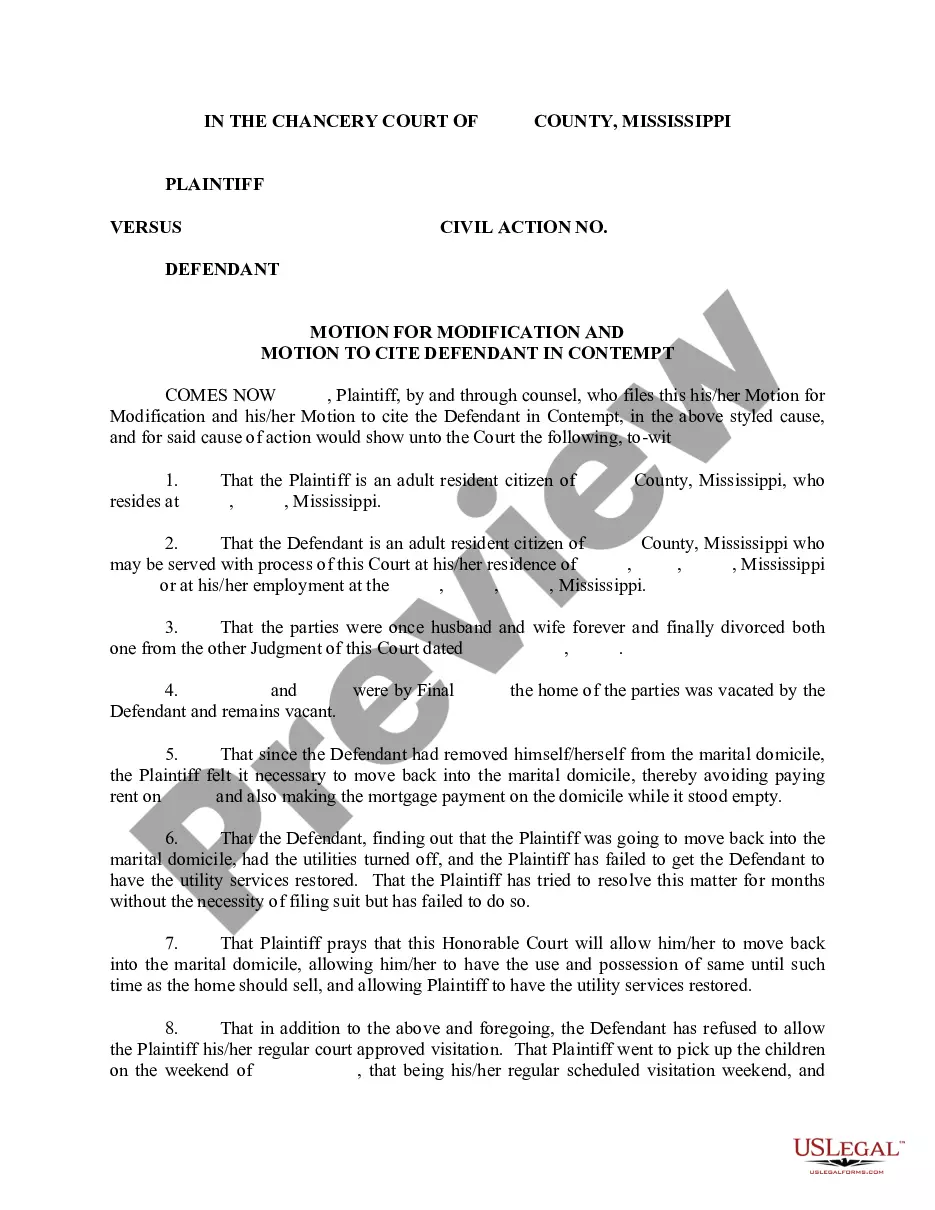
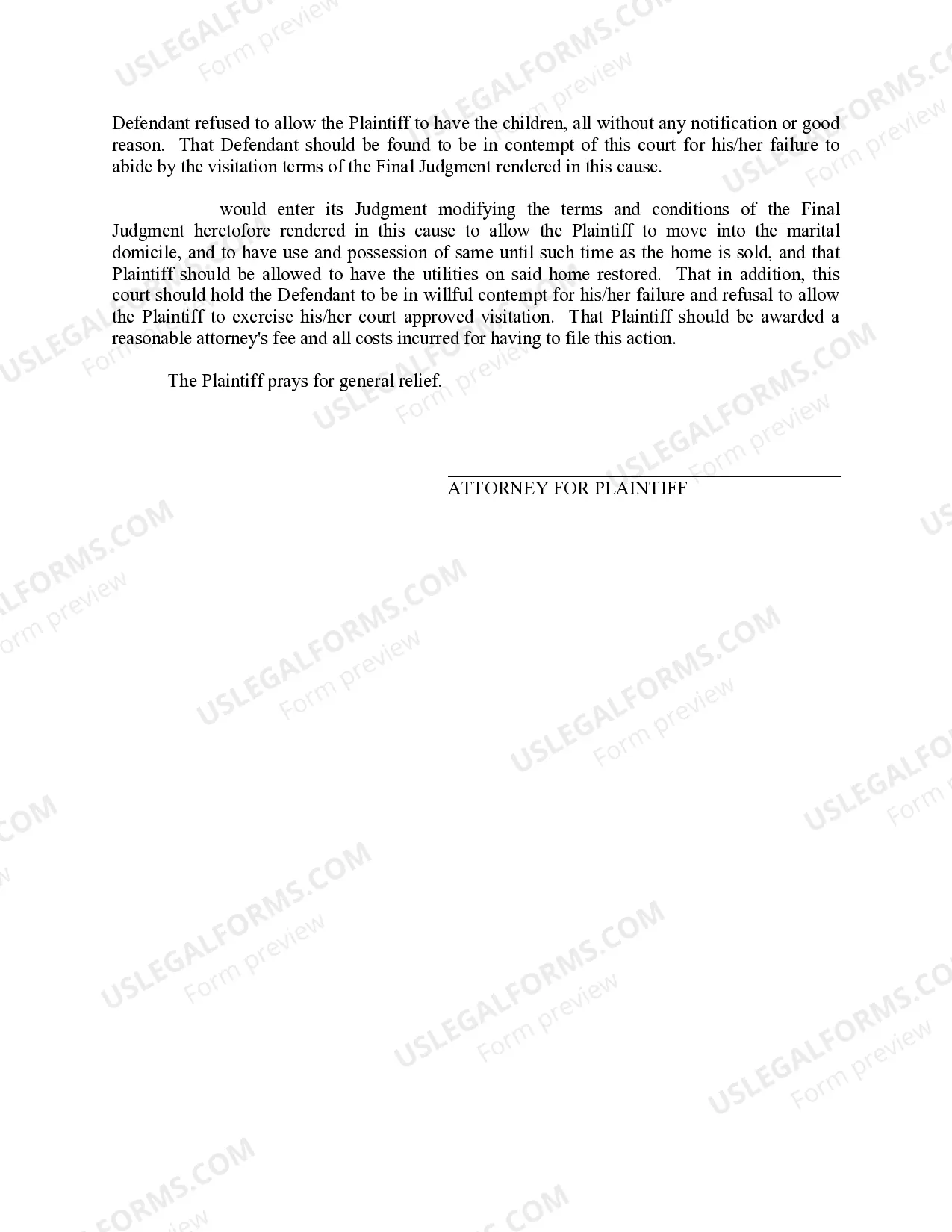
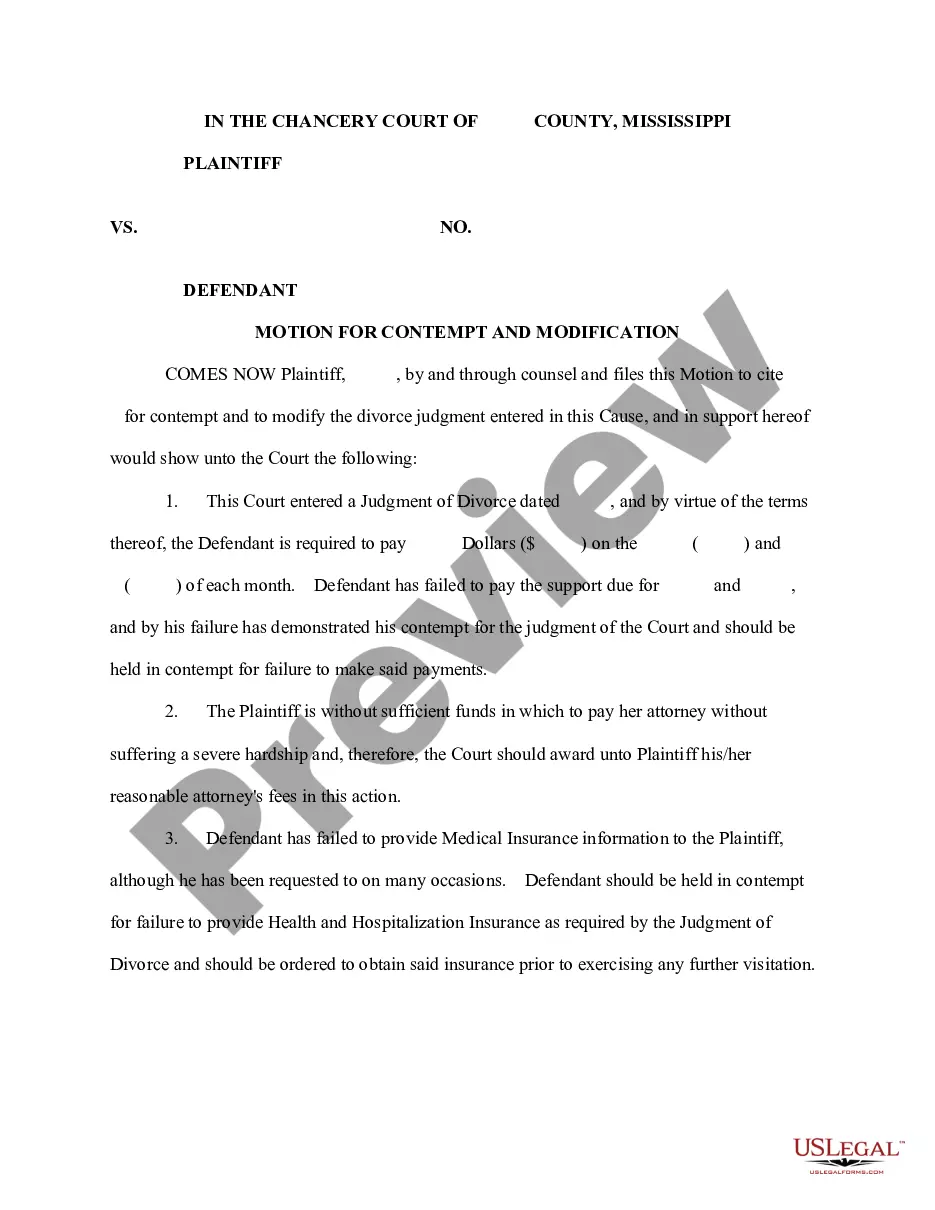
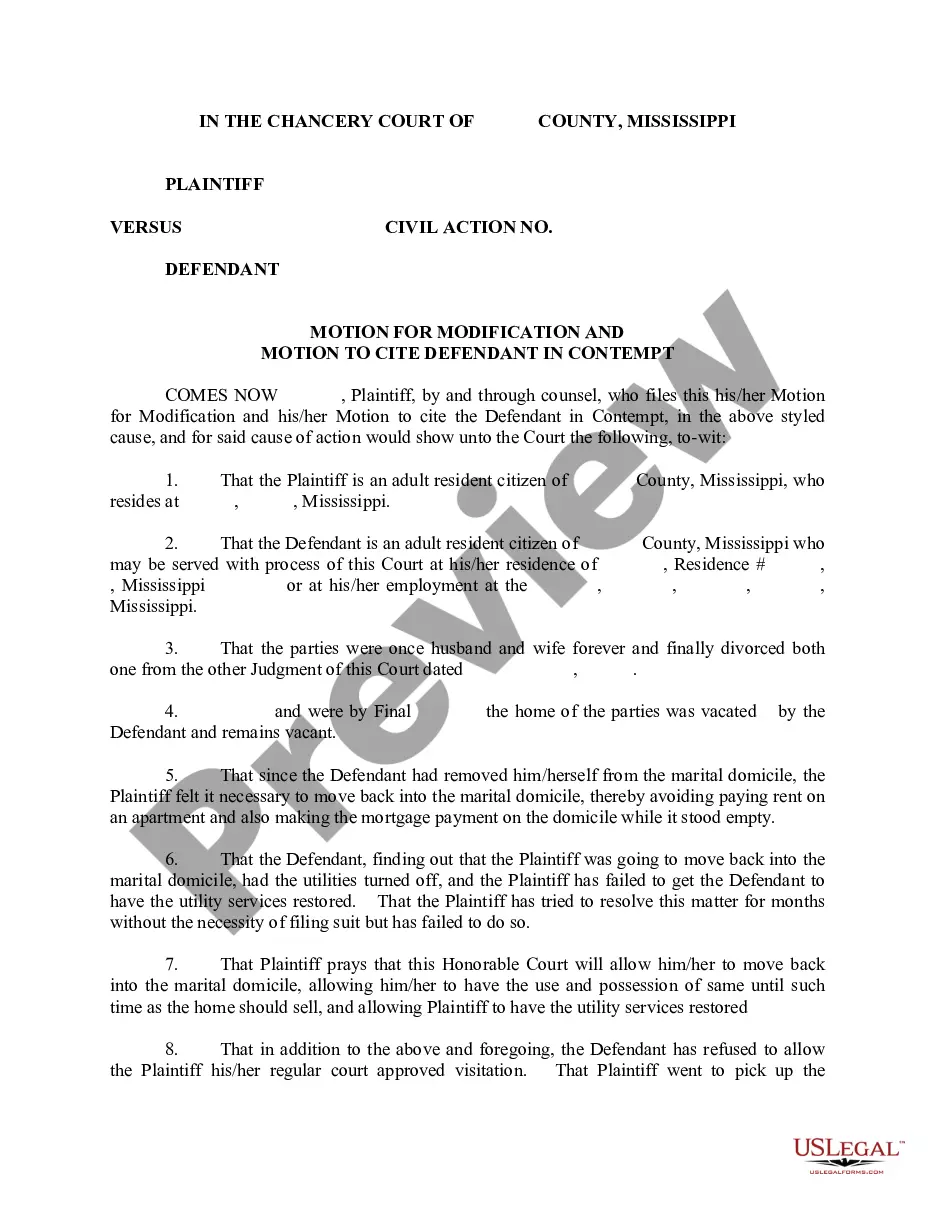
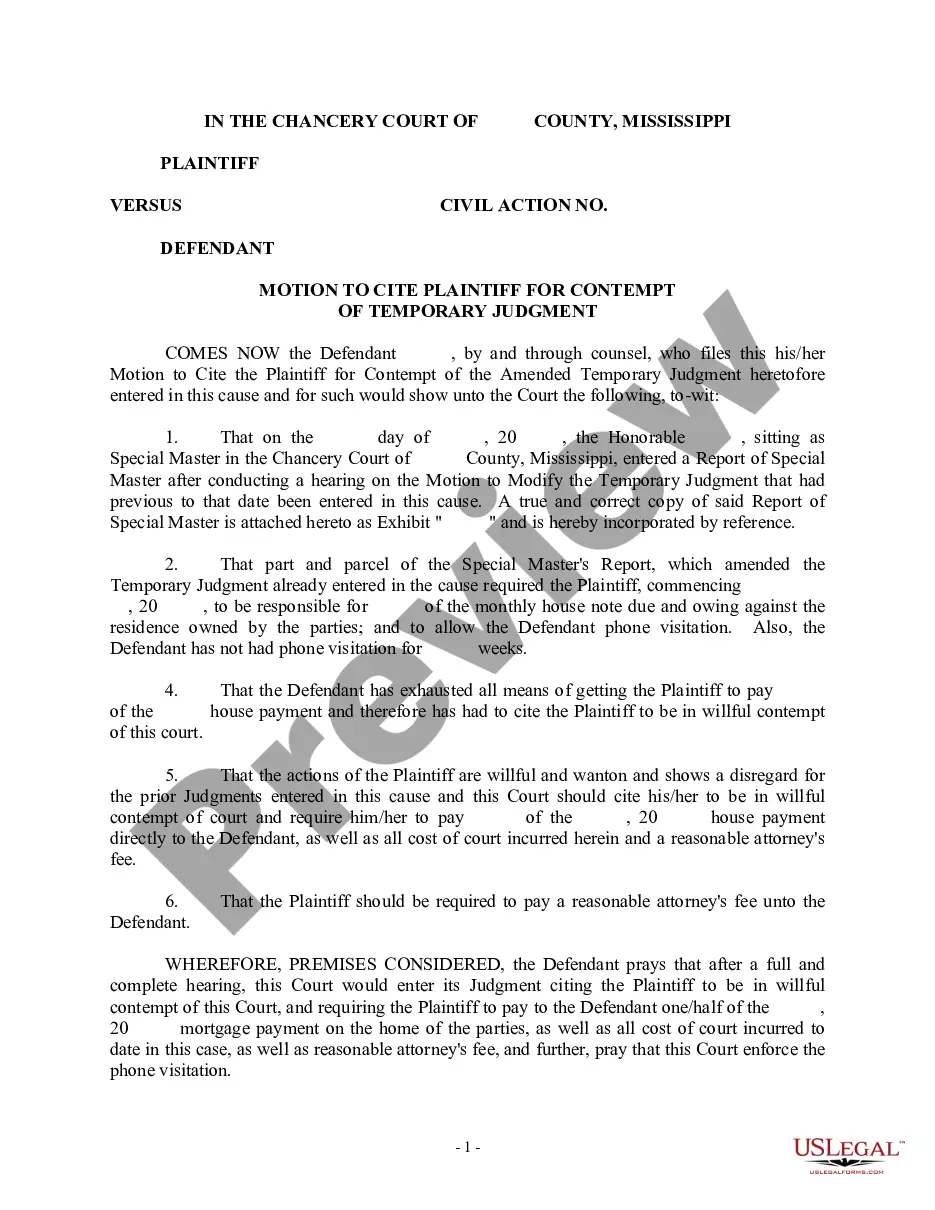
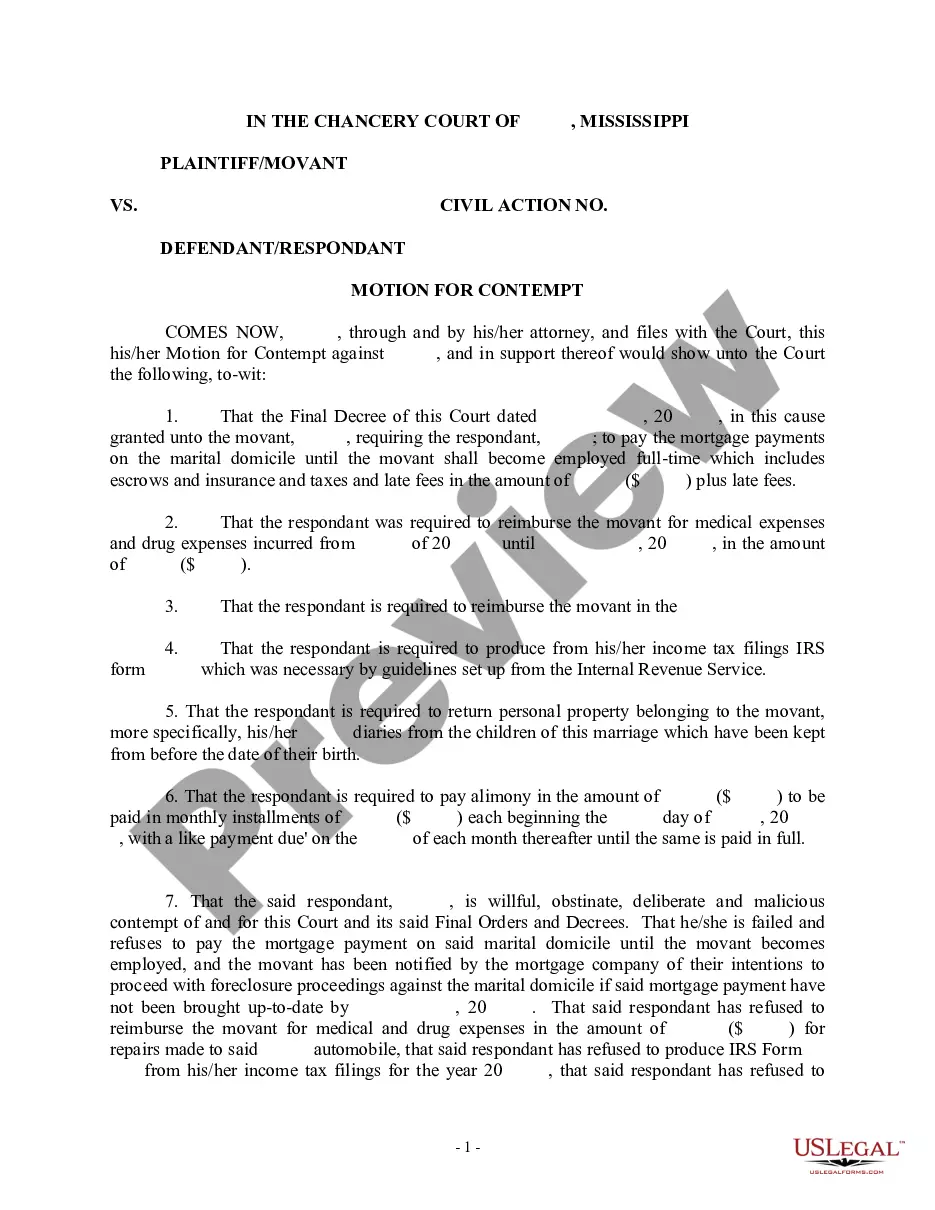
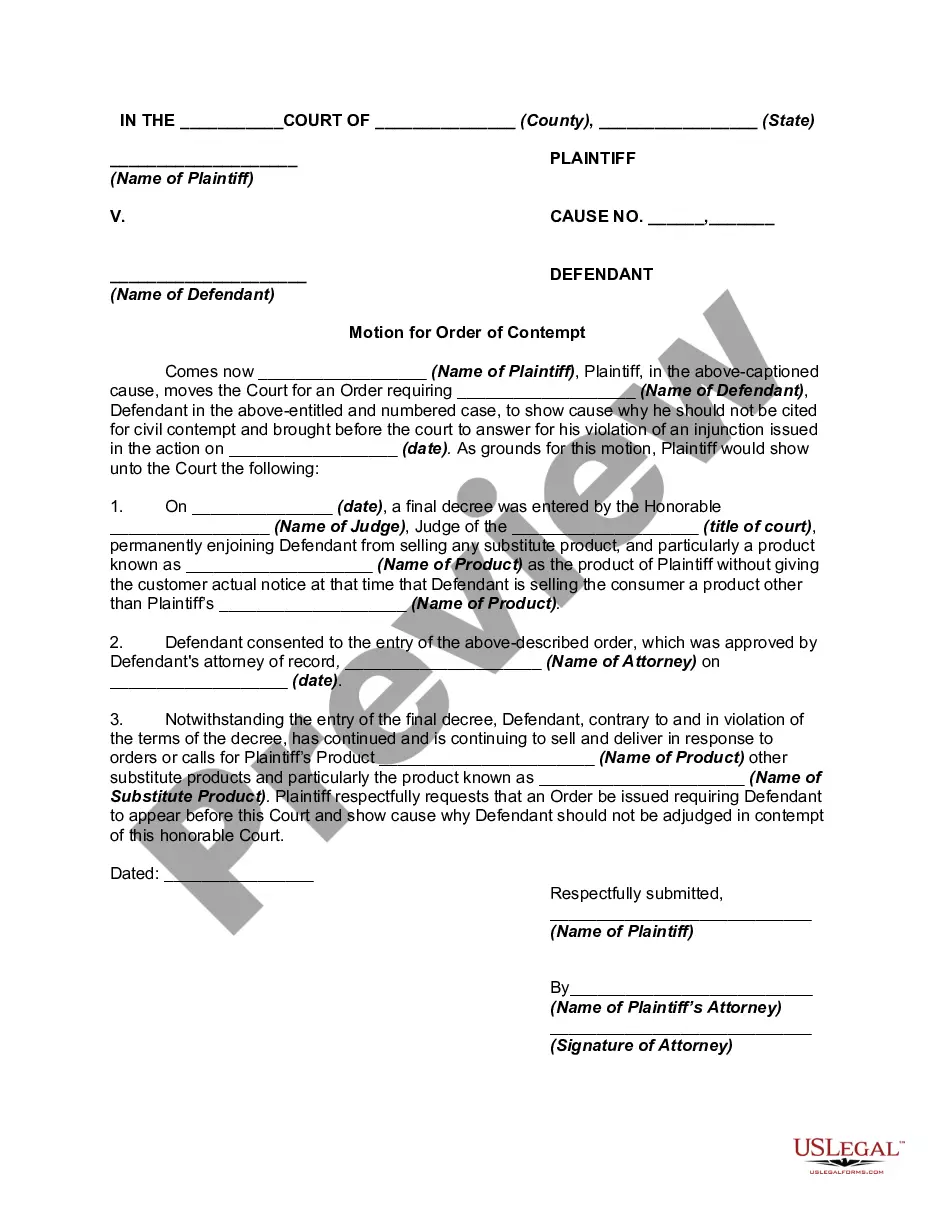
This form, Motion for Modification and Motion to Cite Defendant in Contempt, is a written request to the court seeking changes to a prior order or judgment, as well as holding a defendant in contempt for failing to comply with a court order. This type of motion is essential in family law cases, particularly in matters of custody, support, or property disputes, and differs from other motions which may address unrelated issues or request actions without citing contempt.
What’s included in this form
- Identification of the plaintiff and defendant.
- Details of the existing court order being modified.
- Specific requests for modification and contempt citation.
- Your signature along with the date of submission.
- Any additional evidence or documentation supporting the motion.
Situations where this form applies
You should use this form when you believe that there has been a substantial change in circumstances that warrants a modification of a previous court order, or when the other party has failed to comply with court orders, such as not paying child support or violating custody arrangements. This motion helps ensure the court enforces its orders and makes necessary adjustments based on the current situation.
Who can use this document
- Individuals involved in family law matters who need to request a change to a custody or support order.
- Parties seeking enforcement of court orders against non-compliant defendants.
- Those looking to address changes in personal or financial circumstances that impact existing agreements.
How to prepare this document
- Identify the parties involved by listing the names of the plaintiff and defendant.
- Reference the prior court order you wish to modify, including its date and specifics.
- Clearly state the modifications being requested and the reasons for these changes.
- Include pertinent details on how the defendant has failed to comply with existing orders.
- Sign and date the document before filing it with the appropriate court.
Does this document require notarization?
This form does not typically require notarization unless specified by local law. Ensure to check your jurisdiction's requirements before filing.
Get your form ready online
Our built-in tools help you complete, sign, share, and store your documents in one place.
Make edits, fill in missing information, and update formatting in US Legal Forms—just like you would in MS Word.
Download a copy, print it, send it by email, or mail it via USPS—whatever works best for your next step.
Sign and collect signatures with our SignNow integration. Send to multiple recipients, set reminders, and more. Go Premium to unlock E-Sign.
If this form requires notarization, complete it online through a secure video call—no need to meet a notary in person or wait for an appointment.
We protect your documents and personal data by following strict security and privacy standards.

Make edits, fill in missing information, and update formatting in US Legal Forms—just like you would in MS Word.

Download a copy, print it, send it by email, or mail it via USPS—whatever works best for your next step.

Sign and collect signatures with our SignNow integration. Send to multiple recipients, set reminders, and more. Go Premium to unlock E-Sign.

If this form requires notarization, complete it online through a secure video call—no need to meet a notary in person or wait for an appointment.

We protect your documents and personal data by following strict security and privacy standards.
Common mistakes
- Failing to clearly specify the modification being requested, leading to confusion.
- Not including necessary supporting documentation to substantiate claims of contempt.
- Leaving out your signature or date, which can result in the motion being rejected.
Why complete this form online
- Convenience of downloading and filling out the form from home.
- Editability to tailor the form based on your personal circumstances.
- Access to attorney-drafted content that ensures reliability and legal compliance.
Legal use & context
- This form is intended for individuals seeking legal modifications through the court system.
- It can be used as a basis for filing for contempt, provided that the required evidence supports the claims.
- Ensure all claims made in the motion are truthful and supported by facts to maintain legal integrity.
What to keep in mind
- The motion combines requests for modifications and contempt citations.
- Proper completion requires accuracy and adherence to local rules.
- Filing this form can help enforce compliance with court orders.
Looking for another form?
Form popularity
FAQ
Proof of contempt Being found in contempt of a court order is extremely serious, and the sanctions imposed can be severe. The court will require clear and concrete evidence of willful disobedience of the court order.
If a person is found to be in contempt, the court is able to impose sanctions, which may include the following: jail time (usually 1-30 days) ordering the party held in contempt to pay the money owed. ordering the party held in contempt to pay the other party's attorney's fees.
1There is a valid court order in effect.2The other person knows about the court order.3The facts show a plain violation of the order.4You have given the person notice of the contempt hearing and a chance to be heard.5Contempt is an appropriate remedy for the violation.
PETITION FOR CITATION FOR CONTEMPT OF COURT That the defendant is able-bodied, capable of earning adequate funds with which to comply with the orders of this Court, and that said defendant has willfully failed or refused to pay support as ordered by the Court.
Go to the clerk's office at the court that made the orders. Give the clerk your completed Motion for Contempt and Appearance forms. The clerk will write a hearing date and time on the motion, sign it, and give it back to you. The hearing date is when you and the other person must go to court.
There is a valid court order in effect. The other person knows about the court order. The facts show a plain violation of the order. You have given the person notice of the contempt hearing and a chance to be heard. Contempt is an appropriate remedy for the violation.
At the hearing, you will have to swear to tell the truth before you present your case. As the party alleging contempt, you will probably speak first. Keep your explanation of how your ex disobeyed a court order brief and only talk about the reasons you asked for the contempt action.
To get a contempt finding, you must usually file a court document called a "motion for an order to show cause." That puts the burden on the parent who isn't following the custody or visitation order to explain to the court the reasons why he or she should not be held in contempt.
Depending on the infraction, contempt of court consequences can include fines, compensatory visitation, a modification to the custody arrangement, and in some instances even jail time. In most cases, if someone is held in contempt, the court will first give them the opportunity to make amends for the violation.