Mississippi Motion for Enforcement of Order for Payment and for Sanctions and Attorney's Fees
Overview of this form
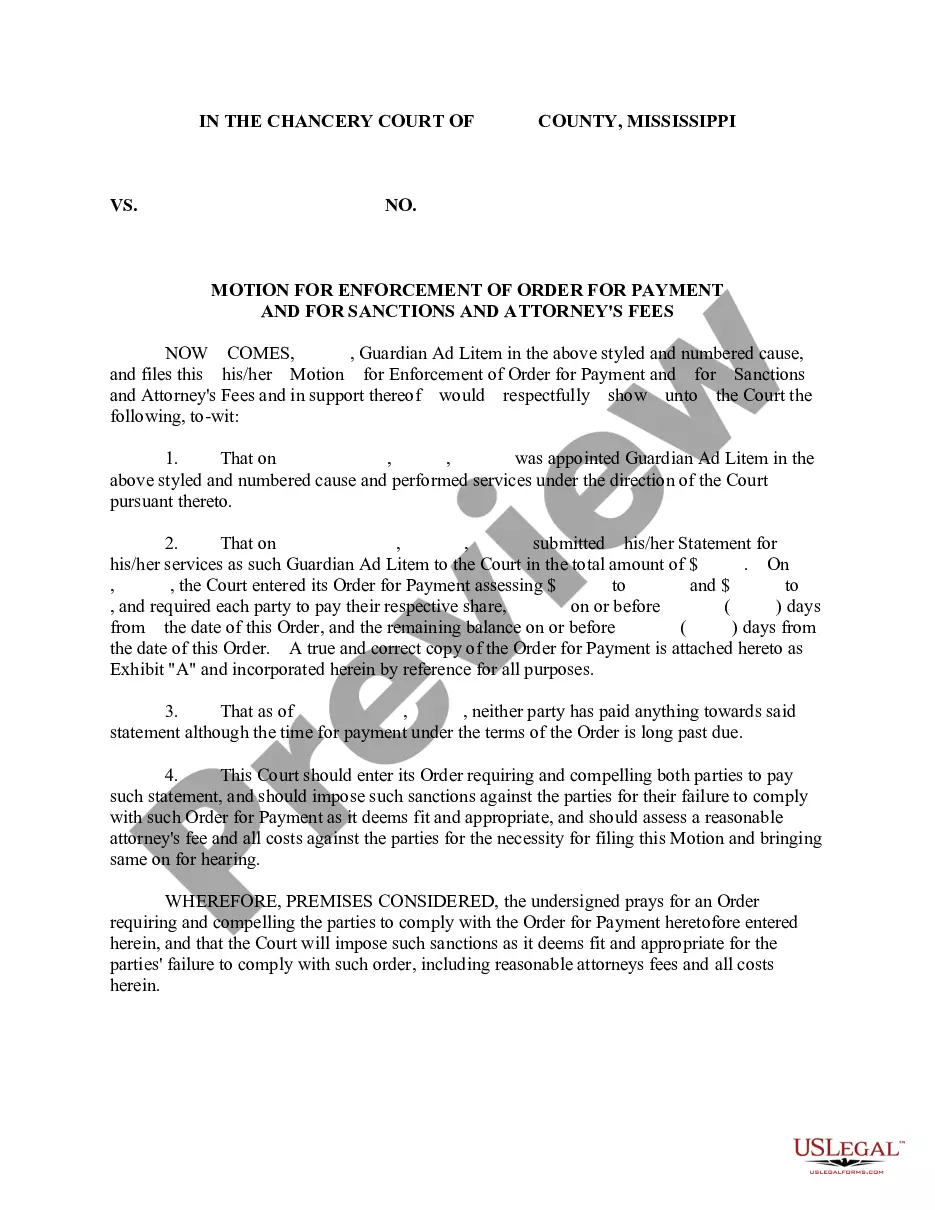
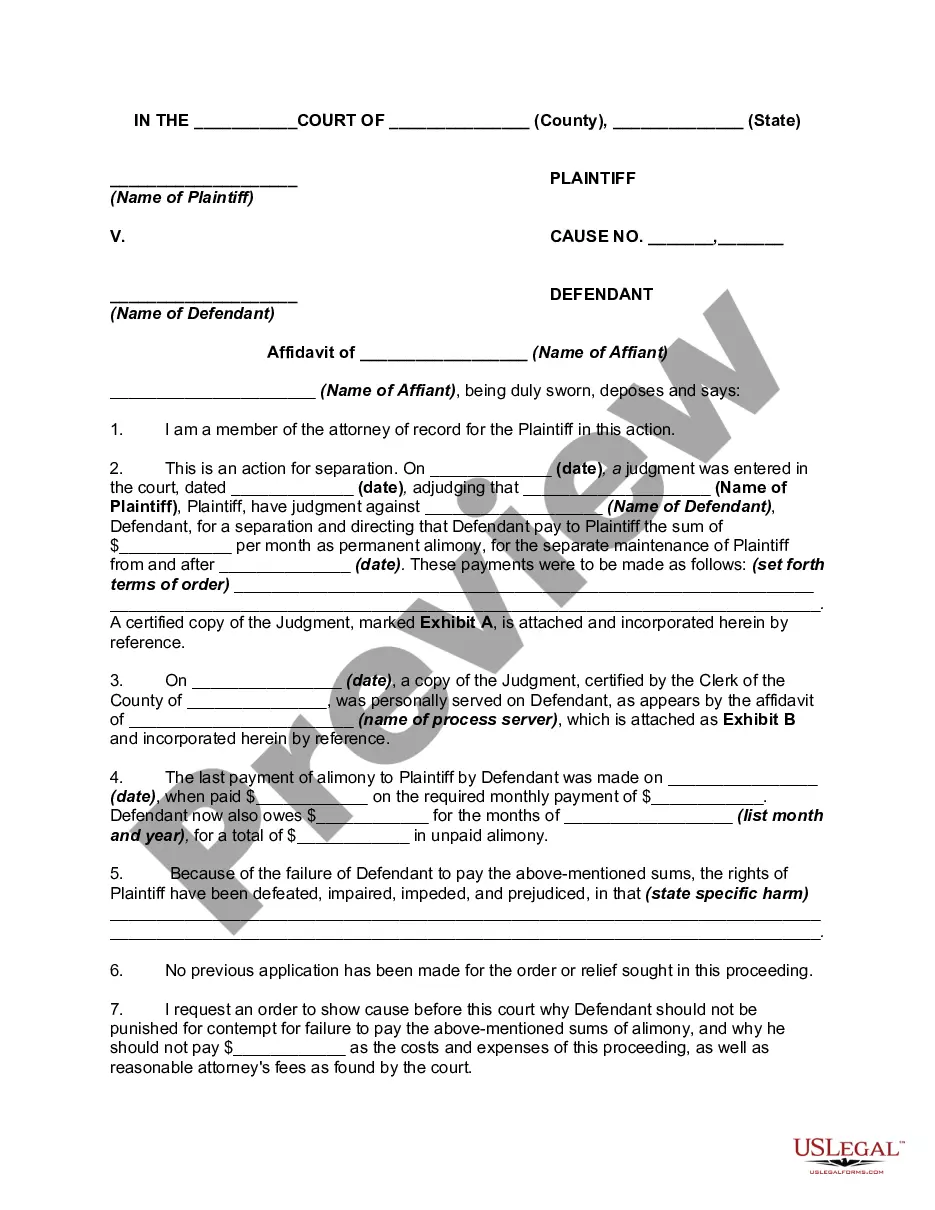
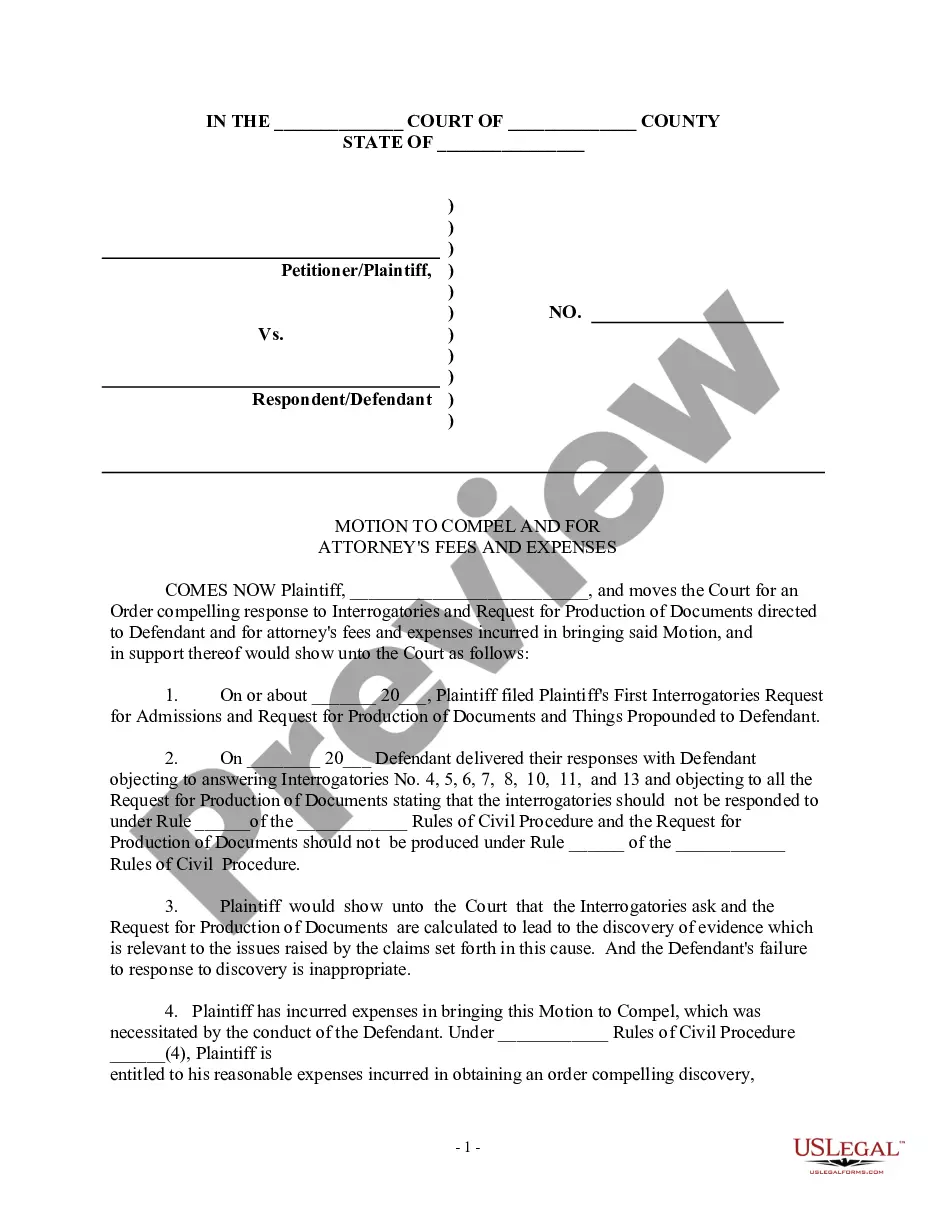
The Motion for Enforcement of Order for Payment and for Sanctions and Attorney's Fees is a legal document used to request the court to enforce a previously issued order for payment. This motion allows a party to seek compliance from another party who has failed to adhere to the court's payment order, while also requesting sanctions and attorney's fees. It is distinct from other motions as it specifically addresses enforcement issues related to compensation orders, ensuring that the rightful recipient receives owed payments.
What’s included in this form
- Identification of the parties involved, including the Guardian Ad Litem.
- Date of the original court order for payment and details regarding payment amounts.
- Specification of non-compliance with the payment order and the elapsed time since the order was issued.
- Request for the court to compel payment and impose sanctions on non-compliant parties.
- Petition for reasonable attorney's fees and associated costs incurred due to the motion's filing.

Situations where this form applies
This form should be used when one party is seeking to enforce a court order for payment that has not been fulfilled by the other party. Scenarios may include instances where a Guardian Ad Litem provided services in a case and the fees ordered by the court remain unpaid. If the original payment order has elapsed without compliance, this motion allows the aggrieved party to prompt the court's involvement in securing payment.
Intended users of this form
- Individuals acting as a Guardian Ad Litem in a court case.
- Parties who have a legal order for payment that has not been satisfied by another party.
- Attorneys representing clients in cases requiring enforcement of payment orders.
- Any individuals seeking legal recourse for unpaid fees related to court-appointed services.
Instructions for completing this form
- Identify the parties involved, including the Guardian Ad Litem and any other relevant parties.
- Enter the dates on which the appointment and the original court order were issued.
- Detail the amount owed as specified in the court's order, including any deadlines for payment that were missed.
- Document any prior communication regarding the unpaid fees and the lack of compliance.
- Sign and date the motion, ensuring to include contact information for legal representation if applicable.
Notarization requirements for this form
This form does not typically require notarization to be legally valid. However, some jurisdictions or document types may still require it. US Legal Forms provides secure online notarization powered by Notarize, available 24/7 for added convenience.
Get your form ready online
Our built-in tools help you complete, sign, share, and store your documents in one place.
Make edits, fill in missing information, and update formatting in US Legal Forms—just like you would in MS Word.
Download a copy, print it, send it by email, or mail it via USPS—whatever works best for your next step.
Sign and collect signatures with our SignNow integration. Send to multiple recipients, set reminders, and more. Go Premium to unlock E-Sign.
If this form requires notarization, complete it online through a secure video call—no need to meet a notary in person or wait for an appointment.
We protect your documents and personal data by following strict security and privacy standards.

Make edits, fill in missing information, and update formatting in US Legal Forms—just like you would in MS Word.

Download a copy, print it, send it by email, or mail it via USPS—whatever works best for your next step.

Sign and collect signatures with our SignNow integration. Send to multiple recipients, set reminders, and more. Go Premium to unlock E-Sign.

If this form requires notarization, complete it online through a secure video call—no need to meet a notary in person or wait for an appointment.

We protect your documents and personal data by following strict security and privacy standards.
Common mistakes
- Failing to provide accurate details of the original payment order.
- Not including all parties involved in the payment order.
- Omitting signatures or necessary contact information.
- Neglecting to attach supporting documents, such as the original order.
- Not adhering to local filing requirements or deadlines.
Benefits of using this form online
- Convenient access to a legally vetted form that can be downloaded and filled out at your pace.
- Editability allows for customization to fit specific case details quickly.
- Reliable source of legal documentation that meets standard requirements.
- Immediate availability saves time compared to traditional methods of form acquisition.
Looking for another form?
Form popularity
FAQ
Some of the most common court order violations involve child custody or child support, visitation, or alimony. When this type of violation is proven to be willful, then the guilty party can be required to pay attorney fees and costs of filing a complaint, and may even face jail time.
Motion for Enforcement is used to enforce an Order that the Judge has already signed. A Motion for Contempt is used to punish a party for an act or omission that the party should or should not have done regardless of any Court Order.
After you complete your motion, you must file it with the court.You must then serve (mail) a copy of your filed motion (including all exhibits and the date, time, and place of hearing) to all other parties in the case. If a party is represented by an attorney, mail the motion directly to the attorney's office.
If you have a Child Arrangement Order in place and a party to that order is failing to comply with the terms then your first port of call is to try to resolve the issue privately. If this is not possible then you may wish to seek mediation or an application to court for enforcement which Nelsons can help you with.
In many cases where a court order is made against an individual, that individual does not comply, or refuses to comply. An Enforcement Order is a further court order effectively ordering a party to comply with a judgment or order made against them.
Apply for an order related to the enforcement of a child arrangements order or to set aside or change an existing enforcement order.
When one party refuses to follow a court order, the other party can file a motion for contempt.The purpose of civil contempt is to force compliance with the terms of the order; whereas, the purpose of criminal contempt is to punish a party's non-compliance.
Agreements for holidays such as birthdays and Christmas should also be defined within the Child Arrangement Order.It is important to note that generally, the police will not get involved in breaches of court orders where the child is with a person with parental responsibility, even if you make allegations of abuse.
An Enforcement Order is made when a fine is imposed or when the court is granting further time to pay a fine.
Generally speaking, a MOTION, is a request made to the Court to take some specified action or to compell a party to take some specified action, whereas an ORDER is the decree or decision of the Court.