Mississippi Demand for Notice of Aggravating and for Disclosure of Evidence Supporting Mitigating Circumstances
Understanding this form
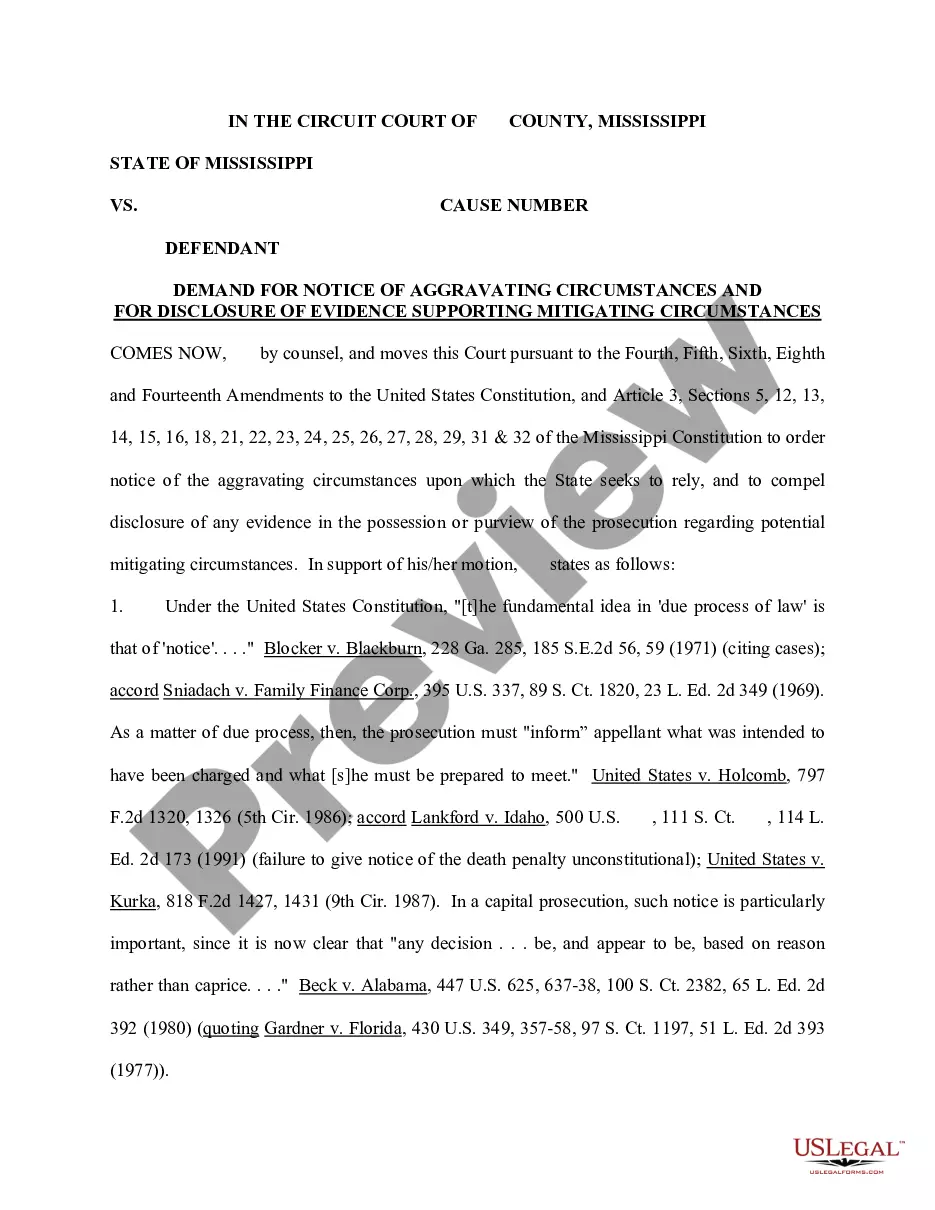
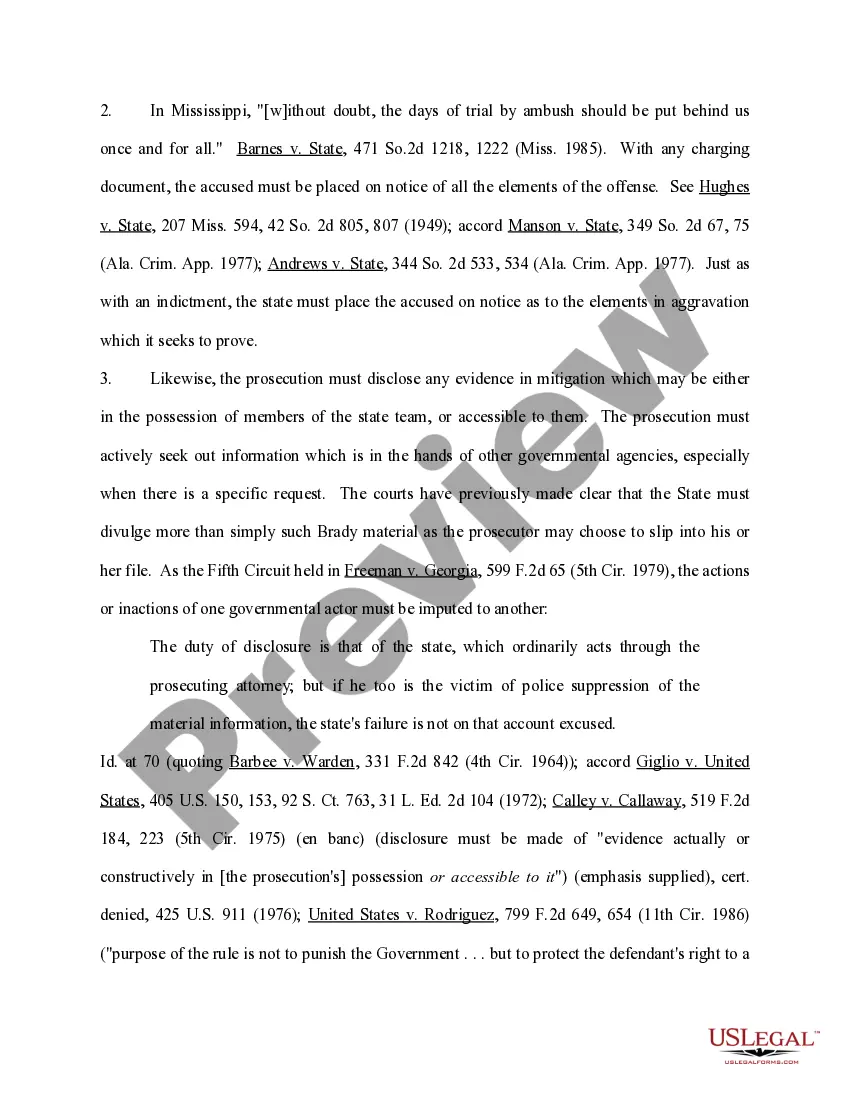
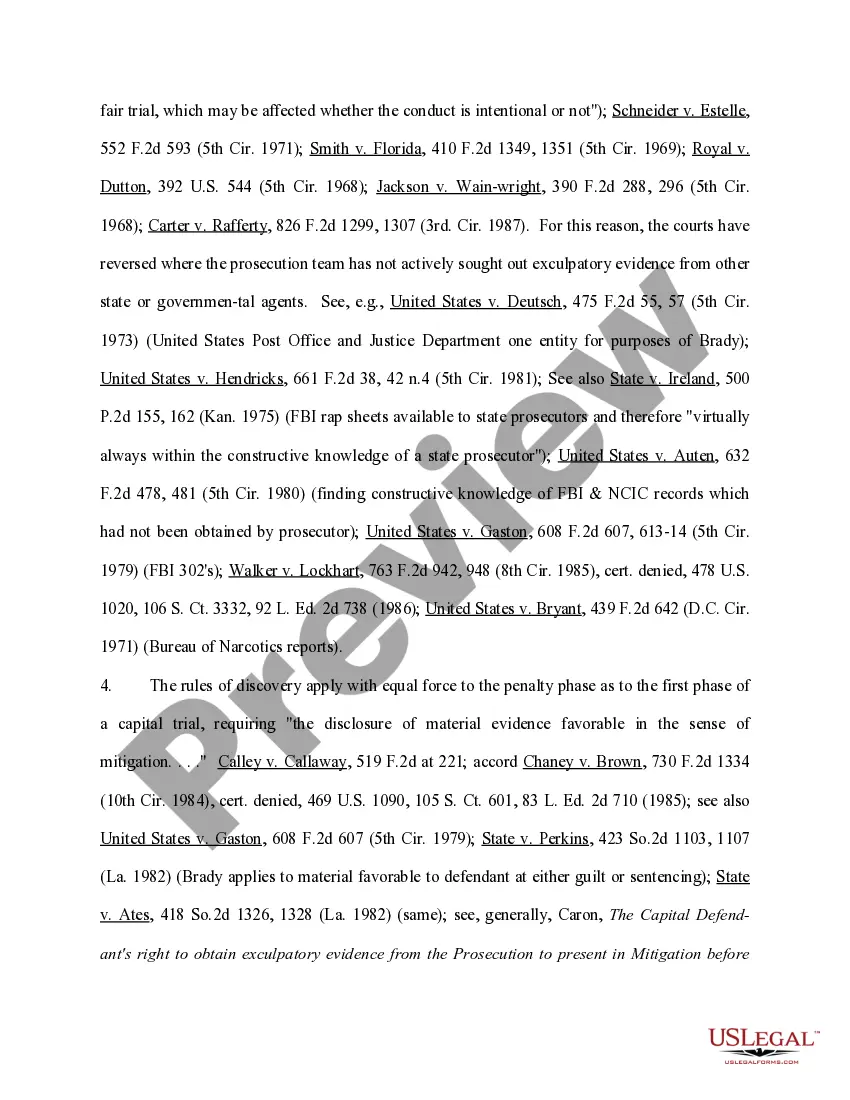
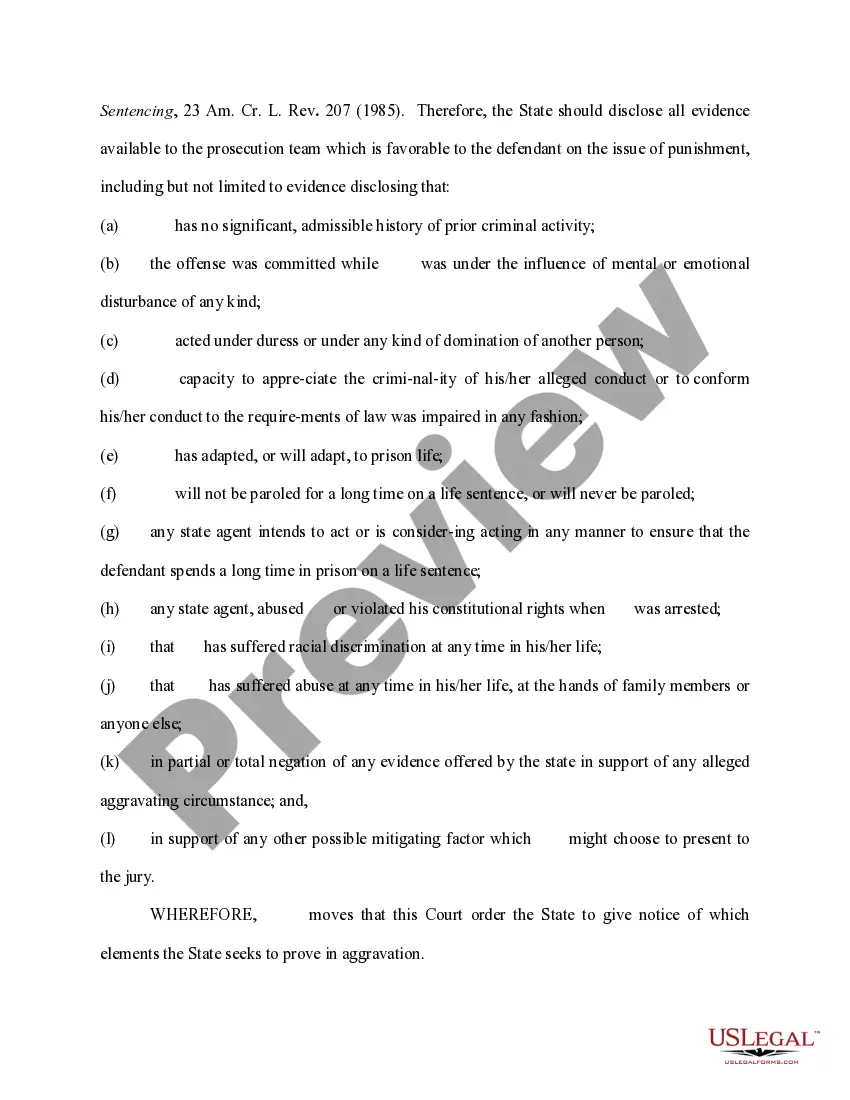
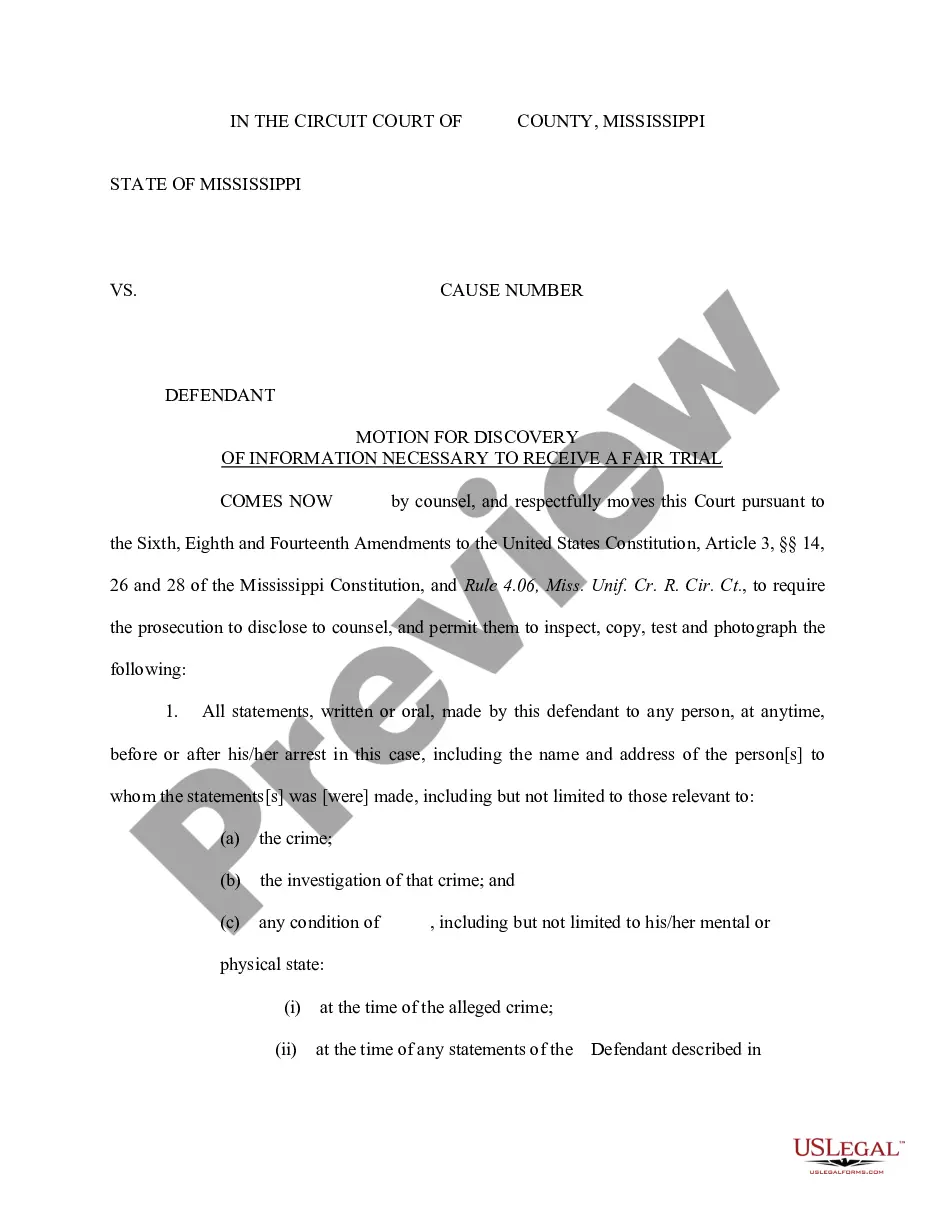
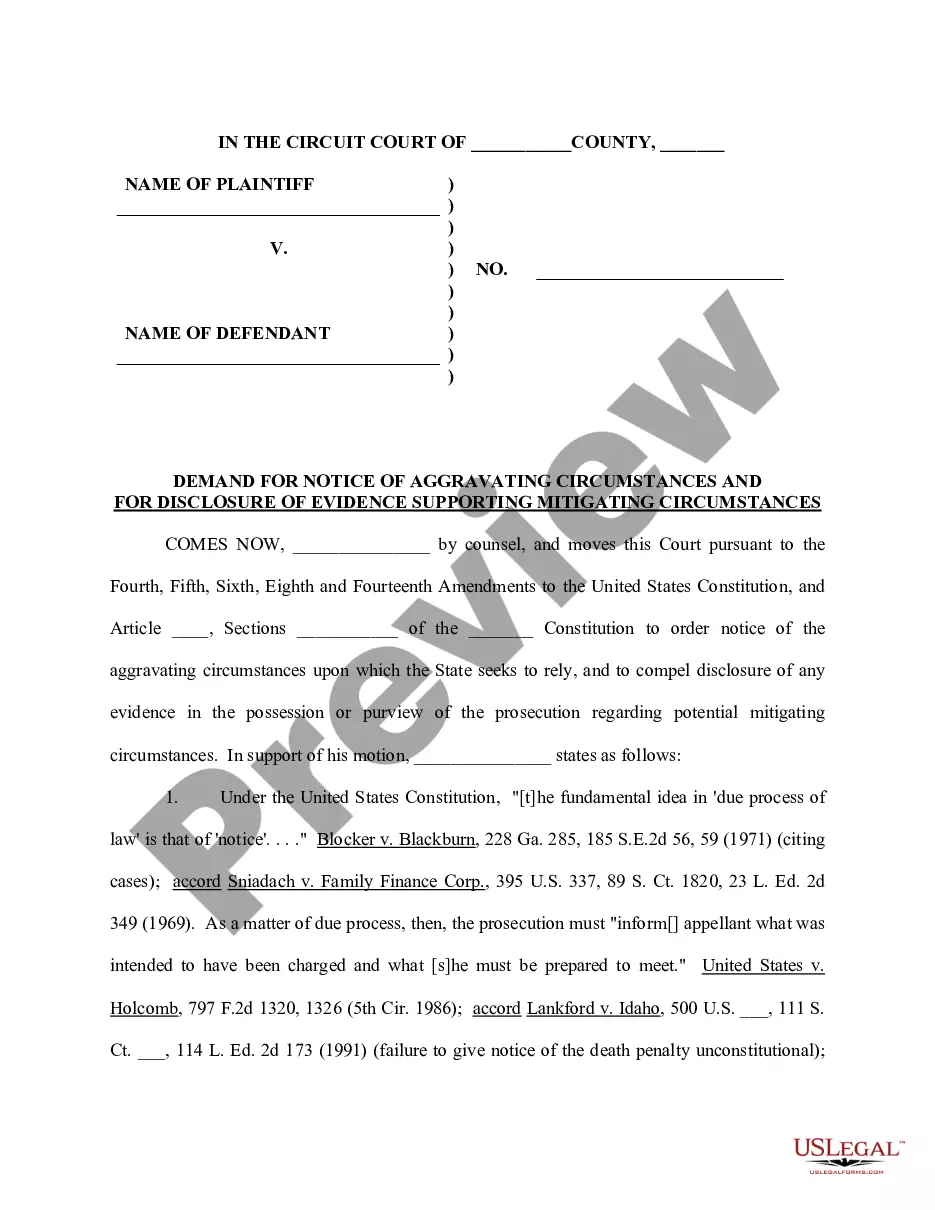
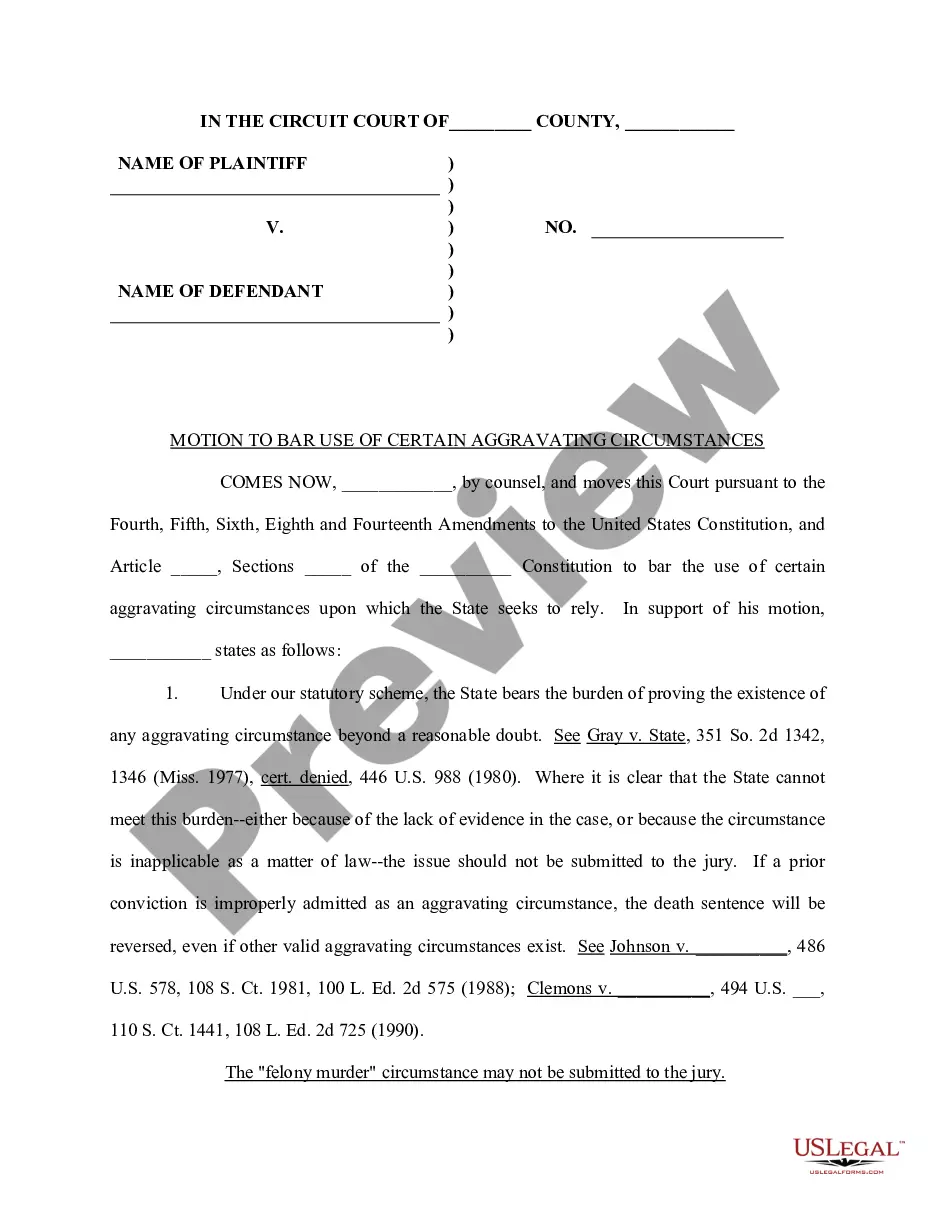
The Demand for Notice of Aggravating Circumstances and for Disclosure of Evidence Supporting Mitigating Circumstances is a specific motion used in capital cases in Mississippi. This legal form requests the prosecution to disclose any aggravating factors they intend to use against the defendant and any evidence related to potential mitigating circumstances. This ensures that the defendant is adequately prepared to respond to the charges during the trial, emphasizing the importance of due process in capital prosecutions.
Form components explained
- Identification of the defendant and case number.
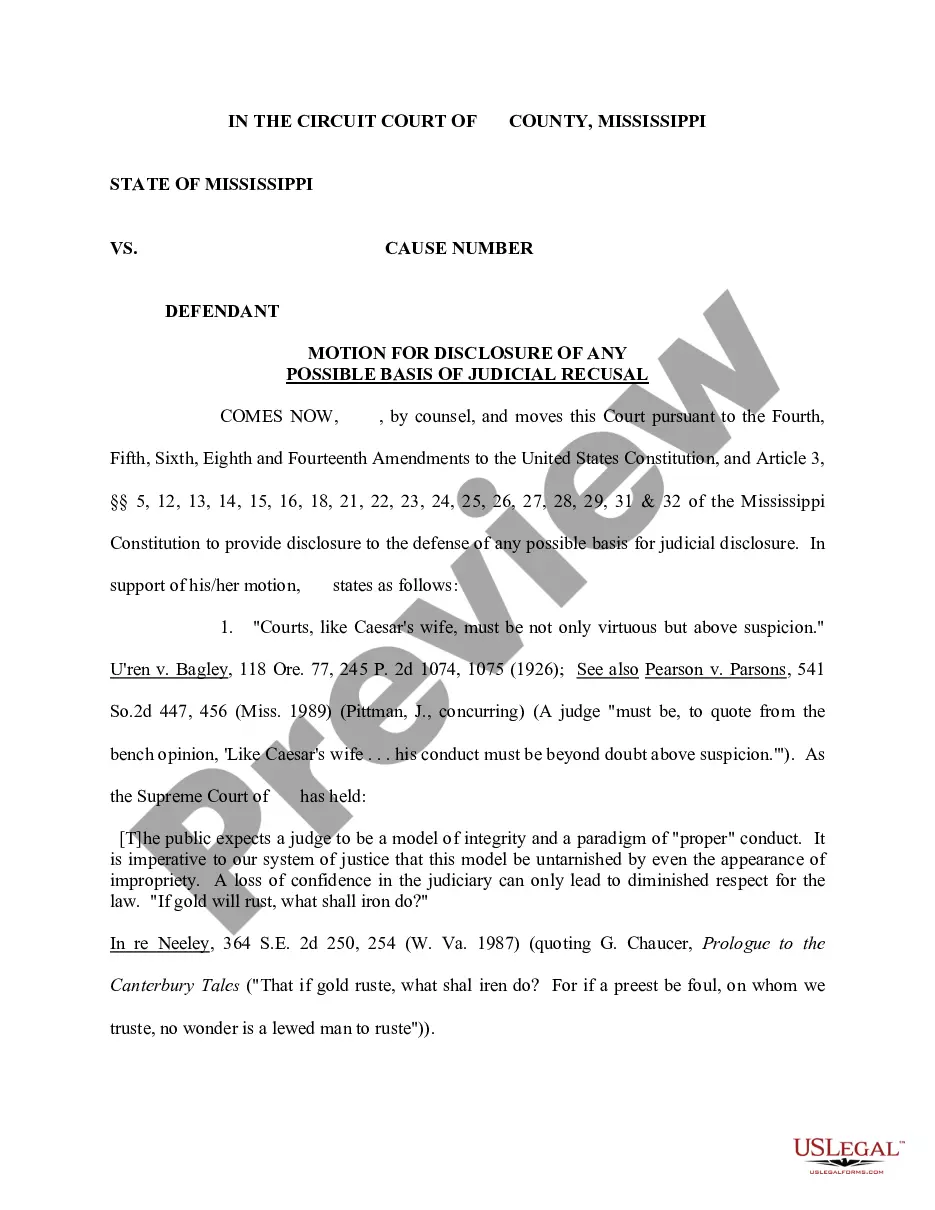
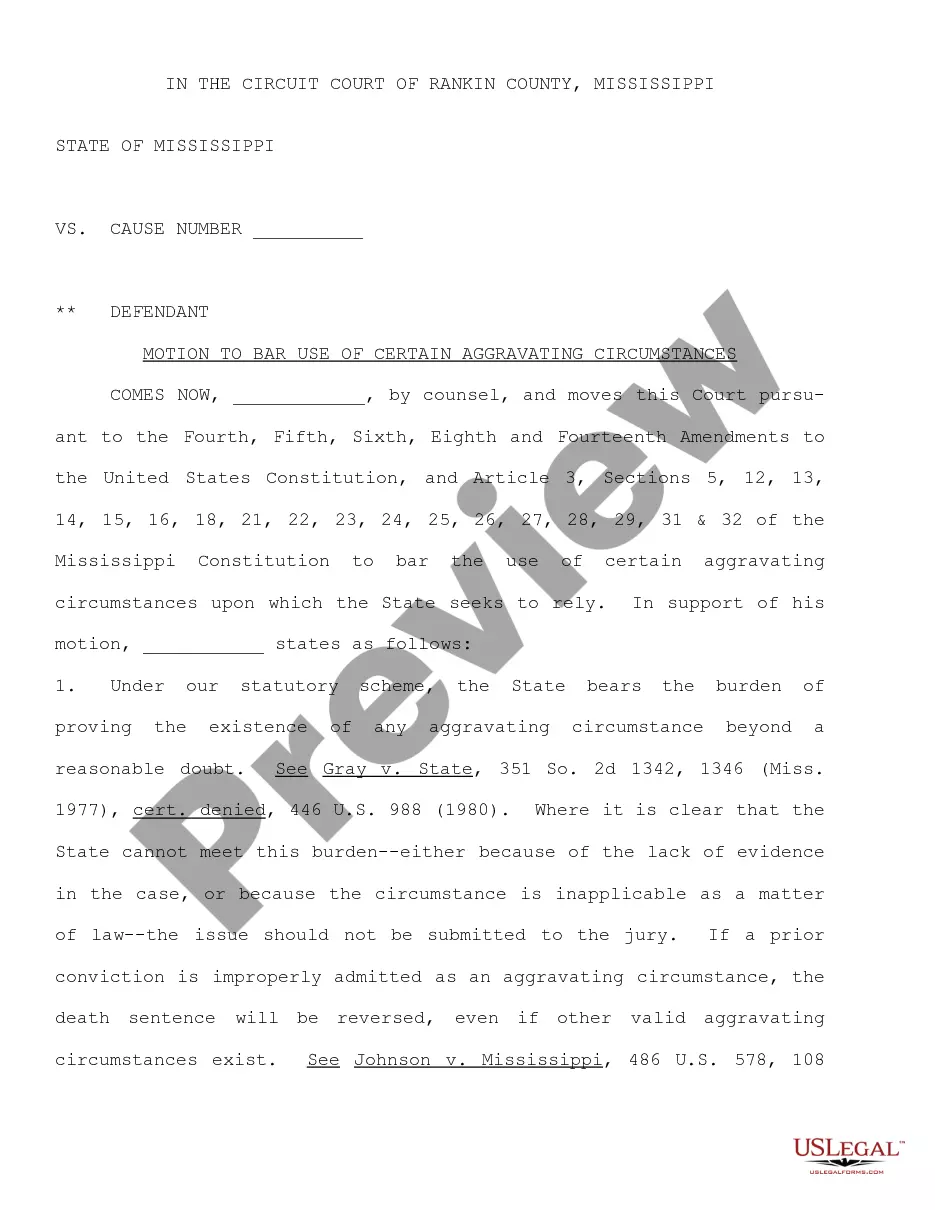
- Legal basis for the demand, referencing relevant constitutional amendments and state statutes.
- Request for the state to notify which aggravating circumstances will be presented.
- Requirement for the prosecution to disclose evidence supporting mitigating factors.
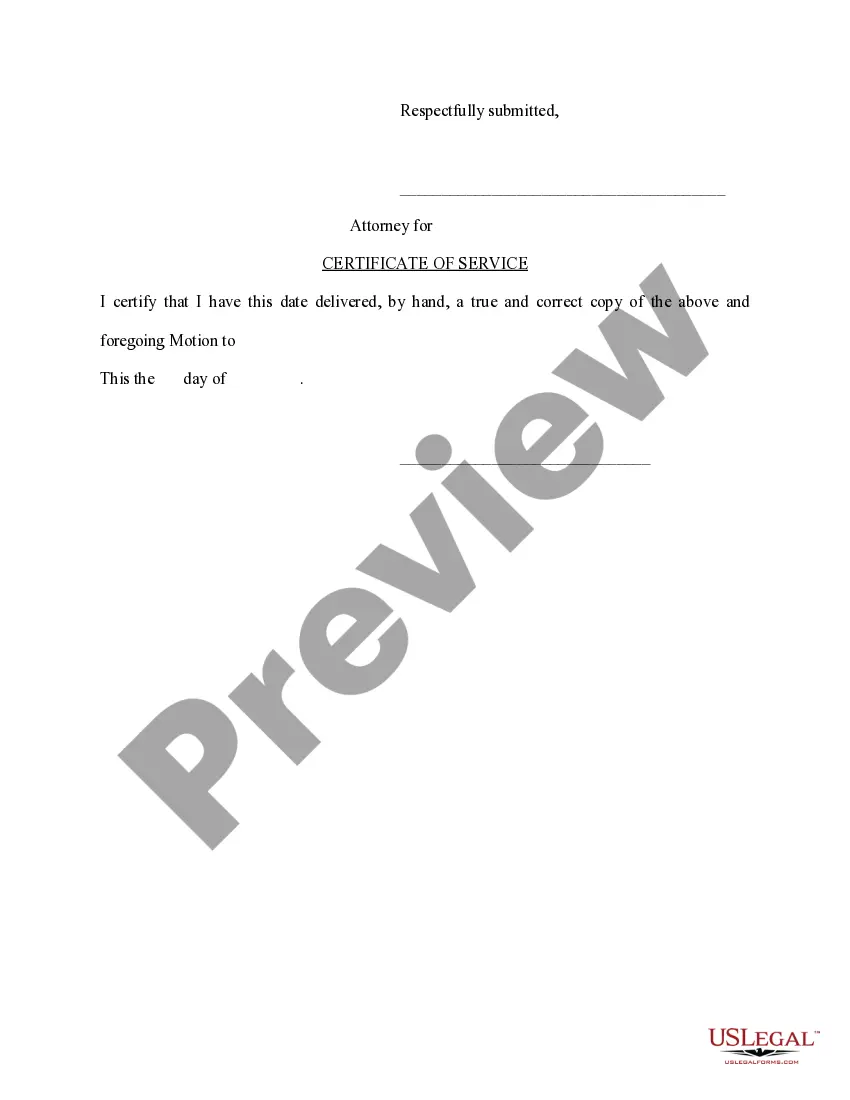
- Space for attorney signatures and certification of service.
Situations where this form applies
This form is essential when facing a capital case in Mississippi. It should be utilized when the defense needs to ensure that they are informed of the specific aggravating circumstances that the prosecution intends to rely upon for sentencing. Using this form helps the defendant prepare a more robust legal defense and allows them to present evidence that may mitigate the potential penalties they face.
Intended users of this form
This form is intended for:
- Defendants involved in capital cases in Mississippi.
- Defense attorneys representing clients in serious criminal cases.
- Individuals seeking to understand their legal rights concerning aggravating and mitigating circumstances in their case.
How to prepare this document
- Identify the parties involved, including the defendant and attorney information.
- Fill in the case number associated with the capital trial.
- Specify the legal grounds for your request, citing relevant constitutional articles and amendments.
- Clearly state what evidence or notice you are demanding from the prosecution.
- Ensure that the form is signed by the attorney representing the defendant.
- Complete the certification of service to confirm the form has been delivered to the necessary parties.
Does this form need to be notarized?
This form usually doesn’t need to be notarized. However, local laws or specific transactions may require it. Our online notarization service, powered by Notarize, lets you complete it remotely through a secure video session, available 24/7.
Get your form ready online
Our built-in tools help you complete, sign, share, and store your documents in one place.
Make edits, fill in missing information, and update formatting in US Legal Forms—just like you would in MS Word.
Download a copy, print it, send it by email, or mail it via USPS—whatever works best for your next step.
Sign and collect signatures with our SignNow integration. Send to multiple recipients, set reminders, and more. Go Premium to unlock E-Sign.
If this form requires notarization, complete it online through a secure video call—no need to meet a notary in person or wait for an appointment.
We protect your documents and personal data by following strict security and privacy standards.

Make edits, fill in missing information, and update formatting in US Legal Forms—just like you would in MS Word.

Download a copy, print it, send it by email, or mail it via USPS—whatever works best for your next step.

Sign and collect signatures with our SignNow integration. Send to multiple recipients, set reminders, and more. Go Premium to unlock E-Sign.

If this form requires notarization, complete it online through a secure video call—no need to meet a notary in person or wait for an appointment.

We protect your documents and personal data by following strict security and privacy standards.
Typical mistakes to avoid
- Failing to properly cite constitutional and state provisions that support the motion.
- Leaving the case number or defendant information incomplete.
- Not specifying all necessary aggravating and mitigating circumstances.
- Omitting the certification of service, which is crucial for the formal submission of the motion.
Benefits of using this form online
- Convenience of downloading and completing the form at your own pace.
- Access to templates drafted by licensed attorneys, ensuring accuracy.
- Ability to save and edit the form as needed before submission.
- Time-saving compared to traditional methods of obtaining legal forms.
Legal use & context
- This form is legally recognized in Mississippi courts for capital cases.
- It protects the defendant's rights by ensuring clear communication regarding aggravating and mitigating circumstances.
- Utilization of this form can help prevent trial by ambush, promoting transparency in the legal process.
Looking for another form?
Form popularity
FAQ
Mitigating factors are extenuating circumstances that might lead to a reduced sentence. Aggravating factors are circumstances that increase the defendant's culpability and could lead to an enhanced or maximum sentence.
Any fact or circumstance that lessens the severity or culpability of a criminal act. Mitigating factors include an ability for the criminal to reform, mental retardation, an addiction to illegal substances or alcohol that contributed to the criminal behavior, and past good deeds, among many others.
Lack of a prior criminal record. Minor role in the offense; Culpability of the victim; Past circumstances, such as abuse that resulted in criminal activity; Circumstances at the time of the offense, such as provocation, stress, or emotional problems that might not excuse the crime but might offer an explanation;
Mitigating (or extenuating) circumstances are factors that tend to lessen the severity of a crime or its punishment by making the defendant's conduct understandable or less blameworthy. Mitigating circumstances might include a defendant's young age, mental illness or addiction, or minor role in the crime.
Legal Definition of aggravating circumstance : a circumstance relating to the commission of an act that increases the degree of liability or culpability punitive damages are recoverable in a conversion case when the evidence shows legal malice, willfulness, insult, or other aggravating circumstances Schwertfeger v.
Any fact or circumstance that increases the severity or culpability of a criminal act. Aggravating factors include recidivism, lack of remorse, amount of harm to the victim, or committing the crime in front of a child, among many others.
Purpose of Mitigation In order for juries to determine whether a particular defendant deserves a sentence of death, they must weigh evidence that this murderer is actually one of the worst of the worst (the aggravating factors) against the reasons for sparing him or her (the mitigating factors).
Minor role. The defendant played a relatively minor role in the crime. Victim culpability. The victim willingly participated in the crime or initiated the events leading to it. Unusual circumstance. No harm. Lack of record. Relative necessity. Remorse. Difficult personal history.