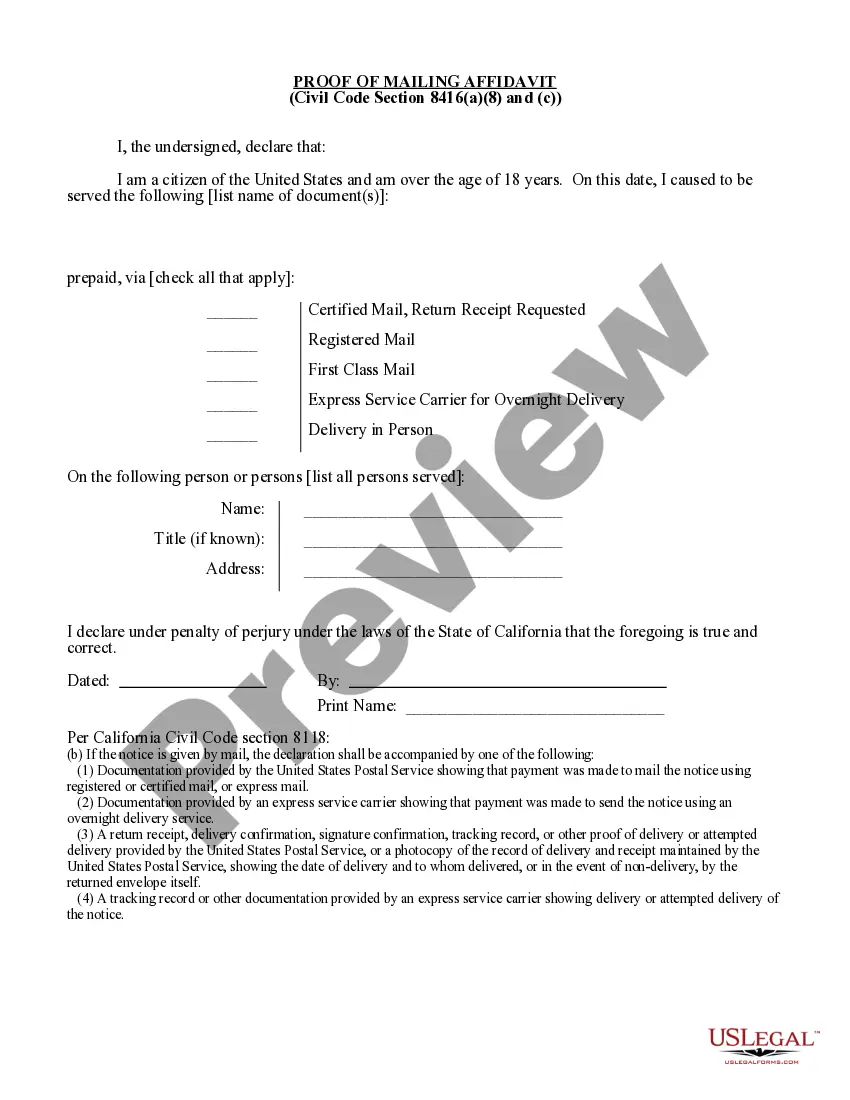
Mississippi Motion for Disclosure of Any Possible Basis of Judicial Recusal
About this form
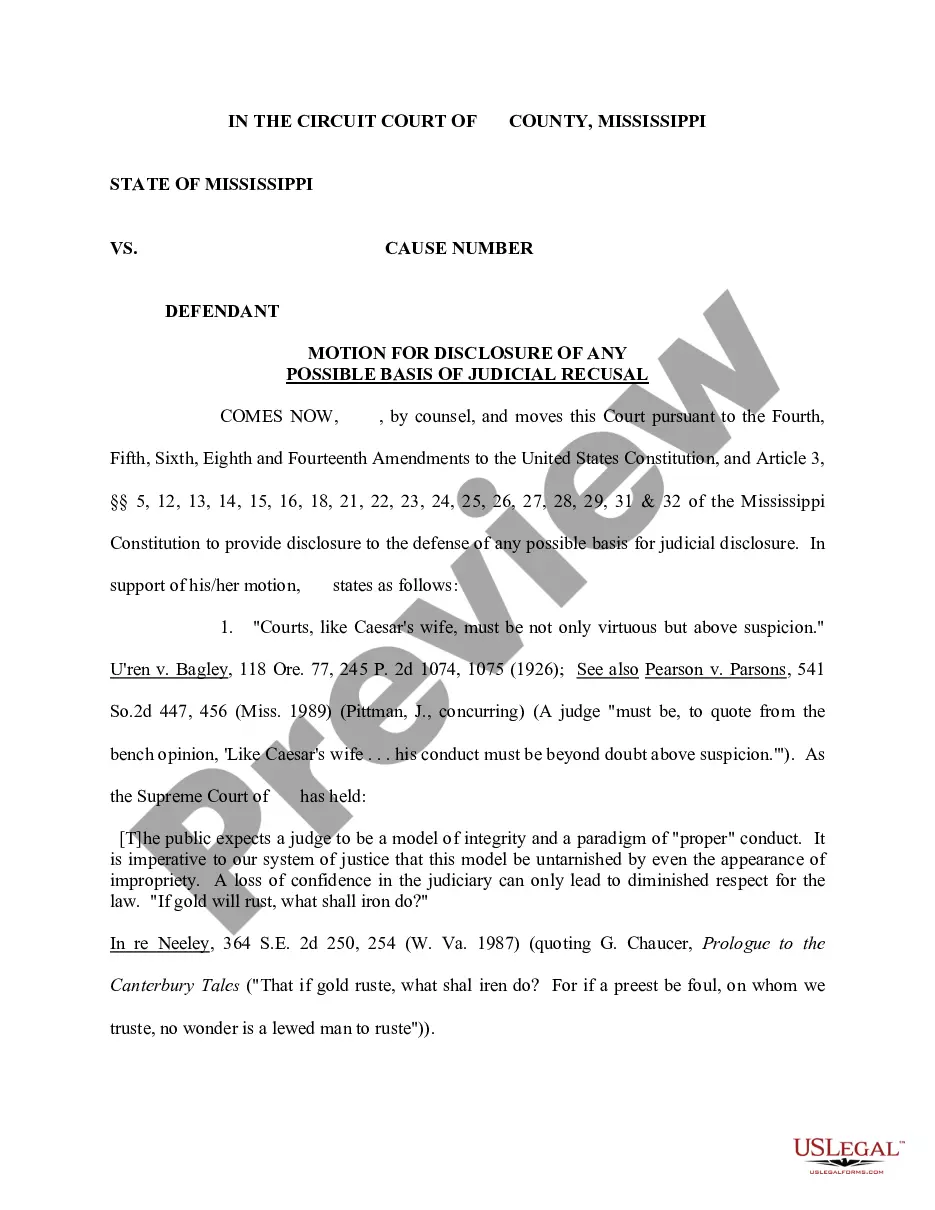
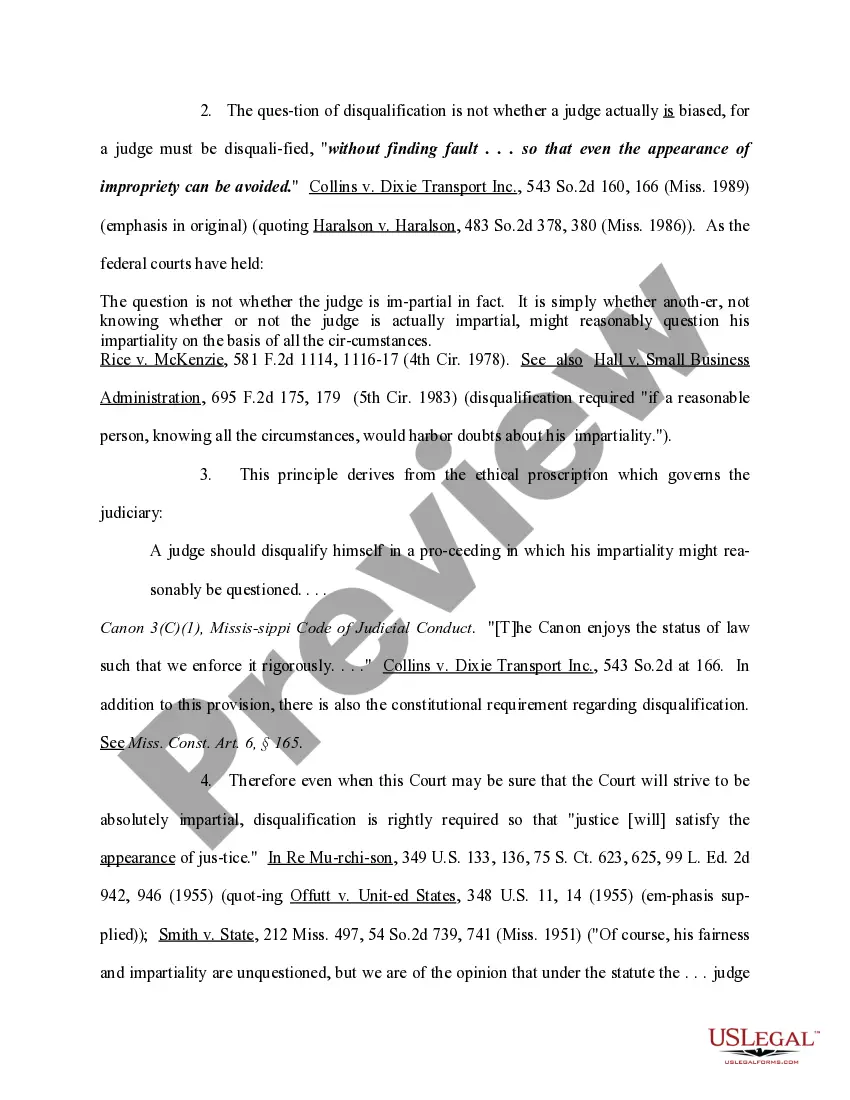
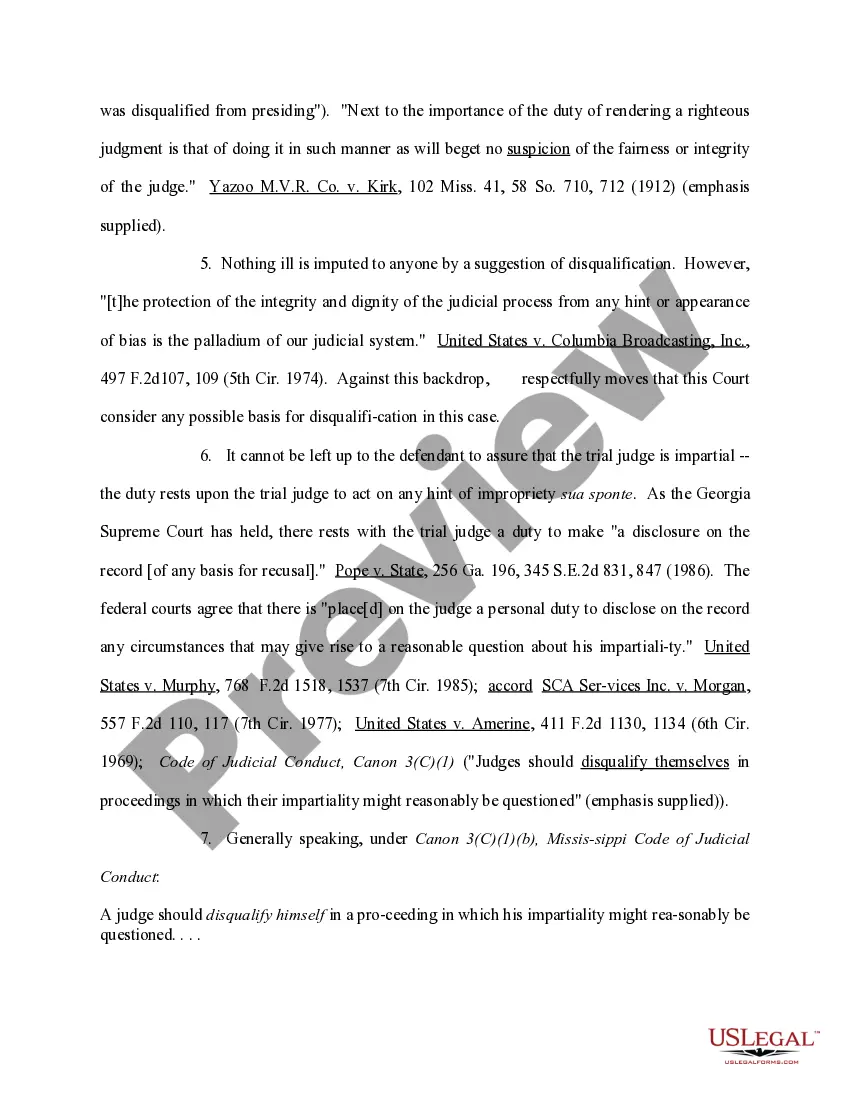
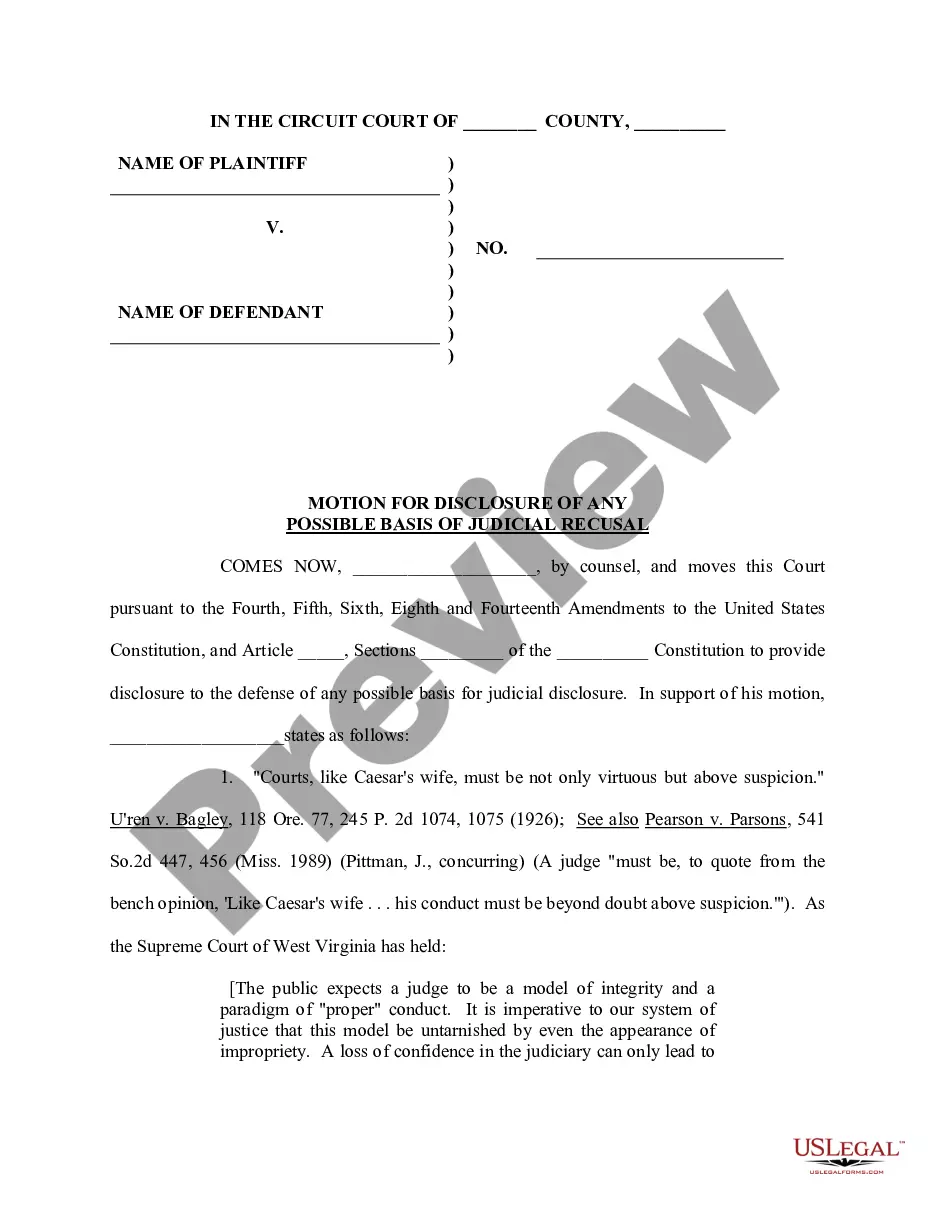
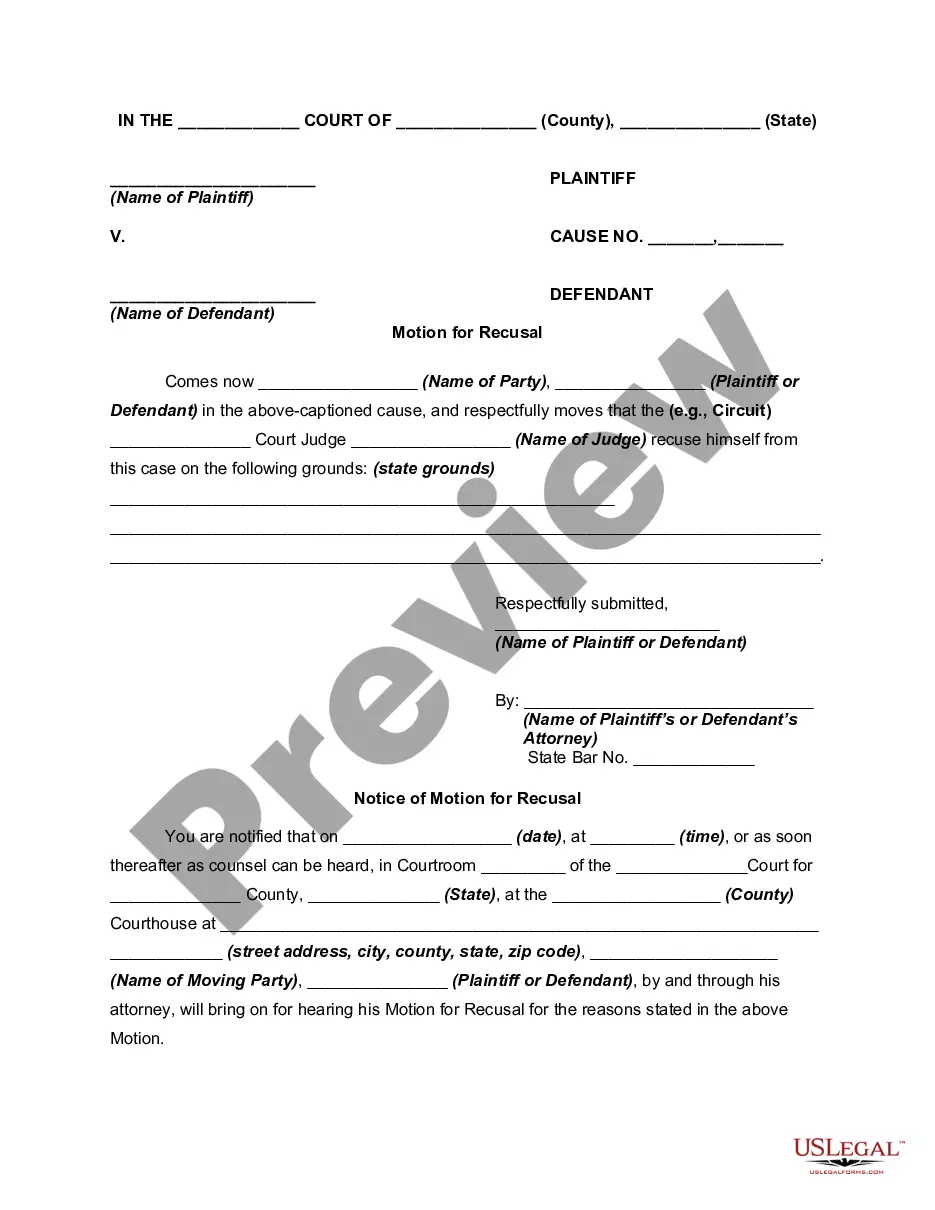
The Motion for Disclosure of Any Possible Basis of Judicial Recusal is a legal document used to request the court to disclose any potential reasons for a judge's recusal. This motion helps ensure the integrity of the judicial process by allowing the defense to be aware of any factors that could compromise the judge's impartiality. It differs from other motions by specifically focusing on judicial recusal issues, making it crucial for defendants concerned about potential biases in their case.
What’s included in this form
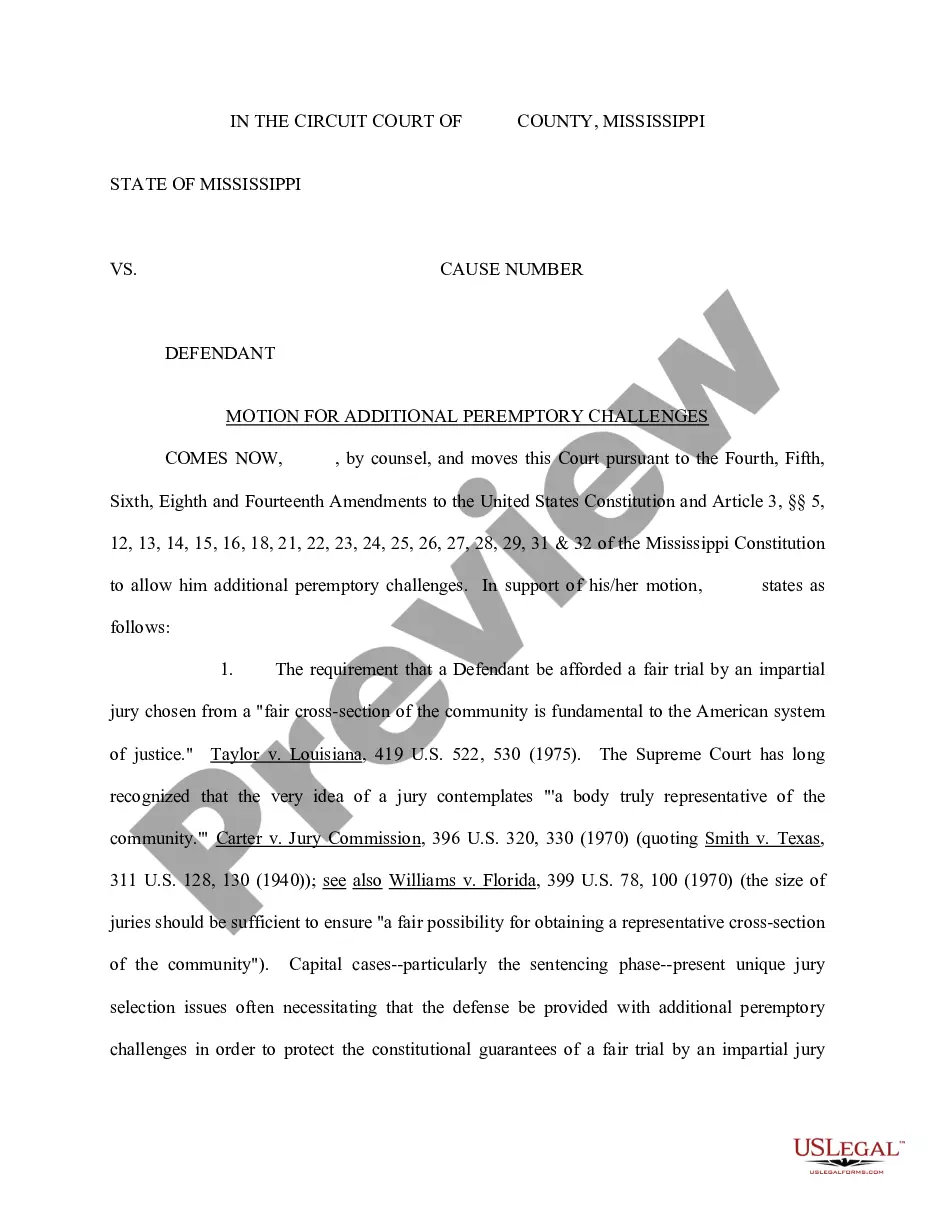
- Case caption: Identifies the parties involved in the legal proceedings.
- Motion rationale: Provides the legal basis for requesting disclosure regarding judicial recusal.
- Legal citations: References relevant amendments and judicial conduct codes supporting the motion.
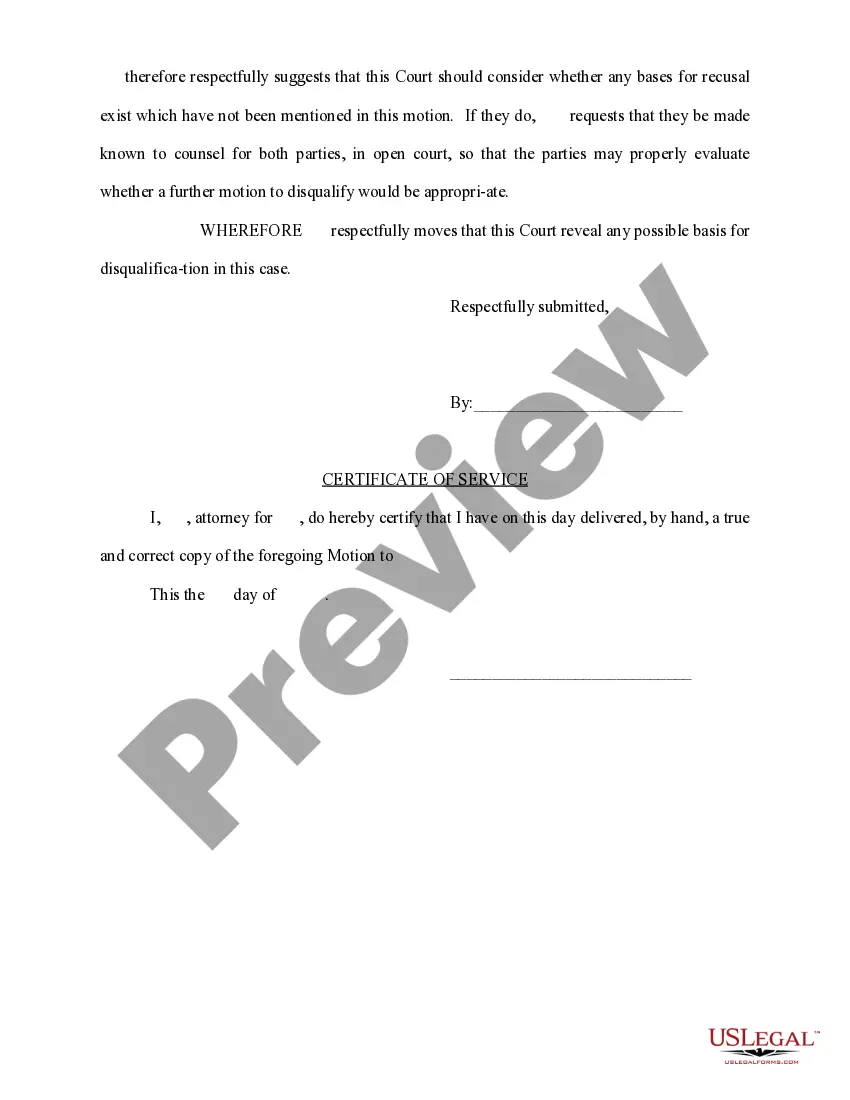
- Disclosure request: Clearly states the request for the court to reveal any potential basis for disqualification.
- Certification of service: Confirms that the motion has been delivered to relevant parties.
Situations where this form applies
This form is applicable in situations where a defendant suspects that the judge may have a bias or conflict of interest that could affect the fairness of their trial. It is particularly important when the defendant believes there are undisclosed relationships or circumstances that might reasonably question the judge's impartiality. By filing this motion, the defense seeks to uphold the integrity of the legal process and ensure that justice is served transparently.
Intended users of this form
This motion is intended for:
- Defendants in legal proceedings who are concerned about the impartiality of the judge.
- Attorneys representing defendants seeking to ensure fair trial standards.
- Individuals involved in cases where the appearance of judicial impartiality is questioned.
Instructions for completing this form
- Identify the parties: Fill in the names of the plaintiff and defendant as listed in the case caption.
- State the motion: Clearly articulate the request for disclosure in the motion rationale section.
- Cite legal authority: Reference the appropriate constitutional amendments and codes relevant to your request.
- Complete the disclosure request: Specify the reasons you believe warrant the judge's recusal.
- Sign and date: Ensure the motion is signed by the attorney representing the defendant, and include the date of submission.
- Certify service: Include a section to certify that all parties have been notified of the filing.
Notarization requirements for this form
This form does not typically require notarization to be legally valid. However, some jurisdictions or document types may still require it. US Legal Forms provides secure online notarization powered by Notarize, available 24/7 for added convenience.
Get your form ready online
Our built-in tools help you complete, sign, share, and store your documents in one place.
Make edits, fill in missing information, and update formatting in US Legal Forms—just like you would in MS Word.
Download a copy, print it, send it by email, or mail it via USPS—whatever works best for your next step.
Sign and collect signatures with our SignNow integration. Send to multiple recipients, set reminders, and more. Go Premium to unlock E-Sign.
If this form requires notarization, complete it online through a secure video call—no need to meet a notary in person or wait for an appointment.
We protect your documents and personal data by following strict security and privacy standards.

Make edits, fill in missing information, and update formatting in US Legal Forms—just like you would in MS Word.

Download a copy, print it, send it by email, or mail it via USPS—whatever works best for your next step.

Sign and collect signatures with our SignNow integration. Send to multiple recipients, set reminders, and more. Go Premium to unlock E-Sign.

If this form requires notarization, complete it online through a secure video call—no need to meet a notary in person or wait for an appointment.

We protect your documents and personal data by following strict security and privacy standards.
Typical mistakes to avoid
- Failing to include all necessary legal citations.
- Not providing sufficient details on why recusal is requested.
- Neglecting to sign the motion or certify service appropriately.
- Missing the submission deadline for the motion.
Why use this form online
- Immediate access: Download and fill out the motion at your convenience.
- Editability: Tailor the legal arguments and information to fit your specific case circumstances.
- Legal accuracy: Ensure compliance with the latest legal standards set by licensed attorneys.
- Time-saving: Skip the lengthy process of drafting a motion from scratch.
Looking for another form?


Form popularity
FAQ
A recusal is appropriate when a conflict of interest exists between an employee's job duties and financial interests (including interests in future employment) or certain business or personal relationships or outside activities.
Recusal Add to list Share. In law, recusal is the act of a judge being disqualified (or disqualifying herself) because of a conflict of interest.
Judicial disqualification, also referred to as recusal, is the act of abstaining from participation in an official action such as a legal proceeding due to a conflict of interest of the presiding court official or administrative officer.
A motion to recuse is a legal motion filed in court that says a judge should be disqualified, or removed, from a legal case for a reason listed within CCP 170.1. The motion can be brought by either a prosecutor or a defense attorney.
(5) A judge who refuses to recuse himself or herself shall not pass upon his or her own disqualification or upon the sufficiency in law, fact, or otherwise, of the statement of disqualification filed by a party.
Judges recuse themselves when they take no part in deciding cases that they would otherwise help decide. The Due Process clauses of the United States Constitution requires judges to recuse themselves from cases in two situations: Where the judge has a financial interest in the case's outcome.
Primary tabs. Judges recuse themselves when they take no part in deciding cases that they would otherwise help decide. The Due Process clauses of the United States Constitution requires judges to recuse themselves from cases in two situations: Where the judge has a financial interest in the case's outcome.
If a party believes that the judge's impartiality may reasonably be questioned under the provisions of the Constitution of New Mexico or the Code of Judicial Conduct, the party may file a notice of facts requiring recusal. The notice shall specifically set forth the constitutional grounds alleged.
Judicial disqualification, also referred to as recusal, is the act of abstaining from participation in an official action such as a legal proceeding due to a conflict of interest of the presiding court official or administrative officer.