Mississippi Judgment Appointing Administrator
Overview of this form
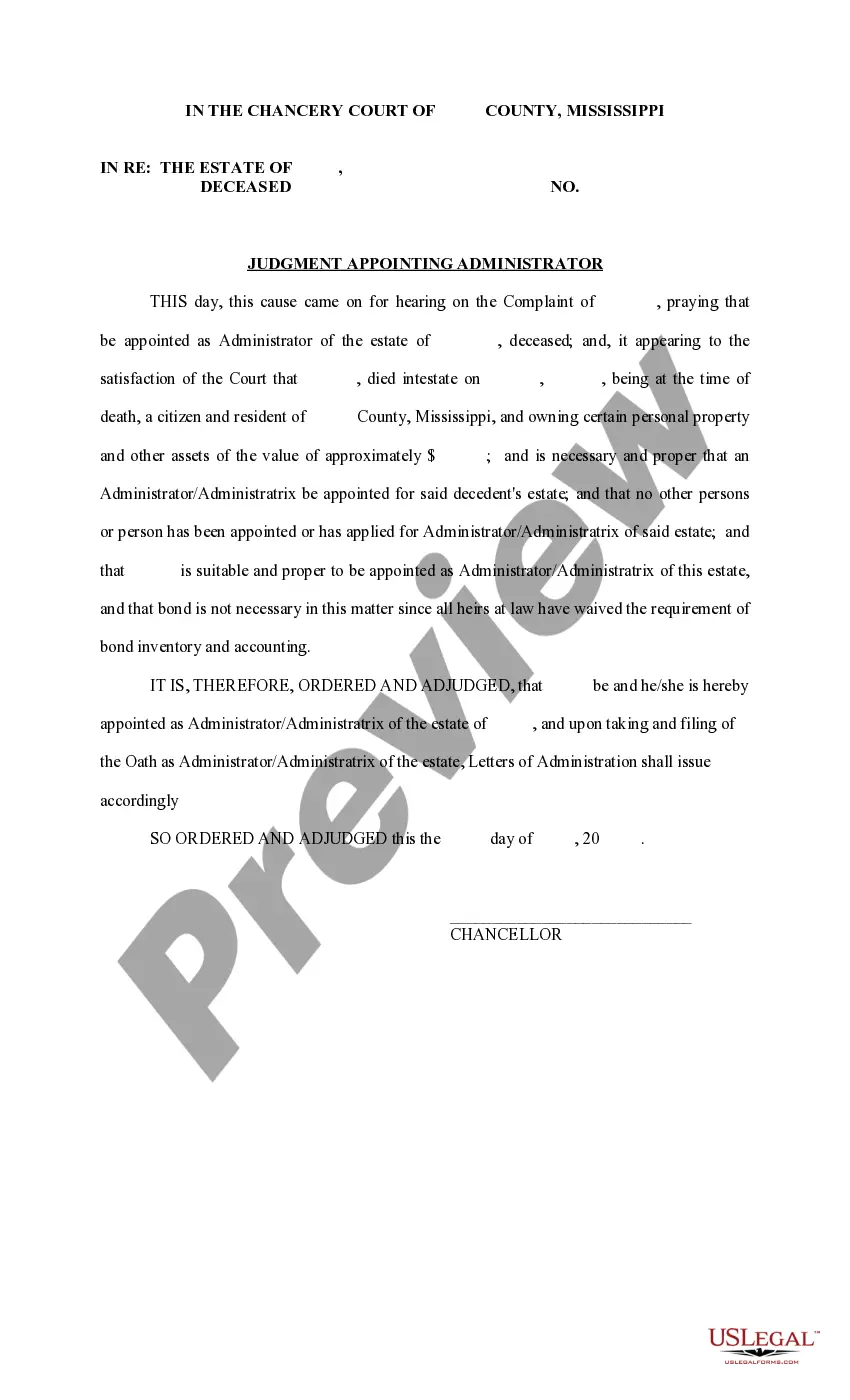
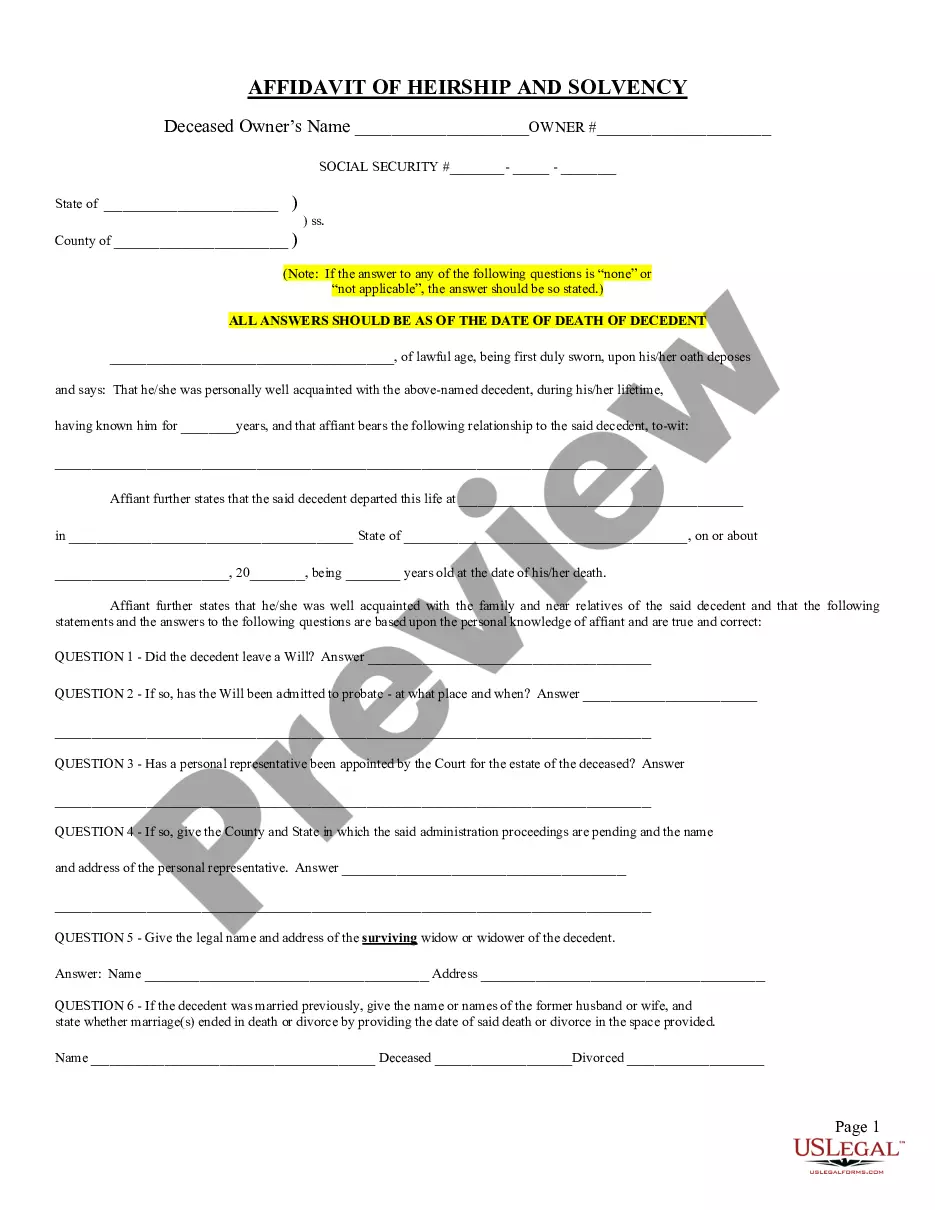
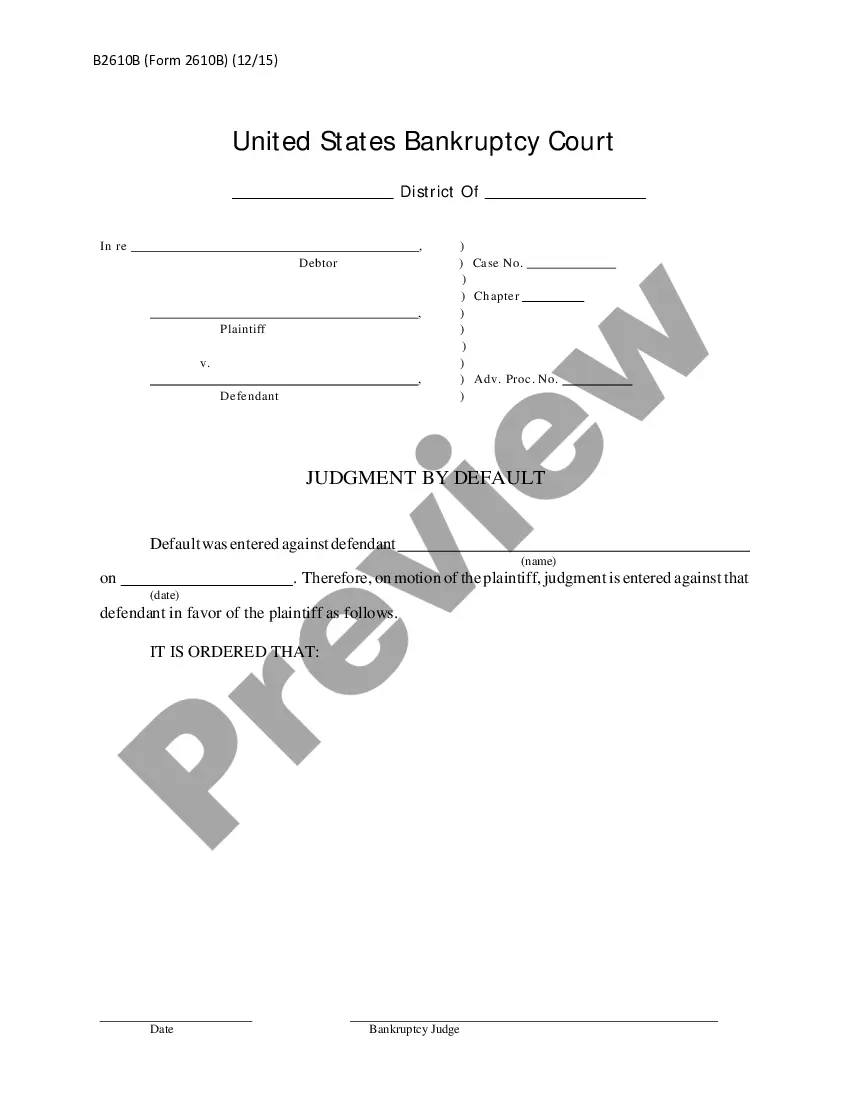
The Judgment Appointing Administrator is a legal document used to establish an administrator for an estate following a court's judgment. This form differs from other estate planning documents by specifically designating an administrator based on the court's findings, making it essential for those managing the affairs of deceased individuals or those unable to handle their affairs. Once it is signed by a judge, it becomes legally binding.
Key components of this form
- Title: Clearly states that it is a Judgment Appointing Administrator.
- Parties involved: Identifies the deceased and the appointed administrator.
- Judicial finding: Includes the court's findings and rationale for the appointment.
- Signatures: Requires the signatures of the judge and potentially other involved parties.
- Date: Specifies the date of the judgment to establish a clear timeline.
Situations where this form applies
This form is necessary when a court has determined that an individual needs to be appointed as an administrator for an estate. This commonly occurs after a decedent has passed away without a will or when the will has been contested. It is also applicable in situations where someone is deemed incapable of managing their financial or personal affairs, requiring judicial intervention.
Who can use this document
- Individuals appointed by a court to manage an estate.
- Legal representatives seeking to formalize an administrator's appointment.
- Family members or heirs requiring clarity on the management of a deceased relative's estate.
Completing this form step by step
- Identify the parties involved, including the deceased and the proposed administrator.
- Insert the relevant court case number and jurisdiction details.
- Provide the date of the court hearing and any findings relevant to the appointment.
- Ensure all required signatures are collected, particularly from the judge.
- File the completed judgment with the court for it to take effect.
Is notarization required?
This form does not typically require notarization unless specified by local law. However, it is advisable to check state-specific regulations to ensure compliance.
Get your form ready online
Our built-in tools help you complete, sign, share, and store your documents in one place.
Make edits, fill in missing information, and update formatting in US Legal Forms—just like you would in MS Word.
Download a copy, print it, send it by email, or mail it via USPS—whatever works best for your next step.
Sign and collect signatures with our SignNow integration. Send to multiple recipients, set reminders, and more. Go Premium to unlock E-Sign.
If this form requires notarization, complete it online through a secure video call—no need to meet a notary in person or wait for an appointment.
We protect your documents and personal data by following strict security and privacy standards.

Make edits, fill in missing information, and update formatting in US Legal Forms—just like you would in MS Word.

Download a copy, print it, send it by email, or mail it via USPS—whatever works best for your next step.

Sign and collect signatures with our SignNow integration. Send to multiple recipients, set reminders, and more. Go Premium to unlock E-Sign.

If this form requires notarization, complete it online through a secure video call—no need to meet a notary in person or wait for an appointment.

We protect your documents and personal data by following strict security and privacy standards.
Avoid these common issues
- Failing to properly identify all parties involved.
- Leaving out the date or court case number.
- Not obtaining the judge's signature before using the form.
- Using incorrect terminology for the jurisdiction.
Benefits of using this form online
- Convenience: Downloadable and accessible from anywhere at any time.
- Editability: Easily customize the form to fit specific circumstances.
- Reliability: Forms are drafted by licensed attorneys and regularly updated to reflect current laws.
Summary of main points
- The Judgment Appointing Administrator formalizes the appointment of an estate administrator.
- It is legally binding once signed by the judge.
- Proper completion is essential to avoid common mistakes during the filing process.
Looking for another form?


Form popularity
FAQ
Administrators. If no living executors are named in the will, or if the executors named can't or don't wish to act, or there is no will, then one or more beneficiaries can apply to act as an administrator. A beneficiary is appointed an administrator once a 'grant of letters of administration with Will annexed' is given
First, the person who makes the will, also known as the testator, can name an individual to be the executor. The testator would stipulate this appointment in the will. Once the testator passes away, the named executor may have to submit a petition to the appropriate probate court to be confirmed as the executor.
An administrator can be appointed by: the board of directors of a company taking a majority decision. the shareholders of a company at a general meeting. a qualifying floating charge holder meaning a debenture holder, usually a bank.
A court can always remove an executor who is dishonest or seriously incompetent. By Mary Randolph, J.D. It doesn't happen often, but beneficiaries who object to how an executor or administrator is handling an estate can ask the probate court to remove the personal representative and appoint someone else.
Letters of Administration are granted by a Surrogate Court or probate registry to appoint appropriate people to deal with a deceased person's estate where property will pass under Intestacy Rules or where there are no executors living (and willing and able to act) having been validly appointed under the deceased's will
How is an Administrator of an estate appointed? Letters of Administration can be made by the Supreme Court where a person dies without leaving a Will or without an executor. Once granted, the appointed person will be the Administrator of the estate, just like an Executor appointed in a Will.
8465. (a) The court may appoint as administrator a person nominated by a person otherwise entitled to appointment or by the guardian or conservator of the estate of a person otherwise entitled to appointment. The nomination shall be made in writing and filed with the court.