Mississippi Waiver and Release
What this document covers
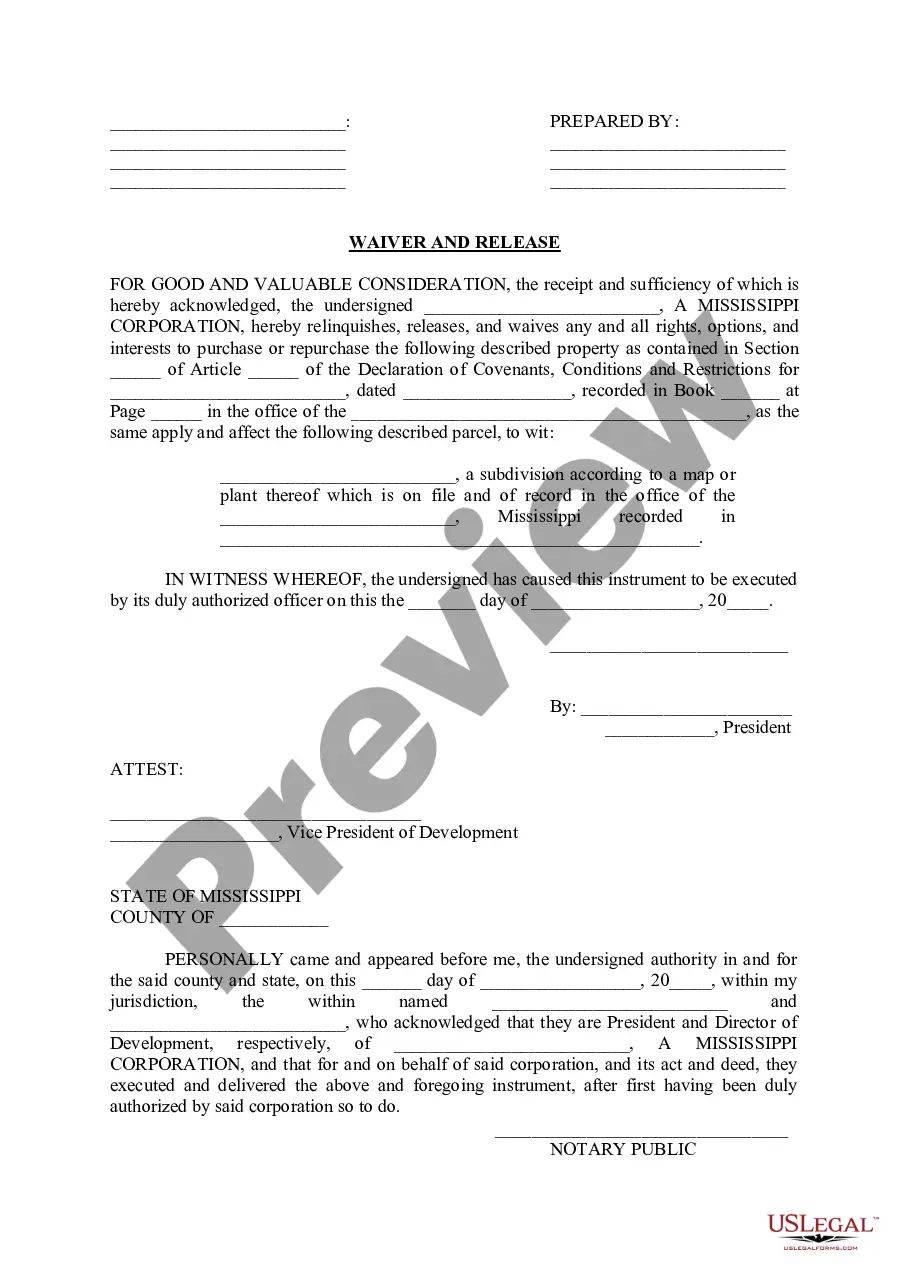
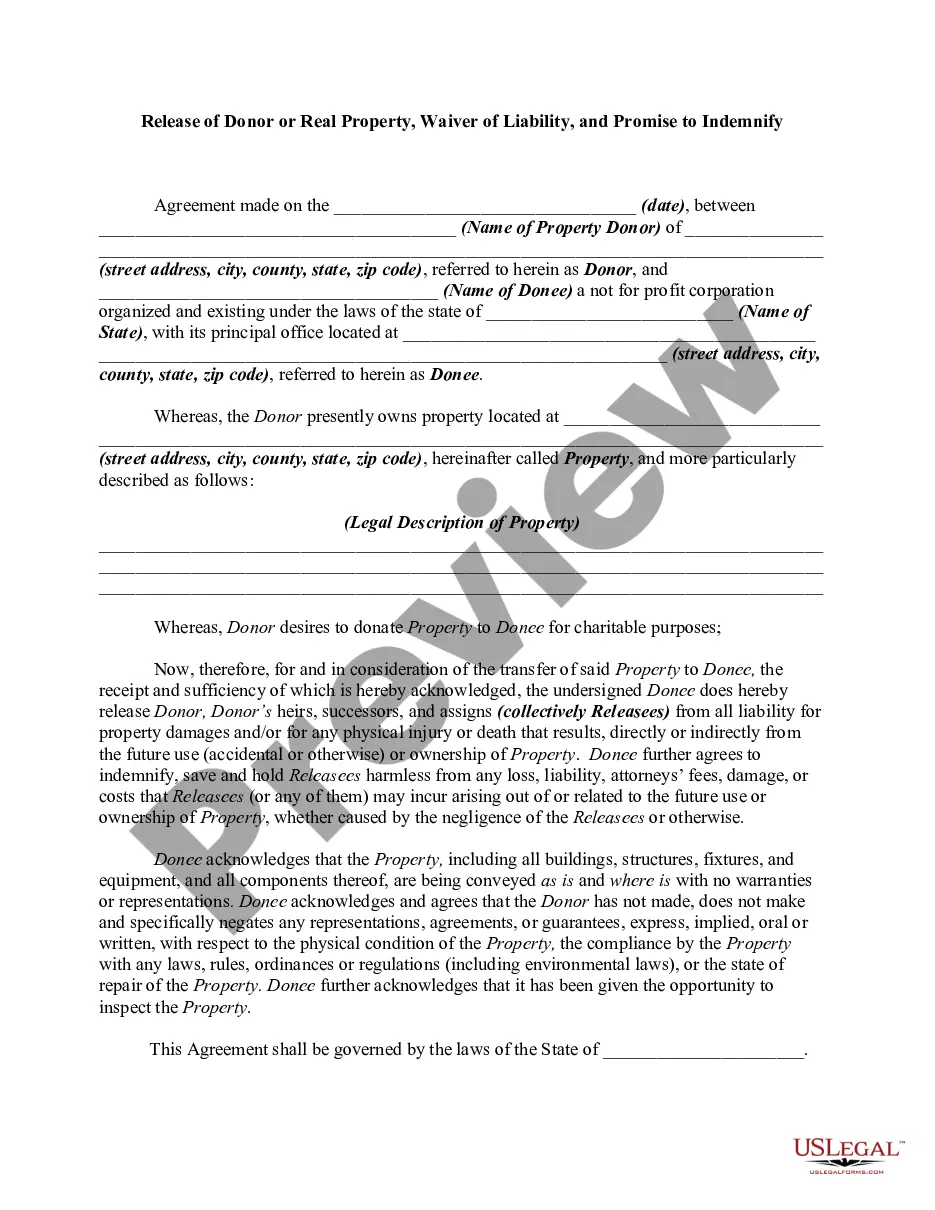
The Waiver and Release is a legal document used by a developer to formally relinquish rights, options, and interests in purchasing property within a planned community, such as a subdivision. This form is essential for developers who want to clarify and settle any potential claims regarding property purchases in such communities. It ensures that the developer cannot later assert rights that they have chosen to waive, protecting both the developer and the community's interests.
Main sections of this form
- Preparation details, including the developer's name and other parties involved.
- Statement of waiver and release regarding property rights.
- Description of the property to which the waiver applies.
- Execution clause with dates and signatures of authorized representatives.
- Notary acknowledgment to validate the form's execution.

When this form is needed
This form should be used when a developer wants to officially waive their rights to purchase property in a planned community. Situations that may necessitate this form include when the developer decides not to proceed with an investment or when the community's governing body requires a formal withdrawal of interest to maintain clarity in property management and community regulations.
Who should use this form
- Developers involved in real estate transactions within planned communities.
- Corporations that need to document the relinquishment of property rights.
- Real estate professionals managing properties in subdivisions.
Steps to complete this form
- Identify the developer's corporate name and relevant parties involved in the transaction.
- Clearly specify the property being waived in terms of its legal description.
- Enter the relevant sections and article numbers from the Declaration of Covenants, Conditions, and Restrictions.
- Fill in the execution date and required signatures from authorized corporate representatives.
- Obtain notarization to ensure the document is legally binding.
Does this form need to be notarized?
Yes, this form must be notarized to be legally valid. Notarization helps ensure that the signatures are authentic and that the document can be admitted in court if necessary. US Legal Forms offers integrated online notarization services that are secure, available 24/7, and allow you to complete the process via video call without needing to travel.
Get your form ready online
Our built-in tools help you complete, sign, share, and store your documents in one place.
Make edits, fill in missing information, and update formatting in US Legal Forms—just like you would in MS Word.
Download a copy, print it, send it by email, or mail it via USPS—whatever works best for your next step.
Sign and collect signatures with our SignNow integration. Send to multiple recipients, set reminders, and more. Go Premium to unlock E-Sign.
If this form requires notarization, complete it online through a secure video call—no need to meet a notary in person or wait for an appointment.
We protect your documents and personal data by following strict security and privacy standards.

Make edits, fill in missing information, and update formatting in US Legal Forms—just like you would in MS Word.

Download a copy, print it, send it by email, or mail it via USPS—whatever works best for your next step.

Sign and collect signatures with our SignNow integration. Send to multiple recipients, set reminders, and more. Go Premium to unlock E-Sign.

If this form requires notarization, complete it online through a secure video call—no need to meet a notary in person or wait for an appointment.

We protect your documents and personal data by following strict security and privacy standards.
Common mistakes
- Failing to accurately describe the property involved.
- Not obtaining necessary signatures from all authorized parties.
- Neglecting to arrange for notarization, if required.
- Overlooking specific local legal requirements that might apply.
Why use this form online
- Quick and easy access to downloadable templates designed by licensed attorneys.
- The ability to fill out, edit, and save the document at your convenience.
- Peace of mind knowing that the form complies with state-specific legal requirements.
Looking for another form?


Form popularity
FAQ
Get help. Writing a waiver should not be complicated. Use the correct structure. Proper formatting. Include a subject line. Include a caution! Talk about the activity risks. Do not forget an assumption of risk. Hold harmless.
Waivers should only be signed before participating in an activity, not after you are hurt. If you are injured and given papers to sign, immediately call a personal injury attorney. You can find a personal injury lawyer by contacting your state or local bar association.
Release Versus Waiver The main difference between releases and waivers is the transferring of ownership. When rights are released, they are transferred to another party. When rights are waived, they are gone altogether.In the case of the skydiver, they might be asked to sign a release form rather than a waiver.
A release and waiver agreement is an enforceable promise not to pursue legal action in exchange for compensation. The releasee gives money or some other form of compensation to the releasor, who then agrees not to press charges, sue, or take any other legal action against the releasee.
If you've been injured due to negligent actions, you can sue even if you signed a waiver. Winning a lawsuit concerning negligence is not uncommon. Many celebrities have sued for negligence even though they signed documents stating they understood the risks.
A liability waiver, or release waiver, is a legal document that a company or organization requires members of the public to sign in order to protect their organization from being sued if you sustain an injury.Depending on the facts of your case, you may still be able to file a lawsuit and recover damages.
A liability waiver, or release of liability, is a legal document that a company or organization has you sign in order to protect them from being sued in the event that you are injured.