Mississippi Waiver and Release
What is this form?
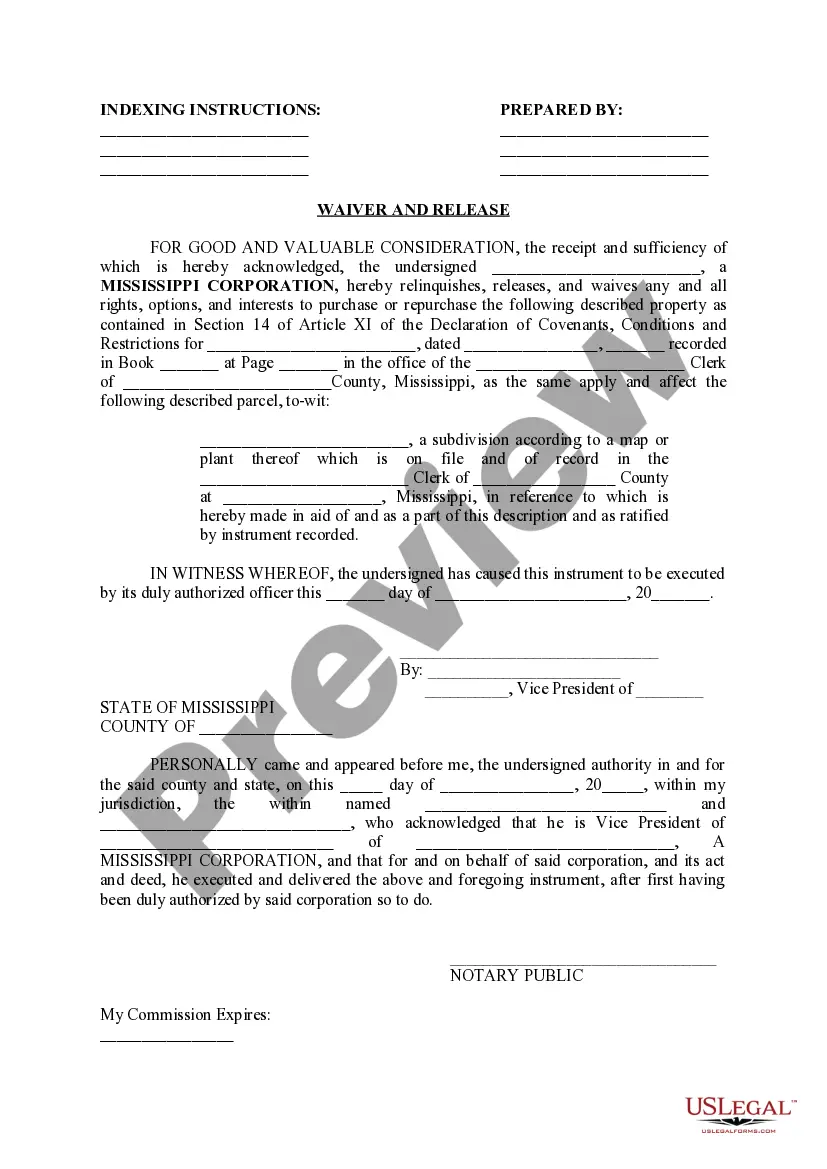
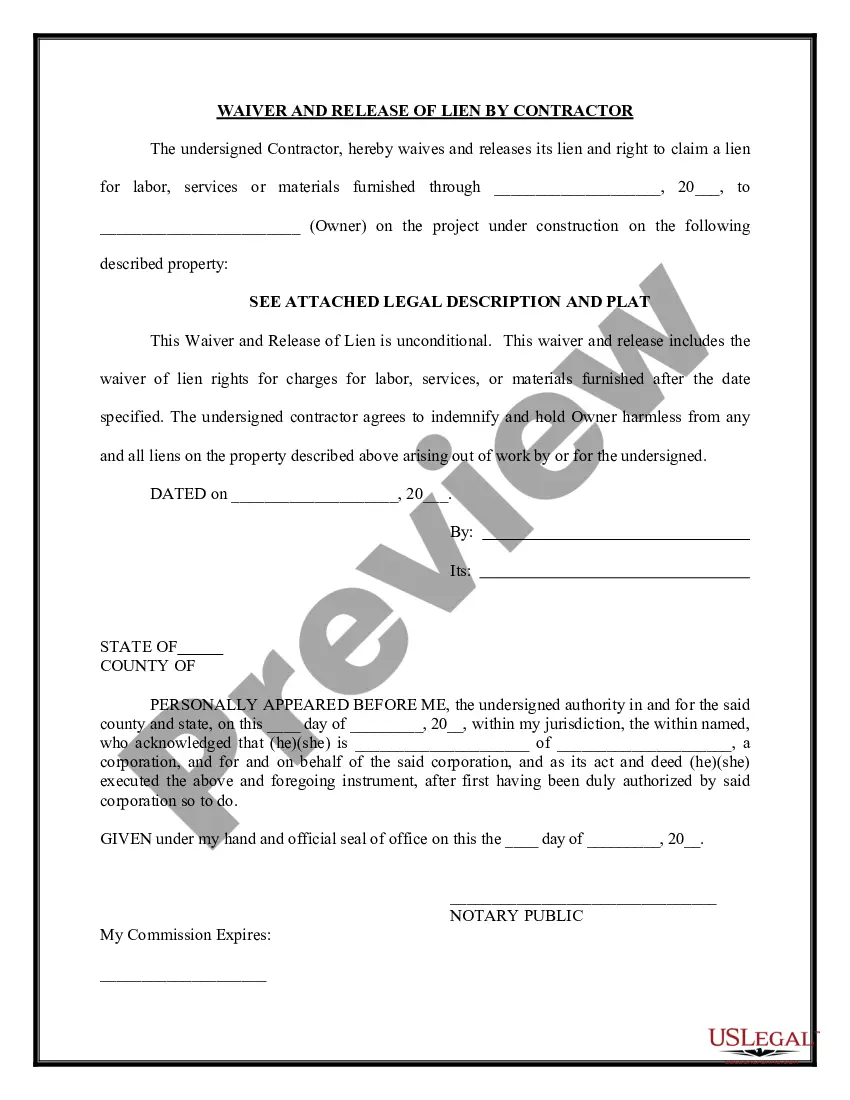
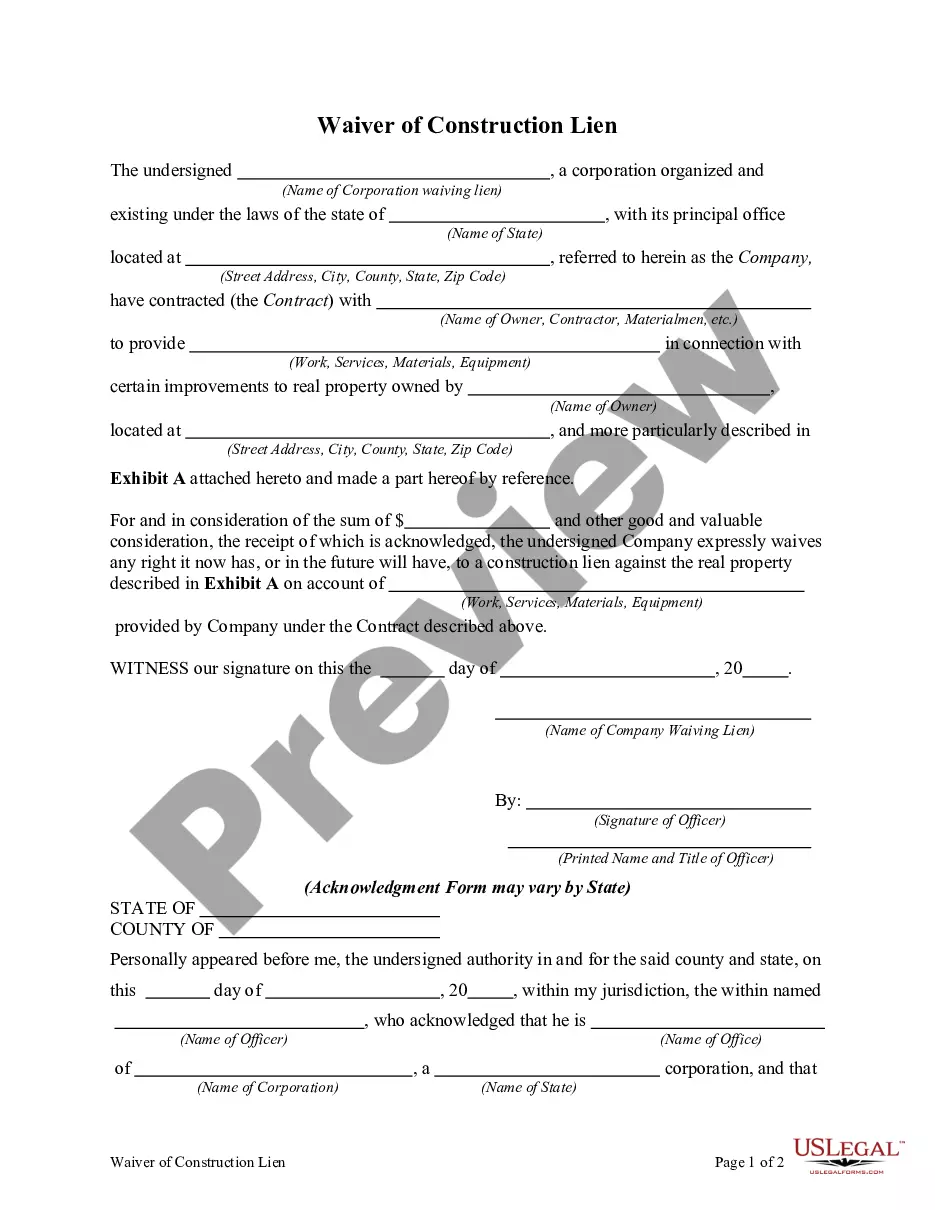
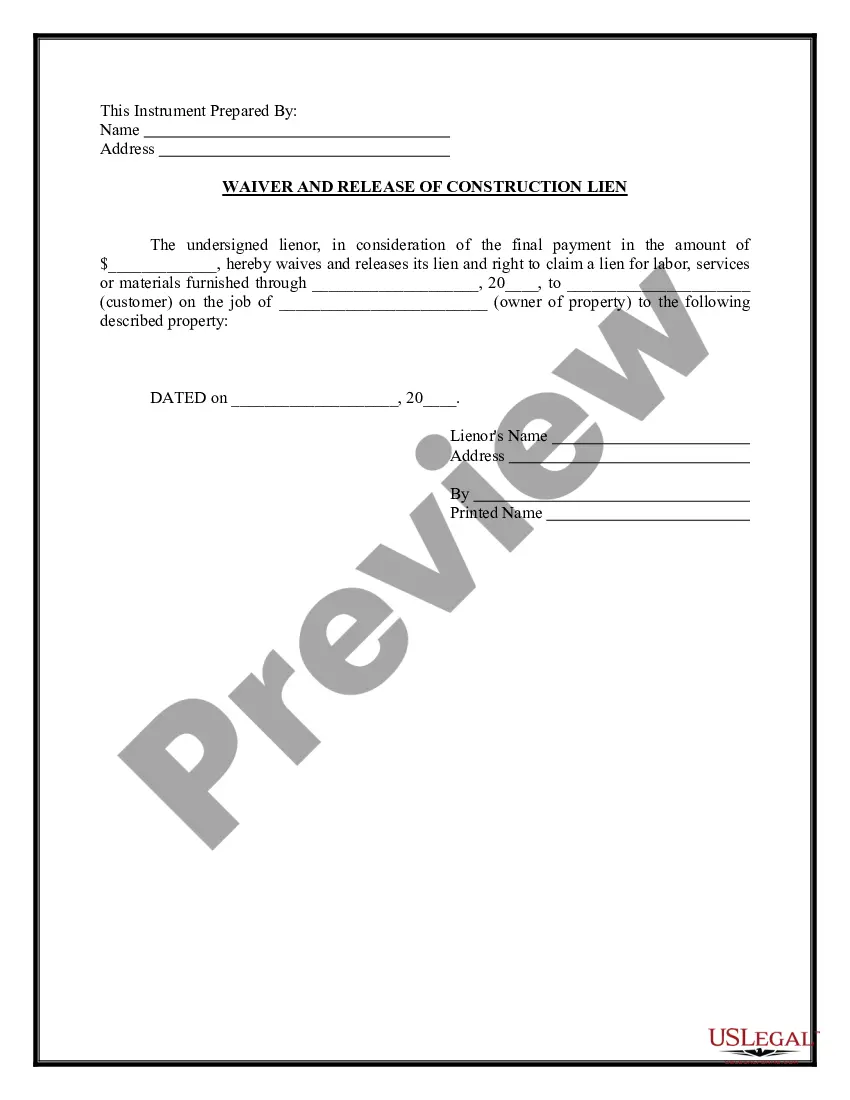
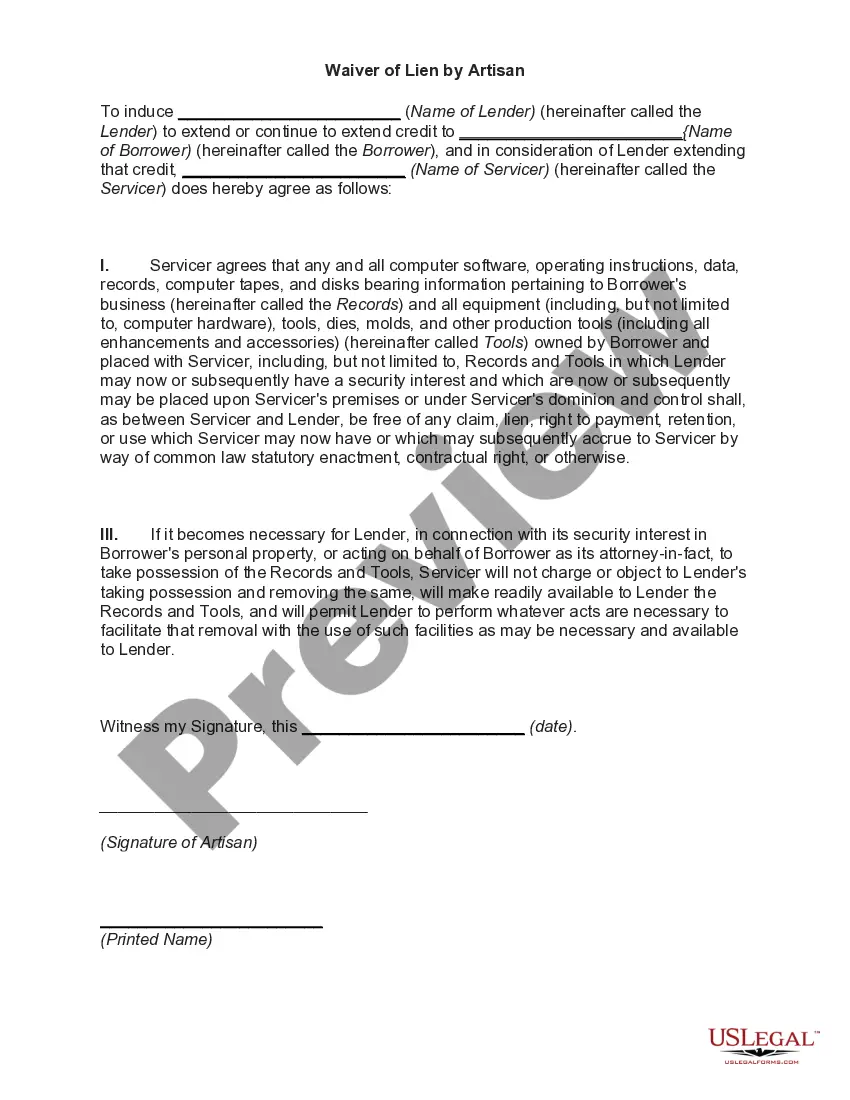
The Waiver and Release form is a legal document that allows a lienor to relinquish their right to claim a lien on a property, usually after receiving final payment for services rendered. This form specifically addresses situations related to the ownership and repurchase ofproperty under a Declaration of Covenants in a subdivision. It is essential to understand that this form is distinct from other release documents as it focuses on lien rights, particularly in construction or improvement contexts.
Key parts of this document
- Date of execution
- Lienor's acknowledgment of receipt of payment
- Description of the property involved
- Condition of the waiver upon the receipt of payment
- Provision for the waiver to be void if payment is not received within a specified time
- Signature of the lien holder and notary acknowledgment
When this form is needed
This form should be utilized when a contractor or service provider has completed work on a property and has received the final payment. It serves to protect the lienor by confirming that they waive any rights to claim a lien on the property for the services rendered. Circumstances may include the completion of construction, repairs, or any services that required materials or labor on the property.
Who this form is for
- Contractors providing construction or repair services
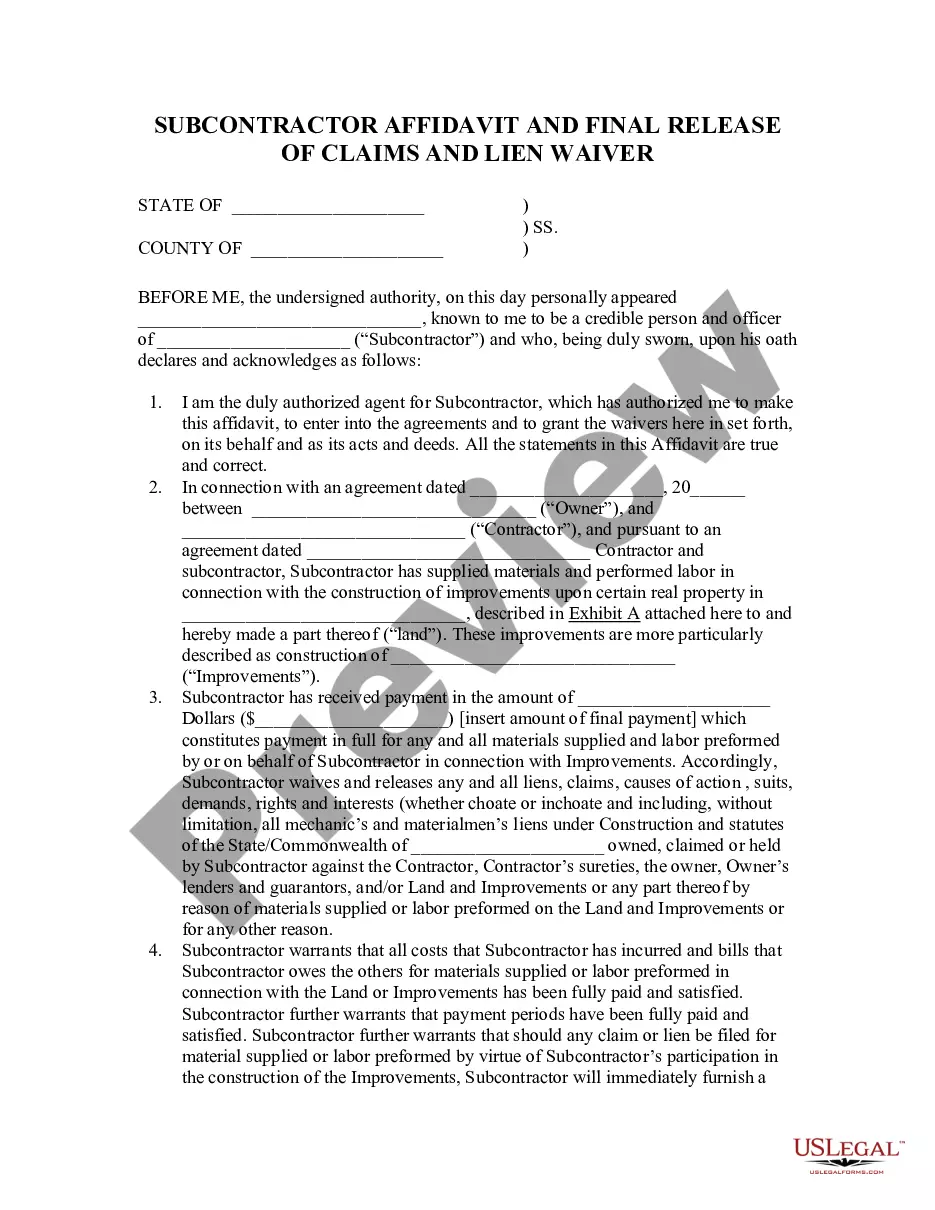
- Subcontractors or suppliers who furnished materials
- Property owners who wish to clear any lien on their property
Instructions for completing this form
- Enter the date on which the form is executed.
- Provide the names of the lienor and the customer, as well as the name of the property owner.
- Include the amount of final payment received.
- Specify the exact property description where work was performed.
- Indicate the deadline for receipt of payment for the waiver to remain valid.
- Ensure the lien holder signs the document and obtains notary acknowledgment.
Notarization guidance
This form must be notarized to be legally valid. US Legal Forms provides secure online notarization powered by Notarize, allowing you to complete the process through a verified video call.
Get your form ready online
Our built-in tools help you complete, sign, share, and store your documents in one place.
Make edits, fill in missing information, and update formatting in US Legal Forms—just like you would in MS Word.
Download a copy, print it, send it by email, or mail it via USPS—whatever works best for your next step.
Sign and collect signatures with our SignNow integration. Send to multiple recipients, set reminders, and more. Go Premium to unlock E-Sign.
If this form requires notarization, complete it online through a secure video call—no need to meet a notary in person or wait for an appointment.
We protect your documents and personal data by following strict security and privacy standards.

Make edits, fill in missing information, and update formatting in US Legal Forms—just like you would in MS Word.

Download a copy, print it, send it by email, or mail it via USPS—whatever works best for your next step.

Sign and collect signatures with our SignNow integration. Send to multiple recipients, set reminders, and more. Go Premium to unlock E-Sign.

If this form requires notarization, complete it online through a secure video call—no need to meet a notary in person or wait for an appointment.

We protect your documents and personal data by following strict security and privacy standards.
Common mistakes
- Failing to provide the correct property description.
- Not entering the final payment amount correctly.
- Omitting the lienor's signature or the notary acknowledgment.
- Not specifying the payment condition, which can invalidate the waiver.
Benefits of using this form online
- Immediate access to a reliable, attorney-drafted template.
- Convenience of downloading and printing from home.
- Editability allows users to customize the document for their specific situation.
- Ensures compliance with legal standards, minimizing errors.
Summary of main points
- The Waiver and Release form protects both parties by confirming the release of lien rights upon final payment.
- This document is crucial for contractors and subcontractors finalizing their payment agreements.
- Proper completion and notarization are essential for the form's legality and enforceability.
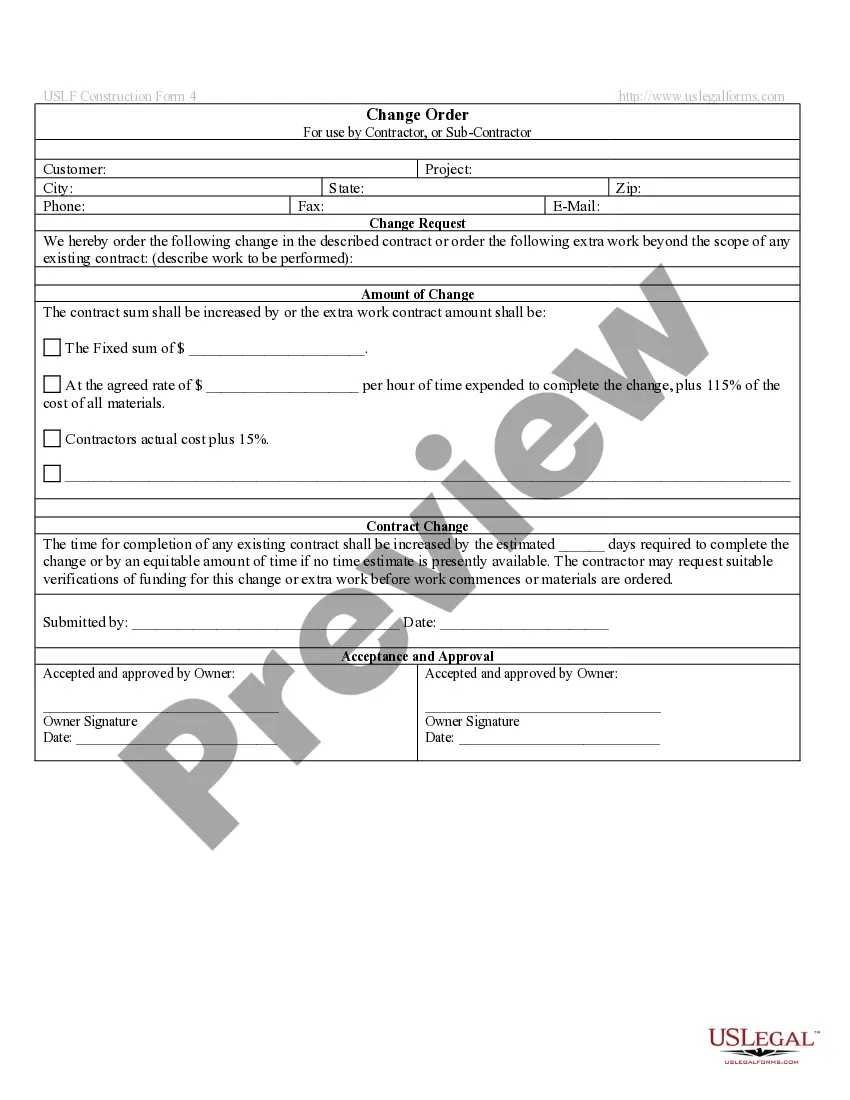
Looking for another form?
Form popularity
FAQ
Get help. Writing a waiver should not be complicated. Use the correct structure. Proper formatting. Include a subject line. Include a caution! Talk about the activity risks. Do not forget an assumption of risk. Hold harmless.
Waivers should only be signed before participating in an activity, not after you are hurt. If you are injured and given papers to sign, immediately call a personal injury attorney. You can find a personal injury lawyer by contacting your state or local bar association.
Release Versus Waiver The main difference between releases and waivers is the transferring of ownership. When rights are released, they are transferred to another party. When rights are waived, they are gone altogether.In the case of the skydiver, they might be asked to sign a release form rather than a waiver.
A release and waiver agreement is an enforceable promise not to pursue legal action in exchange for compensation. The releasee gives money or some other form of compensation to the releasor, who then agrees not to press charges, sue, or take any other legal action against the releasee.
If you've been injured due to negligent actions, you can sue even if you signed a waiver. Winning a lawsuit concerning negligence is not uncommon. Many celebrities have sued for negligence even though they signed documents stating they understood the risks.
A liability waiver, or release waiver, is a legal document that a company or organization requires members of the public to sign in order to protect their organization from being sued if you sustain an injury.Depending on the facts of your case, you may still be able to file a lawsuit and recover damages.
A liability waiver, or release of liability, is a legal document that a company or organization has you sign in order to protect them from being sued in the event that you are injured.