Mississippi Order Voiding Tax Sale of Certain Properties
What this document covers
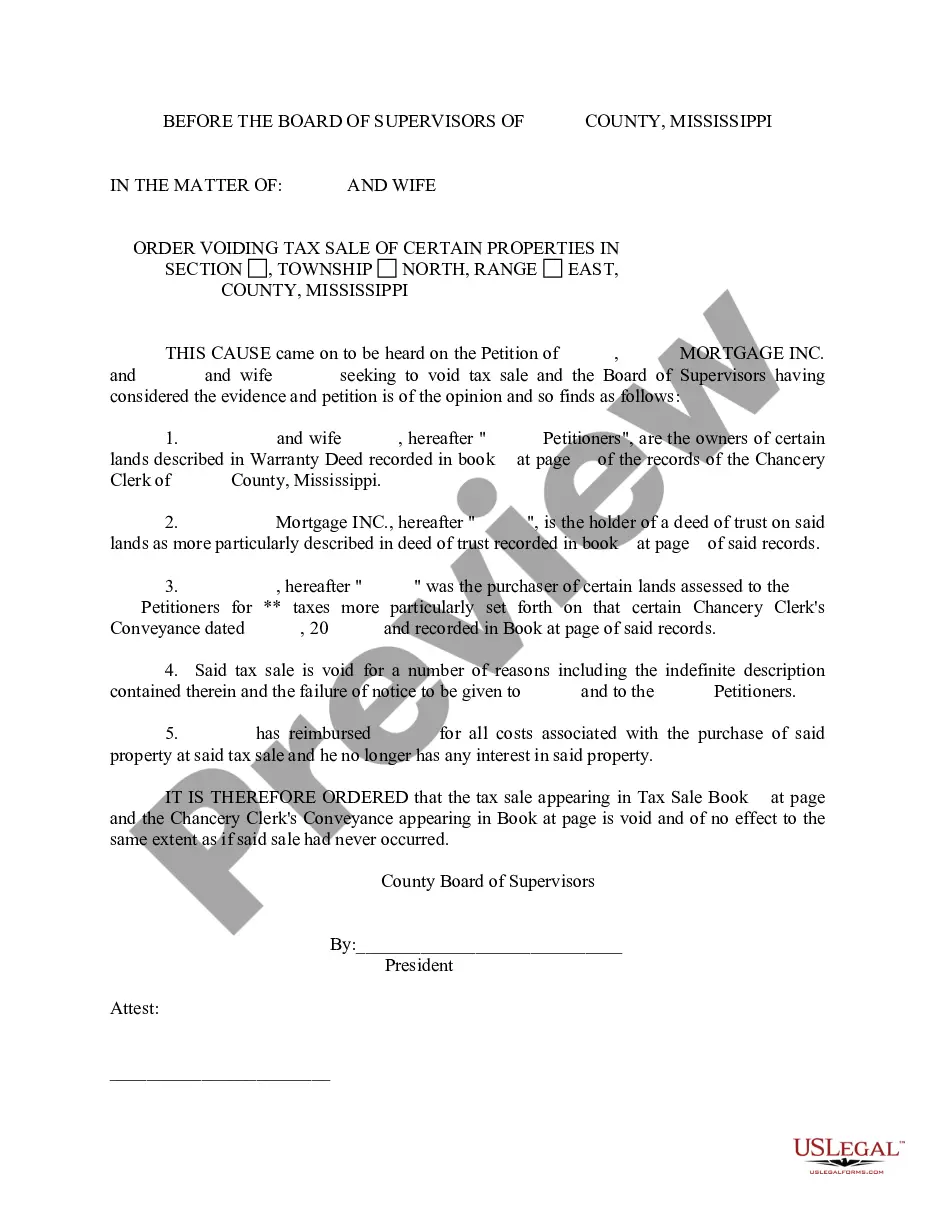
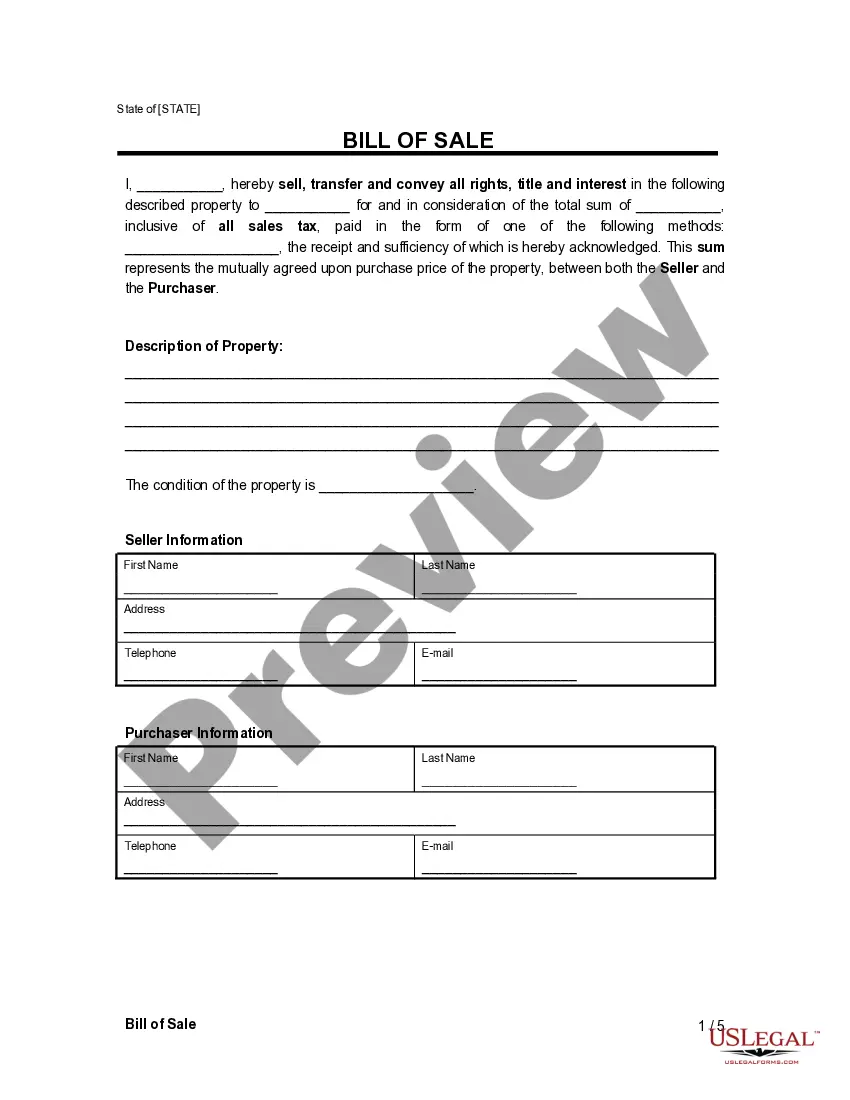
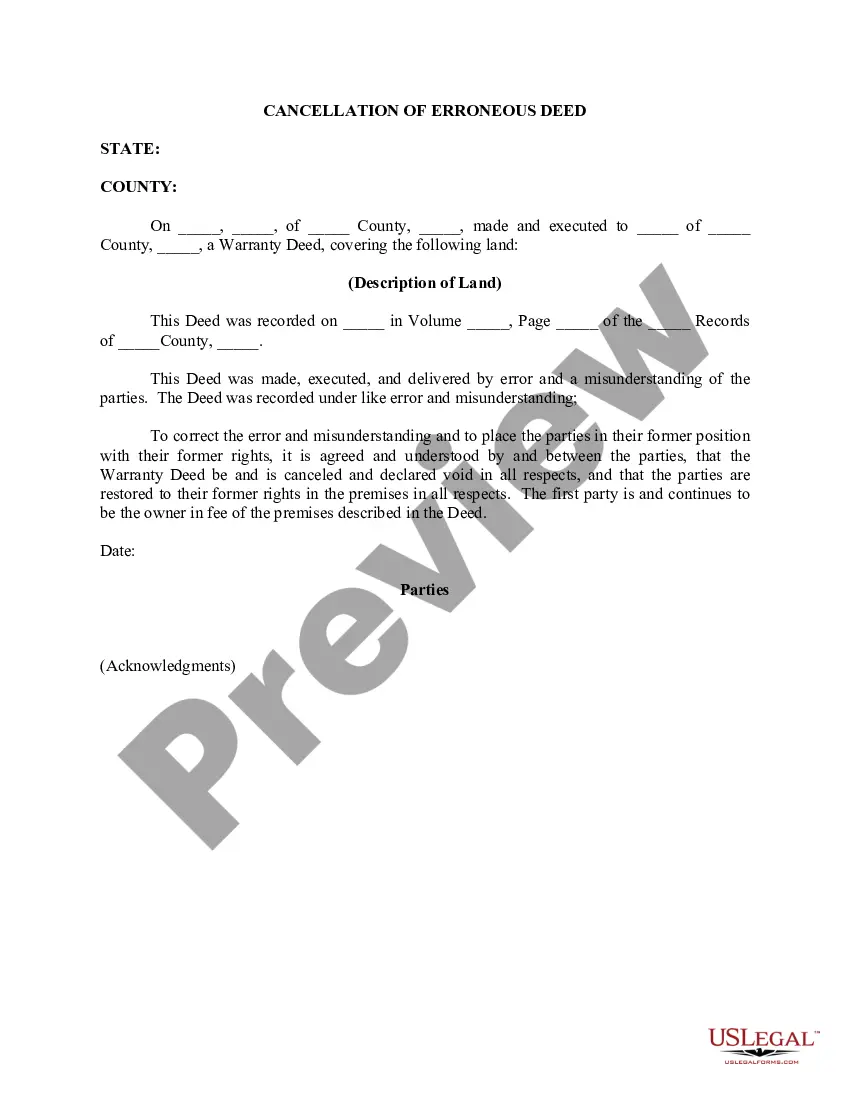
The Order Voiding Tax Sale of Certain Properties is a legal document issued by the court that declares a tax sale void. This order is officially signed by a judge and commands that the sale has no legal effect as if it never occurred. Unlike other forms related to property sales, this specific order is focused on reversing the consequences of a tax sale, making it essential for property owners who believe their property was unjustly sold due to tax issues.
Key parts of this document
- Order declaration: Commands that the previous tax sale is void and ineffective.
- Reference details: Includes information about the tax sale as recorded in the Tax Sale Book.
- Judge's signature: Confirms the order's legitimacy and enforceability.

When this form is needed
This form should be used when a property owner wishes to dispute a tax sale that they believe was wrongful or improper. It is particularly relevant if the owner has successfully appealed the tax assessment or if errors in the tax sale process have occurred. Utilization of this order helps restore their rights to the property.
Who needs this form
- Property owners who have had their property sold at a tax sale.
- Individuals seeking to contest a tax sale due to legal or procedural errors.
- Attorneys representing clients in cases involving tax disputes over property sales.
How to complete this form
- Identify the pertinent tax sale details, including the Tax Sale Book and page number.
- Specify the exact property involved in the tax sale.
- Fill in the judge's name and any other relevant court details.
- Ensure the form is signed by the judge before it is presented in court.
- File the completed form with the appropriate court office to enforce the order.
Notarization requirements for this form
This form does not typically require notarization unless specified by local law. It is important to check with your jurisdiction's requirements to ensure compliance.
Get your form ready online
Our built-in tools help you complete, sign, share, and store your documents in one place.
Make edits, fill in missing information, and update formatting in US Legal Forms—just like you would in MS Word.
Download a copy, print it, send it by email, or mail it via USPS—whatever works best for your next step.
Sign and collect signatures with our SignNow integration. Send to multiple recipients, set reminders, and more. Go Premium to unlock E-Sign.
If this form requires notarization, complete it online through a secure video call—no need to meet a notary in person or wait for an appointment.
We protect your documents and personal data by following strict security and privacy standards.

Make edits, fill in missing information, and update formatting in US Legal Forms—just like you would in MS Word.

Download a copy, print it, send it by email, or mail it via USPS—whatever works best for your next step.

Sign and collect signatures with our SignNow integration. Send to multiple recipients, set reminders, and more. Go Premium to unlock E-Sign.

If this form requires notarization, complete it online through a secure video call—no need to meet a notary in person or wait for an appointment.

We protect your documents and personal data by following strict security and privacy standards.
Mistakes to watch out for
- Failing to reference the correct Tax Sale Book and page number.
- Omitting vital details regarding the property or the parties involved.
- Not obtaining the necessary signature from the judge before submission.
Why complete this form online
- Immediate access to a professionally drafted legal form.
- Easy download and customization to fit your specific case needs.
- No need for in-person visits; the form can be filled out and submitted remotely.
Legal use & context
- This order serves to legally void a tax sale, reinstating property ownership rights.
- It can be enforced in court if proper procedures are followed.
- The document must be properly filled out and submitted to the appropriate court.
What to keep in mind
- The Order Voiding Tax Sale of Certain Properties is essential for homeowners contesting a tax sale.
- Proper completion is critical for ensuring the documentâs validity.
- Understanding state-specific requirements can greatly affect the outcome of the order.
Looking for another form?
Form popularity
FAQ
Paying Someone Else's Property Taxes The taxing authority might then simply sell the home at auction, satisfying the tax lien from the buyer's funds. In other states, the taxing authority will auction off a tax lien certificate instead, rather than the actual property.
The unpaid taxes are auctioned off at a tax lien sale. The highest bidder gets the lien against the property. The tax collector uses the money earned at the tax lien sale to compensate for unpaid back taxes. The homeowner has to pay back the lien holder, plus interest, or face foreclosure.
When homeowners fail to pay their property taxes, some tax jurisdictions choose to hold tax deed home sales to make back the money they are owed. Interested buyers can register to participate as a bidder on these homes in a tax deed auction.
In Mississippi, a tax sale will eventually take place if you don't pay the property taxes on your home. At the sale, the winning bidder buys the tax debt and gets a lien on the property. The purchaser receives a receipt along with the right to eventually get ownership of your property if you don't pay off the debt.
Contact the local county registrar's or tax recorder's office. Choose the properties you wish to pay the lien on. Obtain the tax lien certificate with the expiration date and a receipt for the sale. Seize the property if the tax lien expires and the owner has not paid the lien plus the interest.
The Tax-Forfeited Inventory200b link provides access to the properties available for sale or you may contact the Public Lands Division in the Secretary of State's Office at 601-359-5156 or toll free (in-state) at 1-866-TFLANDS(835-2637). Approximately how long does the process take?
The answer is simple no. In Mississippi, paying the property taxes on someone else's land does not affect ownership in any manner. You simply cannot obtain title to someone's land by paying their taxes for them.
Persons who are 65 years of age and older or who are disabled, upon application and proof of eligibility, are exempt from all ad valorem taxes up to $7,500.00 of assessed value.