California Letter from Landlord to Tenant about time of intent to enter premises
Understanding this form
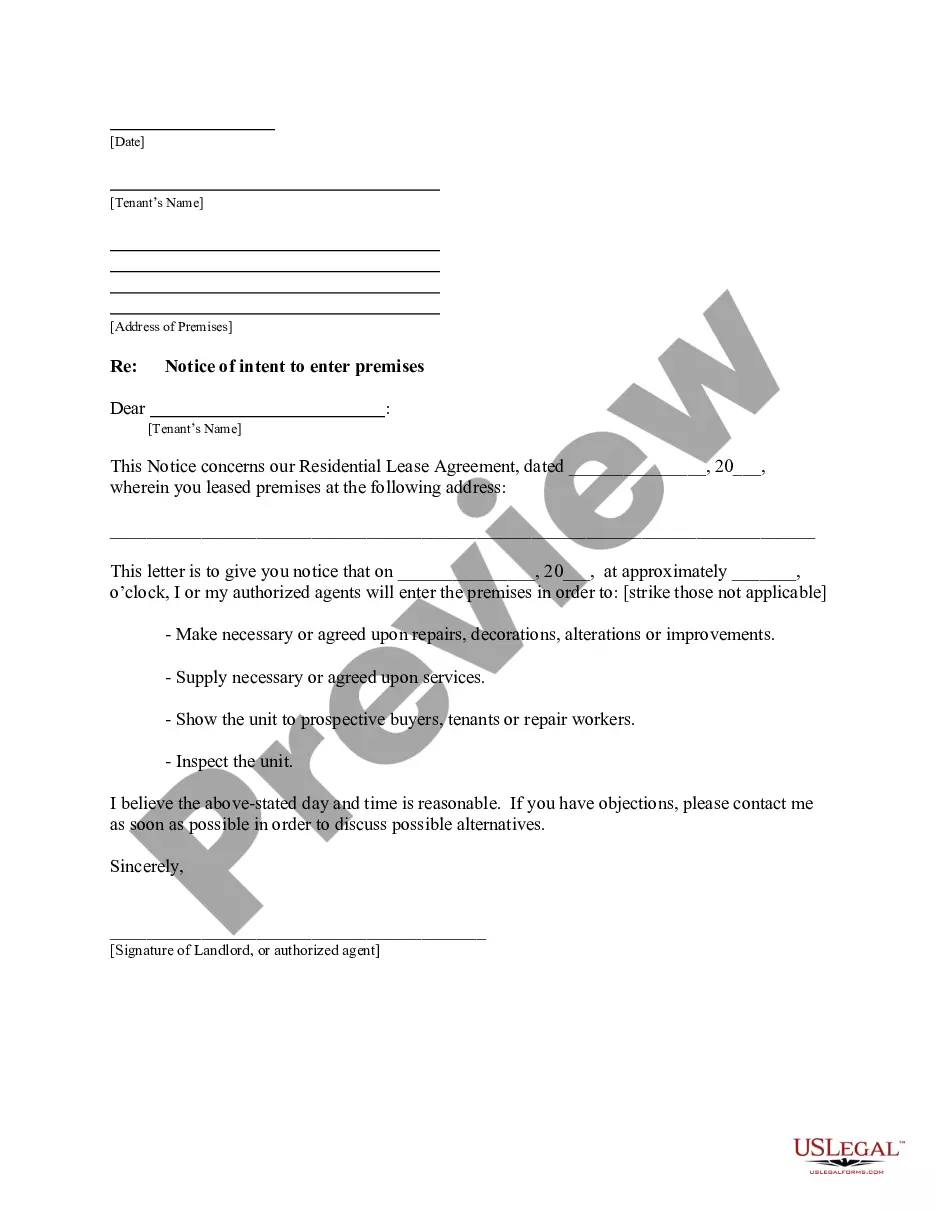
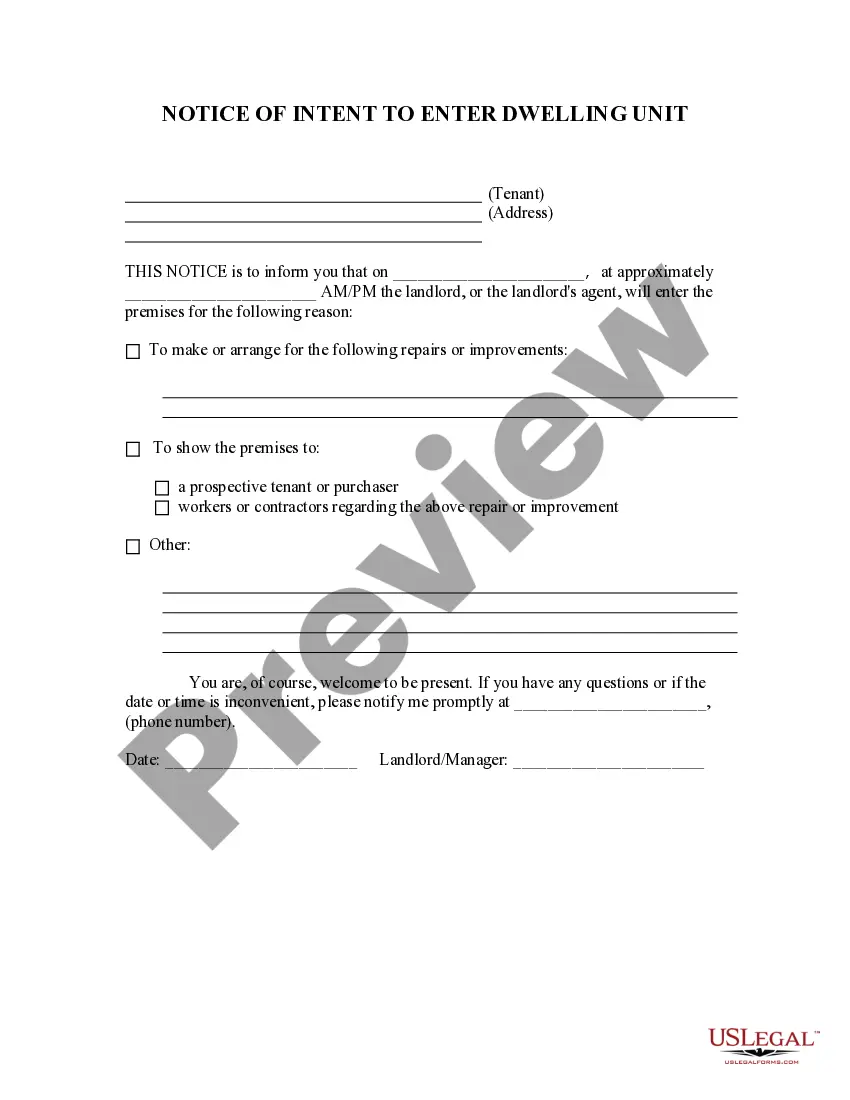
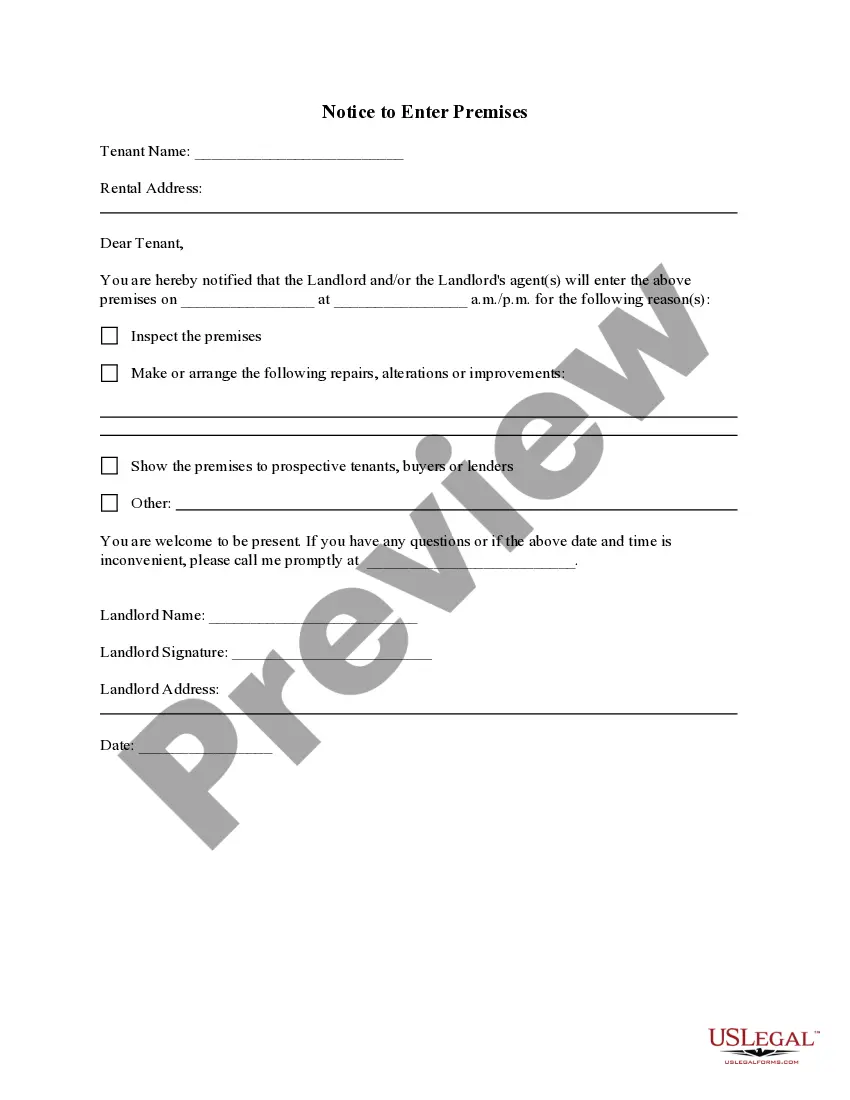
This form serves as a notice from a landlord to a tenant regarding the landlord's intent to enter the rented premises. It outlines the reasons for the visit, such as making repairs, conducting inspections, or showing the property to prospective occupants. This letter ensures that tenants are informed, thus differentiating it from other forms of landlord communication that may lack specific notice or may not be legally compliant in certain situations.
Main sections of this form
- Date of the original lease agreement.
- Address of the rented property.
- Date and time of the intended entry.
- Specific reasons for entering the premises.
- Landlord's or authorized agent's signature.
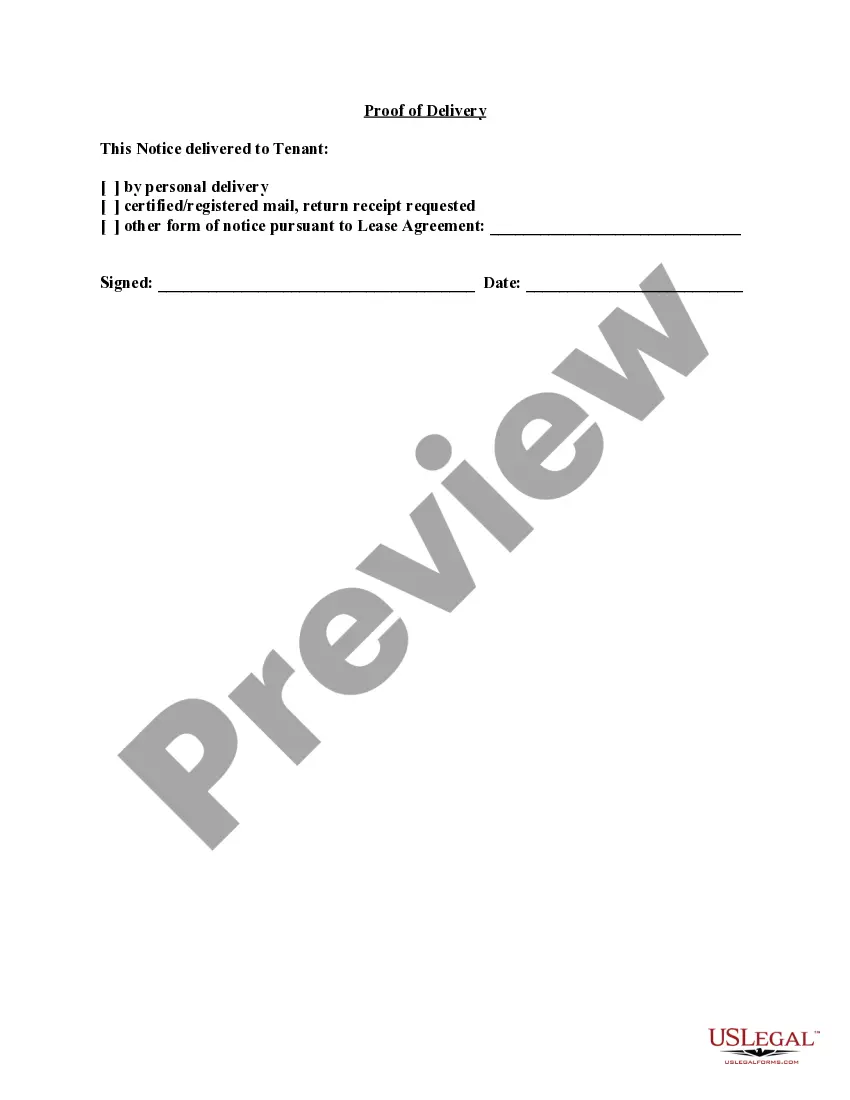
- Proof of delivery method for notifying the tenant.
When to use this document
This form should be used whenever a landlord intends to enter a rental property for any reason that requires prior notice, such as conducting repairs, inspecting the unit, or showing the property to potential renters or buyers. Using this form helps to maintain clear communication and ensure that the rights of the tenant are respected.
Intended users of this form
This form is intended for:
- Residential landlords who are leasing property.
- Property managers acting on behalf of landlords.
- Landlords needing to maintain compliance with tenant notification laws.
Steps to complete this form
- Enter the date of the lease agreement.
- Specify the address of the rental property.
- Fill in the date and time you plan to enter the premises.
- Choose the applicable reasons for entering the property.
- Sign the notice as the landlord or authorized agent.
- Select a delivery method for the notice and document it accordingly.
Notarization requirements for this form
Notarization is not commonly needed for this form. However, certain documents or local rules may make it necessary. Our notarization service, powered by Notarize, allows you to finalize it securely online anytime, day or night.
Get your form ready online
Our built-in tools help you complete, sign, share, and store your documents in one place.
Make edits, fill in missing information, and update formatting in US Legal Forms—just like you would in MS Word.
Download a copy, print it, send it by email, or mail it via USPS—whatever works best for your next step.
Sign and collect signatures with our SignNow integration. Send to multiple recipients, set reminders, and more. Go Premium to unlock E-Sign.
If this form requires notarization, complete it online through a secure video call—no need to meet a notary in person or wait for an appointment.
We protect your documents and personal data by following strict security and privacy standards.

Make edits, fill in missing information, and update formatting in US Legal Forms—just like you would in MS Word.

Download a copy, print it, send it by email, or mail it via USPS—whatever works best for your next step.

Sign and collect signatures with our SignNow integration. Send to multiple recipients, set reminders, and more. Go Premium to unlock E-Sign.

If this form requires notarization, complete it online through a secure video call—no need to meet a notary in person or wait for an appointment.

We protect your documents and personal data by following strict security and privacy standards.
Mistakes to watch out for
- Failing to provide adequate notice as required by state law.
- Not specifying clear reasons for entry, which can lead to disputes.
- Omitting the signature of the landlord or authorized agent.
- Not keeping proof of delivery to the tenant.
Benefits of completing this form online
- Convenient access to templates that can be easily customized.
- Streamlined editing to fit your specific situation.
- Reliable and accurate legal language drafted by licensed attorneys.
Legal use & context
- This notice helps protect tenant rights by ensuring they are informed about landlord access.
- It's important for compliance with state laws regarding notice requirements.
- A properly completed notice can help prevent legal disputes between landlords and tenants.
What to keep in mind
- This letter informs tenants of the landlord's intention to enter the property.
- Proper use of this form can facilitate smooth landlord-tenant relationships.
- Always verify state-specific rules regarding notice periods and entry conditions.
Looking for another form?
Form popularity
FAQ
Yes, an email can count as a written notice in California if both parties have consented to use email for official communications. It's essential for both tenants and landlords to have this agreement documented. Employing a California Letter from Landlord to Tenant about time of intent to enter premises in email format can ensure legal compliance and clarity.
A letter of intent from a landlord typically outlines the landlord's plan or desire to enter a tenant's premises, detailing the purpose and intended time of entry. This letter should communicate the landlord's intention clearly and respectfully. A California Letter from Landlord to Tenant about time of intent to enter premises serves as a formal way to express this intent.
The right of entry in California allows landlords to enter a rented property under specific conditions, including emergencies, repairs, and inspections. However, landlords are required to provide reasonable notice to the tenant, usually 24 hours. It's crucial for landlords to adhere to this requirement, and thus providing a California Letter from Landlord to Tenant about time of intent to enter premises is advisable.
In California, landlords can give notice by email if there is an agreement with the tenant to use email as an acceptable communication method. This agreement should ideally be documented in writing. Sending a California Letter from Landlord to Tenant about time of intent to enter premises via email can fulfill the notice requirement effectively.
A 3-day notice, which is typically used for rent or lease violations, can be emailed in California if both parties have agreed to use email as a form of official communication. However, ensuring that this process is documented can help prevent disputes over whether the notice was received. A California Letter from Landlord to Tenant about time of intent to enter premises should be sent according to the agreed-upon method.
Yes, an email can serve as an official notice in California if it is agreed upon as a valid form of communication by both parties. It is recommended that this agreement be documented to avoid misunderstandings. Using a California Letter from Landlord to Tenant about time of intent to enter premises via email can ensure that the notice is recognized legally.
A 24-hour notice to enter in California is a written notification that a landlord provides to a tenant, stating the intent to enter the rental property within the next 24 hours. This notice should specify the reason for entry and the expected time. Complying with this notice is important to avoid legal issues and can be framed as a California Letter from Landlord to Tenant about time of intent to enter premises.
Yes, California law mandates that landlords must give notice before entering rented premises. The standard notice period is at least 24 hours, which upholds tenant rights to privacy. Proper notice can be effectively communicated through a California Letter from Landlord to Tenant about time of intent to enter premises.
Generally, a landlord cannot enter the property without providing notice in California, except in emergency situations. This regulation is designed to protect tenant privacy and rights. If a landlord does enter without notice, tenants may consider sending a California Letter from Landlord to Tenant about time of intent to enter premises to address the issue formally.
Yes, a landlord can give notice by text message in California, provided you have a prior agreement that allows for such communication. However, it is more advisable to send a written notice through traditional methods or email to ensure clarity. This written notice should ideally be a California Letter from Landlord to Tenant about time of intent to enter premises.