Mississippi Answer
Overview of this form
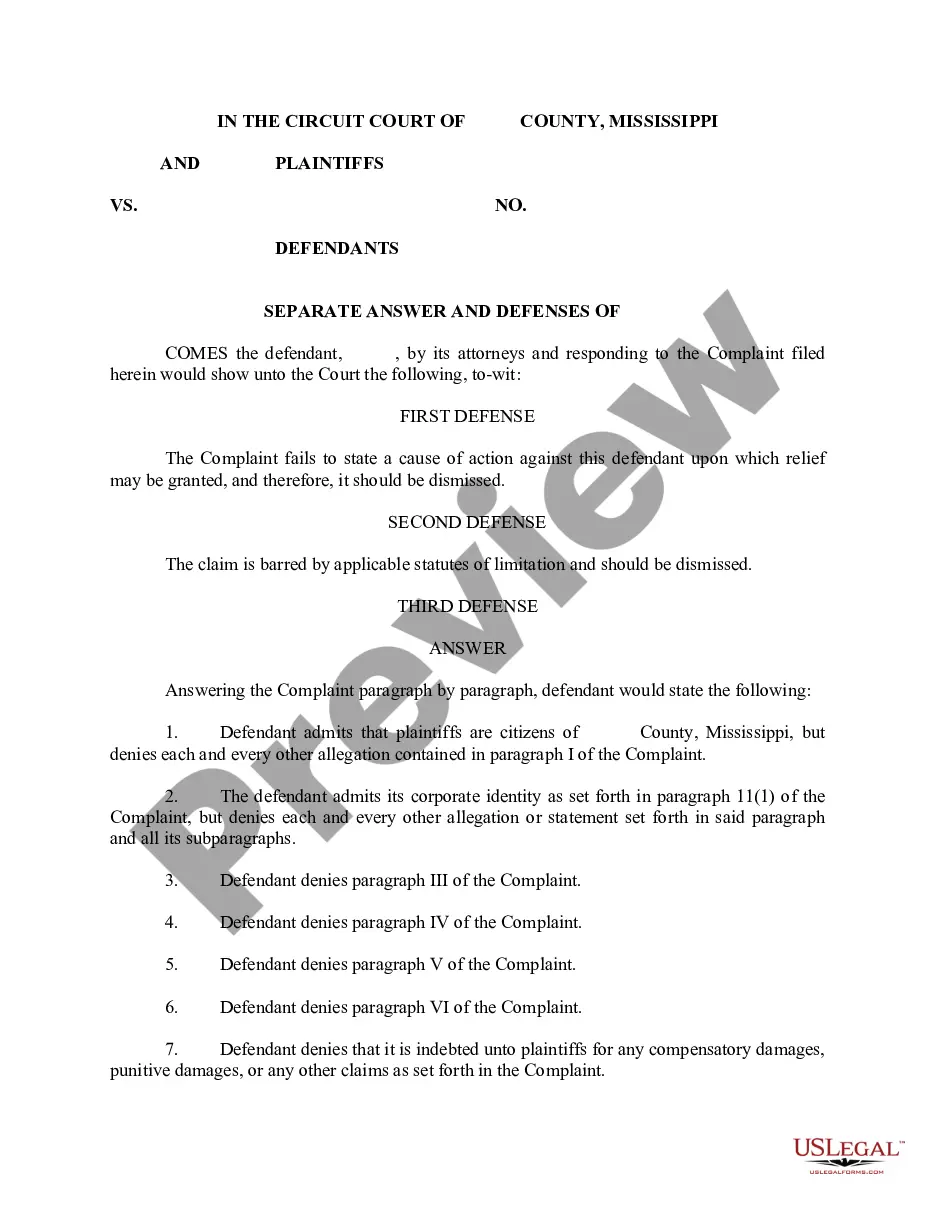
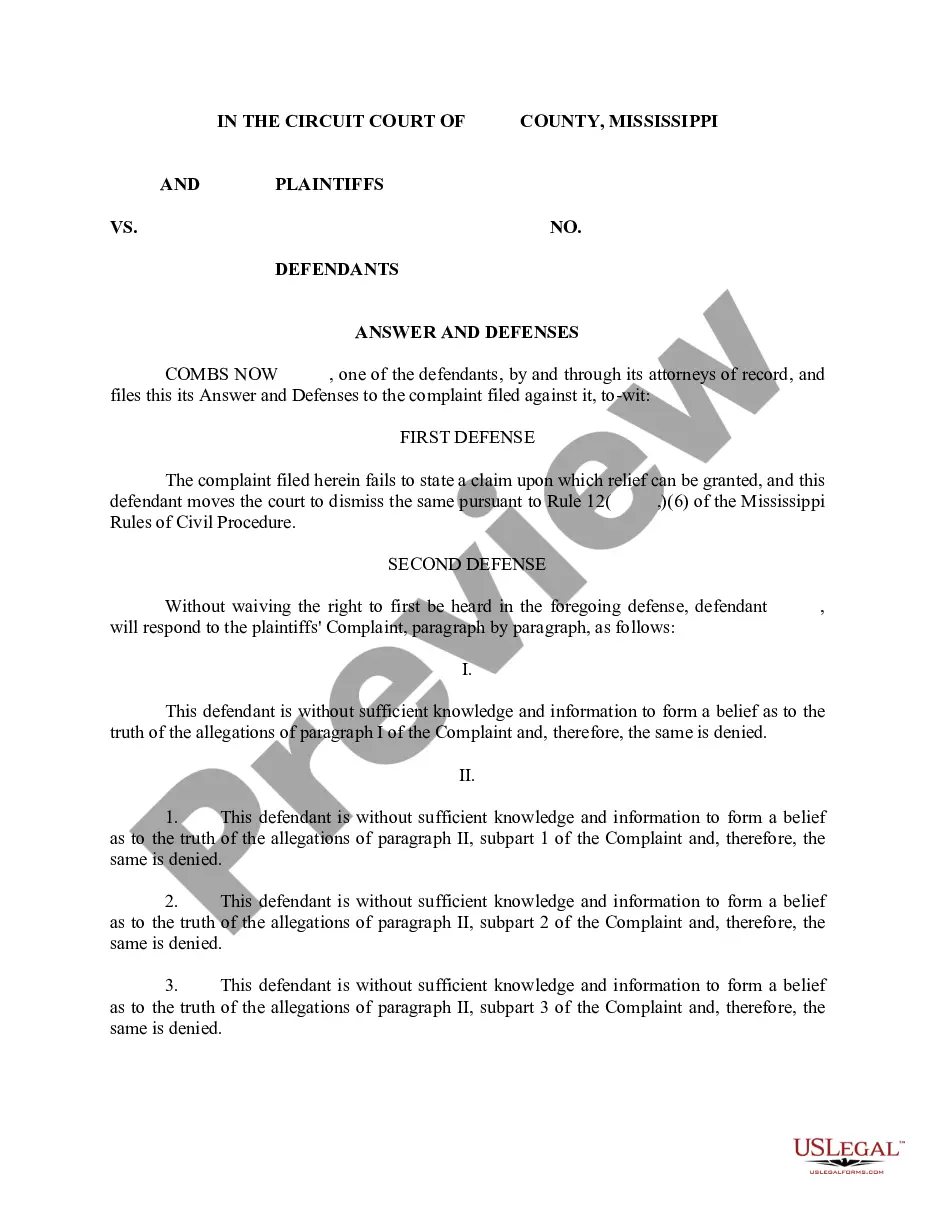
This Answer form serves as a formal response to a Complaint that initiates a lawsuit, specifically for cases involving product liability. By using this form, defendants can assert their defenses and refute claims made against them. Unlike other legal responses, this Answer allows for tailored defenses based on the specifics of the case, making it a vital tool in protecting oneâs legal rights in a lawsuit.
Form components explained
- Second Defense: Assertion that the claim is barred by statutes of limitation.
- Paragraph-by-paragraph response to the Complaint, with specific denials of each claim.
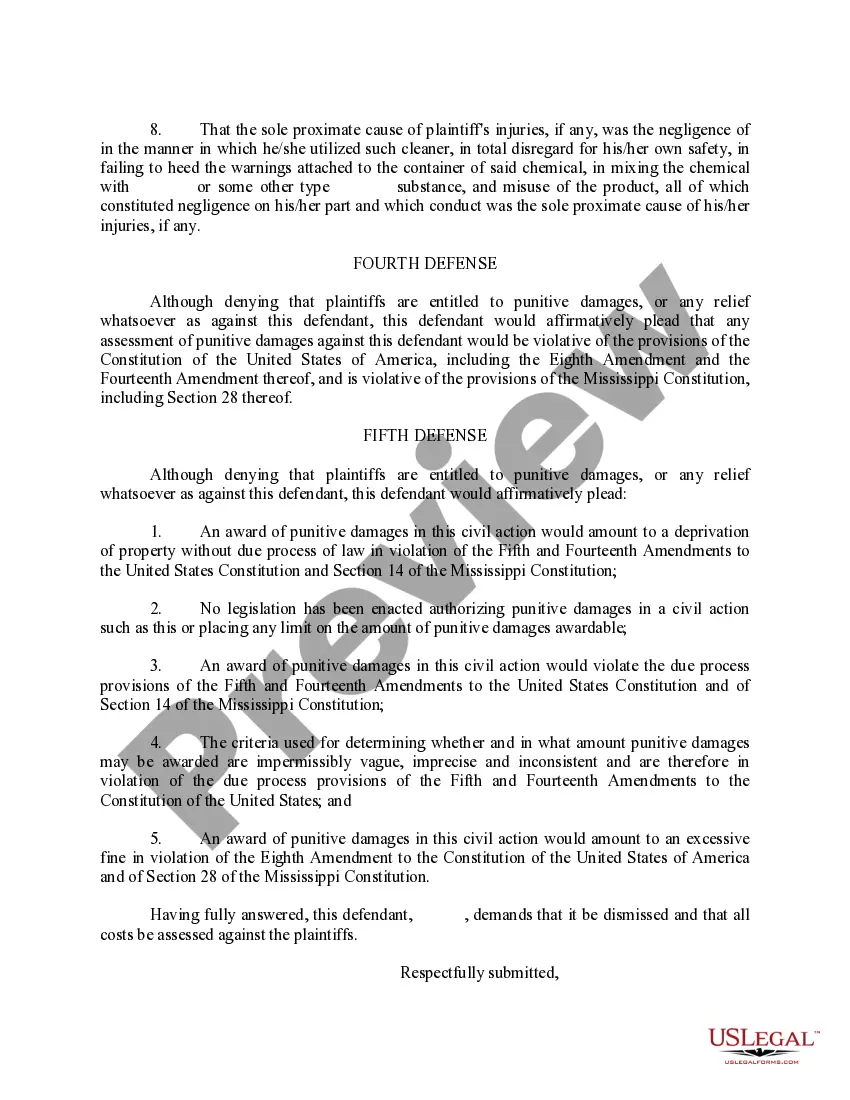
- Fourth Defense: Claims against the constitutionality of punitive damages.
- Fifth Defense: Detailed argument against punitive damages based on constitutional provisions.
When to use this form
This form should be used when a defendant has received a Complaint and seeks to formally respond in a product liability lawsuit. It is necessary to file this Answer within the specified timeframe dictated by relevant laws to avoid default judgments. Additionally, if a defendant wishes to state any affirmative defenses, this form provides a structured manner to do so.
Who can use this document
- Any individual or business entity facing a product liability lawsuit.
- Defendants who wish to counter the claims made against them in court.
- Those needing a structured response format to ensure all defenses are included.
How to complete this form
- Begin by identifying the parties involved, including the defendant and plaintiffs.
- Review the Complaint thoroughly to structure responses to each paragraph effectively.
- Specify your defenses in the appropriate sections, ensuring they align with your case facts.
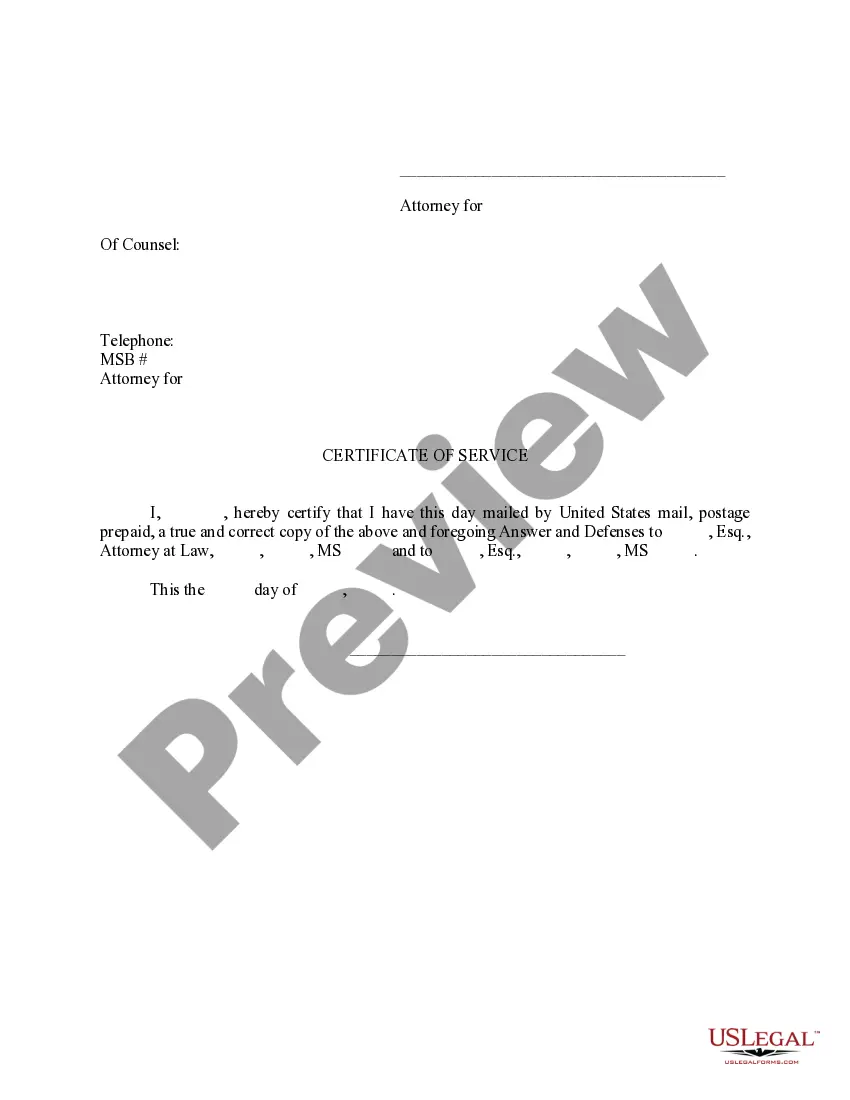
- Sign and date the form to affirm your responses and defenses.
- File the Answer with the appropriate court before the deadline to avoid default.
Does this document require notarization?
This form does not typically require notarization unless specified by local law.
Get your form ready online
Our built-in tools help you complete, sign, share, and store your documents in one place.
Make edits, fill in missing information, and update formatting in US Legal Forms—just like you would in MS Word.
Download a copy, print it, send it by email, or mail it via USPS—whatever works best for your next step.
Sign and collect signatures with our SignNow integration. Send to multiple recipients, set reminders, and more. Go Premium to unlock E-Sign.
If this form requires notarization, complete it online through a secure video call—no need to meet a notary in person or wait for an appointment.
We protect your documents and personal data by following strict security and privacy standards.

Make edits, fill in missing information, and update formatting in US Legal Forms—just like you would in MS Word.

Download a copy, print it, send it by email, or mail it via USPS—whatever works best for your next step.

Sign and collect signatures with our SignNow integration. Send to multiple recipients, set reminders, and more. Go Premium to unlock E-Sign.

If this form requires notarization, complete it online through a secure video call—no need to meet a notary in person or wait for an appointment.

We protect your documents and personal data by following strict security and privacy standards.
Common mistakes
- Failing to respond within the allotted timeframe, risking default.
- Not addressing each paragraph of the Complaint, which can weaken the defense.
- Omitting necessary affirmative defenses that may apply to the case.
Why use this form online
- Convenience of completing the form from any location with internet access.
- Editability allows for customization based on individual case needs.
- Reliable legal templates drafted by licensed attorneys to ensure compliance.
Legal use & context
- The Answer is an essential document in civil litigation, particularly in product liability cases.
- Filing the Answer timely can help protect the defendant's rights and prevent default judgments.
- Affirmative defenses raised can limit liability and influence legal outcomes significantly.
Summary of main points
- The Answer is a critical document for defendants in product liability lawsuits.
- It should include clear responses to the Complaint and any applicable affirmative defenses.
- Always pay attention to specific requirements based on your stateâs laws.
Looking for another form?
Form popularity
FAQ
Although the particulars vary from state to state, products liability law usually requires that you prove all of the following things (these are called the "elements" in your claim) in order to win: You were injured or suffered losses. The product is defective. The defect caused your injury.
Transfer Risk through Management of Suppliers. A risk transfer program helps your business avoid financial vulnerability to damages and claims due to liabilities caused or contributed to by others. Managing Supplies and Imported Goods. Build Safety into Design. Keep Essential Records. Enable and Review Customer Feedback.
Yes, in many cases a retailer can, indeed, be held liable for a defective product at least if an injury or a death resulted.
The Kind of Product Liability Claim Can Determine Whether a Defense Works. The Product Design or Defect Did Not Cause Plaintiff's Injury. The Plaintiff Was Negligent Too. The Plaintiff "Assumed the Risk" The Statute of Limitations Had Expired. Specific Breach of Warranty Defenses.
Generally, any manufacturers as well as any sellers down the distribution chain (i.e., distributors, wholesalers, and retailers) can be held legally responsible for a defective product causing injury.
Product liability refers to a manufacturer or seller being held liable for placing a defective product into the hands of a consumer. Responsibility for a product defect that causes injury lies with all sellers of the product who are in the distribution chain.
Under California law, manufacturers, designers, and retailers are strictly liable for injuries that are caused to plaintiffs when they use defective products in a reasonably foreseeable way.The product's defect was the direct or proximate cause of the plaintiff's injury.