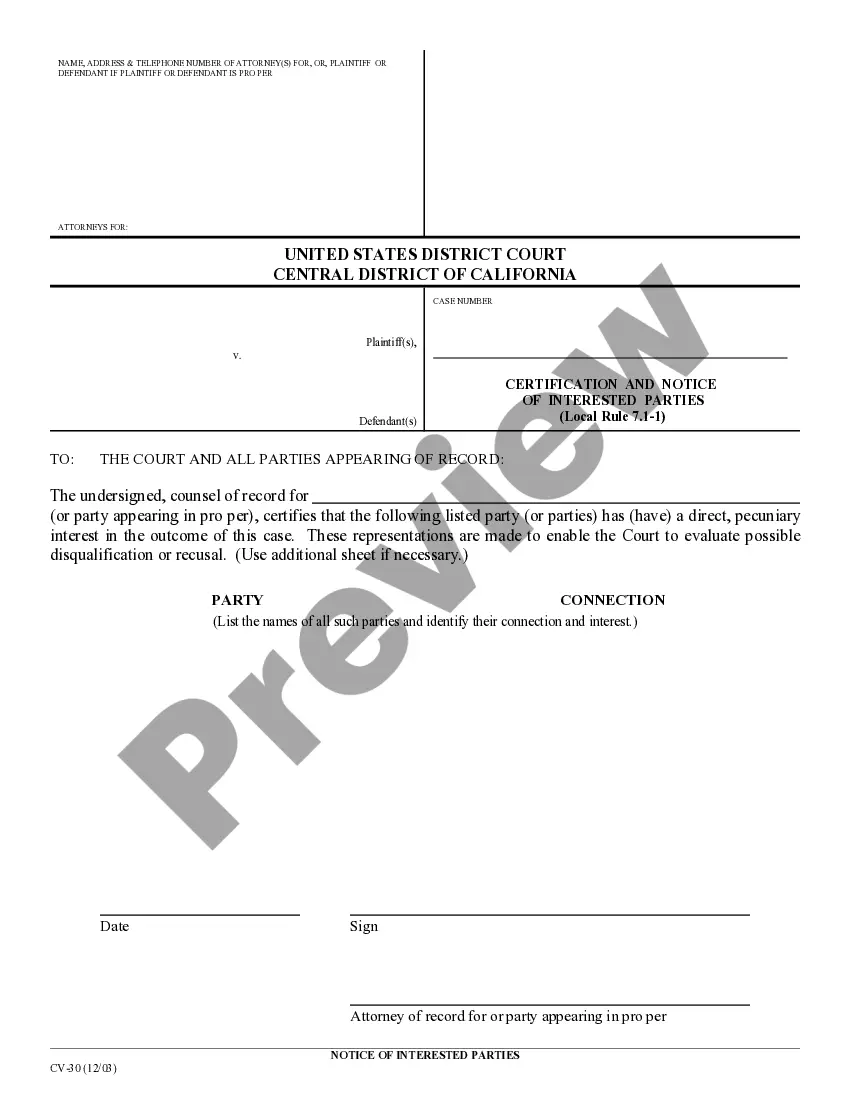
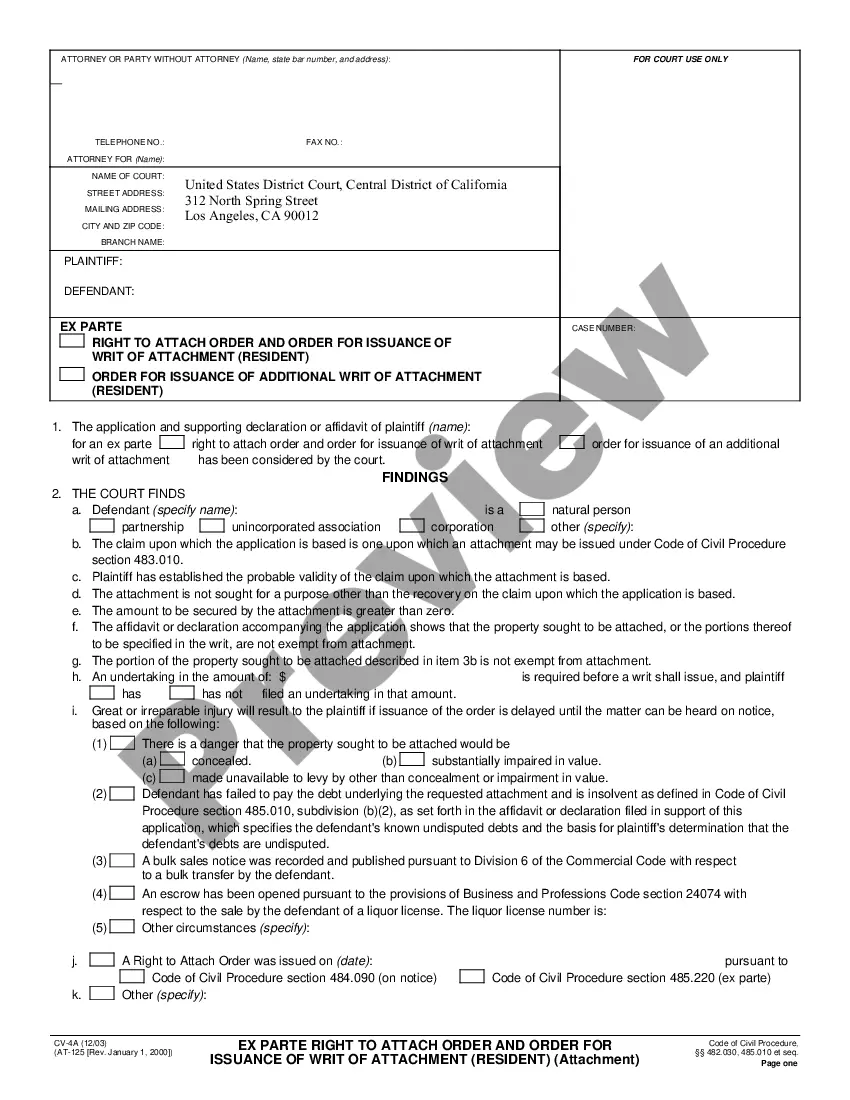
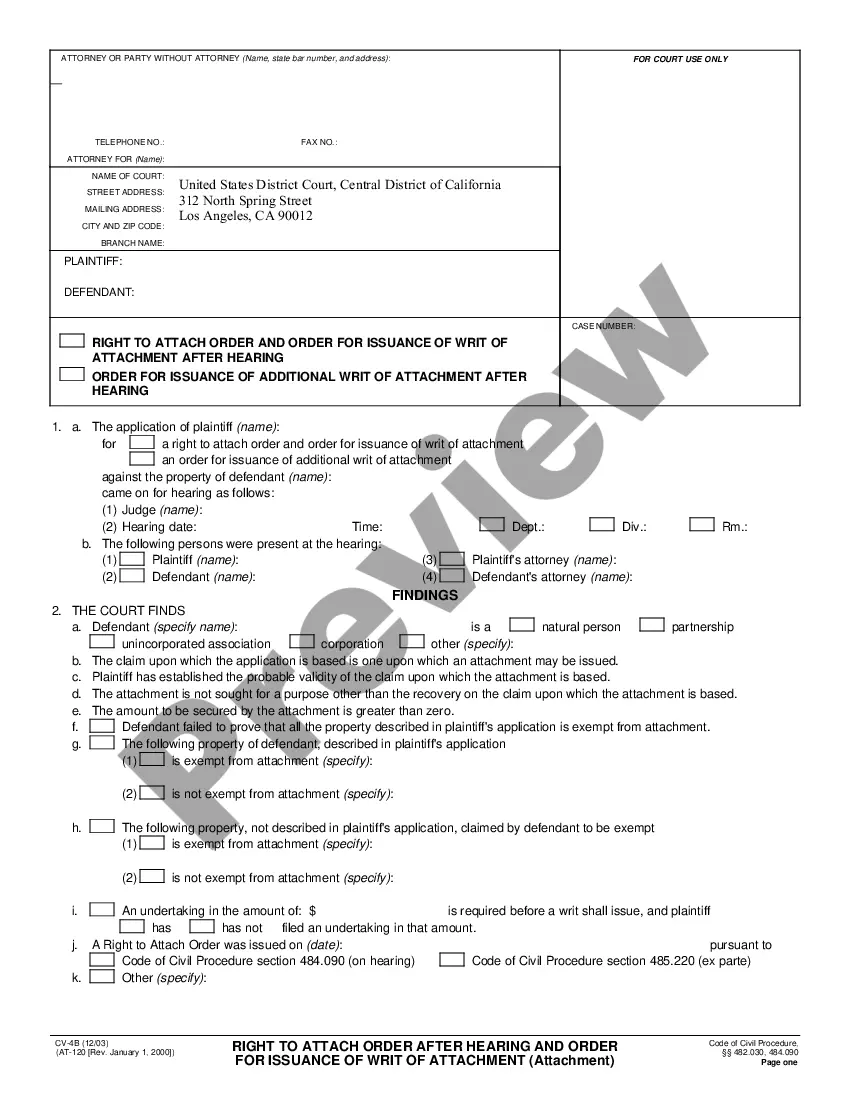
Mississippi Partnerships - Action for Accounting against Partner, Constructive Trust Complaint
Overview of this form
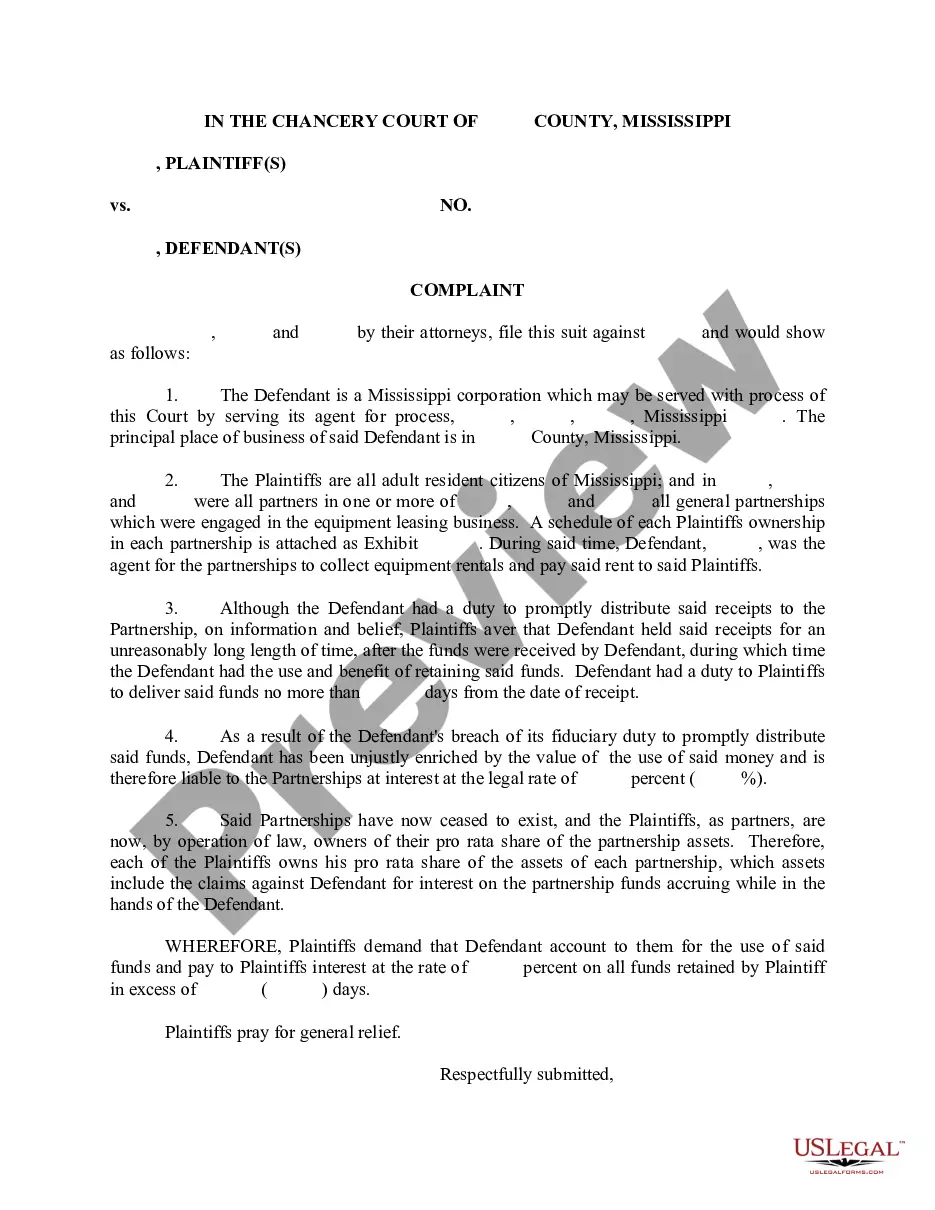
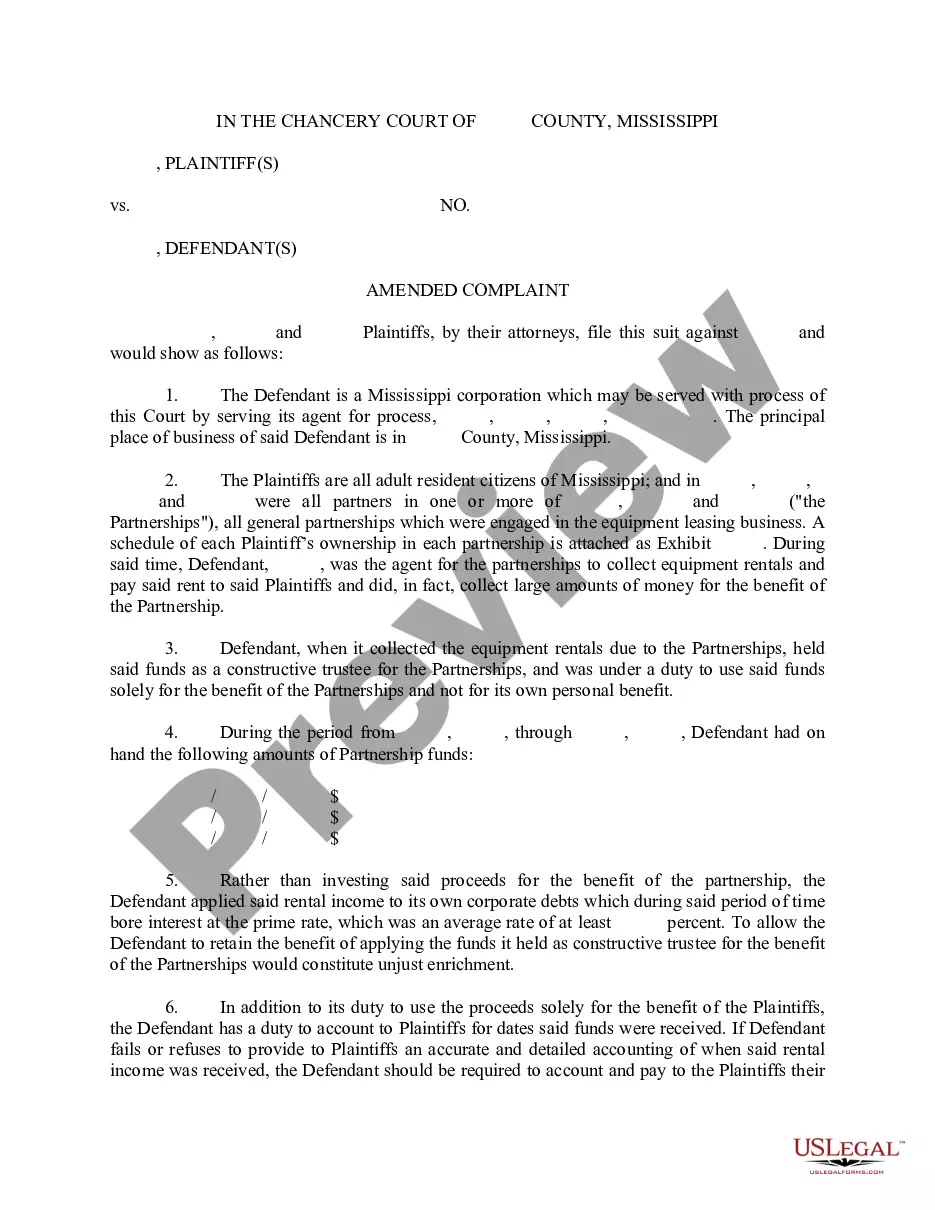
The Partnerships - Action for Accounting against Partner, Constructive Trust Complaint is a legal document used to initiate a lawsuit regarding financial disputes between partners in a business partnership. This form allows a partner to seek accounting for transactions and possibly establish a constructive trust, ensuring that the trust relationship is honored. It is specifically tailored for situations where there is disagreement concerning the actions of a Trustee, differing from general complaints by focusing on partnership dynamics and financial accountability.
Main sections of this form
- Title and court information: Includes the name of the Plaintiff and Defendant, and the relevant court where the lawsuit is filed.
- Allegations: Clearly states the claims made against the Defendant, detailing the nature of the dispute.
- Request for accounting: Specifies the need for an accounting of the partnershipâs financial activities.
- Constructive trust claim: Outlines the basis for the request to impose a constructive trust based on identified wrongs.
- Signature block: Provides sections for signatures of the parties involved, signifying the filing of the complaint.
Situations where this form applies
This form should be used when a partner in a business partnership believes that another partner has mismanaged funds, failed to provide financial transparency, or acted contrary to the partnership agreement. It is appropriate in scenarios involving financial disputes over the distribution of profits, expenses, or when a partner fails to fulfill their fiduciary duties and accounting is required.
Intended users of this form
- Business partners seeking legal remedies for financial mismanagement.
- Partners who require a formal accounting of partnership finances.
- Individuals filing a complaint regarding trust violations within a partnership context.
- Trustees facing disputes over financial transactions and accountability.
How to complete this form
- Identify the parties: Enter names and contact information for the Plaintiff and Defendant.
- State the allegations: Clearly outline the claims and issues related to the partnership.
- Specify the request for accounting: Detail the reasons for requesting financial oversight and transparency.
- Include the constructive trust claim: Articulate why a constructive trust should be imposed on the assets in question.
- Sign and date: Ensure all necessary parties sign and date the document before submission.
Notarization requirements for this form
This form does not typically require notarization unless specified by local law. Always check your stateâs specific regulations regarding notarization of legal documents.
Get your form ready online
Our built-in tools help you complete, sign, share, and store your documents in one place.
Make edits, fill in missing information, and update formatting in US Legal Forms—just like you would in MS Word.
Download a copy, print it, send it by email, or mail it via USPS—whatever works best for your next step.
Sign and collect signatures with our SignNow integration. Send to multiple recipients, set reminders, and more. Go Premium to unlock E-Sign.
If this form requires notarization, complete it online through a secure video call—no need to meet a notary in person or wait for an appointment.
We protect your documents and personal data by following strict security and privacy standards.

Make edits, fill in missing information, and update formatting in US Legal Forms—just like you would in MS Word.

Download a copy, print it, send it by email, or mail it via USPS—whatever works best for your next step.

Sign and collect signatures with our SignNow integration. Send to multiple recipients, set reminders, and more. Go Premium to unlock E-Sign.

If this form requires notarization, complete it online through a secure video call—no need to meet a notary in person or wait for an appointment.

We protect your documents and personal data by following strict security and privacy standards.
Common mistakes
- Failing to provide sufficient details in the allegations can weaken your case.
- Not identifying all parties involved in the partnership, which can lead to jurisdictional issues.
- Leaving out key signatures, which may render the document invalid.
- Neglecting to review local laws that may impose additional requirements.
Why use this form online
- Immediate access: Download the form instantly and begin filling it out.
- Editability: Customize the form easily to fit your specific needs.
- Guidance: Access resources and support from licensed attorneys if needed.
- Convenience: Complete the process from home without the need for face-to-face meetings.
What to keep in mind
- The Partnerships - Action for Accounting against Partner, Constructive Trust Complaint is essential for seeking accountability in partnerships.
- Understanding the key components is crucial for a successful filing.
- Ensure all parties are correctly identified and that allegations are clearly outlined.
- Utilizing this form online streamlines the process while ensuring compliance with legal standards.
Looking for another form?
Form popularity
FAQ
A holds funds that he knows have been paid to him by mistake. A holds an asset that he has obtained by means of fraud. A and another person (B) share a common intention that B should have a beneficial interest in an asset, and B has acted to his detriment on the basis of that intention.
Enforcement of a Constructive Trust The establishment of a constructive trust is typically imposed by a court of law. The court may choose to enforce this equitable remedy if the defendant would receive an unfair advantage if the trust is not imposed, or if the defendant has interfered with an existing trust.
In modern times, four elements must be met before a constructive trust will be imposed: (1) a confidential or fiduciary relationship which must normally be shown; (2) a promise by defendant; and (3) transfer by plaintiff to defendant in reliance on defendant's promise (4) under circumstances that constitute unjust
A constructive trust is an extraordinary remedy, not a cause of action. Instead, a constructive trust is imposed based upon an established cause of action. One such cause of action is breach of fiduciary duty, often seen in probate and trust litigation.
A constructive trust is founded upon a common intention that can either be expressed or inferred but cannot be based upon an intention that the parties never in fact had. Estoppels may be claimed where there has been either a representation or acquiescence that an interest in property is to arise.
The imposition of a constructive trust requires: (1) the existence of res (property or some interest in property); (2) the right of the complaining party to that res; and (3) some wrongful acquisition or detention of the res by another party who is not entitled to it. See Burlesci v.