Mississippi Plaintiff's First Set of Requests for Admissions to Defendant
About this form
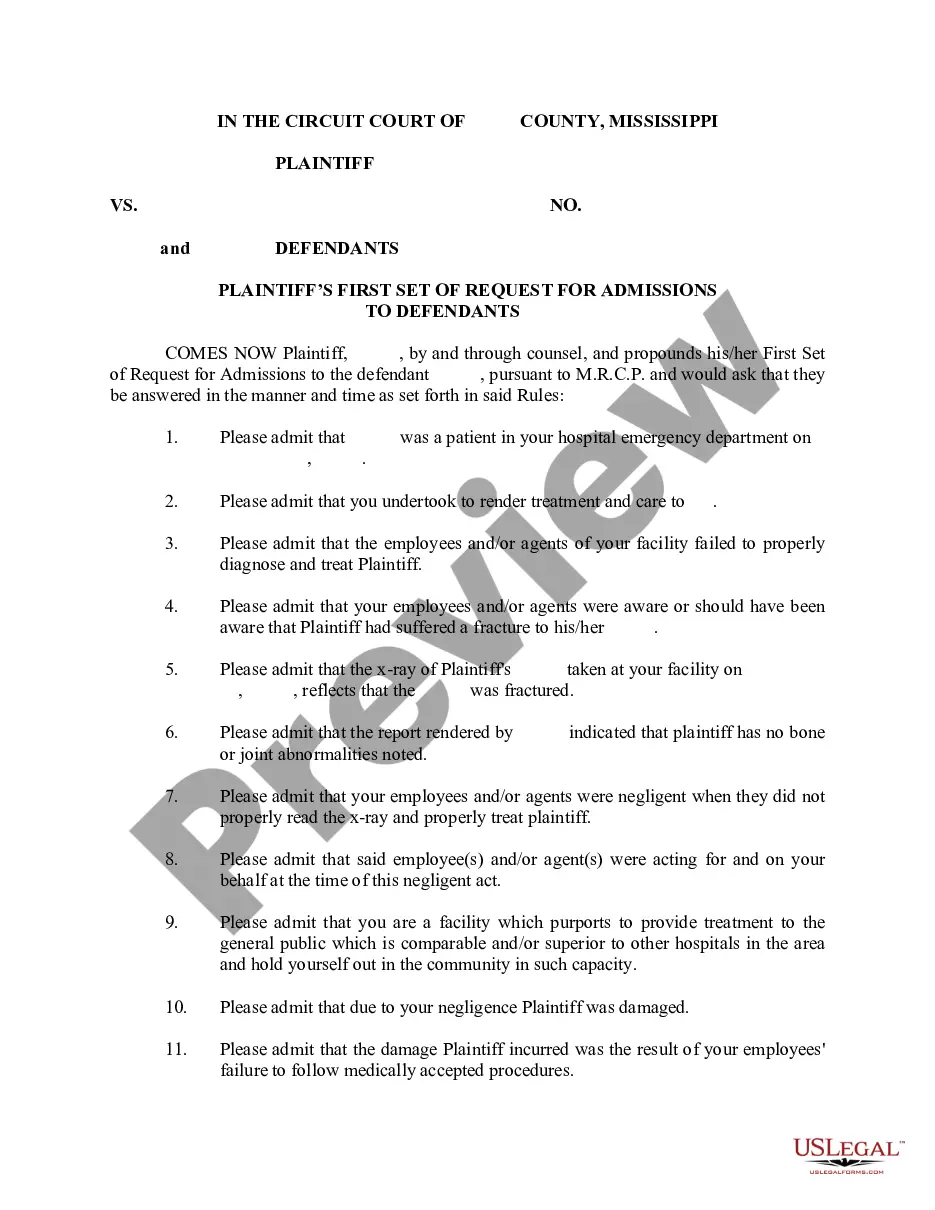
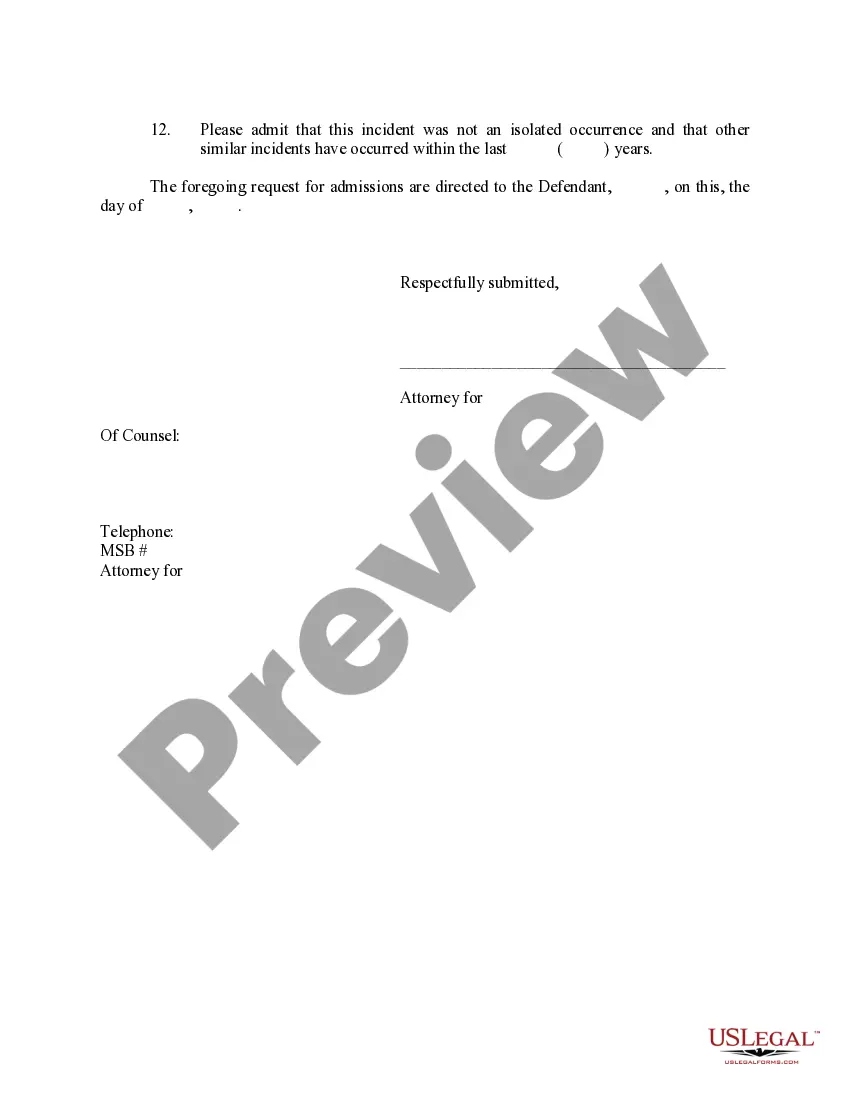
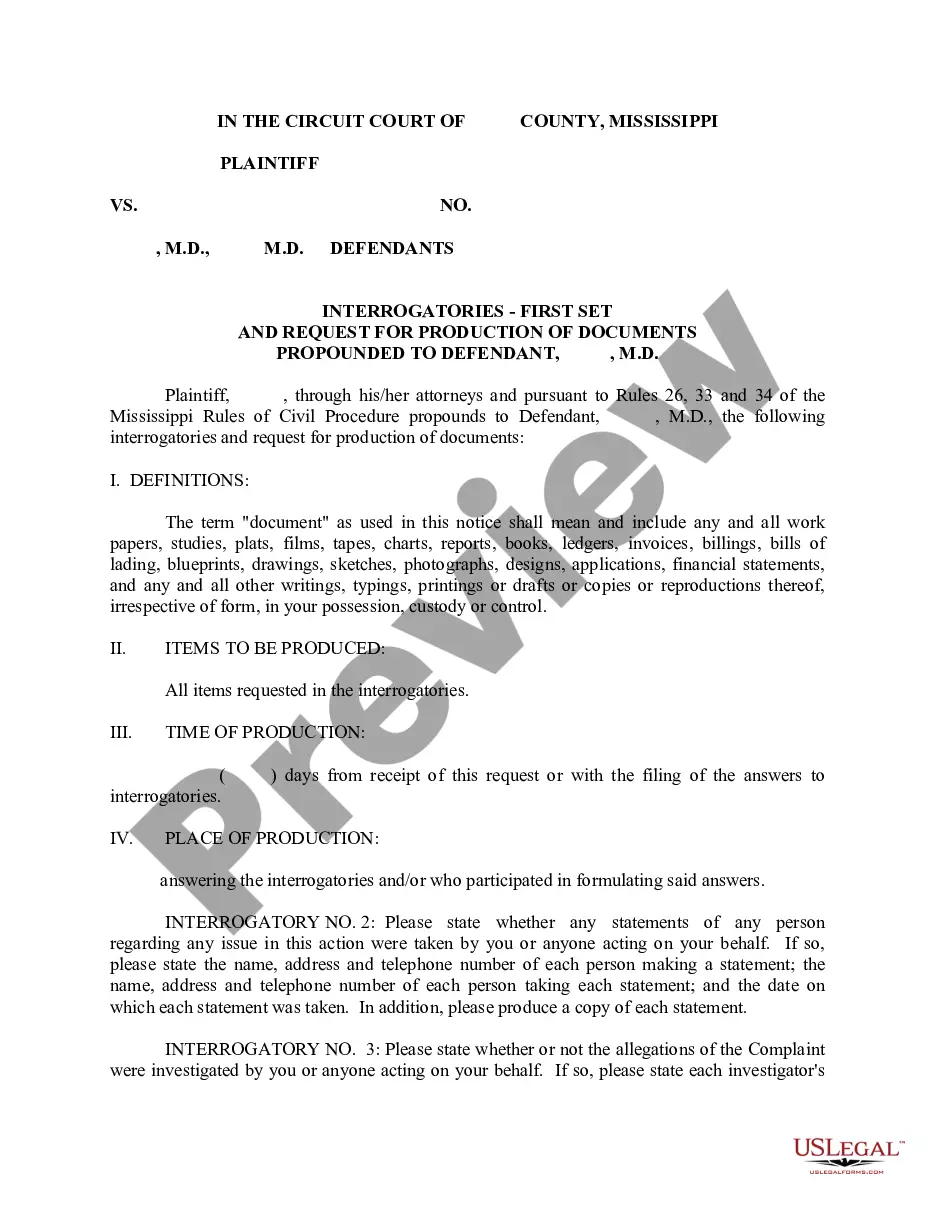
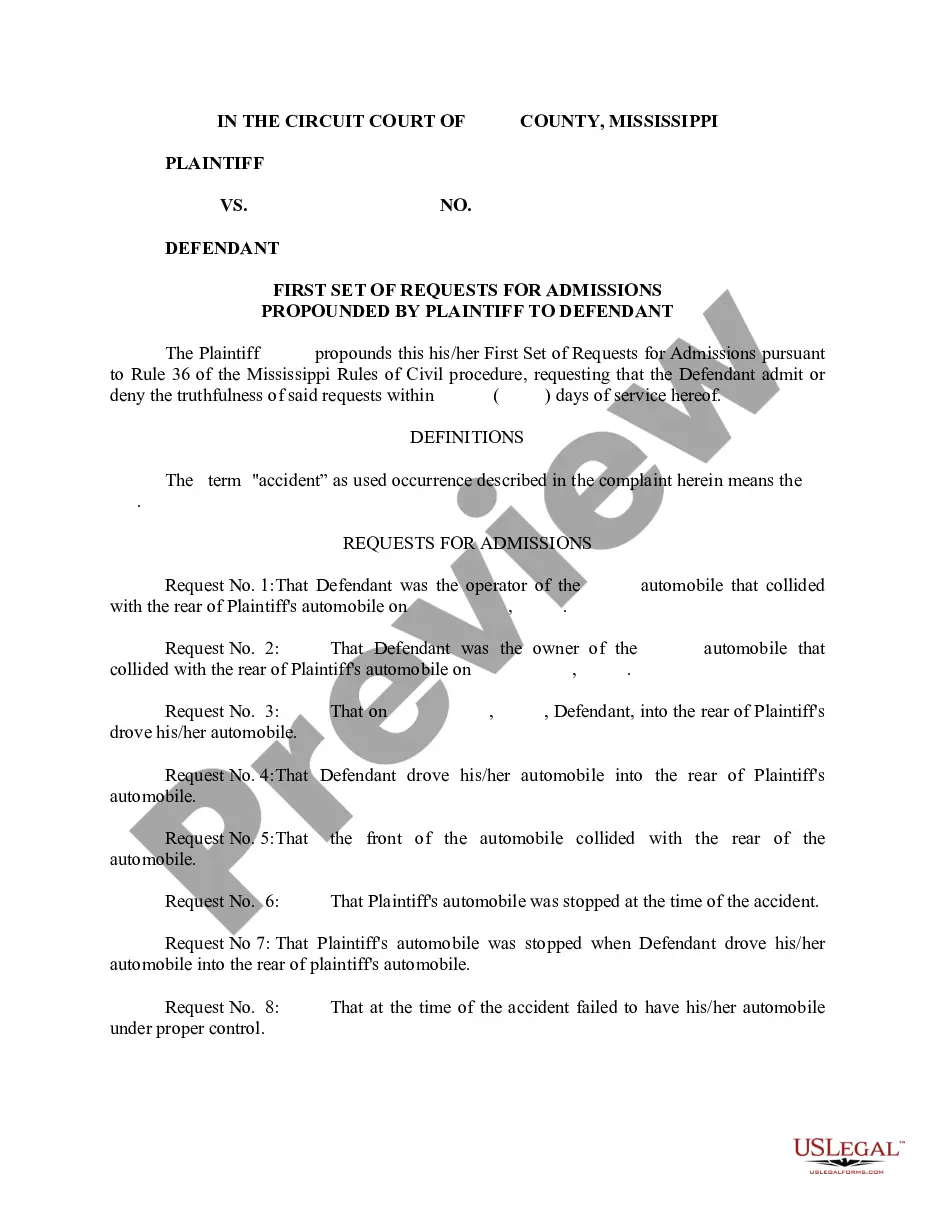
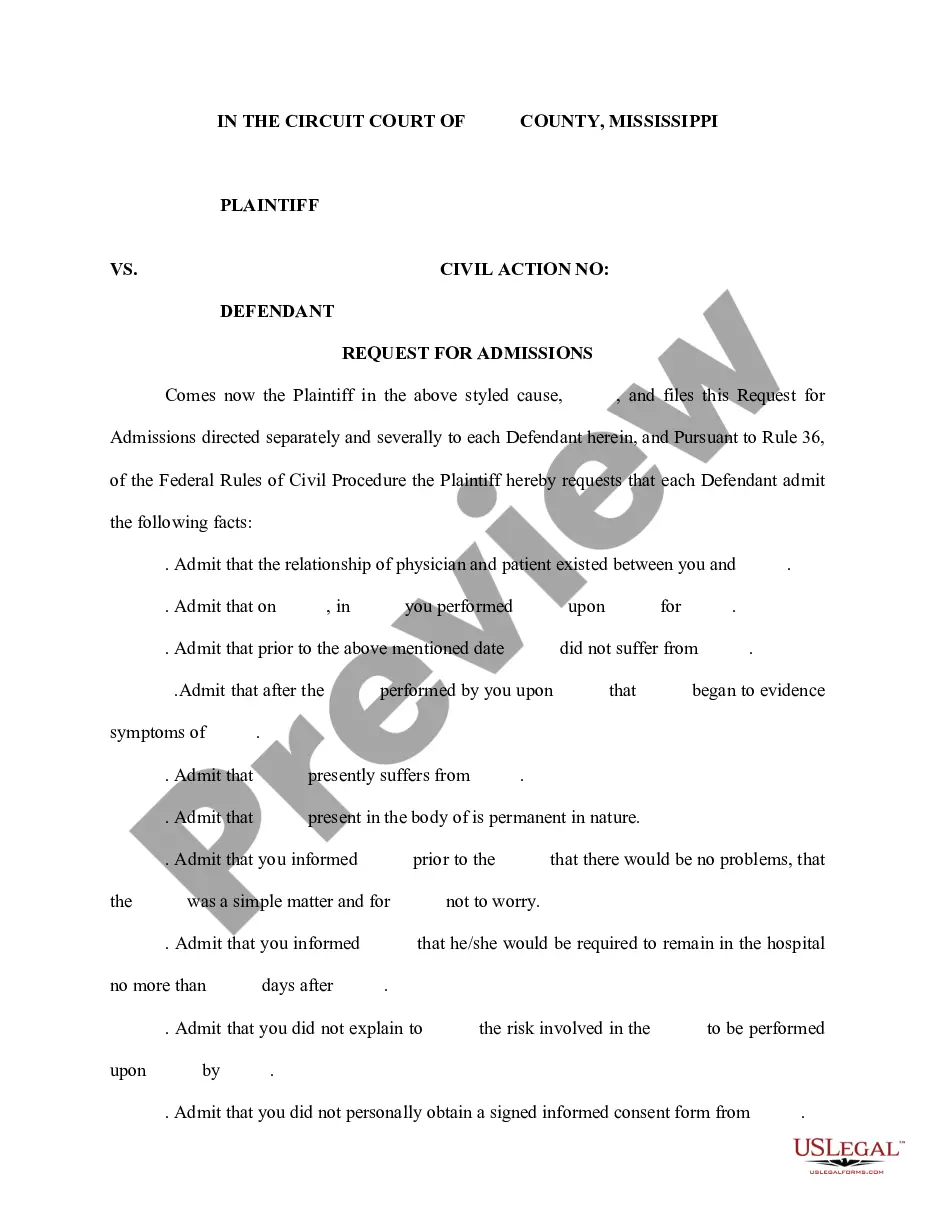
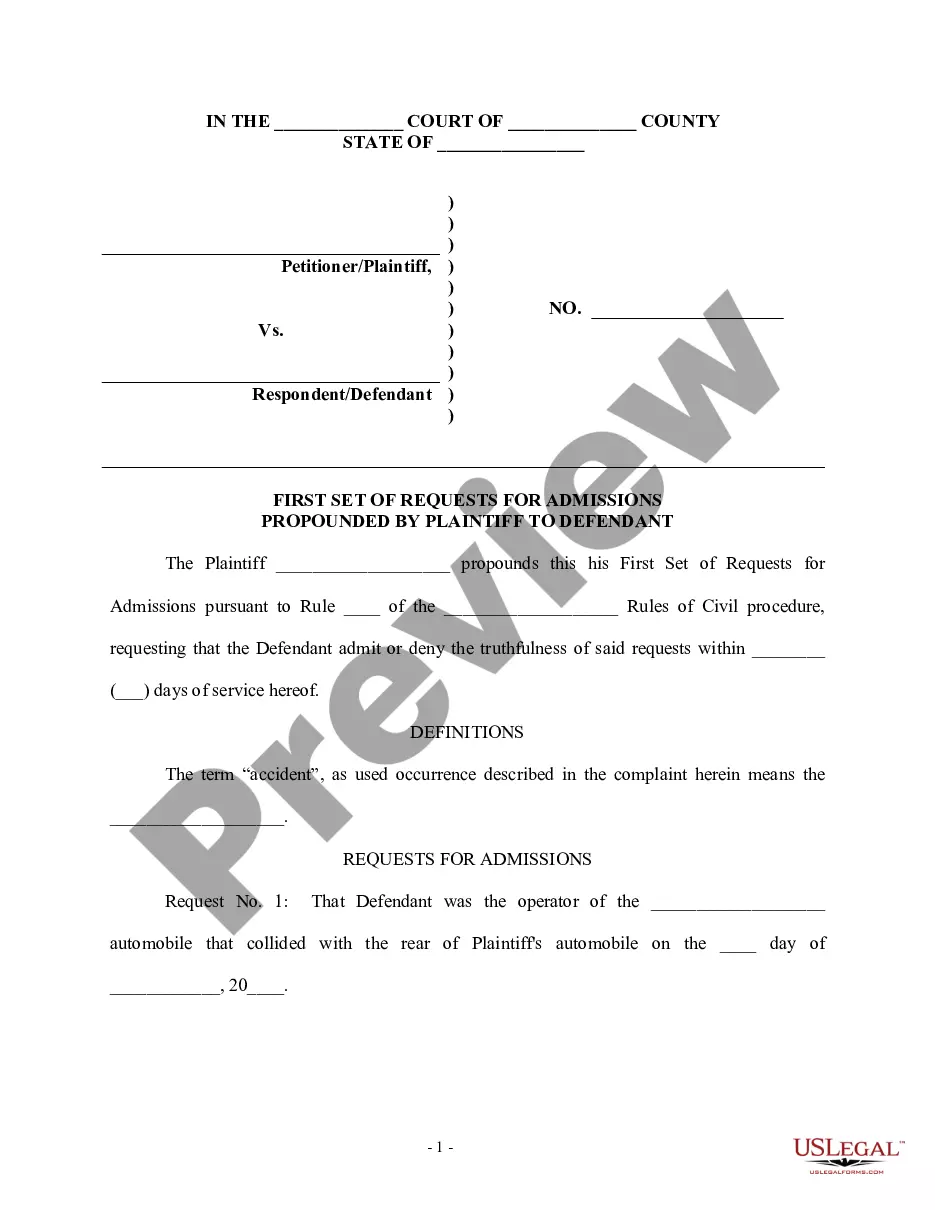
The Plaintiff's First Set of Requests for Admissions to Defendant is a legal document used in Mississippi to initiate requests for the opposing party to admit or deny certain facts in a legal case. This form is essential in the discovery phase of litigation, allowing parties to clarify issues and streamline the trial process. By using this form, plaintiffs can effectively establish facts that may be material to their case, distinguishing it from other legal forms that may focus on different aspects of a lawsuit.
Key components of this form
- The introductory request, stating the purpose of the admissions.
- Specific requests asking the defendant to admit or deny particular facts related to the case.
- Instructions for responding to the requests, including timelines and formats for reply.
- Space for the defendant's admissions or denials, where they will formally respond to each request.
When to use this form
This form should be used when a plaintiff needs to clarify specific factual matters in the context of a lawsuit. Examples include cases involving negligence claims, where it is important to establish whether the defendant's actions led to the plaintiff's damages. It can also be useful in cases concerning contracts, where confirming agreement on certain terms is necessary. Utilizing this form helps ensure that both parties are on the same page regarding critical factual issues.
Who can use this document
- Plaintiffs in civil litigation in Mississippi.
- Attorneys representing plaintiffs in cases where admissions may streamline proceedings.
- Individuals seeking to clarify factual disputes with the opposing party.
Instructions for completing this form
- Identify the parties involved in the case, including the plaintiff and the defendant.
- Detail the specific facts you want the defendant to admit or deny, ensuring clarity and precision.
- Complete the section requesting admissions by inserting the relevant facts, such as proper treatment or negligence.
- Prepare any necessary introductory statements outlining the purpose of the request for admissions.
- Review the form for accuracy and completeness before serving it to the defendant as part of the discovery process.
Notarization requirements for this form
Notarization is generally not required for this form. However, certain states or situations might demand it. You can complete notarization online through US Legal Forms, powered by Notarize, using a verified video call available anytime.
Get your form ready online
Our built-in tools help you complete, sign, share, and store your documents in one place.
Make edits, fill in missing information, and update formatting in US Legal Forms—just like you would in MS Word.
Download a copy, print it, send it by email, or mail it via USPS—whatever works best for your next step.
Sign and collect signatures with our SignNow integration. Send to multiple recipients, set reminders, and more. Go Premium to unlock E-Sign.
If this form requires notarization, complete it online through a secure video call—no need to meet a notary in person or wait for an appointment.
We protect your documents and personal data by following strict security and privacy standards.

Make edits, fill in missing information, and update formatting in US Legal Forms—just like you would in MS Word.

Download a copy, print it, send it by email, or mail it via USPS—whatever works best for your next step.

Sign and collect signatures with our SignNow integration. Send to multiple recipients, set reminders, and more. Go Premium to unlock E-Sign.

If this form requires notarization, complete it online through a secure video call—no need to meet a notary in person or wait for an appointment.

We protect your documents and personal data by following strict security and privacy standards.
Common mistakes to avoid
- Failing to specify each fact clearly, leading to ambiguity in the requests.
- Not observing the correct timeframes for serving the requests or responding to them.
- Assuming the opposing party will respond positively without clear factual support.
Advantages of online completion
- Convenience: Download and complete the form at any time, from anywhere.
- Editability: Customize the requests based on the specifics of your case.
- Reliability: Access forms that are drafted by licensed attorneys and updated for legal compliance.
Legal use & context
- This form is used primarily in civil litigation for requesting factual admissions.
- Requests for admissions can significantly simplify trial proceedings by reducing the number of contested issues.
- Failure to respond to these requests can lead to deemed admissions, further impacting the case outcome.
Looking for another form?

Form popularity
FAQ
Primary tabs. In a civil action, a request for admission is a discovery device that allows one party to request that another party admit or deny the truth of a statement under oath. If admitted, the statement is considered to be true for all purposes of the current trial.
Requests for Admission Are Part of DiscoveryRequests for admission allow one party to ask another party to admit or deny certain statements while under oath. That way, admitted statements can be considered true during the trial.
There are basically six types of discovery in family court: 1) interrogatories; 2) requests for production of documents and inspection 3) requests for admissions; 4) depositions; 5) subpoenas duces tecum; 6) physical and mental examinations.
A request for admission (sometimes also called a request to admit) is a set of statements sent from one litigant to an adversary, for the purpose of having the adversary admit or deny the statements or allegations therein. Requests for admission are part of the discovery process in a civil case.
If you admit the request, write admit for your response. If you deny the request, write deny. If you have to qualify an answer or deny only a part, you must specify the part that is true and deny the rest.
Proper Objections A responding party has four options: (1) admit; (2) deny; (3) admit in part and deny in part; or (4) explain why the party is unable to answer. It is possible to object to all or part of a request as well, but courts do not like parties who play word games to avoid responding.
Similar to responses to Requests for Production, responses to Requests for Admissions do not have to be verified. It is critical to respond to Requests for Admissions because failure to respond results in the requests being deemed admitted without the need for a motion to have the responses established as admitted.
Each request must be numbered consecutively. The first paragraph immediately shall state he identity of the party requesting the admissions, the set number, and the identity of the responding party. Each request shall be separately set forth and identified by letter or number. C.C.P.
When responding to Requests for Admissions, remember to answer as follows: Admit: If any portion of the Request for Admission is true then you must admit to that portion of the request. You are also allowed to have a hybrid response admit the part of the request that is true while denying another part.