Mississippi Request for Admissions - Medical Malpractice
Overview of this form
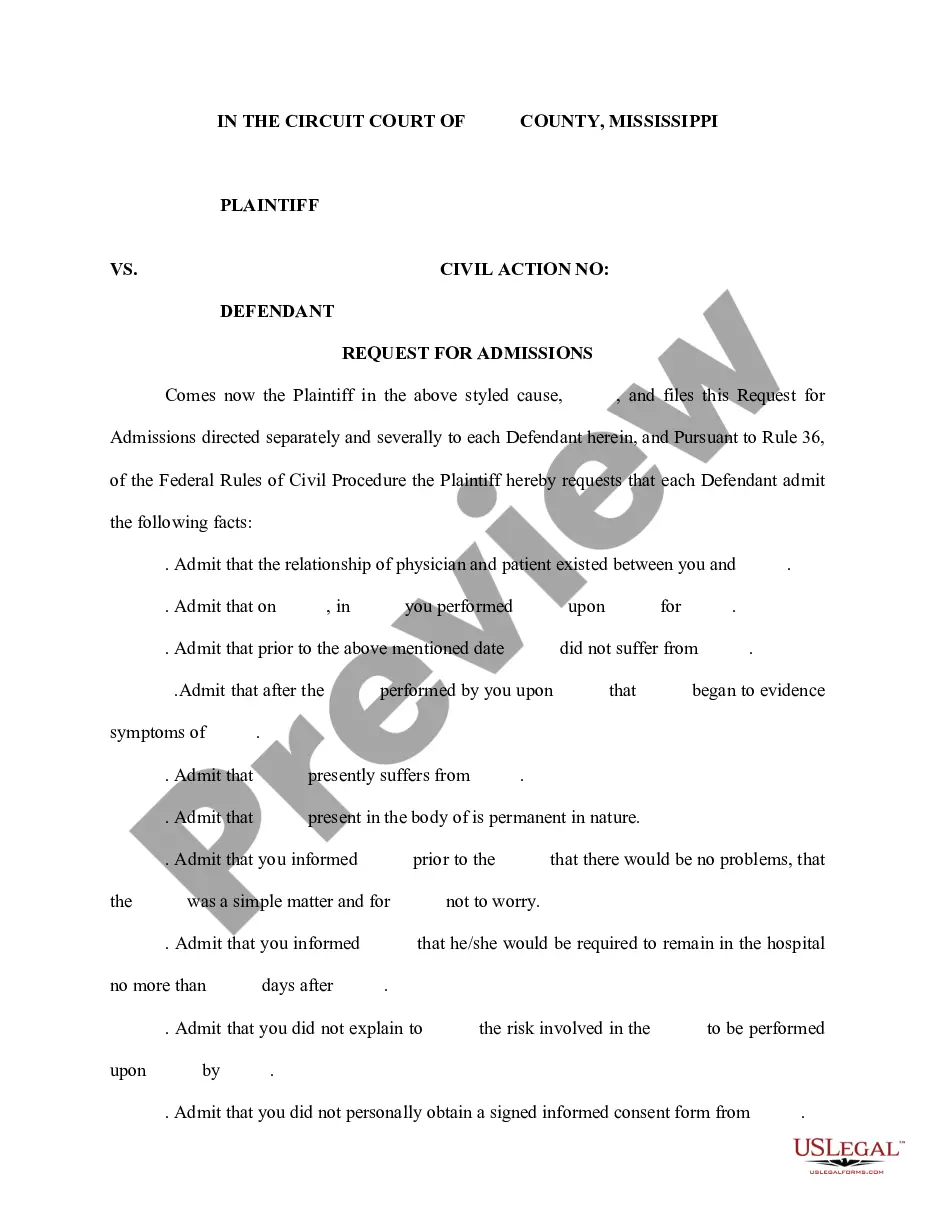
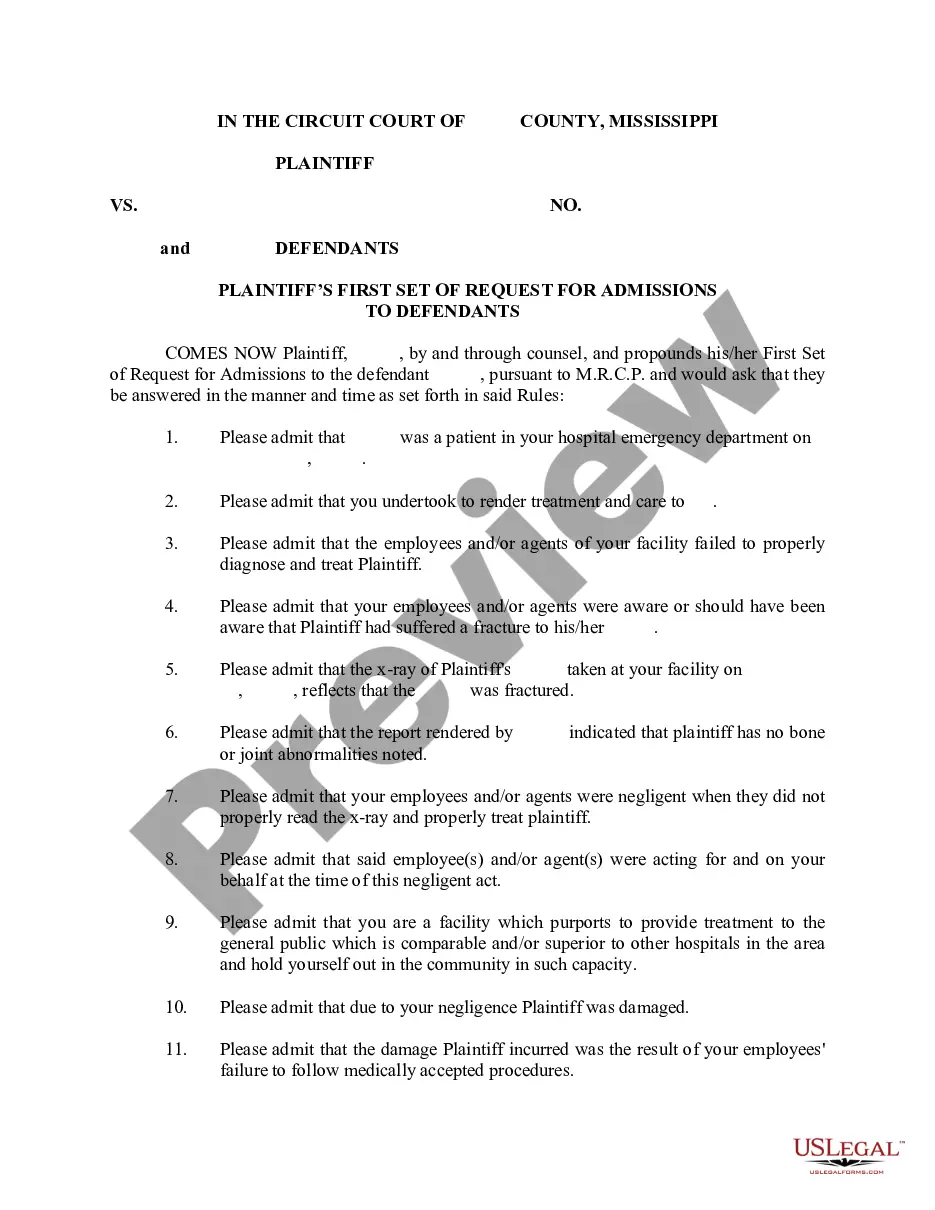
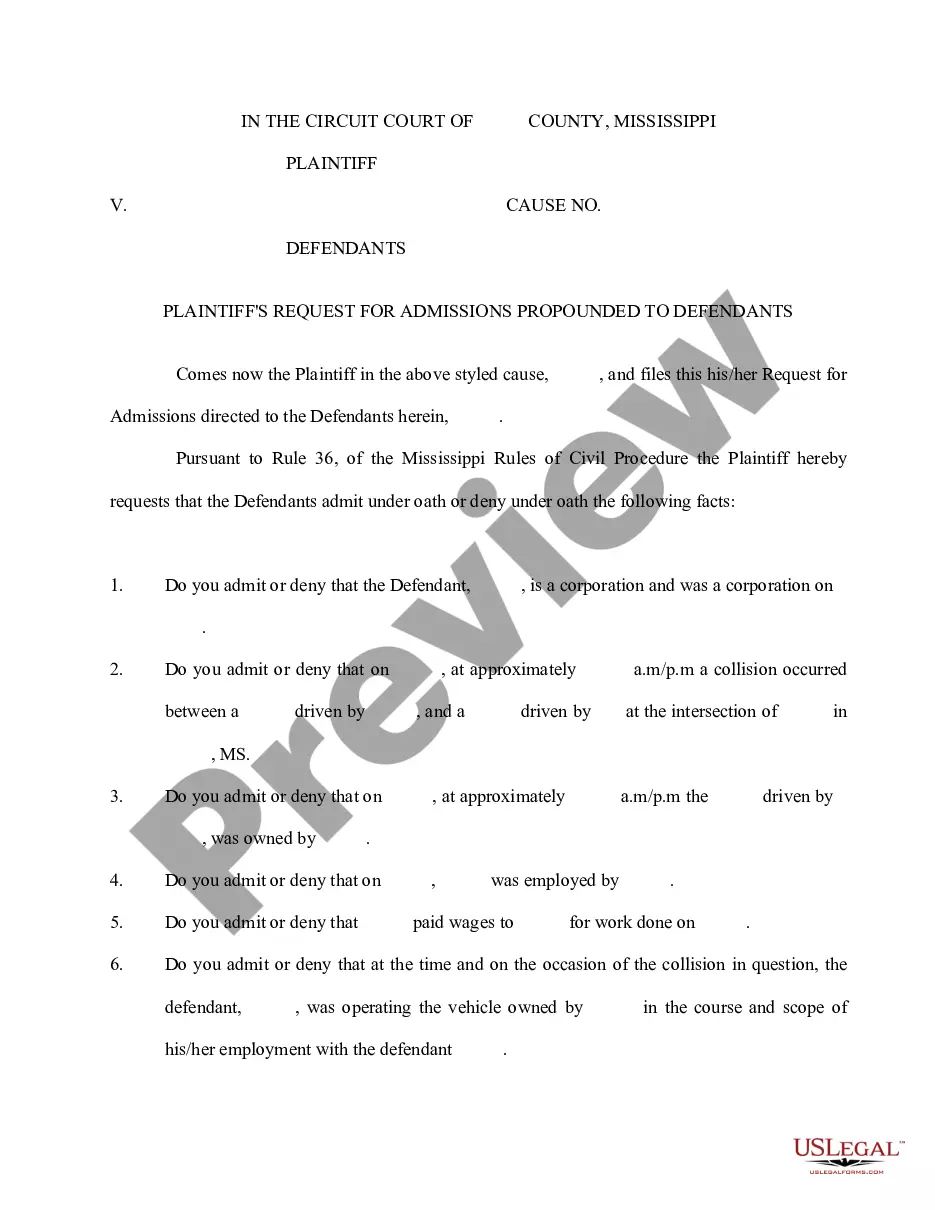
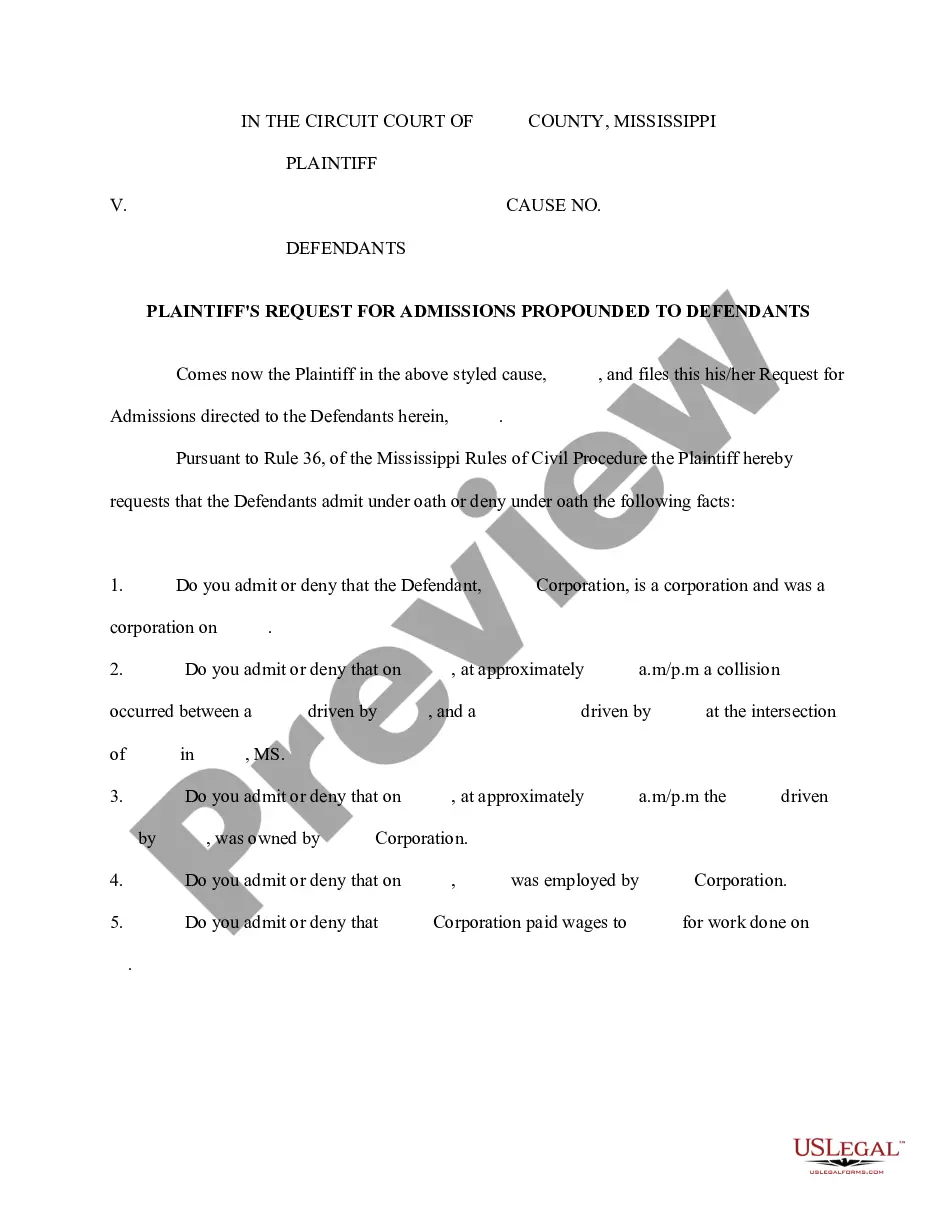
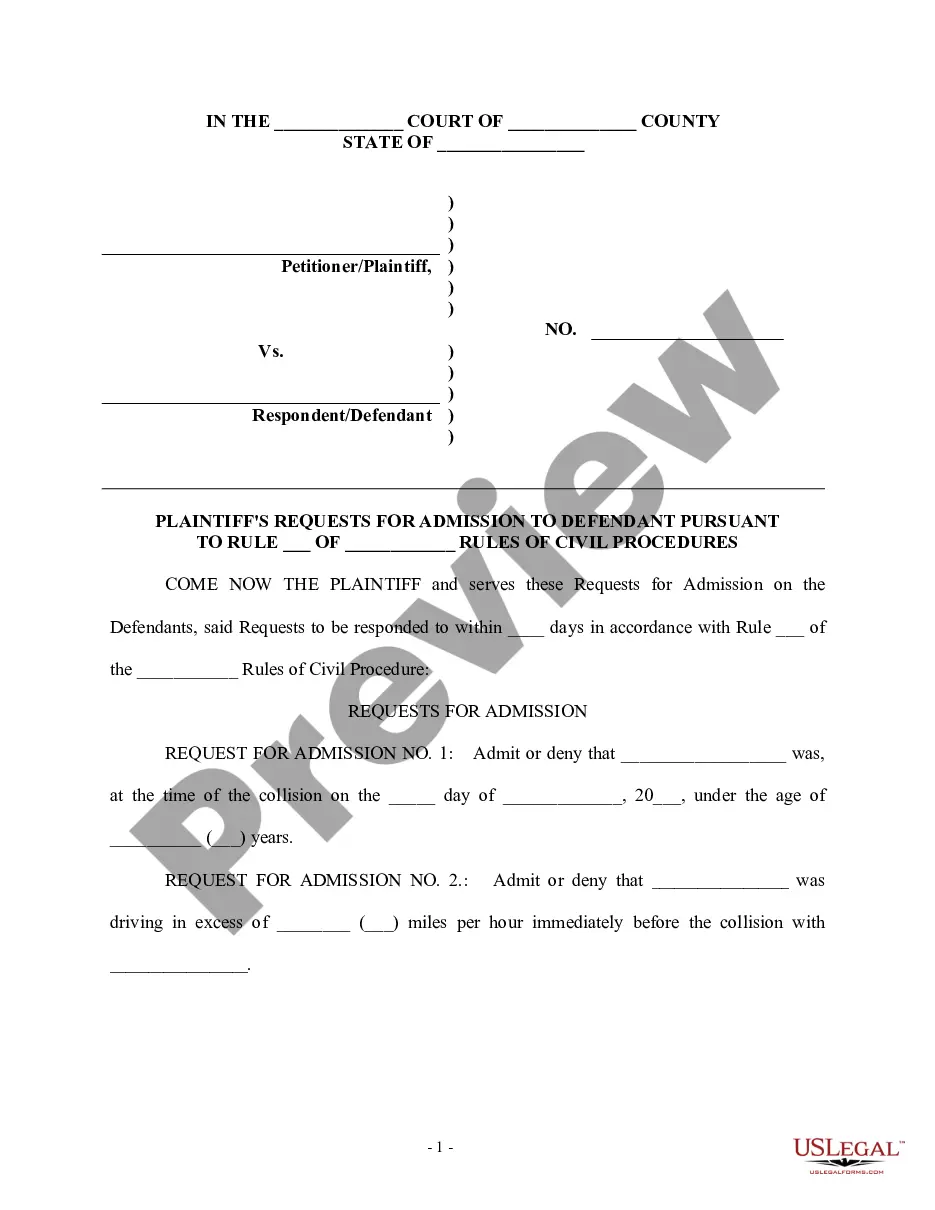
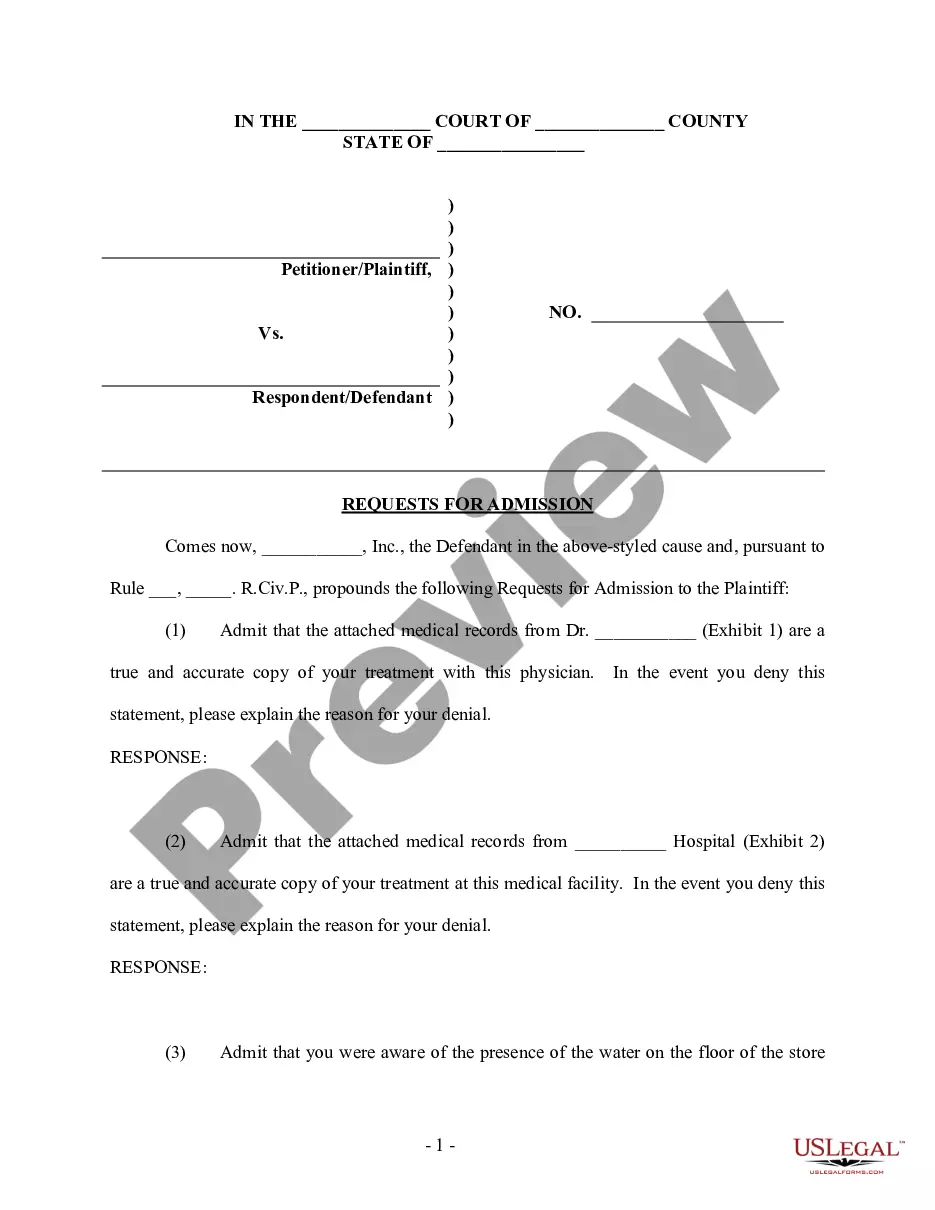
The Request for Admissions in medical malpractice is a legal document used in Mississippi to formally ask the opposing party to admit or deny specific facts related to a medical malpractice case. This form is crucial in simplifying and clarifying the issues in dispute, making it different from other forms by focusing on admissions rather than defenses or claims. Properly utilizing this form can significantly streamline the pre-trial process.
Form components explained
- Parties involved: Names and designations of the plaintiff and defendant.
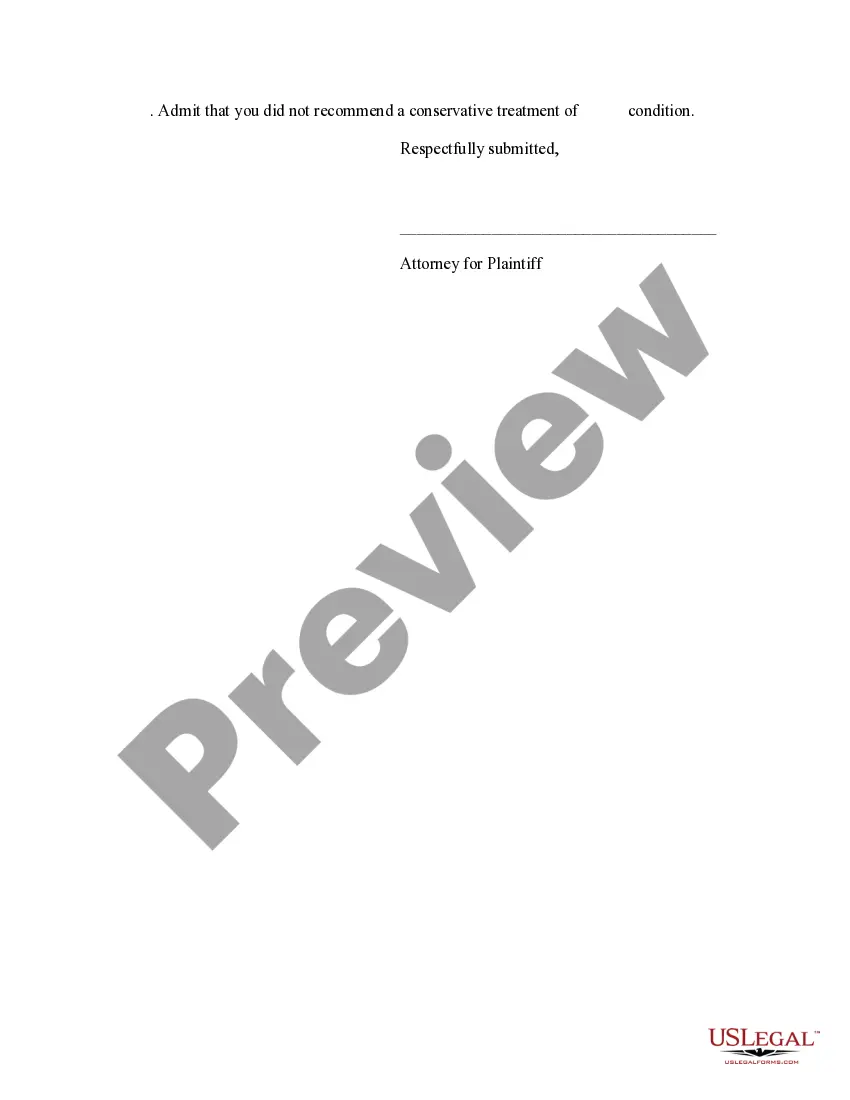
- Confirmation of facts: Specific statements about the case that require an admission or denial.
- Response deadline: A specified time frame within which the opposing party must respond.
- Signature: Space for both parties to sign, formalizing their agreement or disagreement with the statements.
- Instructions: Guidelines for completing and submitting the form as per Mississippi laws.
When this form is needed
This form is essential when you are involved in a medical malpractice litigation and you need to clarify certain factual elements with the other party. It is particularly useful in cases where there may be disagreements on basic facts that can impact the outcome of the case. Utilizing this form can help expedite the discovery process and improve the overall efficiency of the litigation.
Who this form is for
- Plaintiffs seeking to establish facts in a medical malpractice case.
- Defendants wanting to either confirm or challenge specific allegations made against them.
- Attorneys representing parties in a medical malpractice lawsuit.
How to complete this form
- Identify the parties involved by filling in their names and addresses.
- Draft specific statements that you want the opposing party to admit or deny.
- Indicate the deadline by which the opposing party must respond to your requests.
- Ensure all parties sign the form, confirming their acknowledgment of the admissions requested.
- File the completed form with the appropriate court and serve the other party with a copy.
Does this document require notarization?
This form does not typically require notarization to be legally valid. However, some jurisdictions or document types may still require it. US Legal Forms provides secure online notarization powered by Notarize, available 24/7 for added convenience.
Get your form ready online
Our built-in tools help you complete, sign, share, and store your documents in one place.
Make edits, fill in missing information, and update formatting in US Legal Forms—just like you would in MS Word.
Download a copy, print it, send it by email, or mail it via USPS—whatever works best for your next step.
Sign and collect signatures with our SignNow integration. Send to multiple recipients, set reminders, and more. Go Premium to unlock E-Sign.
If this form requires notarization, complete it online through a secure video call—no need to meet a notary in person or wait for an appointment.
We protect your documents and personal data by following strict security and privacy standards.

Make edits, fill in missing information, and update formatting in US Legal Forms—just like you would in MS Word.

Download a copy, print it, send it by email, or mail it via USPS—whatever works best for your next step.

Sign and collect signatures with our SignNow integration. Send to multiple recipients, set reminders, and more. Go Premium to unlock E-Sign.

If this form requires notarization, complete it online through a secure video call—no need to meet a notary in person or wait for an appointment.

We protect your documents and personal data by following strict security and privacy standards.
Common mistakes
- Failing to specify enough details in the requested admissions.
- Missing the response deadline, which can negatively affect the case.
- Not signing the document, rendering it invalid.
- Submitting incorrect or outdated forms that do not comply with current state laws.
Why complete this form online
- Convenience: Download and fill out the form from anywhere at any time.
- Editability: Easily modify the form to fit your specific case details.
- Reliability: Access the most current version of the form that complies with Mississippi laws.
Looking for another form?

Form popularity
FAQ
Misdiagnosis or delayed diagnosis. Failure to treat. Prescription drug errors. Surgical or procedural errors. Childbirth injuries.
Multiple studies have concluded that misdiagnosis is the most common cause of malpractice claims. Misdiagnosis includes failure to diagnose a medical problem that exists or making a diagnosis that is incorrect.
Delayed diagnosis or misdiagnosis. Surgical errors. Poor medical case management. Medication errors. Childbirth and prenatal errors.
A doctor-patient relationship existed. The doctor was negligent. The doctor's negligence caused the injury. The injury led to specific damages. Failure to diagnose. Improper treatment. Failure to warn a patient of known risks.
A successful medical malpractice case rests on three factors: Liability: You must be able to prove that a doctor, nurse or health care provider acted negligently or recklessly in causing your injuries.Causation: There must be a link between that reckless or negligent act and your injuries.
Contact the Medical Professional Involved. Contact the Relevant Medical Licensing Board. Know How Long You Have to File a Claim. Get a Medical Assessment to Confirm Your Case Has Merit. Consider an Out-of-Court Settlement.
Death: The most serious cases of medical malpractice can lead to fatal injuries. Some situations in which this may occur is inattention during serious surgical procedures, improper medication, or device malfunction.
Anesthesia Errors Failing to evaluate a patient's medical history to identify possible complications. Failing to tell the patient critical preoperative instructions, such as not eating or drinking before the procedure. Administering too much anesthesia. Improperly placing the breathing tube.