Mississippi Response to Motion
About this form
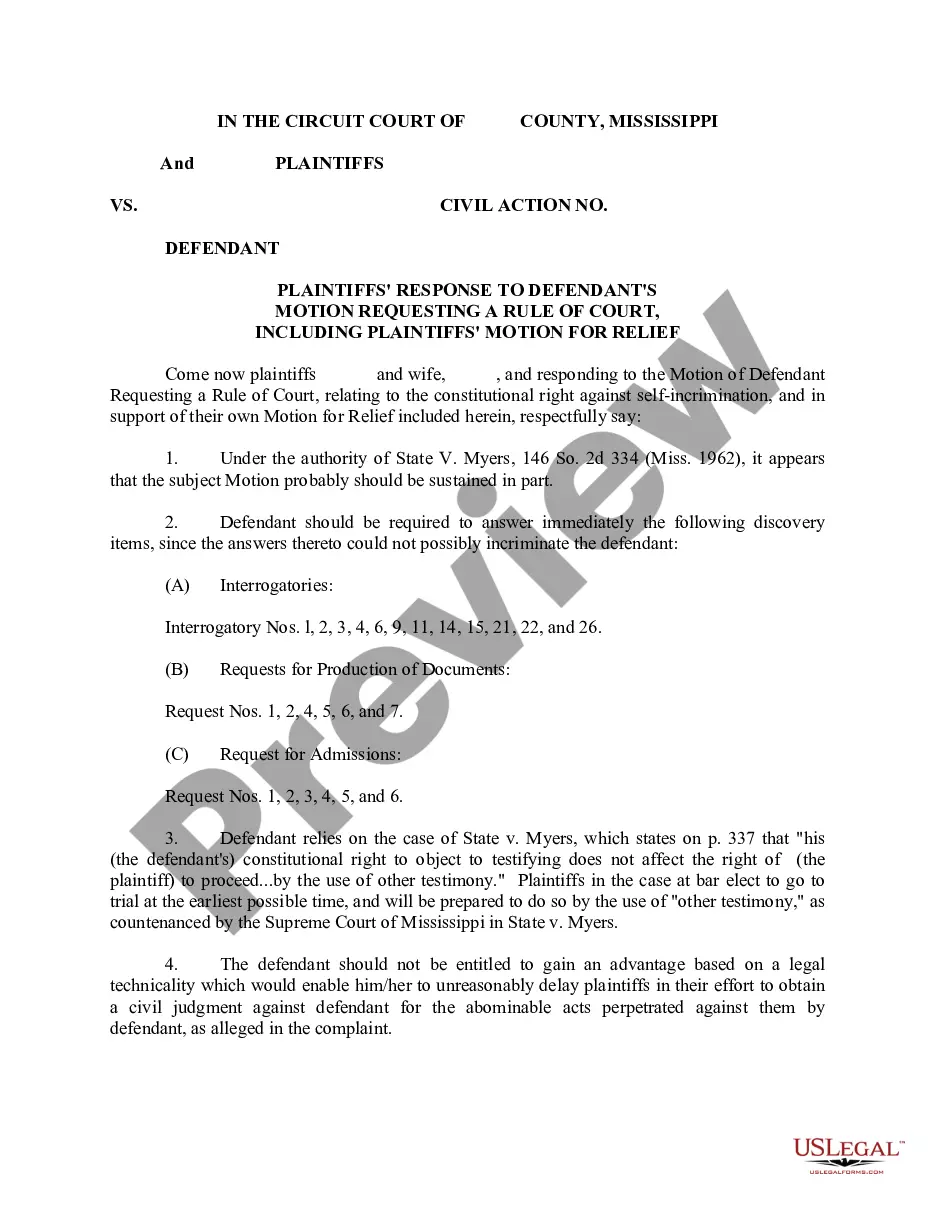
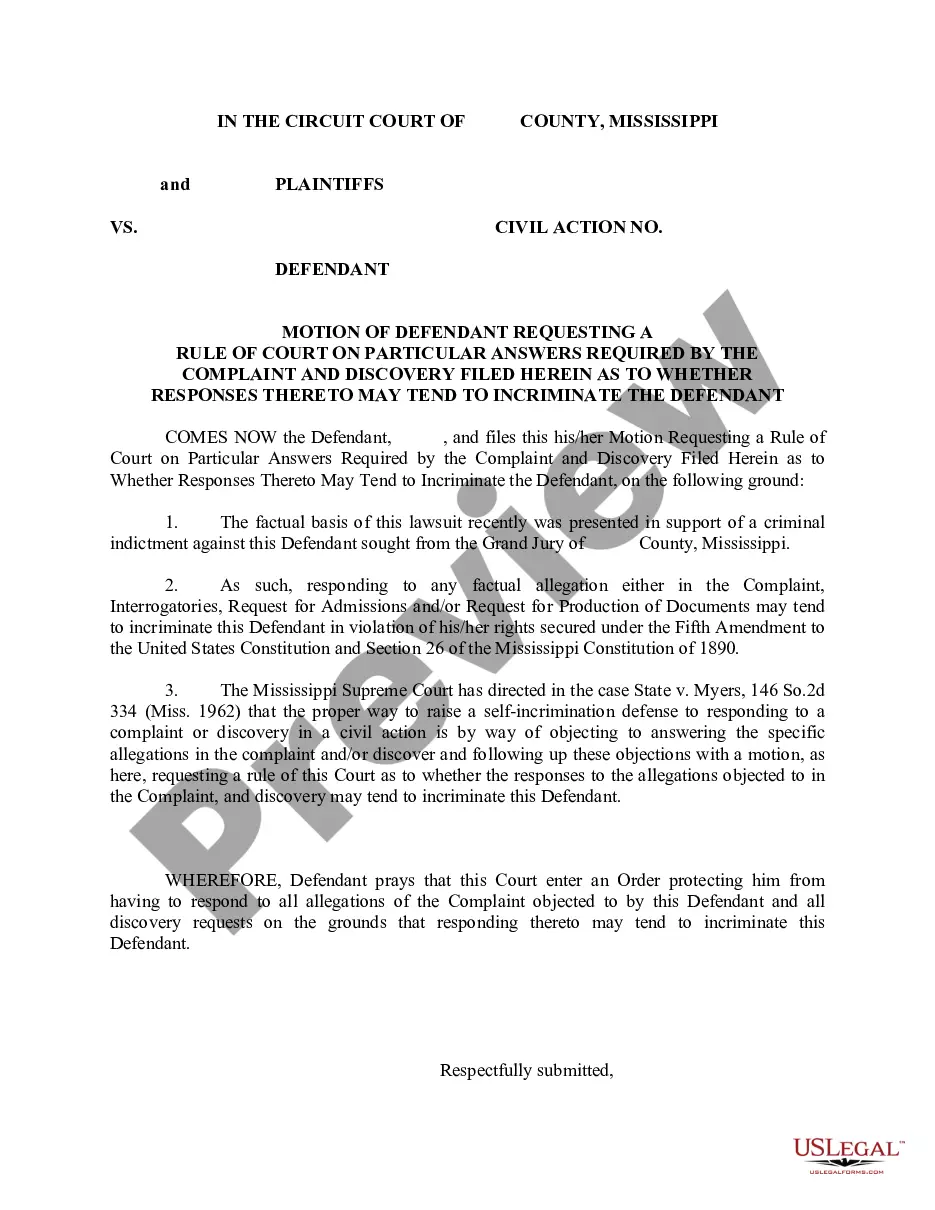
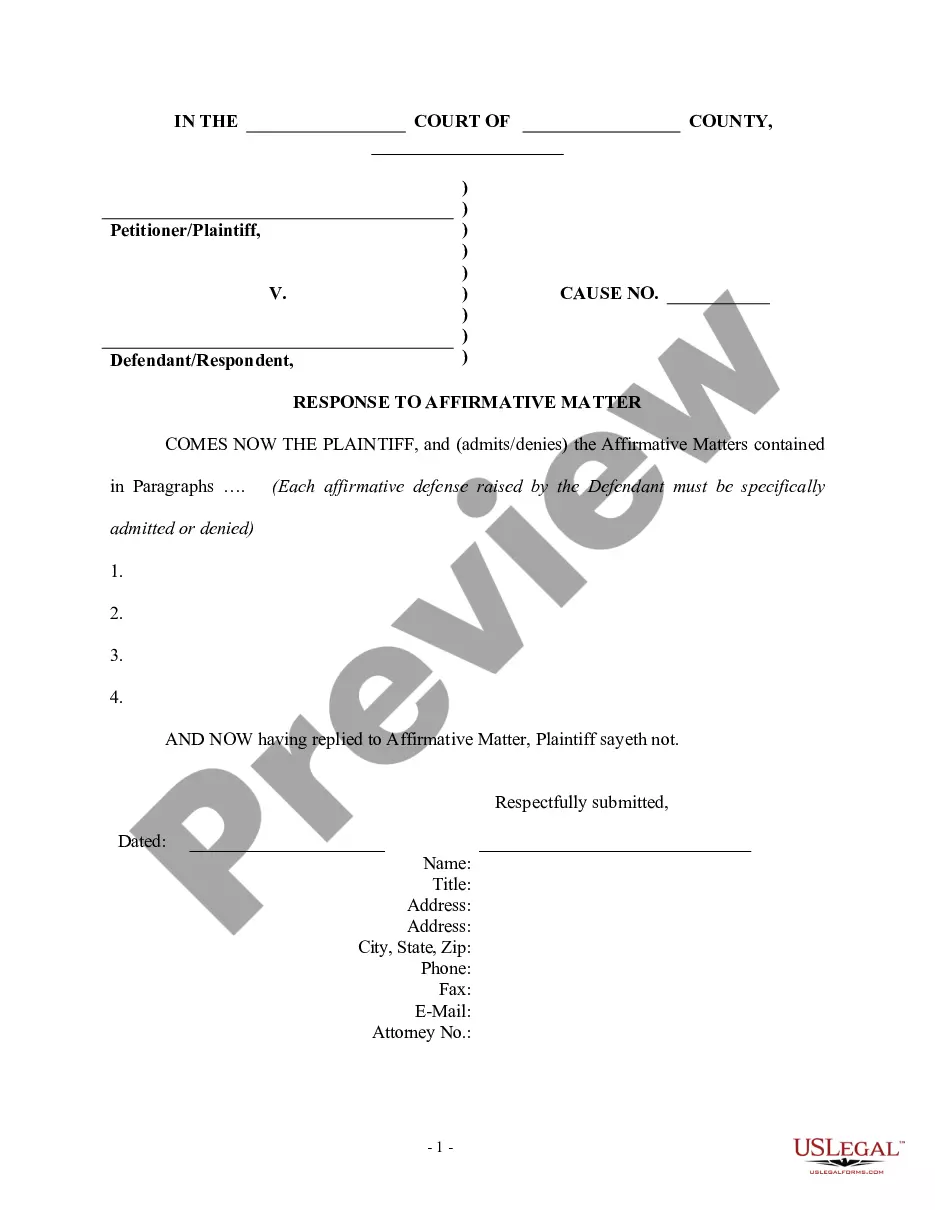
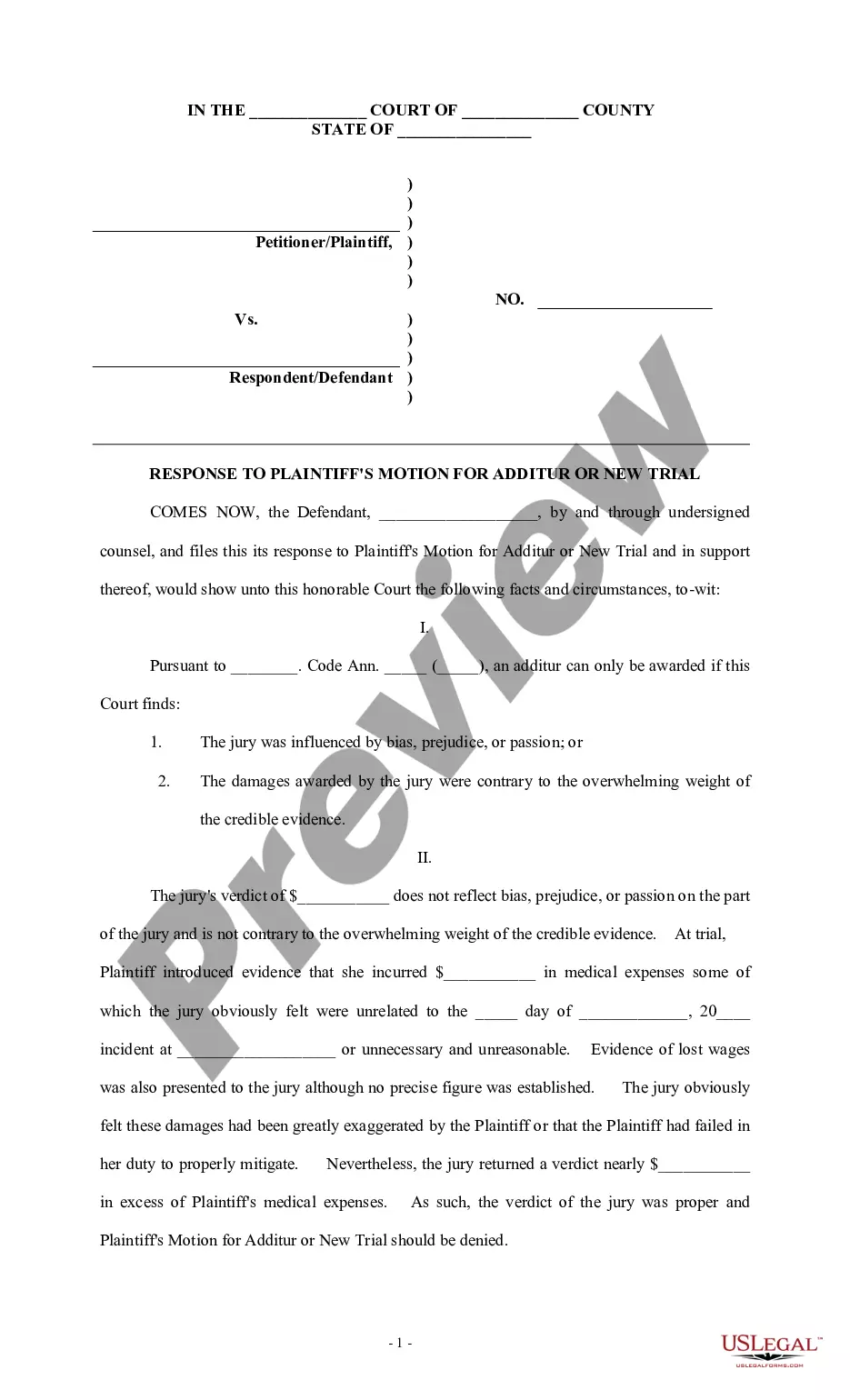
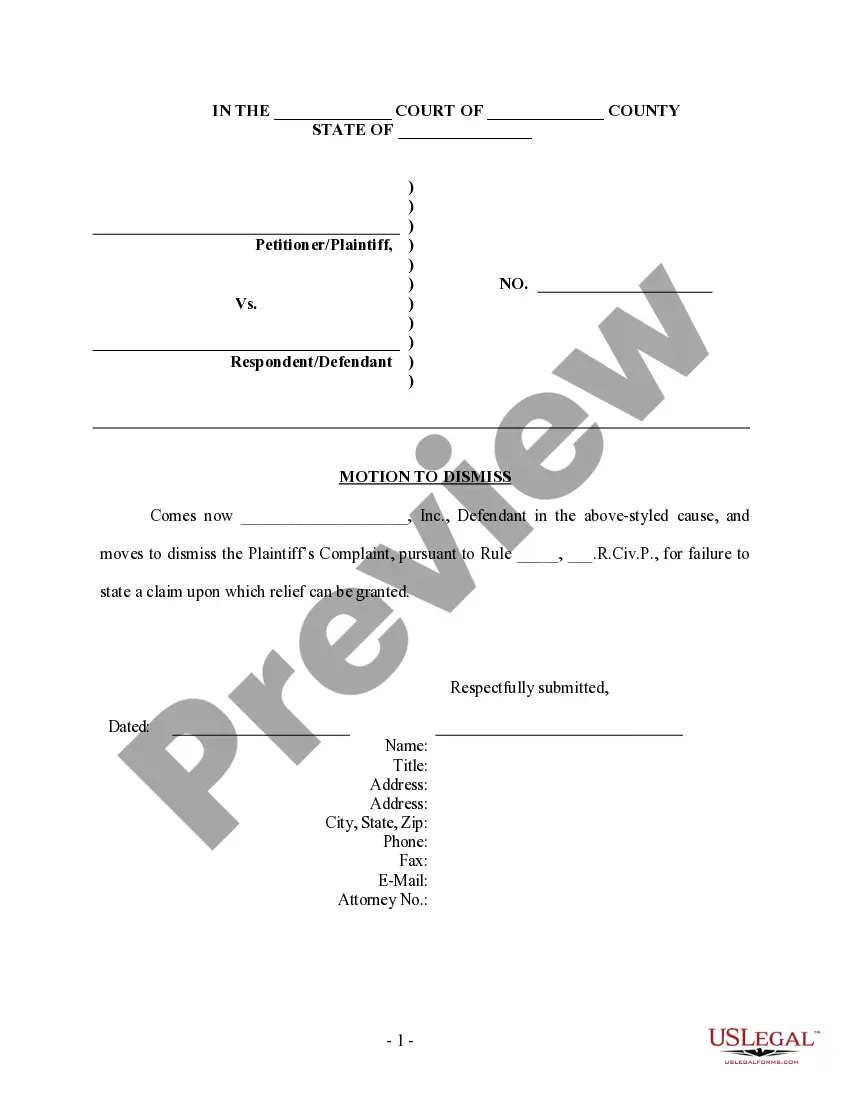
The Response to Motion is a legal document used to address a motion filed in court. It allows the responding party to present arguments or objections related to the motion, providing clarity on their stance regarding specific legal claims or requests made by another party. This form stands out by being customizable, making it suitable for various legal situations while ensuring compliance with legal standards.
What’s included in this form
- Identification of the responding party and the motion being addressed.
- A section to state legal principles and precedents supporting the response.
- Specific discovery items that the defendant is required to answer.
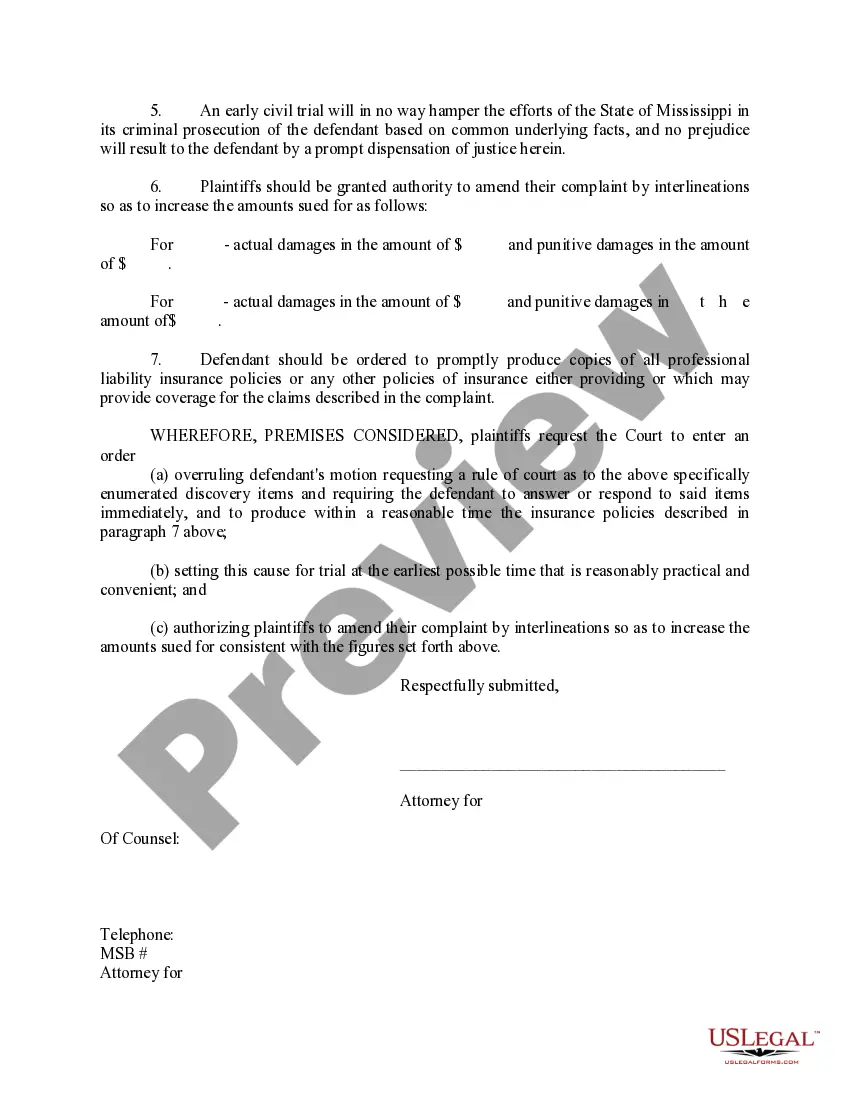
- Declarations regarding the urgency of the matter and trials.
- Request for amendments to the complaint and trial scheduling.
Common use cases
This form should be used when you receive a motion from the opposing party in a legal case and need to respond formally. It is particularly relevant in civil litigation, where time-sensitive responses are critical to advancing your case. Use this form to assert your rights, challenge requests, or provide necessary information as required by the court.
Who can use this document
- Individuals or parties involved in a civil litigation process needing to respond to a motion.
- Lawyers representing clients who are defendants in civil cases.
- Pro se litigants who are self-representing in court and require a structured template for their response.
Instructions for completing this form
- Identify the parties involved by filling out their names and roles in the case.
- Complete the section that states your response to the motion, referencing applicable laws or cases.
- List the discovery items the defendant must answer, ensuring clarity in your requests.
- Declare the urgency of setting a trial and the rationale behind your request for a prompt resolution.
- Review for accuracy and completeness before submitting the document to the court.
Notarization requirements for this form
Notarization is generally not required for this form. However, certain states or situations might demand it. You can complete notarization online through US Legal Forms, powered by Notarize, using a verified video call available anytime.
Get your form ready online
Our built-in tools help you complete, sign, share, and store your documents in one place.
Make edits, fill in missing information, and update formatting in US Legal Forms—just like you would in MS Word.
Download a copy, print it, send it by email, or mail it via USPS—whatever works best for your next step.
Sign and collect signatures with our SignNow integration. Send to multiple recipients, set reminders, and more. Go Premium to unlock E-Sign.
If this form requires notarization, complete it online through a secure video call—no need to meet a notary in person or wait for an appointment.
We protect your documents and personal data by following strict security and privacy standards.

Make edits, fill in missing information, and update formatting in US Legal Forms—just like you would in MS Word.

Download a copy, print it, send it by email, or mail it via USPS—whatever works best for your next step.

Sign and collect signatures with our SignNow integration. Send to multiple recipients, set reminders, and more. Go Premium to unlock E-Sign.

If this form requires notarization, complete it online through a secure video call—no need to meet a notary in person or wait for an appointment.

We protect your documents and personal data by following strict security and privacy standards.
Mistakes to watch out for
- Failing to reference the specific motion being responded to.
- Overlooking essential discovery items that need to be addressed.
- Not adhering to local submission protocols, such as formatting and deadlines.
- Submitting the form without proper signatures or required documentation as evidence.
Why complete this form online
- Convenient and accessible, allowing for easy edits and updates as needed.
- Reliable templates drafted by licensed attorneys to ensure legal accuracy.
- Instant download options available in various formats for your preference.
Legal use & context
- The Response to Motion is a critical step in the litigation process, allowing you to formally contest the requests made by the opposing party.
- Using a properly drafted response can help protect your legal rights and streamline the legal proceedings.
- Ensure that your response adheres to local court rules for maximum effectiveness.
Looking for another form?
Form popularity
FAQ
You have only 14 days to respond to a regular motion. The time to respond runs from the date the motion was filed. Check the certificate of service, which should be included with the Motion papers. If you need to respond to an Administrative Motion, you have only 4 days.
A motion is a written request made to the court, asking the judge to issue an order.Other parties have the chance to file and serve a written response to the motion. There is a specific deadline for filing and serving a written response, usually fourteen (14) days prior to a hearing.
A "motion" is simply a formal request to a court that it do something or decide an issue in favor of the party that asks for it. "Granted" means the court agreed with the request, and did or decided in favor of the requester.
This formal writing breaks down into two categories: pleadings and motions. A pleading demands that the other party do something, while a motion requests that the judge in the case do something.A party filing a complaint is the complaining party, while the other side is the responding party.
The motion to compel further responses has to be brought within 45 days of service of the response. (C.C.P. § 2030.300) Sounds simple enough, but it's not. You have to understand when something is deemed served.
The response must be filed within 10 days after service of the motion unless the court shortens or extends the time. A motion authorized by Rules 8, 9, 18, or 41 may be granted before the 10-day period runs only if the court gives reasonable notice to the parties that it intends to act sooner.
(a) Motion and opposition (3) Any opposition must be served and filed within 15 days after the motion is filed.
21 provides that misjoinder of parties is not ground for dismissal of an action, and that parties may be dropped or added by court order on motion of any party or of the court's own initiative at any stage in the action and on such terms as are just.
Effect of a Rule 12 Motion - Absent a court order setting a different time, a Rule 12 motion extends the time to file a responsive pleading until 14 days after the court's denial of the motion or deferral to trial or, if more definite statement ordered, 14 days after service of the more definite statement. FED.