Mississippi Order Granting Protective Order
Overview of this form
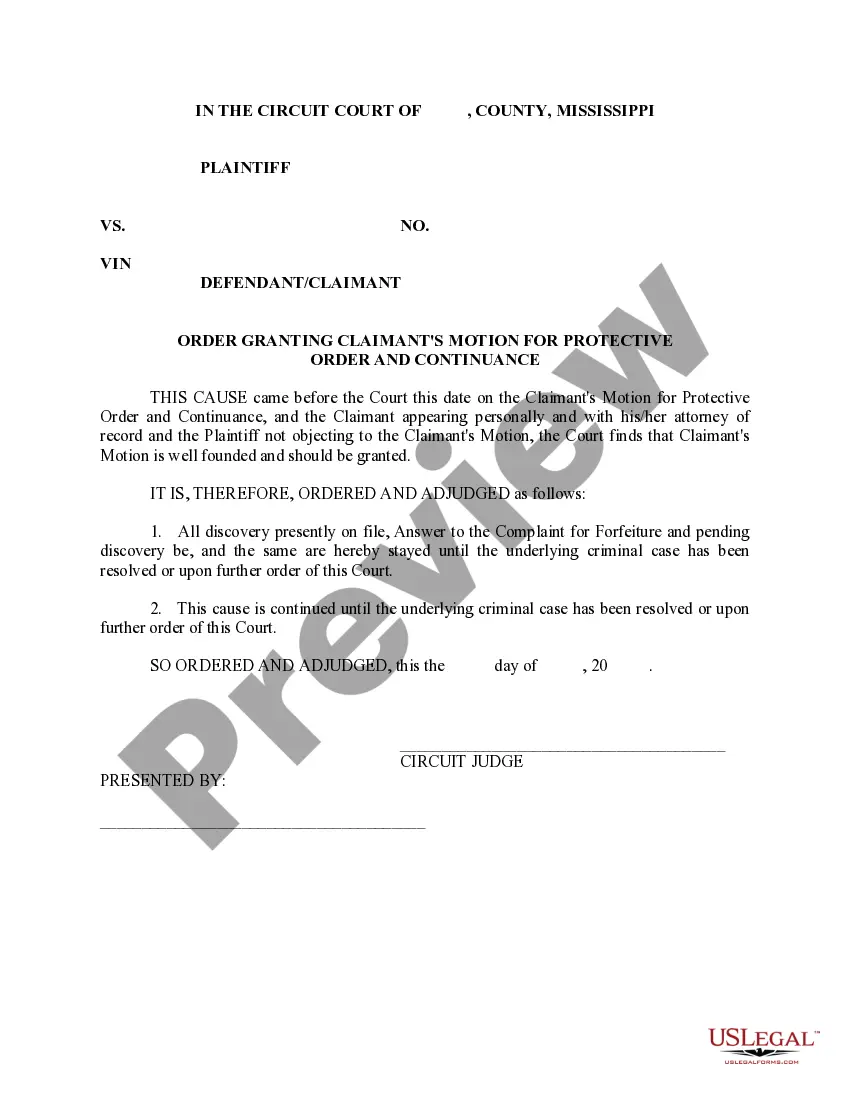
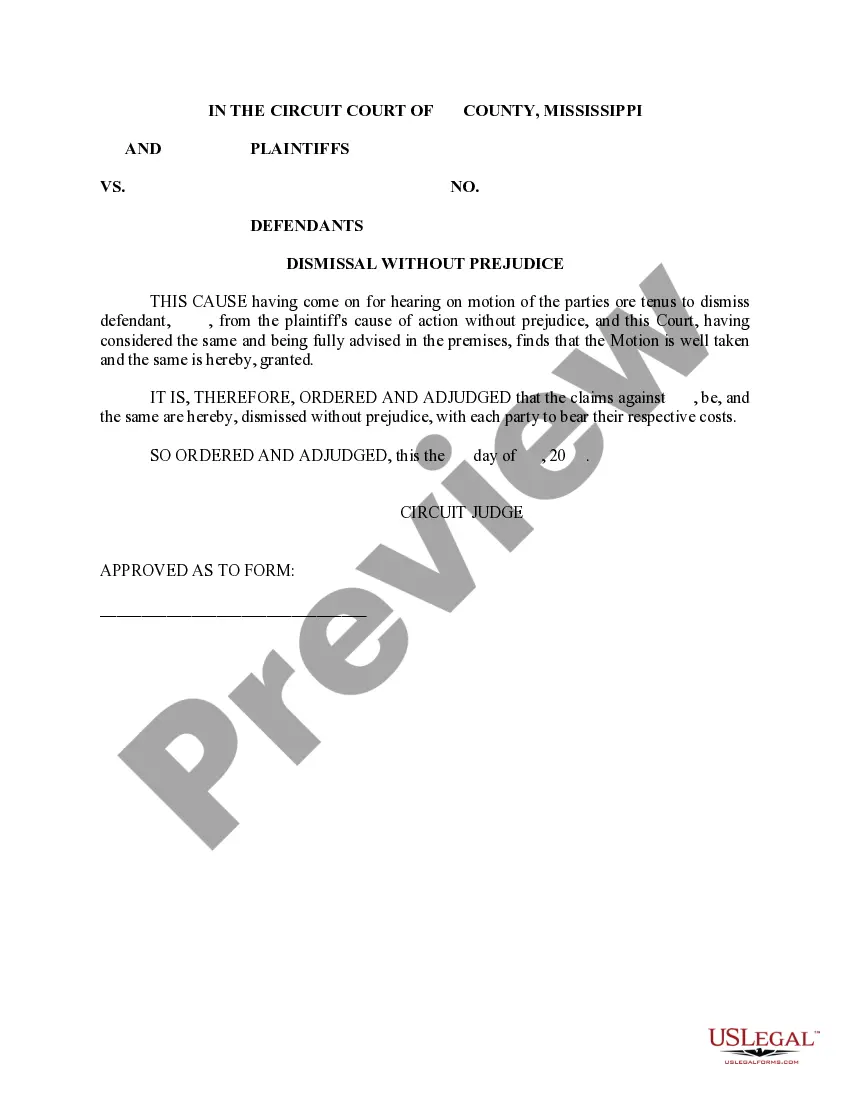
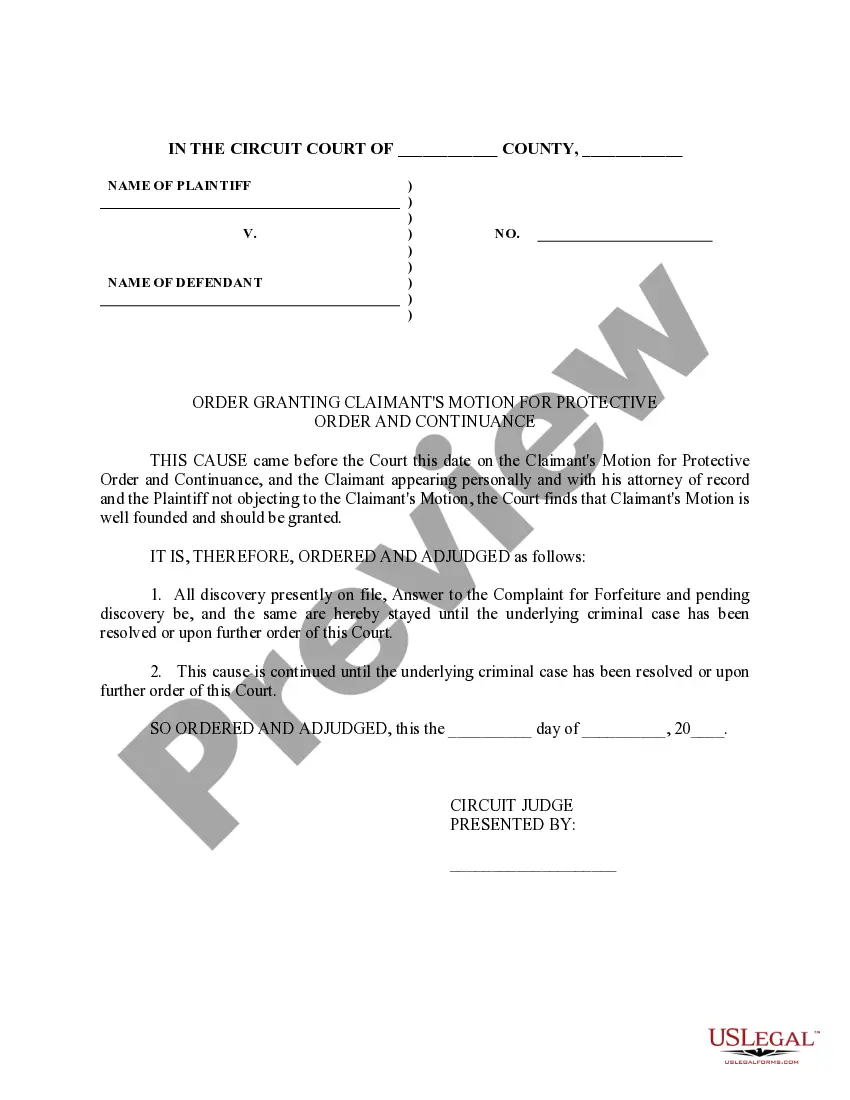
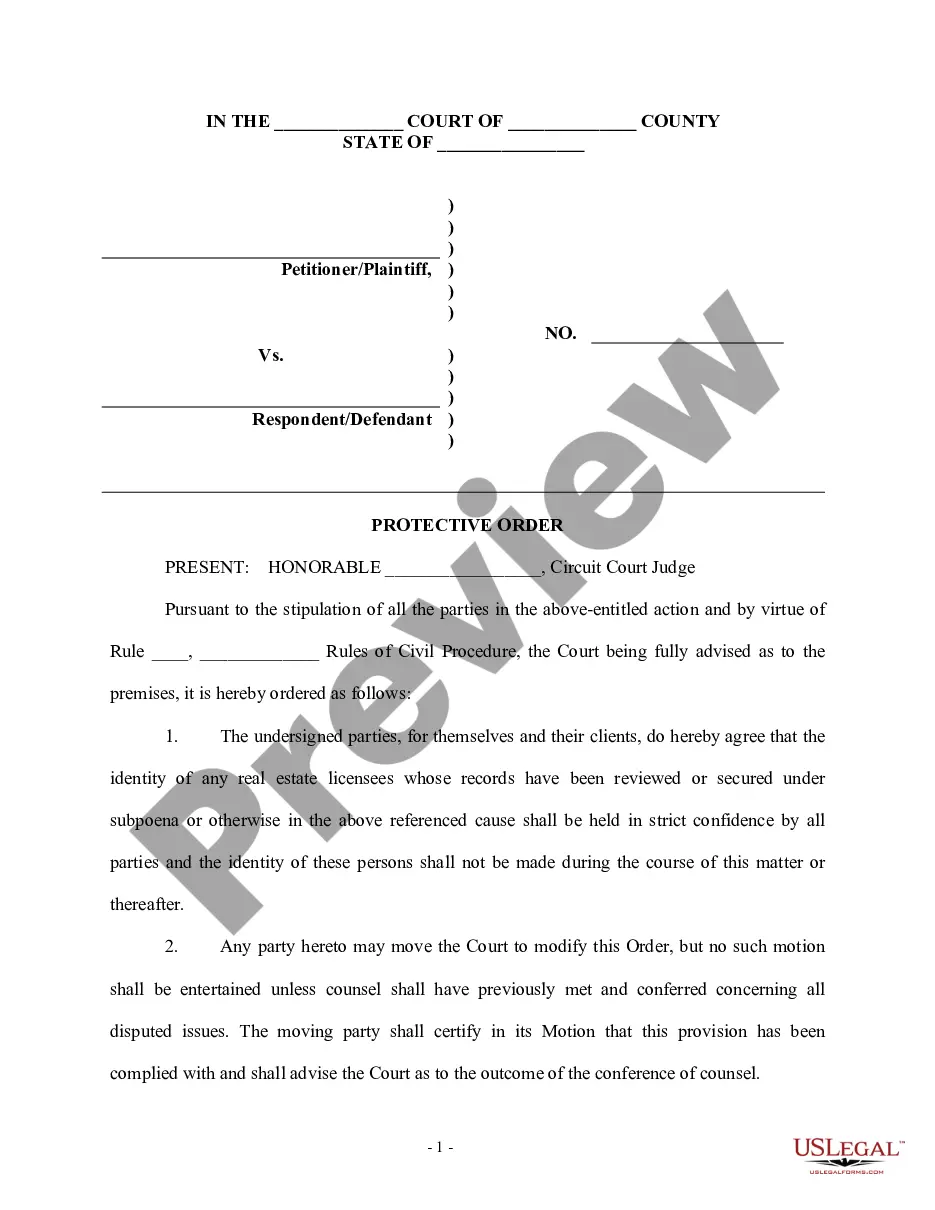
The Order Granting Protective Order is a legal document issued by a court that commands specific actions to protect a party's rights during ongoing legal proceedings. This form is used to pause discovery processes until a related case is resolved, helping to ensure that all parties have a fair chance without undue pressure during potentially complex legal situations. Unlike other court orders, this form specifically addresses protective measures in the context of ongoing criminal cases.
Form components explained
- The introductory clause stating the court's findings regarding the Claimant's motion.
- Details of the stay on all discovery processes currently on file.
- Provisions for continuing the case until the underlying criminal matter is resolved.
When this form is needed
This form is necessary when a claimant requests a protective order to halt discovery processes in a civil case due to ongoing criminal proceedings. It is commonly used when the claimant seeks to avoid self-incrimination or when the resolution of the criminal case may impact the civil litigation significantly. Legal counsel typically recommends this form in scenarios involving contested allegations or sensitive information.
Who this form is for
- Claimants involved in civil litigation who are also facing criminal charges.
- Individuals seeking to protect their legal interests during concurrent legal processes.
- Legal representatives acting on behalf of claimants in related cases.
Steps to complete this form
- Begin by entering the relevant case information, including the court name and case number.
- Clearly state the reasoning for the protective order request in the introductory clause.
- Specify the details of the stay on the discovery processes within the document.
- Include any requests for continuance until the underlying criminal case is resolved.
- Ensure all parties are represented accurately and consider including attorneysâ information if applicable.
Notarization requirements for this form
This form does not typically require notarization unless specified by local law. Always check relevant regulations to ensure compliance with jurisdictional requirements.
Get your form ready online
Our built-in tools help you complete, sign, share, and store your documents in one place.
Make edits, fill in missing information, and update formatting in US Legal Forms—just like you would in MS Word.
Download a copy, print it, send it by email, or mail it via USPS—whatever works best for your next step.
Sign and collect signatures with our SignNow integration. Send to multiple recipients, set reminders, and more. Go Premium to unlock E-Sign.
If this form requires notarization, complete it online through a secure video call—no need to meet a notary in person or wait for an appointment.
We protect your documents and personal data by following strict security and privacy standards.

Make edits, fill in missing information, and update formatting in US Legal Forms—just like you would in MS Word.

Download a copy, print it, send it by email, or mail it via USPS—whatever works best for your next step.

Sign and collect signatures with our SignNow integration. Send to multiple recipients, set reminders, and more. Go Premium to unlock E-Sign.

If this form requires notarization, complete it online through a secure video call—no need to meet a notary in person or wait for an appointment.

We protect your documents and personal data by following strict security and privacy standards.
Mistakes to watch out for
- Failing to provide adequate justification for the protective order.
- Omitting necessary case details, such as the case number or jurisdiction.
- Neglecting to sign the order or secure the required judicial approval.
Why complete this form online
- Easy access and immediate download of professionally drafted templates.
- Customizable to fit specific legal needs and circumstances.
- Convenient to modify and complete at your own pace from any location.
Legal use & context
- A Protective Order is legally enforceable and must be complied with once issued by a court.
- Failure to comply with such orders may lead to contempt of court charges.
- Use this form in conjunction with legal advice for the best outcomes in court proceedings.
Key takeaways
- An Order Granting Protective Order helps suspend legal proceedings during related criminal cases.
- It is crucial for protecting the rights of claimants involved in both civil and criminal matters.
- Ensure compliance with local requirements to enhance the formâs legal standing.
Looking for another form?

Form popularity
FAQ
If the judge is satisfied, he or she will issue a temporary protective order that will last ten days, but which can be extended upon request, up to the maximum length of one year, but can only last 30 days where the victim has minor children with the abuser.
Be punctual. Make sure your witnesses are present and prepared. Ensure your evidence is ready. If witnesses or documents that have been subpoenaed and are not in the court, let the judge know. Dress in a manner similar to that as you would for a job interview.
Ask the court to change the order. The court can drop the "no contact" part of the order but keep the "no abuse" part of the order. Get the 209A protective order "terminated." This will end the order completely.
There are typically two reasons for a denied restraining order petition: Petitioner did not establish a claim for relief. Petitioner did not appear at the time set for the ex parte hearing on the petition.
If a Judge hears from an individual about past cases of physical or emotional abuse without a good explanation from the other side, a restraining order can be granted.If the connection between the parties is something else, like neighbors, then the restraining order is a civil one, not domestic violence.
If you believe the protection order was granted improperly or that it is no longer needed, you can file a motion asking the court to dissolve (terminate or cancel) the protection order.If the court schedules a hearing and grants the motion, the protection order will become immediately void and unenforceable.
Consult with a family law attorney experienced in defending people against false restraining orders. You must go to court for the final restraining order hearing and present your evidence proving why the accusations against you are false. The evidence can be police reports, witnesses, text messages and or emails.
Under section 93-21-7(2) of the Mississippi Code, there is no cost to file for a protection order. . temporary restraining order. the clerk will fill out the information for you.