Mississippi Procedures
Understanding this form
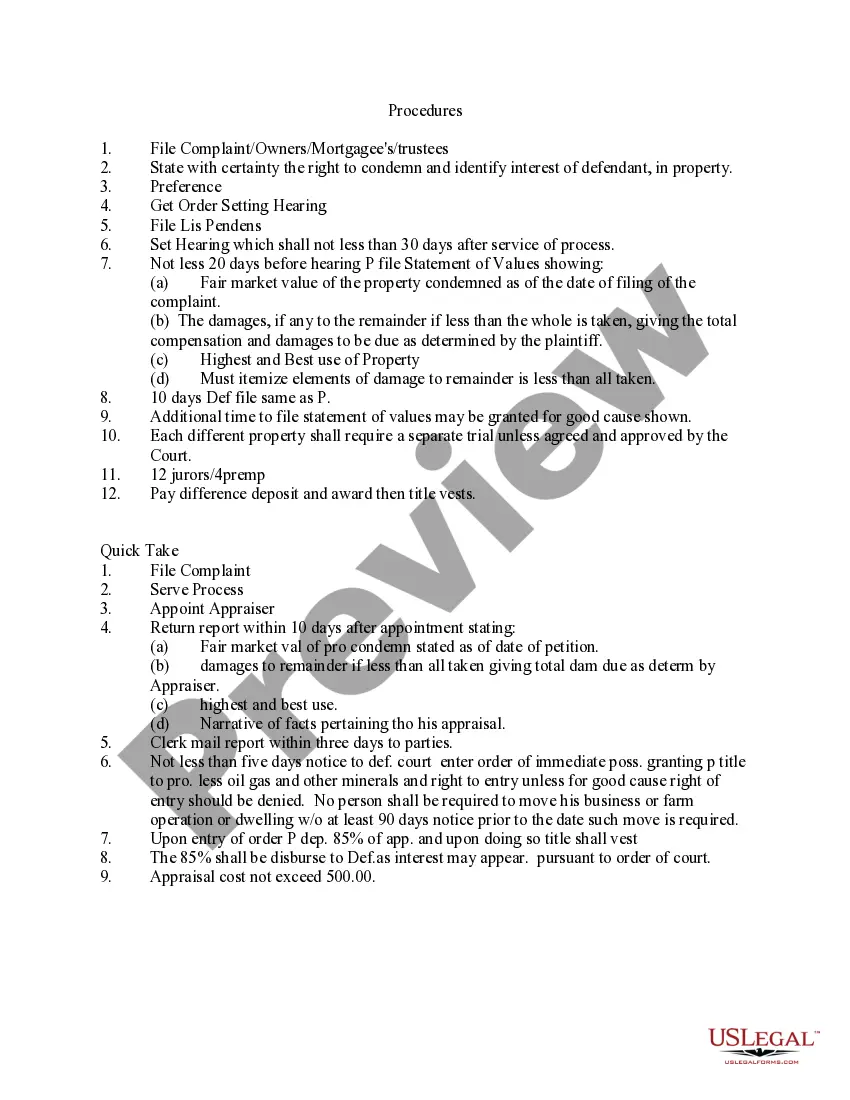
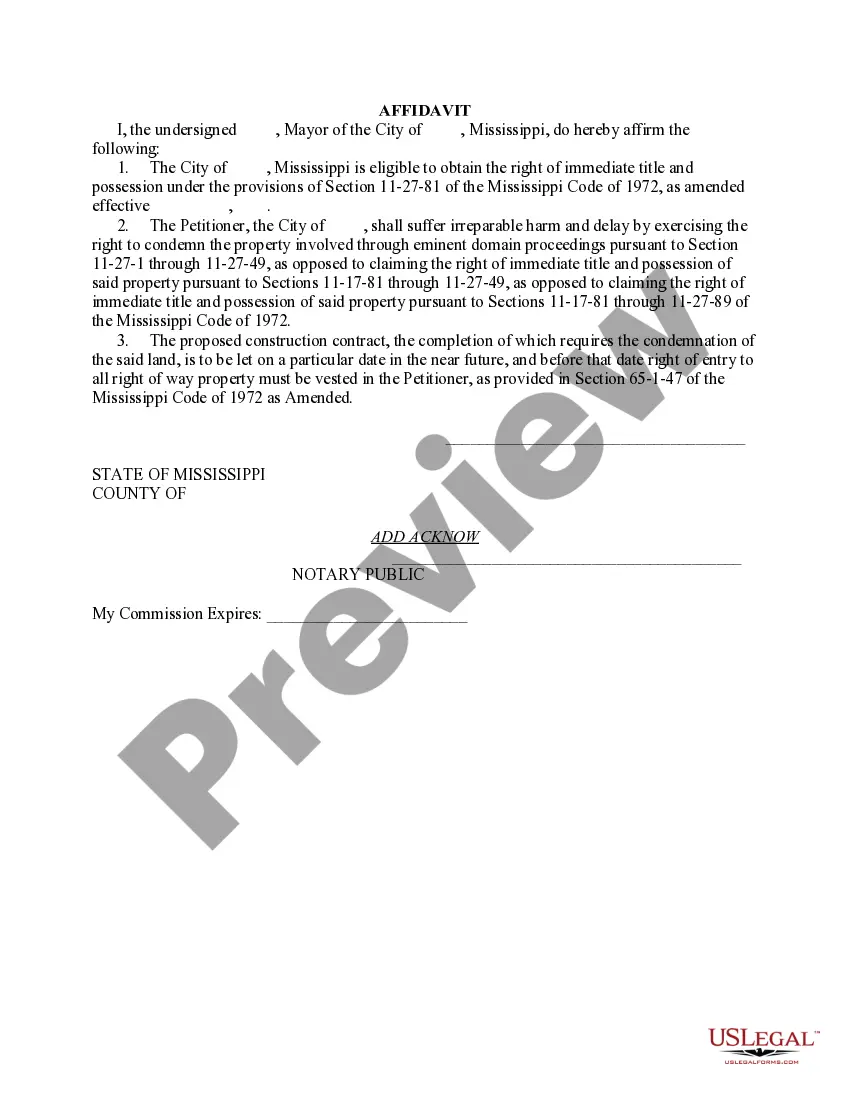
The Procedures form is an informational guide related to eminent domain cases. It outlines the necessary steps and forms needed to initiate and pursue an eminent domain action successfully. This form is essential for individuals or entities looking to understand their rights and obligations in such cases, distinguishing it from other legal forms that may not provide specific procedural guidance.
What’s included in this form
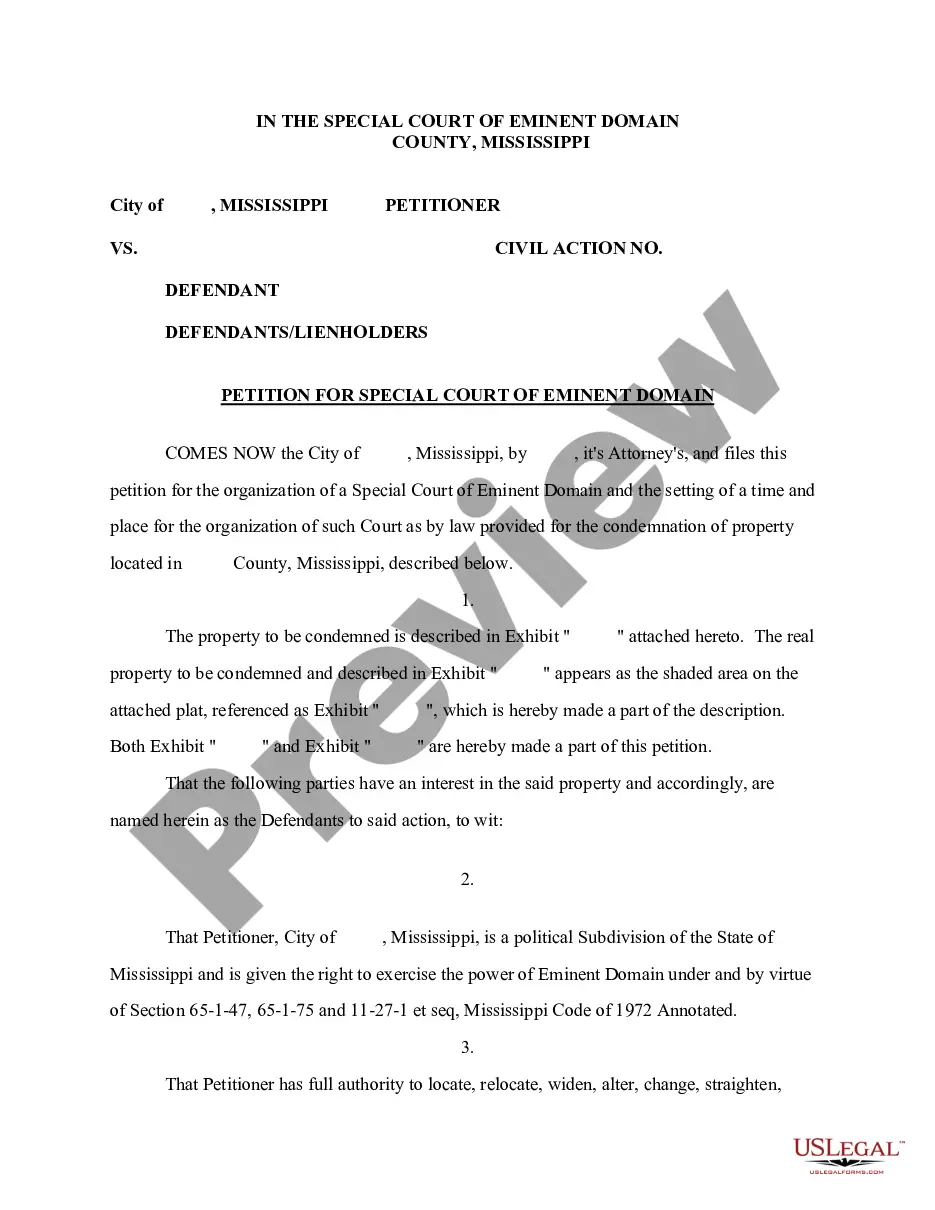
- Filing a Complaint against property owners, mortgagees, and trustees.
- Requirements to state the right to condemn and identify the defendant's interest in property.
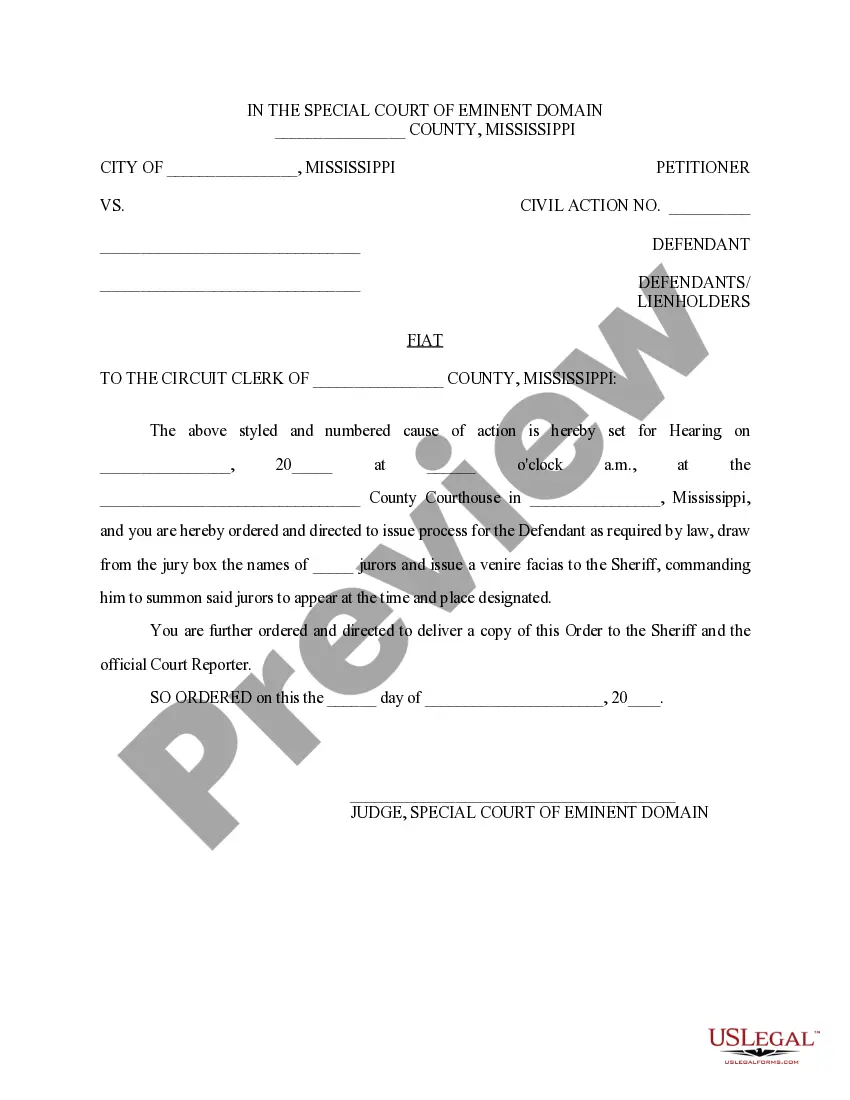
- Procedures for hearing notifications and scheduling.
- Preparation of a Statement of Values showing fair market value and damages.
- Details for appointing an appraiser and filing appraisal reports.
- Title vesting procedures and deposit requirements.


When to use this document
This form is used when a property owner or government authority seeks to acquire private property for public use through eminent domain. You would typically use this form when you are involved in cases where your property is targeted for such acquisition and you need to navigate the legal process required to assert your rights and receive fair compensation.
Who needs this form
- Property owners facing potential eminent domain actions.
- Government entities responsible for public projects requiring property acquisition.
- Legal representatives assisting clients through the eminent domain process.
- Mortgagees or trustees involved in property that may be subjected to condemnation.
Completing this form step by step
- File the Complaint to initiate the eminent domain proceedings.
- Clearly state your right to condemn and identify all interested parties in the property.
- Set a hearing date and ensure proper notice is given to all parties involved.
- Prepare and file a Statement of Values with fair market valuations and damage estimates.
- Appoint an appraiser to evaluate the property and submit their findings as required.
- Ensure compliance with all court orders regarding payments and title vesting.
Does this document require notarization?
This form usually doesn’t need to be notarized. However, local laws or specific transactions may require it. Our online notarization service, powered by Notarize, lets you complete it remotely through a secure video session, available 24/7.
Get your form ready online
Our built-in tools help you complete, sign, share, and store your documents in one place.
Make edits, fill in missing information, and update formatting in US Legal Forms—just like you would in MS Word.
Download a copy, print it, send it by email, or mail it via USPS—whatever works best for your next step.
Sign and collect signatures with our SignNow integration. Send to multiple recipients, set reminders, and more. Go Premium to unlock E-Sign.
If this form requires notarization, complete it online through a secure video call—no need to meet a notary in person or wait for an appointment.
We protect your documents and personal data by following strict security and privacy standards.

Make edits, fill in missing information, and update formatting in US Legal Forms—just like you would in MS Word.

Download a copy, print it, send it by email, or mail it via USPS—whatever works best for your next step.

Sign and collect signatures with our SignNow integration. Send to multiple recipients, set reminders, and more. Go Premium to unlock E-Sign.

If this form requires notarization, complete it online through a secure video call—no need to meet a notary in person or wait for an appointment.

We protect your documents and personal data by following strict security and privacy standards.
Typical mistakes to avoid
- Failing to provide adequate notice to involved parties about hearings.
- Not filing the Statement of Values properly or on time.
- Neglecting to appoint an appraiser in a timely manner.
- Overlooking specific state requirements that may apply to your case.
Benefits of using this form online
- Convenience: Easily download and access the form at any time.
- Editability: Customize the form in Word or Rich Text formats to suit your needs.
- Reliability: Ensure you are using a legally vetted form prepared by licensed attorneys.
Legal use & context
- This form provides guidance on the process of eminent domain, a legal mechanism allowing government entities to acquire private property for public use.
- It is essential to follow the outlined procedures to ensure claims are enforceable and valid.
- By using this form, parties can better understand their rights and responsibilities under eminent domain laws.
Summary of main points
- This form serves as a guide to the procedures necessary for eminent domain actions.
- Timely filing and proper documentation are crucial to success.
- Consult local laws for any specific requirements that may apply to your case.
Looking for another form?
Form popularity
FAQ
The eminent domain power is subjected to certain constitutional limits such as: The property acquired must be taken for a public use; The state must pay just compensation in exchange for the property; No person must be deprived of his/her property without due process of law.
The Fifth Amendment to the Constitution says 'nor shall private property be taken for public use, without just compensation.' This is a tacit recognition of a preexisting power to take private property for public use, rather than a grant of new power. 597 Eminent domain appertains to every independent government.
Eminent domain has been utilized traditionally to facilitate transportation, supply water, construct public buildings, and aid in defense readiness. Early federal cases condemned property for construction of public buildings (e.g., Kohl v.
The Constitution protects property rights through the Fifth and Fourteenth Amendments' Due Process Clauses and, more directly, through the Fifth Amendment's Takings Clause: nor shall private property be taken for public use without just compensation. There are two basic ways government can take property: (1) outright
In most cases, it is not possible to refuse an eminent domain action. The power of eminent domain is a legal right of the government.However, you can oppose the government's requests if they are not acting justly, and can refuse their compensation offers to ensure you receive a fair sum.
Most appraisers will break down the $75,000 amount into the components of just compensation (discussed in more detail below), including the portion attributable to the land taken, land improvements taken, residue damages or other damages.
Assuming you decline, the government will file an action in court to seize your property through eminent domain. Then, the court schedules an Order of Taking. This is a court hearing in which the government argues that it attempted to purchase your land for a fair price and is justified in seizing it for public use.
Eminent domain refers to the power of the government to take private property and convert it into public use. The Fifth Amendment provides that the government may only exercise this power if they provide just compensation to the property owners.