Mississippi Response and Objection to First Request for Production of Documents
Overview of this form
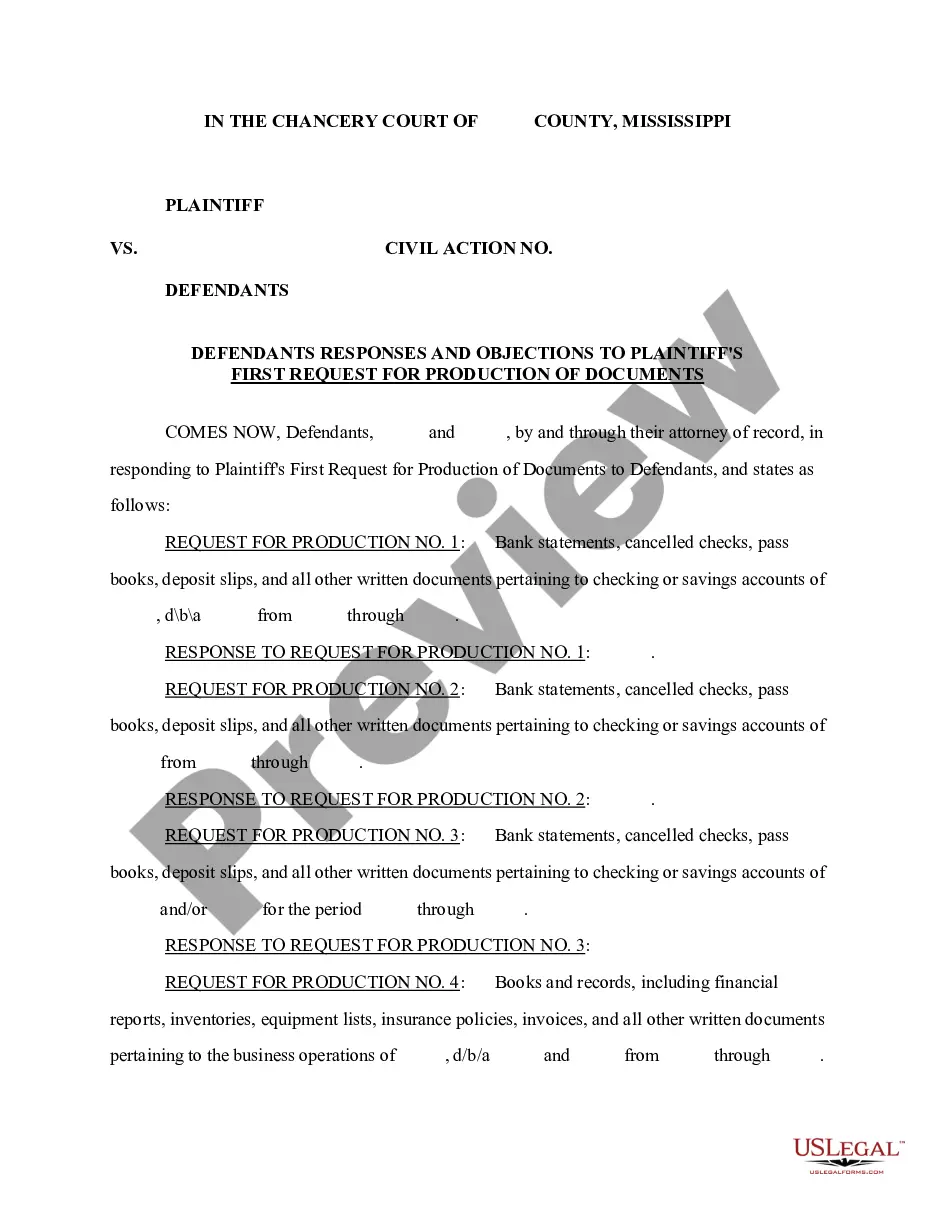
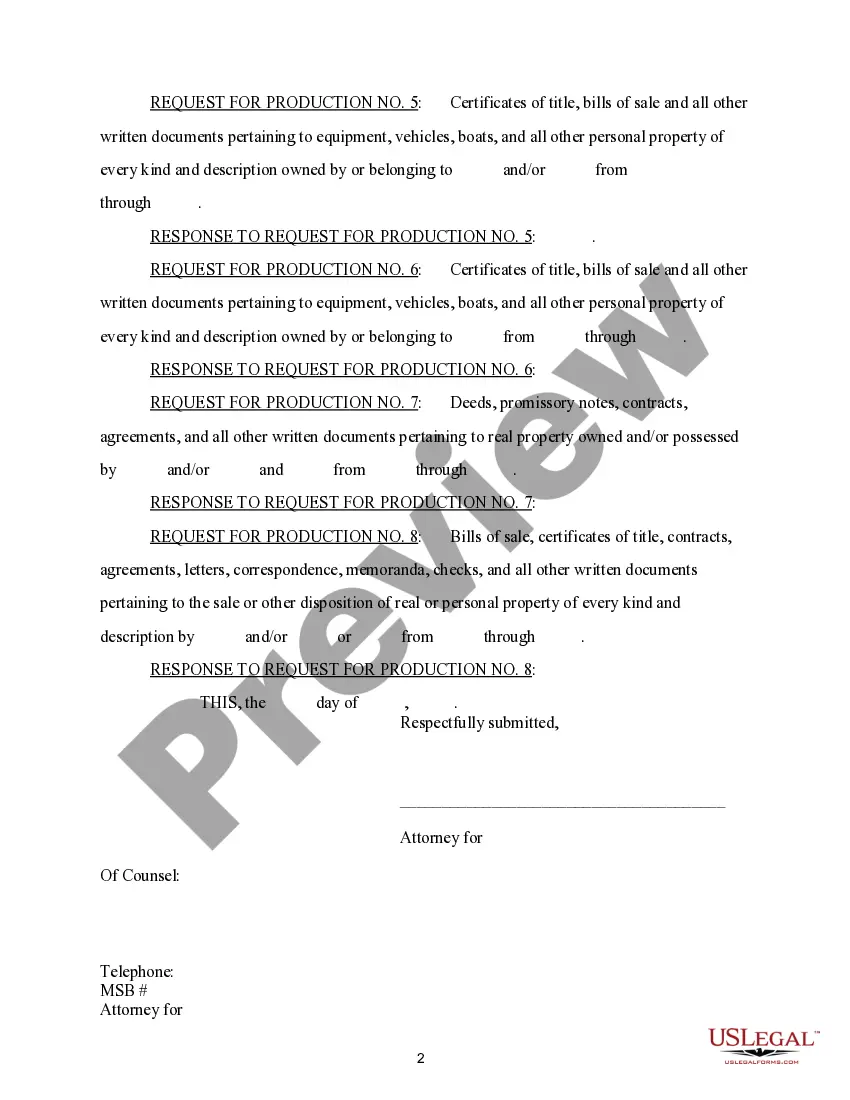
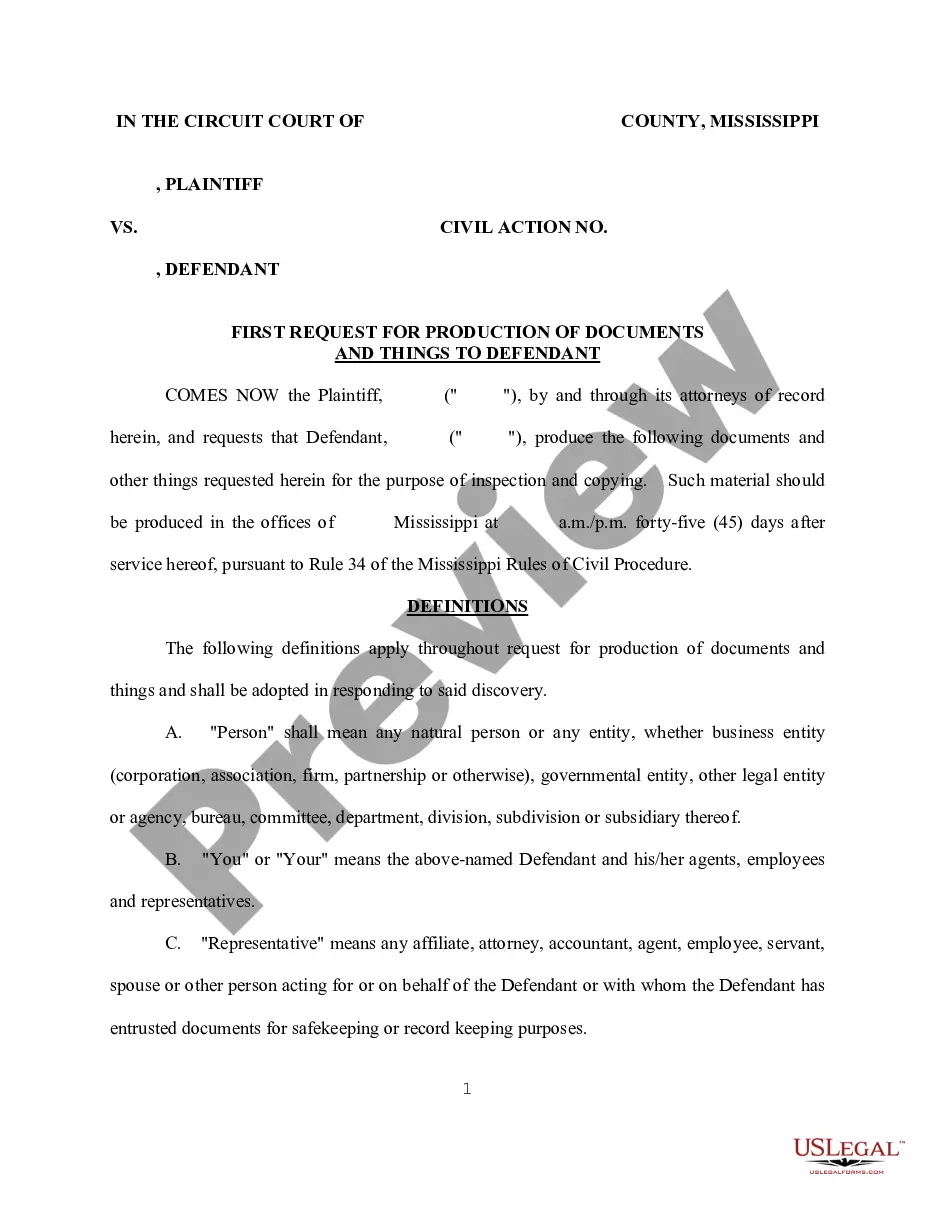
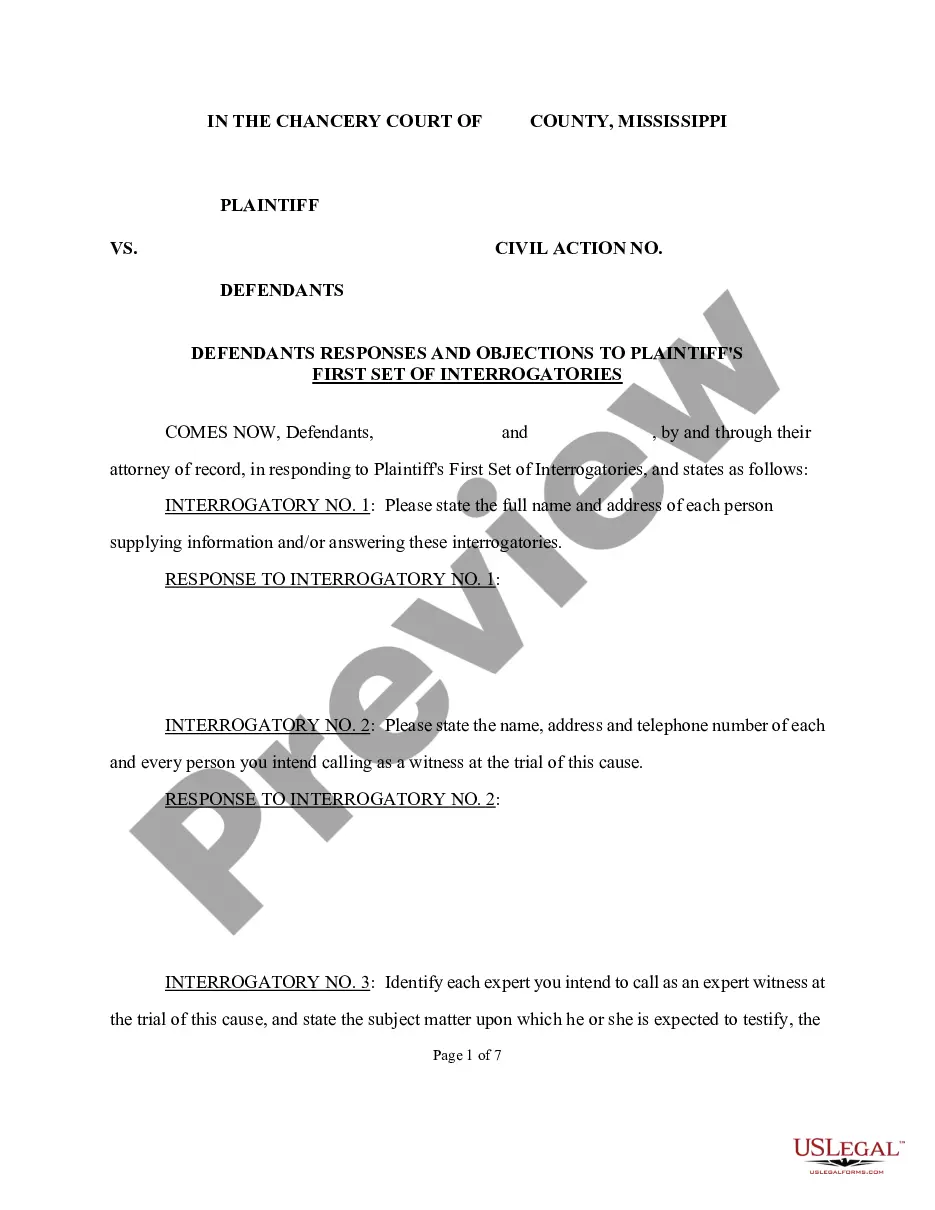
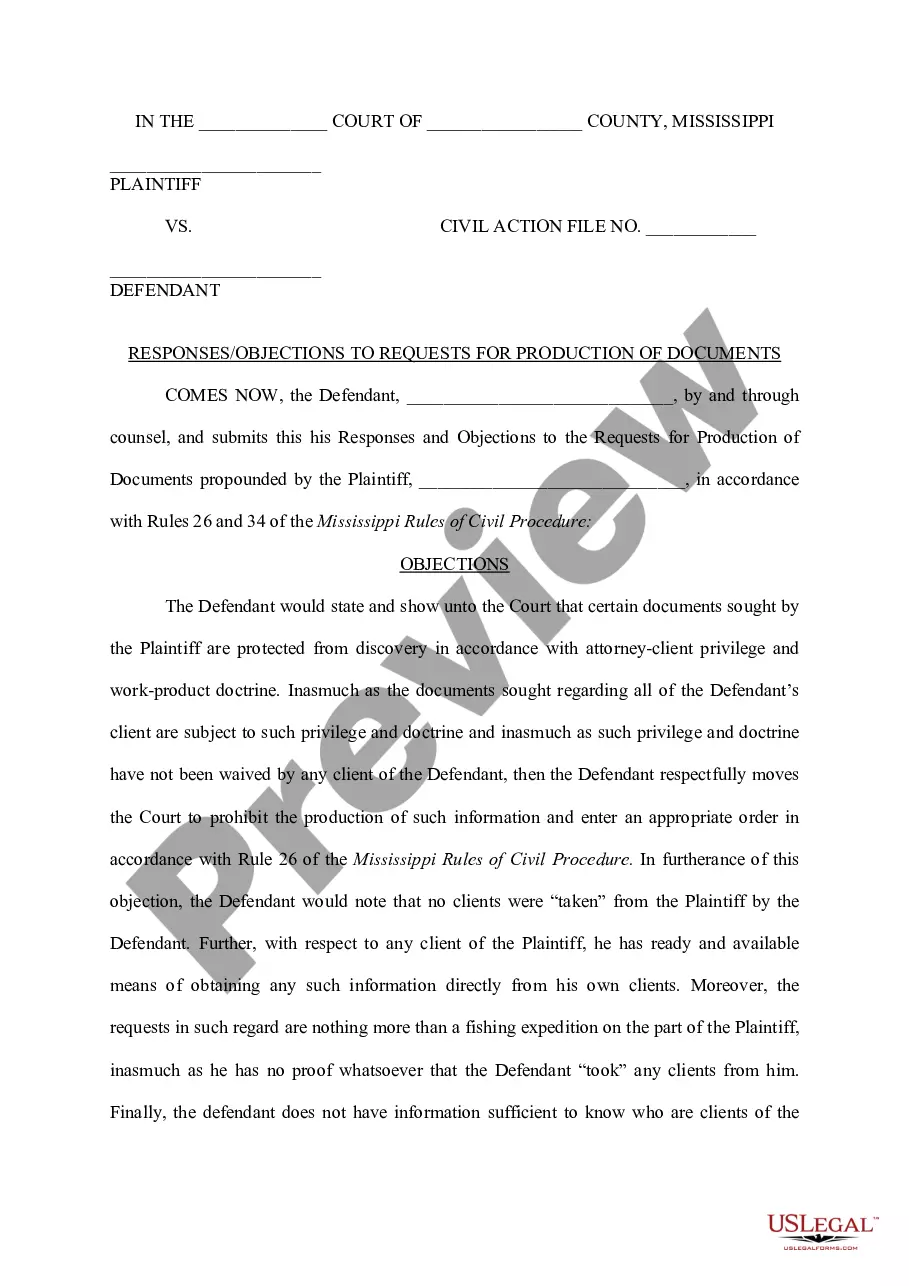
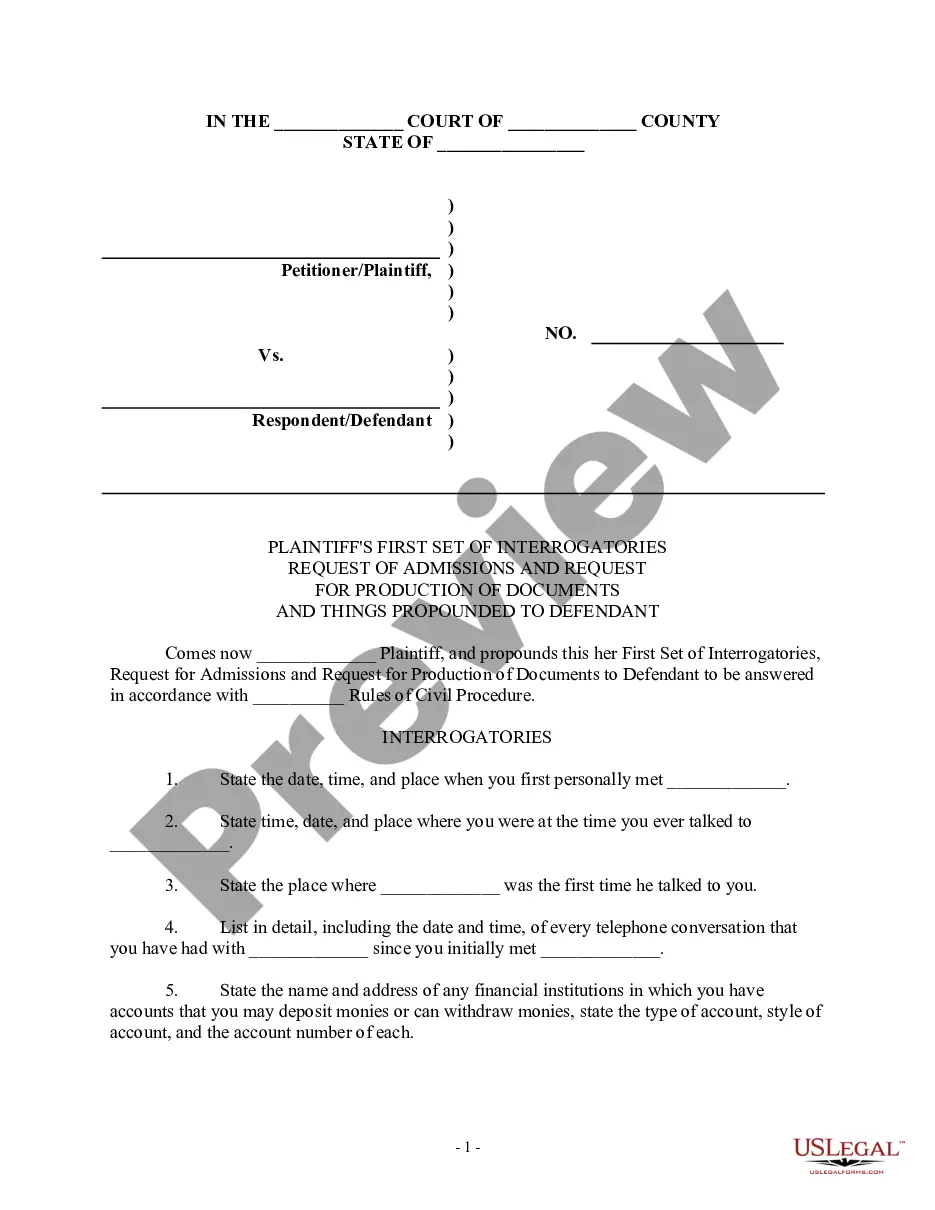
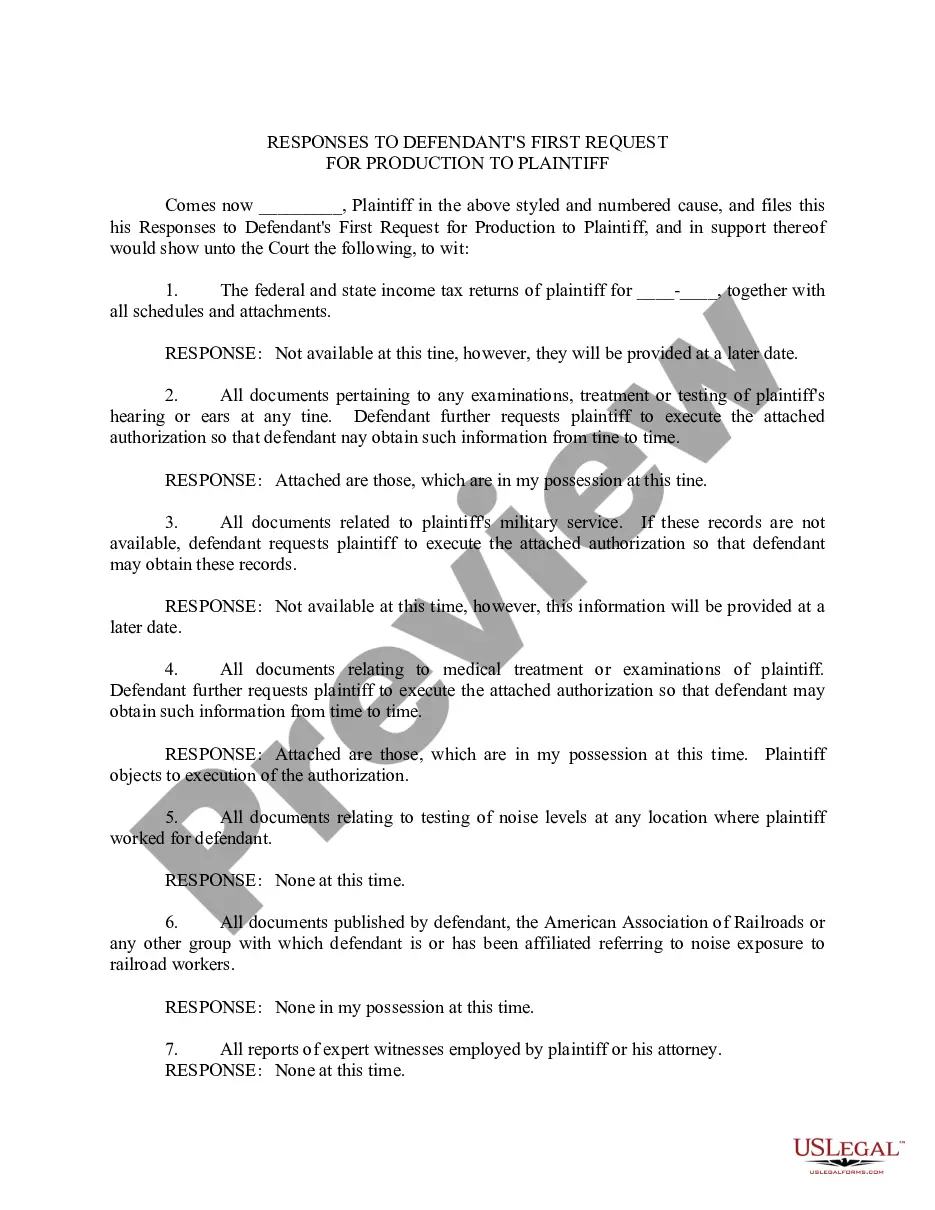
The Response and Objection to First Request for Production of Documents is a legal form used by parties involved in litigation to respond to a request for documents from the opposing party. This form allows you to formally set forth any objections you may have and to outline your responses to specific requests. It helps to clarify which documents you are willing to provide and which you believe should not be disclosed, protecting your legal interests in the process.
Key parts of this document
- Identification of parties involved in the case.
- List of documents requested by the opposing party.
- Your responses to each request, including whether you are objecting or complying.
- Explanation of the basis for any objections.
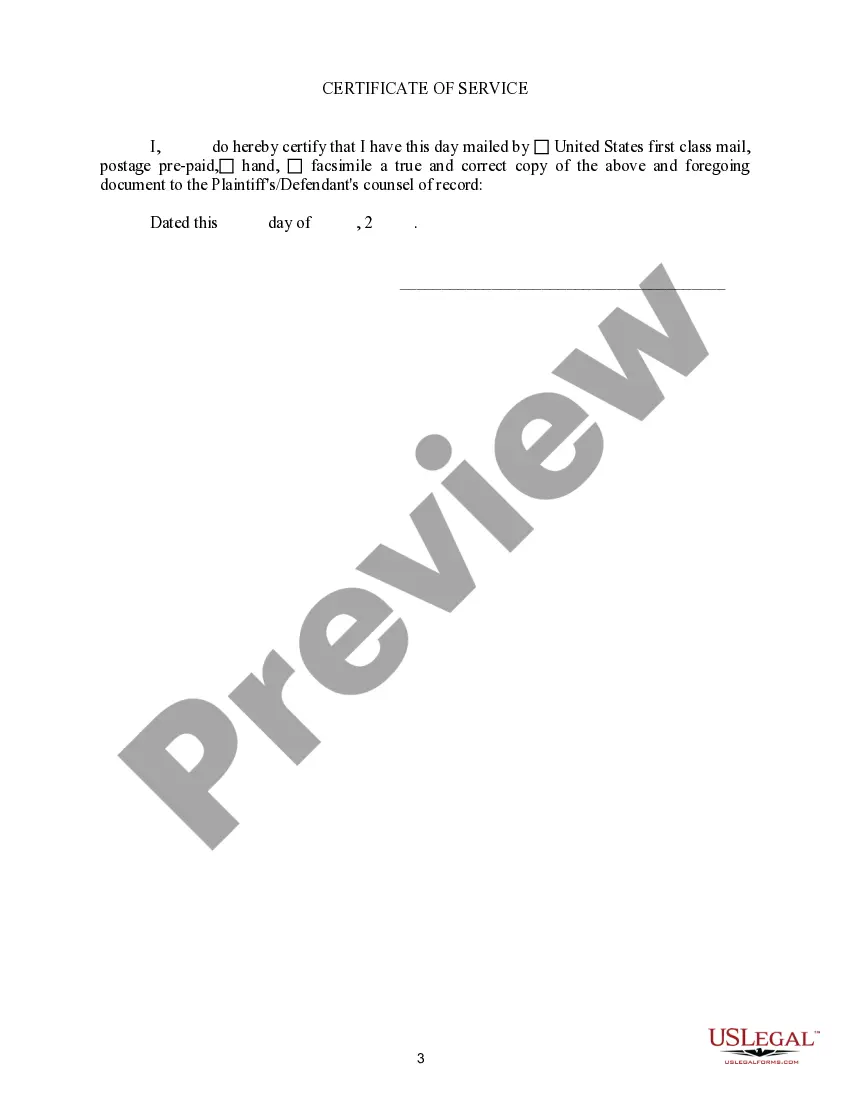
- Signature and date fields for verification.
Common use cases
This form is necessary when you receive a request for the production of documents during litigation. It is important to use this form to respond appropriately to each request, especially when you believe some requests are too broad, irrelevant, or protected by privilege. Using this form ensures that your legal rights are preserved and that the process is conducted in accordance with applicable laws.
Who needs this form
- Individuals or businesses engaged in legal disputes that require document production.
- Defendants responding to a plaintiff's discovery requests.
- Attorneys representing clients in litigation.
Steps to complete this form
- Identify the case by entering the names of the parties and the court information.
- Review the requests for documents and decide which you will comply with and which you will object to.
- Provide responses to each request, clearly stating your reasons for any objections.
- Sign and date the form to confirm your responses are accurate.
- File the completed form with the court and serve it to the other parties as required.
Notarization guidance
This form does not typically require notarization unless specified by local law. However, it's advisable to check local court rules to ensure compliance.
Get your form ready online
Our built-in tools help you complete, sign, share, and store your documents in one place.
Make edits, fill in missing information, and update formatting in US Legal Forms—just like you would in MS Word.
Download a copy, print it, send it by email, or mail it via USPS—whatever works best for your next step.
Sign and collect signatures with our SignNow integration. Send to multiple recipients, set reminders, and more. Go Premium to unlock E-Sign.
If this form requires notarization, complete it online through a secure video call—no need to meet a notary in person or wait for an appointment.
We protect your documents and personal data by following strict security and privacy standards.

Make edits, fill in missing information, and update formatting in US Legal Forms—just like you would in MS Word.

Download a copy, print it, send it by email, or mail it via USPS—whatever works best for your next step.

Sign and collect signatures with our SignNow integration. Send to multiple recipients, set reminders, and more. Go Premium to unlock E-Sign.

If this form requires notarization, complete it online through a secure video call—no need to meet a notary in person or wait for an appointment.

We protect your documents and personal data by following strict security and privacy standards.
Mistakes to watch out for
- Failing to respond to all requests can lead to unfavorable court rulings.
- Not providing clear reasons for objections may weaken your position.
- Missing signatures or dates can render the form invalid.
Why complete this form online
- Convenience of downloading the form from anywhere.
- Editability allows you to customize the responses to fit your specific situation.
- Access to attorney-drafted templates ensures legal accuracy and completeness.
Legal use & context
- This form is essential for maintaining the integrity of the discovery process in litigation.
- Responses must comply with applicable procedural laws to be enforceable.
Quick recap
- The Response and Objection to First Request for Production of Documents is essential for formal responses in litigation.
- Understanding the key components helps ensure a complete and accurate submission.
- Utilizing the form correctly can protect your rights during the discovery process.
Looking for another form?

Form popularity
FAQ
When responding to Requests for Admissions, remember to answer as follows: Admit: If any portion of the Request for Admission is true then you must admit to that portion of the request. You are also allowed to have a hybrid response admit the part of the request that is true while denying another part.
If a request asks for a document, make a copy of the document; in your response, describe the document and say that a copy is attached; and attach a copy of the document to the responses you send back to the other side.
The making available by a party of documents in his possession, custody or power for inspection by the other party or for use as evidence at trial.
An objection to a. discovery request is boilerplate when it merely states the legal grounds for. the objection without (1) specifying how the discovery request is deficient. and (2) specifying how the objecting party would be harmed if it were. forced to respond to the request.8 For example, a boilerplate objection.
SUMMARY: Failure to timely answer discovery or refusal to answer discovery has two important and potentially catastrophic consequences. You may waive your right to object to the discovery even if the other party has no right to the information requested. In other words, you may be forced to give it to them.
A request for production is a discovery device used to gain access to documents, electronic data, and physical items held by an opposing party in a legal matter. The aim is to gain insight into any relevant evidence that the opposing party holds.
Thank you for your inquiry regarding our product or service. Thank you for your interest in our product or service. We would like to thank you for your letter inquiring about our product. We truly appreciate your letter asking for information about our service.
ANSWER: A fictional document. A non-existent objection neither based in statutory authority nor found in case law. A statement by a party during the discovery phase that they will neither be held to the Code of Civil Procedure nor the rules of evidence.
Make it a lead-off general objection. Object to anything that is not relevant to the subject matter (no longer the standard) or not likely to lead to admissible evidence (no longer the standard). Don't say if anything is being withheld on the basis of the objection. Use boilerplate wording from form files.