Mississippi Answer to Complaint and Motion to Dismiss
What is this form?
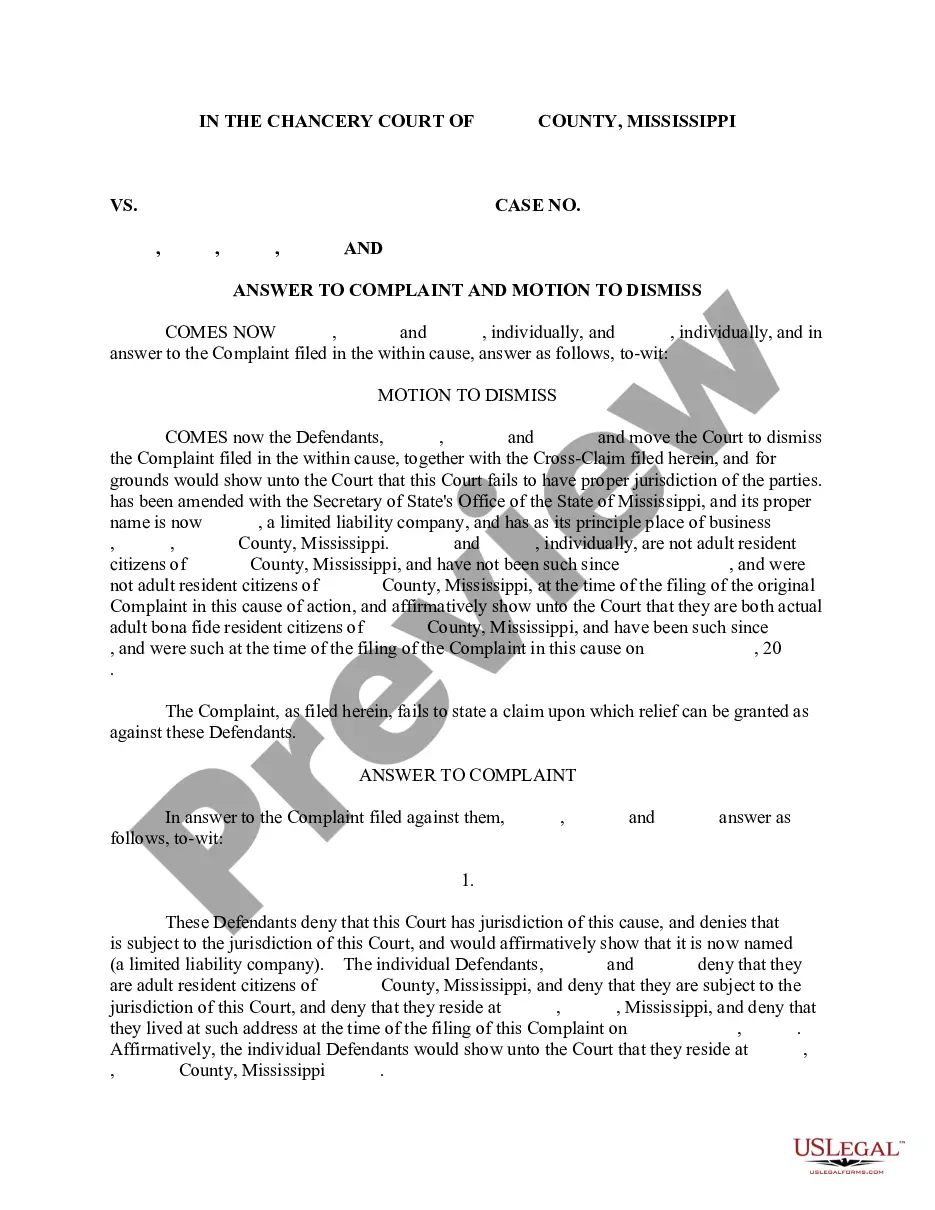
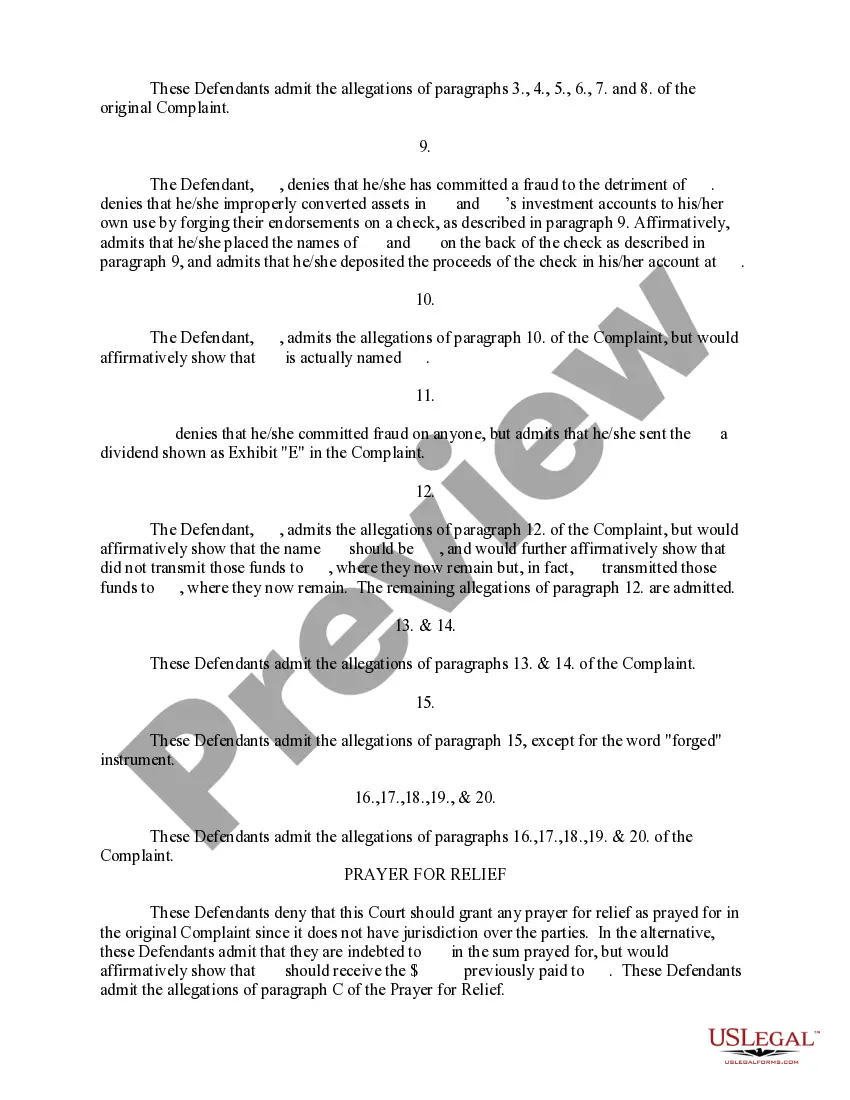
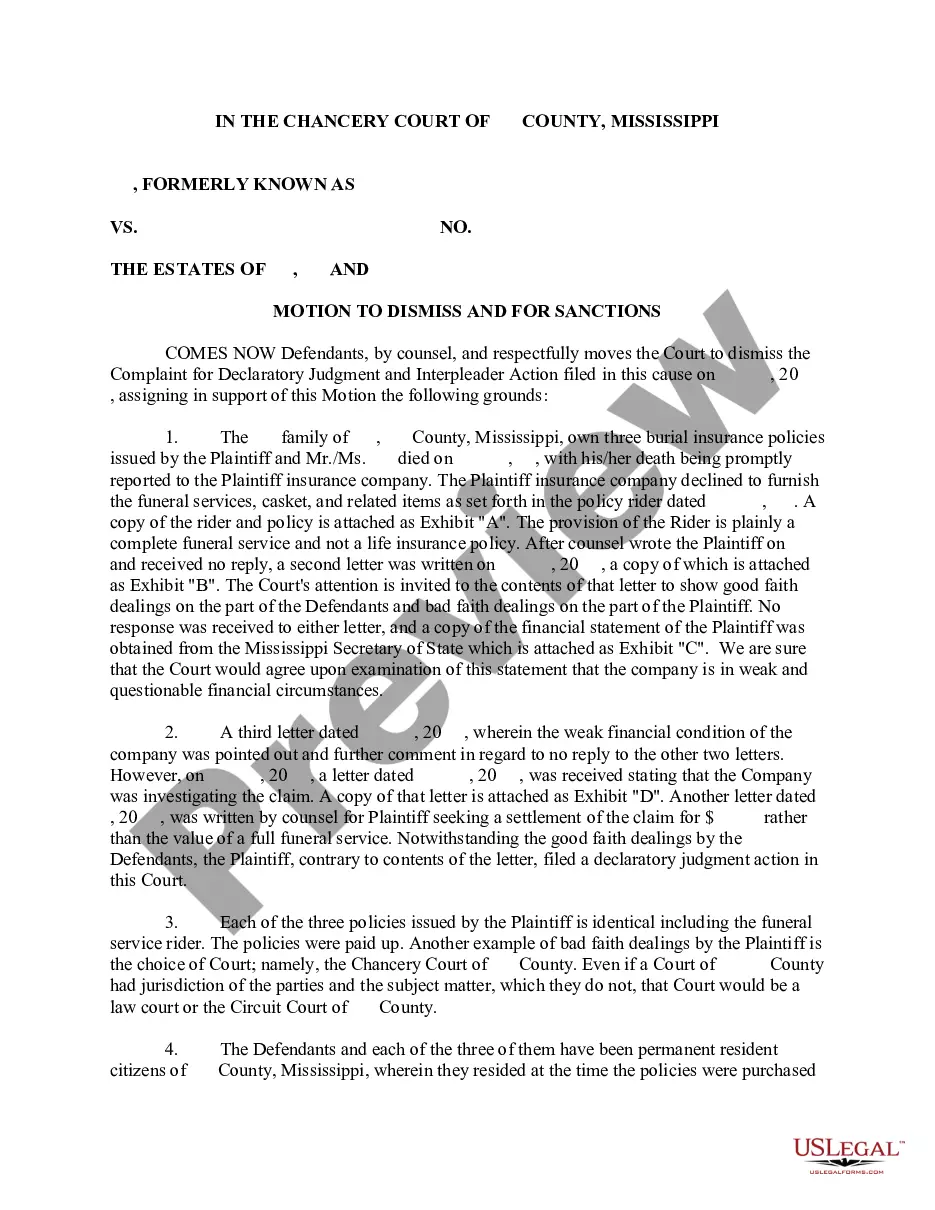
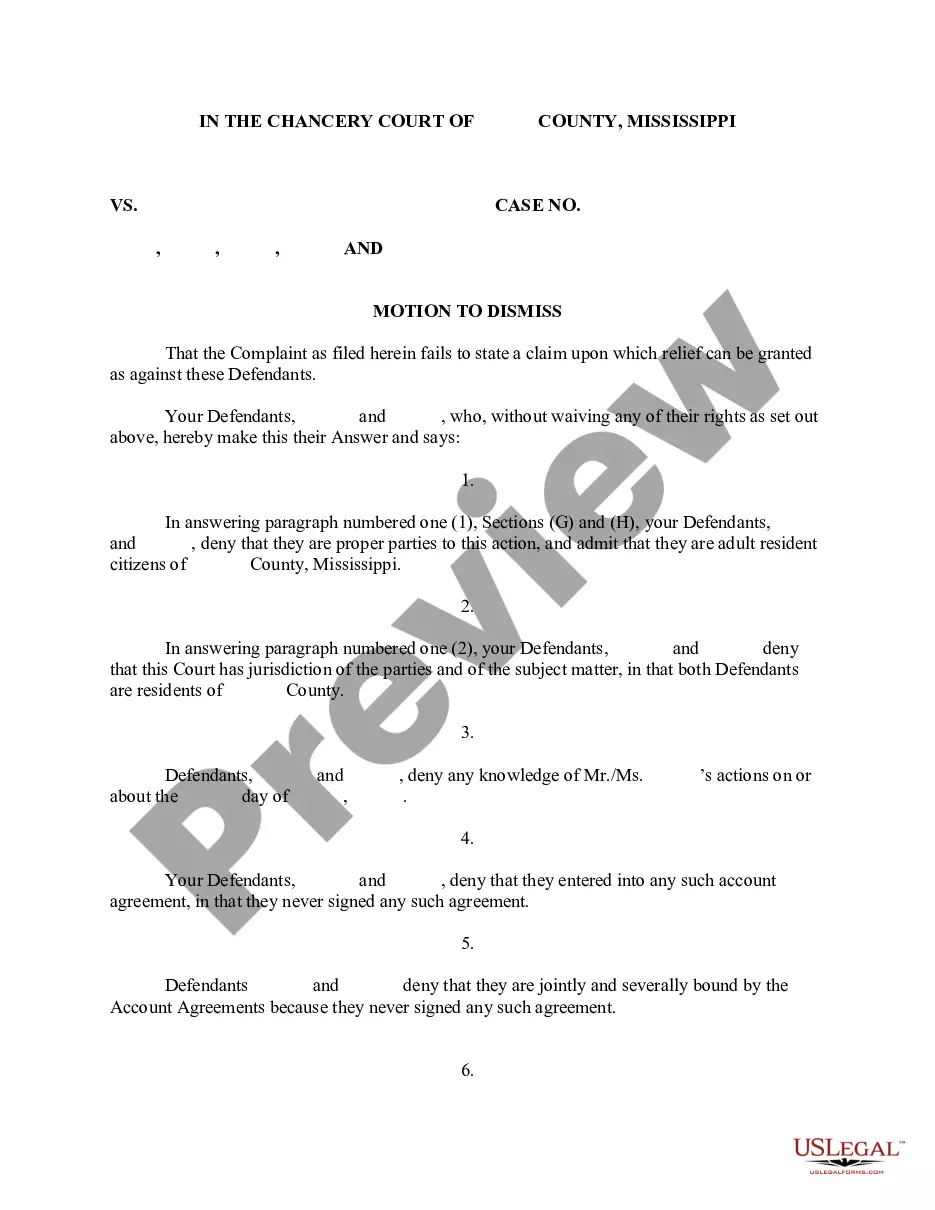
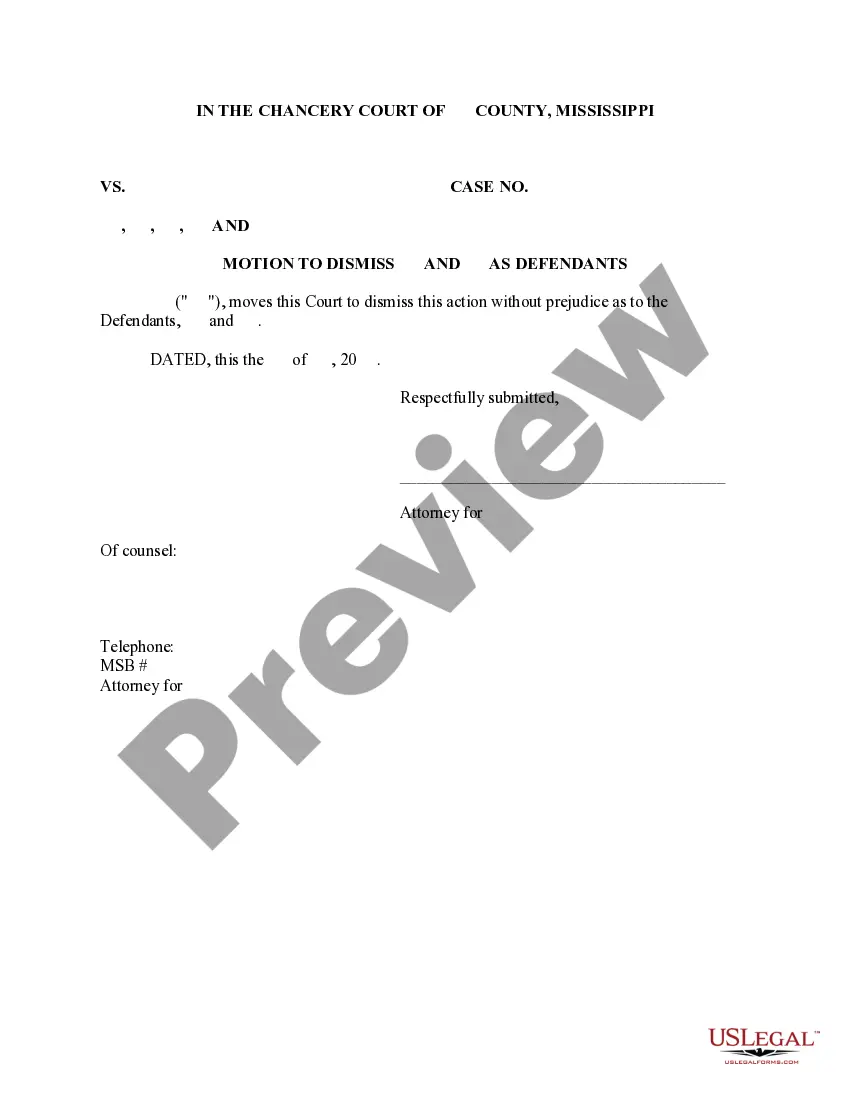
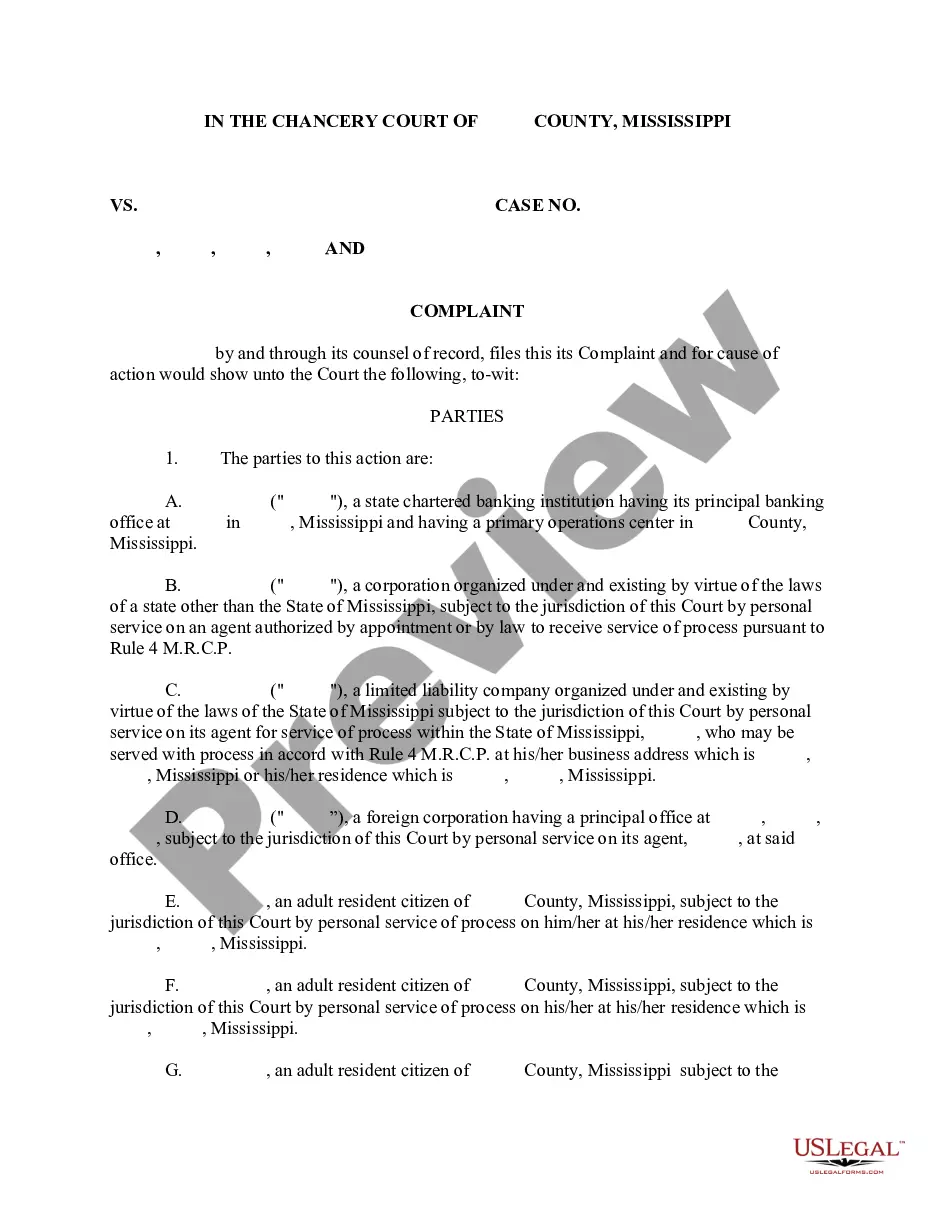
The Answer to Complaint and Motion to Dismiss is a legal document used by defendants to respond to a complaint filed against them in court. This form not only answers the allegations but also requests the court to dismiss the case based on specific legal grounds. It is essential for ensuring that the defense is properly articulated and helps protect the rights of the defendants involved. Unlike other response forms, this one includes both an answer to the claims and a motion to request dismissal of the case.
Key parts of this document
- Identification of the parties involved in the complaint.
- Denial or admission of the allegations presented in the complaint.
- Introduction of grounds for the motion to dismiss.
- Affirmative defenses and additional facts relevant to the case.
- Request for dismissal of the complaint.

When to use this form
This form should be used when you, as a defendant, receive a complaint and wish to formally respond in court. Use it if you believe that the court lacks jurisdiction over the matter, or if the complaint fails to state a valid claim against you. It is particularly useful when you want to assert that the allegations are not true and request the case to be dismissed entirely.
Who this form is for
- Defendants in a legal case who have been served with a complaint.
- Individuals or businesses that wish to contest jurisdiction or the merits of the claim.
- Anyone seeking to respond to a legal complaint with a motion for dismissal.
Completing this form step by step
- Identify all parties involved in the complaint and clearly state their names.
- Provide detailed responses to each allegation, clearly indicating which you admit and which you deny.
- State your reasons for filing a motion to dismiss, specifying any jurisdictional issues.
- Include any affirmative defenses or counterclaims that may support your position.
- Sign and date the form before submitting it to the court.
Notarization requirements for this form
This form usually doesn’t need to be notarized. However, local laws or specific transactions may require it. Our online notarization service, powered by Notarize, lets you complete it remotely through a secure video session, available 24/7.
Get your form ready online
Our built-in tools help you complete, sign, share, and store your documents in one place.
Make edits, fill in missing information, and update formatting in US Legal Forms—just like you would in MS Word.
Download a copy, print it, send it by email, or mail it via USPS—whatever works best for your next step.
Sign and collect signatures with our SignNow integration. Send to multiple recipients, set reminders, and more. Go Premium to unlock E-Sign.
If this form requires notarization, complete it online through a secure video call—no need to meet a notary in person or wait for an appointment.
We protect your documents and personal data by following strict security and privacy standards.

Make edits, fill in missing information, and update formatting in US Legal Forms—just like you would in MS Word.

Download a copy, print it, send it by email, or mail it via USPS—whatever works best for your next step.

Sign and collect signatures with our SignNow integration. Send to multiple recipients, set reminders, and more. Go Premium to unlock E-Sign.

If this form requires notarization, complete it online through a secure video call—no need to meet a notary in person or wait for an appointment.

We protect your documents and personal data by following strict security and privacy standards.
Typical mistakes to avoid
- Failing to answer each allegation in the complaint.
- Not including sufficient details to support grounds for the motion to dismiss.
- Omitting signature or date, which can lead to rejection of the form.
- Not adhering to state-specific requirements regarding filing timelines.
Advantages of online completion
- Convenient access to templates that can be completed at your own pace.
- Edit and customize the document to fit your specific legal situation.
- Ensure reliability by using forms drafted by licensed attorneys.
Looking for another form?


Form popularity
FAQ
If a defendant has pleaded a counterclaim before being served with the plaintiff's motion to dismiss, the action may be dismissed over the defendant's objection only if the counterclaim can remain pending for independent adjudication.
A pleading demands that the other party do something, while a motion requests that the judge in the case do something. These documents can be filed with the court before, during, or after the trial, though pleadings are typically filed at or near a case's outset.
No, because "for the purposes of Rule 15(a), a Rule 12(b)(6) motion to dismiss is not a responsive pleading and thus does not itself terminate plaintiff's unconditional right to amend a complaint under Rule 15(a)." Op.
Typically, the losing party may appeal after the court has delivered its final judgment. In addition to appealing the final decision, the appellant can also appeal earlier rulings that were not definitive when they were issued.
For example in the state of California, a motion to dismiss for failure to state a claim is called a demurrer.
N. application by a defendant in a lawsuit or criminal prosecution asking the judge to rule that the plaintiff (the party who filed the lawsuit) or the prosecution has not and cannot prove its case.
Generally, however, a defendant must file a motion to dismiss before filing an "answer" to the complaint. If the motion to dismiss is denied, the defendant must still file their answer, usually within a shortened amount of time.The motion to dismiss must be filed with the court and served on the other party.
A motion to dismiss (aka demurrer in some states) is a powerful litigation tool that can stop a lawsuit cold in its tracks. When granting a motion to dismiss, the judge essentially decides the case in the defendant's favor most often denying the plaintiff the opportunity to go to trial.
The most common type of pre-answer motion is the motion to dismiss. A pre-answer motion to dismiss may be made on any of the grounds listed in FRCP 12(b). Courts may also consider other grounds for dismissal raised in a pre-answer motion to dismiss, including immunity or failure to exhaust administrative remedies.