Mississippi Complaint to Correct Warranty Deed and to Remove a Cloud
About this form
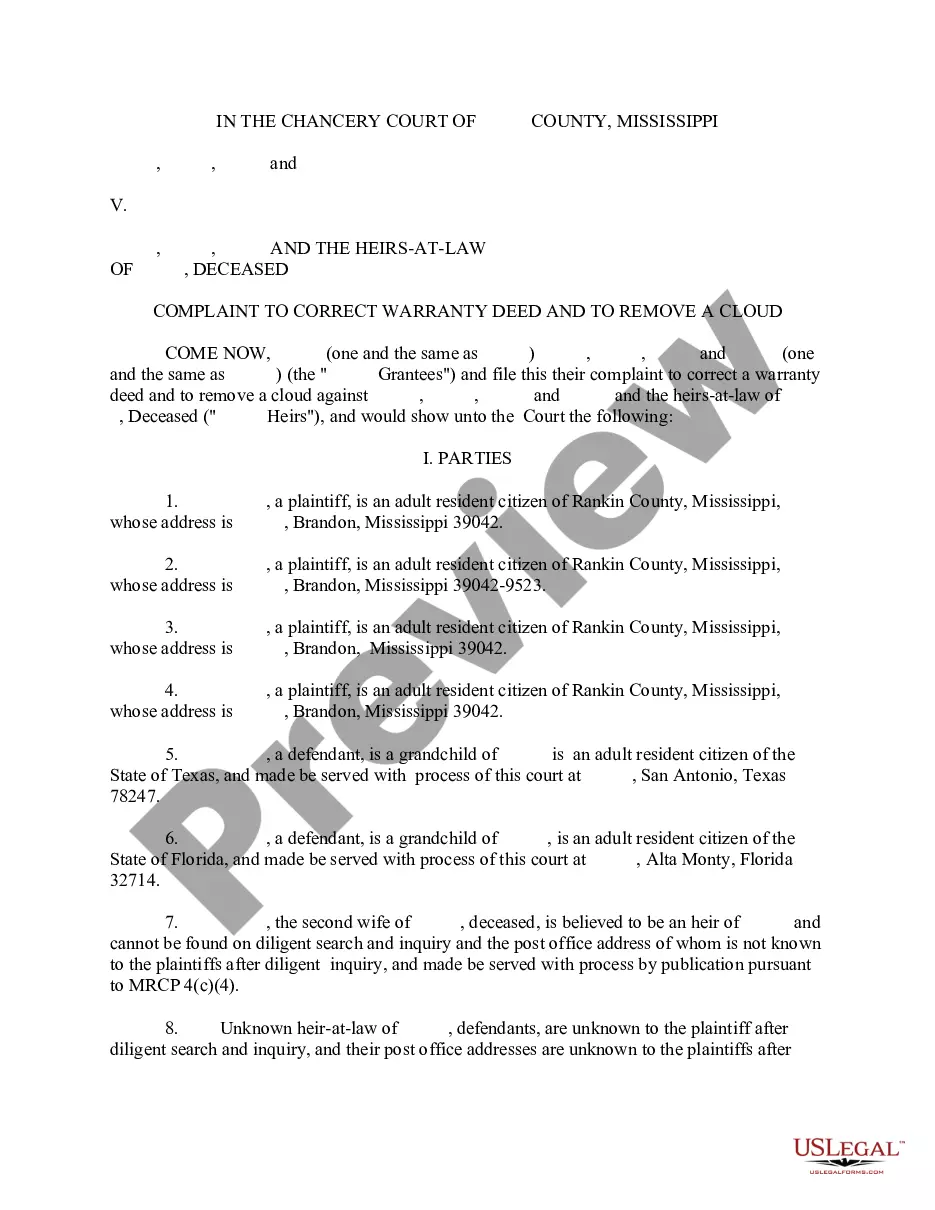
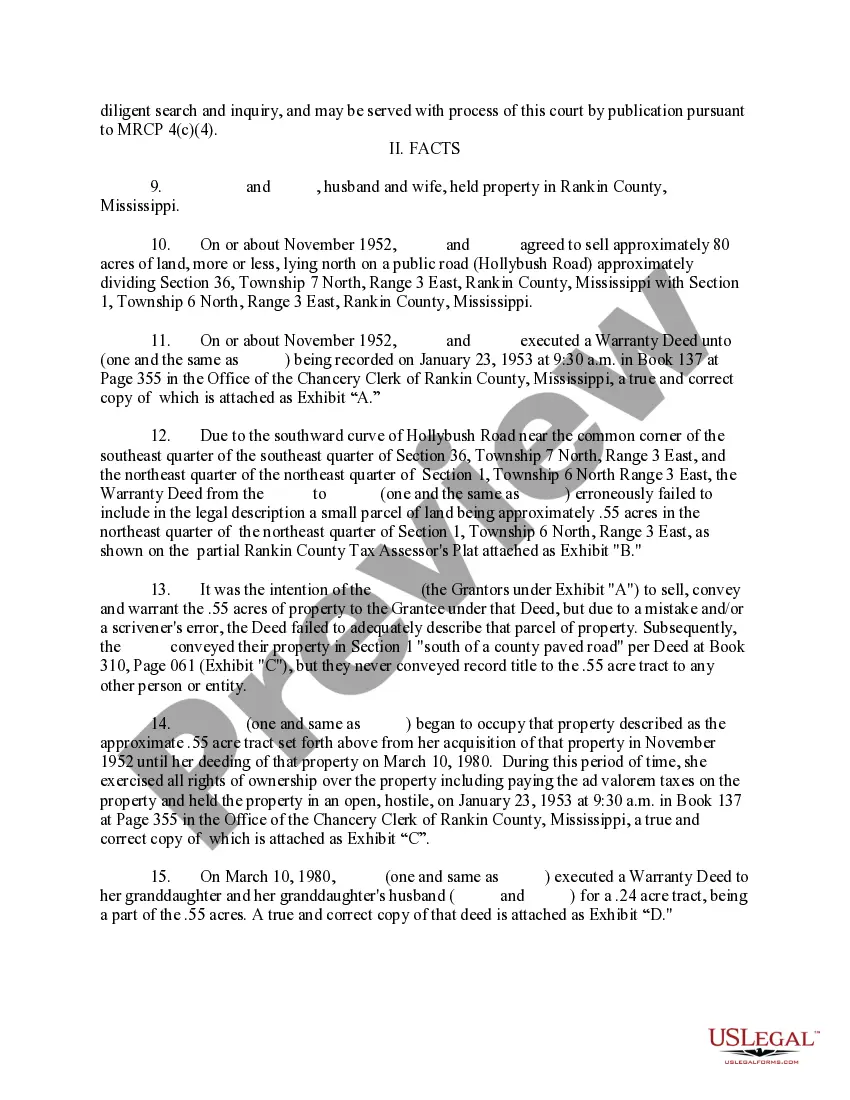
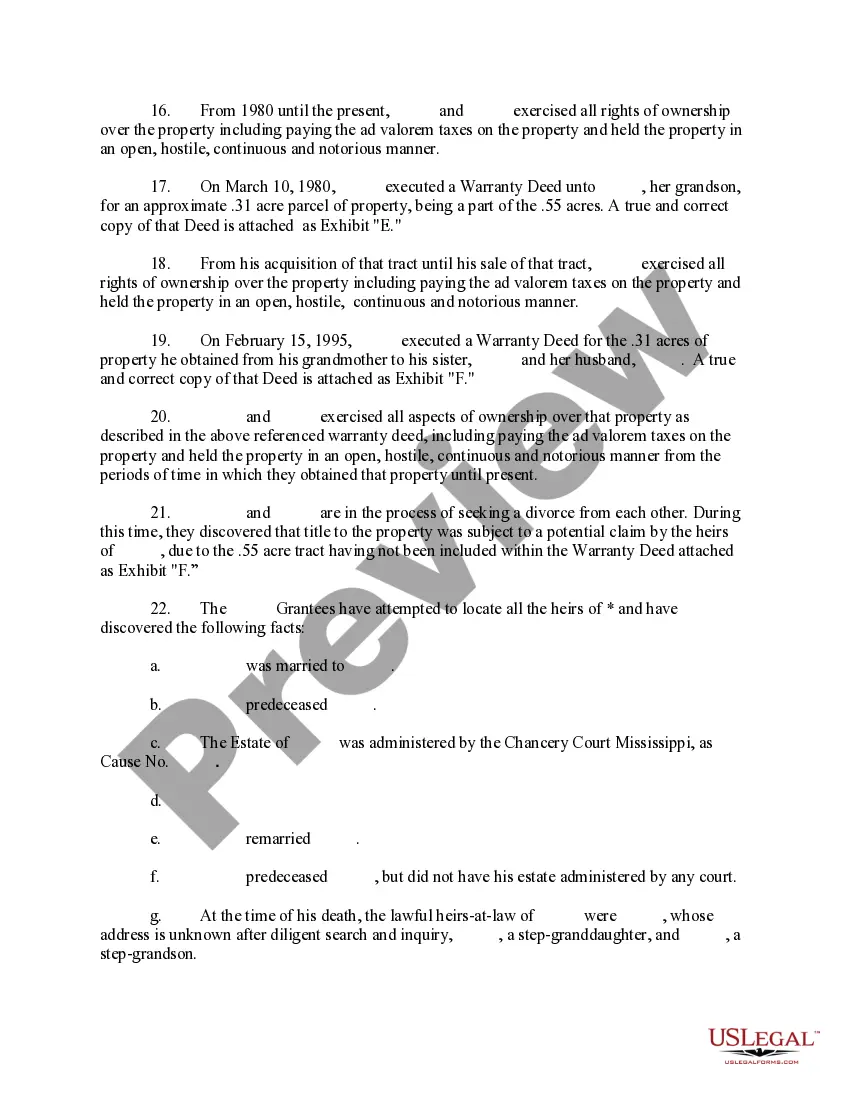
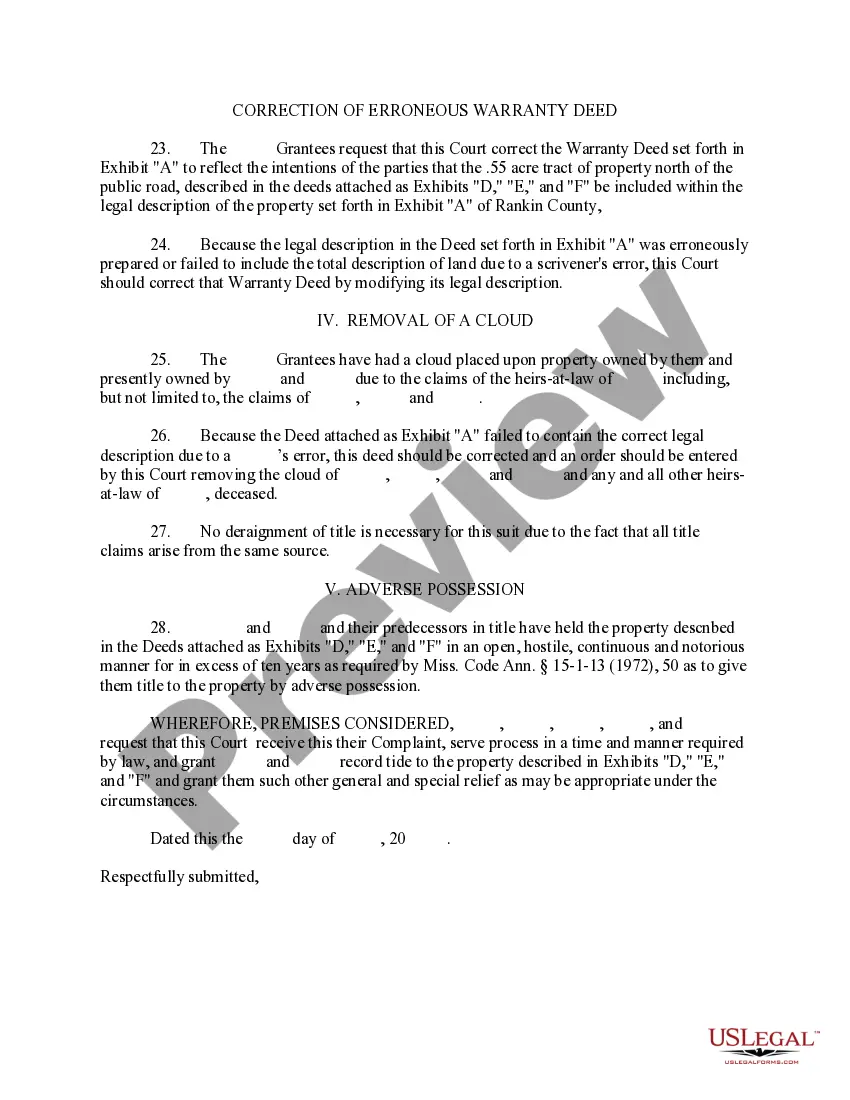
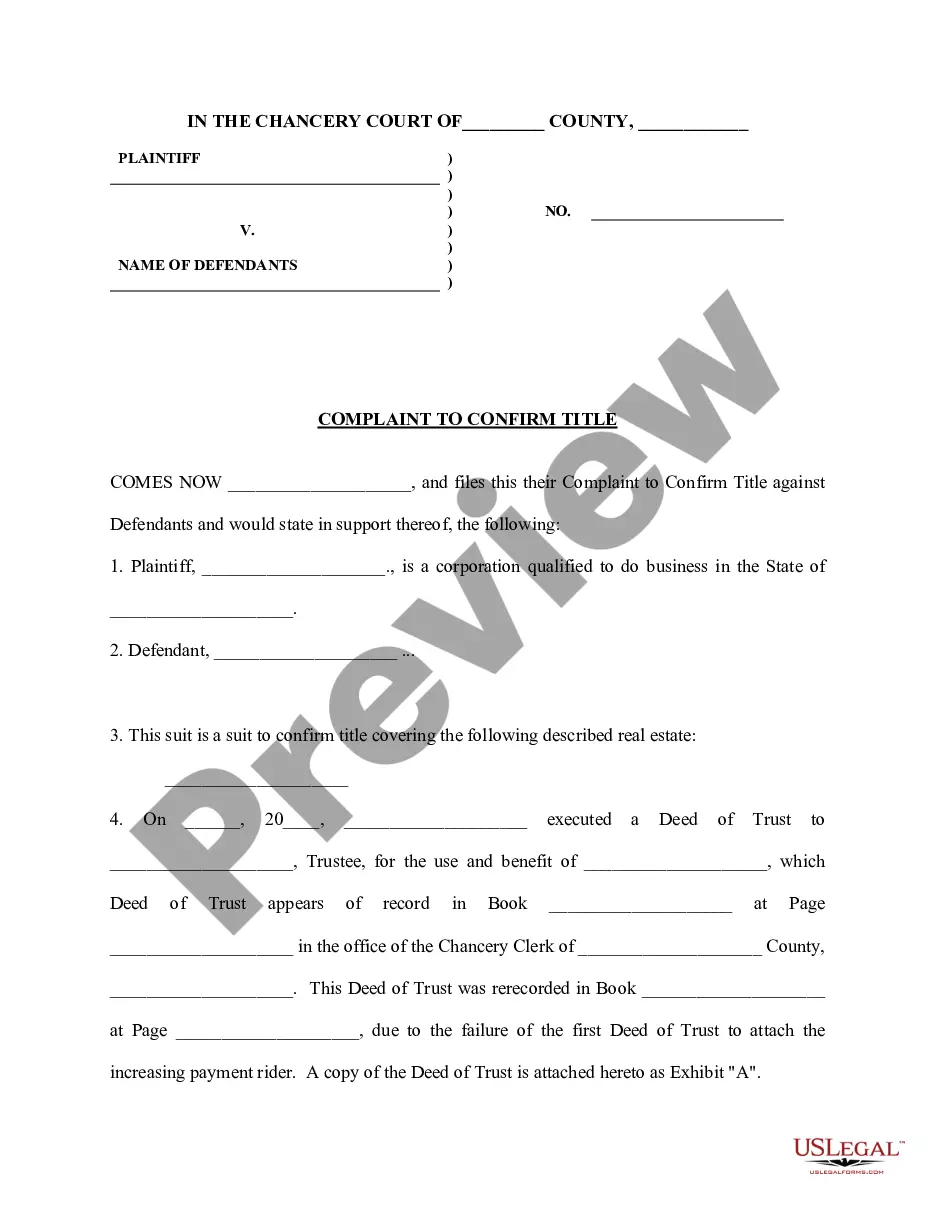
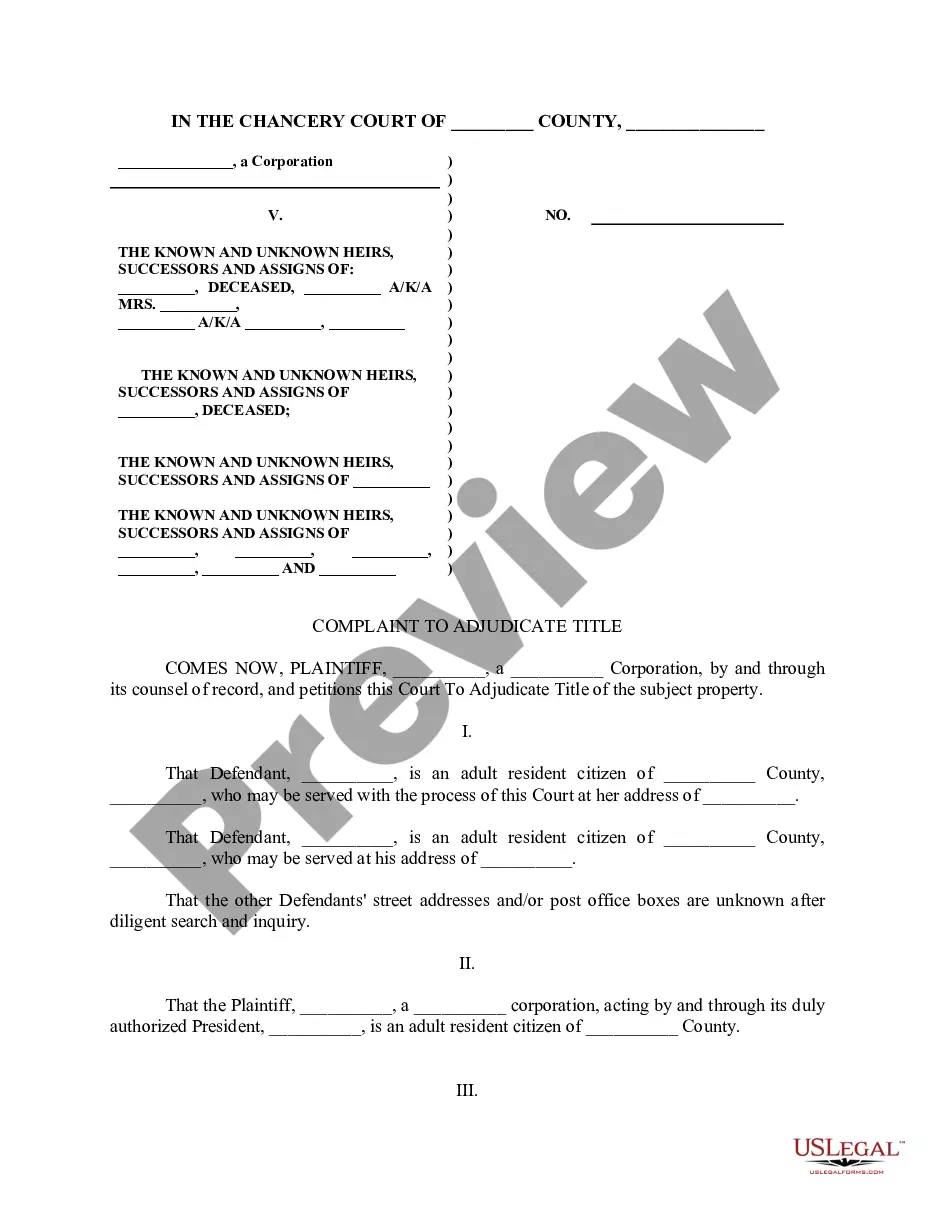
The Complaint to Correct Warranty Deed and to Remove a Cloud is a legal document used to amend an existing warranty deed. This form addresses errors in the property's legal description, allowing for corrections that ensure clarity in property ownership. It is particularly useful in situations where a scrivener's error has caused confusion or inaccuracies in the deed, differentiating it from other forms, such as quitclaim deeds, which do not provide warranties of title.
Key parts of this document
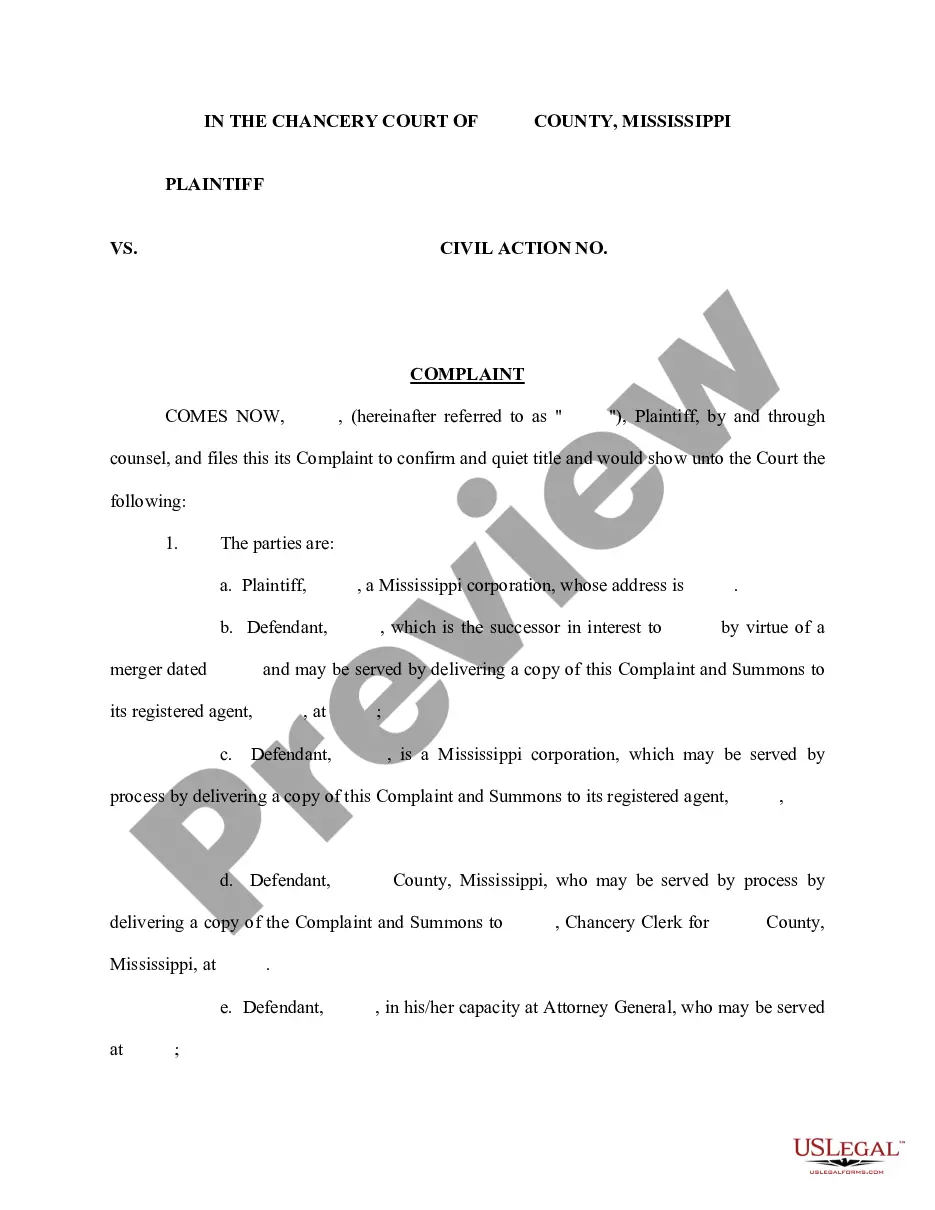
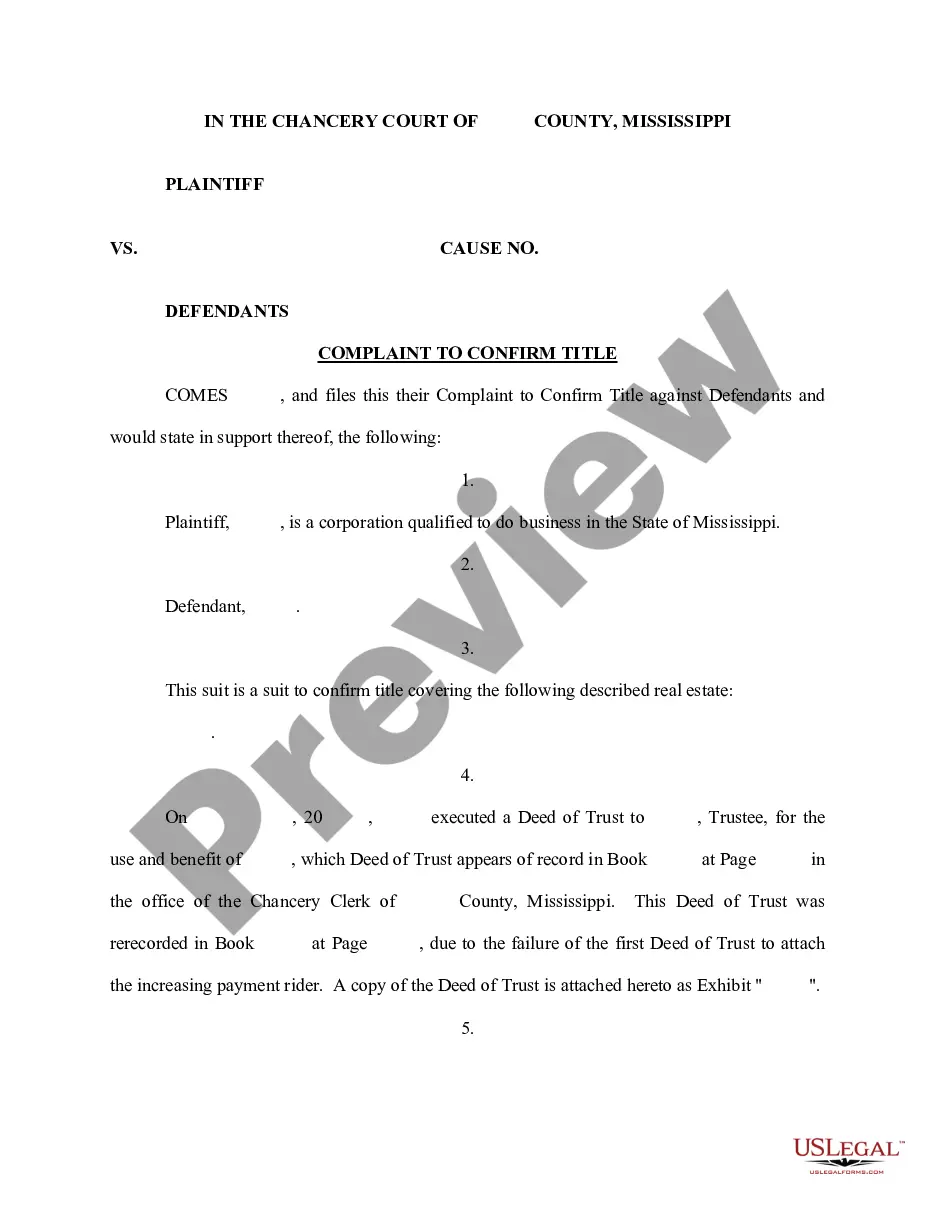
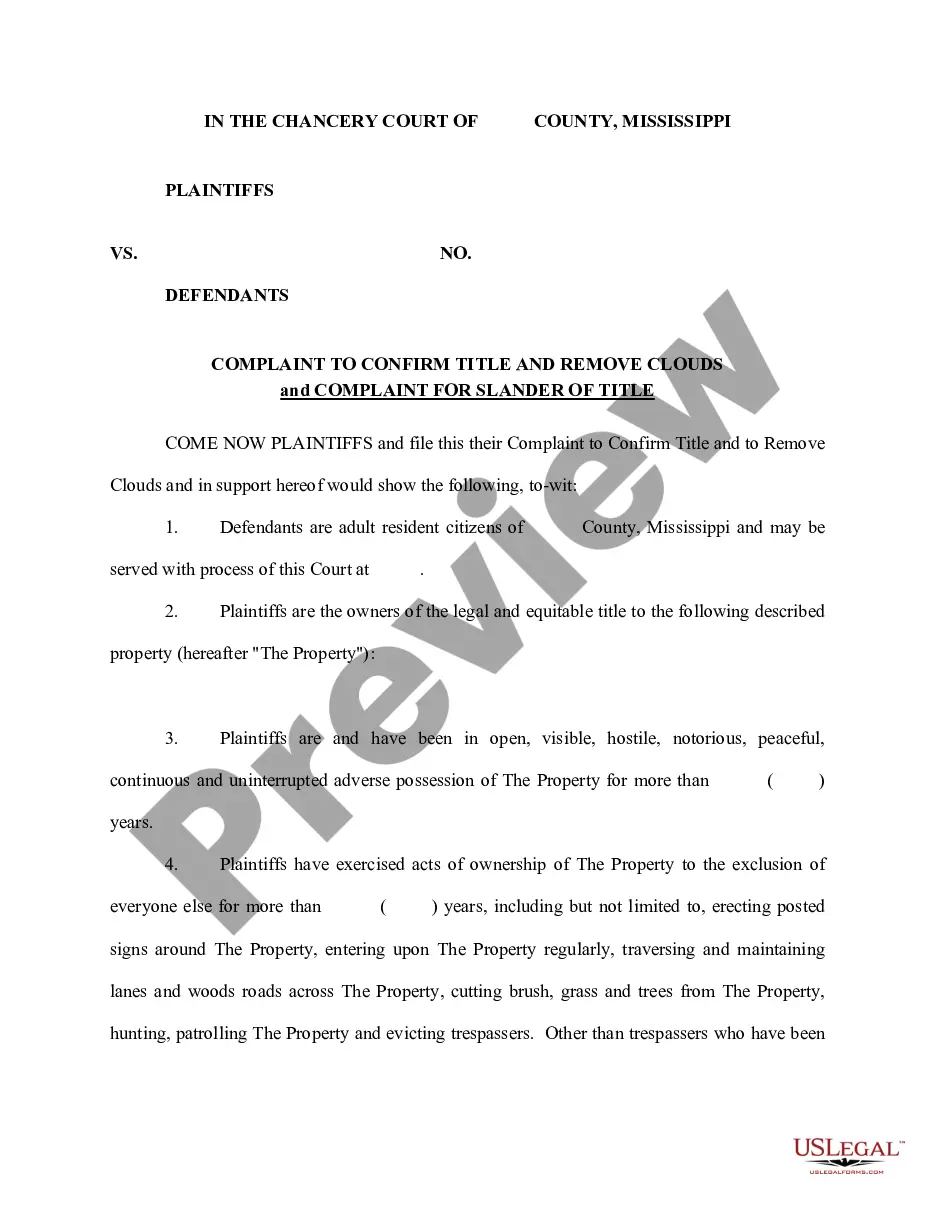
- Identification of the parties involved in the deed.
- A detailed legal description of the property as corrected.
- Reference to the specific error necessitating the correction.
- Request for court approval to correct the warranty deed.
- Signature and date fields to validate the document.
Common use cases
This form should be utilized when there is a need to correct a warranty deed due to inaccuracies, such as errors in the legal description of the property. It is commonly needed in situations where a property owner discovers discrepancies that impact title clarity, potentially affecting property financing, resale, or ownership disputes.
Intended users of this form
- Property owners needing to amend a faulty warranty deed.
- Real estate agents assisting clients with property transactions.
- Attorneys representing clients in property disputes.
- Individuals involved in estate planning or inheritance issues related to property.
How to prepare this document
- Identify the parties by entering their names and addresses at the top of the form.
- Specify the property by providing the corrected legal description, clearly stating the error and its correction.
- Include any relevant details about the ownership and any prior deeds related to the property.
- Sign and date the form, ensuring all parties involved complete this action if necessary.
- File the completed form with the appropriate court for validation and approval.
Is notarization required?
This form does not typically require notarization unless specified by local law. It is advisable to check local regulations to confirm any notarization requirements that may apply to your specific situation.
Get your form ready online
Our built-in tools help you complete, sign, share, and store your documents in one place.
Make edits, fill in missing information, and update formatting in US Legal Forms—just like you would in MS Word.
Download a copy, print it, send it by email, or mail it via USPS—whatever works best for your next step.
Sign and collect signatures with our SignNow integration. Send to multiple recipients, set reminders, and more. Go Premium to unlock E-Sign.
If this form requires notarization, complete it online through a secure video call—no need to meet a notary in person or wait for an appointment.
We protect your documents and personal data by following strict security and privacy standards.

Make edits, fill in missing information, and update formatting in US Legal Forms—just like you would in MS Word.

Download a copy, print it, send it by email, or mail it via USPS—whatever works best for your next step.

Sign and collect signatures with our SignNow integration. Send to multiple recipients, set reminders, and more. Go Premium to unlock E-Sign.

If this form requires notarization, complete it online through a secure video call—no need to meet a notary in person or wait for an appointment.

We protect your documents and personal data by following strict security and privacy standards.
Avoid these common issues
- Failing to provide a clear and accurate legal description of the property.
- Not specifying the original error that needs correction.
- Omitting signatures or dates, which can invalidate the document.
Why use this form online
- Convenient access to legal documents from anywhere, any time.
- Edit and customize the form to fit your specific needs effortlessly.
- Reliability, as the documents are drafted by licensed attorneys.
Legal use & context
- This form is legally binding upon court approval.
- Corrected deeds clarify ownership, reducing legal disputes.
- Ensures compliance with local property laws in Mississippi.
Summary of main points
- The form corrects errors in warranty deeds to ensure clear property title.
- Proper completion and filing are critical for legal validity.
- Consulting an attorney can help clarify the process and ensure accuracy.
Looking for another form?
Form popularity
FAQ
Before a quitclaim deed can be recorded with a county recorder in Mississippi, the grantor must sign and acknowledge it. The names, addresses, and telephone numbers of the grantors and grantees to the quit claim deed, along with a legal description of the real property should be provided on the first page (89-5-24).
Once signed and notarized, a Mississippi deed must be recorded. The deed must be presented to the Recorder of Deeds in the county where the property is located. The transfer takes effect when signed and accepted by the grantee. However, recording provides notice to the public that the property was transferred.
The mortgage company usually prepares this deed as part of the loan package and delivers it to the title company for you to sign at closing. The title company is commonly the trustee to the deed and holds legal title to the property until the loan gets fully repaid.
Generally, someone else cannot remove you from title without your consent and/or knowledge. You should speak to a local real estate attorney to see how to return your name to title and how it was removed in the first place.
Retrieve your original deed. Get the appropriate deed form. Draft the deed. Sign the deed before a notary. Record the deed with the county recorder. Obtain the new original deed.
The Mississippi general warranty deed is used to transfer real property in Mississippi with a guarantee from the seller or grantor that the property is free from hidden claims against the title and that the grantor has the legal authority to sell the property.
Once signed and notarized, a Mississippi deed must be recorded. The deed must be presented to the Recorder of Deeds in the county where the property is located. The transfer takes effect when signed and accepted by the grantee. However, recording provides notice to the public that the property was transferred.
The answer is yes. Parties to a transaction are always free to prepare their own deeds. If you do so, be sure your deed measures up to your state's legal regulations, to help avert any legal challenge to the deed later. Some deeds require more expertise than others.
A quit claim deed in the state of Mississippi is a legal document that transfers property from one person to the next. It's important to note that the transfer if a property via this document comes with no guarantees as to whether or not the property has a clear title.