Mississippi Oath of Office
Overview of this form
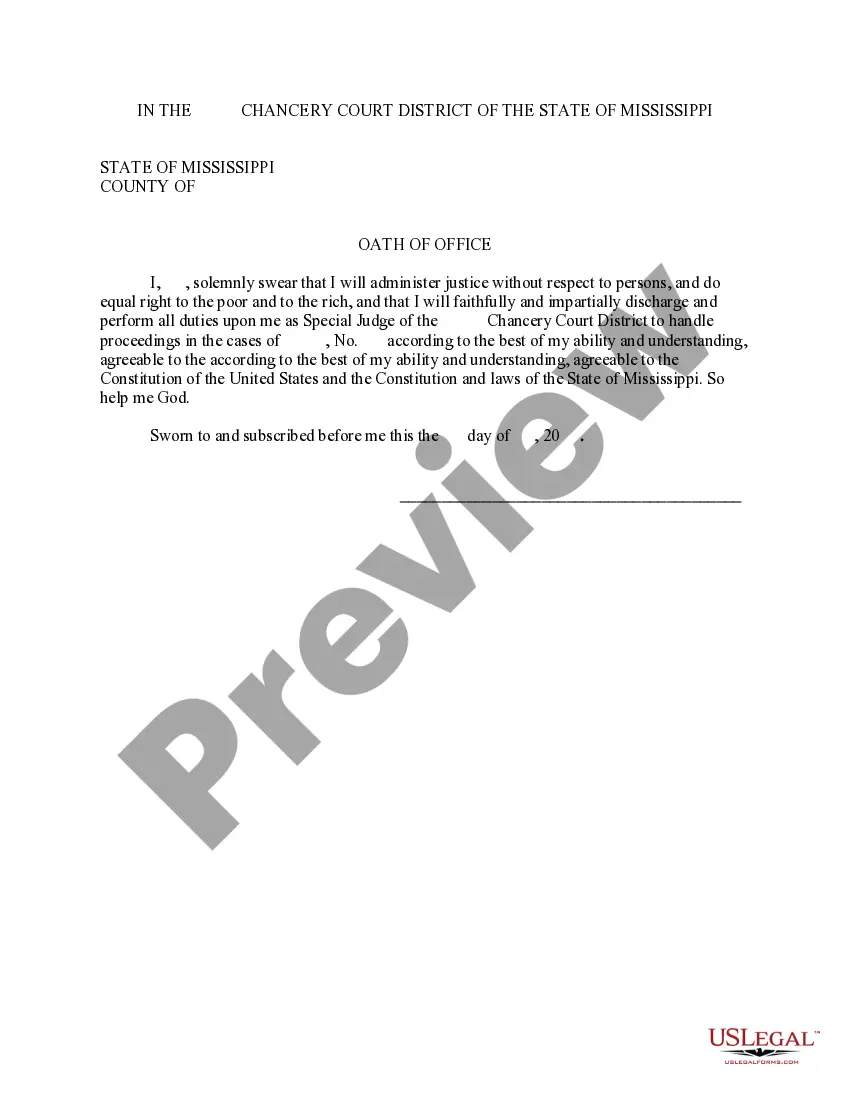
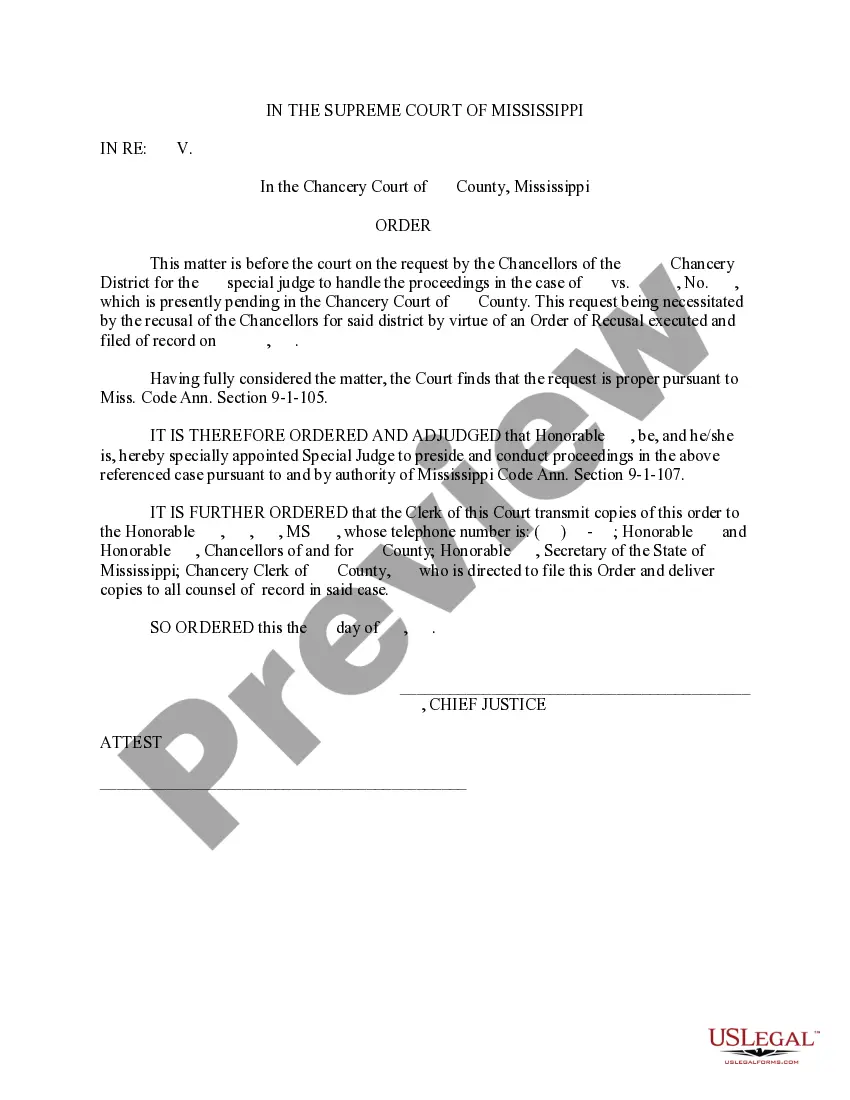
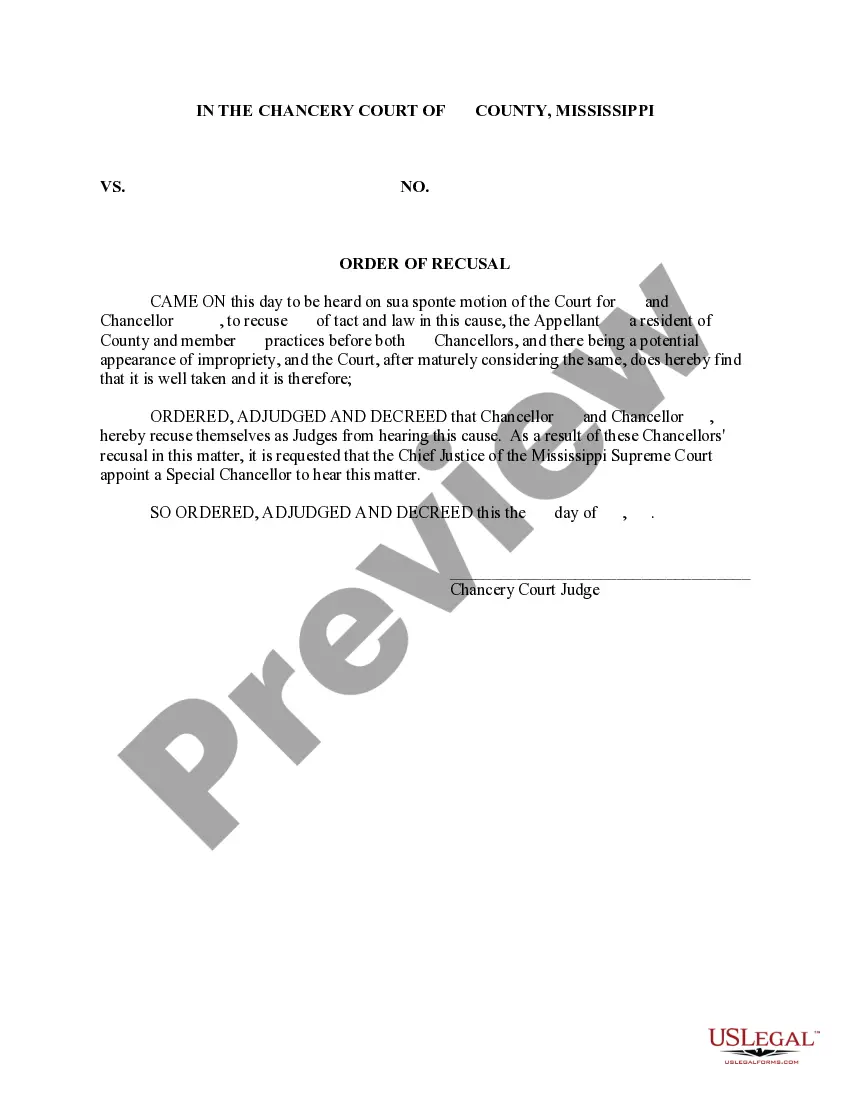
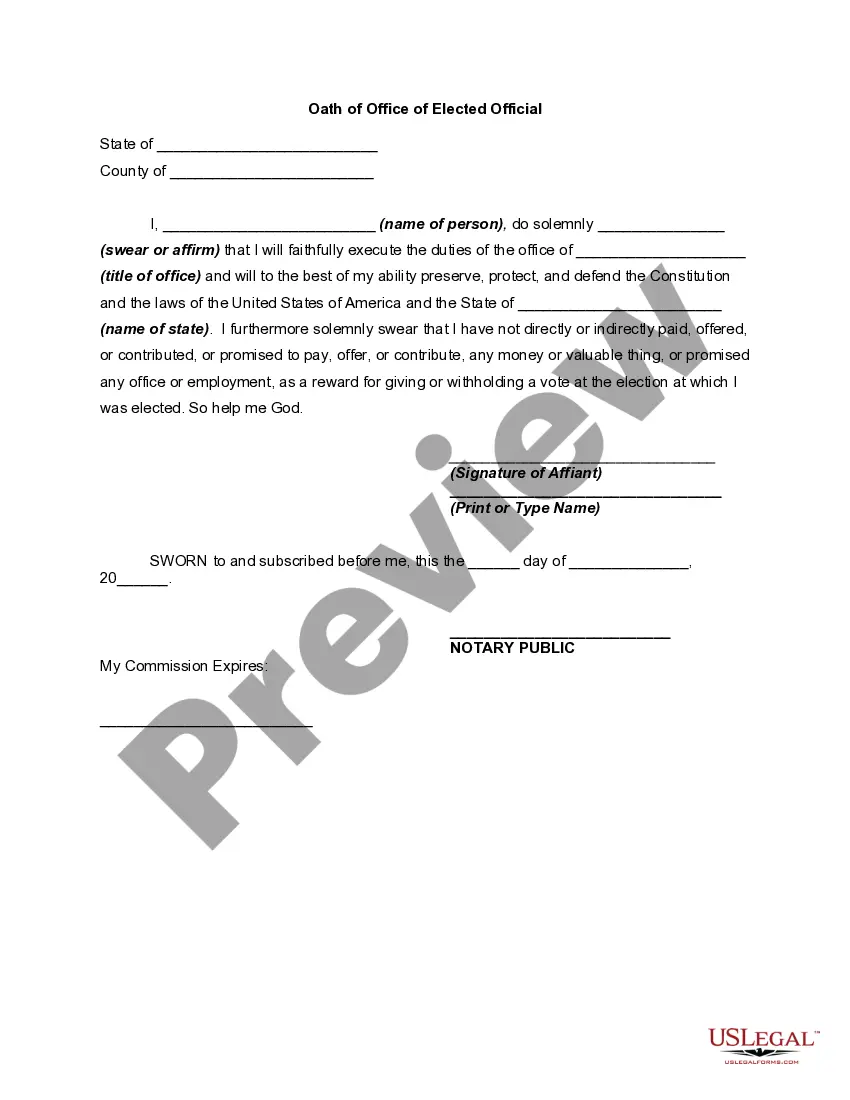
The Oath of Office is a legal document required for all Special Judges serving in the Chancery Court. This oath affirms the judge's commitment to impartiality and fairness in their duties. While similar forms may exist for other judicial positions, this specific oath is tailored for Chancery Court judges, underlining their responsibility to maintain equity for all individuals who appear before them.
Key components of this form
- Date of oath-taking.
- Signature line for the judge.
- Certification area for the individual administering the oath.
Situations where this form applies
This form should be used when a Special Judge is appointed to the Chancery Court. It is necessary to solidify their authority and commitment to uphold the law in a fair manner. The oath must be taken before a qualified official, generally during the judge's swearing-in ceremony.
Intended users of this form
- Special Judges appointed to the Chancery Court.
- Officials responsible for administering oaths.
How to complete this form
- Determine the date of the oath-taking.
- Have the Special Judge sign in the designated area.
- Make sure the administering official completes their section, if applicable.
- File the completed form as required by local court rules.
Notarization guidance
To make this form legally binding, it must be notarized. Our online notarization service, powered by Notarize, lets you verify and sign documents remotely through an encrypted video session.
Get your form ready online
Our built-in tools help you complete, sign, share, and store your documents in one place.
Make edits, fill in missing information, and update formatting in US Legal Forms—just like you would in MS Word.
Download a copy, print it, send it by email, or mail it via USPS—whatever works best for your next step.
Sign and collect signatures with our SignNow integration. Send to multiple recipients, set reminders, and more. Go Premium to unlock E-Sign.
If this form requires notarization, complete it online through a secure video call—no need to meet a notary in person or wait for an appointment.
We protect your documents and personal data by following strict security and privacy standards.

Make edits, fill in missing information, and update formatting in US Legal Forms—just like you would in MS Word.

Download a copy, print it, send it by email, or mail it via USPS—whatever works best for your next step.

Sign and collect signatures with our SignNow integration. Send to multiple recipients, set reminders, and more. Go Premium to unlock E-Sign.

If this form requires notarization, complete it online through a secure video call—no need to meet a notary in person or wait for an appointment.

We protect your documents and personal data by following strict security and privacy standards.
Avoid these common issues
- Failing to date the form at the time of signing.
- Not having a qualified official present to administer the oath.
- Leaving the signature line blank or misfilling it.
Benefits of using this form online
- Immediate access to the form in editable format.
- Convenient download options in Word and Rich Text formats.
- Assurance that the form is prepared by licensed attorneys, ensuring legal reliability.
Legal use & context
- The Oath of Office serves as a formal commitment that underpins the integrity of the judicial system.
- Failure to complete and submit the oath could impact the judge's ability to serve effectively and legally.
Summary of main points
- The Oath of Office is essential for Special Judges in the Chancery Court.
- It confirms the judge's obligation to be fair and impartial.
- Ensure all sections are completed accurately to avoid delays or legal issues.
Looking for another form?



Form popularity
FAQ
I do solemnly swear (or affirm) that I will support and defend the Constitution of the United States against all enemies, foreign and domestic; that I will bear true faith and allegiance to the same; that I take this obligation freely, without any mental reservation or purpose of evasion; and that I will well and
Supervisors administer the oath of office by watching you sign the SF-61 form and submitting it to human capital management.
Before he enter on the Execution of his Office, he shall take the following Oath or Affirmation: I do solemnly swear (or affirm) that I will faithfully execute the Office of President of the United States, and will to the best of my Ability, preserve, protect and defend the Constitution of the United States.
Under the laws of a state, it may be considered treason or a high crime to betray a sworn oath of office. The word "oath" and the phrase "I swear" refer to a solemn vow. For those who choose not to, the alternative terms "solemn promise" and "I promise" are sometimes used.
Upon taking office, senators-elect must swear or affirm that they will "support and defend the Constitution." The president of the Senate or a surrogate administers the oath to newly elected or re-elected senators. The oath is required by the Constitution; the wording is prescribed by law.
Today, Members of the House take an oath to uphold the Constitution in a group swearing-in on the House Floor on the opening day of a new Congress. Often, they pose for ceremonial photos individually with the Speaker following the official swearing-in.
Upon taking office, senators-elect must swear or affirm that they will "support and defend the Constitution." The president of the Senate or a surrogate administers the oath to newly elected or re-elected senators. The oath is required by the Constitution; the wording is prescribed by law.
Before he enter on the Execution of his Office, he shall take the following Oath or Affirmation: I do solemnly swear (or affirm) that I will faithfully execute the Office of President of the United States, and will to the best of my Ability, preserve, protect and defend the Constitution of the United States.
In order to assume his or her duties, the President-elect must recite the Oath of Office. The Oath is administered by the Chief Justice of the Supreme Court. The President-elect places the left hand on the Bible, raises the right hand, and takes the Oath as directed by the Chief Justice.