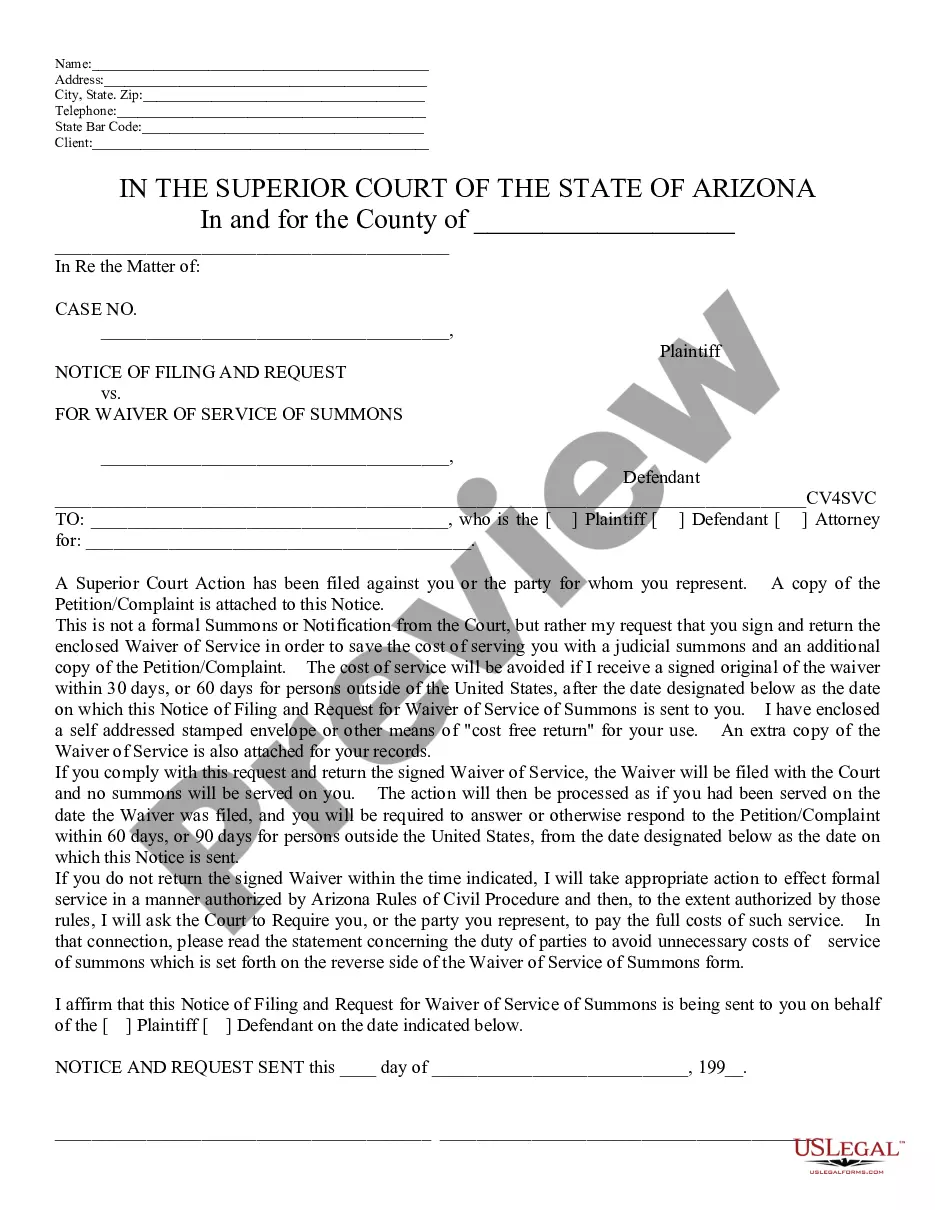
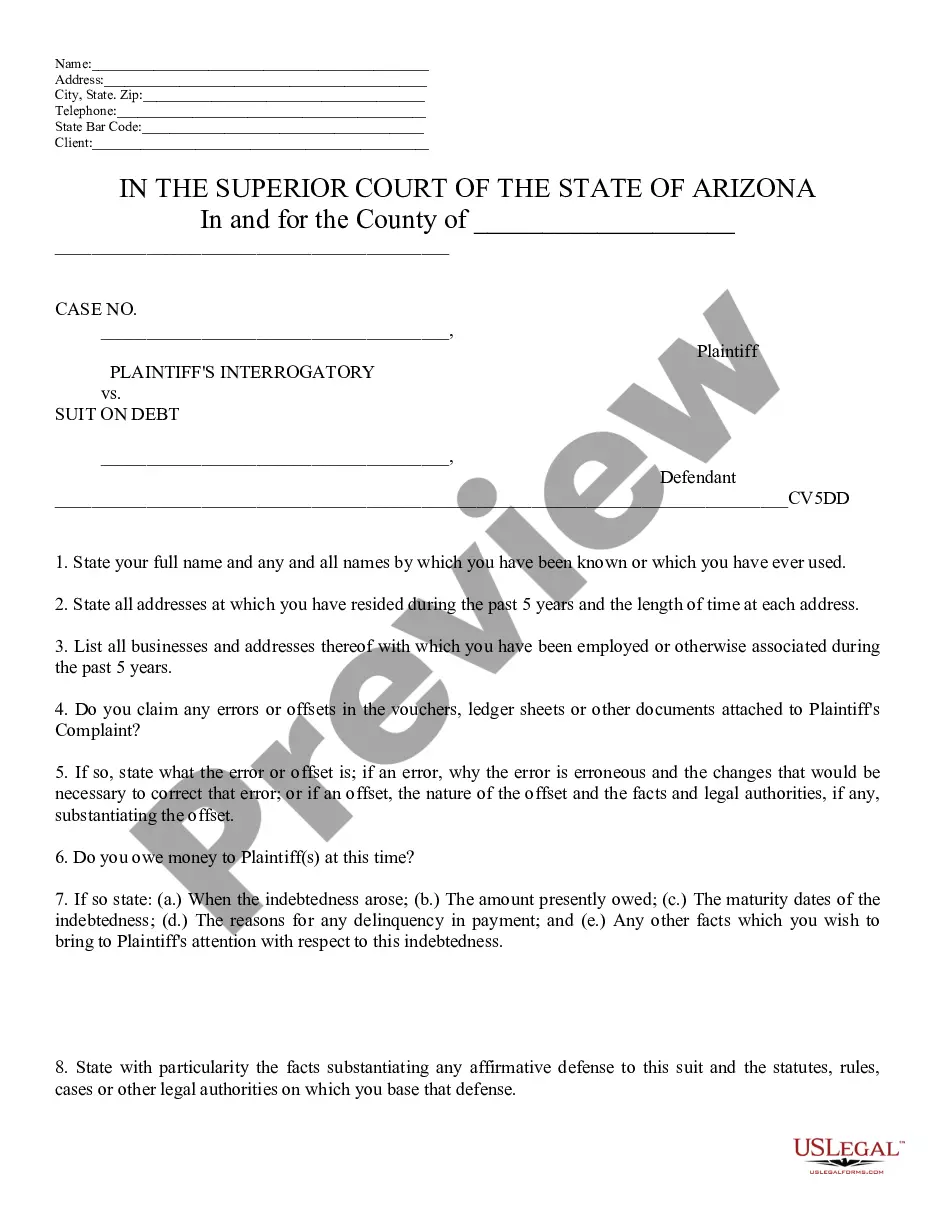
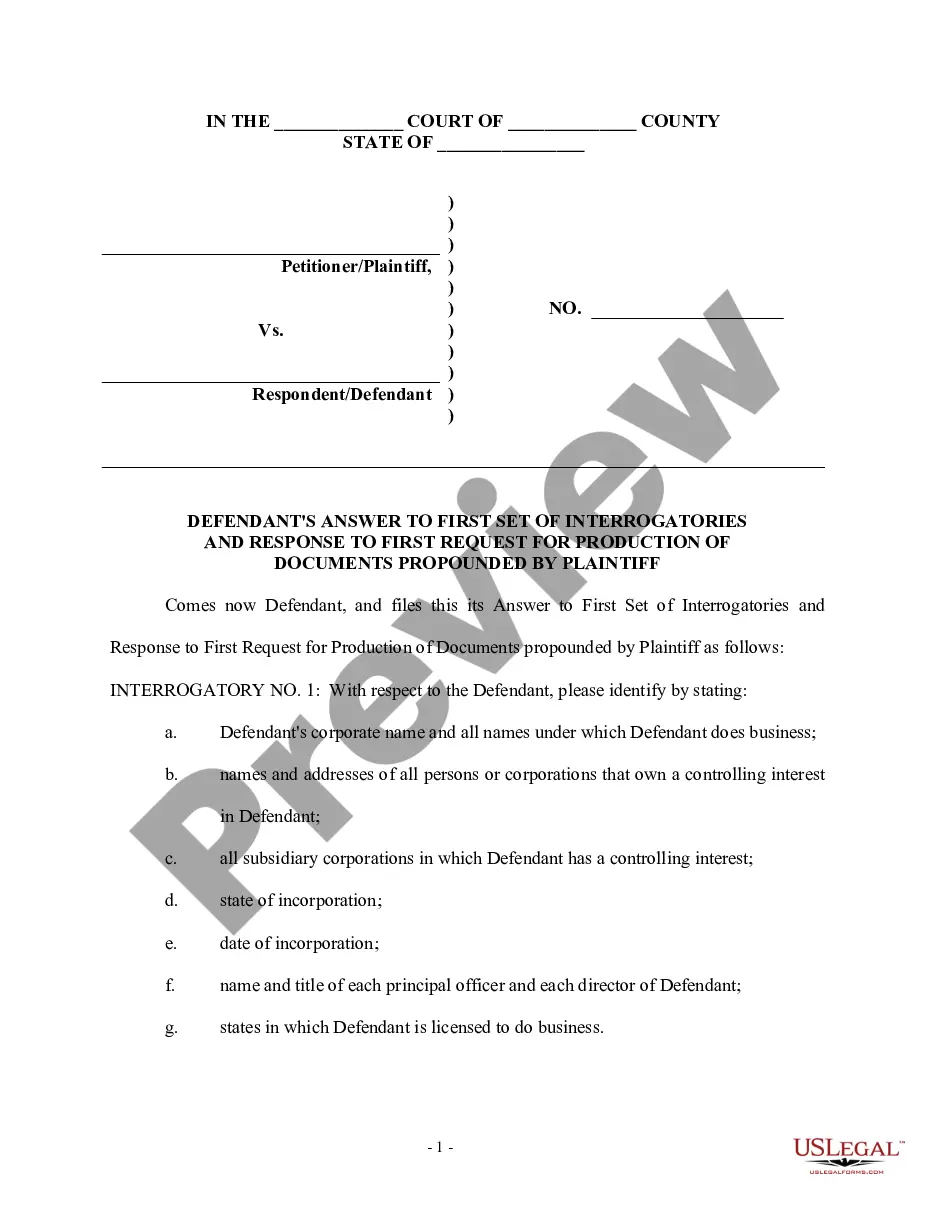
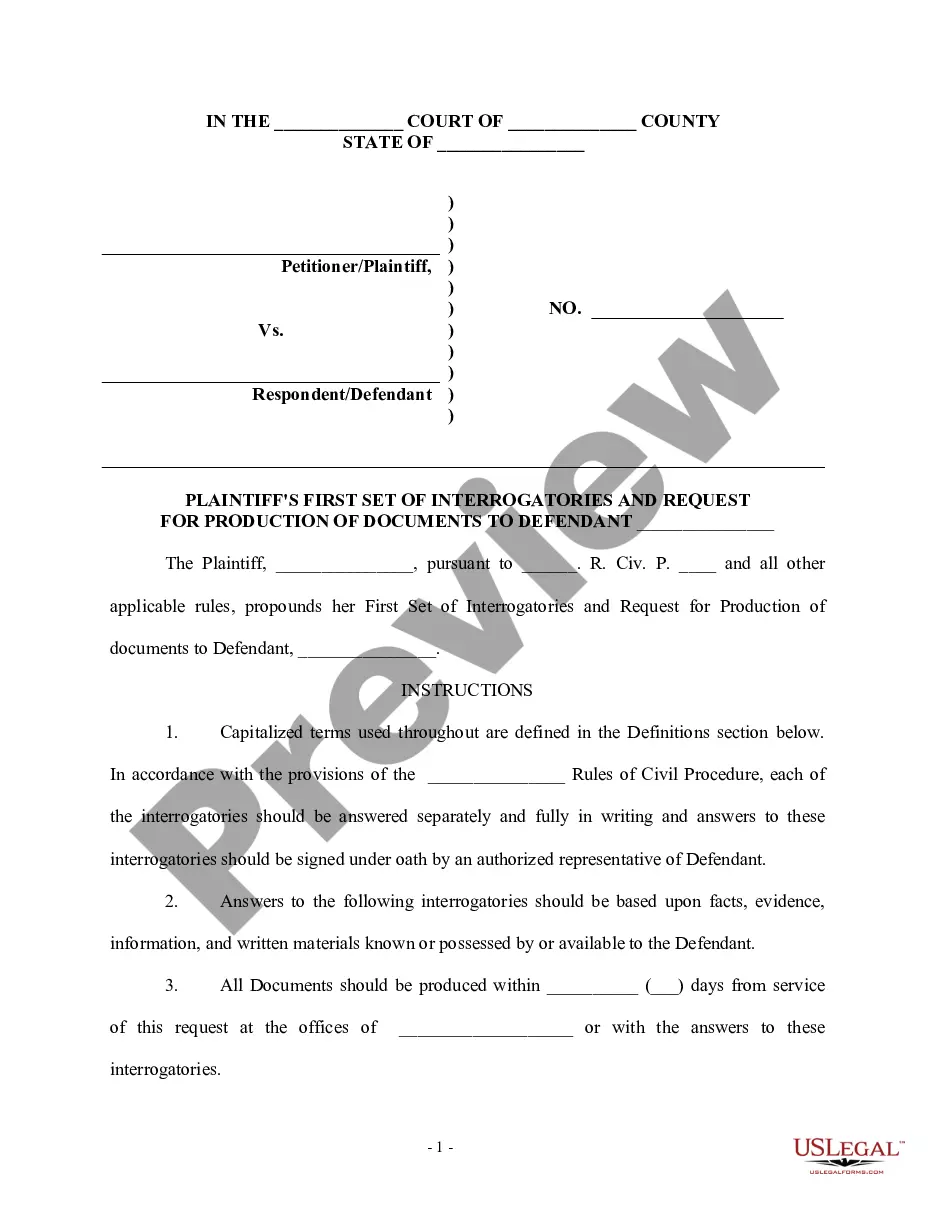
Mississippi Plaintiff's First Set of Interrogatories and Request for Production of Documents and Things Propounded to Defendant
About this form
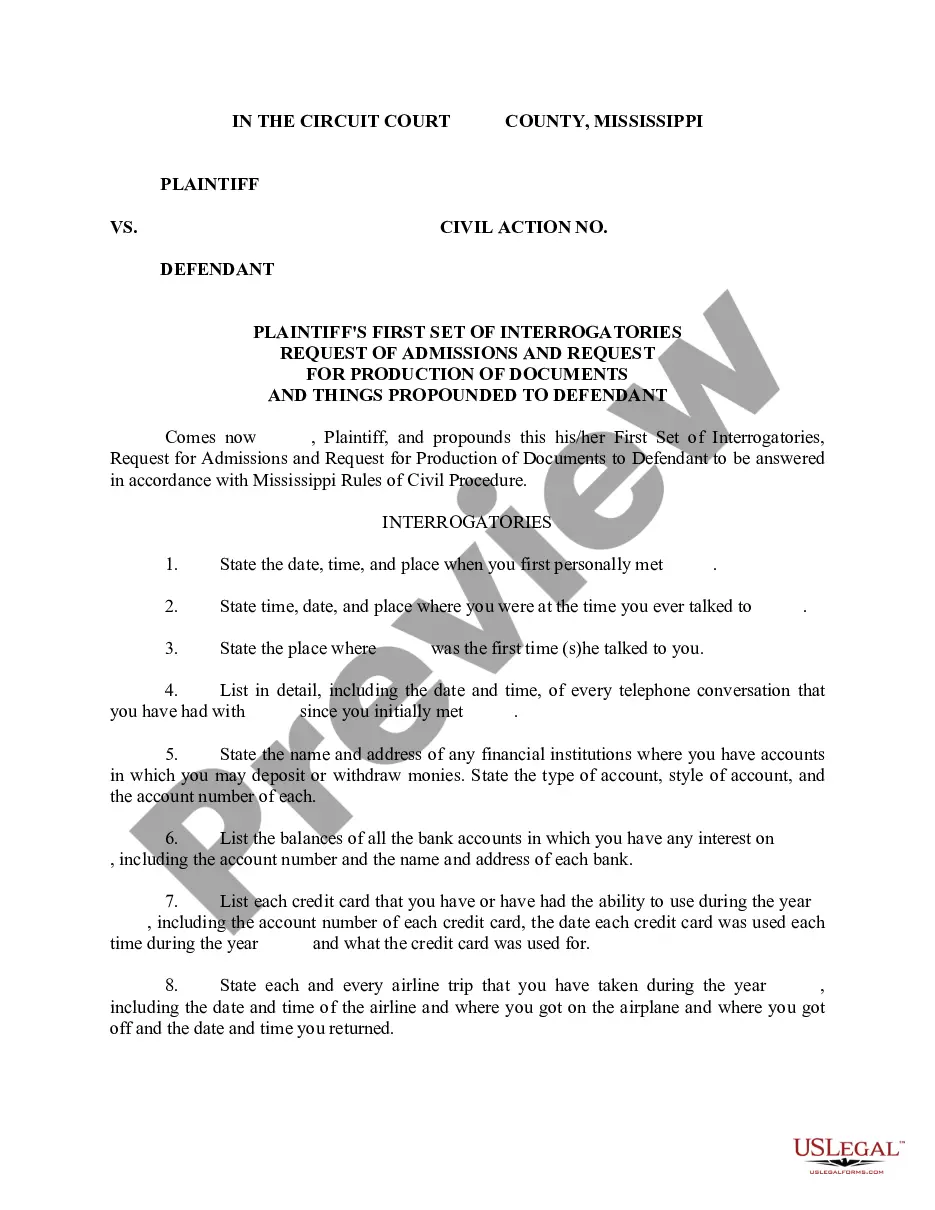
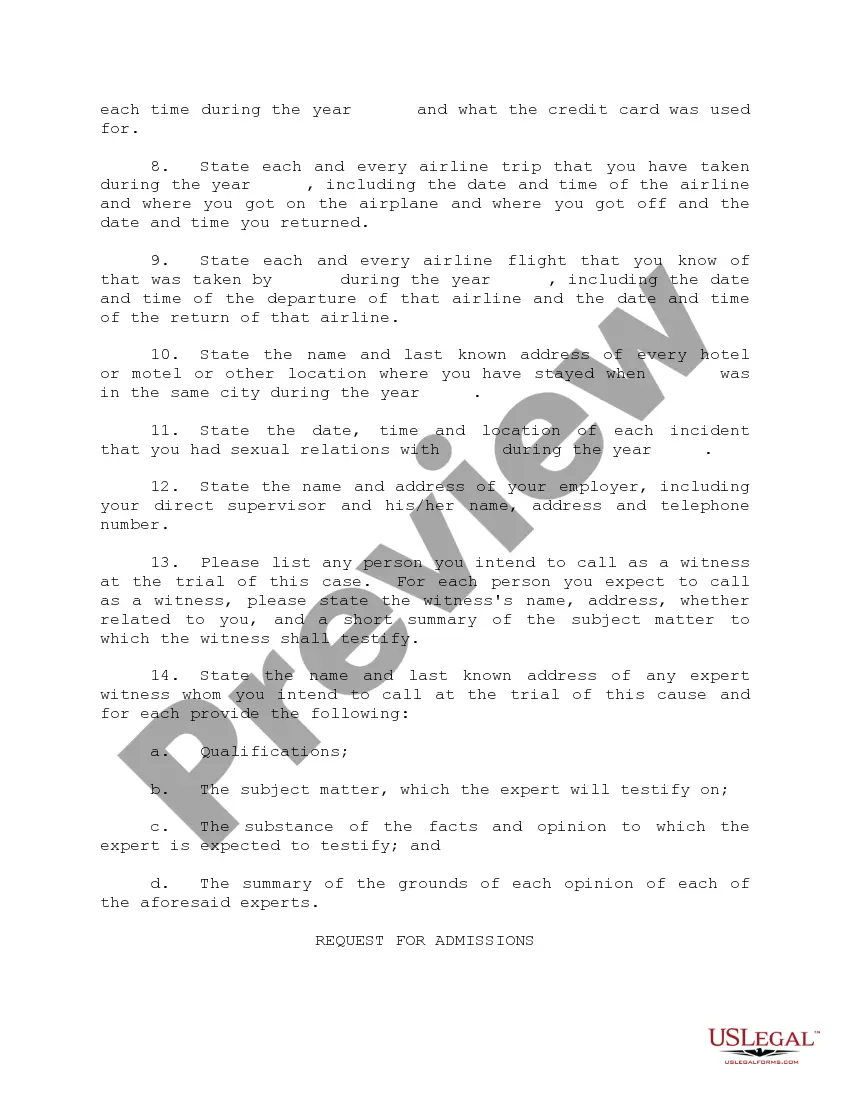
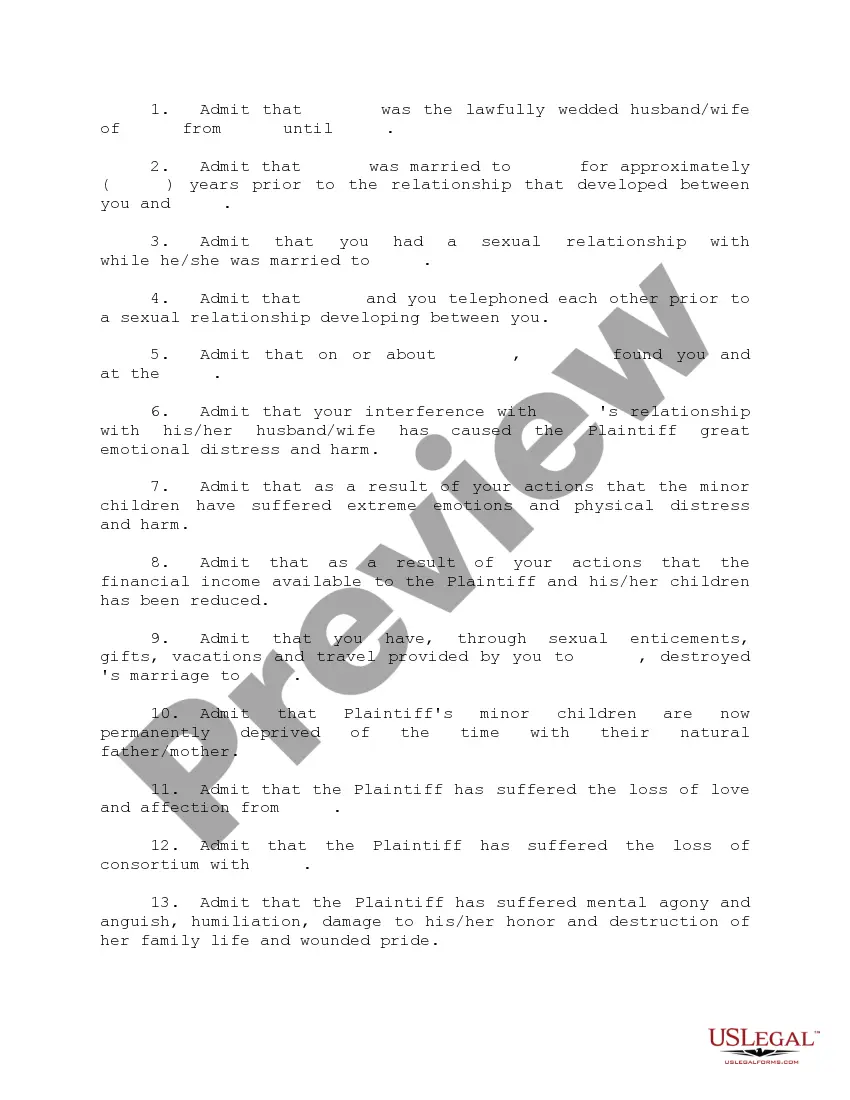
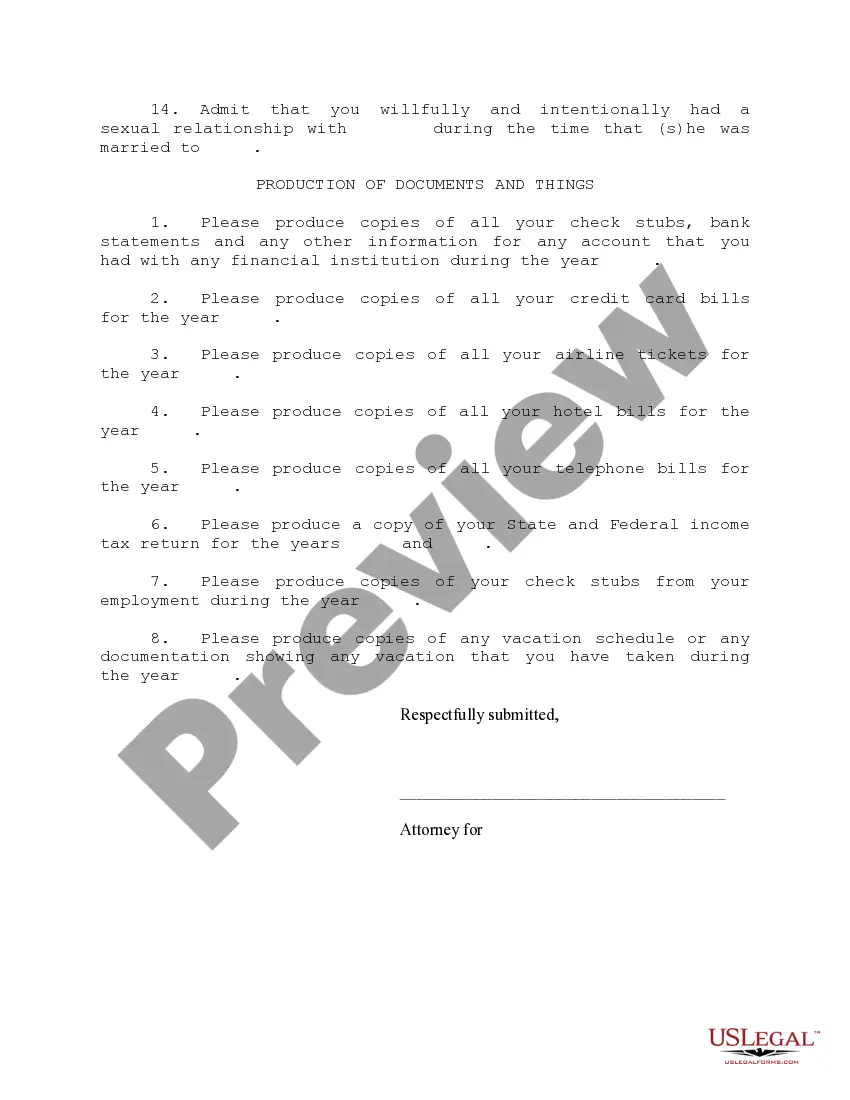
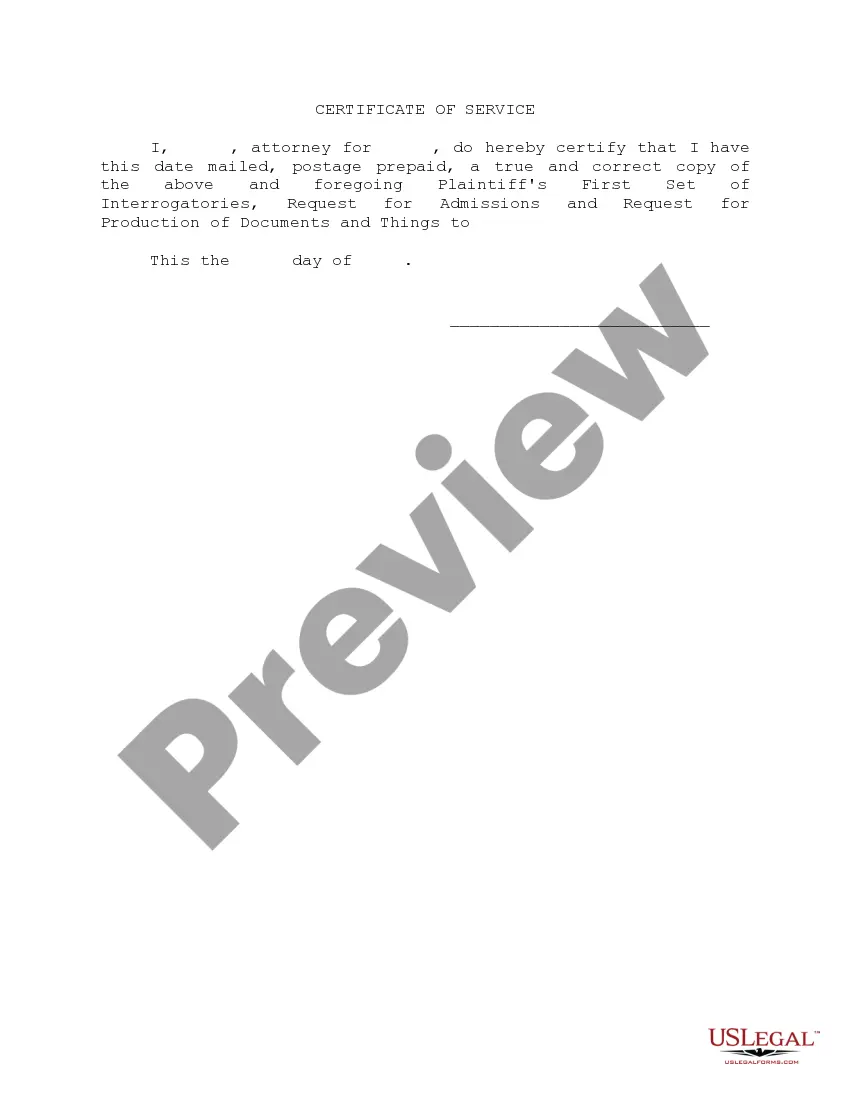
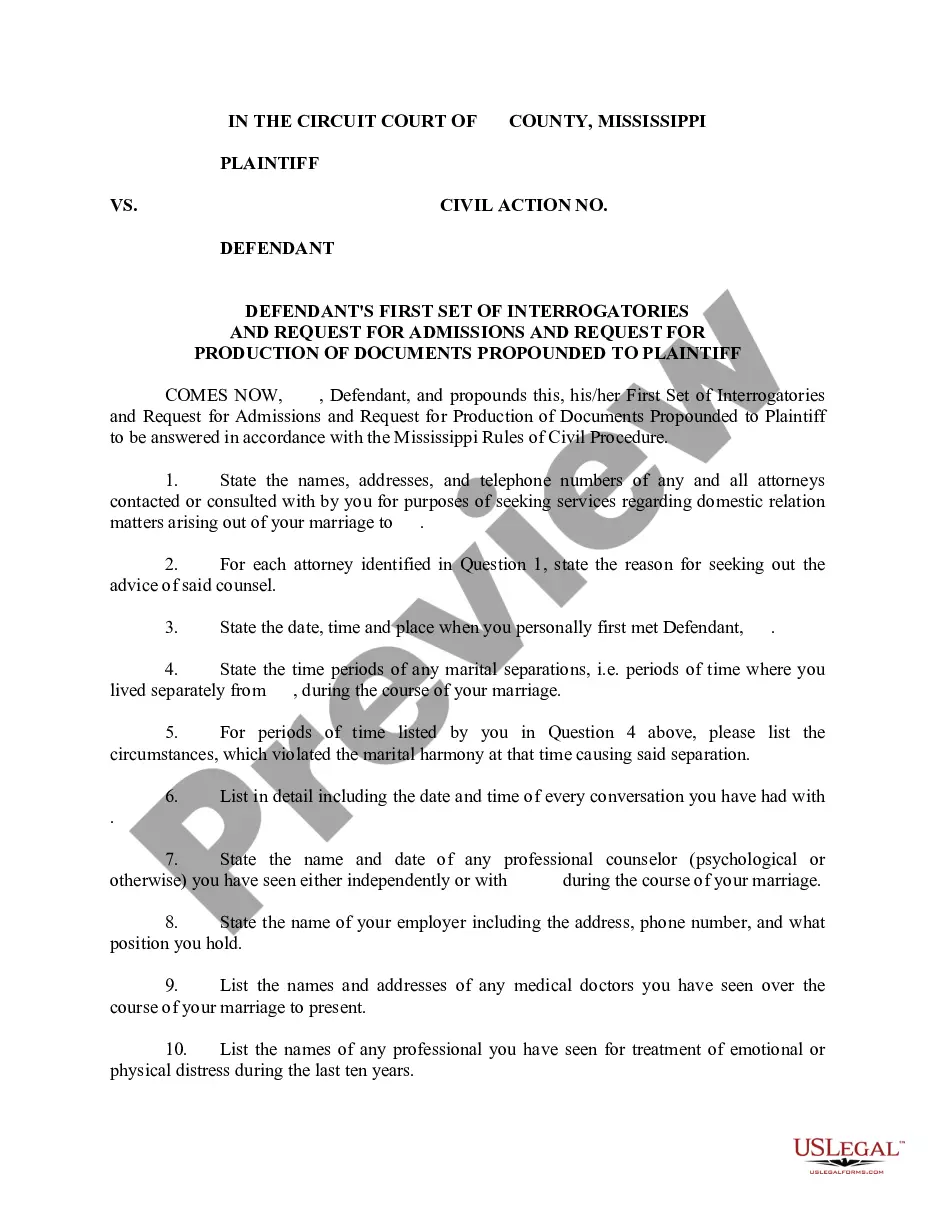
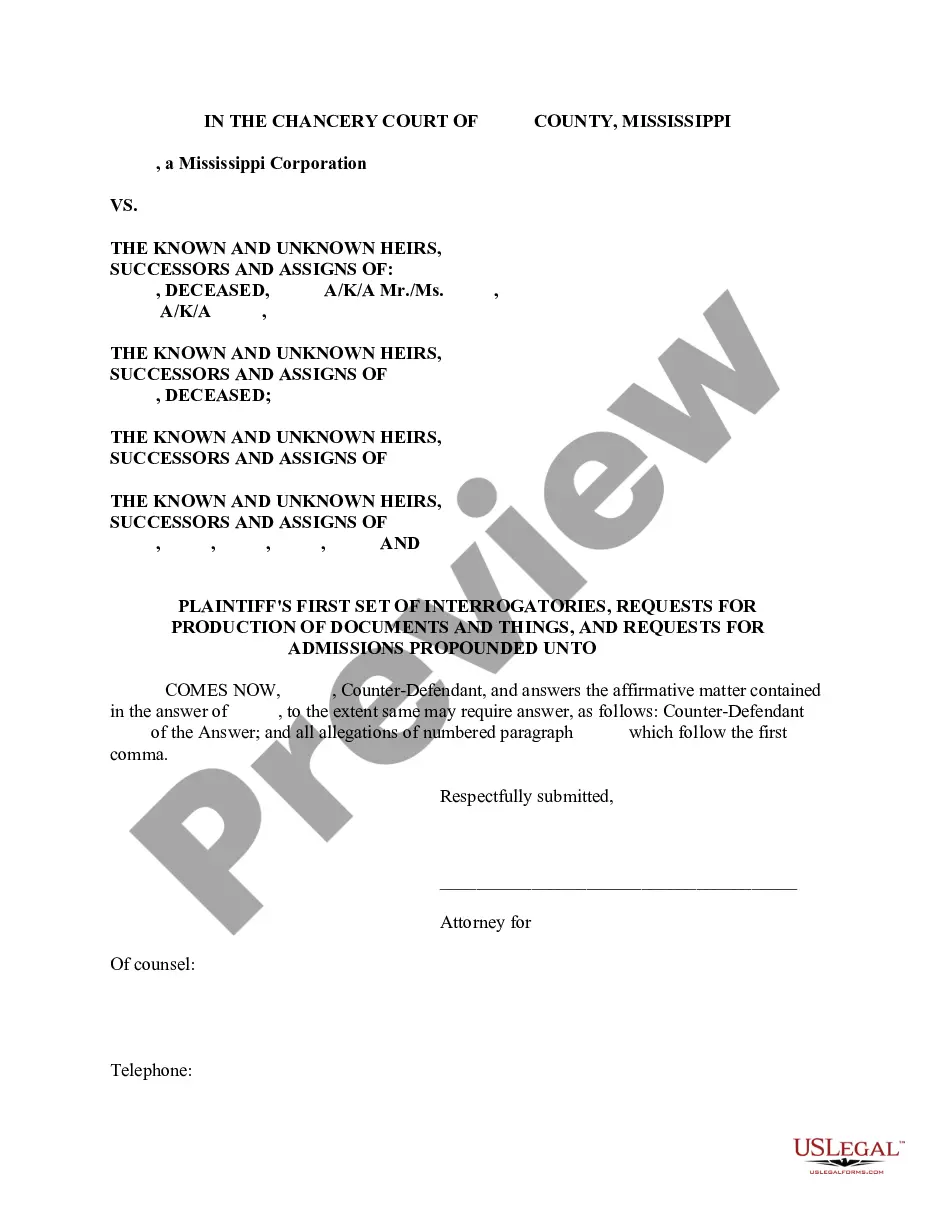
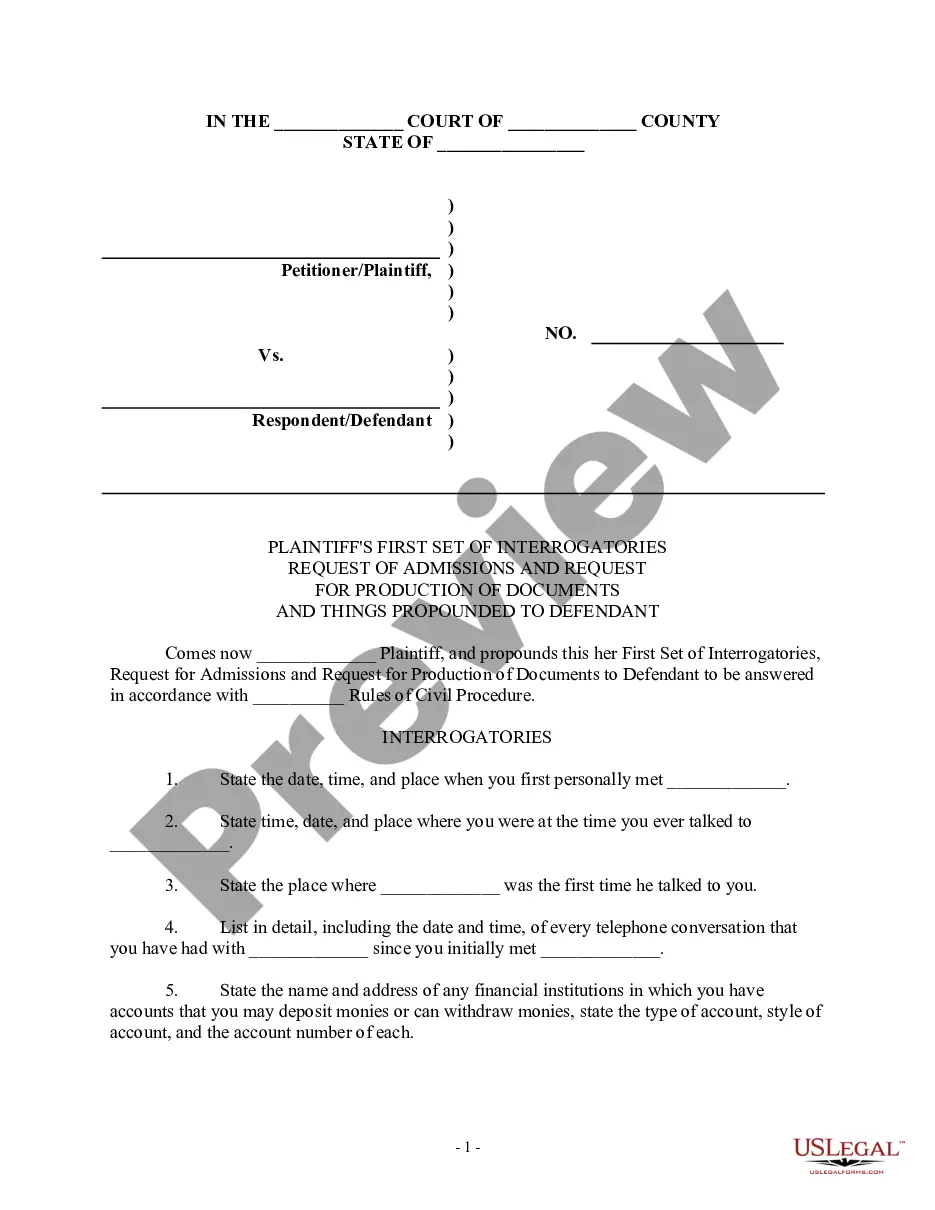
The Plaintiff's First Set of Interrogatories and Request for Production of Documents and Things Propounded to Defendant is a crucial legal document used during the discovery phase of a lawsuit. Interrogatories are written questions directed to the opposing party, aiming to gather information relevant to the case. This form differs from other legal documents by specifically requesting both answers to questions and the production of certain documents and items, offering a comprehensive approach to uncover necessary evidence.
Main sections of this form
- Request for identification of potential witnesses, including their names and addresses.
- Inquiry regarding expert witnesses, detailing their qualifications and contact information.
- Questions aimed at understanding actions that impacted the financial situation of the plaintiff.
- Requests for specific documents and tangible items relevant to the case.
Common use cases
This form is suitable for use when a plaintiff is preparing to commence legal action against a defendant and needs to gather factual evidence through written questioning. It is particularly appropriate when there is a need to clarify facts, discover information held by the opposing party, or establish a favorable position through documented evidence relevant to the case.
Intended users of this form
- Individuals or entities initiating a lawsuit as the plaintiff.
- Legal professionals representing plaintiffs in civil lawsuits.
- Anyone involved in litigation requiring detailed information from the defendant.
Instructions for completing this form
- Identify the parties involved in the lawsuit and provide necessary contact information.
- List all potential witnesses, including their names, addresses, and relationship to the case.
- Specify any expert witnesses and detail their qualifications and relevance to the case.
- Answer all interrogatories clearly and accurately, ensuring you back your responses with any needed documentation.
- Review the completed form for accuracy and completeness before submission to the defendant.
Notarization requirements for this form
This form does not typically require notarization unless specified by local law. Always verify with local regulations before submission to ensure compliance with any legal requirements.
Get your form ready online
Our built-in tools help you complete, sign, share, and store your documents in one place.
Make edits, fill in missing information, and update formatting in US Legal Forms—just like you would in MS Word.
Download a copy, print it, send it by email, or mail it via USPS—whatever works best for your next step.
Sign and collect signatures with our SignNow integration. Send to multiple recipients, set reminders, and more. Go Premium to unlock E-Sign.
If this form requires notarization, complete it online through a secure video call—no need to meet a notary in person or wait for an appointment.
We protect your documents and personal data by following strict security and privacy standards.

Make edits, fill in missing information, and update formatting in US Legal Forms—just like you would in MS Word.

Download a copy, print it, send it by email, or mail it via USPS—whatever works best for your next step.

Sign and collect signatures with our SignNow integration. Send to multiple recipients, set reminders, and more. Go Premium to unlock E-Sign.

If this form requires notarization, complete it online through a secure video call—no need to meet a notary in person or wait for an appointment.

We protect your documents and personal data by following strict security and privacy standards.
Avoid these common issues
- Failing to include all relevant witnesses in the list.
- Neglecting to provide full and accurate contact information for expert witnesses.
- Omitting necessary documentation that supports your answers.
- Providing vague or incomplete responses to interrogatories.
Advantages of online completion
- Immediate access to professionally drafted templates tailored for your needs.
- Easy editing capabilities to customize the form based on your specific case.
- Secure download for convenient storage and future reference.
Looking for another form?
Form popularity
FAQ
Interrogatories, which are written questions about things that are relevant or important to the case. (NRCP 33; JCRCP 33) Requests for production of documents or things, which are written requests that demand the other side provide particular documents or items.
Interrogatories, which are written questions about things that are relevant or important to the case. (NRCP 33; JCRCP 33) Requests for production of documents or things, which are written requests that demand the other side provide particular documents or items.
Interrogatories are written questions that one party to a lawsuit sends to another, and the responding party submits written answers under oath. If a lawsuit is filed in a personal injury case, chances are interrogatories will come into play.
A request for production is a discovery device used to gain access to documents, electronic data, and physical items held by an opposing party in a legal matter. The aim is to gain insight into any relevant evidence that the opposing party holds.
What Is a Request for Production of Documents? A request for production is a discovery device used to gain access to documents, electronic data, and physical items held by an opposing party in a legal matter. The aim is to gain insight into any relevant evidence that the opposing party holds.
Interrogatories are lists of questions sent to the other party that s/he must respond to in writing. You can use interrogatories to find out facts about a case but they cannot be used for questions that draw a legal conclusion.
In law, interrogatories (also known as requests for further information) are a formal set of written questions propounded by one litigant and required to be answered by an adversary in order to clarify matters of fact and help to determine in advance what facts will be presented at any trial in the case.
The issues discussed above in connection with interrogatories are also the issues which you need to cover in your requests for production. However, because requests for production do not yield a written answer, you can ask both for specific documents and for general categories of documents.
The purpose of interrogatories is to learn a great deal of general information about a party in a lawsuit. For example, the defendant in a personal injury lawsuit about a car accident might send you interrogatories asking you to disclose things like: Where you live. Where you work.