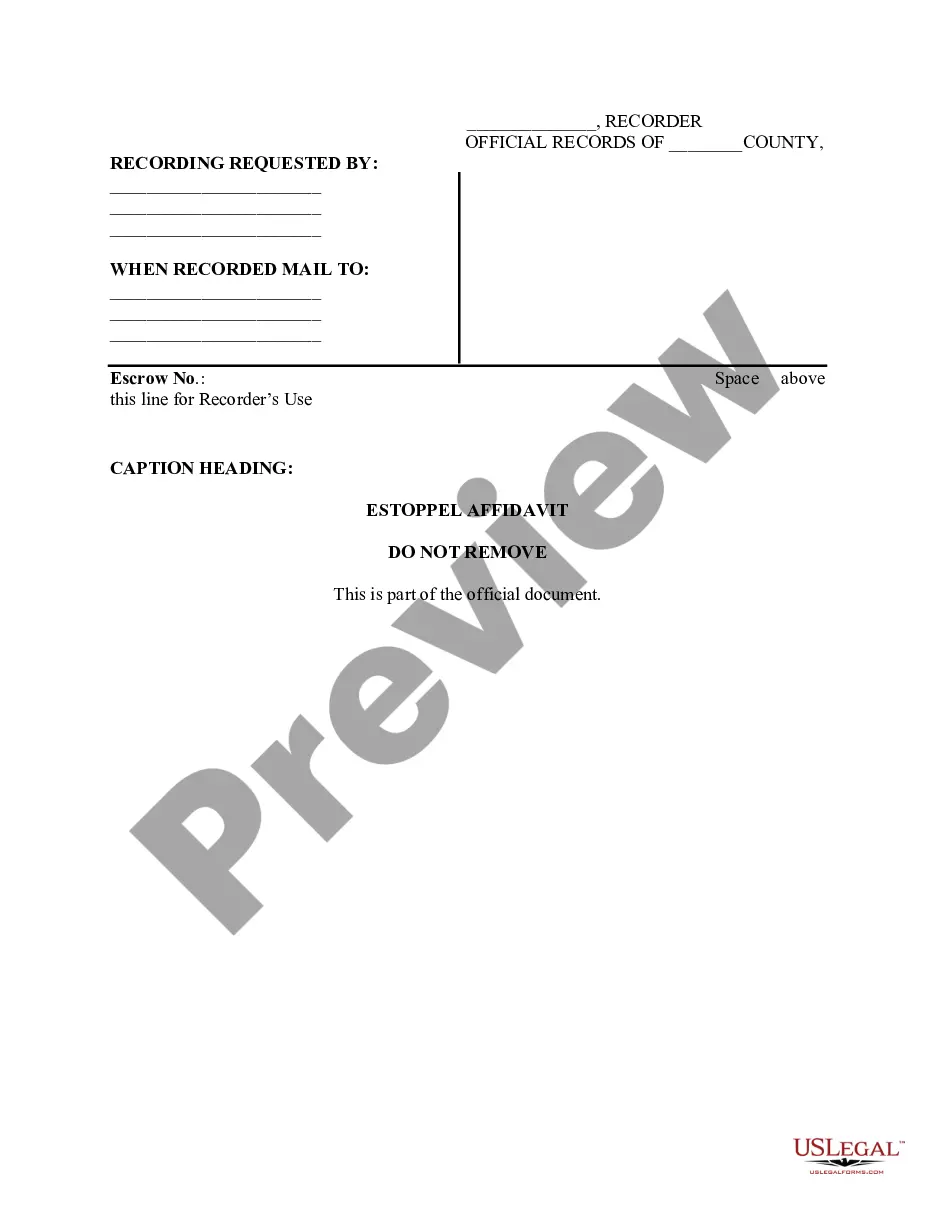
Mississippi Notice of Vendor's Lien
What is this form?
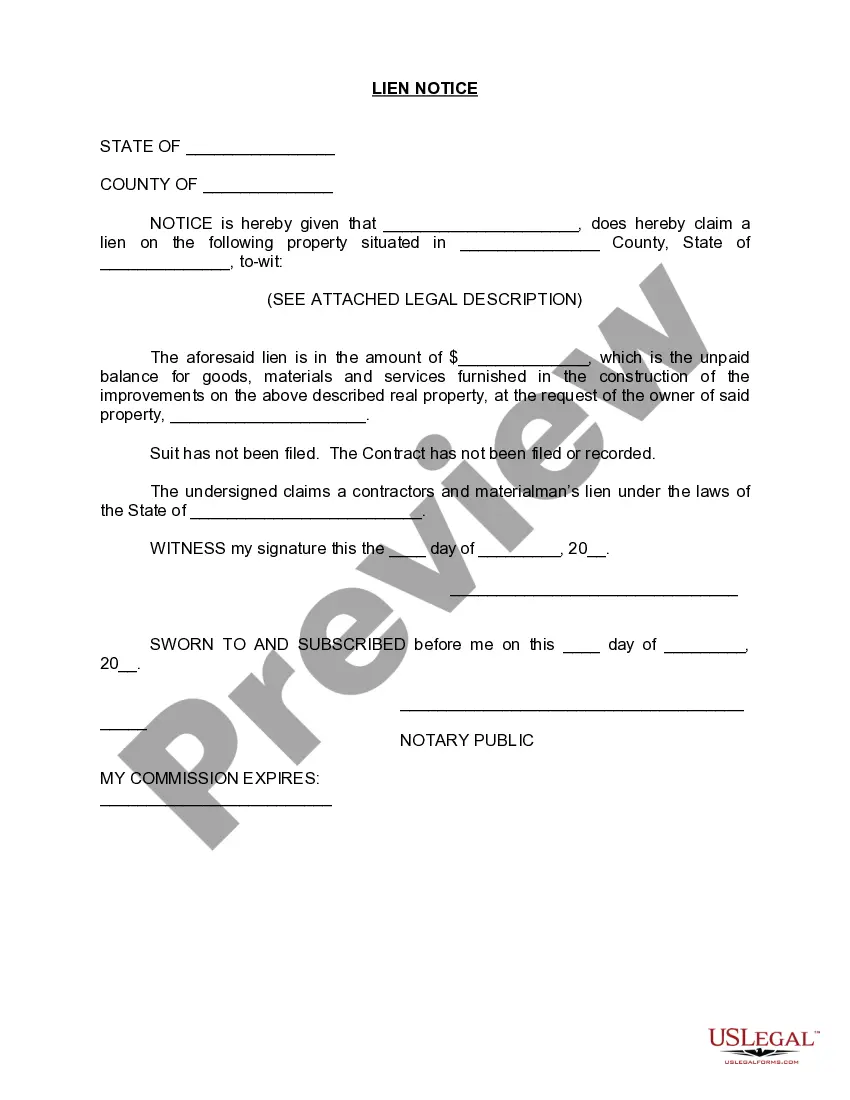
The Notice of Vendor's Lien is a legal document that gives notice of a lien placed on a property by a vendor who has supplied materials but has not been compensated. This form secures the vendor's right to payment for the outstanding balance, differentiating it from other lien types by focusing specifically on vendor-supplied materials for property improvements.
Key components of this form
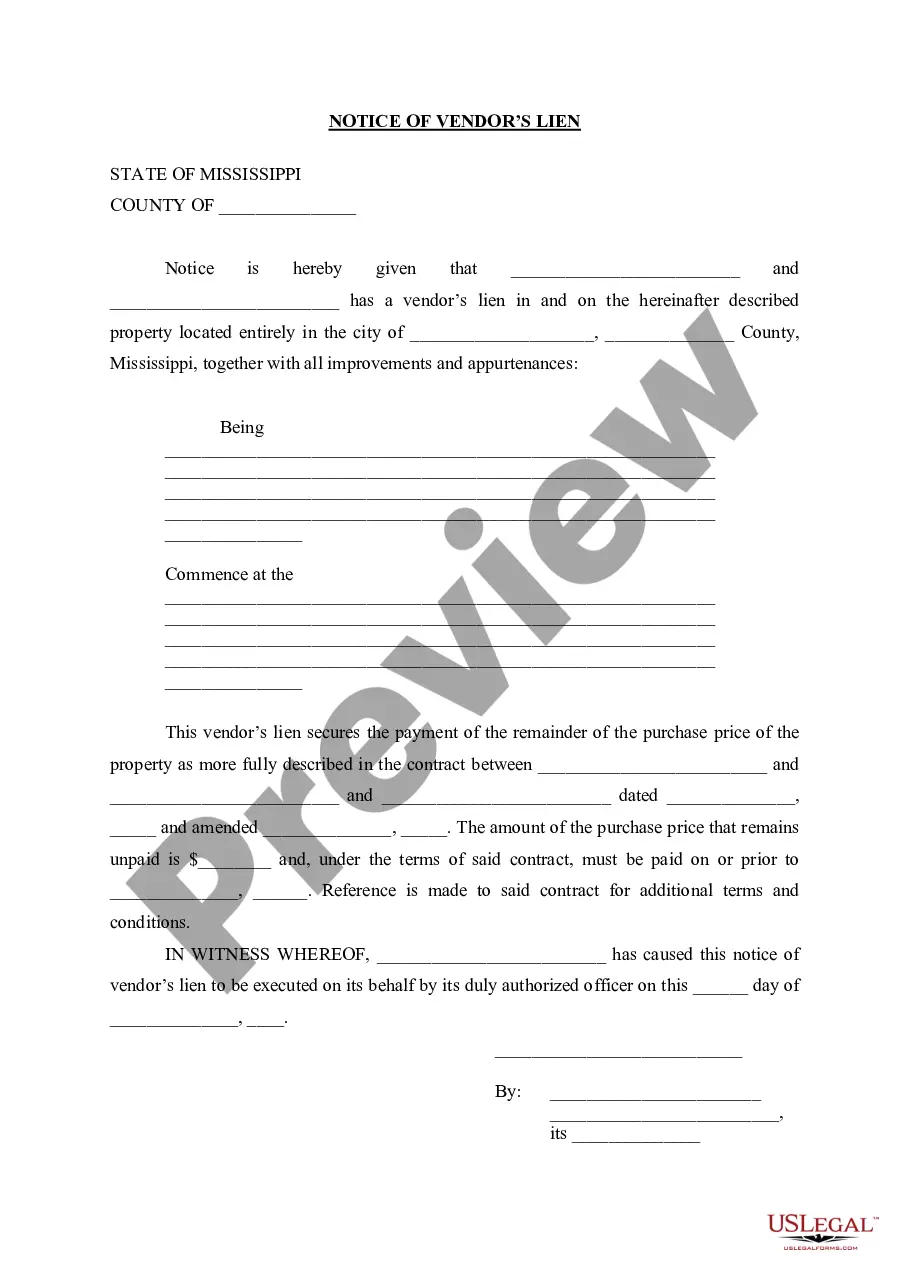
- Identification of the vendor and the debtor.
- Description of the property subject to the lien.
- Details regarding the unpaid purchase price and payment terms.
- Execution by an authorized officer of the vendor.
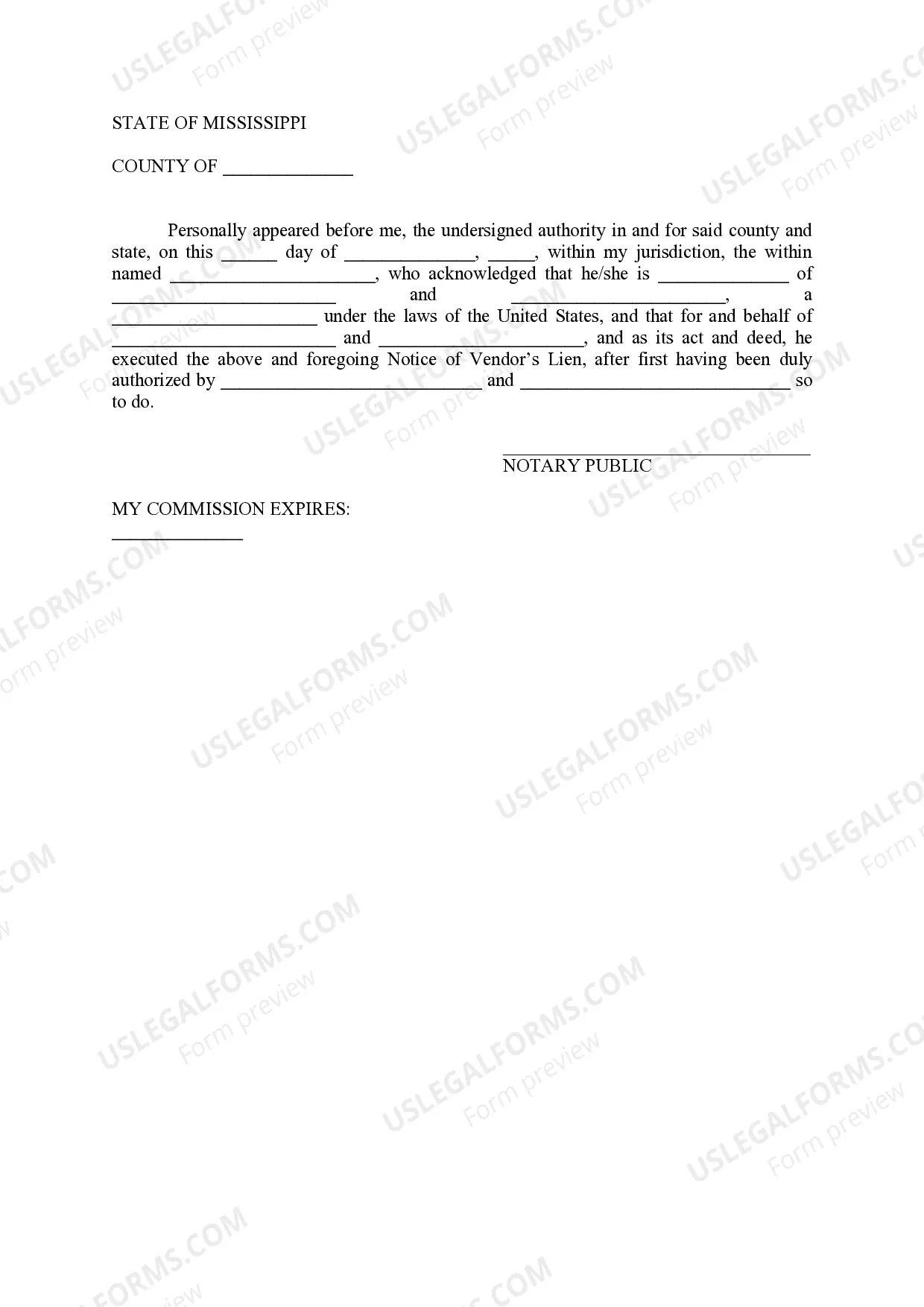
- Notarization section for legal validation.
Common use cases
This form is used when a vendor has provided materials for improvements on a property and has not received payment for those materials. The vendor can file this notice to formally establish their claim against the property, ensuring legal recognition of their financial interest in the property until the debt is satisfied.
Who needs this form
The following parties should consider using this form:
- Material suppliers seeking to secure unpaid debts.
- Contractors who have not been paid for materials used on a project.
- Business owners who need to notify property owners of outstanding dues related to property improvements.
How to prepare this document
- Identify the vendor and debtor by entering their names in the appropriate sections.
- Clearly describe the property on which the lien is being placed.
- Enter the total amount due and the terms of payment as outlined in the original contract.
- Include the date of the contract and any amendments if applicable.
- Ensure the document is signed by an authorized representative of the vendor.
- Complete the notarization section to validate the form legally.
Does this document require notarization?
This form must be notarized to be legally valid. Notarization often adds an additional layer of authenticity, confirming identities and signatures. US Legal Forms provides integrated online notarization options, allowing you to complete this step securely and conveniently from anywhere, 24/7.
Get your form ready online
Our built-in tools help you complete, sign, share, and store your documents in one place.
Make edits, fill in missing information, and update formatting in US Legal Forms—just like you would in MS Word.
Download a copy, print it, send it by email, or mail it via USPS—whatever works best for your next step.
Sign and collect signatures with our SignNow integration. Send to multiple recipients, set reminders, and more. Go Premium to unlock E-Sign.
If this form requires notarization, complete it online through a secure video call—no need to meet a notary in person or wait for an appointment.
We protect your documents and personal data by following strict security and privacy standards.

Make edits, fill in missing information, and update formatting in US Legal Forms—just like you would in MS Word.

Download a copy, print it, send it by email, or mail it via USPS—whatever works best for your next step.

Sign and collect signatures with our SignNow integration. Send to multiple recipients, set reminders, and more. Go Premium to unlock E-Sign.

If this form requires notarization, complete it online through a secure video call—no need to meet a notary in person or wait for an appointment.

We protect your documents and personal data by following strict security and privacy standards.
Mistakes to watch out for
- Failing to include a precise description of the property.
- Not providing complete information regarding amounts due.
- Neglecting to have the form notarized, if required.
- Using vague language that may confuse the lienâs intent.
Why use this form online
- Convenient access to legal forms without needing to visit an attorney.
- Editable templates that allow customization according to specific needs.
- Quick download for immediate use.
- Forms drafted by licensed attorneys to ensure legal compliance.
What to keep in mind
- The Notice of Vendor's Lien secures the vendor's right to payment when materials supplied have not been paid for.
- Proper completion and notarization of the form are crucial for legal validation.
- This form is specifically tailored for the jurisdiction of Mississippi.
Looking for another form?
Form popularity
FAQ
To place a lien, you must first demonstrate that you have a valid debt that has not been paid by the property holder for example if you performed construction work as a contractor or subcontractor at company headquarters and the business did not pay your bill.
A Lien Demand Letter or Notice of Intent to Lien is a formal demand for payment.A lien demand letter puts a debtor on notice of your intent to lien the job site property by a specific date deadline. Increase your odds of getting paid with a lien demand letter.
A lien is a legal claim against your property to secure payment of your tax debt, while a levy actually takes the property to satisfy the tax debt.When filed, the Notice of Federal Tax Lien is a public document that alerts other creditors that the IRS is asserting a secured claim against your assets.
Where and how should you file the mechanics lien in Mississippi? The mechanics lien must be filed the chancery court where the project is located. You may have the mechanics lien recorded in the court by sending it via email together with the required lien fees, or you may also walk in and personally file it.
If you're claiming a lien on real property, it must be filed in the recorder's office of the county where the property is located. Expect to pay a filing fee between $25 and $50 depending on the location where you file.
The Tax-Forfeited Inventory200b link provides access to the properties available for sale or you may contact the Public Lands Division in the Secretary of State's Office at 601-359-5156 or toll free (in-state) at 1-866-TFLANDS(835-2637). Approximately how long does the process take?
A lien secures the government's interest in your property when you don't pay your tax debt. A levy actually takes the property to pay the tax debt. If you don't pay or make arrangements to settle your tax debt, the IRS can levy, seize and sell any type of real or personal property that you own or have an interest in.
The answer is simple no. In Mississippi, paying the property taxes on someone else's land does not affect ownership in any manner. You simply cannot obtain title to someone's land by paying their taxes for them.
Prepare the lien document, taking care to include all the necessary information set forth above including the required statements. Sign the document. Deliver the lien must the office of the clerk of the chancery court of the county where the property is located.