Mississippi Purchase Money Deed of Trust
What this document covers
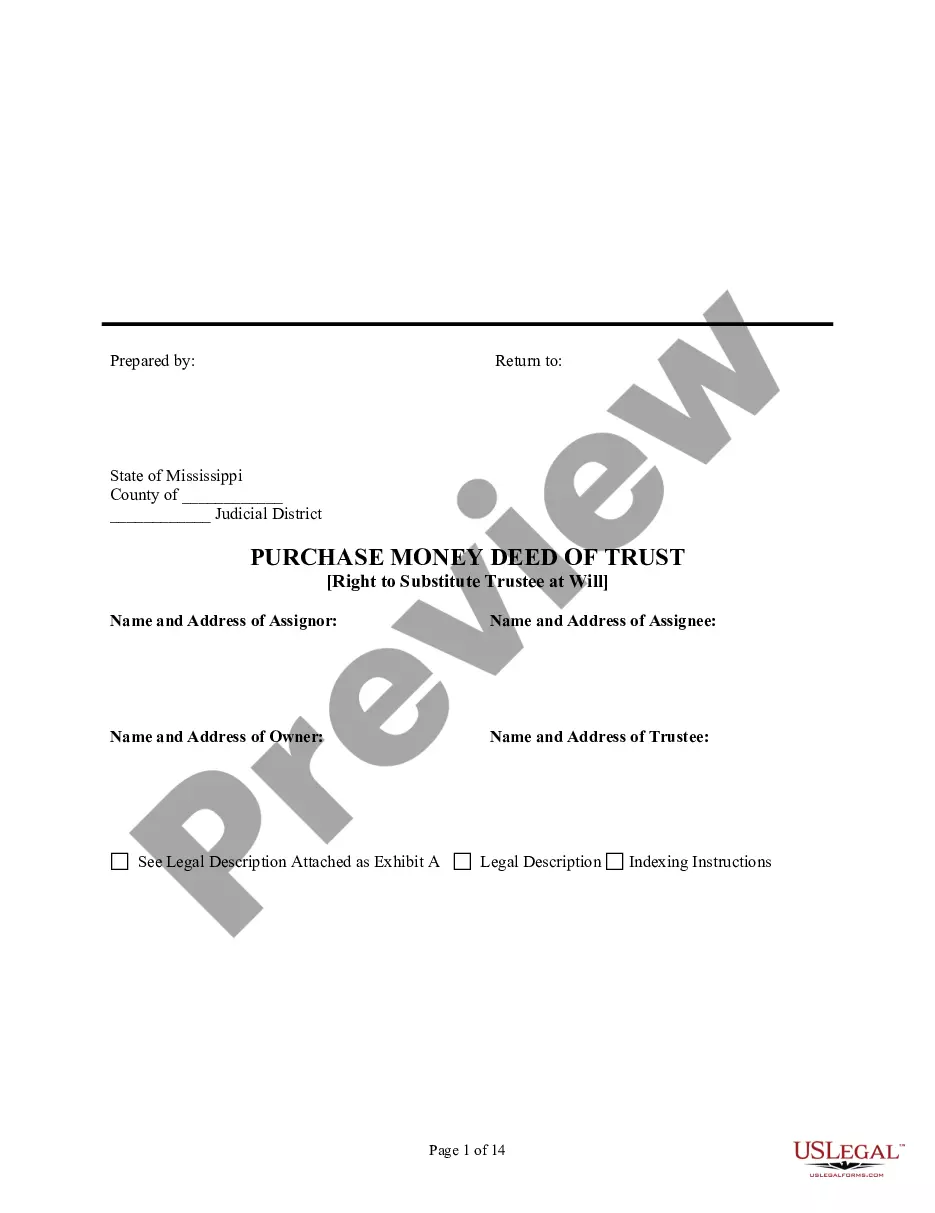
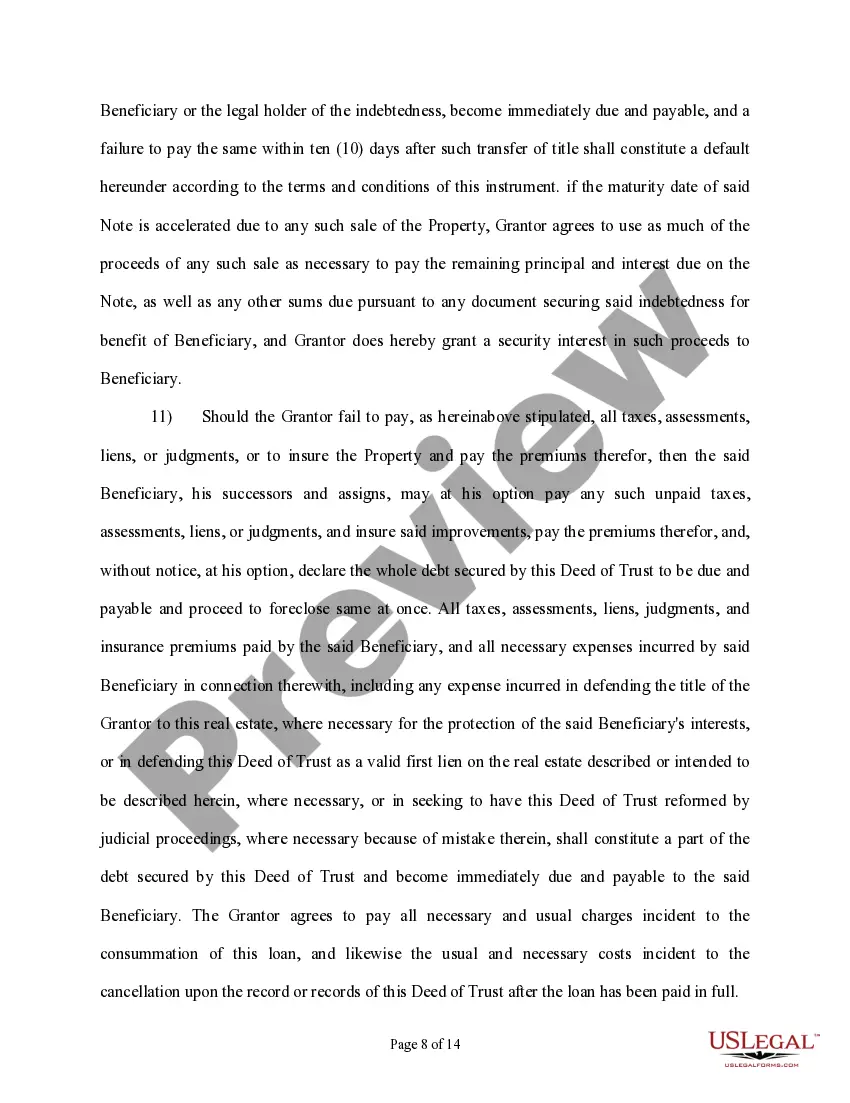
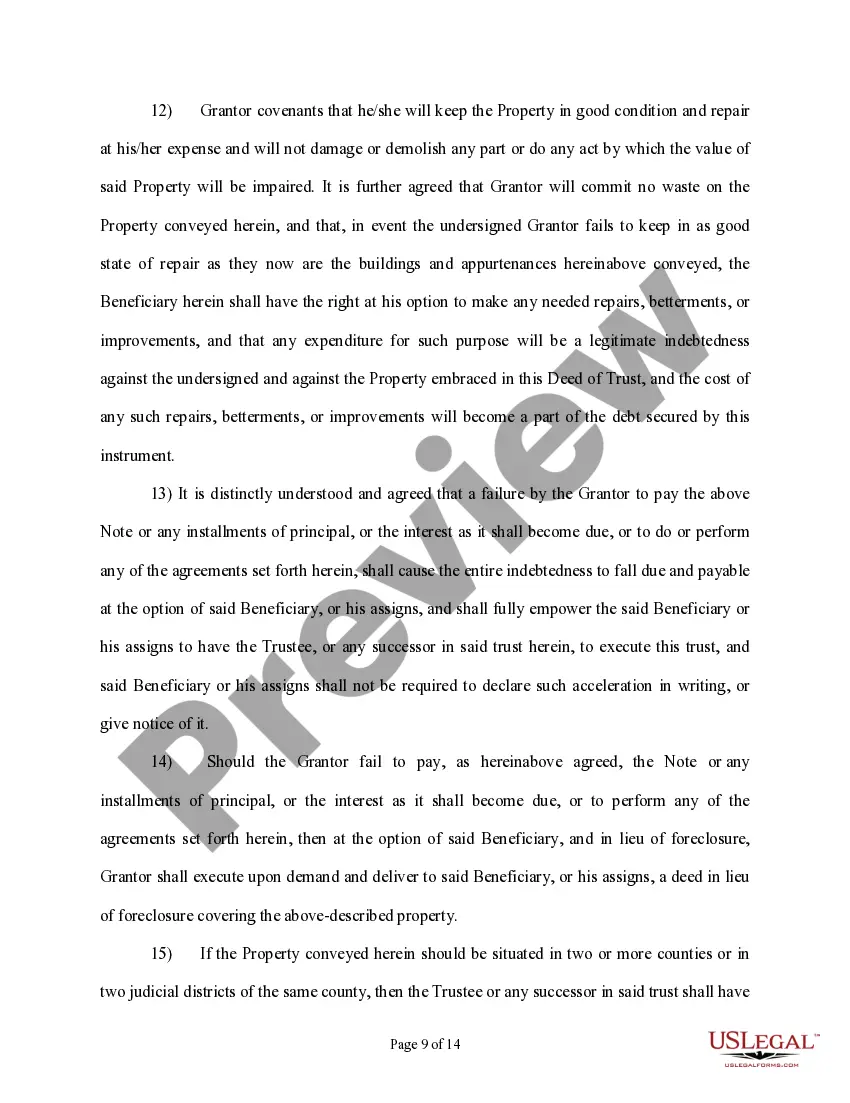
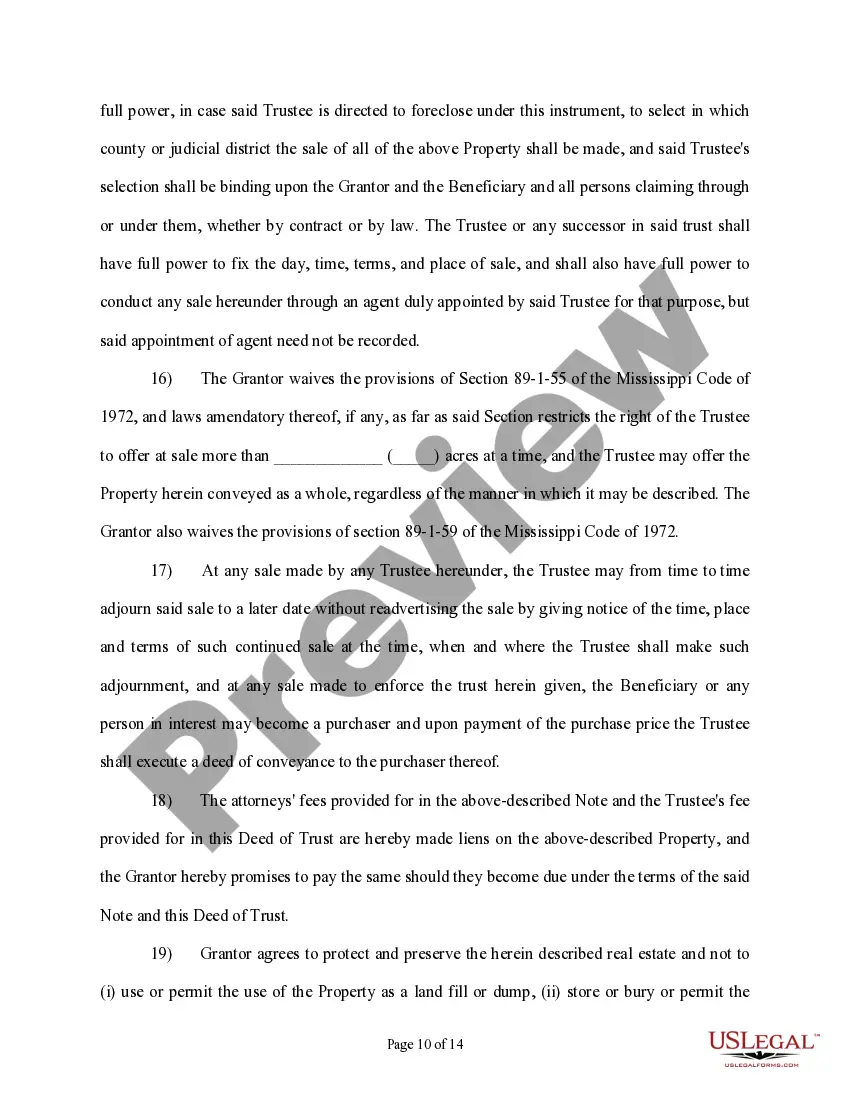
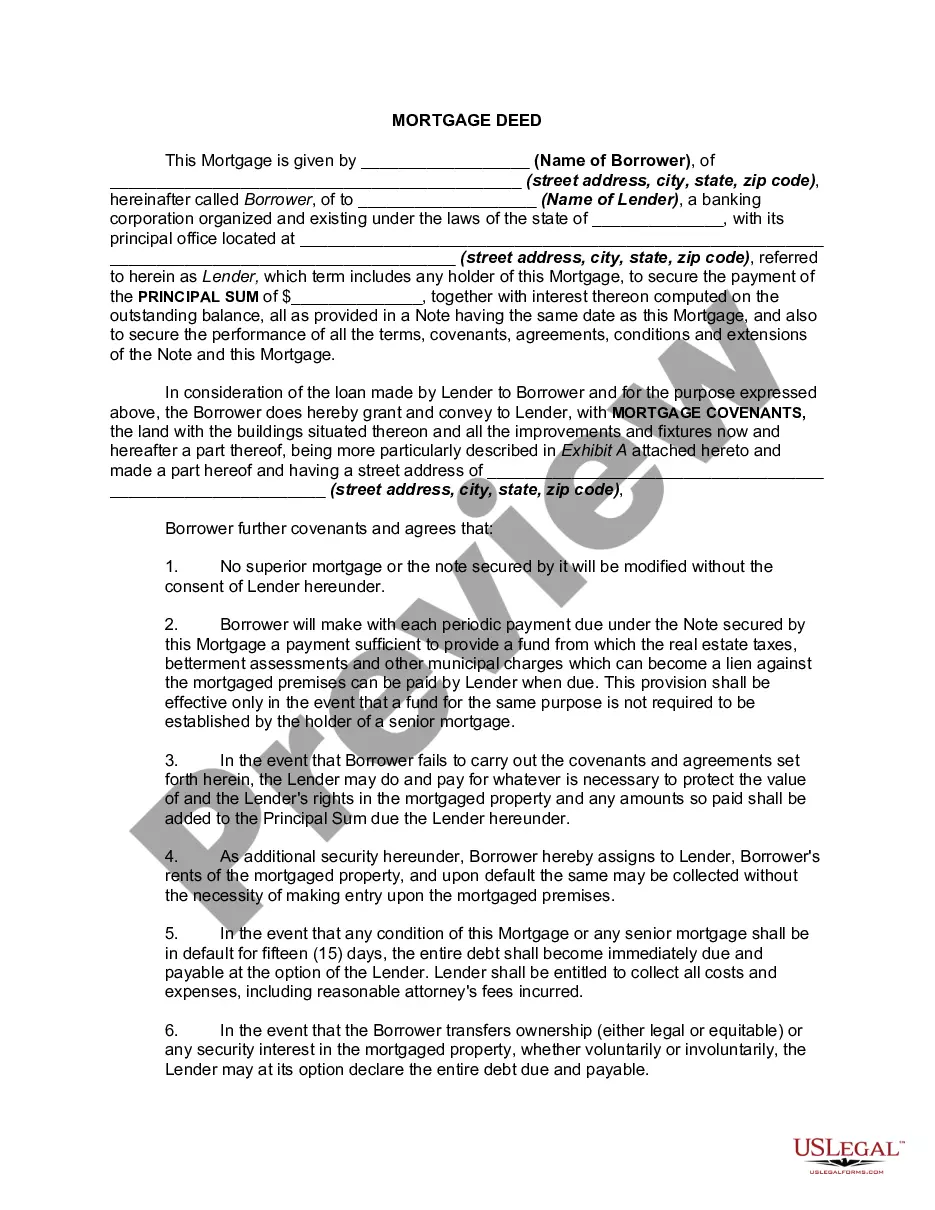
The Purchase Money Deed of Trust is a legal document specifically used in Mississippi to secure a loan for the purchase of real estate. This form conveys title to a property to a trustee as collateral until the borrower repays the loan. Unlike other mortgage documents, this deed emphasizes the initial purchase payment, known as the purchase money, and outlines the obligations of both the borrower and the lender. Properly drafted by licensed attorneys, this form ensures that all relevant legal procedures and rights are included.
Main sections of this form
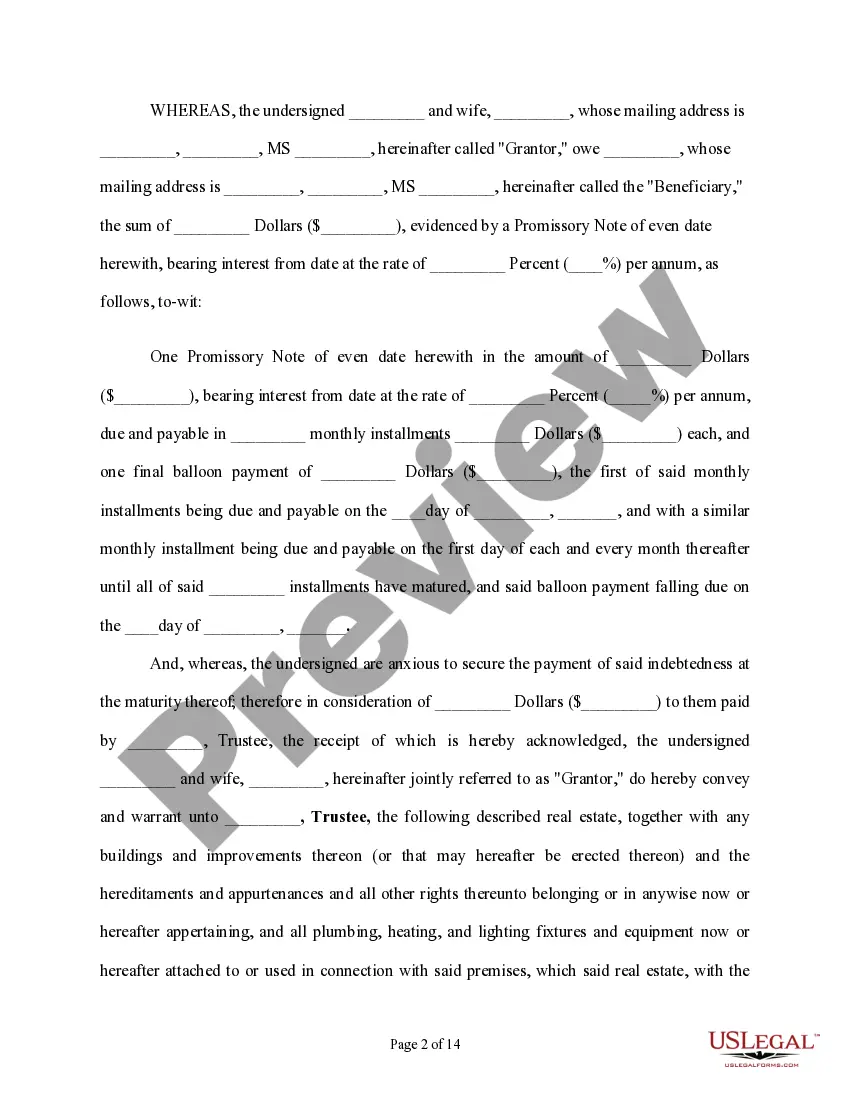
- Promissory note details including loan amount, interest rate, and repayment schedule.
- Identification of the parties involved, including the Grantor and Trustee.
- Description of the secured real estate, including legal descriptions.
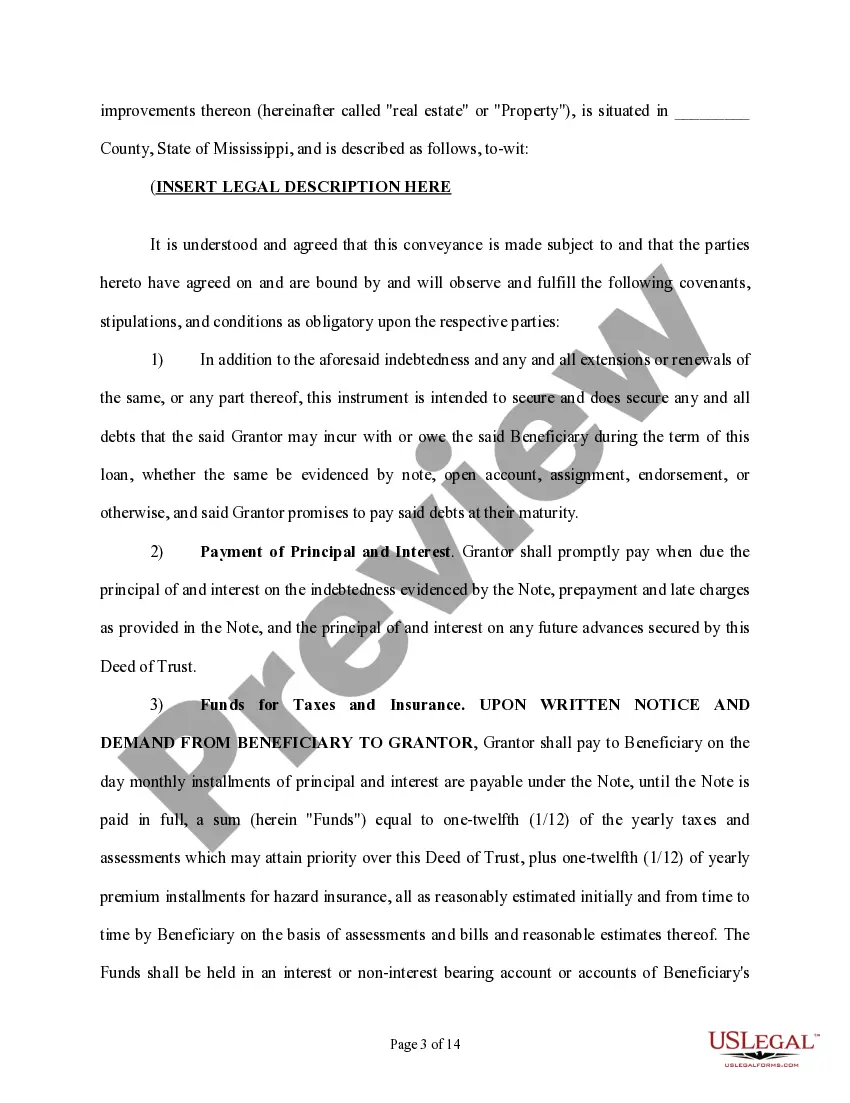
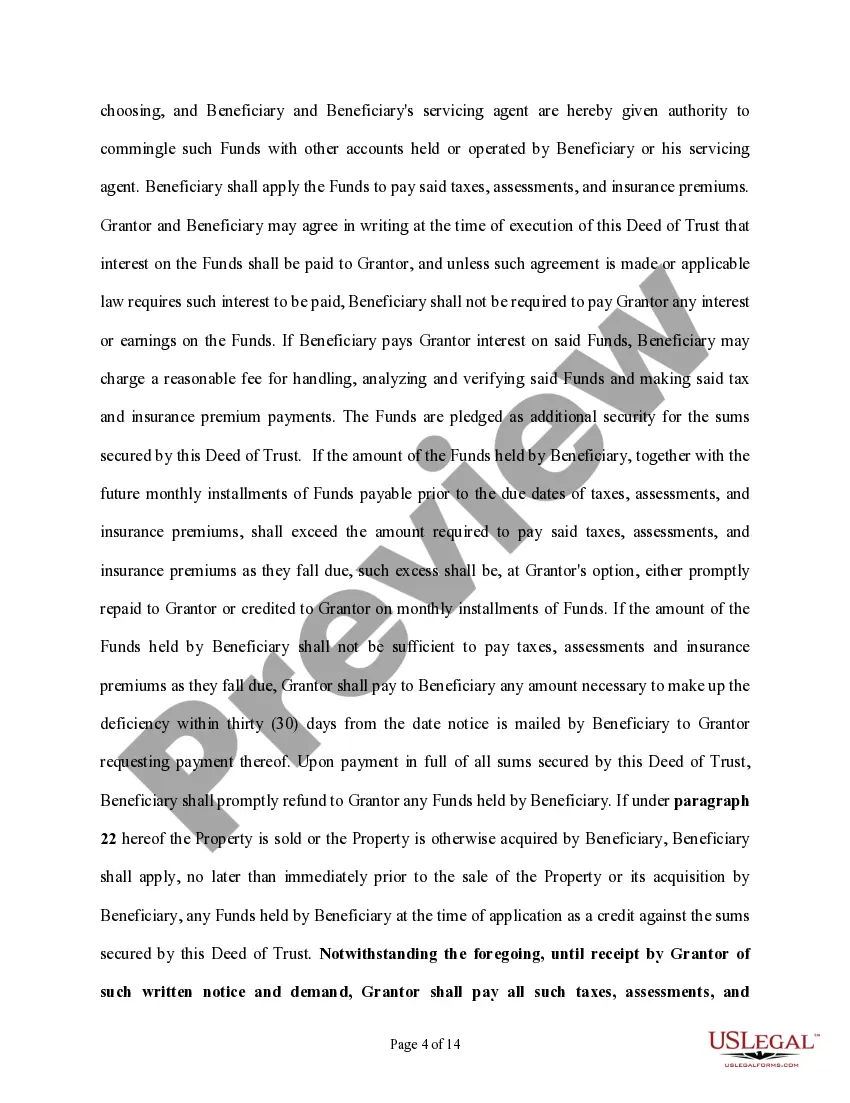
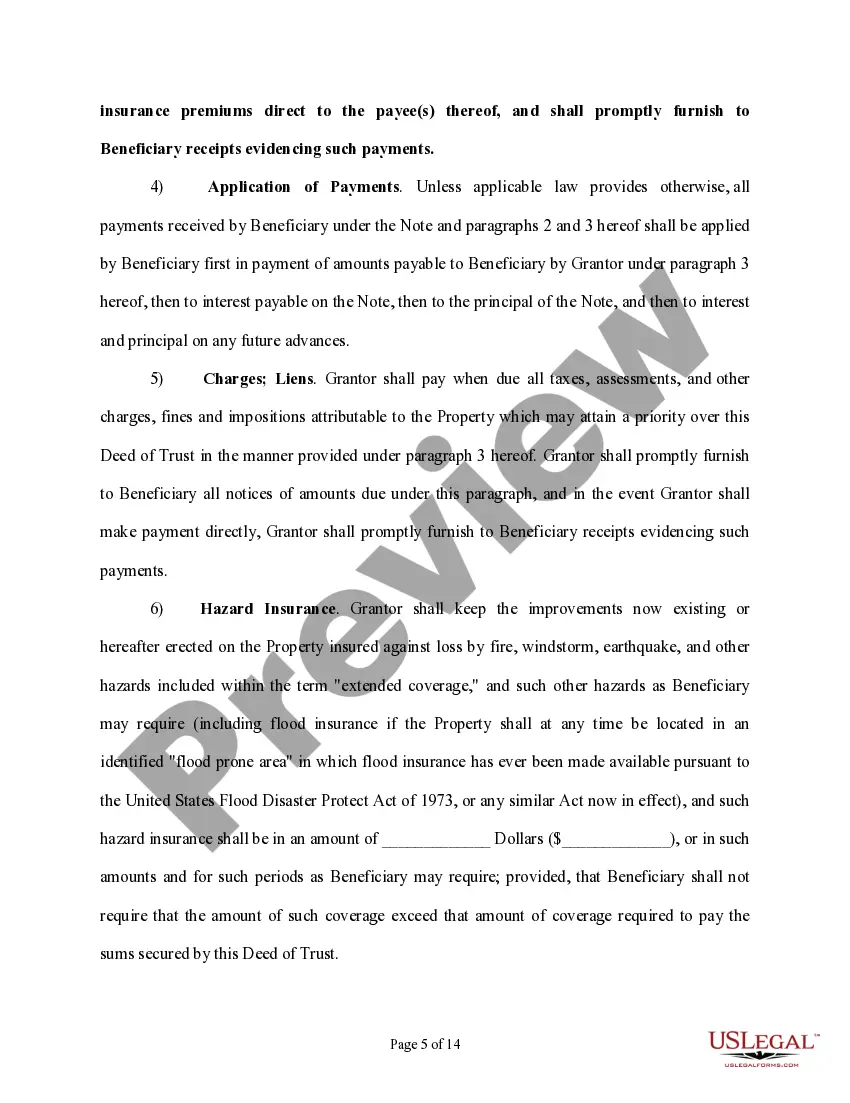
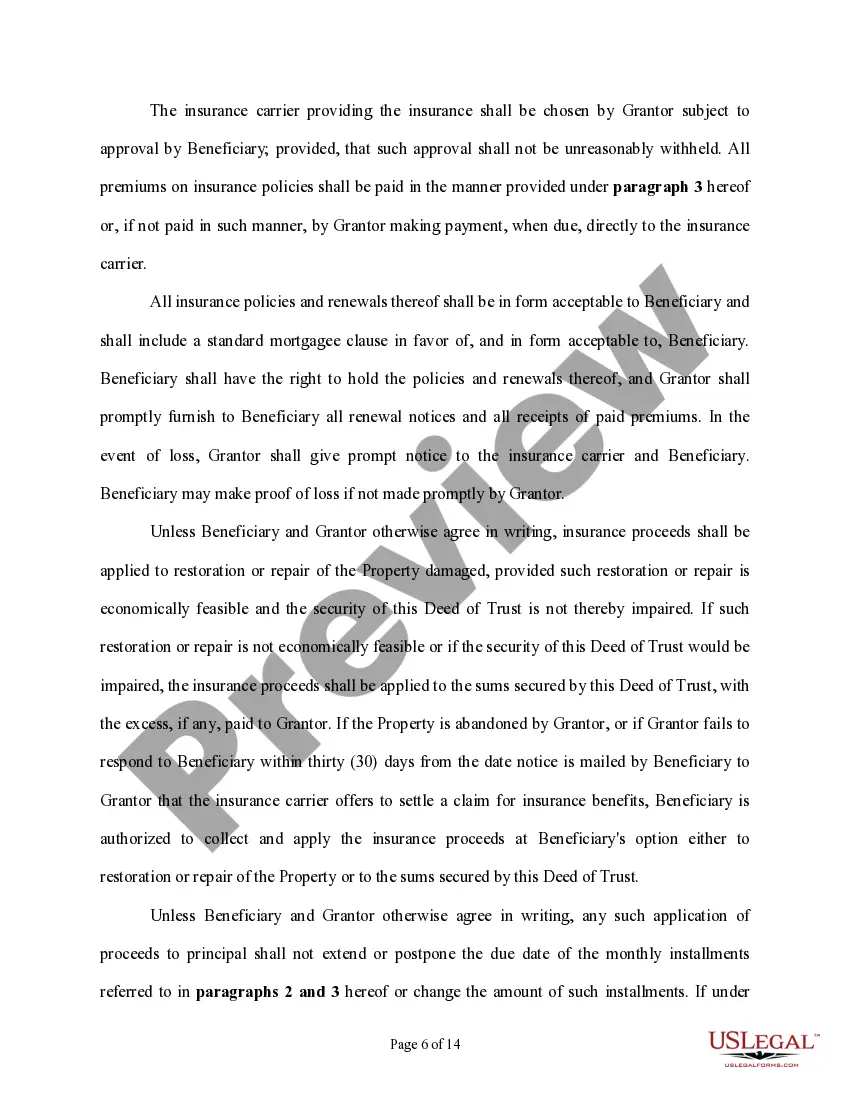
- Covenants enforcing payment of principal, interest, taxes, and insurance.
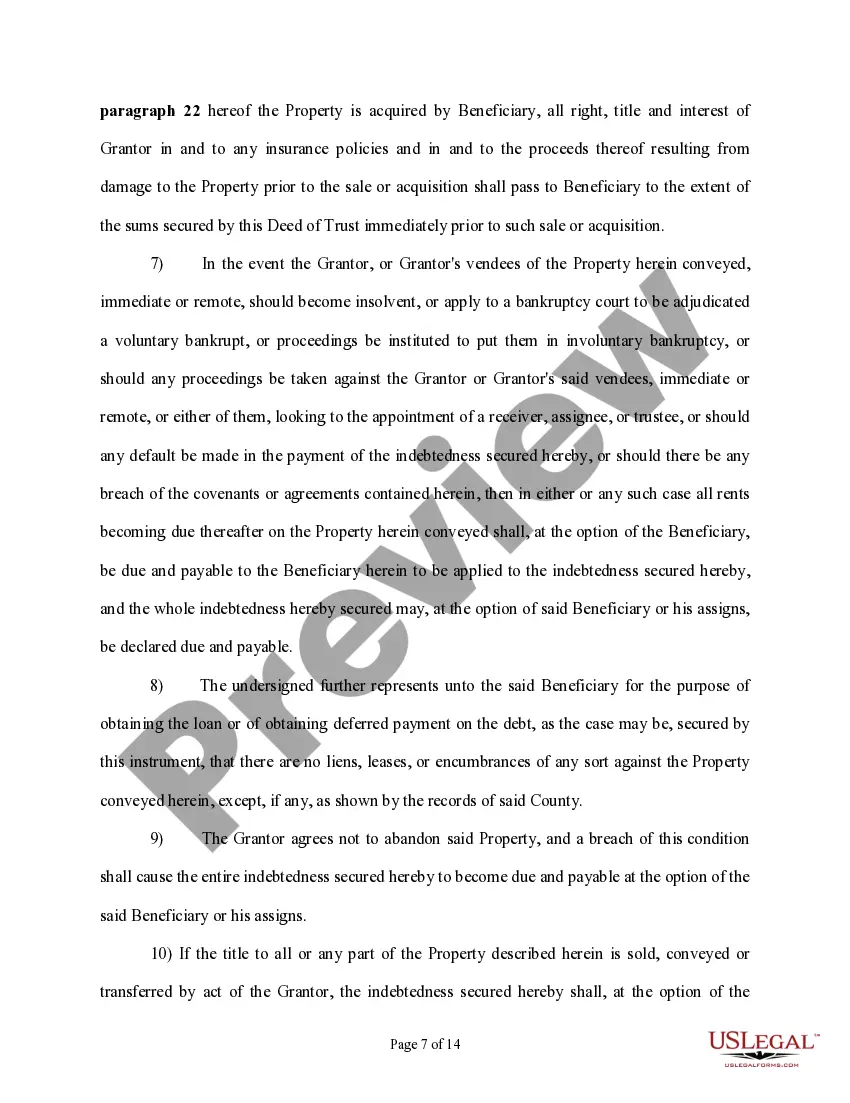
- Provisions for potential default and the rights associated with debt collection.
- Application of payments and handling of surplus funds for taxes and insurance.


When this form is needed
This form should be used when you are purchasing real estate in Mississippi and wish to secure financing through a deed of trust. It is essential when you make an initial payment towards the property and need the lender to have assurance of repayment. This document is also used in situations where the property may need to be foreclosed upon in case of default, or where taxes and insurance need to be collected systematically to protect the lender's interest.
Who can use this document
Individuals and entities involved in real estate transactions in Mississippi should consider using this form. Specifically, it is appropriate for:
- Homebuyers seeking financing to purchase property.
- Lenders looking to secure loans against real estate.
- Trustees involved in managing mortgage transactions.
- Real estate attorneys assisting clients with property purchases.
How to complete this form
- Identify the parties involved by entering the names of the Grantor and the Trustee.
- Specify the property by including a detailed legal description.
- Fill in the loan details, including the amount, interest rate, and repayment terms.
- Ensure agreements concerning taxes and insurance are clearly defined.
- Sign the document in the presence of a notary for validation.
Does this form need to be notarized?
Yes, this form must be notarized to be legally valid. US Legal Forms offers integrated online notarization, allowing you to securely complete the notarization process via a video call without the need for travel.
Get your form ready online
Our built-in tools help you complete, sign, share, and store your documents in one place.
Make edits, fill in missing information, and update formatting in US Legal Forms—just like you would in MS Word.
Download a copy, print it, send it by email, or mail it via USPS—whatever works best for your next step.
Sign and collect signatures with our SignNow integration. Send to multiple recipients, set reminders, and more. Go Premium to unlock E-Sign.
If this form requires notarization, complete it online through a secure video call—no need to meet a notary in person or wait for an appointment.
We protect your documents and personal data by following strict security and privacy standards.

Make edits, fill in missing information, and update formatting in US Legal Forms—just like you would in MS Word.

Download a copy, print it, send it by email, or mail it via USPS—whatever works best for your next step.

Sign and collect signatures with our SignNow integration. Send to multiple recipients, set reminders, and more. Go Premium to unlock E-Sign.

If this form requires notarization, complete it online through a secure video call—no need to meet a notary in person or wait for an appointment.

We protect your documents and personal data by following strict security and privacy standards.
Common mistakes to avoid
- Failing to include a complete legal description of the property.
- Not providing accurate details for loan repayment terms.
- Omitting the signatures of all necessary parties.
- Neglecting to notarize the document before submission.
Why use this form online
- Convenience of accessing and downloading the form from anywhere.
- Editable and customizable to fit individual needs.
- Legally vetted by licensed attorneys ensuring reliability and compliance.
Quick recap
- The Purchase Money Deed of Trust secures a loan against the real estate being purchased.
- It is essential for outlining both parties' responsibilities and the terms of the loan.
- Notarization is required to ensure the document's legal validity.
Looking for another form?

Form popularity
FAQ
The person who owns the property usually signs a promissory note and a deed of trust. The deed of trust does not have to be recorded to be valid.
A deed of trust involves three parties: a lender, a borrower, and a trustee. The lender gives the borrower money. In exchange, the borrower gives the lender one or more promissory notes. As security for the promissory notes, the borrower transfers a real property interest to a third-party trustee.
Can I make a declaration of trust myself? Some owners are put off using solicitors duke to the deed of trust cost. Individuals can write out their own, and use someone else as a witness. However, this may have errors or not be a legally binding document.
Name of the trust. Address of the trust. Objects of the trust (Charitable or Religious) One settlor of the trust. Two trustees of the trust (minimum)
Some owners are put off using solicitors duke to the deed of trust cost. Individuals can write out their own, and use someone else as a witness. However, this may have errors or not be a legally binding document. The investment of getting a deed of trust when buying a property is often worth it in the long term.
Party information: names and addresses of the trustor(s), trustee(s), beneficiary(ies), and guarantor(s) (if applicable) Property details: full address of the property and its legal description (which can be obtained from the County Recorder's Office)
Yes, there are key differences between the two. With a deed, you transfer the ownership of the property to one party. In contrast, a deed of trust does not mean the holder owns the property. In an arrangement involving a deed of trust, the borrower signs a contract with the lender with details regarding the loan.
A purchase-money mortgage also called seller or owner financing is a mortgage issued to the buyer by the seller of a given property. This type of mortgage is typically part of real estate transactions where the buyer has had difficulty getting approved for a loan with more traditional lenders.