Mississippi Corporate Records Maintenance Package for Existing Corporations
What this document covers
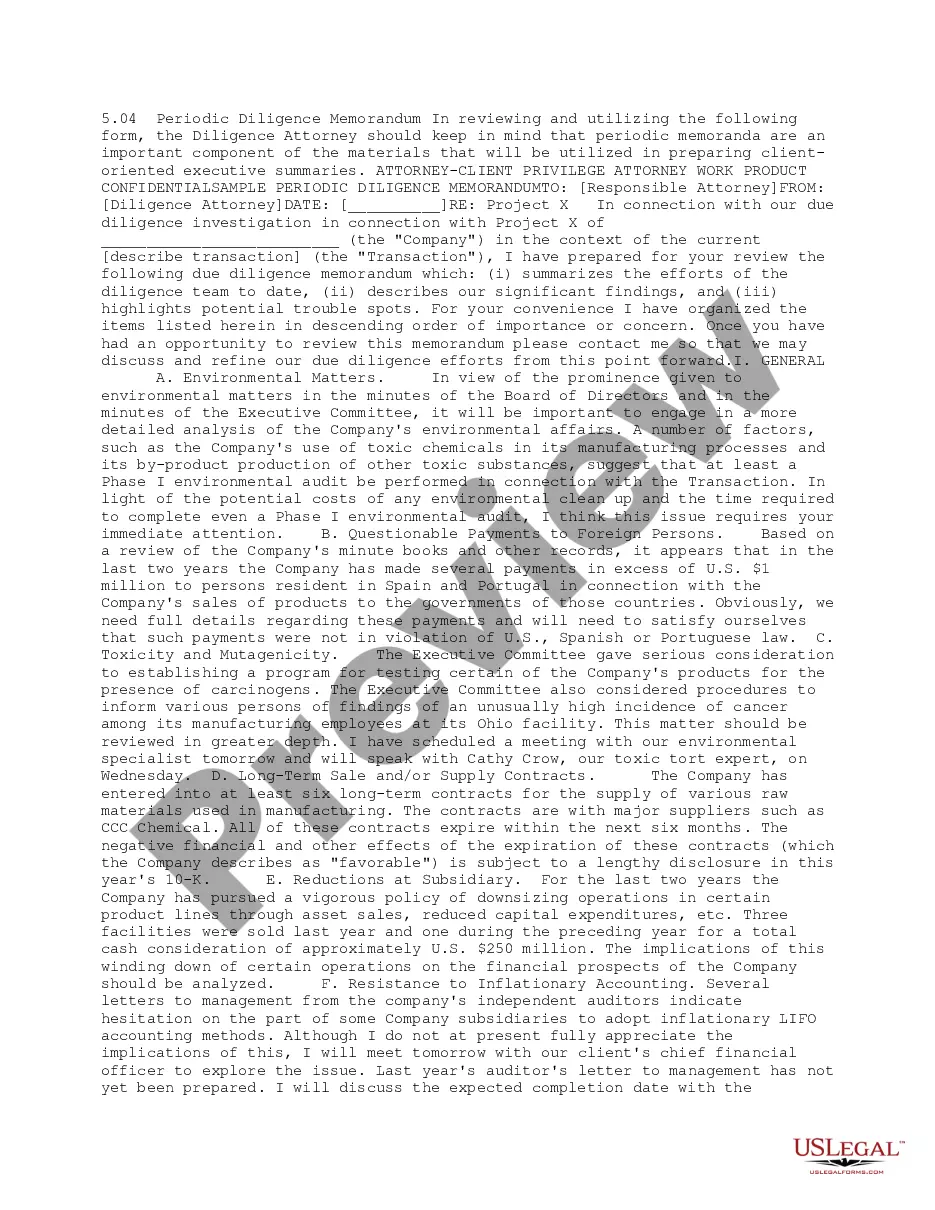
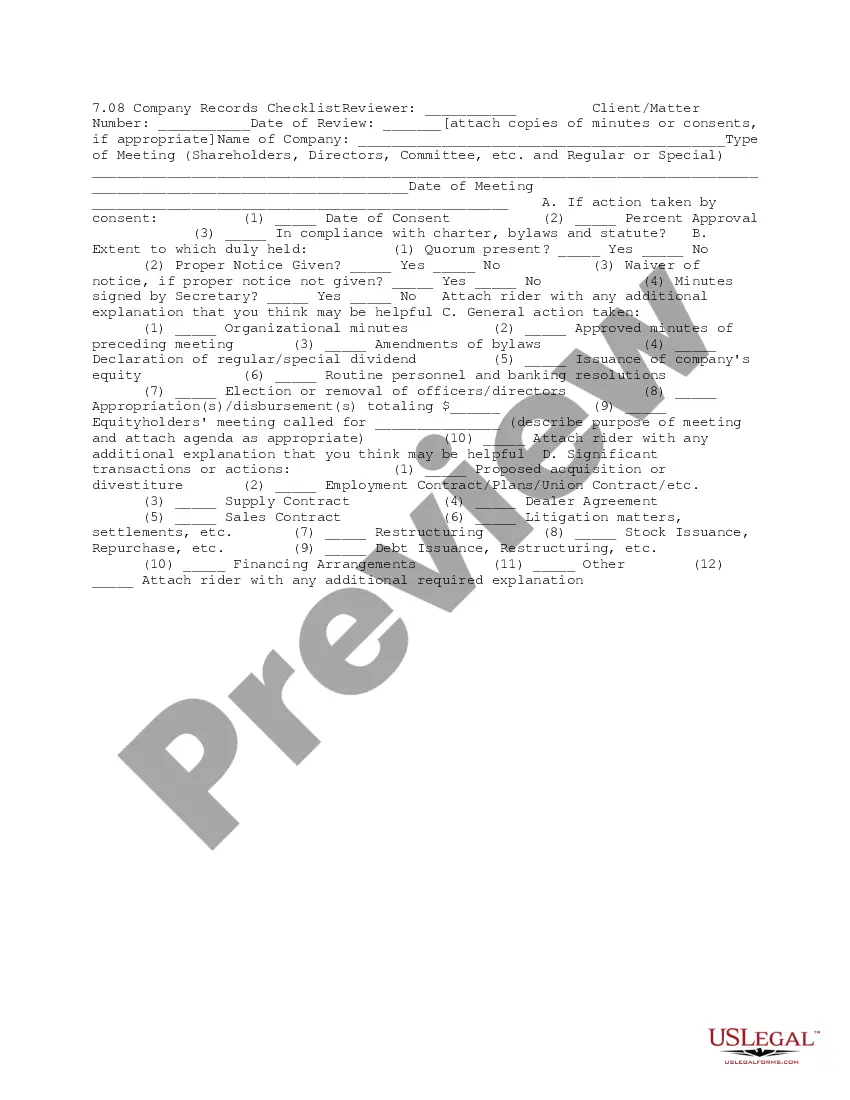
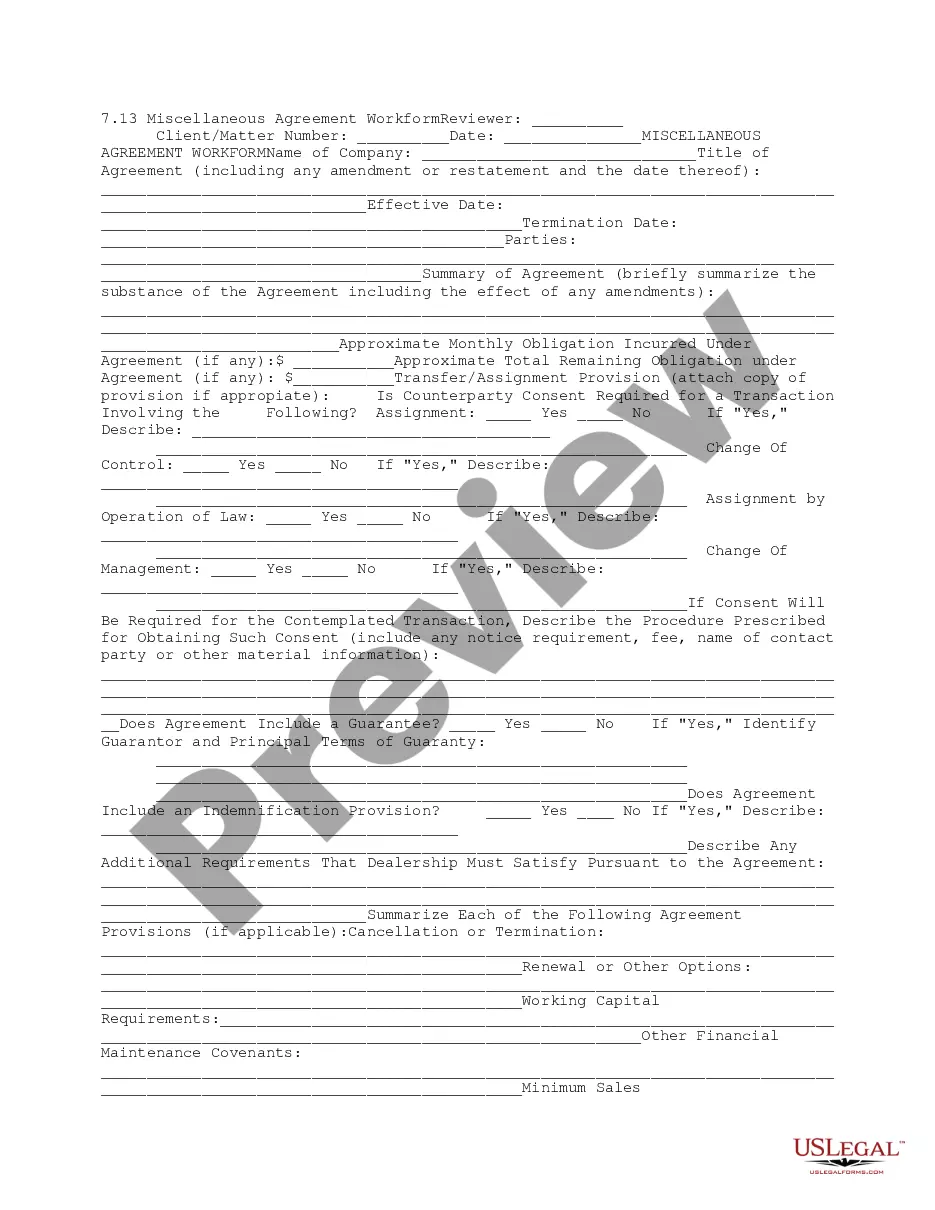
The Corporate Records Maintenance Package for Existing Corporations is a comprehensive collection of documents designed to help established corporations keep their records organized and compliant with legal requirements. This package is crucial for ensuring that corporations maintain the necessary formalities to protect themselves from personal liability. It differs from other business forms by focusing specifically on documentation that supports ongoing corporate governance and compliance, rather than initial incorporation or formation processes.
Key parts of this document
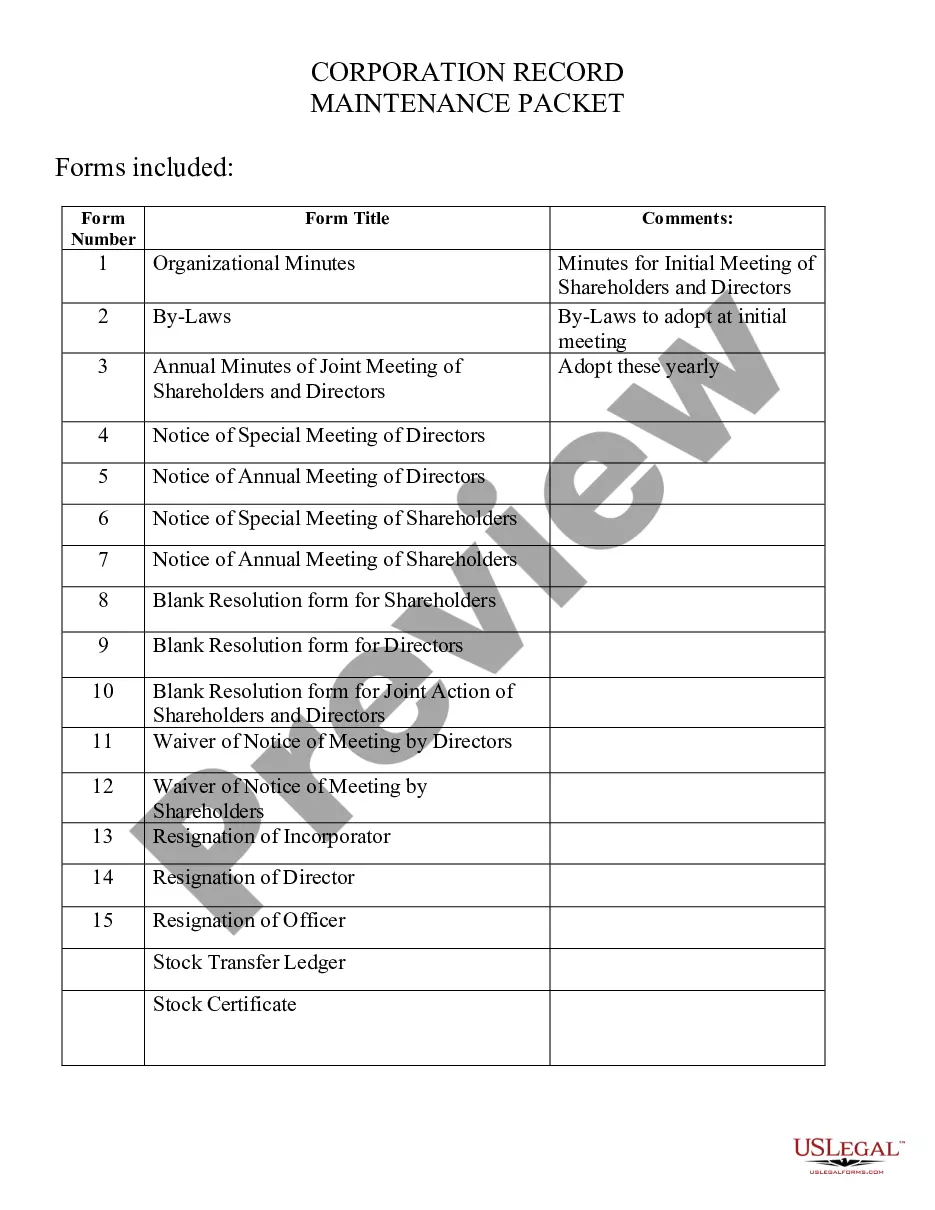
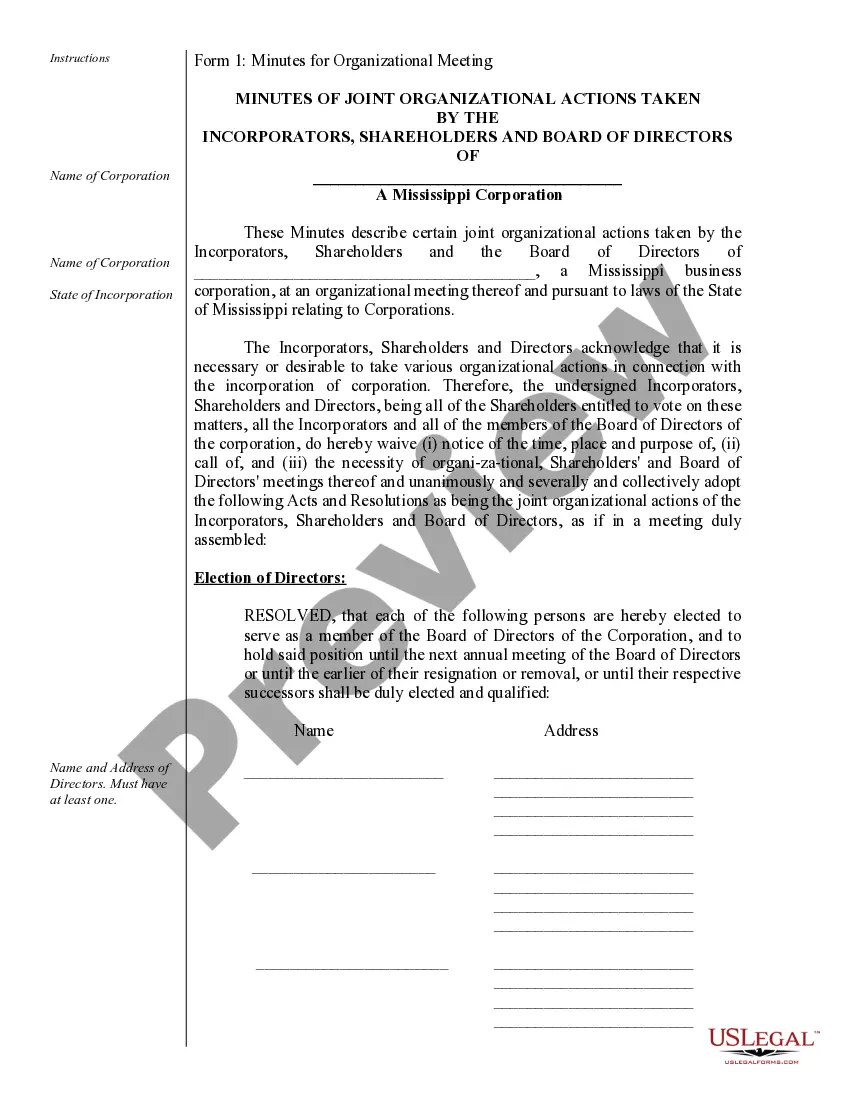
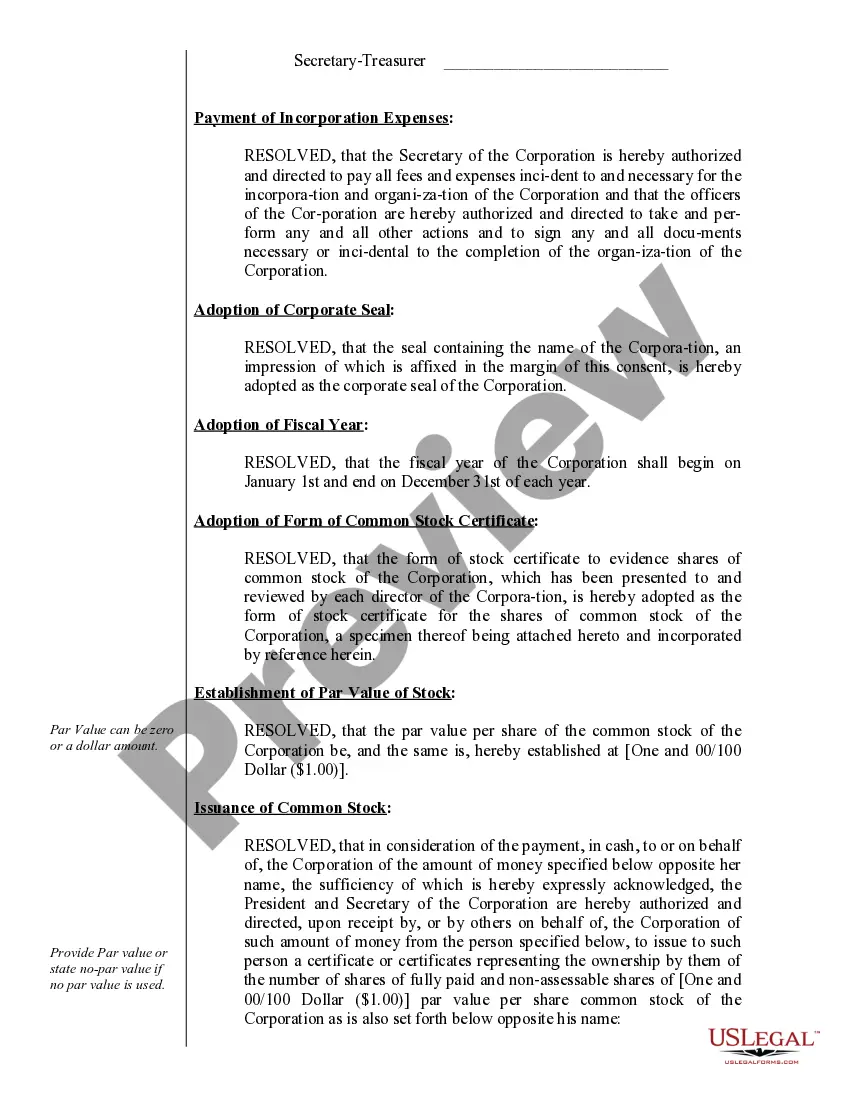
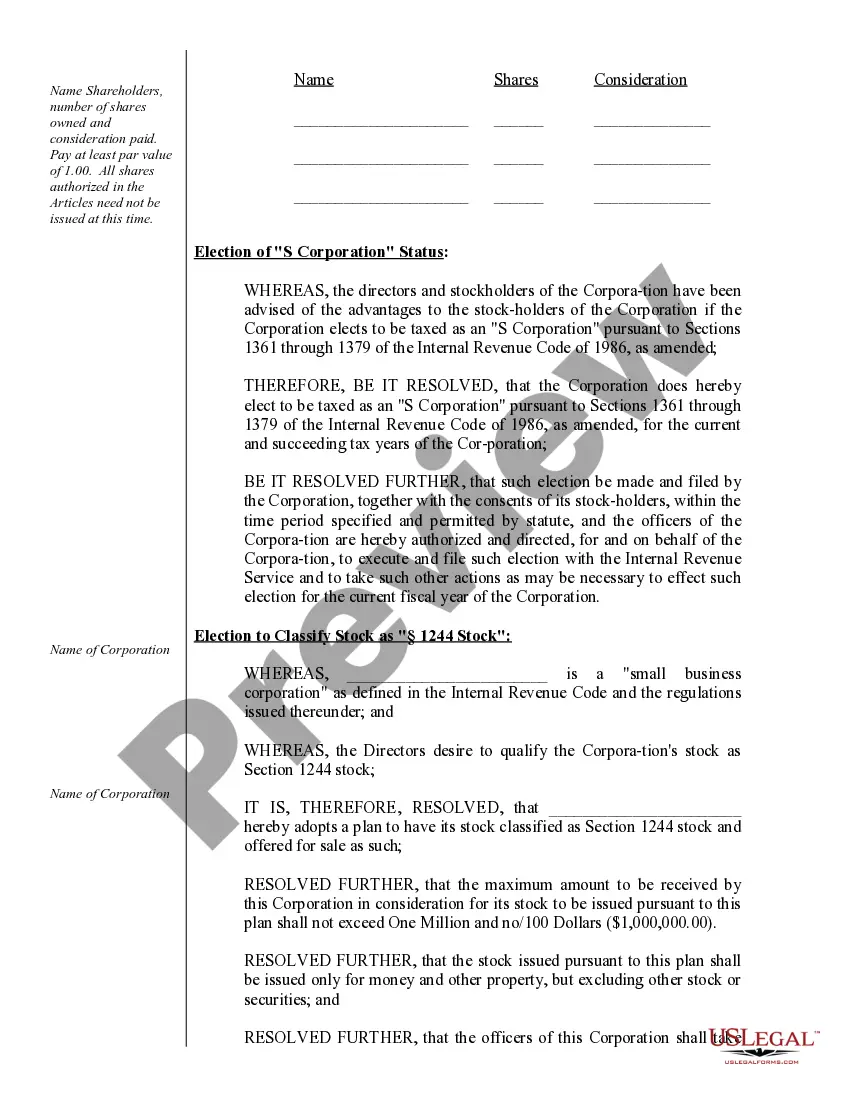
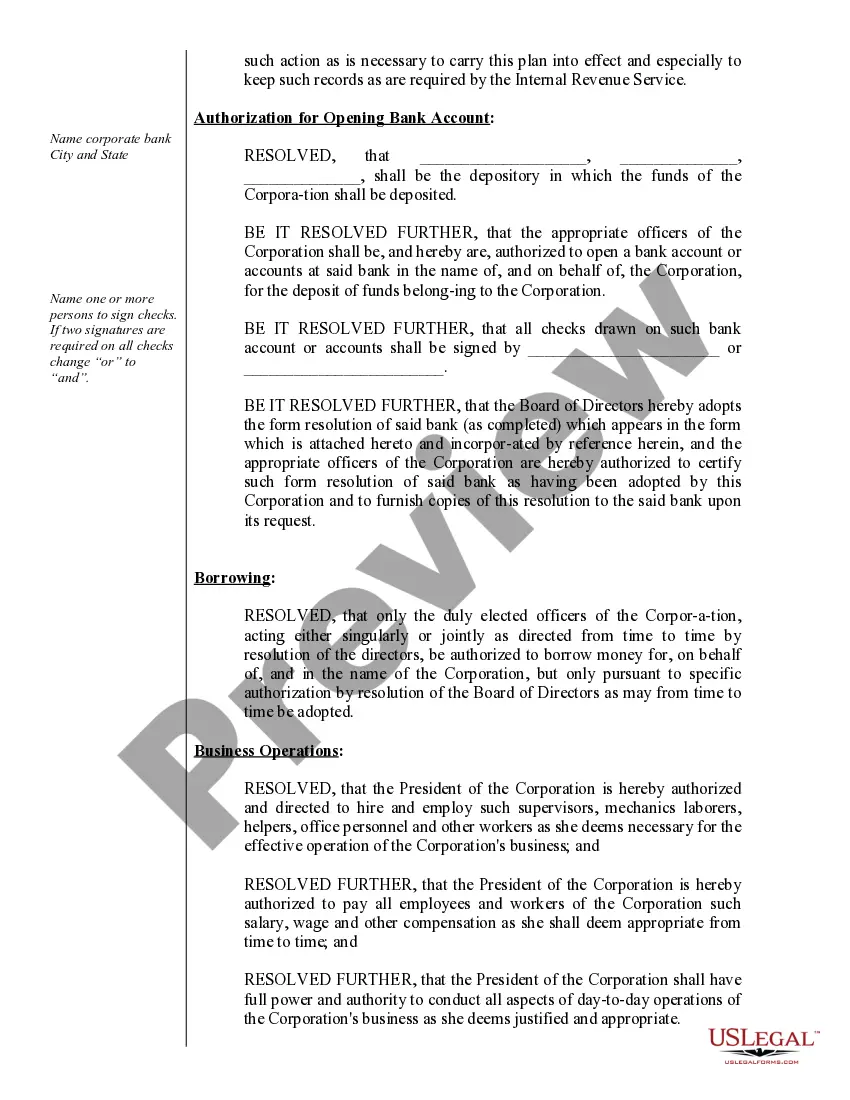
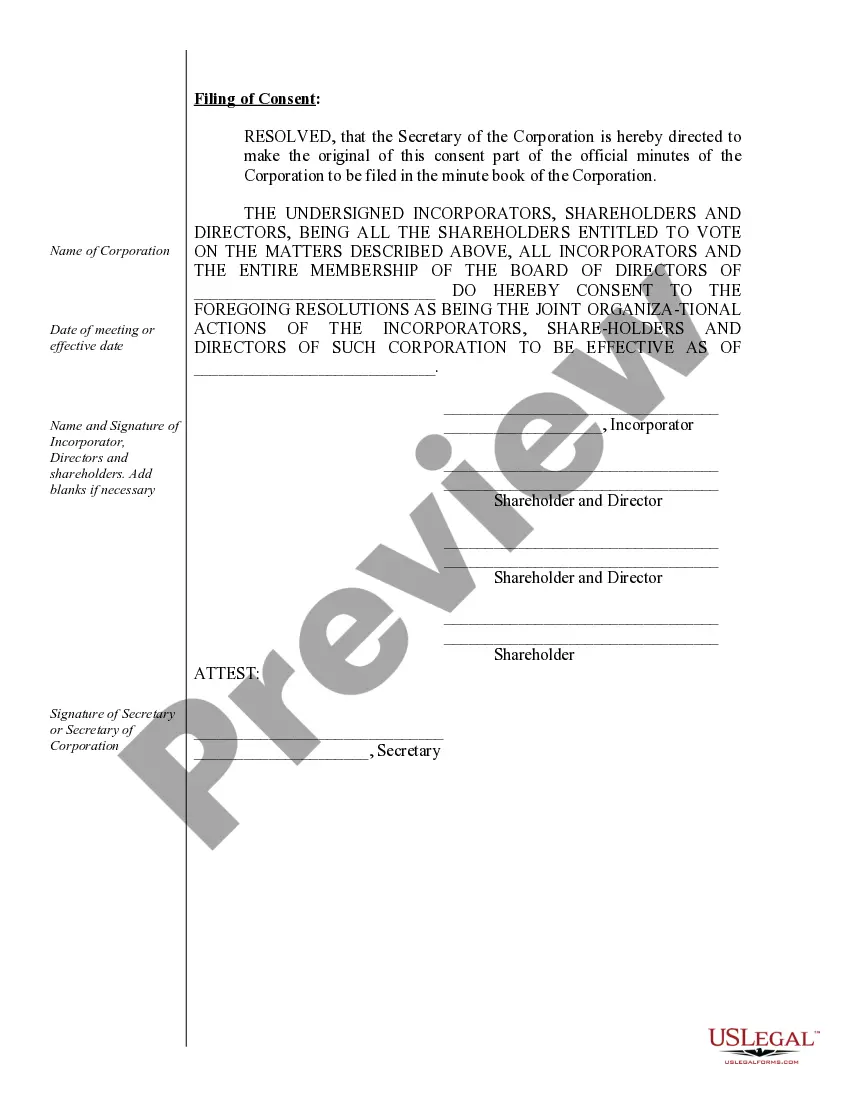
- Organizational Minutes: Initial meeting documentation for shareholders and directors.
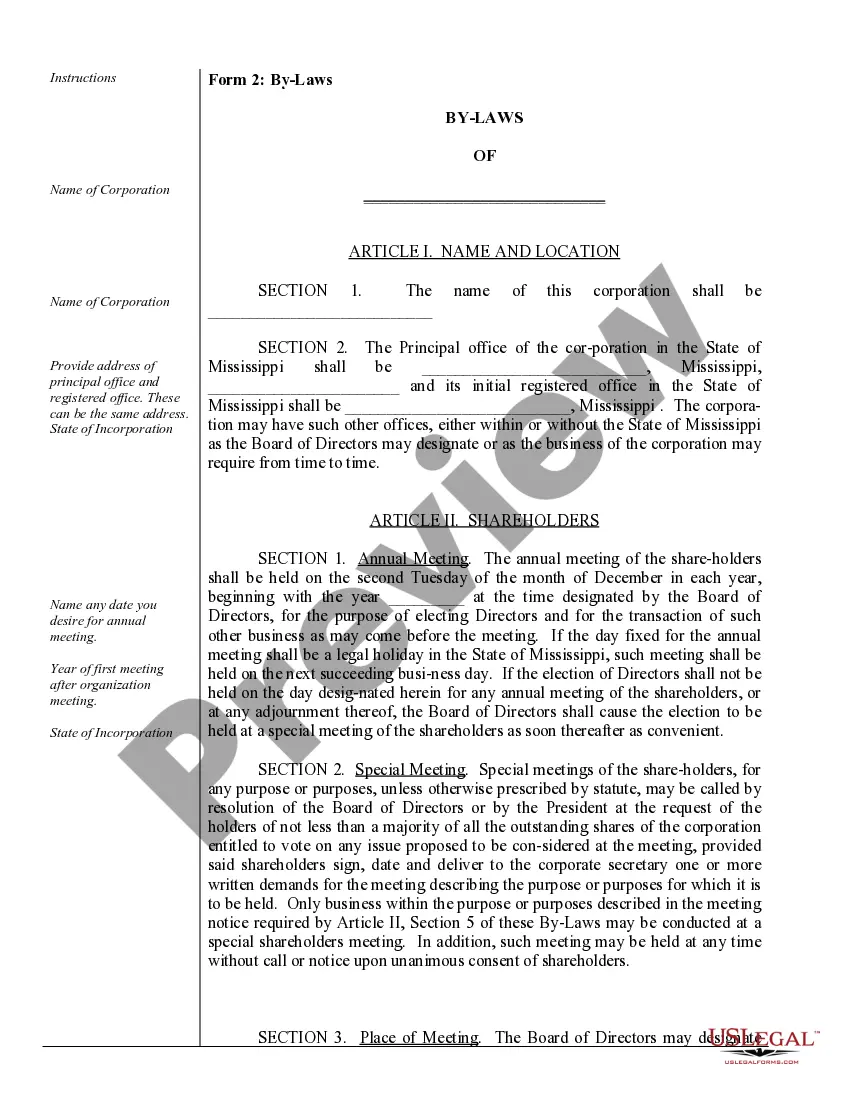
- By-Laws: Rules governing the corporation's internal management.
- Annual Minutes: Records of annual meetings for shareholders and directors.
- Notices: Formal notifications for special and annual meetings of directors and shareholders.
- Blank Resolutions: Templates for resolutions passed by shareholders and directors.
- Resignation Forms: Documents for resignations of incorporators, directors, and officers.
- Stock Transfer Ledger and Certificate: Records of stock ownership and transfers.



When this form is needed
This Corporate Records Maintenance Package should be used when your corporation needs to update or organize its corporate records. Common situations include changes in directors or officers, annual meetings to review corporate actions, issuing new stock certificates, or maintaining compliance with state laws governing corporation record-keeping. The package ensures that all necessary documentation is prepared and properly filed.
Who should use this form
This package is intended for:
- Existing corporation owners and shareholders who need to maintain corporate compliance.
- Corporate secretaries responsible for documenting corporate governance.
- Directors and officers needing to formalize changes within the corporation.
How to prepare this document
- Identify the name of the corporation and its state of incorporation.
- Fill out the organizational minutes, capturing the key details of the initial meeting.
- Complete the by-laws by defining the governance rules of the corporation.
- Prepare and distribute notices for special and annual meetings to all relevant parties.
- Document any resolutions adopted during meetings, using the blank resolution forms provided.
- Maintain a stock transfer ledger to track ownership changes and issue stock certificates as necessary.
Does this form need to be notarized?
This form does not typically require notarization unless specified by local law. For specific situations or if your jurisdiction demands notarization, consider consulting with a legal professional to ensure compliance.
Get your form ready online
Our built-in tools help you complete, sign, share, and store your documents in one place.
Make edits, fill in missing information, and update formatting in US Legal Forms—just like you would in MS Word.
Download a copy, print it, send it by email, or mail it via USPS—whatever works best for your next step.
Sign and collect signatures with our SignNow integration. Send to multiple recipients, set reminders, and more. Go Premium to unlock E-Sign.
If this form requires notarization, complete it online through a secure video call—no need to meet a notary in person or wait for an appointment.
We protect your documents and personal data by following strict security and privacy standards.

Make edits, fill in missing information, and update formatting in US Legal Forms—just like you would in MS Word.

Download a copy, print it, send it by email, or mail it via USPS—whatever works best for your next step.

Sign and collect signatures with our SignNow integration. Send to multiple recipients, set reminders, and more. Go Premium to unlock E-Sign.

If this form requires notarization, complete it online through a secure video call—no need to meet a notary in person or wait for an appointment.

We protect your documents and personal data by following strict security and privacy standards.
Mistakes to watch out for
- Failing to hold annual meetings and document them appropriately.
- Not updating corporate records after significant changes, like the resignation of a director or officer.
- Omitting essential details in meeting minutes, which can lead to compliance issues.
- Not providing adequate notice before holding special meetings.
Advantages of online completion
- Convenience: Instant access to all necessary forms tailored for corporate record maintenance.
- Editability: Easily modify the templates to fit your corporation's specific needs.
- Reliability: Access to forms prepared by licensed attorneys, ensuring legal compliance.
What to keep in mind
- The Corporate Records Maintenance Package is vital for ensuring an existing corporation remains compliant with legal record-keeping requirements.
- Failure to maintain proper records can result in a loss of corporate protection against personal liability.
- Using this package aids in timely documentation of corporate decisions, meetings, and changes.
Looking for another form?

Form popularity
FAQ
What is the ownership structure for a business entity? Ownership structure concerns the internal organization of a business entity and the rights and duties of the individuals holding a legal or equitable interest in that business.Example: A shareholder, as owner of a corporation, has certain rights.
There's no secret to a company record book; it's simply a book (usually a 3-ring binder) that houses your important company documents. It's imperative to keep all of your docs in one place so that you have a central and safe place to find them.
A corporation is a business entity that is owned by its shareholder(s), who elect a board of directors to oversee the organization's activities. The corporation is liable for the actions and finances of the business the shareholders are not.
The owners of a corporation are shareholders (also known as stockholders) who obtain interest in the business by purchasing shares of stock. Shareholders elect a board of directors, who are responsible for managing the corporation.
Corporate ownership is one of three broad categories of legal ownership of a business, the other two being sole proprietorship and partnership.
Corporate Documents means the Certificate of Incorporation, Memorandum of Association, Articles of Association, Bylaws and any other corporate document of an entity, including any shareholders, voting and/or any other agreement or document relating to the incorporation, ownership or management of an entity.
Organizational Documents the legal documents used to incorporate or form a company. In the United States, they will include articles of incorporation and bylaws.
A corporate entity is a business structure formed specifically to perform activities, such as running an enterprise or holding assets.Generally speaking, there are three general forms of legal entities through which business can be conducted: (1) sole proprietorship, (2) corporation, and (3) partnership.
Business ownership can take one of three legal forms: sole proprietorship, partnership, or corporation.