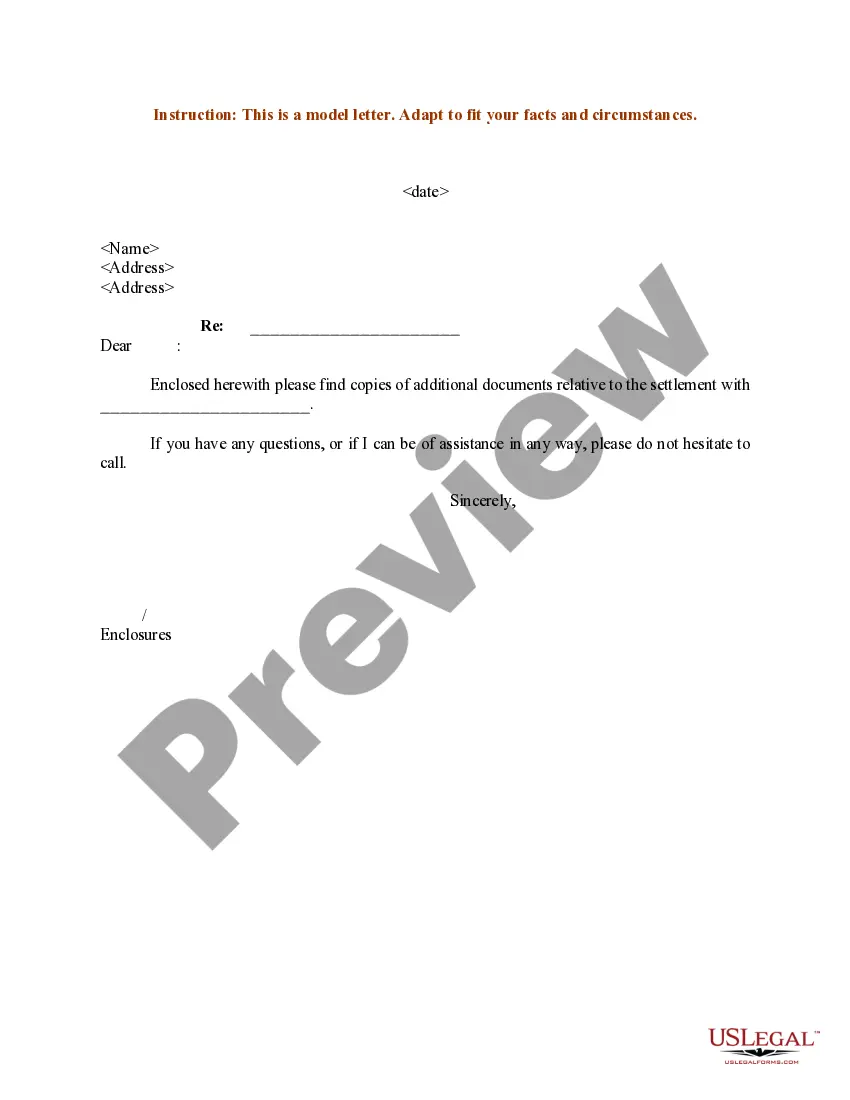
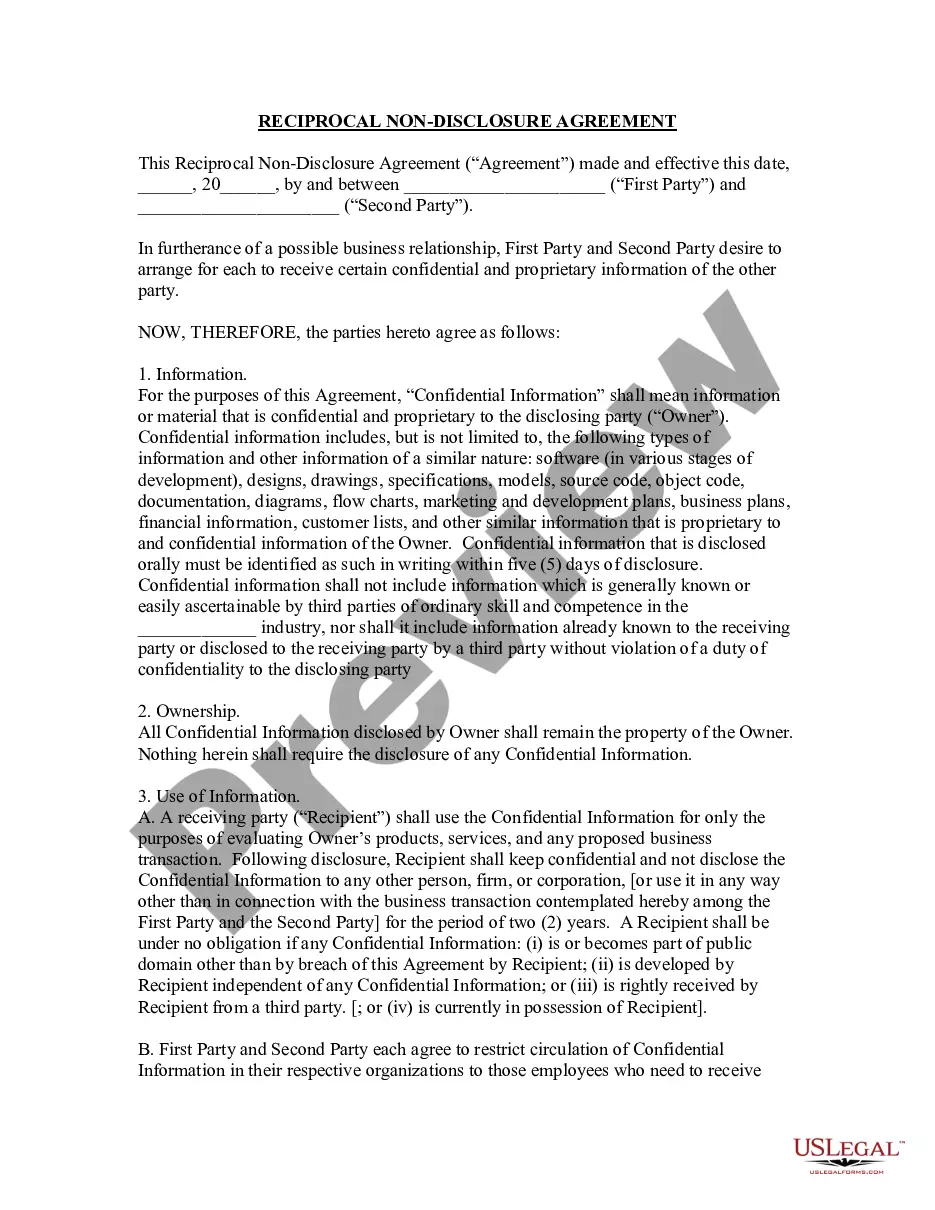
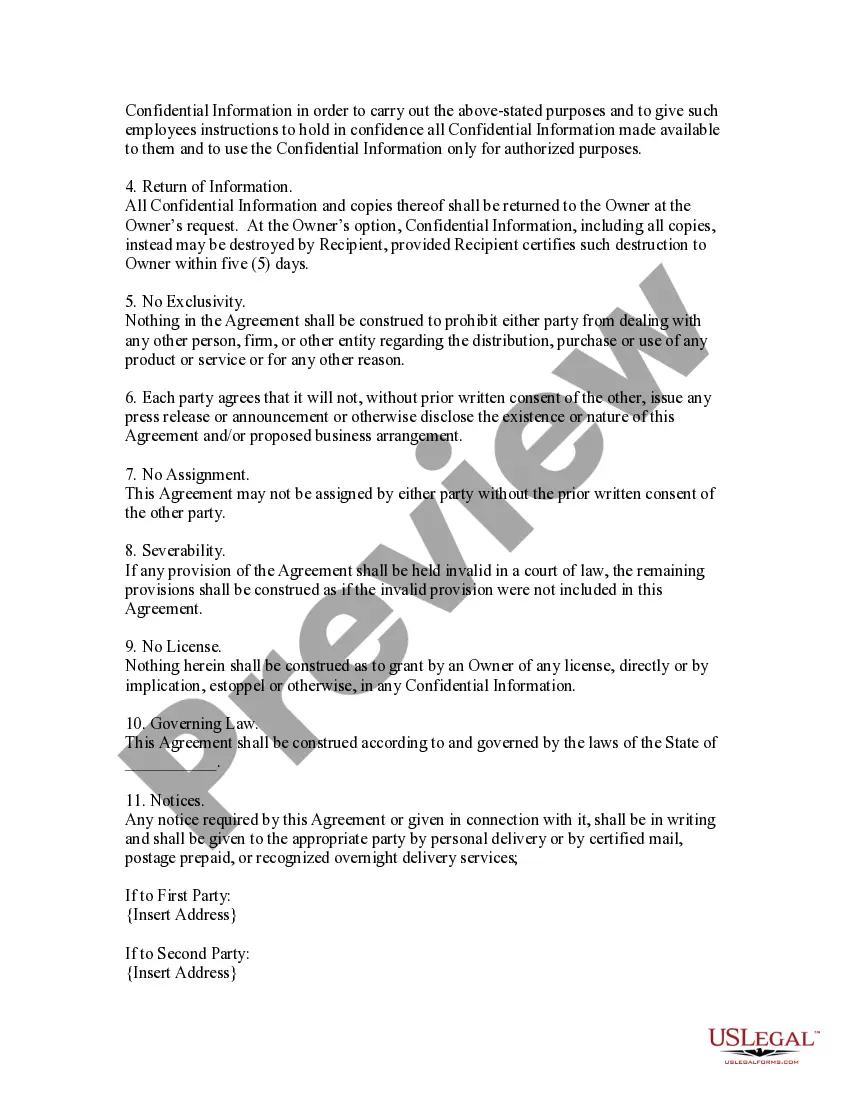
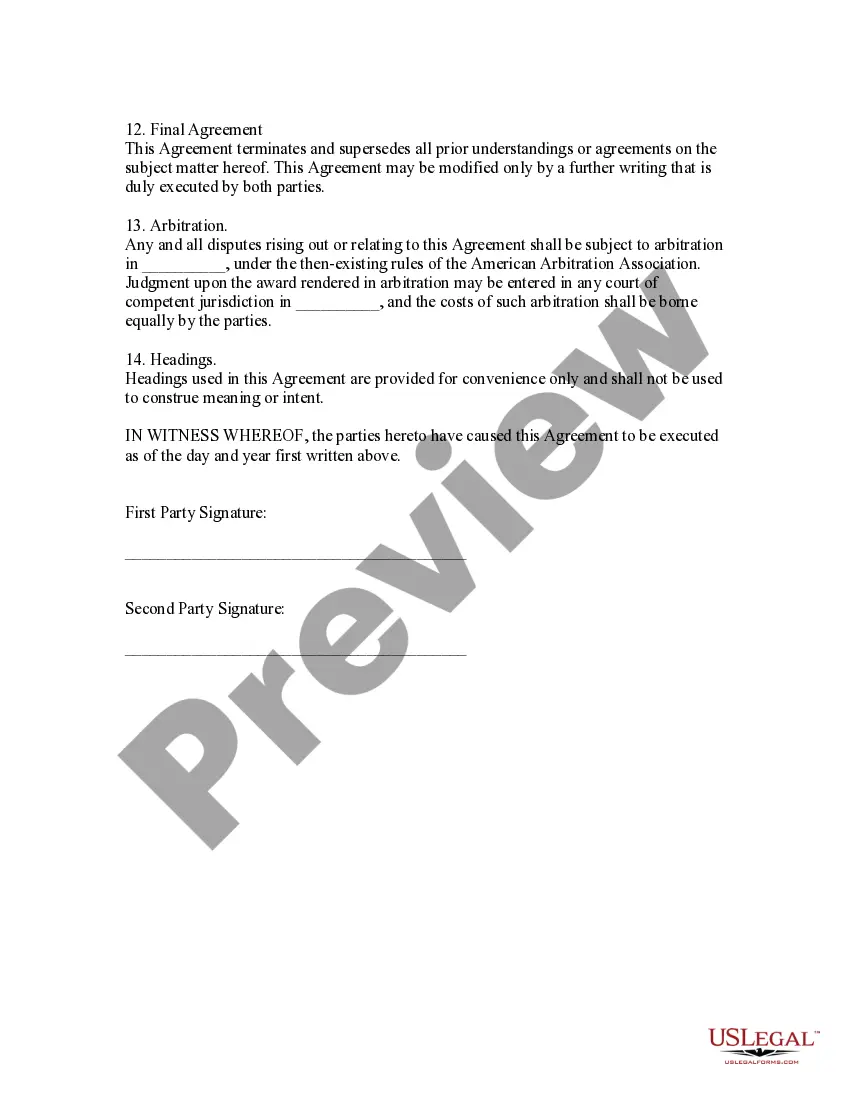
Missouri Reciprocal Nondisclosure Agreement
Description
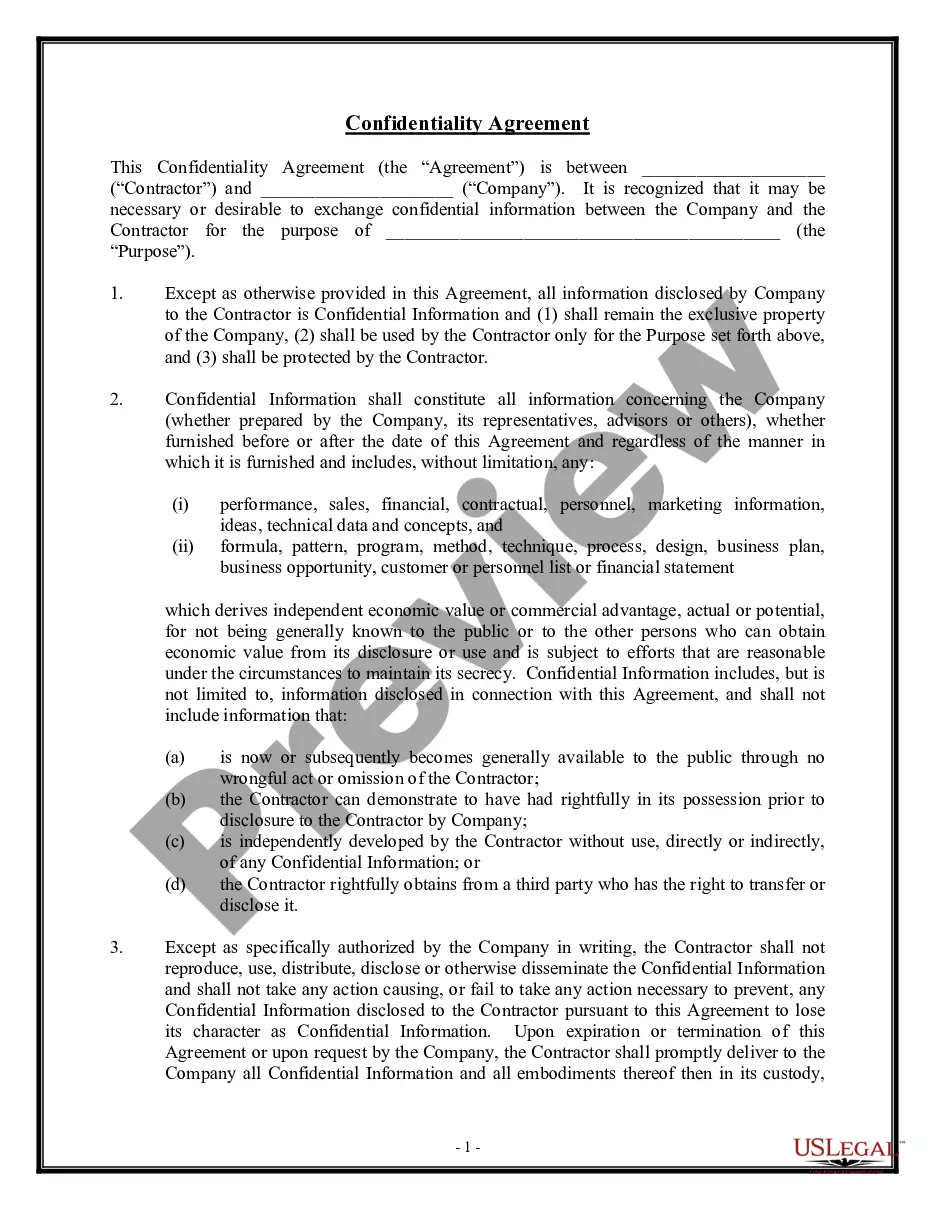
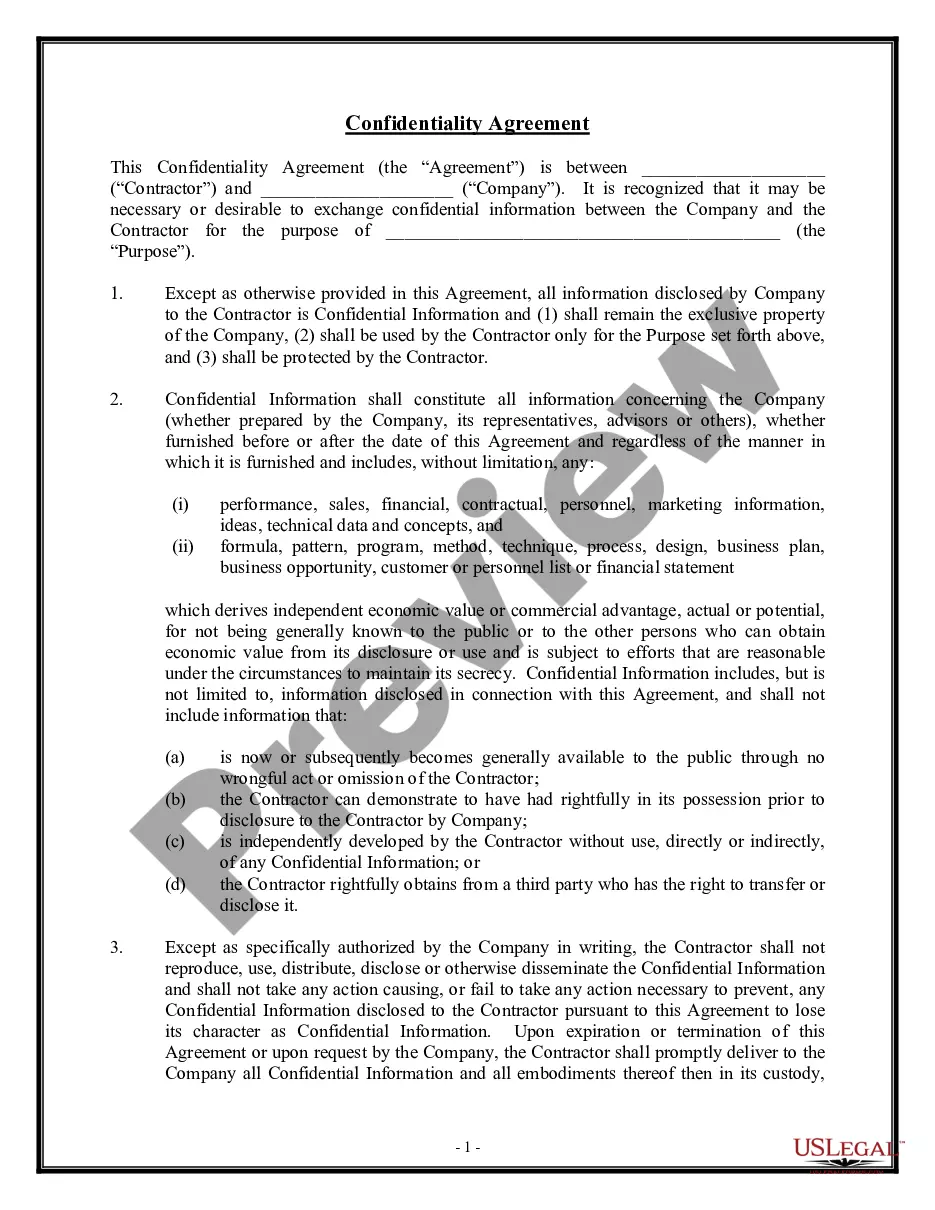
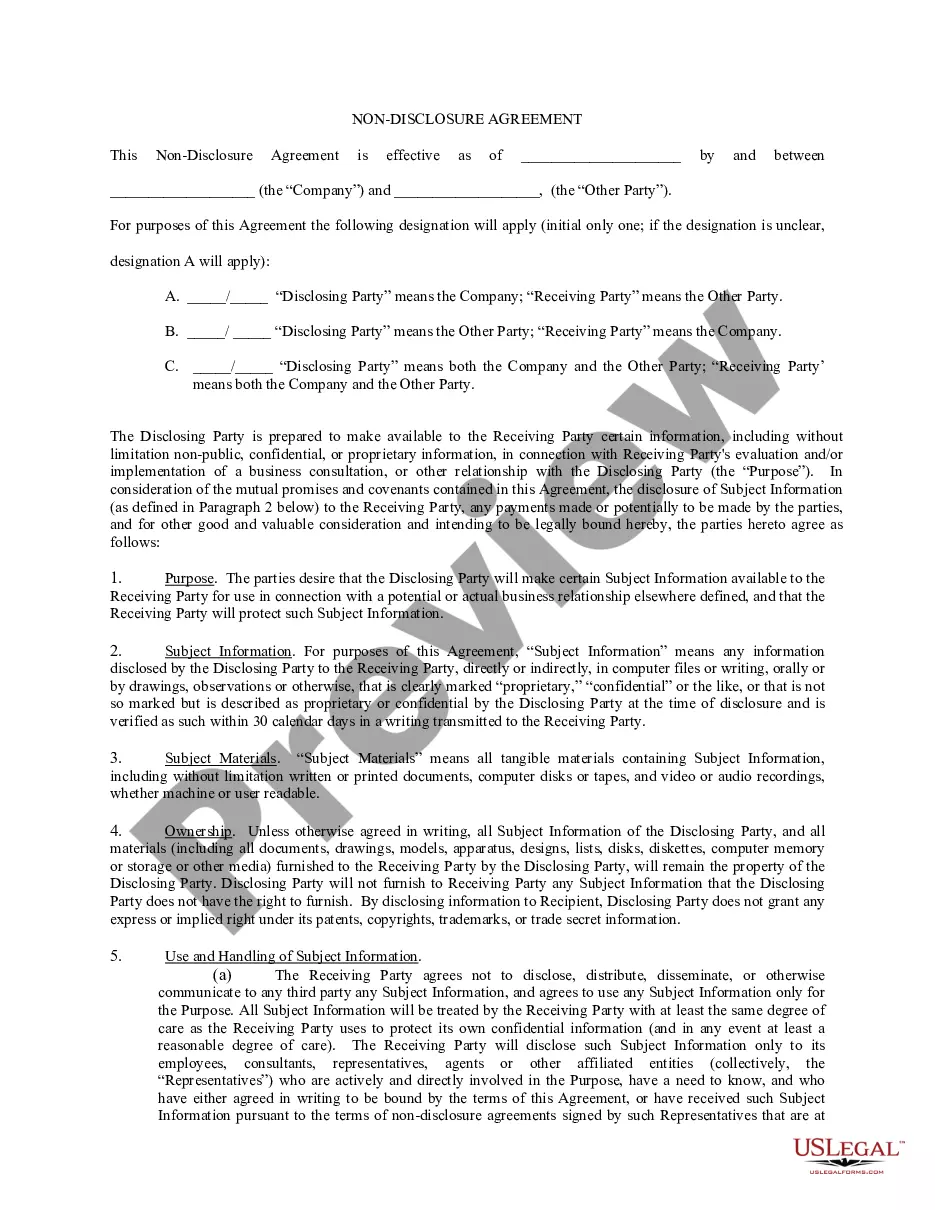
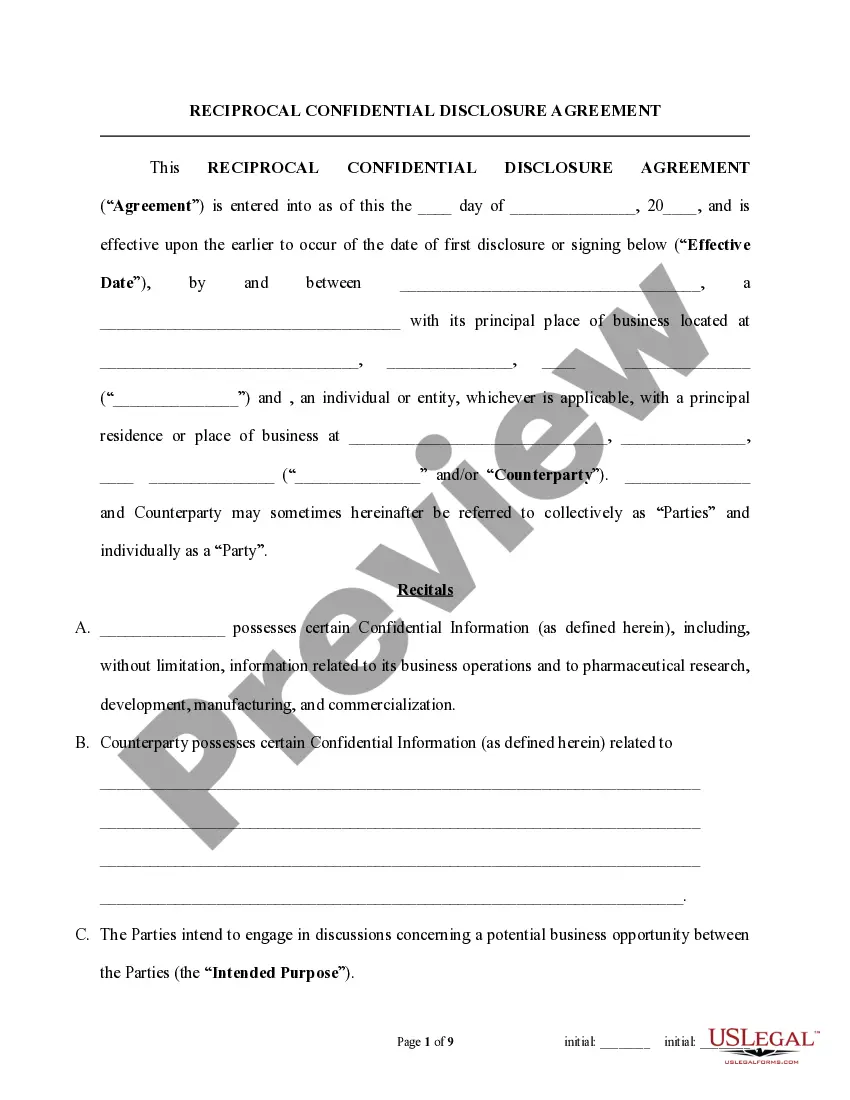
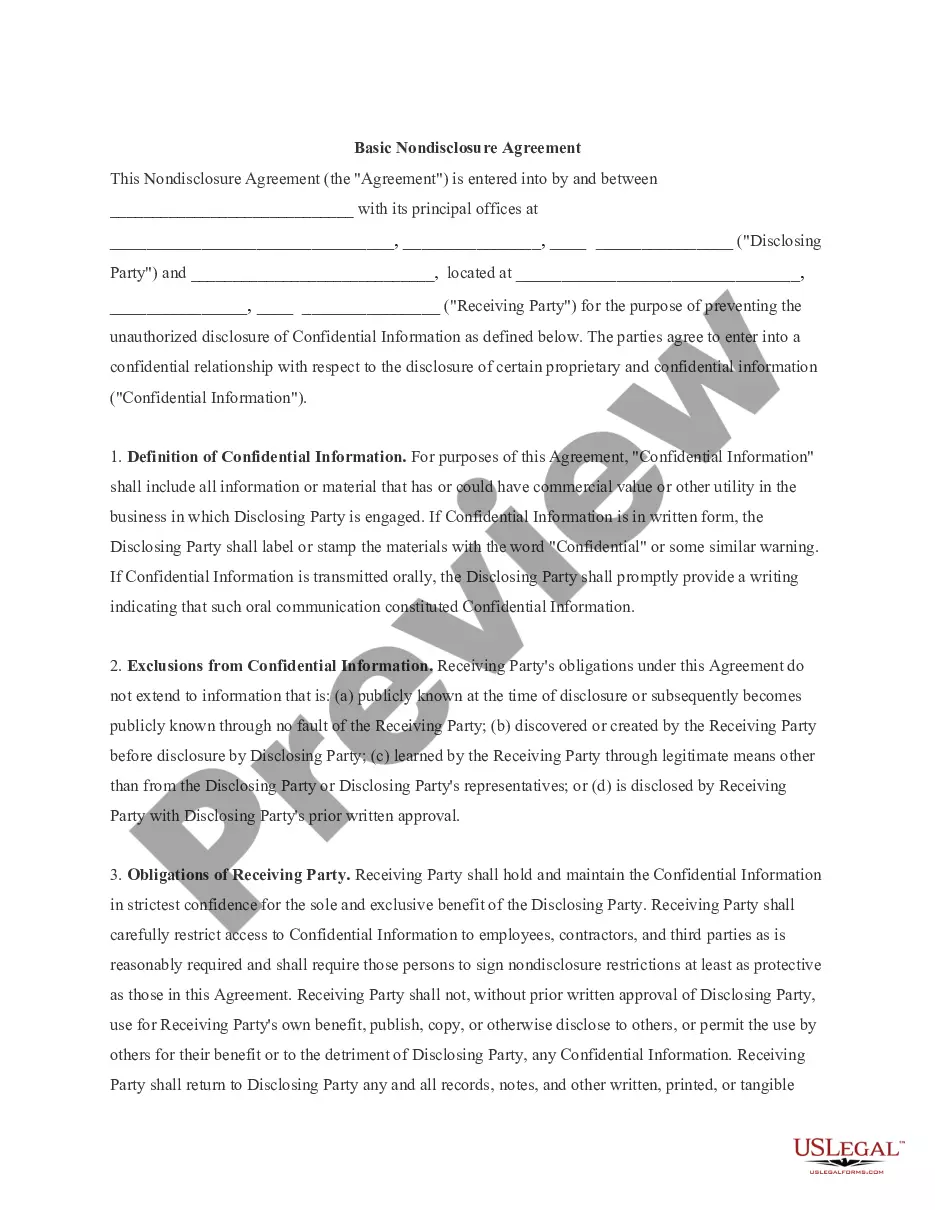
Get your form ready online
Our built-in tools help you complete, sign, share, and store your documents in one place.
Make edits, fill in missing information, and update formatting in US Legal Forms—just like you would in MS Word.
Download a copy, print it, send it by email, or mail it via USPS—whatever works best for your next step.
Sign and collect signatures with our SignNow integration. Send to multiple recipients, set reminders, and more. Go Premium to unlock E-Sign.
If this form requires notarization, complete it online through a secure video call—no need to meet a notary in person or wait for an appointment.
We protect your documents and personal data by following strict security and privacy standards.

Make edits, fill in missing information, and update formatting in US Legal Forms—just like you would in MS Word.

Download a copy, print it, send it by email, or mail it via USPS—whatever works best for your next step.

Sign and collect signatures with our SignNow integration. Send to multiple recipients, set reminders, and more. Go Premium to unlock E-Sign.

If this form requires notarization, complete it online through a secure video call—no need to meet a notary in person or wait for an appointment.

We protect your documents and personal data by following strict security and privacy standards.
Looking for another form?

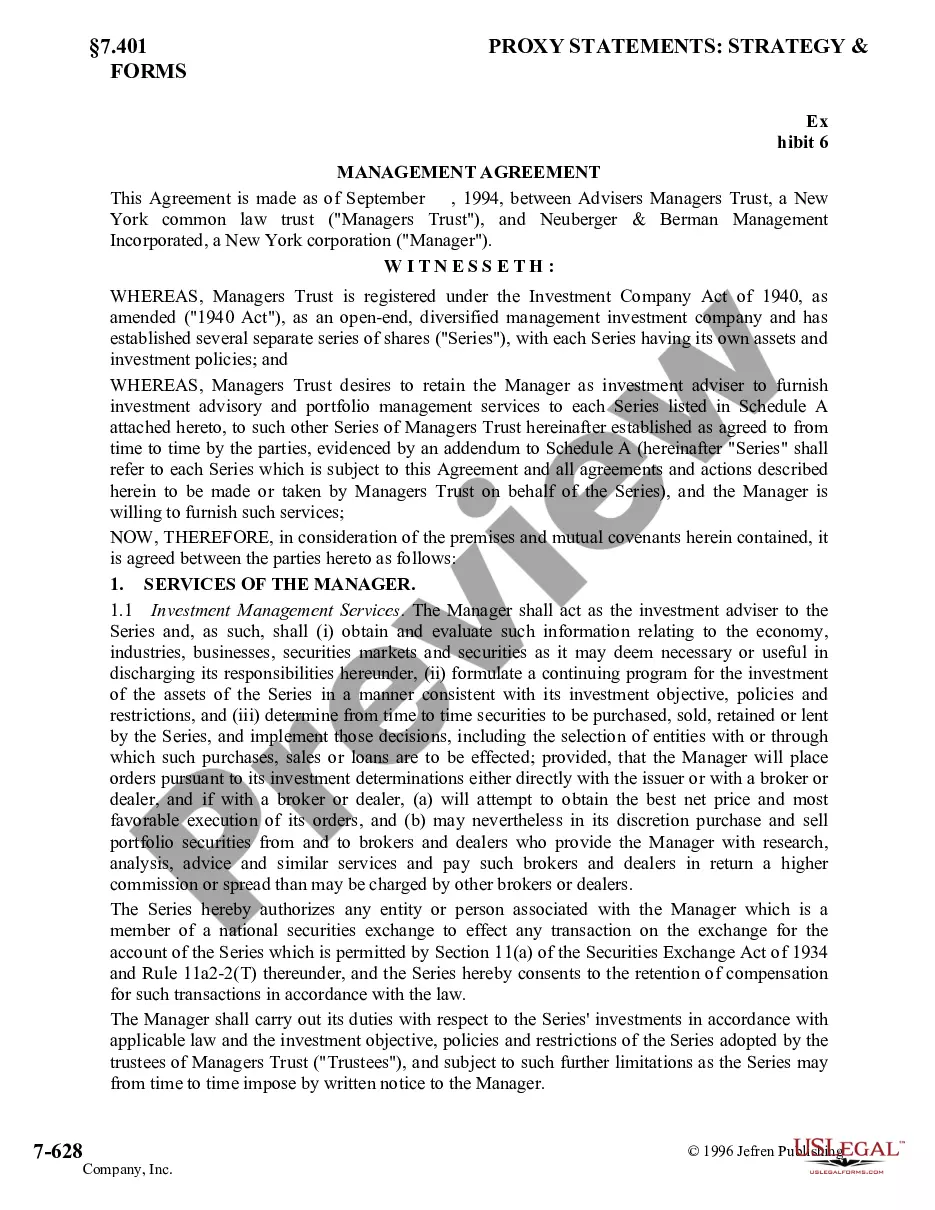

How to fill out Reciprocal Nondisclosure Agreement?
US Legal Forms - one of the largest collections of authorized documents in America - provides a diverse array of legal document templates that you can download or print.
By utilizing the website, you will discover thousands of forms for business and personal purposes, organized by categories, states, or keywords. You can find the most recent versions of forms like the Missouri Reciprocal Nondisclosure Agreement within moments.
If you currently hold a subscription, Log In and retrieve the Missouri Reciprocal Nondisclosure Agreement from your US Legal Forms library. The Download button will appear on each template you view. You have access to all previously downloaded forms in the My documents tab of your account.
Proceed with the payment. Utilize your credit card or PayPal account to complete the transaction.
Select the format and download the document to your device. Edit it. Fill out, modify, print, and sign the downloaded Missouri Reciprocal Nondisclosure Agreement. Every template you have added to your account does not have an expiration date and is yours indefinitely. Therefore, if you desire to download or print another copy, simply navigate to the My documents section and click on the form you need. Access the Missouri Reciprocal Nondisclosure Agreement with US Legal Forms, the most extensive collection of legal document templates. Utilize thousands of professional and state-specific templates that cater to your business or personal requirements.
- Ensure you have selected the correct form for your city/region.
- Click the Preview button to review the form's details.
- Check the form description to confirm that you have chosen the correct document.
- If the form doesn’t meet your requirements, use the Search field at the top of the screen to find the suitable one.
- If you are satisfied with the document, confirm your selection by clicking the Purchase now button.
- Then, select your preferred payment plan and enter your details to create an account.
Form popularity
FAQ
NDAs, or non-disclosure agreements, are legally enforceable contracts that create a confidential relationship between a person who has sensitive information and a person who will gain access to that information. A confidential relationship means one or both parties has a duty not to share that information.
A mutual non-disclosure agreement, or 2-way NDA, is a document that two parties can use to agree not to disclose confidential information to any third party. If either party releases any of the information shared, they may be liable to legal and monetary damages.
Violating an NDA leaves you open to lawsuits from your employer, and you could be required to pay financial damages and possibly associated legal costs. It's illegal to reveal trade secrets or sensitive company information to a competitor.
In those situations, you should refrain from disclosing that you have entered into an NDA or are even in negotiations with the other party (i.e., the first rule of this NDA is we don't talk about this NDA). NDAs may have time limits that provide that they no longer apply after some fixed period.
Violating an NDA can have serious consequences NDAs are legally binding contracts. If an employee has violated an NDA, then the company may take legal action. The most common claims in NDA lawsuits include: Breach of the contract (such as the breach of NDA)
Non-disclosure agreements (NDAs) and non-compete agreements, also called a non-competition agreement or covenant not to compete, have distinct purposes. Both documents, however, are restrictive covenants that limit what an employee can say or do, and (often) where they can and cannot work.
A reciprocal, or mutual, nondisclosure agreement protects both parties who are entering into a business relationship through which confidential information will be exchanged.
The most common areas where non-disclosure agreements are determined to be unenforceable are where they are not limited in duration, or scope. Illegality: Courts will refuse to enforce a contract where the underlying purpose is against the law.
Although non-compete agreements are unenforceable in California, confidentiality agreements are enforceable. This means that when you leave your job with Big Company A, and go to work for a competitor, you cannot take any documents, technical information or specifications, plans or specialized knowledge with you.