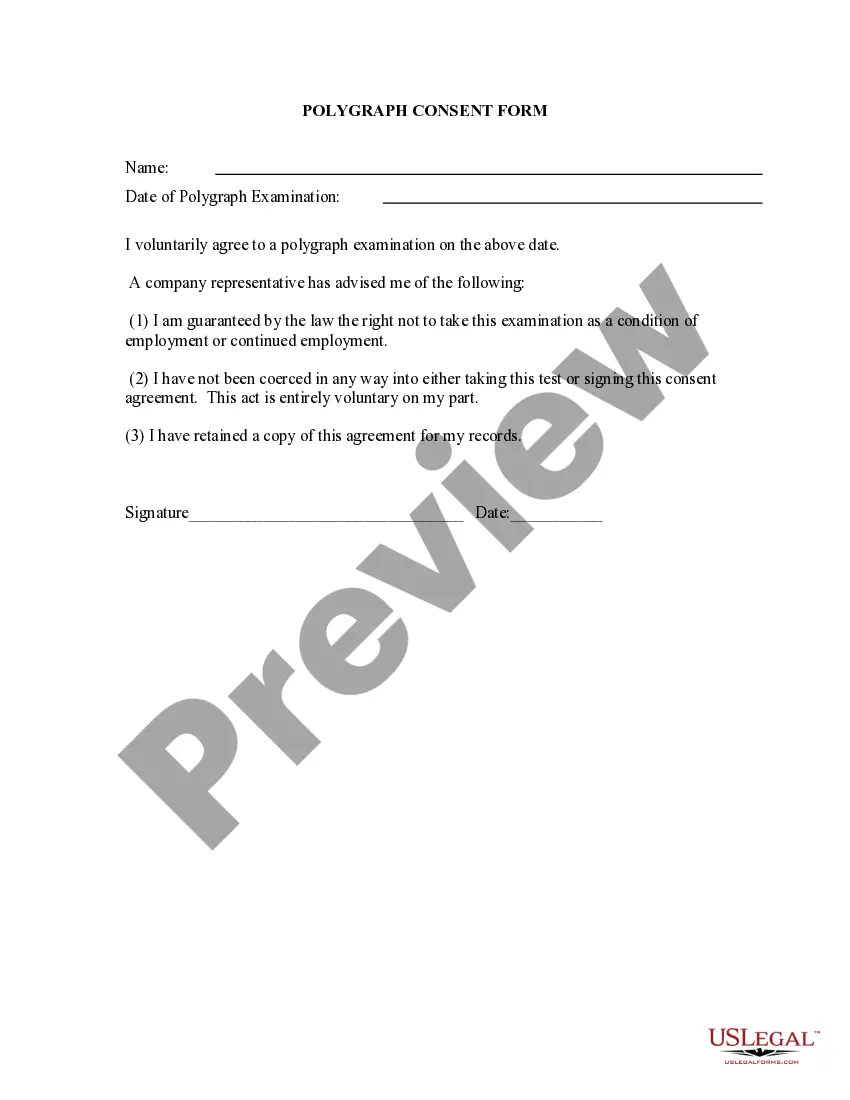
Missouri Polygraph Consent Form
Description
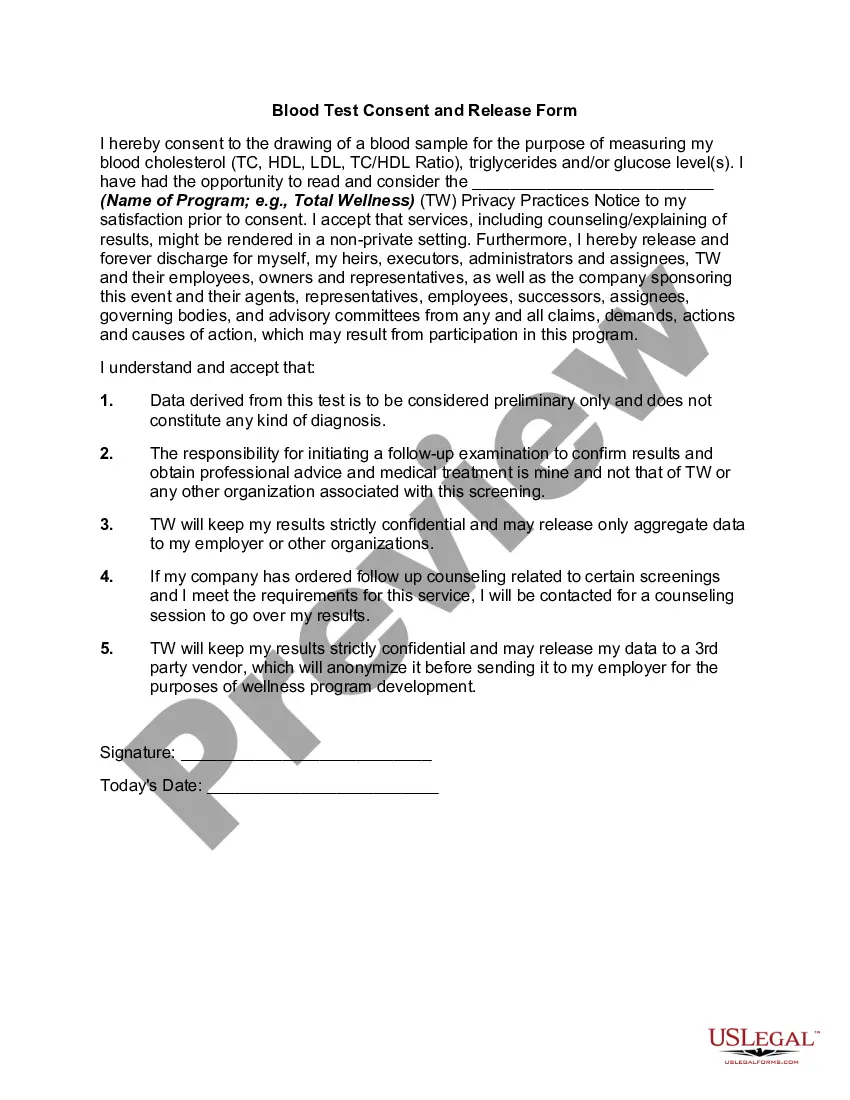
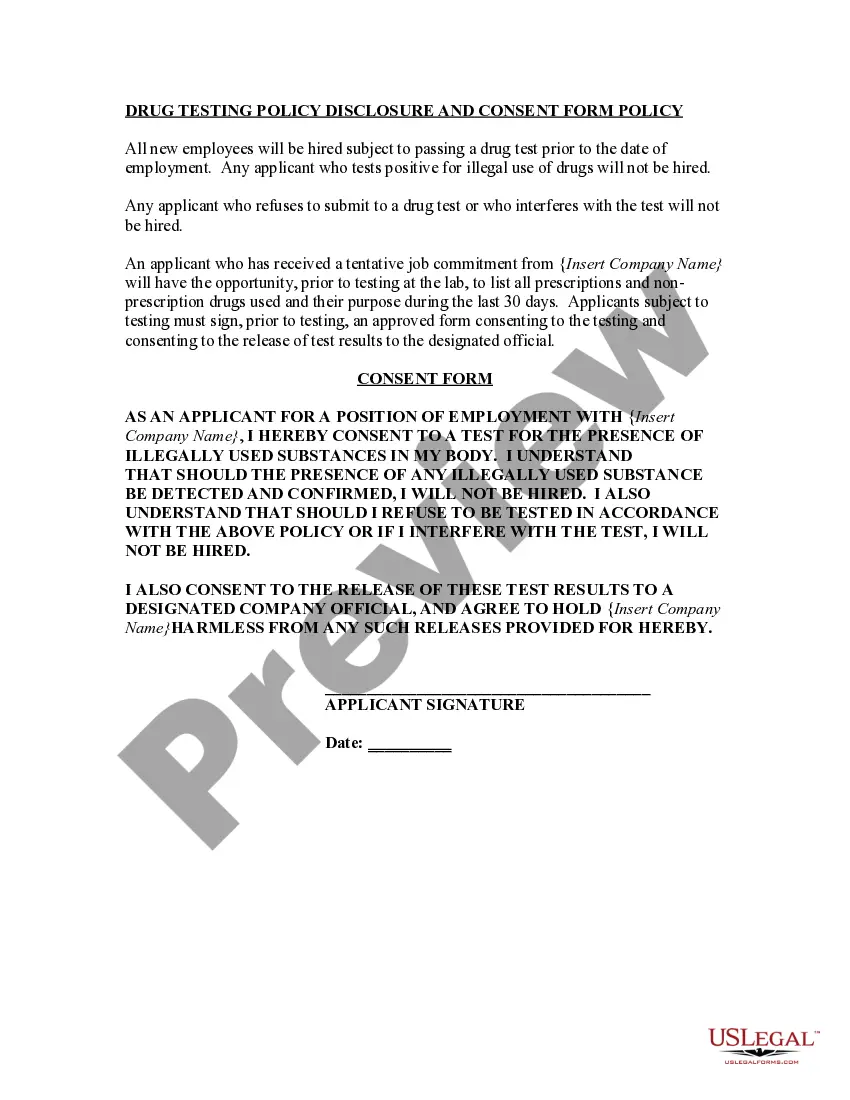
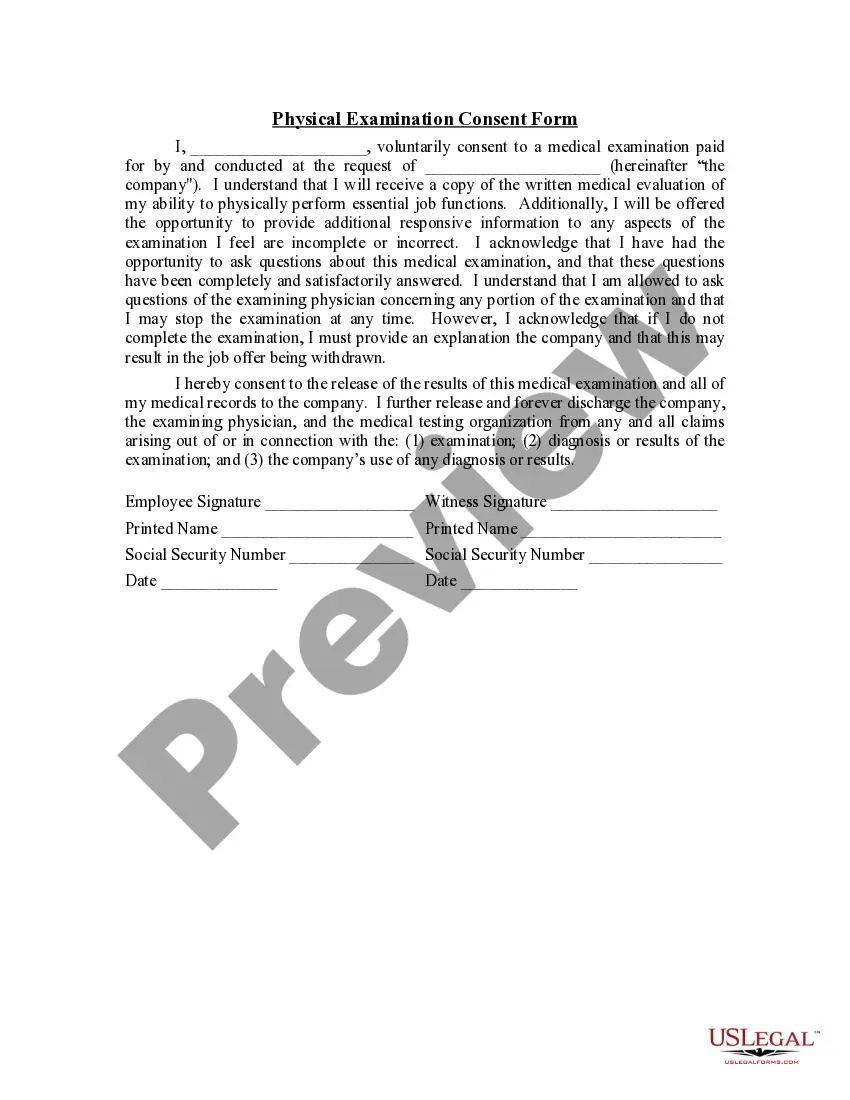
Get your form ready online
Our built-in tools help you complete, sign, share, and store your documents in one place.
Make edits, fill in missing information, and update formatting in US Legal Forms—just like you would in MS Word.
Download a copy, print it, send it by email, or mail it via USPS—whatever works best for your next step.
Sign and collect signatures with our SignNow integration. Send to multiple recipients, set reminders, and more. Go Premium to unlock E-Sign.
If this form requires notarization, complete it online through a secure video call—no need to meet a notary in person or wait for an appointment.
We protect your documents and personal data by following strict security and privacy standards.
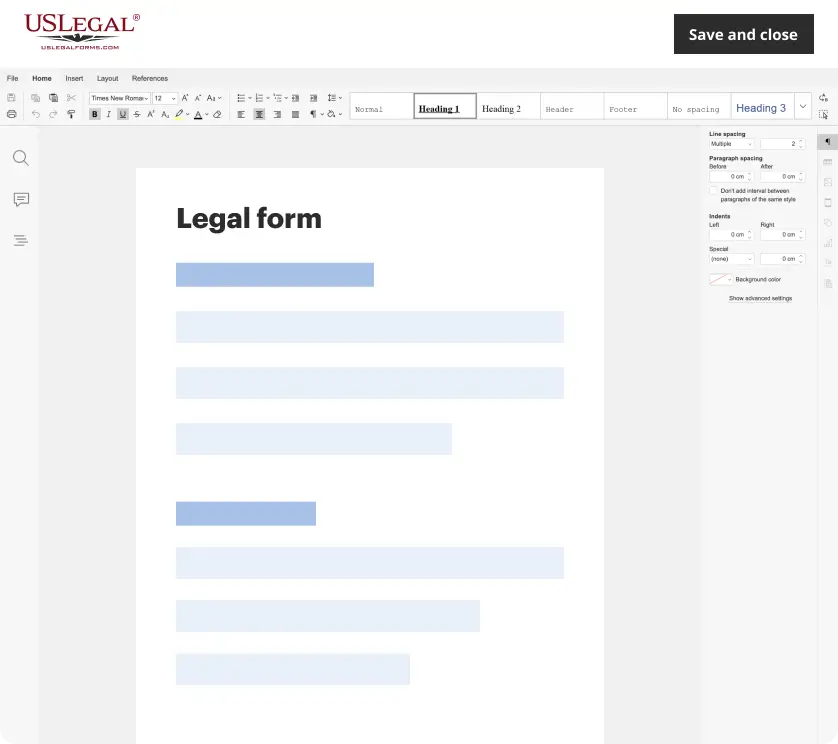
Make edits, fill in missing information, and update formatting in US Legal Forms—just like you would in MS Word.
Download a copy, print it, send it by email, or mail it via USPS—whatever works best for your next step.
Sign and collect signatures with our SignNow integration. Send to multiple recipients, set reminders, and more. Go Premium to unlock E-Sign.
If this form requires notarization, complete it online through a secure video call—no need to meet a notary in person or wait for an appointment.
We protect your documents and personal data by following strict security and privacy standards.
Looking for another form?
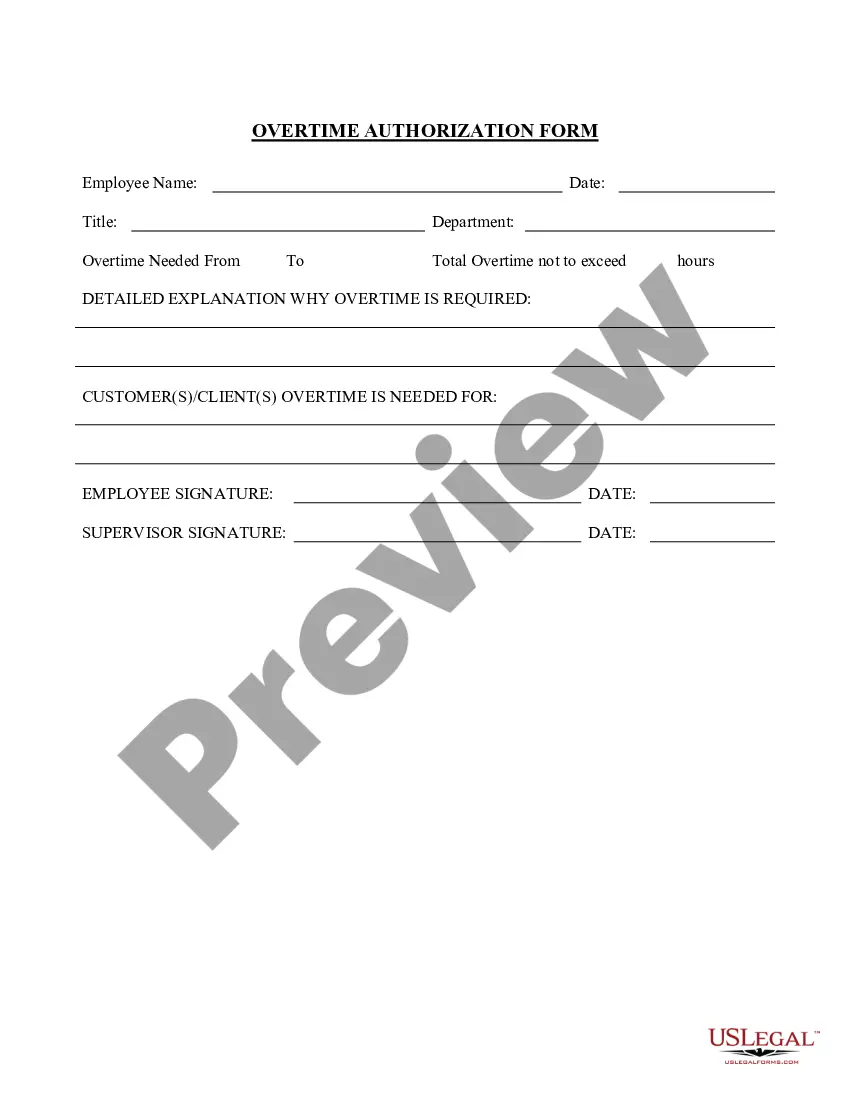
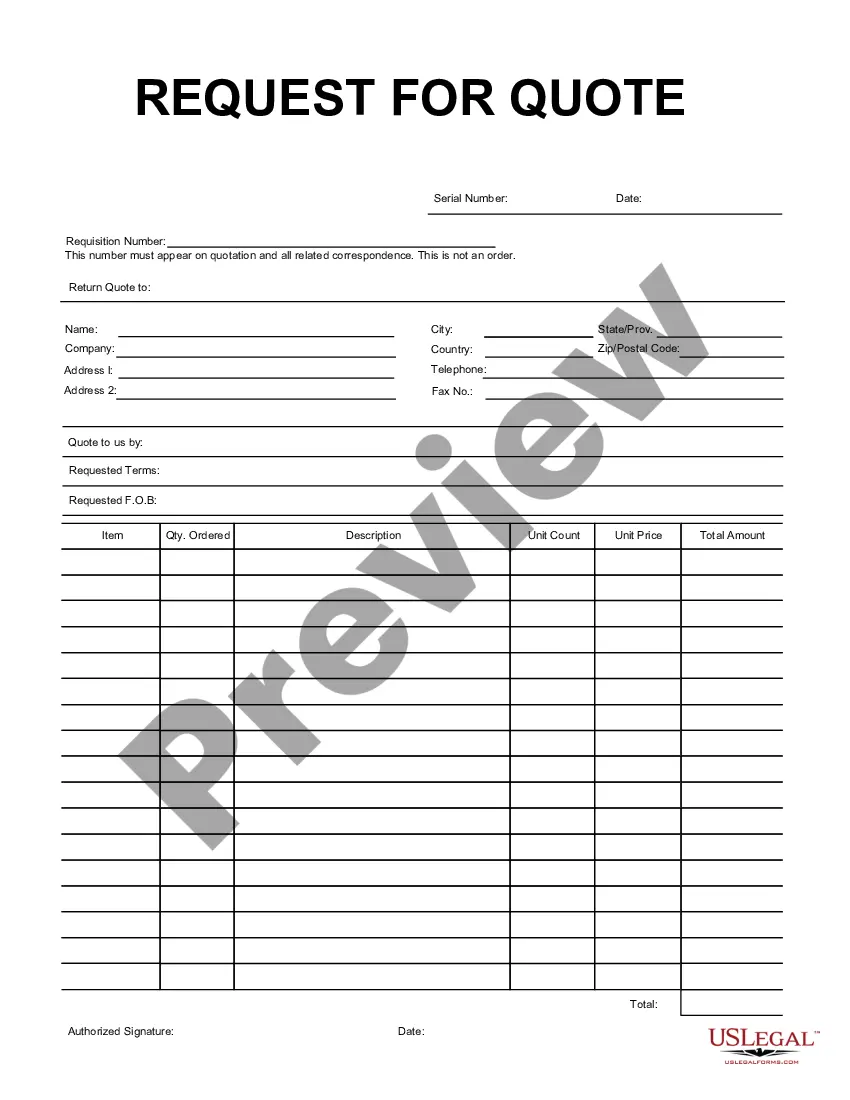
How to fill out Polygraph Consent Form?
Selecting the appropriate legal document template can be quite challenging.
Certainly, there are numerous templates accessible online, but how can you find the legal form you need.
Utilize the US Legal Forms website. The service offers thousands of templates, including the Missouri Polygraph Consent Form, which can be utilized for both business and personal purposes.
You can preview the form using the Preview button and read the form description to confirm this is the right one for you.
- All the documents are verified by experts and comply with federal and state regulations.
- If you are already registered, Log In to your account and click the Download button to access the Missouri Polygraph Consent Form.
- Use your account to browse through the legal forms you have previously acquired.
- Navigate to the My documents section in your account and retrieve another copy of the document you desire.
- If you are a new user of US Legal Forms, here are simple instructions to follow.
- First, ensure that you have chosen the correct form for your city/state.
Form popularity
FAQ
However, results of polygraph examinations are admissible in civil and labor courts at the discretion of the judge. The following are court citations wherein polygraph results were admitted as evidence.
The law in Missouri is clear that polygraph results are inadmissible.
Polygraph test cannot be administered without obtaining the written consent of the accused person to whom it is to be administered, the Karnataka High Court ruled (Virendra Khanna v. State of Karnataka).
Despite the 1988 legal ban on private employers using polygraph tests and the 1998 court decision ruling that their results are inadmissible as evidence in federal courts, there are huge loopholes in place and they're exploited by federal employers, law enforcement, probation officers, and others.
While there is no specific legislation in place regulating the use of polygraph tests, an employer can ask an employee to take one, but it must be voluntary (we'll go into more detail just now). However, no one can be forced to undergo a lie detector test, as it is against the Constitution.
Neither you nor a counselor can force someone to be truthful. Many times, counselors guide couples to us for a polygraph test when they believe that one or both parties are refusing to fully disclose their behaviors.
Abstract. Polygraph evidence is presently inadmissible in Canada and many jurisdictions of the United States. One of the major reasons for its exclusion lies in the belief (held by members of the judiciary) that jurors would accept such evidence without question due to its technical/scientific nature.
No matter what tactics the police use against you, you are fully within your rights to refuse a polygraph test at any stage of the criminal justice process. If you ever find yourself in one of those dimly lit rooms, you should politely decline to participate until you've discussed the matter with a qualified attorney.
Lie detector results are not admissible as evidence in court.
Occasionally, a suspect will ask to take a test in order to establish his innocence. You are never under any legal obligation to take a lie detector test in a criminal investigation. Even if police tell you the test is mandatory or they threaten you with arrest if you refuse to take one, you don't have to.