Missouri Resolution Regarding TerminationAnd Dues Reformation Agreement
What is this form?
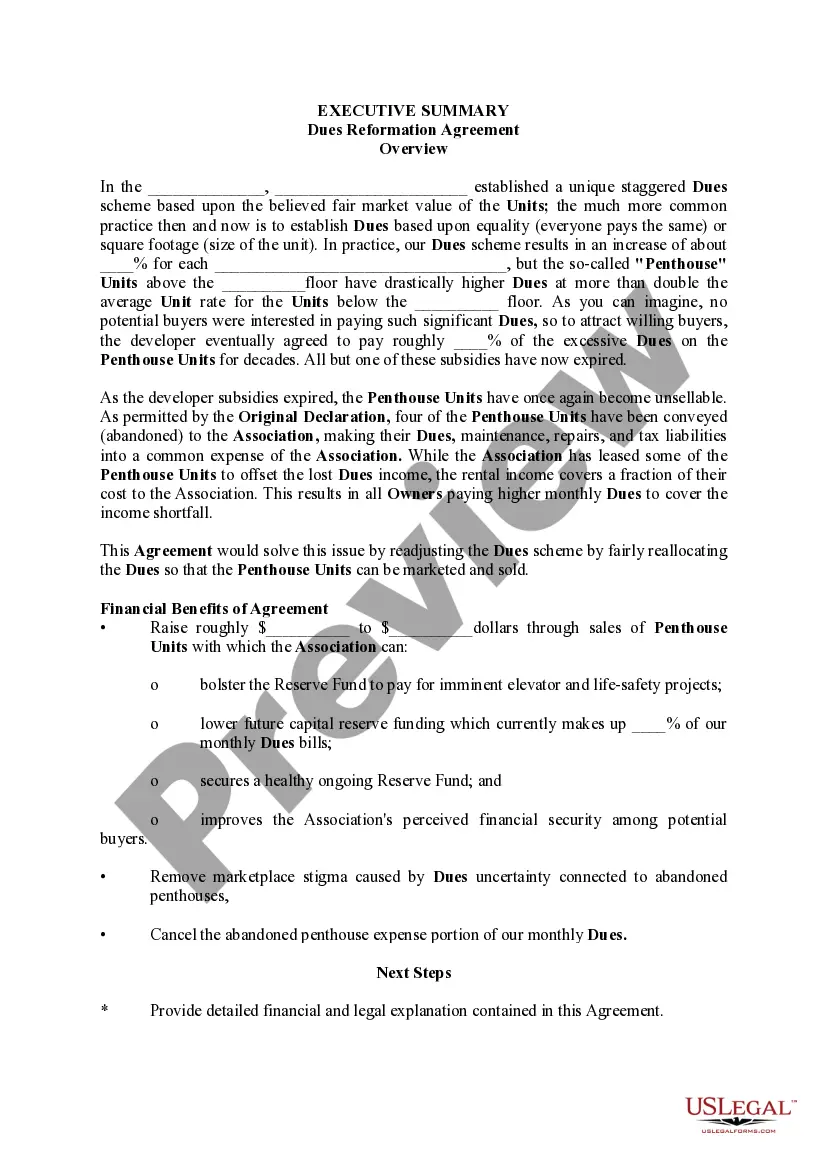
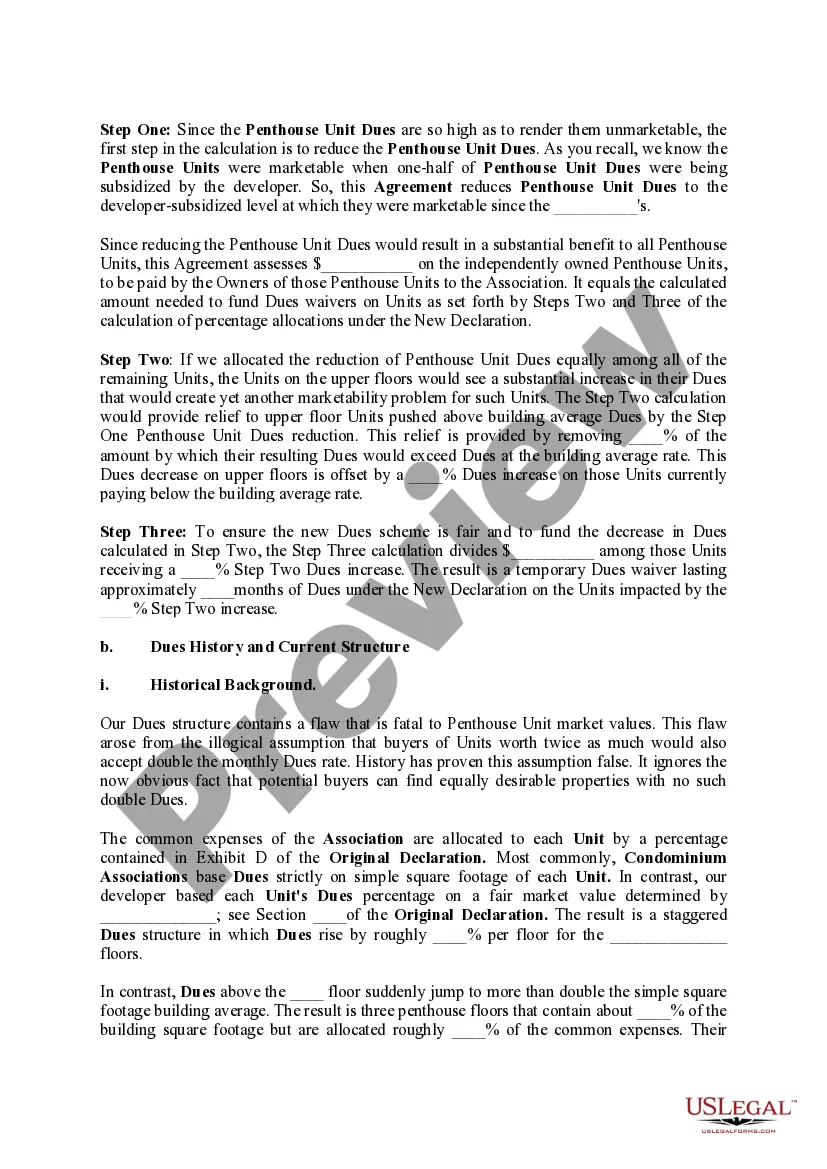
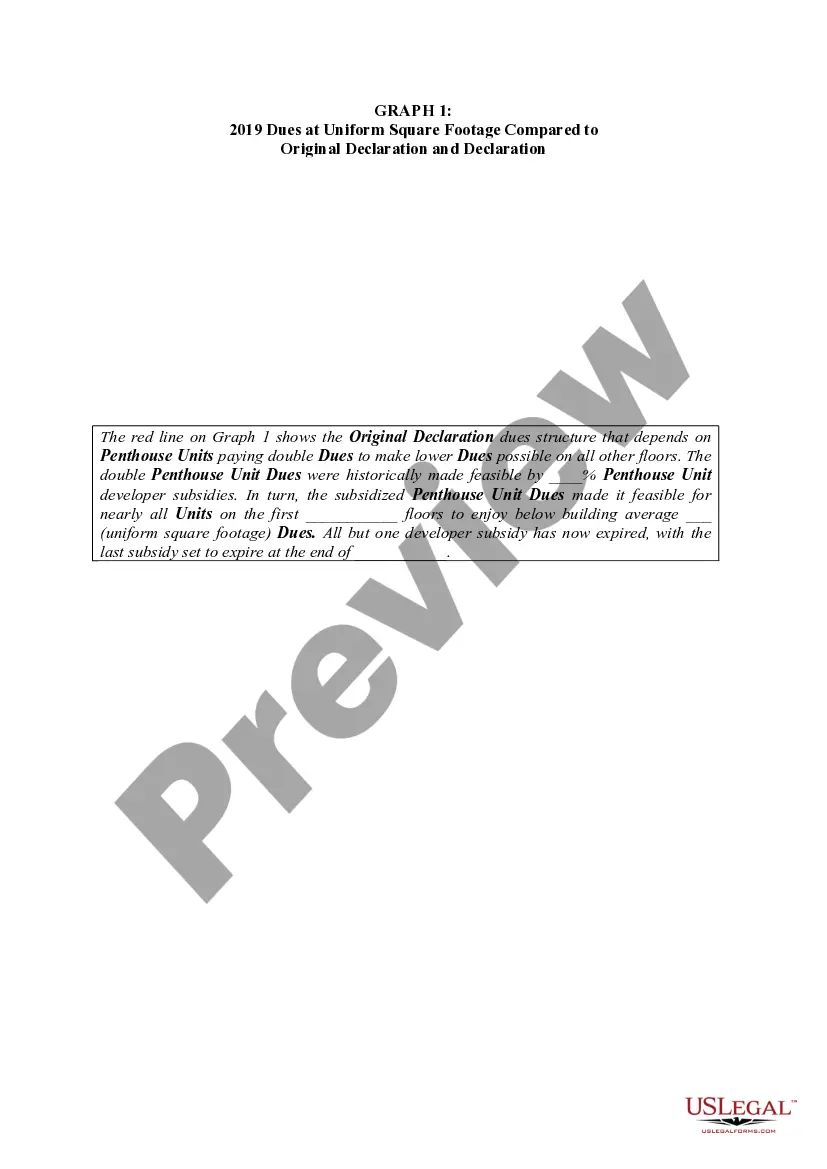
The Resolution Regarding Termination and Dues Reformation Agreement is a legal document used by condominium associations to readjust the dues structure applied to penthouse units. This agreement aims to address the financial burden caused by high dues that make penthouses unsellable and ultimately seeks to reallocate expenses more fairly among unit owners. By adopting this resolution, condominium associations can create a more marketable environment for penthouse units while maintaining overall financial stability for the community.
Key components of this form
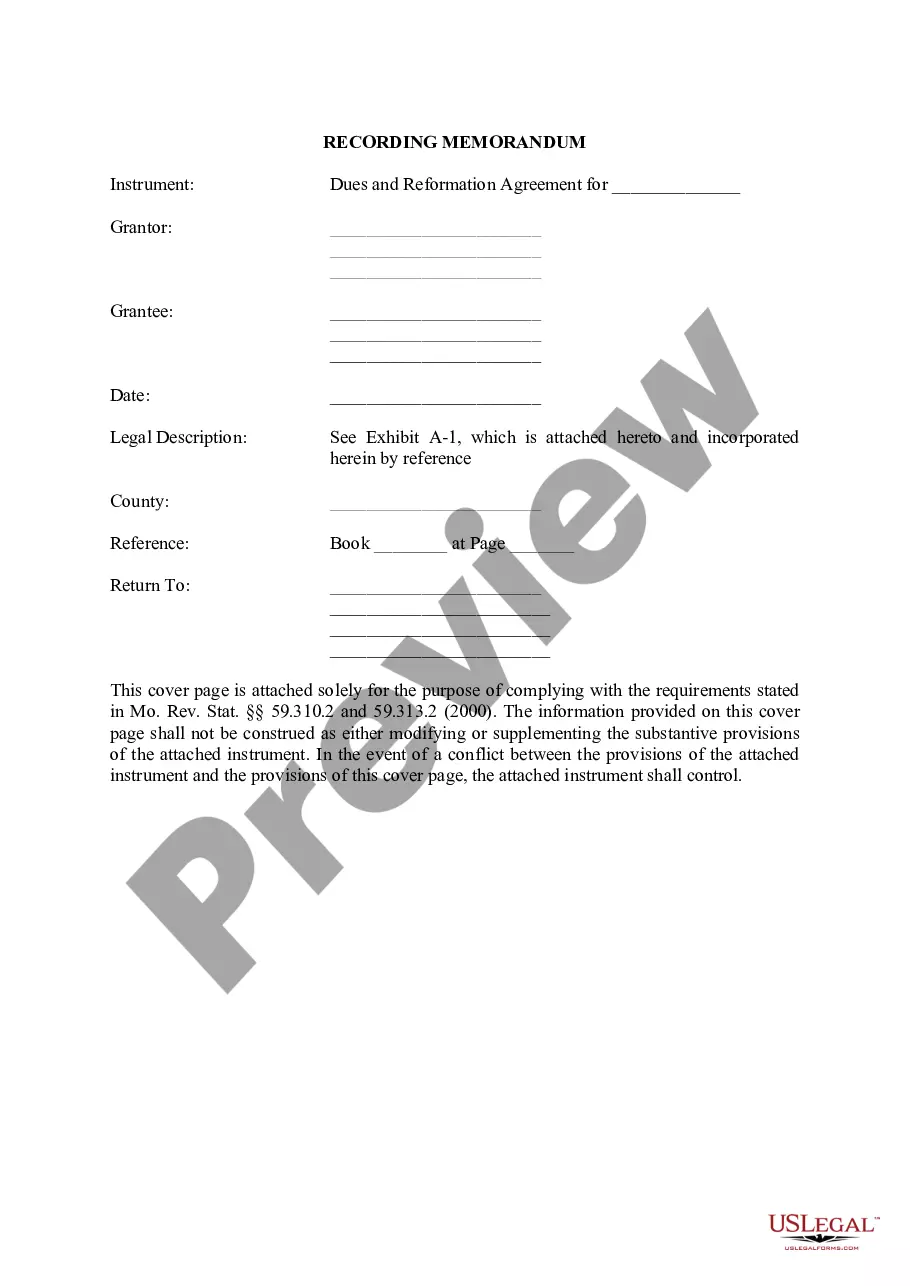
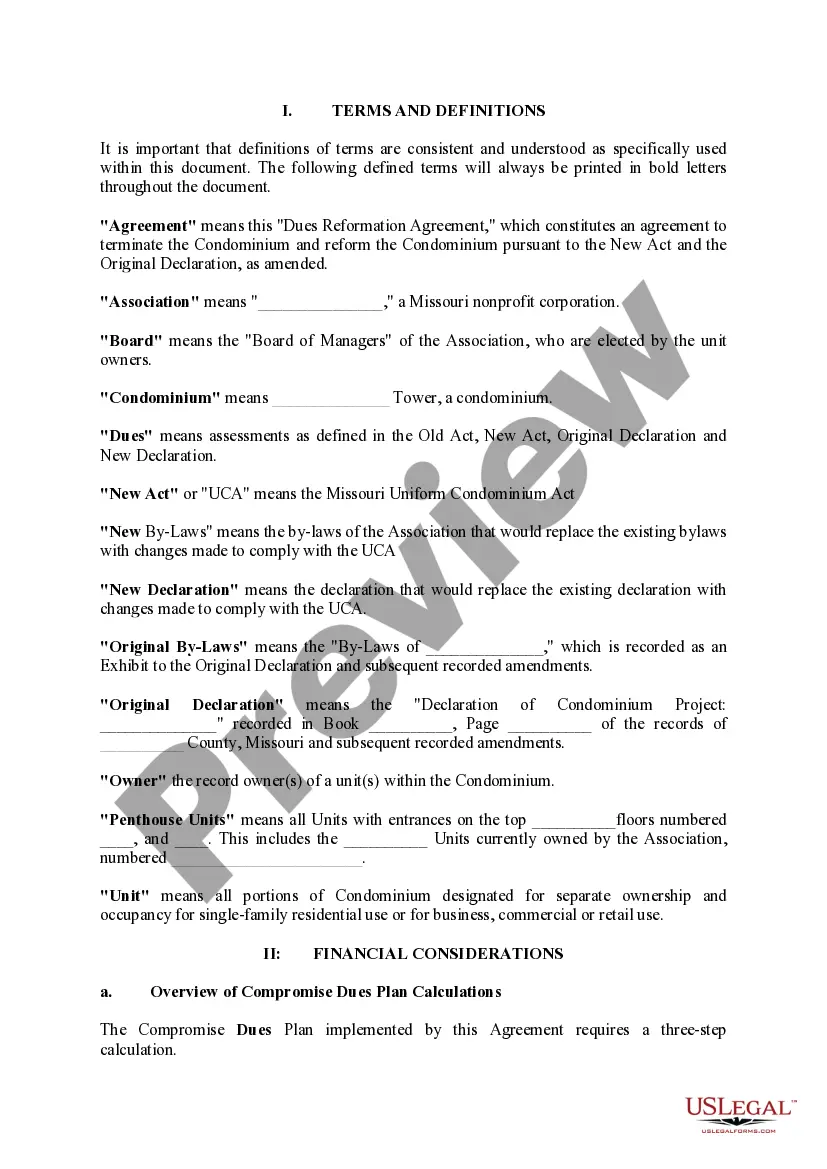
- Recording memorandum outlining the agreement's details and legal references.
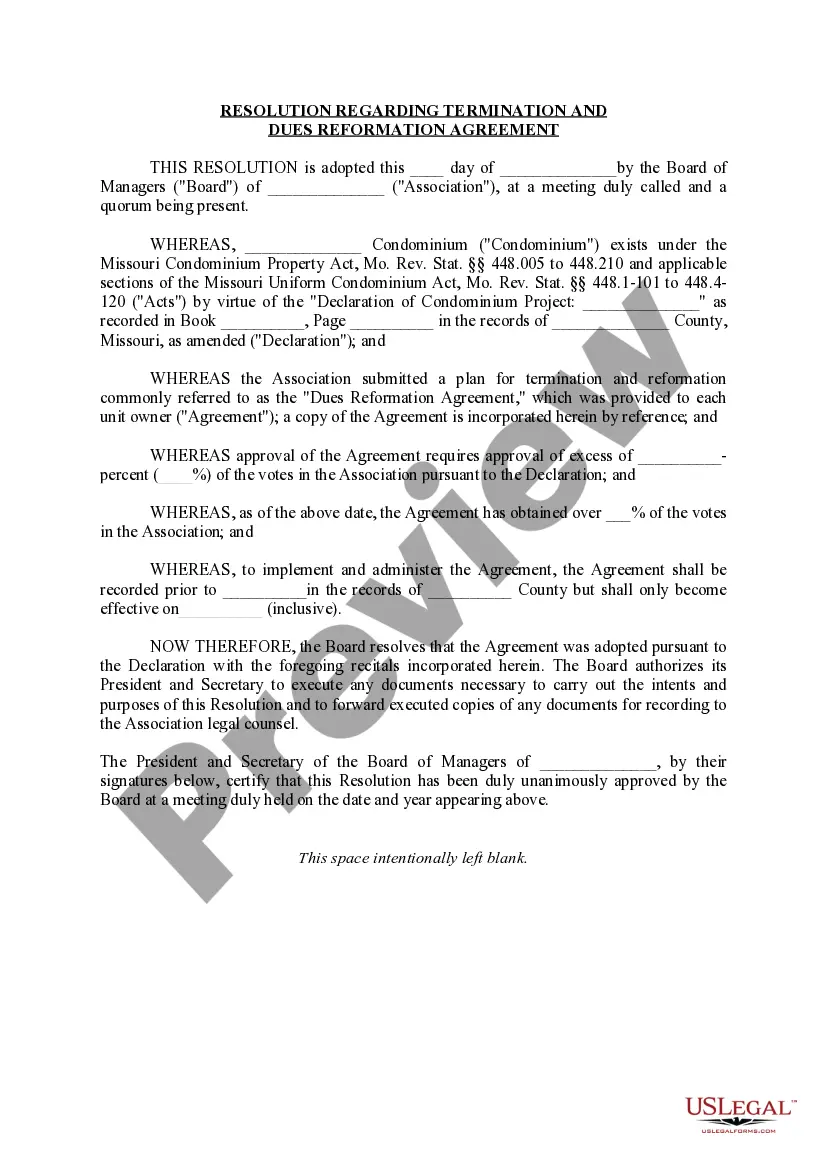
- Resolution section that documents the approval of the dues reform by the Board of Managers.
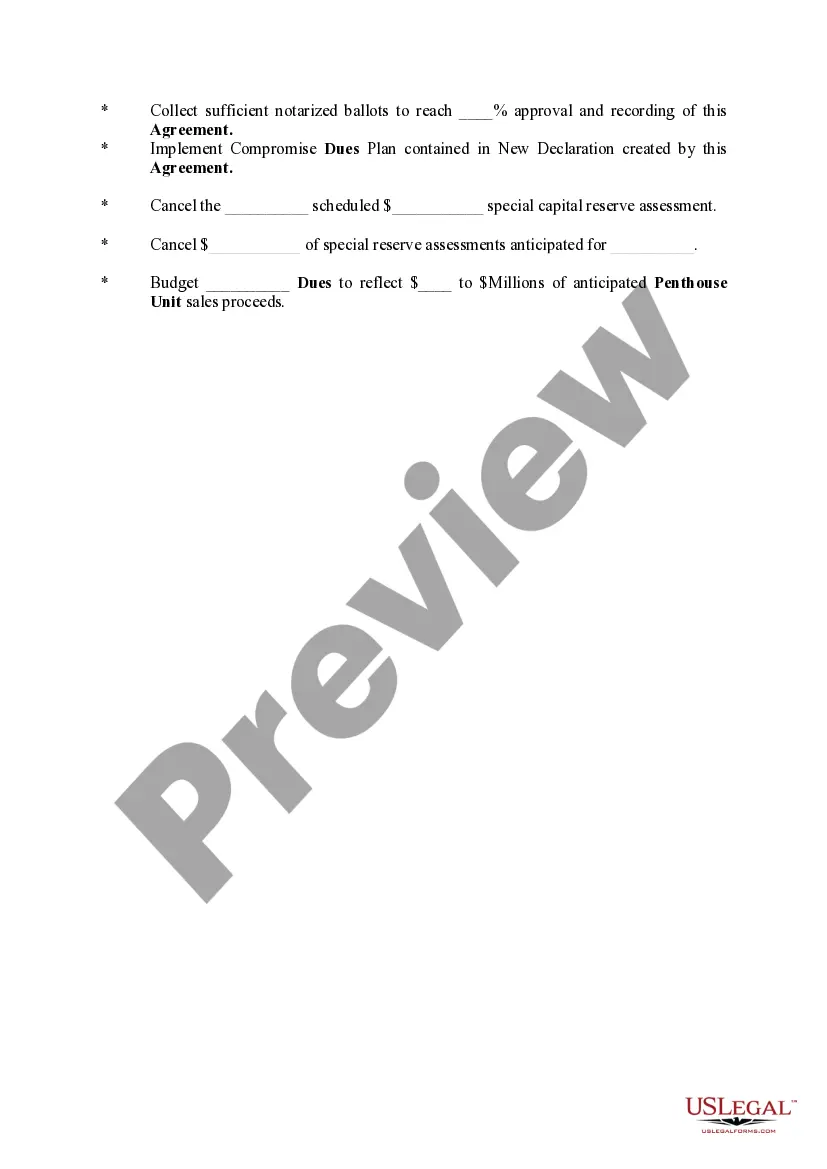
- Executive summary detailing the financial implications and history of dues structures within the condominium.
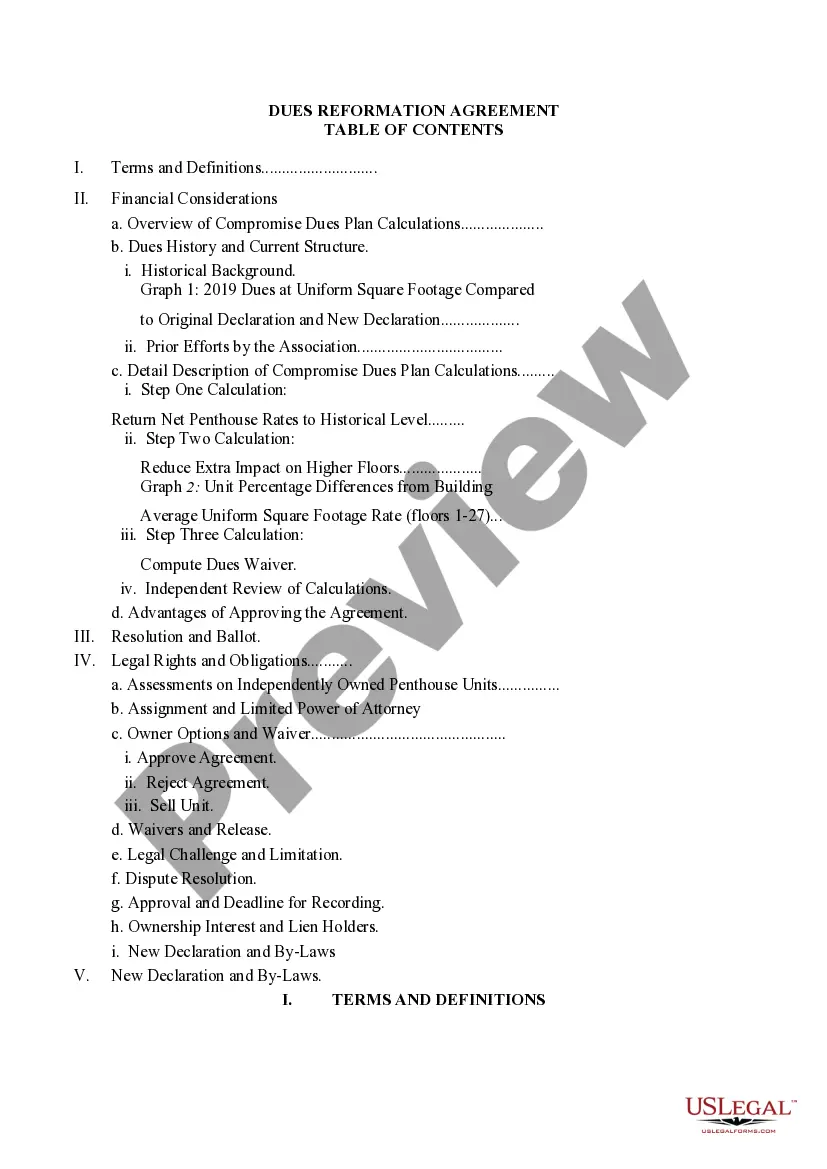
- Detailed calculations for the reformation of dues, including step-by-step adjustments for fairness.
- Provision for legal rights, obligations, and potential assessments on independently owned penthouse units.


Situations where this form applies
This form should be used when a condominium association needs to address issues related to unmarketable penthouse units due to disproportionately high dues. It is particularly relevant when the associationâs existing dues structure leads to financial burdens for owners and potential buyers. Adopting this agreement is essential when the association seeks to establish a more equitable dues system that reflects the true market value of the units and facilitates property sales, thereby promoting community stability.
Who can use this document
- Condominium associations looking to reform their dues structure.
- Board members and managers responsible for managing the financial health of the condominium.
- Unit owners wishing to understand their rights regarding dues assessments.
- Legal representatives assisting with condominium governance and documentation.
Completing this form step by step
- Identify the parties involved: clearly enter the names of the grantor (association) and grantee (individual units).
- Fill out the date of the resolution adoption and the legal description of the property as outlined in the attached exhibit.
- Complete the voting percentages required for the agreement to take effect, ensuring it meets the threshold established in the declaration.
- Review the financial implications outlined in the executive summary to understand the benefits of the agreement.
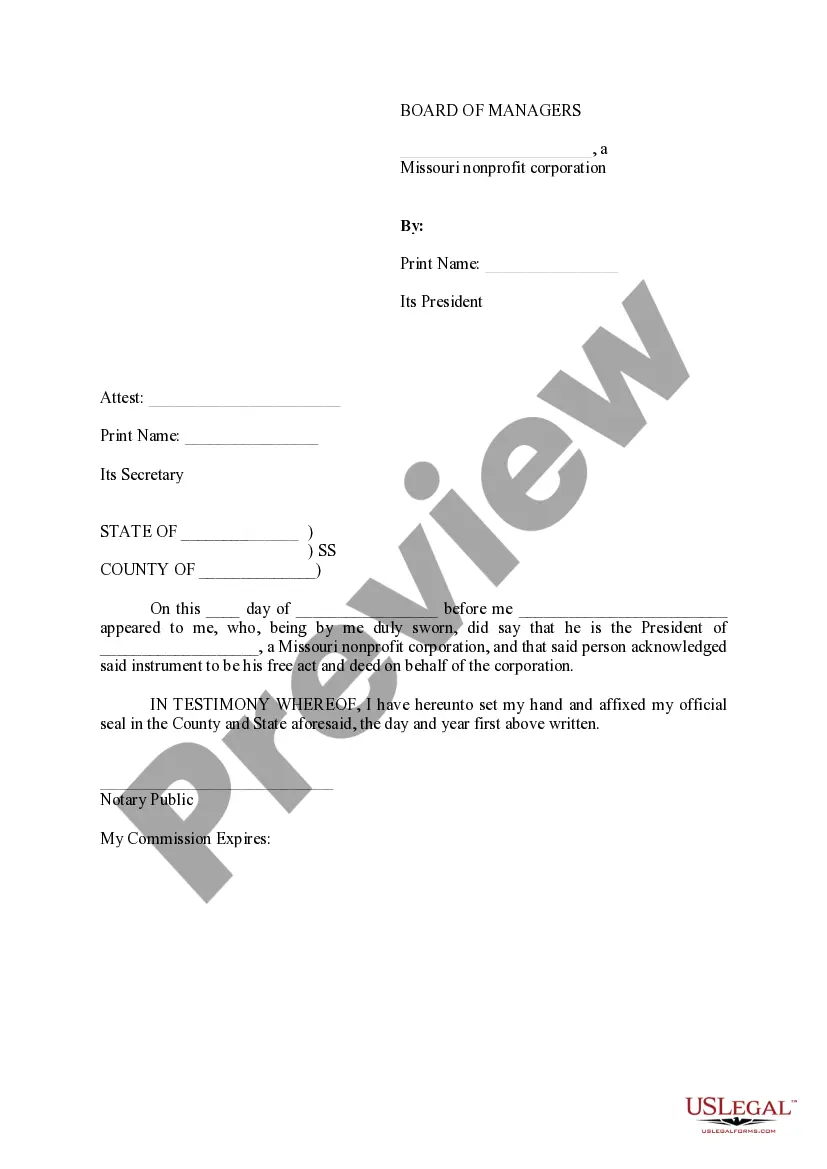
- Ensure that signatures from the President and Secretary of the Board are included for validation.
Does this form need to be notarized?
Yes, this form must be notarized to be legally valid. US Legal Forms offers an integrated online notarization service that is available 24/7 via secure video call, ensuring a convenient process without the need for travel. This will keep your agreement compliant and enforceable.
Get your form ready online
Our built-in tools help you complete, sign, share, and store your documents in one place.
Make edits, fill in missing information, and update formatting in US Legal Forms—just like you would in MS Word.
Download a copy, print it, send it by email, or mail it via USPS—whatever works best for your next step.
Sign and collect signatures with our SignNow integration. Send to multiple recipients, set reminders, and more. Go Premium to unlock E-Sign.
If this form requires notarization, complete it online through a secure video call—no need to meet a notary in person or wait for an appointment.
We protect your documents and personal data by following strict security and privacy standards.

Make edits, fill in missing information, and update formatting in US Legal Forms—just like you would in MS Word.

Download a copy, print it, send it by email, or mail it via USPS—whatever works best for your next step.

Sign and collect signatures with our SignNow integration. Send to multiple recipients, set reminders, and more. Go Premium to unlock E-Sign.

If this form requires notarization, complete it online through a secure video call—no need to meet a notary in person or wait for an appointment.

We protect your documents and personal data by following strict security and privacy standards.
Mistakes to watch out for
- Failing to have the document notarized when required.
- Leaving sections incomplete or incorrectly filled out, particularly in the voting percentages.
- Not attaching the necessary exhibits or supplemental documents referenced in the agreement.
- Overlooking the deadline for ballot submissions, which could invalidate the voting process.
Legal use & context
- This agreement is designed to formally address and revise the dues structure of a condominium as permitted by state law.
- It establishes a resolution that reflects the collective agreement of condominium unit owners, which can help prevent future disputes.
- Proper completion and recording of this agreement is vital for its enforceability and legal standing in any future litigation involving dues disputes.
Summary of main points
- The Resolution Regarding Termination and Dues Reformation Agreement provides a structured way to adjust dues for penthouse units.
- Understanding the implications of this agreement is crucial for all unit owners and board members.
- Compliance with state regulations ensures the validity of the reform process.
Looking for another form?

Form popularity
FAQ
Filling out articles of termination in Missouri requires careful attention to detail. First, gather all necessary information regarding your organization, including its name, date of dissolution, and the reason for termination. Next, ensure that you have the appropriate forms, which can typically be found on the Missouri Secretary of State's website. By following these steps and utilizing resources like the Missouri Resolution Regarding TerminationAnd Dues Reformation Agreement, you can navigate the process with confidence.
Statute 537.100 in Missouri pertains to the liability of property owners regarding injuries that occur on their premises. This statute emphasizes the responsibilities of property owners to maintain a safe environment, which is a crucial consideration when drafting agreements, including the Missouri Resolution Regarding Termination And Dues Reformation Agreement. By understanding this statute, individuals and businesses can better navigate legal responsibilities and protect themselves from potential liabilities.
The 407.675 law in Missouri addresses consumer protection from unfair practices in the sale of goods and services. This law emphasizes transparency and accountability, which aligns with the principles behind the Missouri Resolution Regarding Termination And Dues Reformation Agreement. By adhering to this law, businesses can foster trust and maintain a positive relationship with their customers, which is essential for long-term success.
Statute 473.050 in Missouri outlines the procedures for the appointment of personal representatives in estate matters. This statute plays a crucial role in the management of estate administration, particularly in the context of the Missouri Resolution Regarding Termination And Dues Reformation Agreement. Understanding this statute can help ensure that the rights and duties of the personal representative are clear, ultimately supporting better estate planning.
The employer has seven days to respond to the written request. If the employer does not pay the wages due within the seven days, it will be liable for additional wages to the employee until he or she is finally paid for up to sixty days.
Missouri is an at-will employment state.If an employer terminates an employee because he or she engaged in this sort of conduct, the employee may sue for wrongful discharge.
While the average settlement for wrongful termination cases in California is around $40,000, the average value of a court verdict in wrongful termination cases is slightly larger, around $45,000 (but do keep in mind that attorney fees for legal representation in a wrongful termination trial will skyrocket, too).
Missouri law requires that final wages be paid to an employee upon the end or termination of employment.Final due wages are to be paid at the regular rate of pay and payable in one payment. An employer can set-off a valid debt owed by an employee against final wages without incurring a penalty.
Missouri is referred to as an at-will employment state. This means that employers are typically allowed to fire employees for any reason or for no reason at all.An employee cannot bring a wrongful termination claim simply because he or she was terminated.
An employee may have a claim for wrongful discharge if the employee was fired for filing a workers' compensation claim, reporting wrongdoings or violations of law, refusing to commit a crime or to act contrary to public policy, or performing a civic duty such as serving on a jury or participating as a witness in an