Missouri Letter to Lienholder to Notify of Trust
Understanding this form
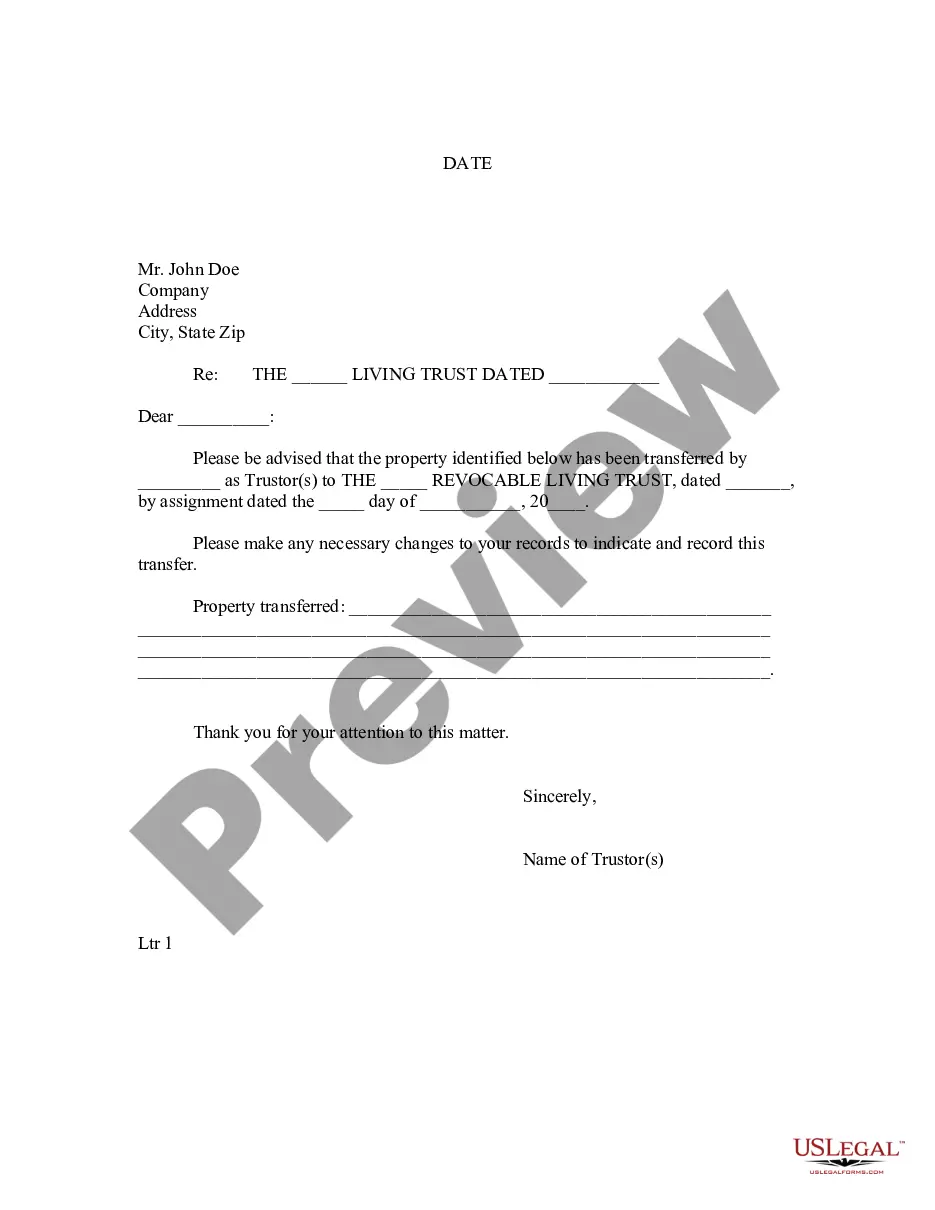
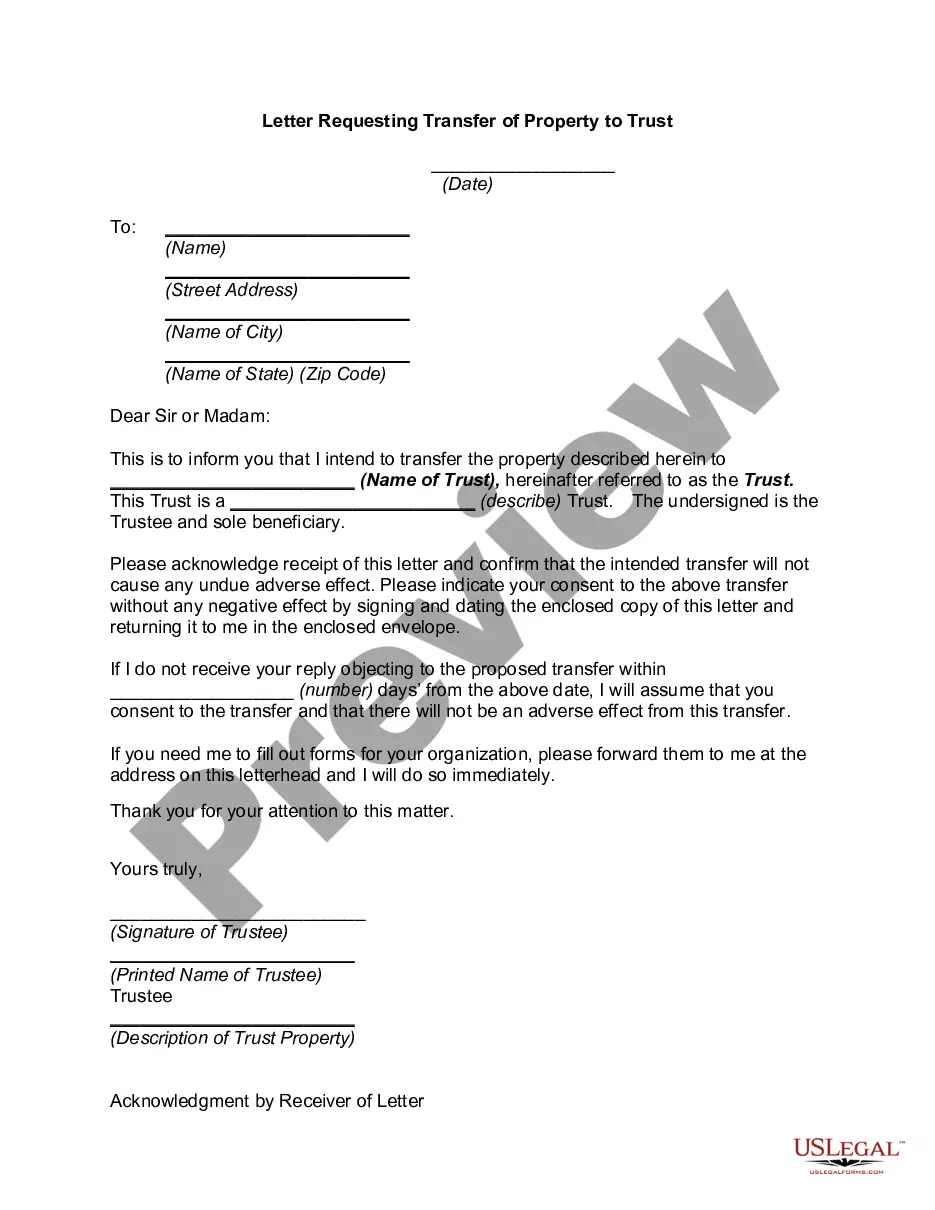
The Letter to Lienholder to Notify of Trust is a formal notice informing a lienholder that specific property has been transferred to a living trust. This document is crucial for estate planning, distinguishing it from other notification letters by explicitly detailing the transfer of property to a trust, which can affect ownership rights and obligations.
Key parts of this document
- Date of the letter
- Trustor's name and contact information
- Trust name and date
- Identification of properties transferred
- Space for lienholder acknowledgment
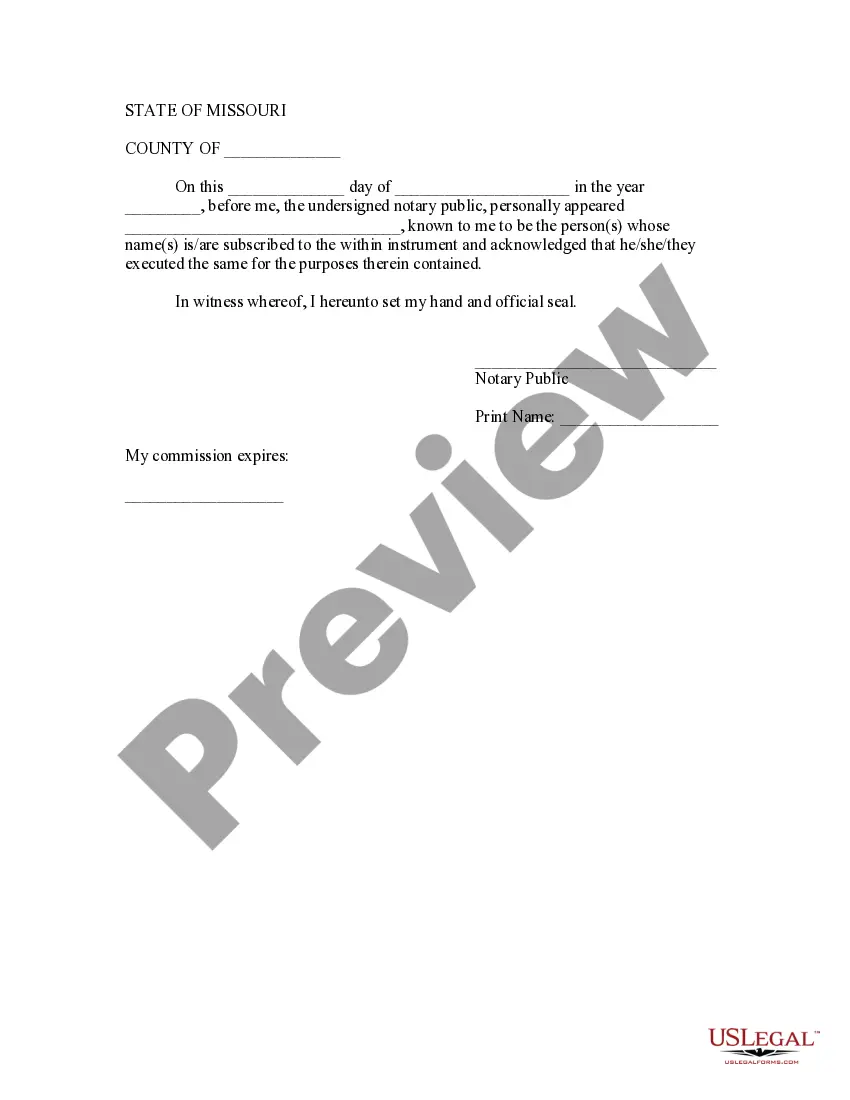
- Notary public acknowledgment section
When this form is needed
This form is used when a trustor transfers property into a living trust and needs to formally inform lienholders of this change. It is essential when establishing or updating estate plans, ensuring that all parties have the accurate information regarding the trust and its assets.
Intended users of this form
- Individuals establishing a living trust
- Trustors wanting to clarify ownership of property
- Anyone with a lien on property being placed in a trust
- Estate planners and legal professionals assisting clients with trusts
Completing this form step by step
- Identify the date of the letter.
- Enter the name and address of the lienholder.
- Specify the name and date of the living trust.
- List the properties transferred to the trust.
- Sign the form and include the required notary information.
Is notarization required?
This document requires notarization to meet legal standards. US Legal Forms provides secure online notarization powered by Notarize, allowing you to complete the process through a verified video call, available 24/7.
Get your form ready online
Our built-in tools help you complete, sign, share, and store your documents in one place.
Make edits, fill in missing information, and update formatting in US Legal Forms—just like you would in MS Word.
Download a copy, print it, send it by email, or mail it via USPS—whatever works best for your next step.
Sign and collect signatures with our SignNow integration. Send to multiple recipients, set reminders, and more. Go Premium to unlock E-Sign.
If this form requires notarization, complete it online through a secure video call—no need to meet a notary in person or wait for an appointment.
We protect your documents and personal data by following strict security and privacy standards.

Make edits, fill in missing information, and update formatting in US Legal Forms—just like you would in MS Word.

Download a copy, print it, send it by email, or mail it via USPS—whatever works best for your next step.

Sign and collect signatures with our SignNow integration. Send to multiple recipients, set reminders, and more. Go Premium to unlock E-Sign.

If this form requires notarization, complete it online through a secure video call—no need to meet a notary in person or wait for an appointment.

We protect your documents and personal data by following strict security and privacy standards.
Mistakes to watch out for
- Failing to include all properties transferred in the notice.
- Not using the correct name of the trust.
- Omitting the notary's acknowledgment section.
- Using incorrect contact information for the lienholder.
Benefits of using this form online
- Convenient access to a legally compliant template.
- Editable fields allow for quick customization.
- Reliable templates drafted by licensed attorneys.
- Instant downloadable format for immediate use.
What to keep in mind
- The Letter to Lienholder to Notify of Trust is essential for communicating property transfers into a living trust.
- Completing the form accurately ensures lienholder records reflect the new ownership.
- Notarization is typically required for the form to be legally effective.
Looking for another form?
Form popularity
FAQ
Yes, Missouri law requires a notarized lien release to ensure that the release is legally binding. This notarization adds a layer of authenticity to the document, protecting both parties involved. Before submitting your lien release to the state, you may also want to draft a Missouri Letter to Lienholder to Notify of Trust for proper documentation. Using US Legal Forms can help you create a compliant notarized release quickly and efficiently.
The 5062 form in Missouri serves as a notice of lien on a vehicle. It is essential when a lender wants to establish their claim against the vehicle. If a lien is released, a Missouri Letter to Lienholder to Notify of Trust may be necessary to inform the lienholder of the changes. US Legal Forms provides resources to help you navigate the paperwork involved in managing your vehicle's liens effectively.
The 551 form in Missouri is used for the transfer of ownership of a vehicle following a lien release. This form is critical when you need to officially notify the state about changes in vehicle ownership or lien status. Completing a Missouri Letter to Lienholder to Notify of Trust is often the first step before you can submit the 551 form. US Legal Forms can assist you in understanding the requirements and filing this form correctly.
To release a lien on a car title in Missouri, you need to obtain a Missouri Letter to Lienholder to Notify of Trust. This document informs the lienholder that the debt has been settled. After you receive confirmation from the lienholder, you can submit the necessary paperwork to the Missouri Department of Revenue. Using US Legal Forms can simplify this process by providing you with the correct templates and guidance.
Depending on state laws, paper titles are generally mailed and electronic titles and/or liens are released to the motor vehicle agency approximately 10 business days after the payoff is received. Allow 15-30 days for receipt of your title based on mail time and/or motor vehicle agency process.
Lien Holder Authorization Letter A letter from the lien holder, giving permission for the vehicle to be relocated.
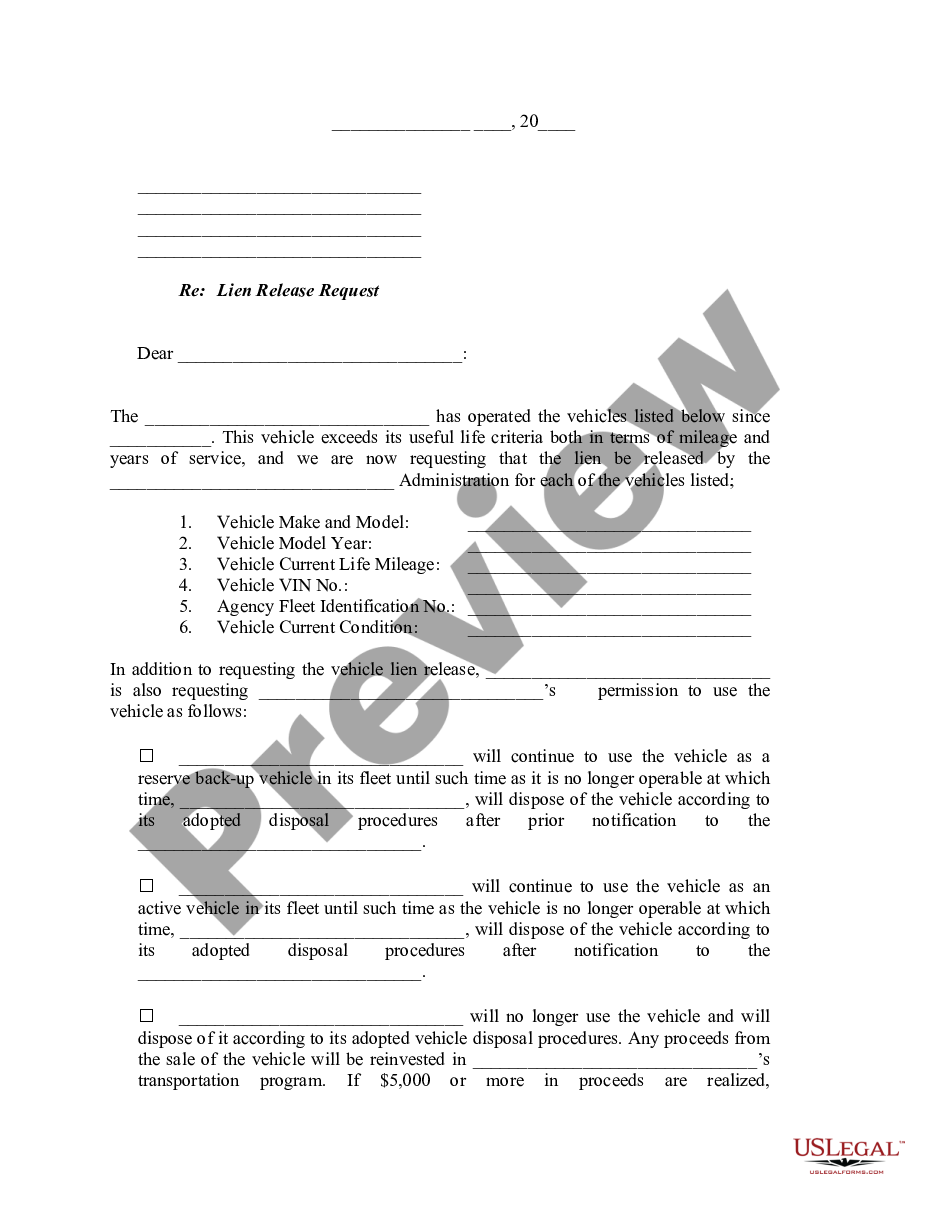
The car (vehicle) lien release form is a document that is used by a lending institution or entity after a borrower has paid the loan in full and the borrower would like to retrieve the title to their vehicle.
Write your name and return address in the top three lines of the letter. Insert the complete date (month, day, year). Enter the recipient's name, title, company name and address on the next five lines. Greet the reader by writing "Dear (recipient's name):" Skip two lines. State the subject in a subject line.
The release of lien may be a separate document or it could be the original vehicle title, with the lien signed off on the front. All titles and releases of lien are sent via regular, first-class mail.
Missouri does not require that lien waivers be notarized in order to be effective. However, there are specific signature requirements that apply to residential jobs.