Minnesota Alternative Transportation Liability Waiver
What is this form?
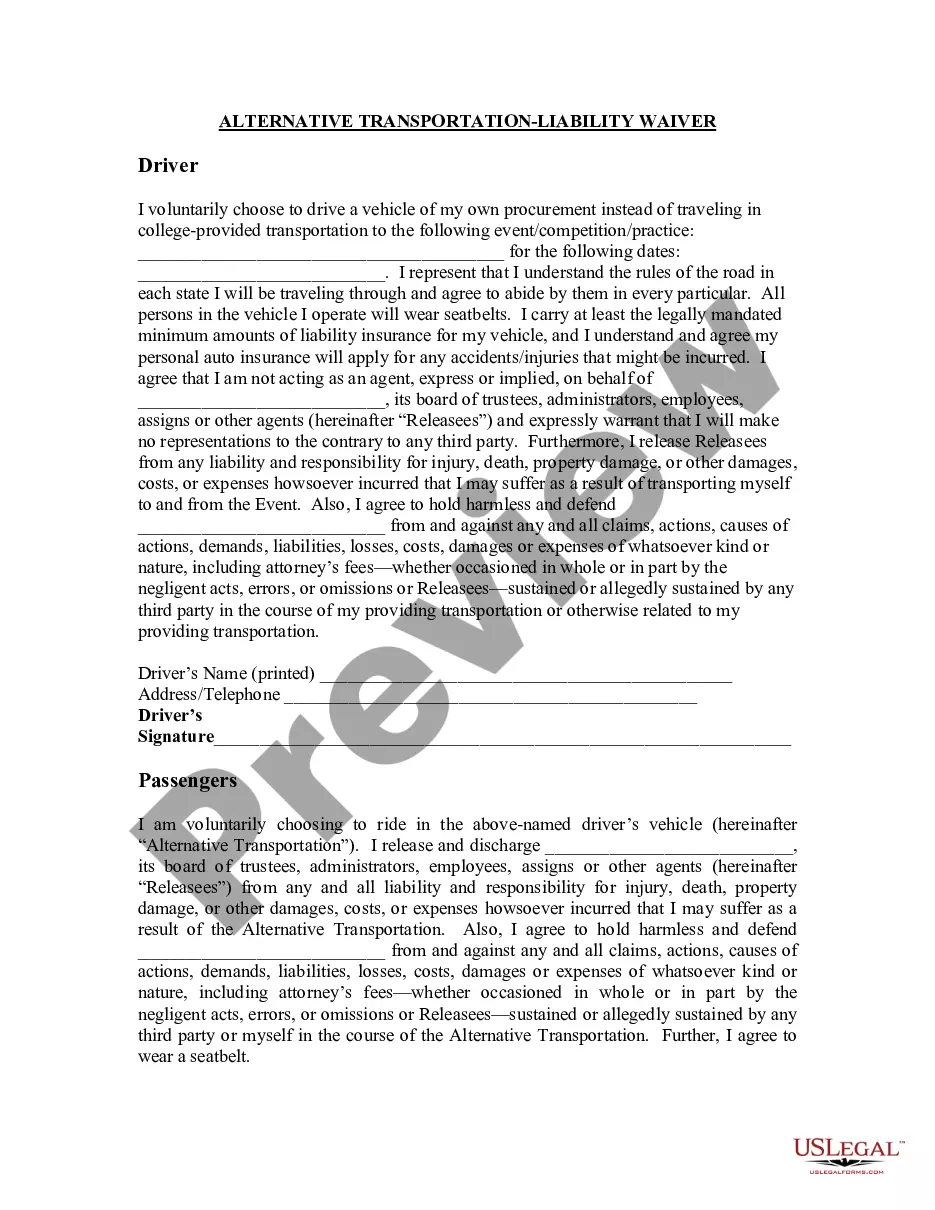
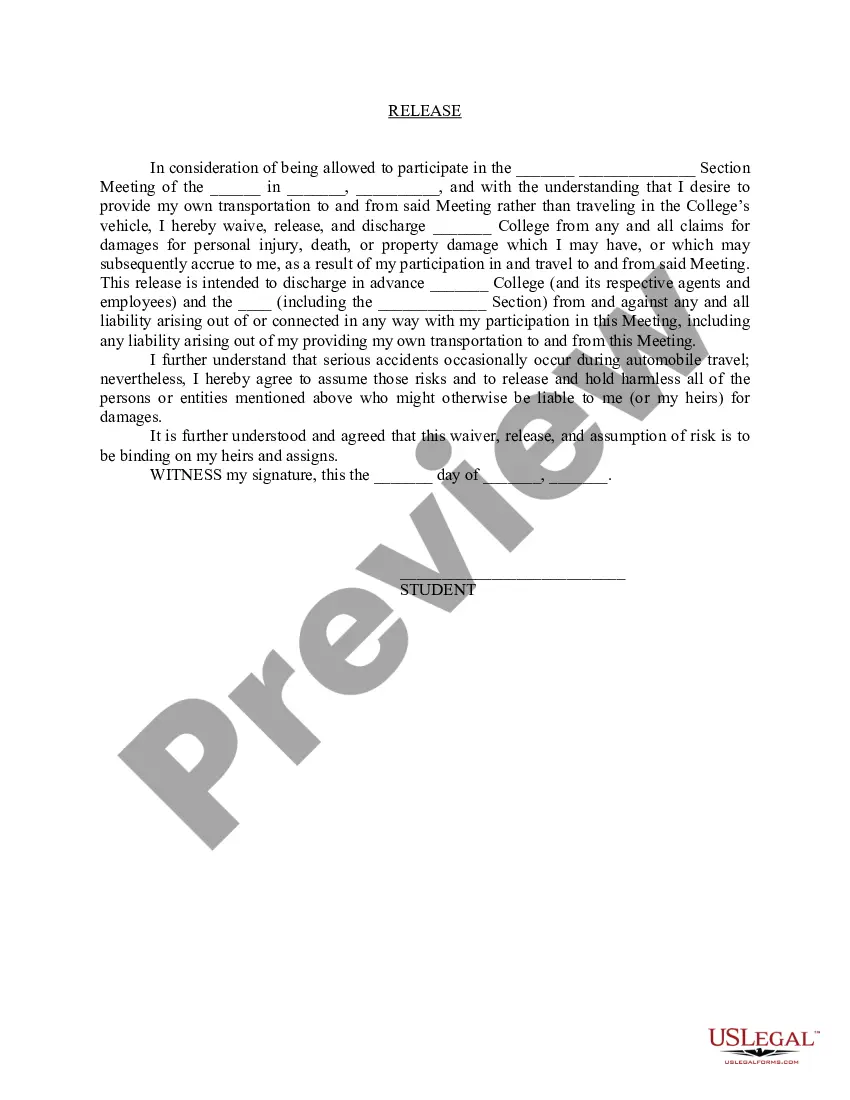
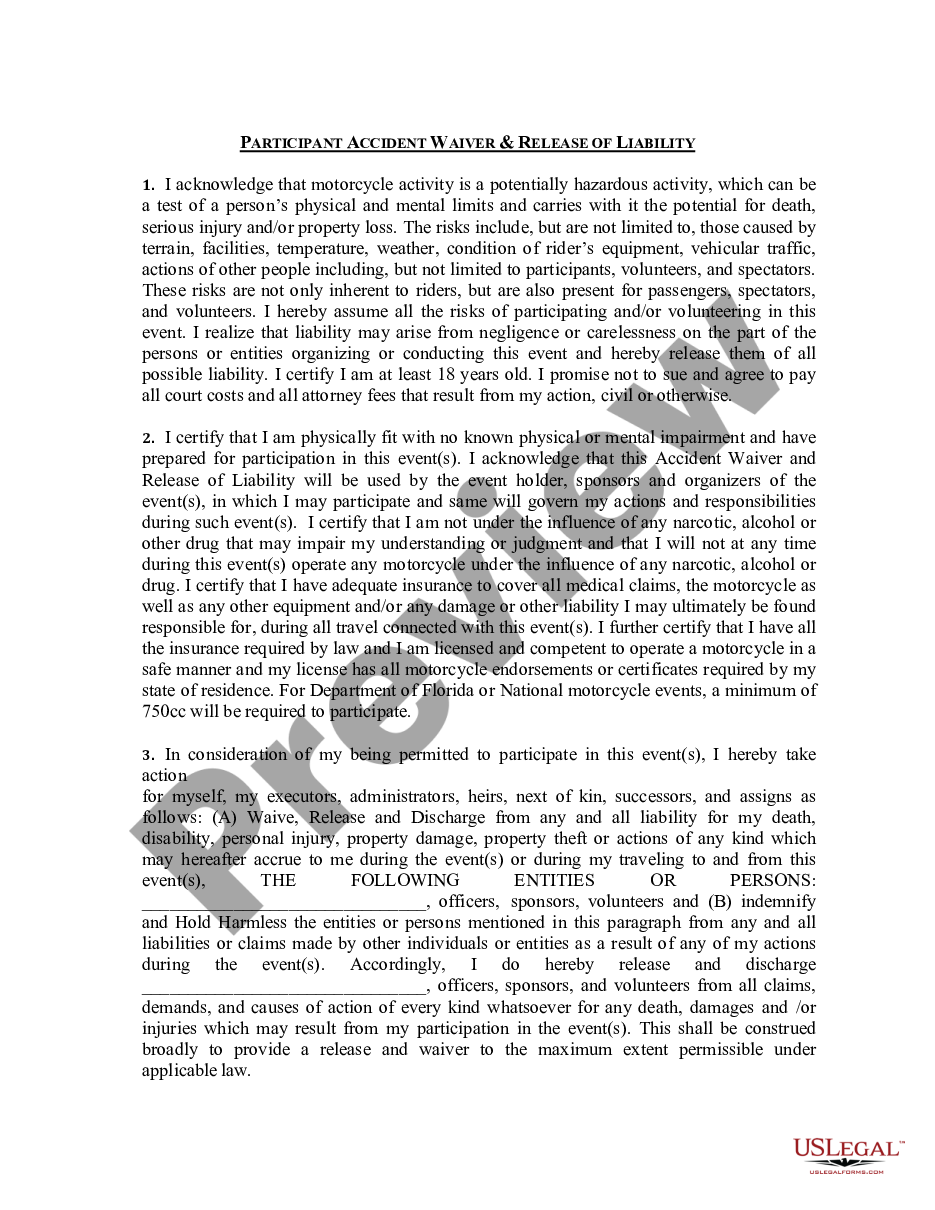
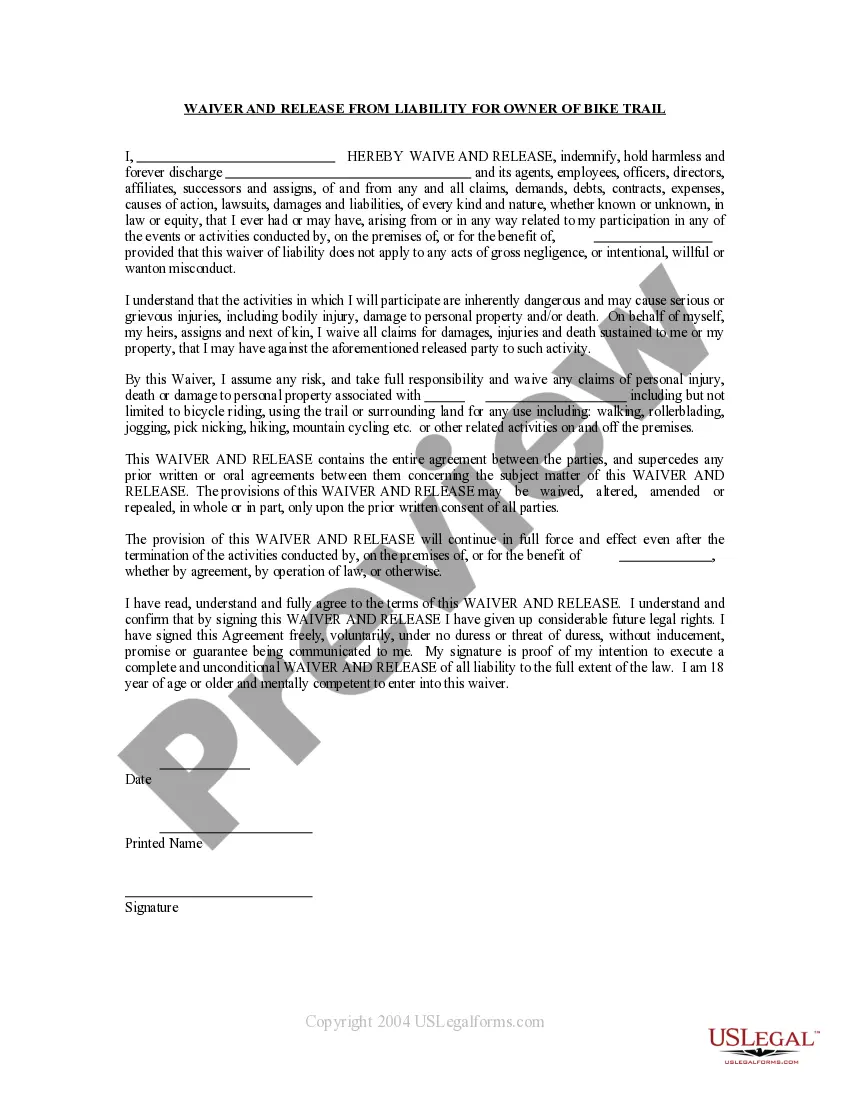
The Alternative Transportation Liability Waiver is a legal document used by college student drivers and their passengers to acknowledge their choice to use personal vehicles instead of college-provided transportation. This form is essential in protecting the college from claims or damages related to the travel, as it includes a hold harmless clause that limits the college's liability for any incidents that may occur during the travel event.
Key components of this form
- Driver's acknowledgment of voluntarily choosing personal transportation.
- Agreement to abide by road rules and ensure all passengers wear seatbelts.
- Waiver of liability for the college and its representatives for any injuries or damages incurred.
- Passenger release of liability, agreeing not to hold the college responsible for any issues arising from the trip.
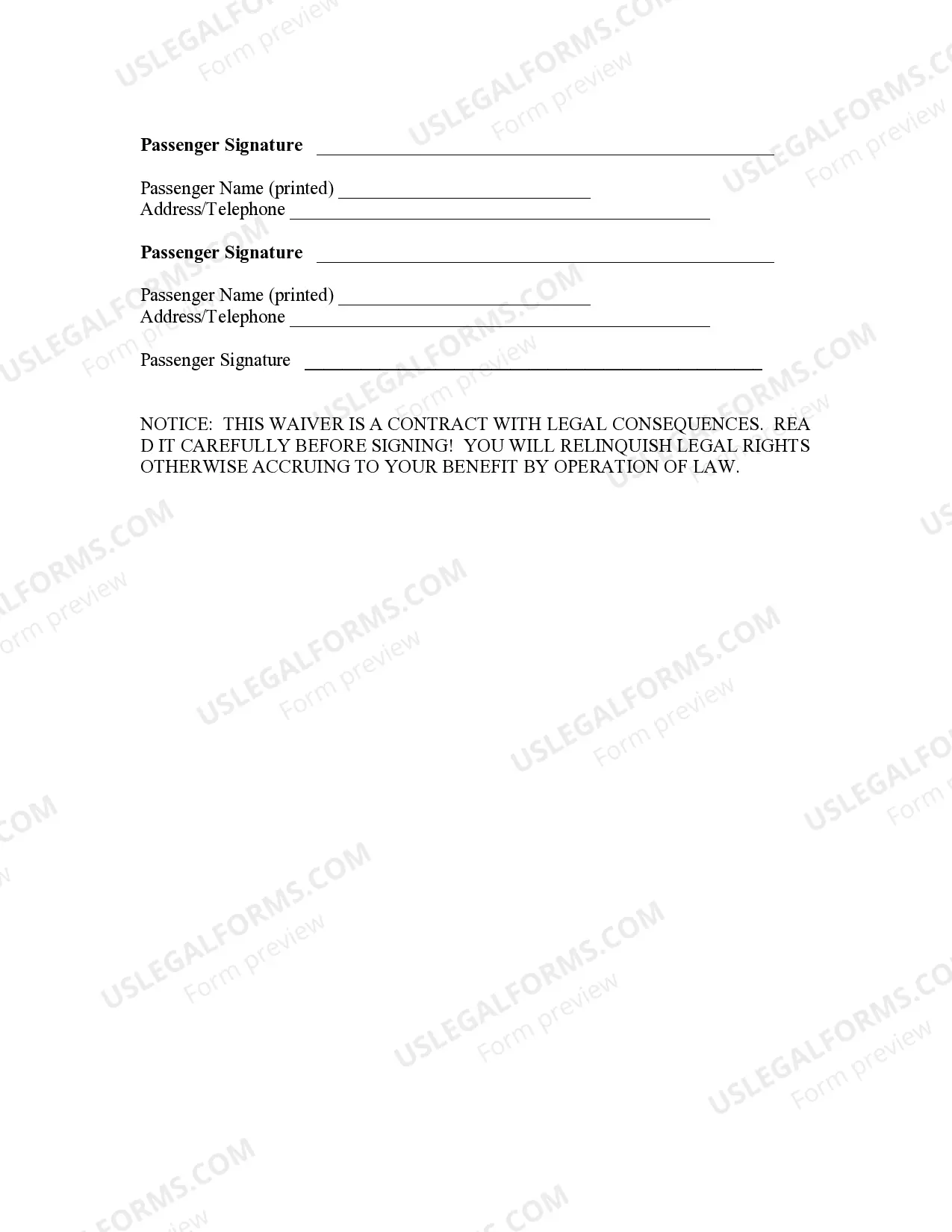
- Space for signatures of the driver and passengers to confirm their understanding and consent.
When to use this form
This form should be used when a college student opts to drive their own vehicle to an event, such as a competition or practice, instead of using transportation provided by the college. It is particularly important to have this waiver for any off-campus events where students decide to use personal vehicles to ensure all parties are aware of their rights and responsibilities.
Who can use this document
- College students participating in off-campus events or activities.
- Students who are responsible for driving themselves and potentially offering rides to other students.
- Colleges and universities looking to limit their liability related to the use of personal vehicles.
Instructions for completing this form
- Identify the driver's name and confirm their address and contact information.
- Specify the event details including the name of the event and the dates of travel.
- Ensure all passengers acknowledge their choice to ride and provide their names and contact details.
- Collect signatures from both the driver and all passengers to confirm their understanding and acceptance of the terms.
- Review the completed form for accuracy and clarity before storing it for your records.
Notarization requirements for this form
This form does not typically require notarization unless specified by local law. It is designed to be signed by the involved parties to ensure their acknowledgment and consent.
Get your form ready online
Our built-in tools help you complete, sign, share, and store your documents in one place.
Make edits, fill in missing information, and update formatting in US Legal Forms—just like you would in MS Word.
Download a copy, print it, send it by email, or mail it via USPS—whatever works best for your next step.
Sign and collect signatures with our SignNow integration. Send to multiple recipients, set reminders, and more. Go Premium to unlock E-Sign.
If this form requires notarization, complete it online through a secure video call—no need to meet a notary in person or wait for an appointment.
We protect your documents and personal data by following strict security and privacy standards.

Make edits, fill in missing information, and update formatting in US Legal Forms—just like you would in MS Word.

Download a copy, print it, send it by email, or mail it via USPS—whatever works best for your next step.

Sign and collect signatures with our SignNow integration. Send to multiple recipients, set reminders, and more. Go Premium to unlock E-Sign.

If this form requires notarization, complete it online through a secure video call—no need to meet a notary in person or wait for an appointment.

We protect your documents and personal data by following strict security and privacy standards.
Common mistakes
- Not ensuring all passengers sign the waiver.
- Failing to provide accurate event details, such as the date and name of the event.
- Overlooking the importance of a clear explanation of the form's implications.
Why complete this form online
- Convenient access to legal forms anytime and anywhere.
- Editability allows users to input specific details easily.
- Reliability of professionally drafted forms that comply with legal standards.
Looking for another form?
Form popularity
FAQ
The Clean Transportation Standard Act in Minnesota aims to promote cleaner transportation options and reduce greenhouse gas emissions. This legislation encourages the use of alternative fuels and vehicles, supporting initiatives that align with the state's environmental goals. Understanding how this act interacts with the Minnesota Alternative Transportation Liability Waiver can help you navigate potential legal implications. For accurate documents and guidance, consider using US Legal Forms to stay compliant.
Yes, liability waivers are generally enforceable in Minnesota, provided they meet certain legal standards. For a Minnesota Alternative Transportation Liability Waiver to be valid, it must clearly outline the risks involved and be signed voluntarily by the participant. Courts often uphold these waivers unless they find them to be overly broad or vague. When drafting your waiver, using a reliable platform like US Legal Forms can ensure that it complies with state regulations.
To be eligible for the DD Waiver, a person must choose to live in the community and meet all of the following criteria: Be eligible for Medical Assistance (MA) based on a disability or other eligibility status. Be certified disabled by Social Security or the State Medical Review Team (SMRT) process.
Developmental disabilities are a group of conditions due to an impairment in physical, learning, language, or behavior areas. These conditions begin during the developmental period, may impact day-to-day functioning, and usually last throughout a person's lifetime. 1.
The Alternative Care (AC) program provides home-and community-based services to people who need nursing home level of care but choose to live in the community. The Alternative Care program provides many of the same services as the Elderly Waiver program.
The Developmental Disabilities (DD) Waiver provides funding for home and community-based services for children and adults with developmental disabilities or related conditions.
The Community Access for Disability Inclusion (CADI) Waiver provides funding for home and community-based services for children and adults, who would otherwise require the level of care provided in a nursing facility.
The Elderly Waiver is for people over the age of 65, who are on Medical Assistance, and have an assessed need for supports and services that will help them avoid or delay institutional care.
The Community Access for Disability Inclusion (CADI) Waiver provides home and community-based care to children and adults with disabilities requiring a high level of care equivalent to that of a nursing facility.
The CADI waiver also has income and asset requirements. Individual applicants cannot have an annual income greater than 95% of the Federal Poverty Level (FPL). As of 2022, this figure is $12,910.50 per year, or calculated monthly, the limit is $1,075.88.