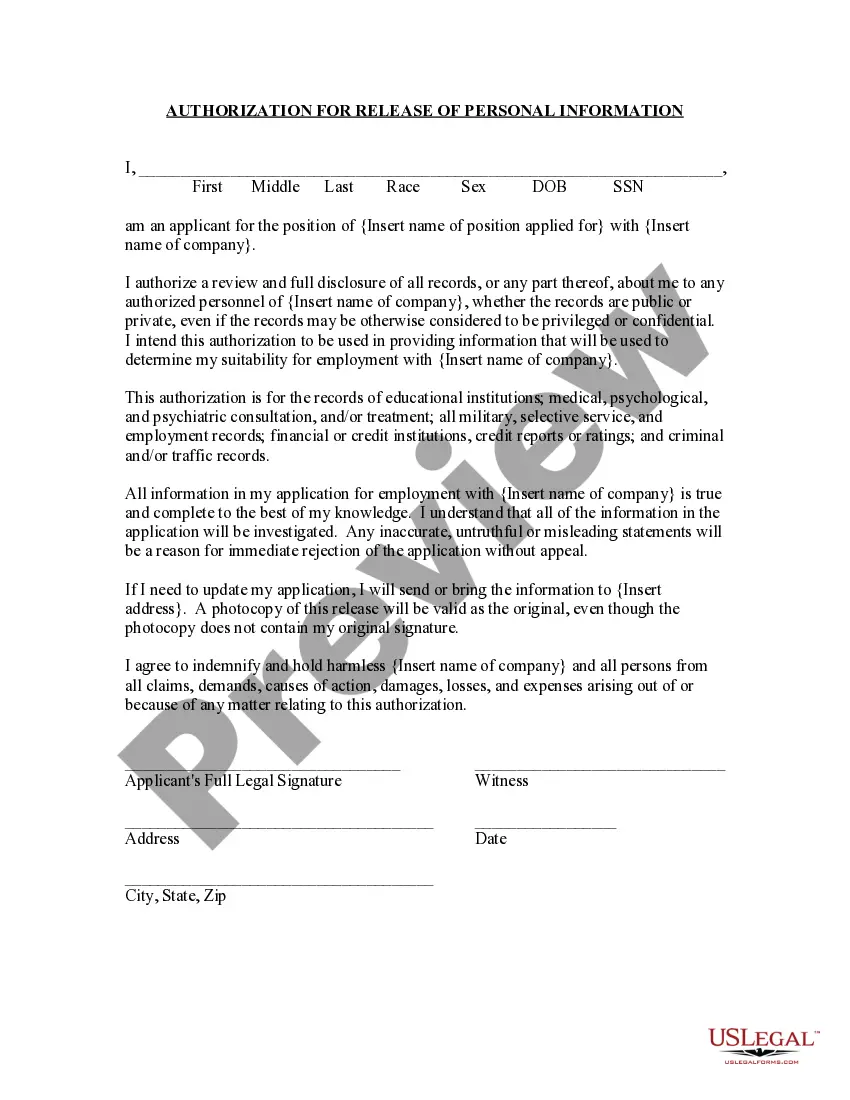
Minnesota Authorization for Release of Personal Information
Description
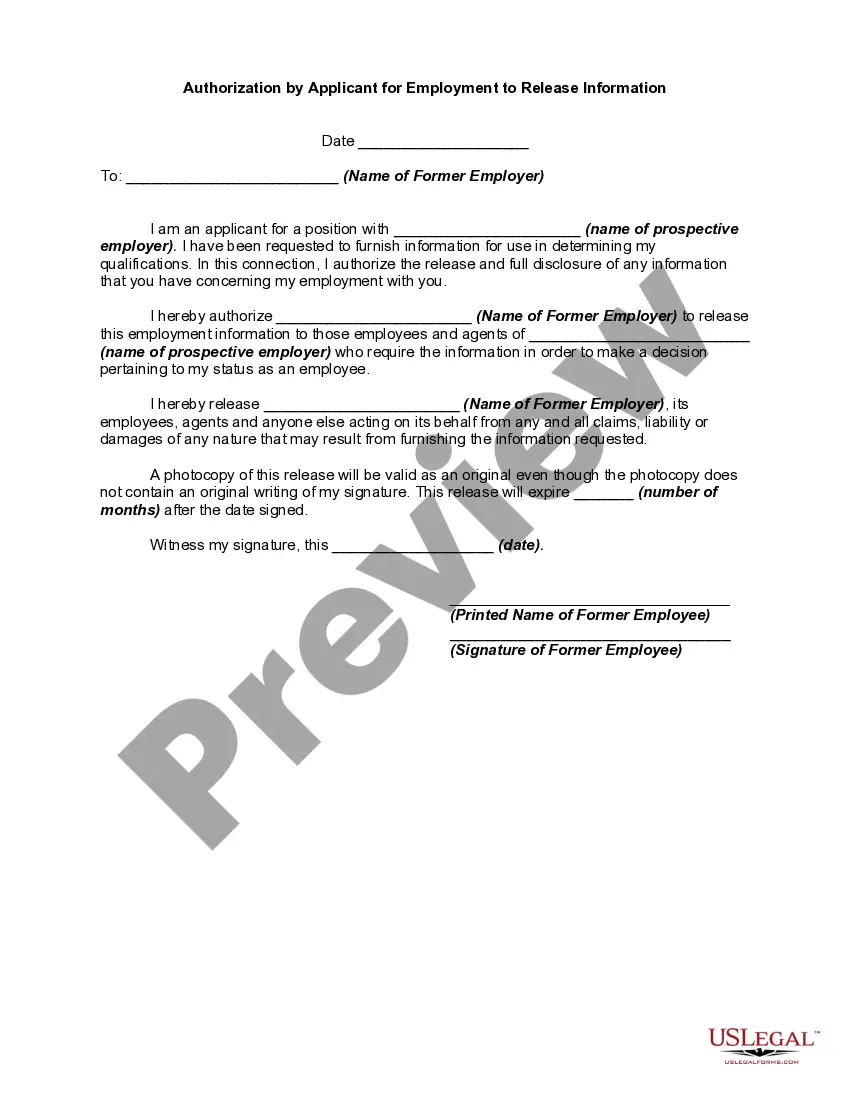
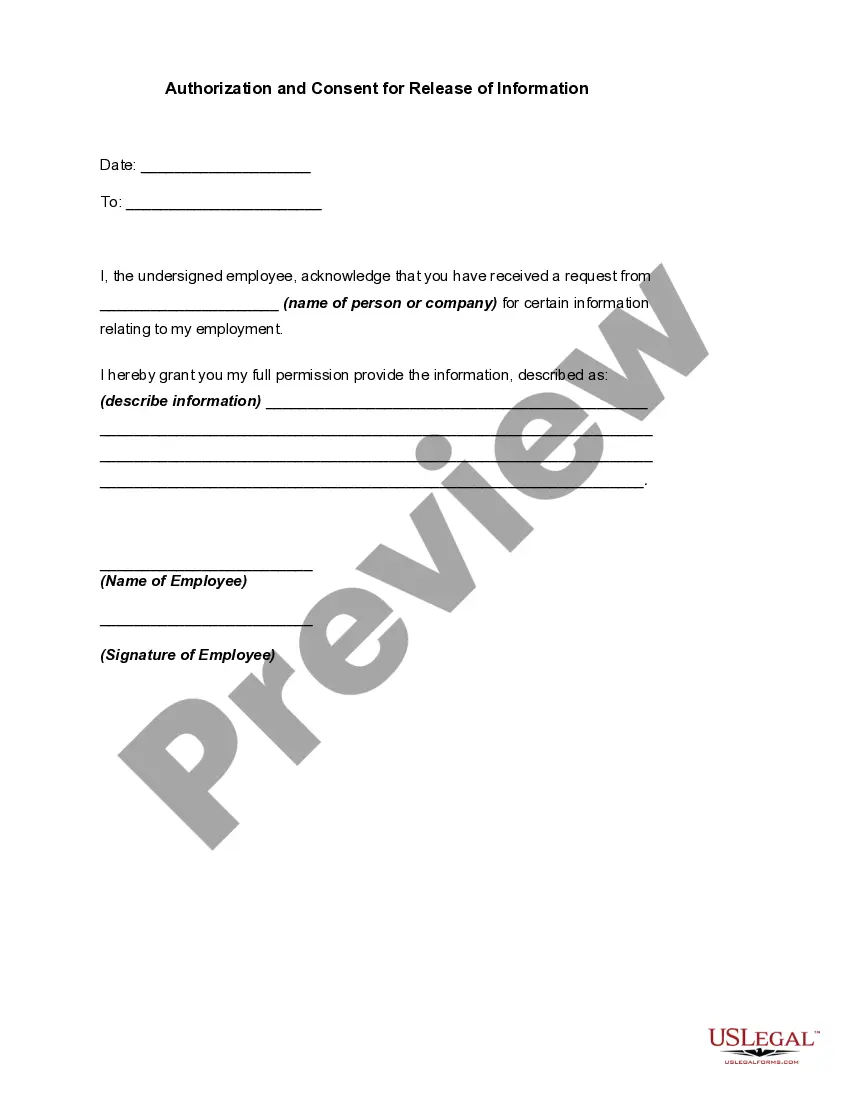
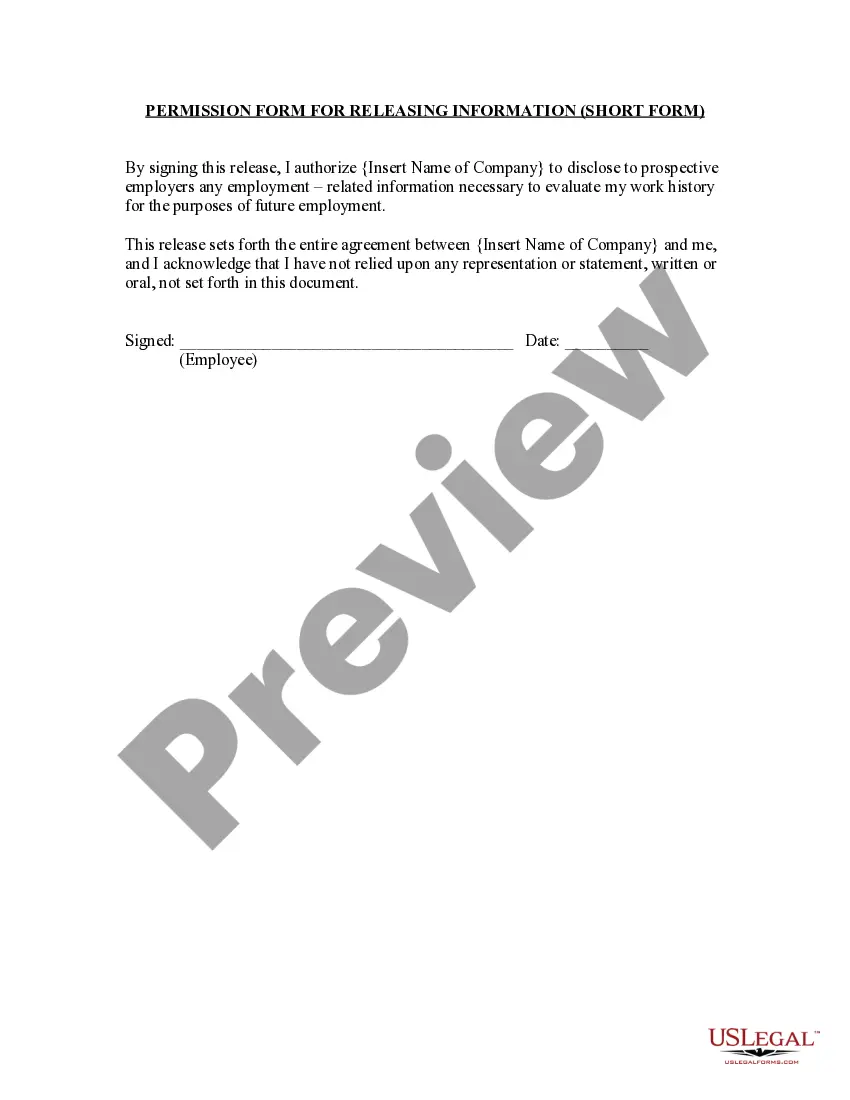
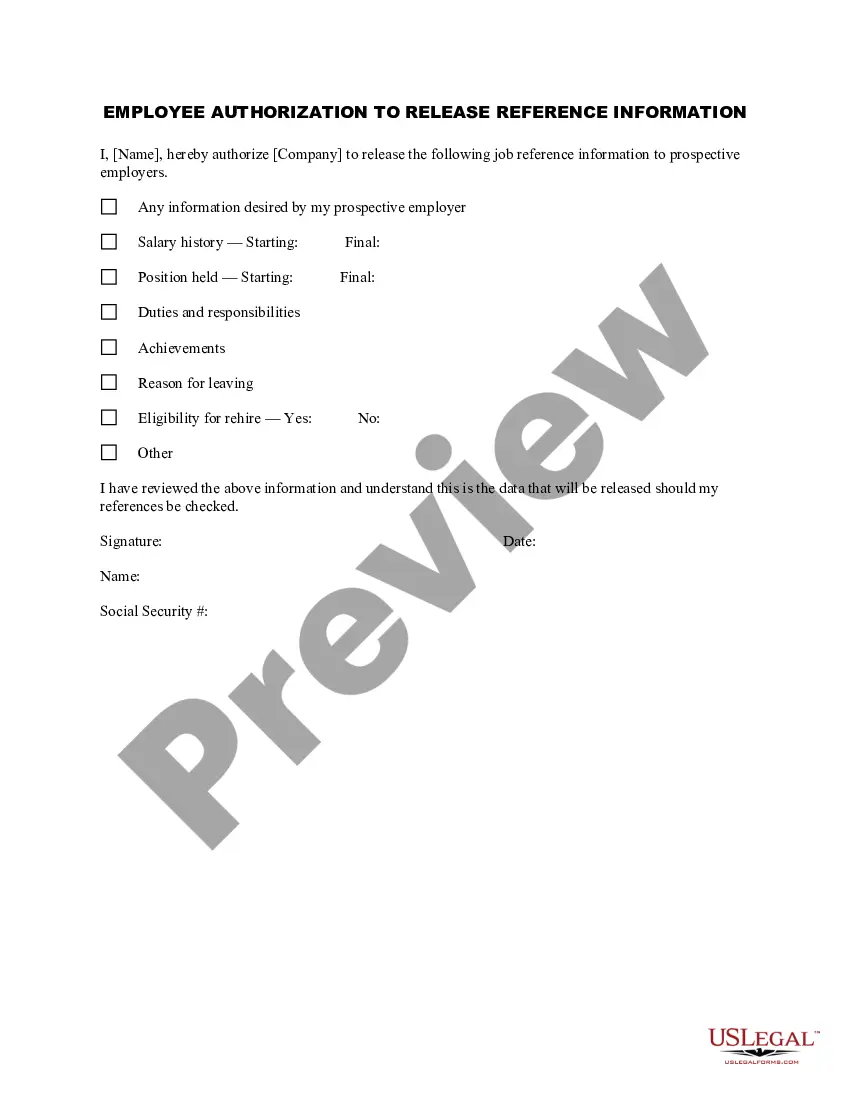
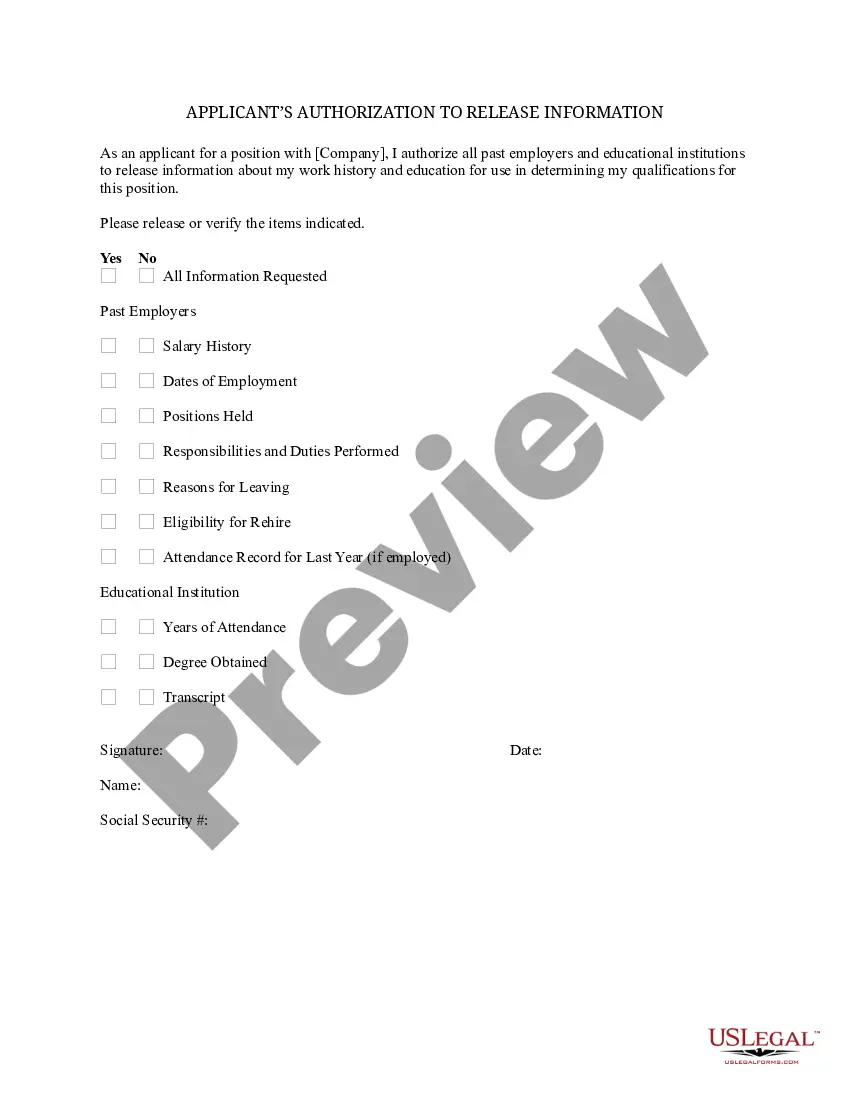
Get your form ready online
Our built-in tools help you complete, sign, share, and store your documents in one place.
Make edits, fill in missing information, and update formatting in US Legal Forms—just like you would in MS Word.
Download a copy, print it, send it by email, or mail it via USPS—whatever works best for your next step.
Sign and collect signatures with our SignNow integration. Send to multiple recipients, set reminders, and more. Go Premium to unlock E-Sign.
If this form requires notarization, complete it online through a secure video call—no need to meet a notary in person or wait for an appointment.
We protect your documents and personal data by following strict security and privacy standards.

Make edits, fill in missing information, and update formatting in US Legal Forms—just like you would in MS Word.

Download a copy, print it, send it by email, or mail it via USPS—whatever works best for your next step.

Sign and collect signatures with our SignNow integration. Send to multiple recipients, set reminders, and more. Go Premium to unlock E-Sign.

If this form requires notarization, complete it online through a secure video call—no need to meet a notary in person or wait for an appointment.

We protect your documents and personal data by following strict security and privacy standards.
Looking for another form?

How to fill out Authorization For Release Of Personal Information?
Selecting the ideal legal document template can be a challenge.
Certainly, there are numerous templates accessible online, but how can you find the legal form you need.
Make use of the US Legal Forms website. This service offers thousands of templates, including the Minnesota Authorization for Release of Personal Information, suitable for both business and personal purposes.
You can browse the form using the Preview button and read the form description to confirm it is the right one for you.
- All templates are vetted by experts and meet federal and state requirements.
- If you are already registered, Log Into your account and click on the Download button to obtain the Minnesota Authorization for Release of Personal Information.
- Use your account to search through the legal forms you have purchased previously.
- Visit the My documents tab in your account to download another copy of the document you need.
- If you are a new user of US Legal Forms, here are some simple instructions for you to follow.
- First, ensure you have selected the correct form for your particular city/county.
Form popularity
FAQ
A release of information (ROI) department or division is found in the majority of hospitals. In the United States, HIPAA and state guidelines strongly direct the rules and regulations of patient information.
The core elements of a valid authorization include:A meaningful description of the information to be disclosed.The name of the individual or the name of the person authorized to make the requested disclosure.The name or other identification of the recipient of the information.More items...
There are a few scenarios where you can disclose PHI without patient consent: coroner's investigations, court litigation, reporting communicable diseases to a public health department, and reporting gunshot and knife wounds.
Generally, an authorization provides the authority for a doctor's release of PHI for specified purposes, which are generally other than treatment, payment, or healthcare operations, or, to disclose protected health information to a third party specified by the individual.
The patient's legal name, date of birth, gender, Social Security number, address, telephone number, guarantor, subscriber, or next-of-kin are key identifying elements that assist in establishing the proper individual.
This form is used to release your protected health information as required by federal and state privacy laws. Your authorization allows the Health Plan (your health insurance carrier or HMO) to release your protected health information to a person or organization that you choose.
Release of information (ROI) is the process of providing access to protected health information (PHI) to an individual or entity authorized to receive or review it.
No. The HIPAA Privacy Rule permits a health care provider to disclose protected health information about an individual, without the individual's authorization, to another health care provider for that provider's treatment of the individual.
Release of information (ROI) is the process of providing access to protected health information (PHI) to an individual or entity authorized to receive or review it.